F. Fernández Mayorga

6.8K posts

F. Fernández Mayorga banner
F. Fernández Mayorga

F. Fernández Mayorga

@Fdez_Mayorga

Extremadamente locomotriz.

Katılım Ağustos 2011
213 Takip Edilen216 Takipçiler
F. Fernández Mayorga retweetledi
Archaeo - Histories
Archaeo - Histories@archeohistories·
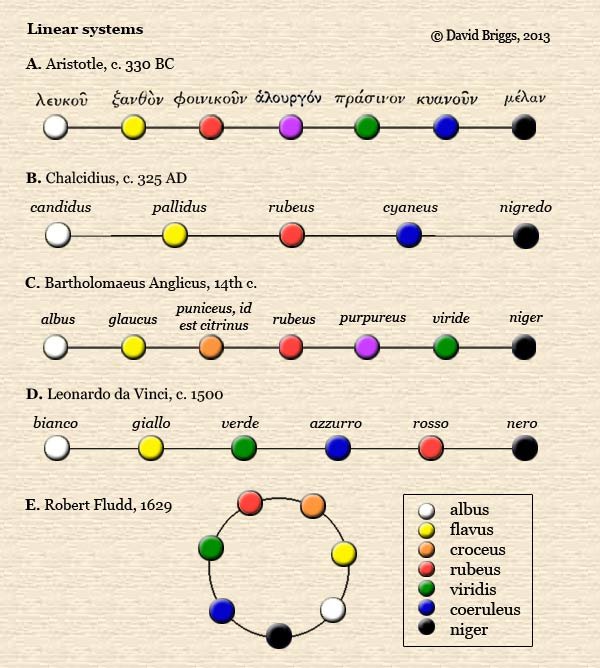
Why were the sky, wine, and sea nearly "purple" in ancient Greece? There was no word for "blue" in classical Greece. The closest descriptions of blue are glaucous and cyan, which express the contrast between light and dark. They do not, however, define the color itself. The perception of color and its linguistic representation in ancient cultures is a topic that has fascinated scholars, linguists, and historians for years. One of the most curious observations from ancient texts is the apparent absence of a term that directly corresponds to the modern color "blue" in Ancient Greek. Let's dive into this phenomenon. In his two works, the Iliad and the Odyssey, Homer only refers to four colors: black, white, greenish-yellow (to represent honey, plant sap, and blood), and porphyro (red). When Homer refers to the sky as "bronze," he does not mean that it is the color of bronze but rather that it is dazzlingly bright, like a well-polished shield. He implied that the wine, the sea, and the sheep were all the same hue, red, by applying the same logic. Aristotle named seven distinct hues, which he thought came from black and white, but in fact, they were variations in brightness rather than colors. Surprisingly, two NASA robotic vehicles on Mars in 2006 and an ancient Greek who lived around 2,500 years ago both experienced colors exactly the same way. One explanation offered after Darwin's theories gained popularity was that the ancient Greeks' retinas did not possess the same capacity for color perception as ours do today. Nonetheless, it is now thought that they categorized things based on their characteristics, not color. The phrase "yellow" or "bright green," which was used to describe the blood, or "juice," of the people, actually indicated wet, fresh, and alive. This occurrence is not as uncommon as one may believe. More languages are spoken in Papua New Guinea than anywhere else in the world, but many of them do not discuss color at all outside of the struggle between light and dark. No word for brown, gray, blue, or green exists in Old Welsh. The division of the color spectrum is considerably different: one term (glas) covers part of the green, another word covers all of the blue, another word covers all of the gray, and a third word covers all or part of the brown. There isn't a single term for "blue" in Russian. The two phrases "galoboy" and "sini," which are typically translated as "light blue" and "dark blue," are used instead. Nevertheless, for Russians, these words refer to two entirely distinct colors rather than two variations of the same color. The representation of color words is the same across all languages. Red is almost typically the third color stated after black and white, followed by green and yellow, blue, and then brown. In his book "Through the Language Glass," linguist Guy Deutscher explores the topic of color in ancient languages. He suggests that as societies grow and develop, so does their need to name and categorize colors. This means the naming of colors is more of a cultural evolution than a strict biological one. The way Ancient Greeks described and perceived colors offers a window into their world, culture, and linguistic evolution. While it may seem strange to modern readers that they apparently lacked a word for "blue," it's a testament to the fluidity of language and the intricate relationship between culture, language, and perception. The exploration of color in ancient cultures challenged us to see the world not just in black and white or blue and green but in a myriad of shades and interpretations. © The Archaeologist #archaeohistories
Archaeo - Histories tweet media
English
22
169
747
45.3K
F. Fernández Mayorga retweetledi
La Órbita De Endor
La Órbita De Endor@laORBITAdeENDOR·
El conflicto sideral más épico jamás visto, ¿y te lo quieres perder? Podcast idóneo para enterarse de la jugada y cómo empezar a leerlo y qué novelas saltarse y cuáles no. go.ivoox.com/rf/171393852
La Órbita De Endor tweet media
Español
2
12
89
2.9K
F. Fernández Mayorga retweetledi
Juan Soto Ivars
Juan Soto Ivars@juansotoivars·
El indulto de las 6 de La Suiza, como los de María Sevilla y Juana Rivas, no nacen del amor a la justicia del gobierno. Son golpes en la mesa: "aquí mando yo". Derriban argumentaciones judiciales. Dan indultos como designan altos cargos. abc.es/opinion/juan-s…
Español
144
2.6K
6.5K
128.5K
F. Fernández Mayorga retweetledi
Pablo Malo
Pablo Malo@pitiklinov·
Este artículo de Nature es un ejemplo de cómo muchos medios (incluidos medios supuestamente científicos como Nature) tratan los problemas de los hombres: reconoce (a regañadientes) que los chicos y hombres jóvenes están peor en varios indicadores objetivos importantes (rendimiento escolar, graduación universitaria, salud mental, suicidios, adicciones, etc.), pero, inmediatamente añade la coletilla obligatoria: “pero cuidado, no vayamos a hablar demasiado de esto porque podría dejar de lado a las mujeres y niñas”. Es decir: los problemas de los hombres solo pueden mencionarse si se recuerda constantemente que las mujeres siguen siendo las verdaderas víctimas prioritarias. Se enfocan los problemas y desventajas de los hombres como una competición de víctimas e implícitamente se admite una jerarquía de sufrimiento: cualquier atención a los problemas masculinos automáticamente “resta” atención a las mujeres. Como si el sufrimiento fuera un recurso de suma cero. Esto, por supuesto, es absurdo: se pueden estudiar y abordar problemas de ambos sexos al mismo tiempo. El artículo no está interesado en entender por qué los chicos están quedando atrás en educación, por qué tienen tasas mucho más altas de suicidio, adicciones o fracaso social. Está interesado en contener el discurso para que no amenace la narrativa dominante de que las mujeres siguen siendo el grupo prioritario de preocupación. Dice textualmente: "Es incómodo y a veces controvertido hablar de una 'crisis masculina' cuando todavía existe una discriminación arraigada y, en muchos casos, cada vez peor contra las niñas y las mujeres.” Es decir: sí, los chicos están mal… pero por favor no hagamos mucho ruido porque las chicas están peor. Y sólo podemos ocuparnos de uno de ellos. nature.com/articles/d4158…
Español
64
738
1.9K
83.7K
F. Fernández Mayorga retweetledi
BM Vera+Cruz de Almogía
BM Vera+Cruz de Almogía@BM_veracruz·
Con la venia de nuestra querida @Archic_Huerto , invitamos a nuestro amigo, José León Alapont @JoseLeonAlapont , a dar los toques de campana para arrancar el paso de Ntra. Sra. de la Concepción, a los sones de su marcha, ‘Siempre Macarena’. #cofradiasmlg
Español
2
14
16
1.5K
F. Fernández Mayorga retweetledi
Cautivo de Estepona
Cautivo de Estepona@AMCautivo·
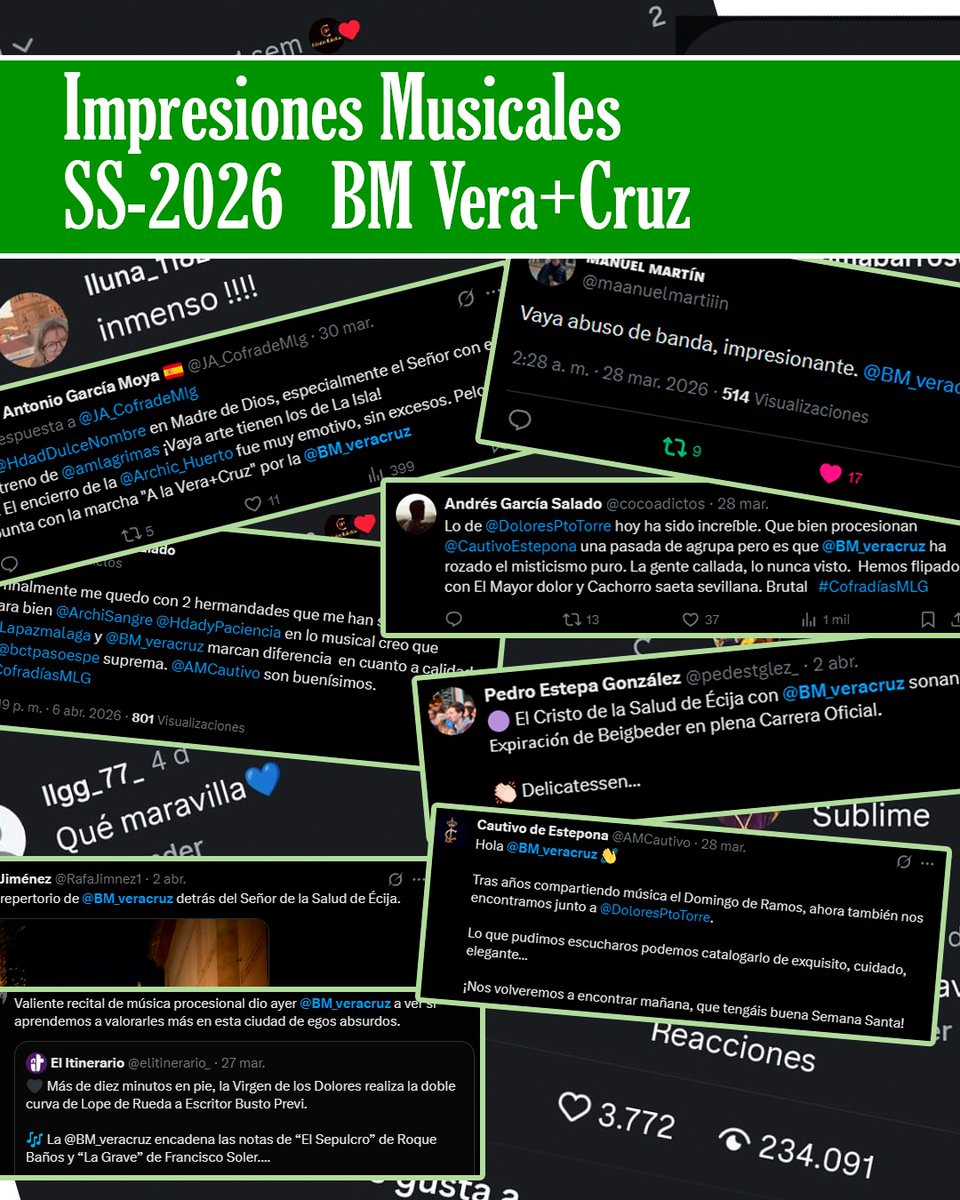
Hola @BM_veracruz 👋 Tras años compartiendo música el Domingo de Ramos, ahora también nos encontramos junto a @DoloresPtoTorre. Lo que pudimos escucharos podemos catalogarlo de exquisito, cuidado, elegante… ¡Nos volveremos a encontrar mañana, que tengáis buena Semana Santa!
Cautivo de Estepona tweet media
Español
0
21
46
3.2K
F. Fernández Mayorga retweetledi
Daniel Gascón
Daniel Gascón@gascondaniel·
Todas deben participar en la propaganda: el CIS sobrerrepresenta a la izquierda por sistema, mientras se nombra a un alto cargo de Hacienda para dirigir la Airef y se reprocha a Cristina Herrero, la presidenta saliente, que se tomara en serio su independencia
Español
2
39
89
3K