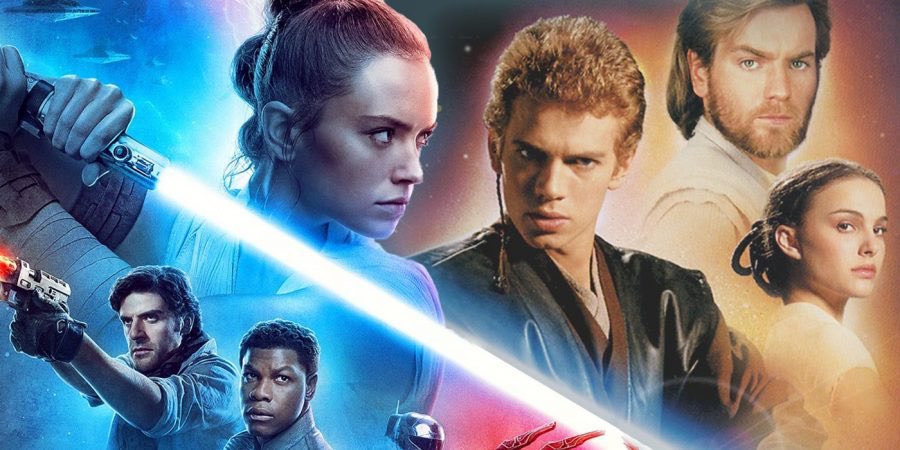
@sw_holocron Nah it’s not the same the Prequels created fascinating worlds and had heart.
Sequels were corporate, terrible world building, shat on the originals, and had bad writing too.
“The sequels are no more polarising than the prequels were when they came out," says BB-8 actor and puppeteer Brian Herring.
“All the people who are upset about the sequels are too young to remember how upset the people when the original ones came out were, except they now have the internet. If the internet had been around to the extent it was around when the prequels came out, you'd have seen exactly the same stuff play out. And I think in 10 years' time, you're going to see what you're seeing with the sequels, because the sequels have a huge fan base and I meet them all the time, but they're all much younger than the people complaining on the internet about how much they didn't like. It's perfectly fine, if you don't like them, you don't like them. Everything's not for everyone. And I just think that these things are all generational and I think Battlestar Galactica said it best, 'this has all happened before, it will all happen again.'"
(Source: gamereactor.eu/bb-8s-actor-th…)
@sw_holocron I teach middle school. The students who like Star Wars enjoy the Mandalorian, Bad Batch and for whatever reason Revenge of the Sith specifically. From my small sample, the majority do not like the sequels.
@sw_holocron This is a super fair point. Not a fan of the sequels but I am the prequels. And I do remember the massive hate. Especially around the most complex character whose story arc was going to be epic... (jar jar)
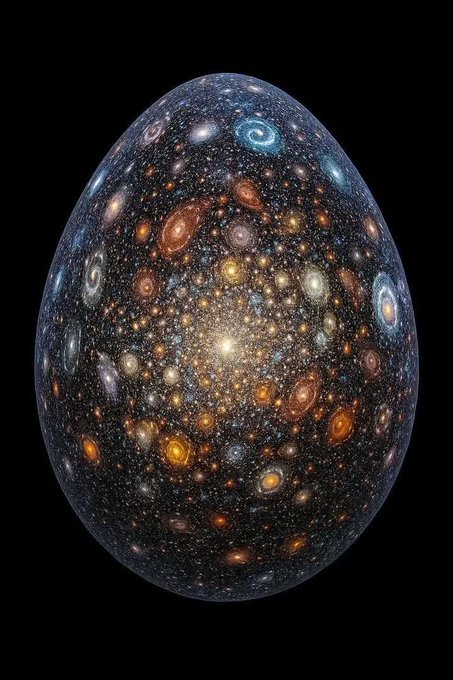
The statement that "The James Webb Space Telescope confirms that there is something seriously wrong with our understanding of the universe, and reveals that there is an unknown physics" is a dramatic but reasonably accurate summary of ongoing scientific debates sparked by JWST data—particularly around the Hubble tension (also called the Hubble crisis).This refers to a persistent mismatch in measurements of the universe's current expansion rate (the Hubble constant):Observations of the nearby universe (using "standard candles" like Type Ia supernovae and Cepheid variable stars) via telescopes like Hubble and now confirmed by JWST yield a higher value: roughly 73 km/s/Mpc.
Predictions from the early universe (via the cosmic microwave background and the standard ΛCDM model of cosmology) give a lower value: around 68 km/s/Mpc.
JWST's key role? Multiple independent studies (including major ones in 2023–2025, with the largest JWST survey of expansion published in late 2024) have cross-checked Hubble's local measurements and ruled out significant observational errors or instrument biases. As Nobel laureate Adam Riess (lead on several of these) has stated: with errors minimized and two flagship telescopes agreeing, the discrepancy points to something missing or incorrect in our current physics models—potentially new physics like evolving dark energy, early dark energy, modified gravity, exotic dark matter behaviors, or unknown early-universe components.This isn't a total breakdown of cosmology (the standard model still explains vast swaths of data brilliantly), but it's a serious crack: the tension has grown to high statistical significance (some reports push toward 5-sigma in recent analyses), forcing physicists to consider revisions. Other JWST surprises—like unexpectedly massive/bright early galaxies, chaotic young galaxies, or odd compact objects—have added fuel, though many of those initial "galaxy crises" have since been refined or explained within models (e.g., via better mass estimates or dust effects).In short: JWST hasn't "broken" physics outright, but it has confirmed a real puzzle that strongly suggests our understanding is incomplete, and unknown physics is likely at play to reconcile the expansion mismatch.It's one of the most exciting (and frustrating) times in cosmology—science at its best when reality refuses to fit the textbook!
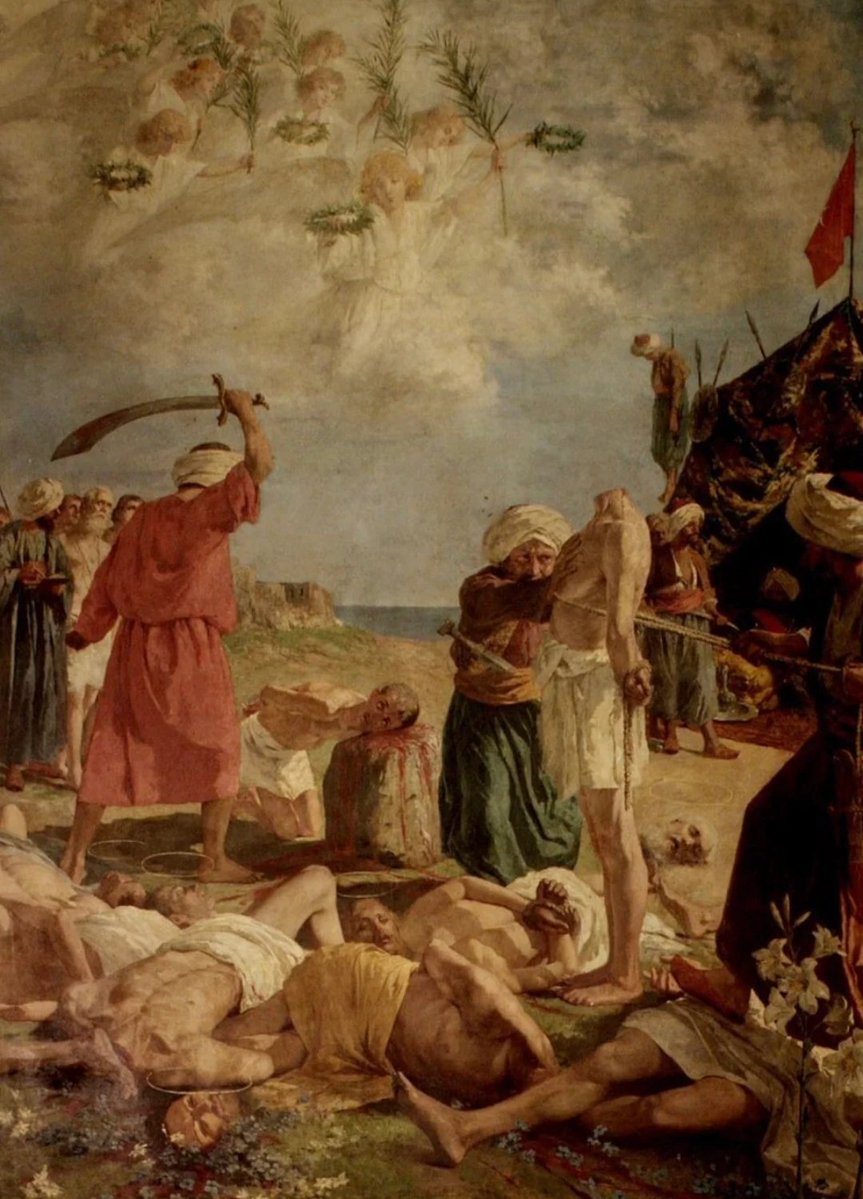
It was 1480, and the streets of Otranto were choked with bodies—men in torn doublets, women clutching lifeless infants, children whose cries had already gone silent. Across the harbor, the banners of the Ottoman Empire rippled in the sea breeze, their crimson field and crescent moon stark against the blue of the Adriatic. The city’s gates, battered and splintered, hung useless on their hinges. Behind them, in the cathedral square, eight hundred men stood bound in rows, their faces set, eyes fixed on the horizon. A Turkish officer read the final demand: embrace Islam or face the sword. When no one stepped forward, the blades began their work.
Otranto had been the sentinel of Italy’s heel for centuries, a fortified port guarding the narrow channel between the Adriatic and the Ionian Seas. On July 28, 1480, a fleet of roughly ninety Ottoman galleys appeared offshore, carrying an invasion force of eighteen thousand under the command of Gedik Ahmed Pasha. The target was not merely a provincial town but the gateway to the Kingdom of Naples—and, potentially, all of Italy. Mehmet II, “the Conqueror” of Constantinople, had turned his gaze westward. If Otranto fell, nothing stood between the Sultan’s armies and the papal states.
The siege began with cannon fire that shook the very limestone foundations of the walls. For fifteen days the defenders, numbering perhaps six thousand including civilians, resisted with crossbow bolts, arquebus fire, and boiling oil poured from the battlements. The city’s governor, Count Francesco Largo, fell early in the fighting, leaving Archbishop Stefano Pendinelli to rally both soldiers and townsfolk. Chroniclers tell of the archbishop walking the ramparts in full vestments, carrying the relics of St. Stephen and offering absolution to the dying. But the walls could not withstand the relentless pounding. On August 11, a breach yawned open, and the Ottoman troops surged in.
What followed was a massacre. An estimated twelve thousand inhabitants were killed outright; five thousand more—mostly women and children—were chained for the slave markets and the harems of the east. The surviving men of fighting age, some eight hundred in number, were herded together. According to Italian and later Vatican accounts, they were offered their lives in exchange for conversion to Islam. Their spokesman, a humble tailor named Antonio Primaldo, answered for them all: they would remain faithful to Christ, whatever the cost. One by one, they were beheaded outside the city walls, their bodies left as a warning and their heads sent to the Sultan.
The sack of Otranto shocked all of Christendom. Pope Sixtus IV called for a crusade, while Ferdinand I of Naples and the rulers of Spain scrambled to reinforce their coasts. Yet the wider Ottoman campaign stalled; Mehmet II died unexpectedly the following year, and in 1481 a Neapolitan force retook the ruined city.
Still, the memory of those August days lingered. Otranto became a symbol—the last Italian city to fall to a Muslim army, and the place where, in the eyes of contemporaries, the fate of Europe teetered on a knife’s edge. In time, the eight hundred would be canonized as the Martyrs of Otranto, their bones enshrined in the cathedral.
#archaeohistories
@ThisParaLife early defector here. On my third tour of the POD. I defected many o'war with comrade Rory. I just wanted to say thank you for yet again getting me through hard times. Never stop. #liveFreeandInvestigate
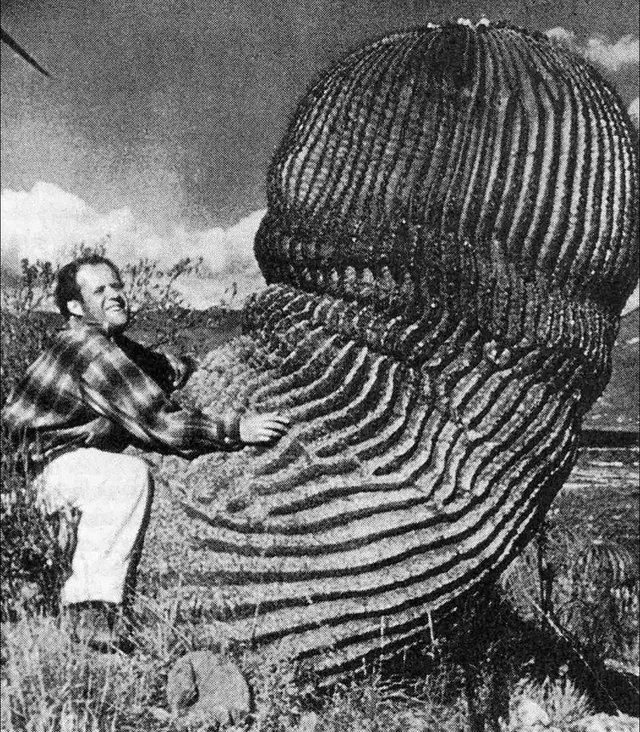
Sergei Eisenstein posing with a giant cactus in Mexico around 1930..
Sergei Eisenstein (1898–1948) was a pioneering Soviet filmmaker and theorist, renowned for developing the concept of montage—a revolutionary editing technique that emphasized the collision of images to generate emotional and intellectual impact. His early works, like Strike (1925) and Battleship Potemkin (1925), reshaped cinematic storytelling.
Eisenstein’s influence extended beyond Soviet cinema, inspiring filmmakers worldwide with his innovative visual style and political engagement. Despite facing censorship and political pressures, he continued creating ambitious projects, including Alexander Nevsky (1938) and Ivan the Terrible (1944–46), leaving a lasting legacy in both film theory and cinematic artistry.