Tracy and I are very impressed at the level of engagement this evening. Great work! Feel free to tweet out any last words before you sign off and enjoy the rest of your evening.
#PQP2
@mrvanwill@DsmallMrs Good question @mrvanwill. It could be for the reason you mentioned. I have always found that when teachers lead their professional learning, within the context of an identified problem of practice, it is much more successful. #PQP2
@FilLettieri@DsmallMrs Interesting point @FilLettieri . But why does this idea not translate to eqao or other standardized tests? Because the students feel they aren't getting anything from it? (i.e. "going for the win) #pqp2
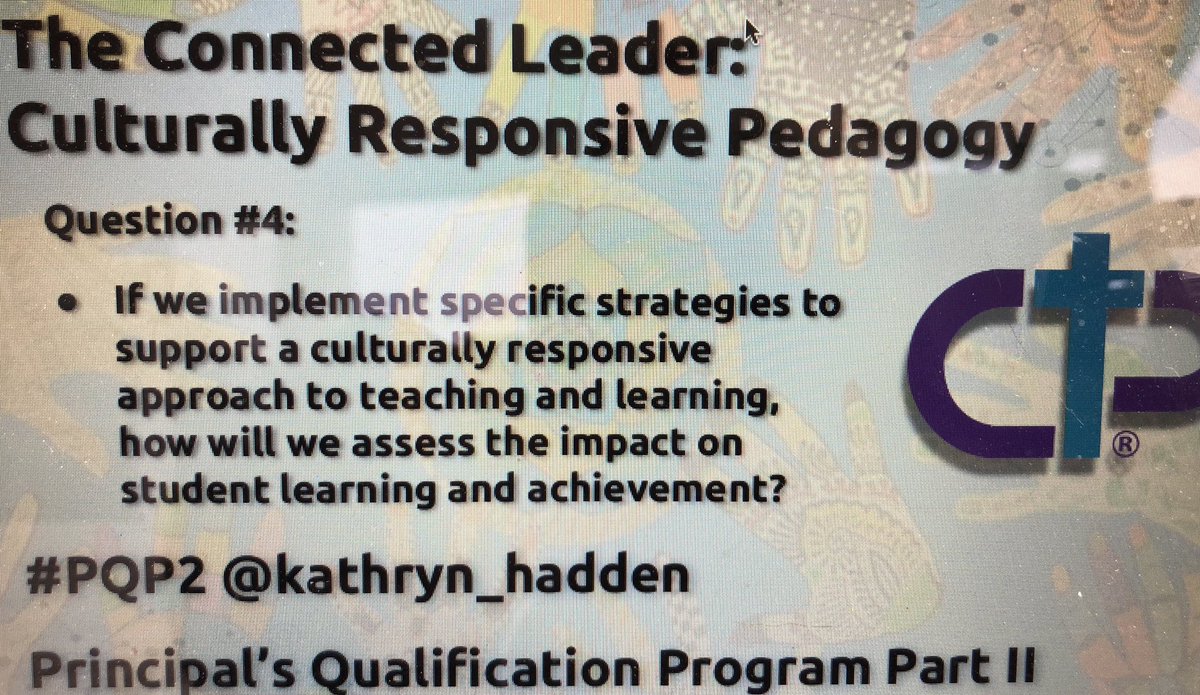
If we implement specific strategies to support a culturally responsive approach to teaching and learning, how will we assess the impact on student learning and achievement?
@FilLettieri Gather student voice to see how they felt, what worked, what was missing. Class discussions, exit cards or a quick survey to gather data. Then be willing to adjust based on the input. #PQP2
@DsmallMrs Data collection is critical @DsmallMrs . I like to compare it to keeping score in a game. Do you ever notice the difference in performance when you keep score? #PQP2
@FilLettieri We can assess student learning through data collection with respect to grades, outcomes after high school and surveys. We also need to have conversations with students. #PQP2
If we implement specific strategies to support a culturally responsive approach to teaching and learning, how will we assess the impact on student learning and achievement? #PQP2
@FilLettieri Examine the curriculum, ask questions about your teaching material. Does it provide a balanced study of cultures? Does it avoid stereotypes? Does it reflect contributions of both genders from different cultures? #pqp2
How can we lessen dominant perspectives in our curriculum so that contributions from different backgrounds can be better understood and integrated into learning?#PQP2
Diversifying our teaching/student resources and resources for teachers to support instruction. Invite guest speakers such as Elders to share their experiences. Contextualize learning. @FilLettieri#PQP2
@FilLettieri Showing our school community that we have a desire to learn and make change. Invite community members into the school to present or experience what is happening there. Open the door to conversations with others. #PQP2@FilLettieri
Great conversations! Now our next question:
How do we work with our communities to help everyone appreciate the importance of culturally responsive teaching? #PQP2@FilLettieri
@mcmullinkds Great point, @mcmullinkds! Those uncomfortable feelings can create a paradigm shift that can have a lasting impact on our thinking and practices. #PQP2
@FilLettieri Access and rely on outside support and expertise to provide intentional resources and facilitate conversations that feel uncomfortable but lead to perspective and understanding. #PQP2@FilLettieri
What does a classroom look like, sound like and feel like when it is inclusive and when instruction is responsive to the full range of student diversity? #PQP2
@flesaru@kathryn_hadden It's important to have that accountability partner, a member from the community who can provide you with authentic feedback about your goals. #PQP2@kathryn_hadden
@kathryn_hadden We can know if our culturally responsive approach is working if we analyze the data. We can also look at student engagement, if students feel that they belong and are accepted then they are more likely to meet success in academic achievement. #PQP2