Fish in the News

2.8K posts

Fish in the News banner
Fish in the News

Fish in the News

@FishInTheNews

Everything about the fishes we love. Aquarium hobby, science and conservation.

Blue Planet Katılım Şubat 2021
365 Takip Edilen7.3K Takipçiler
Fish in the News
Fish in the News@FishInTheNews·
#NewSpeciesAlert - 𝐺𝑎𝑟𝑟𝑎 𝑗𝑖𝑢𝑙𝑜𝑛𝑔𝑖, a new species of labeonine cyprinid, is described from the upper Salween-Nujiang River basin, Yunnan, China. 🔒 mapress.com/zt/article/vie… "Furthermore, this study critically assesses the intraspecific variability of snout morphology in 𝐺𝑎𝑟𝑟𝑎. We highlight that key snout structures exhibit significant and synchronised plasticity. Such variability renders simplistic, fixed categorisations unreliable. Consequently, we argue that snout morphology should be integrated with a broader suite of morphological characters and non-morphological evidence to ensure robust taxonomic results." 𝗥𝗲𝘀𝗲𝗮𝗿𝗰𝗵 𝗧𝗶𝘁𝗹𝗲 𝐺𝑎𝑟𝑟𝑎 𝑗𝑖𝑢𝑙𝑜𝑛𝑔𝑖, a new labeonine species (Cypriniformes: Cyprinidae) from the upper Salween-Nujiang River basin, Yunnan, China, with remarks on the intraspecific variability of snout morphology 𝗖𝗶𝘁𝗮𝘁𝗶𝗼𝗻 Liu, C., Zeng, Y., Oo, T.N. & Chen, X. (2026) 𝐺𝑎𝑟𝑟𝑎 𝑗𝑖𝑢𝑙𝑜𝑛𝑔𝑖, a new labeonine species (Cypriniformes: Cyprinidae) from the upper Salween-Nujiang River basin, Yunnan, China, with remarks on the intraspecific variability of snout morphology. Zootaxa, 5814 (4), 477–497. doi.org/10.11646/zoota… 𝗔𝗯𝘀𝘁𝗿𝗮𝗰𝘁 Based on morphological comparisons and molecular evidence, a new species, 𝐺𝑎𝑟𝑟𝑎 𝑗𝑖𝑢𝑙𝑜𝑛𝑔𝑖 is described from the upper reaches of the Salween-Nujiang River drainage in Baoshan City, Yunnan, China. It is the sixth 𝐺𝑎𝑟𝑟𝑎 species known from the Salween-Nujiang River basin and, notably, the first 𝐺𝑎𝑟𝑟𝑎 species whose type locality is situated in the Chinese section of the drainage. 𝐺𝑎𝑟𝑟𝑎 𝑗𝑖𝑢𝑙𝑜𝑛𝑔𝑖 sp. nov. is closely allied to 𝐺. 𝑔𝑟𝑎𝑣𝑒𝑙𝑦𝑖 in sharing similar meristic counts, but can be distinguished from it by pulvinus enlarged and its width 53.5–64.2% of disc width, and head broader, its width 68.2–77.8% of head length. It can be further distinguished from all other Salween and Chinese congeners by the following combination of characteristics: proboscis unilobed, 12 circumpeduncular scales, 32–34 lateral-line scales, 3.5 transverse scale rows between dorsal-fin origin and lateral line, 9–10 predorsal scales, two pairs of barbels, and breast scaleless. Furthermore, this study critically assesses the intraspecific variability of snout morphology in 𝐺𝑎𝑟𝑟𝑎. We highlight that key snout structures exhibit significant and synchronised plasticity. Such variability renders simplistic, fixed categorisations unreliable. Consequently, we argue that snout morphology should be integrated with a broader suite of morphological characters and non-morphological evidence to ensure robust taxonomic results. 𝗣𝗵𝗼𝘁𝗼 𝗖𝗿𝗲𝗱𝗶𝘁 𝐺𝑎𝑟𝑟𝑎 𝑗𝑖𝑢𝑙𝑜𝑛𝑔𝑖, in an aquarium setting. Cover image for study from Zootaxa. © 2026 the Author(s). Published in the journal Zootaxa. #NewSpecies #Ichthyology #Taxonomy #Biodiversity #AquariumHobby #Fishkeeping #Aquarist #TropicalFish #MengboluoRiver #Proboscis #Morphology #Labeonine #Garra #Cyprinidae #Cypriniformes #BaoshanCity #Yunnan
Fish in the News tweet media
English
0
7
49
1.2K
Fish in the News
Fish in the News@FishInTheNews·
Here, researchers investigated an unusual reproductive event in the normally biparental cichlid fish 𝐶𝑦𝑝ℎ𝑜𝑡𝑖𝑙𝑎𝑝𝑖𝑎 𝑓𝑟𝑜𝑛𝑡𝑜𝑠𝑎, in which a female produced offspring without a male. Using whole-genome sequencing data, the authors analysed whether reproduction occurred via selfing or parthenogenesis by comparing patterns of heterozygosity with those from a wild, genetically diverse 𝐶𝑦𝑝ℎ𝑜𝑡𝑖𝑙𝑎𝑝𝑖𝑎 𝑓𝑟𝑜𝑛𝑡𝑜𝑠𝑎 family collected in Lake Tanganyika and a closely related inbred 𝐶𝑡𝑒𝑛𝑜𝑐ℎ𝑟𝑜𝑚𝑖𝑠 𝑏𝑒𝑛𝑡ℎ𝑖𝑐𝑜𝑙𝑎 family. 🔓 (Preprint) biorxiv.org/content/10.648… The study provides rare genomic evidence of selfing in a vertebrate and suggests that such alternative reproductive modes may be overlooked rather than truly absent. The findings contribute to a broader understanding of how alternative reproductive strategies evolve in vertebrate lineages. 𝗪𝗵𝗮𝘁 𝗶𝘀 𝗮 𝗣𝗿𝗲𝗽𝗿𝗶𝗻𝘁 𝗣𝘂𝗯𝗹𝗶𝗰𝗮𝘁𝗶𝗼𝗻? biorxiv.org/content/what-u… Extract from paper - "The regular mode of sexual reproduction is biparental in vertebrates and is also predominant for cichlids as well as the here investigated species 𝐶𝑦. 𝑓𝑟𝑜𝑛𝑡𝑜𝑠𝑎. The percentage of heterozygous sites (Table S1) was higher in the wild 𝐶𝑦. 𝑓𝑟𝑜𝑛𝑡𝑜𝑠𝑎 parental individuals (20.10 ± 2.85%) and the uniparental female (15.42%) than in the inbred 𝐶𝑡. 𝑏𝑒𝑛𝑡ℎ𝑖𝑐𝑜𝑙𝑎 parents (5.71 ± 0.08%), supporting that biparental sexual reproduction is the predominant reproductive mode in 𝐶𝑦. 𝑓𝑟𝑜𝑛𝑡𝑜𝑠𝑎, with selfing representing a facultative mode under certain environmental conditions or reproductive constraints. There are a few reported cases of selfing in fishes, specifically, in the mangrove killifish 𝐾𝑟𝑦𝑝𝑡𝑜𝑙𝑒𝑏𝑖𝑎𝑠 𝑚𝑎𝑟𝑚𝑜𝑟𝑎𝑡𝑢𝑠 and 𝐾. ℎ𝑒𝑟𝑚𝑎𝑝ℎ𝑟𝑜𝑑𝑖𝑡𝑢𝑠, and in the cichlid fish 𝐵𝑒𝑛𝑖𝑡𝑜𝑐ℎ𝑟𝑜𝑚𝑖𝑠 𝑛𝑖𝑔𝑟𝑜𝑑𝑜𝑟𝑠𝑎𝑙𝑖𝑠. In natural populations of 𝐾. 𝑚𝑎𝑟𝑚𝑜𝑟𝑎𝑡𝑢𝑠, males are rare and many individuals are simultaneous hermaphrodites that reproduce via selfing. In cichlids, sex determination is controlled by highly dynamic sex chromosomes, and sex change can occur in some species. However, whether 𝐶𝑦. 𝑓𝑟𝑜𝑛𝑡𝑜𝑠𝑎 is capable of sex change during its lifetime is so far unknown. Moreover, Svensson et al., 2016 reported a functional hermaphrodite first-generation hybrid capable of selfing, obtained by crossing two sexually reproducing 𝑃𝑢𝑛𝑑𝑎𝑚𝑖𝑙𝑖𝑎 species. Therefore, selfing may be possible in cichlids under certain conditions. Notably, natural hybridization has been observed along a narrow hybrid zone between the northerly distributed 𝐶𝑦. 𝑓𝑟𝑜𝑛𝑡𝑜𝑠𝑎 and its southern sister species 𝐶𝑦. 𝑔𝑖𝑏𝑏𝑒𝑟𝑜𝑠𝑎. Yet, our uniparental 𝐶𝑦. 𝑓𝑟𝑜𝑛𝑡𝑜𝑠𝑎 female shows heterozygosity estimates comparable to those of the wild parents, originating from outside the hybrid zone, making a hybrid origin unlikely as elevated heterozygosity would be expected under recent hybridization. By using selfing as an adaptive strategy, organisms can assure reproduction when males are unavailable. In contrast to asexual reproduction, selfing may also be more efficient to purge deleterious recessive mutations. Facultative selfing is therefore expected to be favoured in systems where mating opportunities are unpredictable or spatially constrained. In cichlids, such conditions may be influenced by life-history traits and temporal or spatial environmental heterogeneity shaping reproductive opportunities. 𝐶𝑦. 𝑓𝑟𝑜𝑛𝑡𝑜𝑠𝑎 is one of the larger Lake Tanganyika cichlids, reaching a total length of 35 cm, and inhabits deeper rocky habitats where it typically occurs in social groups consisting of a dominant male and multiple females. Such a social structure, combined with spatial segregation in patchily distributed habitats in the northern part of the lake, may lead to periods of limited mate access for some individuals. In addition, 𝐶𝑦. 𝑓𝑟𝑜𝑛𝑡𝑜𝑠𝑎 is a maternal mouthbrooder with a long brooding period of approximately 40 days and low fecundity, increasing costs of reproductive failure when mating opportunities are rare or unpredictable. Under these conditions, facultative selfing could represent an alternative reproductive strategy that ensures reproductive output when males are unavailable, particularly in isolated or low density habitats. Beyond these short-term fitness benefits, reproductive flexibility may also have longer-term evolutionary consequences. Given that variation in life-history traits is discussed to contribute to diversification in adaptive radiations, our results suggest that such reproductive flexibility may constitute an additional mechanism facilitating rapid speciation. Future studies should therefore address two complementary questions: under which ecological and social conditions – such as low population density, reduced habitat connectivity, or skewed sex ratios – alternative reproductive modes are expressed, and whether such flexibility ultimately promotes or constrains diversification in adaptive radiations." 𝗥𝗲𝘀𝗲𝗮𝗿𝗰𝗵 𝗧𝗶𝘁𝗹𝗲 Genomic evidence for facultative selfing in the cichlid fish 𝐶𝑦𝑝ℎ𝑜𝑡𝑖𝑙𝑎𝑝𝑖𝑎 𝑓𝑟𝑜𝑛𝑡𝑜𝑠𝑎 𝗖𝗶𝘁𝗮𝘁𝗶𝗼𝗻 M. Efe Uysal, Daniela Souza-Costa, Allison Marks, Adrian Indermaur, Wolfgang Gessl, Walter Salzburger, Julia M. I. Barth, Genomic evidence for facultative selfing in the cichlid fish 𝐶𝑦𝑝ℎ𝑜𝑡𝑖𝑙𝑎𝑝𝑖𝑎 𝑓𝑟𝑜𝑛𝑡𝑜𝑠𝑎. bioRxiv 2026.05.13.724898; doi: doi.org/10.64898/2026.… 𝗔𝗯𝘀𝘁𝗿𝗮𝗰𝘁 Organisms have evolved a remarkable diversity of reproductive strategies in response to environmental variations and selective pressures. Although most vertebrates do reproduce biparentally, rare alternative modes such as selfing (self-fertilization) and different forms of parthenogenesis exist, but remain poorly characterized. Here, we investigated an unusual reproductive event in the normally biparental cichlid fish 𝐶𝑦𝑝ℎ𝑜𝑡𝑖𝑙𝑎𝑝𝑖𝑎 𝑓𝑟𝑜𝑛𝑡𝑜𝑠𝑎, in which a female produced offspring in the absence of a male. Using whole-genome sequencing data, we analyzed whether reproduction occurred via selfing or parthenogenesis by comparing patterns of heterozygosity with those from a wild, genetically diverse C. frontosa family collected in Lake Tanganyika and a closely related inbred 𝐶𝑡𝑒𝑛𝑜𝑐ℎ𝑟𝑜𝑚𝑖𝑠 𝑏𝑒𝑛𝑡ℎ𝑖𝑐𝑜𝑙𝑎 family. The uniparental family exhibited reduced genetic diversity, elevated relatedness, and genome-wide patterns of homozygosity distinct from those expected under parthenogenesis or inbreeding, but consistent with self-fertilization. Our study provides rare genomic evidence of selfing in a vertebrate and suggests that such alternative reproductive modes may be overlooked rather than truly absent. These findings contribute to a broader understanding of how alternative reproductive strategies evolve in vertebrate lineages. 𝗦𝗶𝗴𝗻𝗶𝗳𝗶𝗰𝗮𝗻𝗰𝗲 The overwhelming majority of vertebrates reproduce sexually, requiring a male and a female to produce genetically distinct offspring. Yet, rare alternative modes involving only a single parent such as asexual parthenogenesis (“virgin birth”) or self-fertilization challenge this paradigm. Among these, selfing is exceptionally uncommon and poorly studied in vertebrates. Here, we unveiled - based on genomic analyses - the reproductive strategy of a member of the extraordinarily diverse cichlid fish radiation in Lake Tanganyika that reproduced in captivity in the absence of a male. By comparing patterns of genome-wide heterozygosity with both wild and inbred reference families, we identified a rare case of selfing. This finding adds to the limited records of selfing in vertebrates and expands current understanding of reproductive diversity, highlighting the power of whole-genome sequencing to distinguish among alternative reproductive mechanisms. 𝗣𝗵𝗼𝘁𝗼 𝗖𝗿𝗲𝗱𝗶𝘁 Top - Portrait photo of male 𝐶𝑦𝑝ℎ𝑜𝑡𝑖𝑙𝑎𝑝𝑖𝑎 𝑠𝑝. (aquarium raised). Shutterstock stock photo, cropped. Bottom - During canonical meiosis, DNA replication is followed by two successive divisions (meiosis I and II) to produce haploid gametes (a). Diploidy is restored in sexual reproduction either by fusion of gametes from two individuals (outcrossing), maintaining genome-wide heterozygosity, or by fusion of two independent gametes from the same individual (selfing), resulting in genome-wide reduction and stochastic redistribution of heterozygosity (b). In asexual (parthenogenetic) reproduction, diploidy is restored without fertilisation, either via mitotic divisions (apomixis) producing clonal offspring with fully retained heterozygosity, or via altered meiosis (automixis) (c). Automixis comprises distinct cytological mechanisms with characteristic genomic outcomes: Fusion of meiotic products (d) can occur after meiosis I (central fusion), reuniting homologs and retaining high heterozygosity, particularly in regions of low recombination (e.g., near centromeres), or after meiosis II (terminal fusion), where fusion of sister chromatids results in extensive homozygosity. Alternatively, in automixis, diploidy can be restored through modification of meiotic division itself (e): Suppression of meiosis I (first division restitution, FDR) prevents homolog segregation and largely preserves heterozygosity, whereas suppression of meiosis II (second division restitution, SDR) allows homolog segregation but retains sister chromatids, resulting in partial loss of heterozygosity with recombination-dependent patterns. In premeiotic endoreplication, genome duplication prior to meiosis leads to pairing of identical copies, effectively bypassing homolog interactions and preserving heterozygosity. Finally, postmeiotic genome duplication (gamete duplication) (f) restores diploidy by doubling a haploid genome, resulting in complete homozygosity. Percentages display retained heterozygosity (H). © 2026 the Author(s). Published on bioRxiv Preprint Server. This paper is released under a Creative Commons Attribution 4.0 International (CC-BY-4.0) licence. #Cyphotilapia #Frontosa #Ichthyology #Selfing #LakeTanganyika #AquariumHobby #Fishkeeping #Aquarist #TropicalFish #Cichlidae #Cichlids #RiftValleyCichlids #SelfFertilization #Ctenochromis #Heterozygosity #AsexualParthenogenesis #ReproductiveStrategies
Fish in the News tweet media
English
0
13
47
4.1K
Fish in the News
Fish in the News@FishInTheNews·
#NewSpeciesAlert - 𝑃𝑢𝑛𝑔𝑖𝑡𝑖𝑢𝑠 𝑛𝑎𝑘𝑎𝑚𝑢𝑟𝑎𝑖, a new species of ninespine stickleback is described from the Kanto region of Honshu Island, Japan. Known since the 1960s as an undescribed species, this enigmatic stickleback receives a formal description in this study. 🔒 link.springer.com/article/10.100… 𝗥𝗲𝘀𝗲𝗮𝗿𝗰𝗵 𝗧𝗶𝘁𝗹𝗲 A new species of ninespine stickleback, 𝑃𝑢𝑛𝑔𝑖𝑡𝑖𝑢𝑠 𝑛𝑎𝑘𝑎𝑚𝑢𝑟𝑎𝑖 (Gasterosteiformes, Gasterosteidae), endemic to Honshu Island, Japan 𝗖𝗶𝘁𝗮𝘁𝗶𝗼𝗻 Matsumoto, T., Matsuura, K. A new species of ninespine stickleback, 𝑃𝑢𝑛𝑔𝑖𝑡𝑖𝑢𝑠 𝑛𝑎𝑘𝑎𝑚𝑢𝑟𝑎𝑖 (Gasterosteiformes, Gasterosteidae), endemic to Honshu Island, Japan. Ichthyol Res (2026). doi.org/10.1007/s10228… 𝗔𝗯𝘀𝘁𝗿𝗮𝗰𝘁 Although a ninespine stickleback (𝑃𝑢𝑛𝑔𝑖𝑡𝑖𝑢𝑠 d'Annone 1760) inhabiting the Kanto region of Honshu Island, Japan, was reported as an undescribed species in the early 1960’s, it has at no time been formally described. Morphologically similar to 𝑃𝑢𝑛𝑔𝑖𝑡𝑖𝑢𝑠 𝑠𝑖𝑛𝑒𝑛𝑠𝑖𝑠 (Guichenot 1869), the former is now described as 𝑃𝑢𝑛𝑔𝑖𝑡𝑖𝑢𝑠 𝑛𝑎𝑘𝑎𝑚𝑢𝑟𝑎𝑖 sp. nov., being usually differentiated from all other congeners by the following combination of characters: dorsal-fin rays IX + 11; anal-fin rays I + 9; pectoral-fin rays 10; pelvic-fin rays I + 1; procurrent caudal-fin rays 5 + 5 = 10; lateral plates in an incomplete row, forming a distinct lateral keel on caudal peduncle; 6 plates on ventral surface of caudal peduncle; vertebrae 33 (14 abdominal and 19 caudal vertebrae); dorsal-fin spines inclining alternately to sides of mid-line; first dorsal-fin spine antero- or postero-dorsal to upper end of pectoral-fin base; ascending process of pelvis well-developed, upper end of pelvis reaching to level of fifth pectoral-fin ray base; antero-ventral process of ectocoracoid present, right and left ectocoracoids articulating anteriorly with each other; no distinct ridge on cleithrum and ectocoracoid; body dark yellow or dark green; membranes of dorsal-fin spines hyaline or with a few minute black spots; membrane of pelvic-fin spine of adult males white, becoming blue during courtship behavior; membrane of anal-fin spine of adult males whitish with a distinct white blotch (turning blue during courtship). 𝗣𝗵𝗼𝘁𝗼 𝗖𝗿𝗲𝗱𝗶𝘁 Live specimens of 𝑃𝑢𝑛𝑔𝑖𝑡𝑖𝑢𝑠 𝑛𝑎𝑘𝑎𝑚𝑢𝑟𝑎𝑖, photos from the study. © 2026 the Author(s). Published in the journal Ichthyological Research. #NewSpecies #Ichthyology #Taxonomy #Biodiversity #AquariumHobby #Fishkeeping #Aquarist #HonshuIsland #Japan #Pungitius #Gasterosteiformes #Gasterosteidae #NinespineStickleback #Stickleback #Sticklebacks #SaitamaPrefecture
Fish in the News tweet media
English
0
14
78
2.6K
Fish in the News
Fish in the News@FishInTheNews·
#CrustaceansInTheNews - 𝐺𝑒𝑜𝑠𝑒𝑠𝑎𝑟𝑚𝑎 𝑝𝑒𝑛𝑟𝑖𝑠𝑠𝑒𝑛, a new species of semi-terrestrial vampire crab, is described from Mount Penrissen in southwestern Sarawak, Malaysia. It represents the third species of 𝐺𝑒𝑜𝑠𝑒𝑠𝑎𝑟𝑚𝑎 known from the montane forests of Borneo. 🔓 lkcnhm.nus.edu.sg/rbz/a-new-spec… 𝗥𝗲𝘀𝗲𝗮𝗿𝗰𝗵 𝗧𝗶𝘁𝗹𝗲 A new species of vampire crab of the genus 𝐺𝑒𝑜𝑠𝑒𝑠𝑎𝑟𝑚𝑎 De Man, 1892 (Crustacea: Brachyura: Sesarmidae) from a montane forest in southwestern Sarawak, Malaysian Borneo 𝗖𝗶𝘁𝗮𝘁𝗶𝗼𝗻 Jongkar Grinang, Paul Y. C. Ng & Peter K. L. Ng, A new species of vampire crab of the genus 𝐺𝑒𝑜𝑠𝑒𝑠𝑎𝑟𝑚𝑎 De Man, 1892 (Crustacea: Brachyura: Sesarmidae) from a montane forest in southwestern Sarawak, Malaysian Borneo, Raffles Bulletin of Zoology, Vol. Y 74: 457–464. DOI: doi.org/10.26107/RBZ-2… 𝗔𝗯𝘀𝘁𝗿𝗮𝗰𝘁 A new species of semiterrestrial crab, 𝐺𝑒𝑜𝑠𝑒𝑠𝑎𝑟𝑚𝑎 𝑝𝑒𝑛𝑟𝑖𝑠𝑠𝑒𝑛, new species, is described herein from Mount Penrissen in southwestern Sarawak, Malaysia. It represents the third species of 𝐺𝑒𝑜𝑠𝑒𝑠𝑎𝑟𝑚𝑎 known from the montane forests of Borneo, the other two being 𝐺. 𝑙𝑎𝑟𝑠𝑖 Ng & Grinang, 2018 from Mount Ampungan in Serian, Sarawak, and 𝐺. 𝑎𝑢𝑟𝑎𝑛𝑡𝑖𝑢𝑚 Ng, 1995 from Mount Silam in Sabah. Diagnostic characters distinguishing 𝐺. 𝑝𝑒𝑛𝑟𝑖𝑠𝑠𝑒𝑛, new species, from its congeners are provided, together with ecological notes on its highland habitat. 𝗘𝘁𝘆𝗺𝗼𝗹𝗼𝗴𝘆 The species is named after its type locality, Gunung Penrissen, near the southwestern border between Sarawak (Malaysia) and Kalimantan (Indonesia). The name is used as a noun in apposition. 𝗣𝗵𝗼𝘁𝗼 𝗖𝗿𝗲𝗱𝗶𝘁 𝐺𝑒𝑜𝑠𝑒𝑠𝑎𝑟𝑚𝑎 𝑝𝑒𝑛𝑟𝑖𝑠𝑠𝑒𝑛, new species, live colouration. A–C, holotype male (10.6 × 10.2 mm) (ZRC 2024.0567); D, paratype male (10.7 × 10.5 mm) (ZRC 2024.0171); E, adult male, on shrub, Batu Panggah trail, photographed 2311 hrs; 6 July 2023 (not collected); F, subadult, on shrub, Batu Panggah trail, photographed 2118 hrs, 6 July 2023 (not collected). All specimens from Sarawak. E, F, photographed by Chien Lee. © 2026 the Author(s). Published in the journal Raffles Bulletin of Zoology. This paper is released under a Creative Commons Attribution 4.0 International (CC-BY-4.0) licence. #NewSpeciesAlert #NewSpecies #Ichthyology #Taxonomy #Biodiversity #AquariumHobby #Fishkeeping #Aquarist #VampireCrab #Crustacea: #Brachyura #Sesarmidae #VampireCrabs #Crabs #Sarawak #Borneo #Malaysia #Geosesarma
Fish in the News tweet media
English
0
10
40
1.3K
Fish in the News
Fish in the News@FishInTheNews·
#NewSpeciesAlert - 𝐼𝑚𝑝𝑎𝑟𝑓𝑖𝑛𝑖𝑠 𝑚𝑒𝑙𝑎𝑛𝑜𝑝𝑡𝑒𝑟𝑢𝑠, 𝐼𝑚𝑝𝑎𝑟𝑓𝑖𝑛𝑖𝑠 𝑛𝑖𝑔𝑟𝑜𝑝𝑢𝑛𝑐𝑡𝑎𝑡𝑢𝑠 and 𝐼𝑚𝑝𝑎𝑟𝑓𝑖𝑛𝑖𝑠 𝑡𝑒𝑠𝑠𝑒𝑙𝑙𝑎𝑡𝑢𝑠, three new species of heptapterid catfish, are described from the middle Araguaia River, the upper Araguaia River, and the upper Tapajós River in the Brazilian Shield, respectively. The authors also discuss the distributional patterns of 𝐼𝑚𝑝𝑎𝑟𝑓𝑖𝑛𝑖𝑠 within the Amazon River basin in this study. 🔒 mapress.com/zt/article/vie… 𝗥𝗲𝘀𝗲𝗮𝗿𝗰𝗵 𝗧𝗶𝘁𝗹𝗲 Morphological and molecular evidence reveal three new species of 𝐼𝑚𝑝𝑎𝑟𝑓𝑖𝑛𝑖𝑠 (Heptapteridae: Heptapterini) from the Amazon River basin 𝗖𝗶𝘁𝗮𝘁𝗶𝗼𝗻 Silva, G.S.C., Lopes, M.M., Carvalho, K.R., Oliveira, C. & Sarmento-Soares, L.M. (2026) Morphological and molecular evidence reveal three new species of 𝐼𝑚𝑝𝑎𝑟𝑓𝑖𝑛𝑖𝑠 (Heptapteridae: Heptapterini) from the Amazon River basin. Zootaxa, 5814 (2), 259–275. doi.org/10.11646/zoota… 𝗔𝗯𝘀𝘁𝗿𝗮𝗰𝘁 The integration of morphological and molecular data for 𝐼𝑚𝑝𝑎𝑟𝑓𝑖𝑛𝑖𝑠 species from Amazonian drainages of the Brazilian Shield revealed the presence of three previously undescribed species, which are formally described herein. These species are readily distinguished from their congeners by characters related to coloration: 𝐼. 𝑚𝑒𝑙𝑎𝑛𝑜𝑝𝑡𝑒𝑟𝑢𝑠, from the middle Araguaia River, has a distinctly darker lower caudal-fin lobe; 𝐼. 𝑛𝑖𝑔𝑟𝑜𝑝𝑢𝑛𝑐𝑡𝑎𝑡𝑢𝑠, from the upper Araguaia River, possesses conspicuous black spots on the body; and 𝐼. 𝑡𝑒𝑠𝑠𝑒𝑙𝑙𝑎𝑡𝑢𝑠, from the upper Tapajós River, is characterized by dark blocks of chromatophores on the body, forming a variegated color pattern. Additionally, our species-delimitation analysis recovered these three morphotypes as independent genetic lineages, exhibiting high levels of genetic divergence. A discussion of distributional patterns of 𝐼𝑚𝑝𝑎𝑟𝑓𝑖𝑛𝑖𝑠 within the Amazon River basin is provided. 𝗣𝗵𝗼𝘁𝗼 𝗖𝗿𝗲𝗱𝗶𝘁 Live specimens of a) 𝐼𝑚𝑝𝑎𝑟𝑓𝑖𝑛𝑖𝑠 𝑚𝑒𝑙𝑎𝑛𝑜𝑝𝑡𝑒𝑟𝑢𝑠, LBP 36347; b) 𝐼𝑚𝑝𝑎𝑟𝑓𝑖𝑛𝑖𝑠 𝑛𝑖𝑔𝑟𝑜𝑝𝑢𝑛𝑐𝑡𝑎𝑡𝑢𝑠, LBP 32067; c) 𝐼𝑚𝑝𝑎𝑟𝑓𝑖𝑛𝑖𝑠 𝑡𝑒𝑠𝑠𝑒𝑙𝑙𝑎𝑡𝑢𝑠, LBP 37269. © 2026 the Author(s). Published in the journal Zootaxa. #NewSpecies #Ichthyology #Taxonomy #Biodiversity #AquariumHobby #Fishkeeping #Aquarist #TropicalFish #Catfishes #Imparfinis #Heptapteridae #rioTapajós #Heptapterini #Neotropical #AmazonRiver #Amazon #rioAraguaiari
Fish in the News tweet media
English
0
9
64
2.2K
Fish in the News
Fish in the News@FishInTheNews·
Here, researchers present the first live in-situ observations of the iconic goblin shark (𝑀𝑖𝑡𝑠𝑢𝑘𝑢𝑟𝑖𝑛𝑎 𝑜𝑤𝑠𝑡𝑜𝑛𝑖) on a seamount near Jarvis Island in 2019 and on the slope of the Tonga Trench in 2024 (video below). Past observations are restricted to specimens hauled to the surface, resulting in limited knowledge of this species' ecology. The goblin shark is the only extant representative of the family Mitsukurinidae, a lineage 125 million years old. 🔒 onlinelibrary.wiley.com/doi/10.1111/jf… "This work also confirms in situ habitat use of a Central Pacific seamount, and near-trench slope habitats in the Western Pacific. Amidst global impacts on chondrichthyans, and increasing anthropogenic risks to deep-sea species, further solidification of biogeographic ranges and habitat preferences is helpful for informing conservation management, especially for species with intrinsically vulnerable life histories such as 𝑀. 𝑜𝑤𝑠𝑡𝑜𝑛𝑖 . Based on this observation, we recommend that the International Union for Conservation of Nature Species Survival Commission Shark Specialist Group update their 𝑀. 𝑜𝑤𝑠𝑡𝑜𝑛𝑖 assessment to reflect these observations. We also further highlight the importance of seamount habitats for biodiversity, including for large, evolutionarily distinct and functionally unique species, such as the iconic 𝑀. 𝑜𝑤𝑠𝑡𝑜𝑛𝑖. 𝗥𝗲𝘀𝗲𝗮𝗿𝗰𝗵 𝗧𝗶𝘁𝗹𝗲 First in situ observations of the goblin shark 𝑀𝑖𝑡𝑠𝑢𝑘𝑢𝑟𝑖𝑛𝑎 𝑜𝑤𝑠𝑡𝑜𝑛𝑖 𝗖𝗶𝘁𝗮𝘁𝗶𝗼𝗻 Judah, A. B., Jamieson, A. J., Bingo, S. R. D., Cundy, M. E., Ebert, D. A., Auscavitch, S., Carlson, H. K., Cunanan, T. N. G., Sims, H. B., & Putts, M. (2026). First in situ observations of the goblin shark 𝑀𝑖𝑡𝑠𝑢𝑘𝑢𝑟𝑖𝑛𝑎 𝑜𝑤𝑠𝑡𝑜𝑛𝑖. Journal of Fish Biology, 1–6. doi.org/10.1111/jfb.70… 𝗔𝗯𝘀𝘁𝗿𝗮𝗰𝘁 We report the first live in situ observations of the iconic goblin shark (𝑀𝑖𝑡𝑠𝑢𝑘𝑢𝑟𝑖𝑛𝑎 𝑜𝑤𝑠𝑡𝑜𝑛𝑖) on a seamount near Jarvis Island in 2019 and on the slope of the Tonga Trench in 2024. Past observations are restricted to specimens hauled to the surface, resulting in limited knowledge of this species' ecology. These observations extend its known geographic and depth range considerably, and extend the depth range of lamniform sharks by 108 m. To further clarify habitat preferences and assess conservation status, further sampling, particularly with remote video, is required. 𝗩𝗶𝗱𝗲𝗼 𝗖𝗿𝗲𝗱𝗶𝘁 Video S2. Video of a 𝑀𝑖𝑡𝑠𝑢𝑘𝑢𝑟𝑖𝑛𝑎 𝑜𝑤𝑠𝑡𝑜𝑛𝑖 specimen from the slope of the Tonga Trench recorded by a baited lander on the R/V Dagon (Inkfish Open Ocean Program). See link for second video S1, under Supporting Information. © 2026 the Author(s). Published in the Journal of Fish Biology. #Mitsukurina #GoblinShark #Ichthyology #Ecology #Biodiversity #Sharks #DeepSea #SeaMount #JarvisIsland #TongaTrench #Nature #Mitsukurinidae #Chondrichthyans
English
2
31
144
6.4K
Fish in the News
Fish in the News@FishInTheNews·
#NewSpeciesAlert - 𝐸𝑐ℎ𝑖𝑑𝑛𝑎 𝑎𝑤𝑎 and 𝐸𝑐ℎ𝑖𝑑𝑛𝑎 𝑠𝑎𝑔𝑎𝑚𝑖𝑒𝑛𝑠𝑖𝑠, two new species of moray eels (Muraenidae), are described from Sagami Bay, Suruga Bay, and the Kumano-nada Sea, on the Pacific Coast of southern Japan. 🔓 link.springer.com/article/10.100… 𝗥𝗲𝘀𝗲𝗮𝗿𝗰𝗵 𝗧𝗶𝘁𝗹𝗲 Two new species of the genus 𝐸𝑐ℎ𝑖𝑑𝑛𝑎 (Anguilliformes: Muraenidae) from the Pacific coast of southern Japan 𝗖𝗶𝘁𝗮𝘁𝗶𝗼𝗻 Fujita, A., Oomori, N., Senou, H. et al. Two new species of the genus 𝐸𝑐ℎ𝑖𝑑𝑛𝑎 (Anguilliformes: Muraenidae) from the Pacific coast of southern Japan. Ichthyol Res (2026). doi.org/10.1007/s10228… 𝗔𝗯𝘀𝘁𝗿𝗮𝗰𝘁 Two new moray eels, 𝐸𝑐ℎ𝑖𝑑𝑛𝑎 𝑎𝑤𝑎 sp. nov. and 𝐸𝑐ℎ𝑖𝑑𝑛𝑎 𝑠𝑎𝑔𝑎𝑚𝑖𝑒𝑛𝑠𝑖𝑠 sp. nov., are described on the basis of 23 (221.0–510.1 mm total length; TL) and eight (232.2–385.0 mm TL) specimens, respectively, from the Pacific coast of southern Japan. 𝐸𝑐ℎ𝑖𝑑𝑛𝑎 𝑎𝑤𝑎, distributed in Sagami Bay, Suruga Bay, and the Kumano-nada Sea, differs from all other congeners in having the following combination of characters: both jaws with few molariform and many conical teeth, without long canines; body dark reddish-brown, entirely covered with yellow vermiculate markings; oral cavity white; sensory pores on infraorbital and mandibular enclosed by rounded white blotches; white blotches on mandibular sometimes interconnected; anal-fin margin yellowish-white, rarely indistinct; predorsal vertebrae 4–7 (mode 5), preanal vertebrae 48–55 (53), and total vertebrae 123–132 (130). 𝐸𝑐ℎ𝑖𝑑𝑛𝑎 𝑠𝑎𝑔𝑎𝑚𝑖𝑒𝑛𝑠𝑖𝑠, distributed in Sagami Bay, Suruga Bay, and the Kumano-nada Sea, differs from all other congeners in having the following combination of characters: both jaws with few molariform and many conical teeth, without long canines; short blunt snout (snout length 15.3–20.9% of head length); three supraorbital pores, four (rarely five) infraorbital pores, six mandibular pores, one (rarely two or three) branchial pores; body pale brown, entirely covered with numerous yellowish-white to yellowish-brown irregular spots and blotches; posterior dorsal and anal fins slightly yellowish-green; predorsal vertebrae 3–6 (mode 4), preanal vertebrae 52–54 (53), and total vertebrae 128–134 (131). 𝗣𝗵𝗼𝘁𝗼 𝗖𝗿𝗲𝗱𝗶𝘁 Top - ( a ) 𝐸𝑐ℎ𝑖𝑑𝑛𝑎 𝑎𝑤𝑎 ( b ) 𝐸𝑐ℎ𝑖𝑑𝑛𝑎 𝑠𝑎𝑔𝑎𝑚𝑖𝑒𝑛𝑠𝑖𝑠 Middle - ( a, b, c ) 𝐸𝑐ℎ𝑖𝑑𝑛𝑎 𝑎𝑤𝑎, from study. Bottom - ( a, b, c ) 𝐸𝑐ℎ𝑖𝑑𝑛𝑎 𝑠𝑎𝑔𝑎𝑚𝑖𝑒𝑛𝑠𝑖𝑠, from study. © 2026 the Author(s). Published in the journal Ichthyological Research. #NewSpecies #Ichthyology #Taxonomy #Biodiversity #AquariumHobby #Fishkeeping #Aquarist #TropicalFish #Reef #CoralReef #ReefTank #FishTank #SaltwaterTank #ReefBuilders #MarineAquarium #MarineTank #ReefAquarium #Echidna #Anguilliformes #Muraenidae #MorayEels #MorayEel #Japan #Pacific #PacificOcean #Eels #SagamiBay #SurugaBay
Fish in the News tweet media
English
0
21
127
3.7K
Fish in the News
Fish in the News@FishInTheNews·
#NewSpeciesAlert - Cleaning up the cleaner wrasses: 𝐿𝑎𝑏𝑟𝑜𝑖𝑑𝑒𝑠 𝑓𝑙𝑎𝑚𝑚𝑢𝑙𝑎𝑡𝑢𝑠 (D) and 𝐿𝑎𝑏𝑟𝑜𝑖𝑑𝑒𝑠 𝑖𝑛𝑜𝑝𝑖𝑛𝑎𝑡𝑢𝑠 (G, H), two new species of cleaner wrasse (Labridae) are described from the eastern Indian Ocean and western Pacific Ocean, respectively. The authors revise the 𝐿𝑎𝑏𝑟𝑜𝑖𝑑𝑒𝑠 𝑝ℎ𝑡ℎ𝑖𝑟𝑜𝑝ℎ𝑎𝑔𝑢𝑠 and 𝐿𝑎𝑏𝑟𝑜𝑖𝑑𝑒𝑠 𝑏𝑖𝑐𝑜𝑙𝑜𝑟 species complexes, and provide a rediagnosis of 𝐿𝑎𝑏𝑟𝑜𝑖𝑑𝑒𝑠 𝑟𝑢𝑏𝑟𝑜𝑙𝑎𝑏𝑖𝑎𝑡𝑢𝑠, along with the two new species description, a major work on this enigmatic group of fish. 🔓 lkcnhm.nus.edu.sg/rbz/cleaning-u… "New ecological and field observations are provided for 𝐿𝑎𝑏𝑟𝑜𝑖𝑑𝑒𝑠, and phylogenetic relationships for the new species, congeneric species of 𝐿𝑎𝑏𝑟𝑜𝑖𝑑𝑒𝑠, and related genera of labrichthyine wrasses are explored. 𝐿𝑎𝑏𝑟𝑜𝑖𝑑𝑒𝑠 is rediagnosed and a key to species is provided." 𝗥𝗲𝘀𝗲𝗮𝗿𝗰𝗵 𝗧𝗶𝘁𝗹𝗲 Cleaning up the cleaner wrasses: revision of the 𝐿𝑎𝑏𝑟𝑜𝑖𝑑𝑒𝑠 𝑝ℎ𝑡ℎ𝑖𝑟𝑜𝑝ℎ𝑎𝑔𝑢𝑠 and 𝐿𝑎𝑏𝑟𝑜𝑖𝑑𝑒𝑠 𝑏𝑖𝑐𝑜𝑙𝑜𝑟 species complexes, with rediagnosis of 𝐿𝑎𝑏𝑟𝑜𝑖𝑑𝑒𝑠 𝑟𝑢𝑏𝑟𝑜𝑙𝑎𝑏𝑖𝑎𝑡𝑢𝑠 and descriptions of two new species (Teleostei: Labridae) 𝗖𝗶𝘁𝗮𝘁𝗶𝗼𝗻 Yi-Kai Tea, Lauriane Baraf, Younis Menkara, William B. Ludt, Gerald R. Allen, Jean-Paul A. Hobbs & Peter F. Cowman, Cleaning up the cleaner wrasses: revision of the 𝐿𝑎𝑏𝑟𝑜𝑖𝑑𝑒𝑠 𝑝ℎ𝑡ℎ𝑖𝑟𝑜𝑝ℎ𝑎𝑔𝑢𝑠 and 𝐿𝑎𝑏𝑟𝑜𝑖𝑑𝑒𝑠 𝑏𝑖𝑐𝑜𝑙𝑜𝑟 species complexes, with rediagnosis of 𝐿𝑎𝑏𝑟𝑜𝑖𝑑𝑒𝑠 𝑟𝑢𝑏𝑟𝑜𝑙𝑎𝑏𝑖𝑎𝑡𝑢𝑠 and descriptions of two new species (Teleostei: Labridae). Raffles Bulletin of Zoology, Vol 74: 403–443, 18th May 2026. DOI: doi.org/10.26107/RBZ-2… 𝗔𝗯𝘀𝘁𝗿𝗮𝗰𝘁 The 𝐿𝑎𝑏𝑟𝑜𝑖𝑑𝑒𝑠 𝑝ℎ𝑡ℎ𝑖𝑟𝑜𝑝ℎ𝑎𝑔𝑢𝑠 Randall, 1958 and 𝐿𝑎𝑏𝑟𝑜𝑖𝑑𝑒𝑠 𝑏𝑖𝑐𝑜𝑙𝑜𝑟 Fowler & Bean, 1928 species complexes of cleaner wrasses are reviewed. The former comprises three colourful, phylogenetically intractable species confined to tropical coral reefs in the Indo-Pacific, viz., 𝐿𝑎𝑏𝑟𝑜𝑖𝑑𝑒𝑠 𝑝ℎ𝑡ℎ𝑖𝑟𝑜𝑝ℎ𝑎𝑔𝑢𝑠 from the Hawaiian Islands, 𝐿𝑎𝑏𝑟𝑜𝑖𝑑𝑒𝑠 𝑟𝑢𝑏𝑟𝑜𝑙𝑎𝑏𝑖𝑎𝑡𝑢𝑠 Randall, 1958 from the central and southeastern Pacific, and Labroides pectoralis Randall & Springer, 1975 from the western Pacific. Our phylogenomic analysis of genome-wide ultraconserved elements and mitochondrial DNA resolves four taxa within this complex, with one taxon, 𝐿𝑎𝑏𝑟𝑜𝑖𝑑𝑒𝑠 𝑓𝑙𝑎𝑚𝑚𝑢𝑙𝑎𝑡𝑢𝑠, new species, described as a new, cryptic species from the eastern Indian Ocean. 𝐿𝑎𝑏𝑟𝑜𝑖𝑑𝑒𝑠 𝑓𝑙𝑎𝑚𝑚𝑢𝑙𝑎𝑡𝑢𝑠, new species, is described on the basis of eight specimens, the holotype and four paratypes from Christmas Island, and three paratypes from the Cocos (Keeling) Islands. A second species, 𝐿𝑎𝑏𝑟𝑜𝑖𝑑𝑒𝑠 𝑖𝑛𝑜𝑝𝑖𝑛𝑎𝑡𝑢𝑠, new species, is described on the basis of six specimens, the holotype and two paratypes from Flora Reef, Coral Sea, and one paratype each from the Izu Oceanic Park in Japan, Holmes Reef in the Coral Sea, and Boulari Pass in New Caledonia. 𝐿𝑎𝑏𝑟𝑜𝑖𝑑𝑒𝑠 𝑖𝑛𝑜𝑝𝑖𝑛𝑎𝑡𝑢𝑠, new species, appears to be widespread across the western Pacific but is restricted to deep mesophotic coral reefs below 40 m. The new species is highly distinctive and appears to be only distantly related to 𝐿𝑎𝑏𝑟𝑜𝑖𝑑𝑒𝑠 𝑏𝑖𝑐𝑜𝑙𝑜𝑟. The recent synonymy of 𝐿𝑎𝑟𝑎𝑏𝑖𝑐𝑢𝑠 𝑞𝑢𝑎𝑑𝑟𝑖𝑙𝑖𝑛𝑒𝑎𝑡𝑢𝑠 within 𝐿𝑎𝑏𝑟𝑜𝑖𝑑𝑒𝑠 is corroborated by morphological and phylogenomic evidence, and the species is reinstated as 𝐿𝑎𝑟𝑎𝑏𝑖𝑐𝑢𝑠 𝑞𝑢𝑎𝑑𝑟𝑖𝑙𝑖𝑛𝑒𝑎𝑡𝑢𝑠 (Rüppell, 1835), following the historical combination first established by Günther in the nineteenth century. New ecological and field observations are provided for 𝐿𝑎𝑏𝑟𝑜𝑖𝑑𝑒𝑠, and phylogenetic relationships for the new species, congeneric species of 𝐿𝑎𝑏𝑟𝑜𝑖𝑑𝑒𝑠, and related genera of labrichthyine wrasses are explored. 𝐿𝑎𝑏𝑟𝑜𝑖𝑑𝑒𝑠 is rediagnosed and a key to species is provided. 𝗣𝗵𝗼𝘁𝗼 𝗖𝗿𝗲𝗱𝗶𝘁 A selection of 𝐿𝑎𝑏𝑟𝑜𝑖𝑑𝑒𝑠 in life. A, 𝐿𝑎𝑏𝑟𝑜𝑖𝑑𝑒𝑠 𝑝ℎ𝑡ℎ𝑖𝑟𝑜𝑝ℎ𝑎𝑔𝑢𝑠, underwater photograph from Oahu, Hawaii. B, 𝐿𝑎𝑏𝑟𝑜𝑖𝑑𝑒𝑠 𝑟𝑢𝑏𝑟𝑜𝑙𝑎𝑏𝑖𝑎𝑡𝑢𝑠, underwater photograph from Moorea, French Polynesia; C, 𝐿𝑎𝑏𝑟𝑜𝑖𝑑𝑒𝑠 𝑝𝑒𝑐𝑡𝑜𝑟𝑎𝑙𝑖𝑠, underwater photograph from Koror, Palau. Note attenuated and narrowed anterior body stripe; D, 𝐿𝑎𝑏𝑟𝑜𝑖𝑑𝑒𝑠 𝑓𝑙𝑎𝑚𝑚𝑢𝑙𝑎𝑡𝑢𝑠, new species, underwater photograph from Christmas Island; E, F, 𝐿𝑎𝑏𝑟𝑜𝑖𝑑𝑒𝑠 𝑏𝑖𝑐𝑜𝑙𝑜𝑟, underwater photographs of E, TP and F, IP individuals from Kwajalein Atoll, Marshall Islands, respectively; G, H, 𝐿𝑎𝑏𝑟𝑜𝑖𝑑𝑒𝑠 𝑖𝑛𝑜𝑝𝑖𝑛𝑎𝑡𝑢𝑠, new species, G, aquarium photograph of freshly collected AMS I.51733-001 holotype from Flora Reef, Coral Sea, Queensland, Australia, and H, underwater photograph of juvenile from Izu Oceanic Park, Jogasaki Coast, Izu Peninsula, Sagami Bay, Japan. Photographs by (A, C) K. Stender, (B) C.A. Clark, (D) J. Sommer-Knudsen, (E) N.K. Michiels, (F) M. Rosenstein, (G) S. Ramones and (H) W. Takase. © 2026 the Author(s). Published in the journal Raffles Bulletin of Zoology. This paper is released under a Creative Commons Attribution 4.0 International (CC-BY-4.0) licence. #NewSpecies #Ichthyology #Taxonomy #Biodiversity #AquariumHobby #Fishkeeping #Aquarist #TropicalFish #Reef #CoralReef #ReefTank #FishTank #SaltwaterTank #ReefBuilders #MarineAquarium #MarineTank #ReefAquarium #Labridae #Labroides #CleanerWrasse #Wrasse #Australia #IndianOcean #Systematics #Mesophotic #CrypticSpecies #Labrichthyine
Fish in the News tweet media
English
0
31
157
14.2K
Fish in the News
Fish in the News@FishInTheNews·
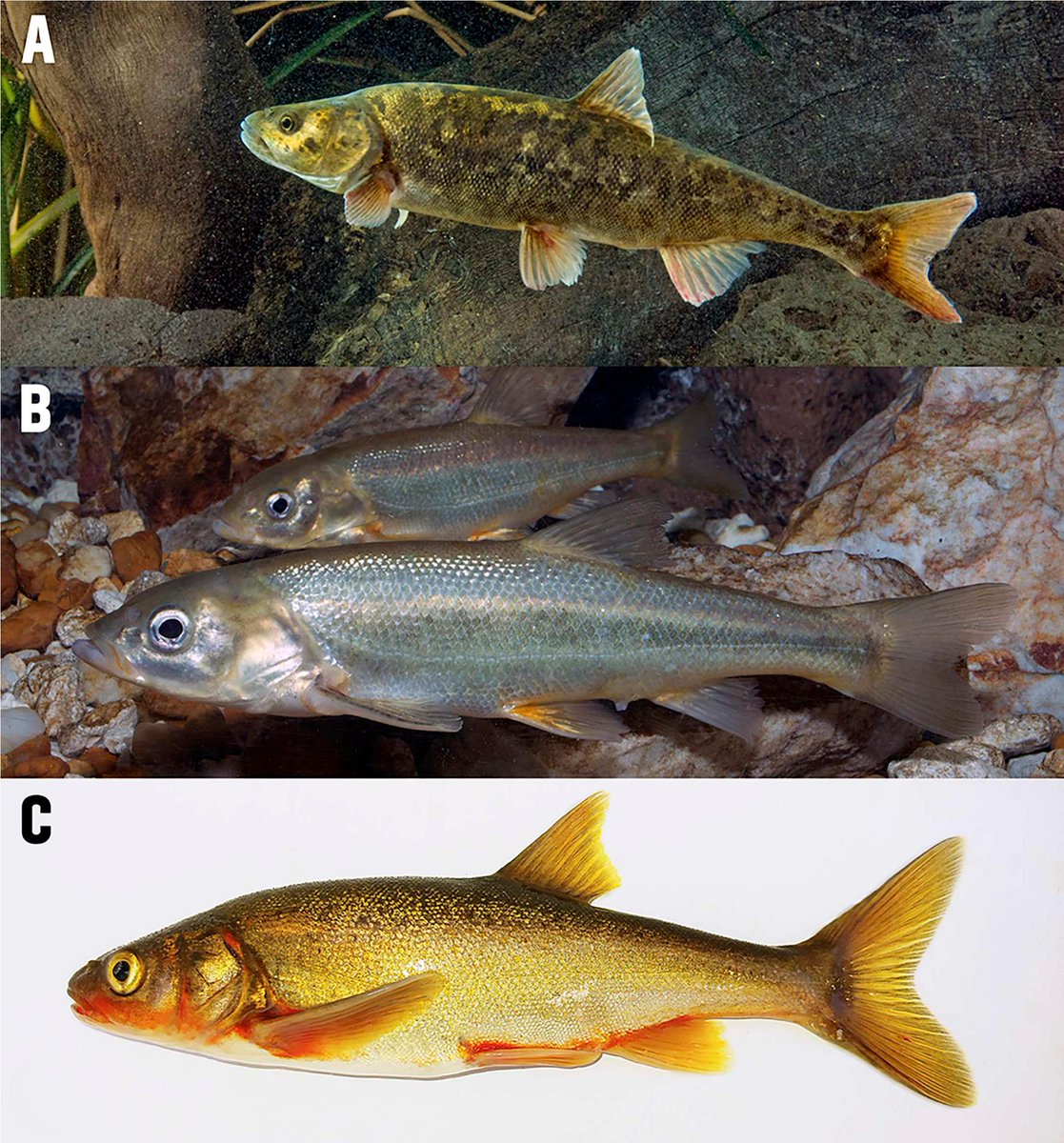
Interesting study on the roundtail chub - 'Holistic species delimitation supports recognition of multiple lineages in the 𝐺𝑖𝑙𝑎 𝑟𝑜𝑏𝑢𝑠𝑡𝑎 complex of the American Southwest', with researchers making the argument for the recognition of two (possibly three) distinct evolutionary lineages within. In the study, a great discussion ensues regarding species delimitation, and the authors support for a holistic, integrative approach, which advocates considering all previous information and seeking to arrive at a conclusion based on consensus. "Definitive species delimitation is a difficult problem in some cases, as we describe here. In a letter to Joseph D. Hooker, Charles Darwin noted, “It is really laughable to see what different ideas are prominent in various naturalists' minds, when they speak of ‘species’; in some, resemblance is everything and descent of little weight—in some, resemblance seems to go for nothing, and Creation the reigning idea—in some, descent is the key—in some, sterility an unfailing test, with others it is not worth a farthing. It all comes, I believe, from trying to define the undefinable” (Darwin Correspondence Project, 2025). Meanwhile, unique and irreplaceable biodiversity continues to be lost at a precipitous rate." 𝗥𝗲𝘀𝗲𝗮𝗿𝗰𝗵 𝗧𝗶𝘁𝗹𝗲 Holistic Species Delimitation Supports Recognition of Multiple Lineages in the 𝐺𝑖𝑙𝑎 𝑟𝑜𝑏𝑢𝑠𝑡𝑎 Complex of the American Southwest Open-access - bioone.org/journals/ichth… 𝗖𝗶𝘁𝗮𝘁𝗶𝗼𝗻 Thomas F. Turner, Thomas E. Dowling, Paul C. Marsh, Robert W. Clarkson, David L. Propst, Steven P. Platania, Megan J. Osborne, Guilherme Caeiro-Dias "Holistic Species Delimitation Supports Recognition of Multiple Lineages in the 𝐺𝑖𝑙𝑎 𝑟𝑜𝑏𝑢𝑠𝑡𝑎 Complex of the American Southwest," Ichthyology & Herpetology, 114(2), 190-203, (15 May 2026) 𝗔𝗯𝘀𝘁𝗿𝗮𝗰𝘁 Challenges associated with species delimitation of the 𝐺𝑖𝑙𝑎 𝑟𝑜𝑏𝑢𝑠𝑡𝑎 species complex in the Gila River basin arise because of convergence of multiple evolutionary processes that result in perplexing patterns of morphological, genetic, and ecological variation. As currently recognized, the complex comprises three nominal species: 𝐺𝑖𝑙𝑎 𝑟𝑜𝑏𝑢𝑠𝑡𝑎, 𝐺𝑖𝑙𝑎 𝑖𝑛𝑡𝑒𝑟𝑚𝑒𝑑𝑖𝑎, and 𝐺𝑖𝑙𝑎 𝑛𝑖𝑔𝑟𝑎, each with overlapping traits and disjunct geographic distributions. Key challenges for delimitation include limited morphological divergence, strong local genetic differentiation that obscures broader patterns of lineage diversification, interspersed geographic distributions of nominal taxa, and phylogenetic analyses complicated by admixture. We review and synthesize ecological, morphological, geological, and genetic data to infer evolutionary processes that shaped diversity in the complex. Historical events, including tectonically-driven drainage isolation and integration and cyclic climatic fluctuations strongly influenced the distribution and diversification of Gila. Morphological analyses revealed overlap among traits traditionally used for species identification, while genetic studies indicated strong population-level differentiation with limited gene flow. Independent phylogenomic analyses yielded conflicting interpretations that hinge upon methodologies employed. To reconcile these complexities, we advocate a holistic approach that integrates evolutionary processes, geologic history, and contemporary morphological and genetic patterns. We suggest these, in tandem, argue against a single polytypic species and support instead the presence of two (possibly three) distinct evolutionary lineages. Importantly, our review underscores the importance of integrating diverse data sources to evaluate taxonomic ambiguities in cryptic species complexes, especially those that evolved in highly dynamic geological and climatic settings. 𝗣𝗵𝗼𝘁𝗼 𝗖𝗿𝗲𝗱𝗶𝘁 (A) Roundtail Chub 𝐺𝑖𝑙𝑎 𝑟𝑜𝑏𝑢𝑠𝑡𝑎 (photo by R. R. Belnap and D. L. Ward), (B) Gila Chub 𝐺𝑖𝑙𝑎 𝑖𝑛𝑡𝑒𝑟𝑚𝑒𝑑𝑖𝑎 (photo by B. Gratwicke), (C) Headwater Chub 𝐺𝑖𝑙𝑎 𝑛𝑖𝑔𝑟𝑎 (photo by R. W. Clarkson). © 2026 the Author(s). Published in the journal Ichthyology & Herpetology. This paper is released under a Creative Commons Attribution 4.0 International (CC-BY-4.0) licence. #Gila #AmericanSouthwest #Ichthyology #Taxonomy #Biodiversity #USA #America #SpeciesDelimitation #Systematics #Leuciscidae #Chub #RoundtailChub #GilaRiver #Darwin
Fish in the News tweet media
English
0
7
50
1.7K
Fish in the News retweetledi
James Albert 🐟 🇺🇦
James Albert 🐟 🇺🇦@JamesAl0410008·
The Malili Lakes ricefish (adrianichthyid) radiation is an example of a "lake species flock" where many closely-related species evolved quickly in a relatively small area. Here's a map from my ichthyology class showing 15 such flocks in ancient lakes around the world.
James Albert 🐟 🇺🇦 tweet media
James Albert 🐟 🇺🇦@JamesAl0410008

The Malili Lakes (Matano, Towuti, Mahalona, Lontoa, and Masapi) in central Sulawesi are classic rift lakes formed over the last 1–2 million years by the movement of major strike-slip faults. #abstract" target="_blank" rel="nofollow noopener">tandfonline.com/doi/full/10.10…

English
1
18
67
6.3K
Fish in the News
Fish in the News@FishInTheNews·
#NewSpeciesAlert - 𝑂𝑙𝑖𝑔𝑜𝑙𝑒𝑝𝑖𝑠 𝑔𝑜𝑛𝑖, a new species of teardrop goby (Oxudercidae: Gobionellinae) is described from east Africa. Populations from the east African coast have traditionally been assigned to 𝑂𝑙𝑖𝑔𝑜𝑙𝑒𝑝𝑖𝑠 𝑎𝑐𝑢𝑡𝑖𝑝𝑒𝑛𝑛𝑖; here, the authors describe the east African lineage as the aforementioned new species. "We further discuss the need for genus revision, considering that species diversity within 𝑂𝑙𝑖𝑔𝑜𝑙𝑒𝑝𝑖𝑠 may be overestimated, with several nominal taxa likely representing conspecific populations of 𝑂. 𝑎𝑐𝑢𝑡𝑖𝑝𝑒𝑛𝑛𝑖𝑠 sensu stricto." 🔓 onlinelibrary.wiley.com/doi/10.1111/jf… 𝗥𝗲𝘀𝗲𝗮𝗿𝗰𝗵 𝗧𝗶𝘁𝗹𝗲 Systematic revision of east African 𝑂𝑙𝑖𝑔𝑜𝑙𝑒𝑝𝑖𝑠 (Oxudercidae: Gobionellinae) reveals a distinct species, 𝑂𝑙𝑖𝑔𝑜𝑙𝑒𝑝𝑖𝑠 𝑔𝑜𝑛𝑖 sp. nov., formerly assigned to 𝑂𝑙𝑖𝑔𝑜𝑙𝑒𝑝𝑖𝑠 𝑎𝑐𝑢𝑡𝑖𝑝𝑒𝑛𝑛𝑖 (Valenciennes, 1837) 𝗖𝗶𝘁𝗮𝘁𝗶𝗼𝗻 Zarei, F., Bills, R., Motomura, H., Kovačić, M., & Chakona, A. (2026). Systematic revision of east African 𝑂𝑙𝑖𝑔𝑜𝑙𝑒𝑝𝑖𝑠 (Oxudercidae: Gobionellinae) reveals a distinct species, 𝑂𝑙𝑖𝑔𝑜𝑙𝑒𝑝𝑖𝑠 𝑔𝑜𝑛𝑖 sp. nov., formerly assigned to 𝑂𝑙𝑖𝑔𝑜𝑙𝑒𝑝𝑖𝑠 𝑎𝑐𝑢𝑡𝑖𝑝𝑒𝑛𝑛𝑖 (Valenciennes, 1837). Journal of Fish Biology, 1–19. doi.org/10.1111/jfb.70… 𝗔𝗯𝘀𝘁𝗿𝗮𝗰𝘁 Species of the gobionelline genus 𝑂𝑙𝑖𝑔𝑜𝑙𝑒𝑝𝑖𝑠 Bleeker, 1874 (Oxudercidae) are small gobies inhabiting muddy estuaries, coastal bays and lagoons, with some extending into freshwater systems. All recognised species occur in the western Pacific and eastern Indian oceans, except 𝑂𝑙𝑖𝑔𝑜𝑙𝑒𝑝𝑖𝑠 𝑎𝑐𝑢𝑡𝑖𝑝𝑒𝑛𝑛𝑖 (Valenciennes, 1837), previously considered widespread across the Indo-West Pacific to include the western Indian Ocean. Populations from the east African coast have traditionally been assigned to this species. Phylogeographic analysis of mitochondrial COI sequences reveals two deeply divergent lineages within 𝑂. 𝑎𝑐𝑢𝑡𝑖𝑝𝑒𝑛𝑛𝑖𝑠 sensu lato: one distributed from the Indian subcontinent to the western Pacific, and another restricted to east African estuaries from South Africa to Kenya. The lineages differ by 5% sequence divergence and show allopatric distributions, with no confirmed records between Kenya and western India. Males of the Indo-Pacific lineage possess small black spots on the head, jaw membranes and anterior dorsal body, which are absent in the east African lineage. Based on genetic divergence, distributional isolation and several sex-specific differences (most notably the male colour pattern), the east African lineage is described as a new species, 𝑂𝑙𝑖𝑔𝑜𝑙𝑒𝑝𝑖𝑠 𝑔𝑜𝑛𝑖 sp. nov. We further discuss the need for genus revision, considering that species diversity within 𝑂𝑙𝑖𝑔𝑜𝑙𝑒𝑝𝑖𝑠 may be overestimated, with several nominal taxa likely representing conspecific populations of 𝑂. 𝑎𝑐𝑢𝑡𝑖𝑝𝑒𝑛𝑛𝑖𝑠 sensu stricto. 𝗘𝘁𝘆𝗺𝗼𝗹𝗼𝗴𝘆 The specific name 𝑔𝑜𝑛𝑖 honours Mr. Ofer Gon, Curator Emeritus of marine fishes at the NRF-SAIAB, in recognition of his contributions to the taxonomy, biology and curation of marine Indo-Pacific fishes. 𝐺𝑜𝑛𝑖 is a noun in the genitive. 𝗣𝗵𝗼𝘁𝗼 𝗖𝗿𝗲𝗱𝗶𝘁 Top left - 𝑂𝑙𝑖𝑔𝑜𝑙𝑒𝑝𝑖𝑠 𝑔𝑜𝑛𝑖 sp. nov.: (a) illustration of SAIAB 11549, female, 45.5 mm standard length (SL), Tshani River estuary, South Africa (31560 39.100 S 29120 26.600 E) (= fig. 240.65 in Smith & Heemstra, 1986); (b–d) uncatalogued fresh and live specimens from (b) the Mzumbe River estuary, South Africa (30360 34.200 S 30320 51.700 E), female, (c) approximately 5 km upstream of the Govuro River estuary, Mozambique (21220 46.600 S 35040 40.100 E), male, and (d) the Backpackers' Channel, Mida Creek, Watamu, Kenya (3210 28.400 S 39590 10.000 E), female. Photographs: (a) by NRF-SAIAB; (b) and (c) by R. Palmer; and (d) by D. Goebbels. Top middle - Male specimens of 𝑂𝑙𝑖𝑔𝑜𝑙𝑒𝑝𝑖𝑠 𝑠𝑡𝑜𝑚𝑖𝑎𝑠 from Japan. (a) KAUM–I. 161802, 44.0 mm standard length (SL), Mizunari River; (b) KAUM–I. 175230, 28.2 mm SL, Mizunari River; (c) KAUM–I. 213390, 45.9 mm SL, Mizunari River; and (d) KAUM–I. 219428, 29.2 mm SL, Suzuri River. Top right - Male specimens of 𝑂𝑙𝑖𝑔𝑜𝑙𝑒𝑝𝑖𝑠 𝑎𝑐𝑢𝑡𝑖𝑝𝑒𝑛𝑛𝑖𝑠 s.s.: (a) uncatalogued, from Lantau Island, Hong Kong (22160 07.500 N 113590 52.100 E; photograph by T.C. Yi); (b) KAUM–I. 161804, 38.1 mm standard length (SL), Mizunari River (31150 1500 N 130260 0500 E), Japan; (c) KAUM–I. 173242, 30.8 mm SL, Mizunari River, Japan; and (d) KAUM–I. 144643, 41.1 mm SL, Amami-oshima Island (28110 1900 N 129160 5700 E), Japan. Bottom - a) The Mlalazi River estuary (28560 38.300 S 31480 52.100 E), KwaZulu-Natal, South Africa, the type locality of 𝑂𝑙𝑖𝑔𝑜𝑙𝑒𝑝𝑖𝑠 𝑔𝑜𝑛𝑖 sp. nov. (b) Salt marshes along the supratidal margins, an important habitat within the estuary. Photos by R. Taylor. © 2026 the Author(s). Published in the Journal of Fish Biology. #NewSpecies #Ichthyology #Taxonomy #Biodiversity #AquariumHobby #Fishkeeping #Aquarist #TropicalFish #SaltMarshes #EstuarineFishes #SupratidalMargins #Gobies #Goby #TeamGoby #Oligolepis #EndemicSpecies #Gobioidei #IntegrativeTaxonomy #TeardropGoby #Oxudercidae #Gobioids #Gobionelline
Fish in the News tweet media
English
0
23
102
3.1K
Fish in the News
Fish in the News@FishInTheNews·
The Malili Lake system on Sulawesi Island represents a classic natural laboratory for studying freshwater fish evolution and harbours multiple endemic 𝑂𝑟𝑦𝑧𝑖𝑎𝑠 species (ricefishes) that diversified under repeated hydrological reorganisations. Here, researchers present a revised taxonomy for the ricefishes from this ancient lake system, demonstrating that introgression from the 𝑂. 𝑚𝑎𝑟𝑚𝑜𝑟𝑎𝑡𝑢𝑠 lineage into 𝑂. 𝑝𝑟𝑜𝑓𝑢𝑛𝑑𝑖𝑐𝑜𝑙𝑎 and 𝑂. 𝑙𝑜𝑥𝑜𝑙𝑒𝑝𝑖𝑠 was not a single ancient event, but rather a more sustained process. 🔓 link.springer.com/article/10.118… 𝗥𝗲𝘀𝗲𝗮𝗿𝗰𝗵 𝗧𝗶𝘁𝗹𝗲 Revised taxonomy reveals sustained introgression and secondary contact in ancient lake ricefishes 𝗖𝗶𝘁𝗮𝘁𝗶𝗼𝗻 Yashima, Y., Nofrianto, A.B., Nuryadi, H. et al. Revised taxonomy reveals sustained introgression and secondary contact in ancient lake ricefishes. BMC Ecol Evo 26, 46 (2026). doi.org/10.1186/s12862… 𝗔𝗯𝘀𝘁𝗿𝗮𝗰𝘁 Background Biotic diversification in ancient lakes is shaped by complex geological histories and genetic exchange among populations. The Malili Lake system on Sulawesi Island represents a classic natural laboratory for studying freshwater fish evolution and harbors multiple endemic 𝑂𝑟𝑦𝑧𝑖𝑎𝑠 species that diversified under repeated hydrological reorganizations. Previous genomic analyses inferred that two sympatric species in Lake Towuti (𝑂. 𝑝𝑟𝑜𝑓𝑢𝑛𝑑𝑖𝑐𝑜𝑙𝑎 and 𝑂. 𝑙𝑜𝑥𝑜𝑙𝑒𝑝𝑖𝑠) experienced a single ancient introgression event from a “ghost lineage” derived from 𝑂. 𝑚𝑎𝑟𝑚𝑜𝑟𝑎𝑡𝑢𝑠 inhabiting another lake. However, recent taxonomic re-evaluation has revealed the presence of an extant 𝑂. 𝑚𝑎𝑟𝑚𝑜𝑟𝑎𝑡𝑢𝑠 population within Lake Towuti itself. This finding suggests that the putative ghost lineage may in fact represent a living population co-occurring in the lake, calling for a re-examination of the introgression history and speciation mode in Lake Towuti. Results By incorporating newly generated ddRAD-seq data from the true 𝑂. 𝑚𝑎𝑟𝑚𝑜𝑟𝑎𝑡𝑢𝑠 in Lake Towuti, we reanalyzed phylogenetic relationships and population genetic structure among Malili Lake Oryzias. Previously reported major phylogenetic relationships and inter-lake introgression patterns were largely reproduced. In contrast, TreeMix and f4-statistic analyses revealed that introgression signals previously attributed to a “ghost lineage” into 𝑂. 𝑝𝑟𝑜𝑓𝑢𝑛𝑑𝑖𝑐𝑜𝑙𝑎 and 𝑂. 𝑙𝑜𝑥𝑜𝑙𝑒𝑝𝑖𝑠 instead originated from the extant 𝑂. 𝑚𝑎𝑟𝑚𝑜𝑟𝑎𝑡𝑢𝑠 population coexisting within Lake Towuti. Demographic model comparisons explicitly incorporating within-lake gene flow further supported a scenario in which 𝑂. 𝑝𝑟𝑜𝑓𝑢𝑛𝑑𝑖𝑐𝑜𝑙𝑎 and 𝑂. 𝑙𝑜𝑥𝑜𝑙𝑒𝑝𝑖𝑠 diverged in allopatry, subsequently came into secondary contact within Lake Towuti, and later experienced additional gene flow following secondary contact with 𝑂. 𝑚𝑎𝑟𝑚𝑜𝑟𝑎𝑡𝑢𝑠 that entered the lake. Conclusion Our results demonstrate that introgression from the 𝑂. 𝑚𝑎𝑟𝑚𝑜𝑟𝑎𝑡𝑢𝑠 lineage into 𝑂. 𝑝𝑟𝑜𝑓𝑢𝑛𝑑𝑖𝑐𝑜𝑙𝑎 and 𝑂. 𝑙𝑜𝑥𝑜𝑙𝑒𝑝𝑖𝑠 was not a single ancient event, but rather a more sustained process. This finding highlights the critical importance of taxonomic resolution for accurately inferring introgression and divergence history. Comparative studies across other ancient lakes on Sulawesi will be valuable for understanding how the timing and nature of gene flow from third lineages influence patterns of population divergence and the strength of reproductive isolation. 𝗣𝗵𝗼𝘁𝗼 𝗖𝗿𝗲𝗱𝗶𝘁 Left - ( A ) A map of the Malili Lake system and the collection site of 𝑂. 𝑚𝑎𝑟𝑚𝑜𝑟𝑎𝑡𝑢𝑠 in Lake Towuti (red circle). The drainage system of the Malili Lakes is shown in blue. The map was provided by Thomas von Rintelen and modified. ( B ) The demographic model proposed by Mandagi et al. (2021), which assumes ancient introgression from a ghost lineage into Lake Towuti. ( C ) A demographic model expected in the case that the ghost lineage in Mandagi et al. (2021) actually corresponds to 𝑂. 𝑚𝑎𝑟𝑚𝑜𝑟𝑎𝑡𝑢𝑠 in Lake Towuti. This model assumes continuous gene flow following secondary contact with 𝑂. 𝑚𝑎𝑟𝑚𝑜𝑟𝑎𝑡𝑢𝑠. Right - Maximum-likelihood phylogeny of 𝑂𝑟𝑦𝑧𝑖𝑎𝑠 in the Malili Lake system based on 3,457 genome-wide SNPs. © 2026 the Author(s). Published in the journal BMC Ecology and Evolution. This paper is released under a Creative Commons Attribution-NonCommercial-NoDerivatives 4.0 International License. creativecommons.org/licenses/by-nc… #Ricefish #Ricefishes #Ichthyology #Taxonomy #Biodiversity #AquariumHobby #Fishkeeping #Aquarist #TropicalFish #Sulawesi #Indonesia #AncientLakes #MaliliLake #LakeTowuti #Oryzias #Biogeography #Introgression
Fish in the News tweet media
English
0
13
57
4.8K
Fish in the News
Fish in the News@FishInTheNews·
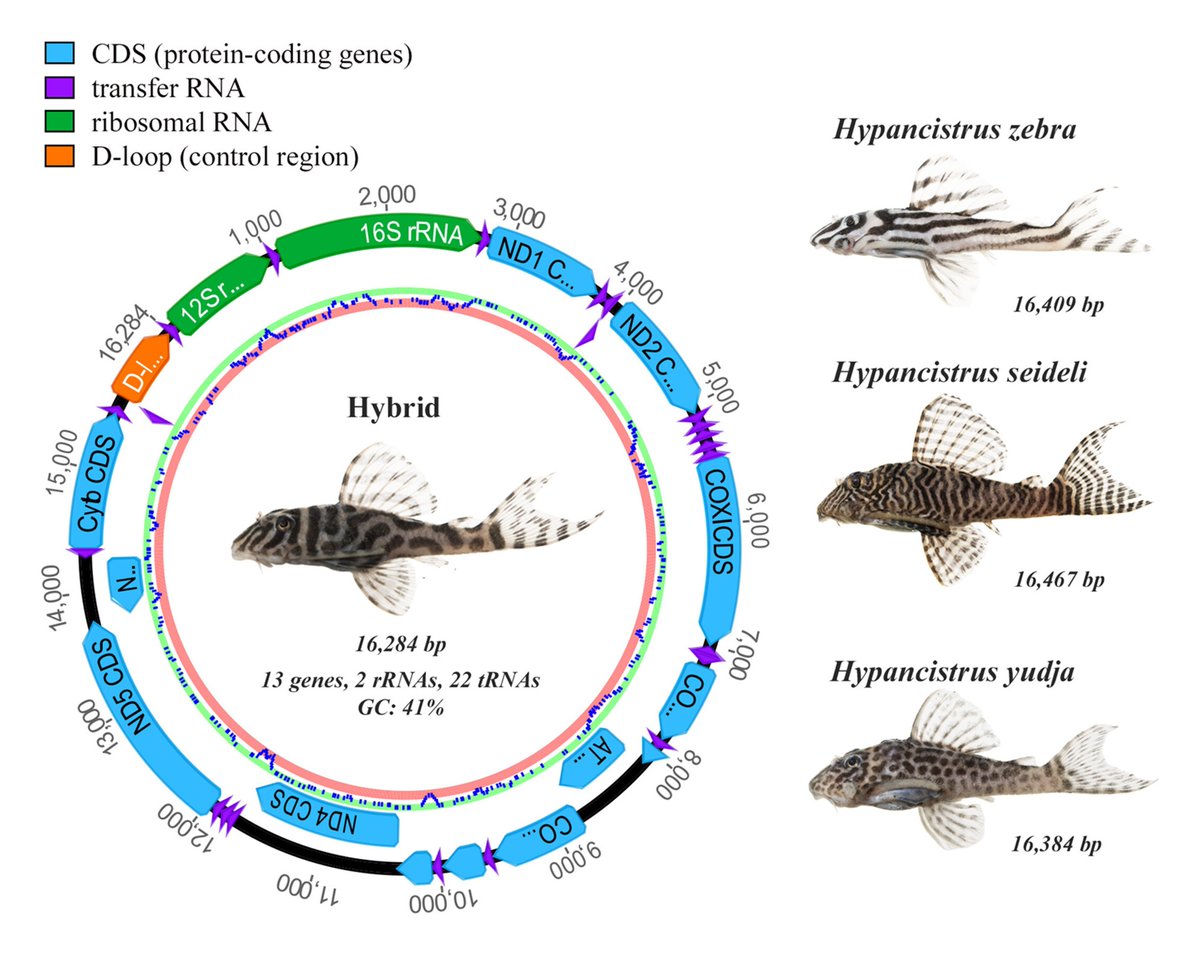
Fascinating paper on the hybridisation, maternal inheritance, and divergence of the 𝐻𝑦𝑝𝑎𝑛𝑐𝑖𝑠𝑡𝑟𝑢𝑠 species from the Xingu River rapids. 𝐻𝑦𝑝𝑎𝑛𝑐𝑖𝑠𝑡𝑟𝑢𝑠 𝑧𝑒𝑏𝑟𝑎 (Zebra pleco), 𝐻𝑦𝑝𝑎𝑛𝑐𝑖𝑠𝑡𝑟𝑢𝑠 𝑠𝑒𝑖𝑑𝑒𝑙𝑖 (King tiger pleco), and 𝐻𝑦𝑝𝑎𝑛𝑐𝑖𝑠𝑡𝑟𝑢𝑠 𝑦𝑢𝑑𝑗𝑎 can form natural hybrids, and several L-numbers in the hobby are the result of this. "These findings raise conservation concerns, particularly for the zebra pleco 𝐻. 𝑧𝑒𝑏𝑟𝑎, a critically endangered species at risk of genetic introgression. Our study provides the first complete mitochondrial genome data for these species and emphasizes the importance of integrating morphological and genomic approaches to understand hybridization dynamics and guide conservation strategies in the Xingu River." 𝗥𝗲𝘀𝗲𝗮𝗿𝗰𝗵 𝗧𝗶𝘁𝗹𝗲 Hybridization, Maternal Inheritance, and Evolutionary Time of Divergence of Endangered Species of 𝐻𝑦𝑝𝑎𝑛𝑐𝑖𝑠𝑡𝑟𝑢𝑠 (Siluriformes: Loricariidae) in the Xingu River Open-access - onlinelibrary.wiley.com/doi/10.1002/ec… 𝗖𝗶𝘁𝗮𝘁𝗶𝗼𝗻 Kerniske, F. F., B. F.Melo, L. M.Sousa, T. M.Degrandi, and R. F.Artoni. 2026. “Hybridization, Maternal Inheritance, and Evolutionary Time of Divergence of Endangered Species of 𝐻𝑦𝑝𝑎𝑛𝑐𝑖𝑠𝑡𝑟𝑢𝑠 (Siluriformes: Loricariidae) in the Xingu River.” Ecology and Evolution 16, no. 5: e73624. doi.org/10.1002/ece3.7…. 𝗔𝗯𝘀𝘁𝗿𝗮𝗰𝘁 Catfishes of the genus 𝐻𝑦𝑝𝑎𝑛𝑐𝑖𝑠𝑡𝑟𝑢𝑠 are among the most emblematic endemic species of the Xingu River rapids, a biodiversity hotspot of the Amazon Basin. In the unique Volta Grande region, the distribution of 𝐻𝑦𝑝𝑎𝑛𝑐𝑖𝑠𝑡𝑟𝑢𝑠 𝑧𝑒𝑏𝑟𝑎, 𝐻𝑦𝑝𝑎𝑛𝑐𝑖𝑠𝑡𝑟𝑢𝑠 𝑠𝑒𝑖𝑑𝑒𝑙𝑖, and 𝐻𝑦𝑝𝑎𝑛𝑐𝑖𝑠𝑡𝑟𝑢𝑠 𝑦𝑢𝑑𝑗𝑎 overlap, creating a potential zone of biological interaction, and previous morphological analyses suggest the occurrence of hybridization between 𝐻. 𝑠𝑒𝑖𝑑𝑒𝑙𝑖 and 𝐻. 𝑦𝑢𝑑𝑗𝑎. We investigated maternal inheritance and phylogenetic relationships among the three species and hybrids using complete mitochondrial genomes and nuclear genome size estimates. Phylogenetic analyses revealed that hybrids carried maternal lineages exclusively from 𝐻. 𝑧𝑒𝑏𝑟𝑎 and 𝐻. 𝑠𝑒𝑖𝑑𝑒𝑙𝑖, with no evidence of contribution from 𝐻. 𝑦𝑢𝑑𝑗𝑎. Nuclear genome size analyses support this pattern, with hybrids exhibiting intermediate values consistent with additive inheritance. Divergence time estimates indicated a very recent evolutionary radiation (< 0.5 Ma), explaining the persistence of reproductive compatibility among the species. These findings raise conservation concerns, particularly for the zebra pleco 𝐻. 𝑧𝑒𝑏𝑟𝑎, a critically endangered species at risk of genetic introgression. Our study provides the first complete mitochondrial genome data for these species and emphasizes the importance of integrating morphological and genomic approaches to understand hybridization dynamics and guide conservation strategies in the Xingu River. 𝗣𝗵𝗼𝘁𝗼 𝗖𝗿𝗲𝗱𝗶𝘁 Circular organisation of the complete mitochondrial genome of the hybrid of 𝐻𝑦𝑝𝑎𝑛𝑐𝑖𝑠𝑡𝑟𝑢𝑠, and photographs of the three parental species — 𝐻. 𝑧𝑒𝑏𝑟𝑎, 𝐻. 𝑠𝑒𝑖𝑑𝑒𝑙𝑖, and 𝐻. 𝑦𝑢𝑑𝑗𝑎 — with their respective mitochondrial genome sizes. Photos by Leandro M. Sousa. © 2026 the Author(s). Published in the journal Ecology and Evolution. This paper is released under a Creative Commons Attribution 4.0 International (CC-BY-4.0) licence. #XinguRiver #Xingu #Ichthyology #Taxonomy #Biodiversity #AquariumHobby #Fishkeeping #Aquarist #TropicalFish #Hybridization #MaternalInheritance #LNumbers #Hypancistrus #Loricariidae #EndangeredSpecies #Plecos #ZebraPlecos
Fish in the News tweet media
English
0
21
69
3.2K
Fish in the News
Fish in the News@FishInTheNews·
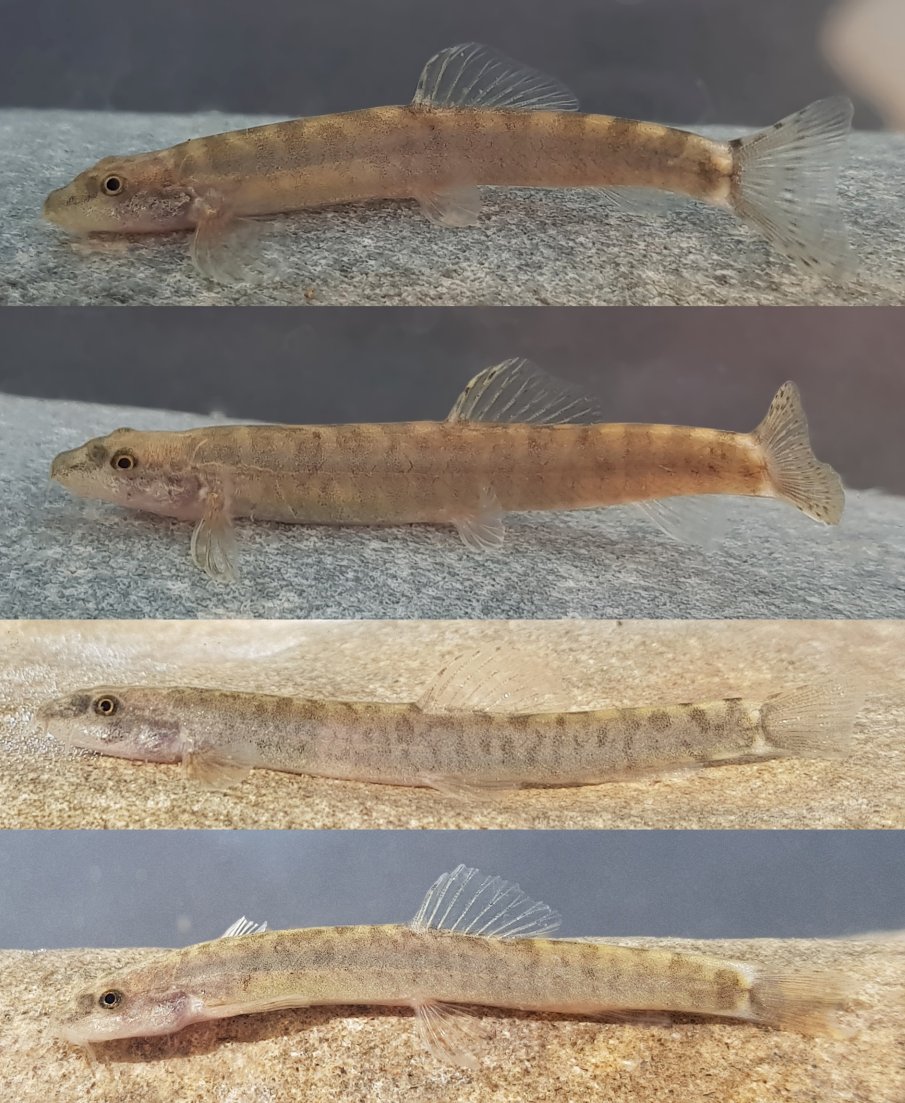
#LostFishes - Following the rediscovery of the Batman River loach (𝑆𝑐ℎ𝑖𝑠𝑡𝑢𝑟𝑎 𝑐ℎ𝑟𝑦𝑠𝑖𝑐𝑟𝑖𝑠𝑡𝑖𝑛𝑎𝑒) in 2021, the first success of Shoal Conservation's '10 Most Wanted' in the 'Search for the Lost Fishes', researchers, including those who originally rediscovered this species after nearly 50 years since last seen, provide a re-description and clarify the taxonomic status of 𝑆𝑐ℎ𝑖𝑠𝑡𝑢𝑟𝑎 𝑐ℎ𝑟𝑦𝑠𝑖𝑐𝑟𝑖𝑠𝑡𝑖𝑛𝑎𝑒 in this study. "The rediscovery of 𝑆. 𝑐ℎ𝑟𝑦𝑠𝑖𝑐𝑟𝑖𝑠𝑡𝑖𝑛𝑎𝑒 clarifies the taxonomic status of this poorly-known Anatolian species, and contributes to an improved understanding of nemacheilid diversity and biogeography in western Asia." 𝗥𝗲𝘀𝗲𝗮𝗿𝗰𝗵 𝗧𝗶𝘁𝗹𝗲 Rediscovery and re-description of 𝑆𝑐ℎ𝑖𝑠𝑡𝑢𝑟𝑎 𝑐ℎ𝑟𝑦𝑠𝑖𝑐𝑟𝑖𝑠𝑡𝑖𝑛𝑎𝑒 (Teleostei: Nemacheilidae) Paywall - mapress.com/zt/article/vie… 𝗖𝗶𝘁𝗮𝘁𝗶𝗼𝗻 Kaya, C., Kaba, M.O., Yoğurtçuoğlu, B. & Freyhof, J. (2026) Rediscovery and re-description of 𝑆𝑐ℎ𝑖𝑠𝑡𝑢𝑟𝑎 𝑐ℎ𝑟𝑦𝑠𝑖𝑐𝑟𝑖𝑠𝑡𝑖𝑛𝑎𝑒 (Teleostei: Nemacheilidae). Zootaxa, 5807 (2), 339–350. doi.org/10.11646/zoota… 𝗔𝗯𝘀𝘁𝗿𝗮𝗰𝘁 The Batman River loach, 𝑆𝑐ℎ𝑖𝑠𝑡𝑢𝑟𝑎 𝑐ℎ𝑟𝑦𝑠𝑖𝑐𝑟𝑖𝑠𝑡𝑖𝑛𝑎𝑒, is rediscovered after 48 years, at two sites upstream of its type locality in southeastern Anatolia. Originally described based on four specimens, all of which are now presumably lost, 𝑆. 𝑐ℎ𝑟𝑦𝑠𝑖𝑐𝑟𝑖𝑠𝑡𝑖𝑛𝑎𝑒 has remained poorly known. We provide a detailed redescription based on freshly-collected fish, including updated morphological data and documentation of colour pattern. In addition, we reassess its generic position using mitochondrial COI sequences within a broad comparative framework of Nemacheilidae. Phylogenetic analyses recover 𝑆. 𝑐ℎ𝑟𝑦𝑠𝑖𝑐𝑟𝑖𝑠𝑡𝑖𝑛𝑎𝑒 in a clade comprising 𝑆𝑐ℎ𝑖𝑠𝑡𝑢𝑟𝑎 𝑐𝑓. 𝑟𝑢𝑝𝑒𝑐𝑢𝑙𝑎, supporting its placement within 𝑆𝑐ℎ𝑖𝑠𝑡𝑢𝑟𝑎 and not 𝑃𝑎𝑟𝑎𝑠𝑐ℎ𝑖𝑠𝑡𝑢𝑟𝑎, as previously suggested. The rediscovery of 𝑆. 𝑐ℎ𝑟𝑦𝑠𝑖𝑐𝑟𝑖𝑠𝑡𝑖𝑛𝑎𝑒 clarifies the taxonomic status of this poorly-known Anatolian species, and contributes to an improved understanding of nemacheilid diversity and biogeography in western Asia. 𝗣𝗵𝗼𝘁𝗼 𝗖𝗿𝗲𝗱𝗶𝘁 𝑆𝑐ℎ𝑖𝑠𝑡𝑢𝑟𝑎 𝑐ℎ𝑟𝑦𝑠𝑖𝑐𝑟𝑖𝑠𝑡𝑖𝑛𝑎𝑒, from top, not preserved, ~35 mm SL, not preserved, ~35 mm SL, stream Han, Batman Province, Türkiye; FFR 15609, 34 mm SL, not preserved, ~30 mm SL, stream Sarım, Diyarbakır Province, Türkiye. © 2026 the Author(s). Published in the journal Zootaxa. #Rediscovery #Ichthyology #Taxonomy #Biodiversity #AquariumHobby #Fishkeeping #Aquarist #FreshwaterFish #LostSpecies #TigrisRiver #Anatolia #Schistura #Nemacheilidae #Loach #Loaches #Paraschistura #Nemacheilid #Biogeography #Turkey #Türkiye
Fish in the News tweet media
English
0
10
51
2K