Oracle of Florida

1.6K posts

Oracle of Florida banner
Oracle of Florida

Oracle of Florida

@FloridaMoonMan

Optimistic Futurist | Constructing a united, open, and technologically-driven global society through the power of distributed systems.

Katılım Kasım 2017
4.7K Takip Edilen1.3K Takipçiler
Farmer
Farmer@SowingAlphaSeed·
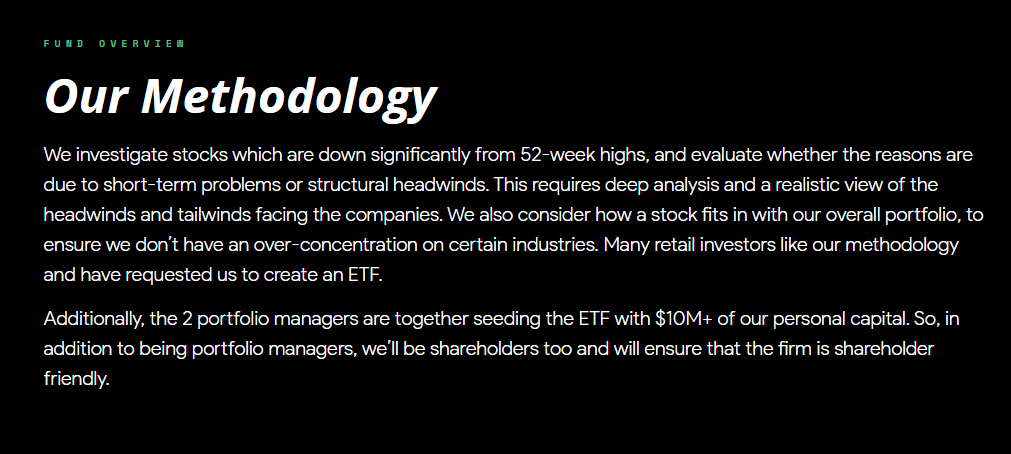
Very interesting ETF launch. Two ex-Google software engineers launching an ETF to actively trade their own capital. Guessing @venkat4754 is one of the PMs. $MNVT mnvt-etf.com
Farmer tweet media
English
12
8
232
29.1K
Oracle of Florida
Oracle of Florida@FloridaMoonMan·
@michaeljburry If executed - the biggest ‘hack’ of all time. Incentives dictate outcomes. Thanks for flagging.
English
0
0
1
29
Cassandra Unchained
Cassandra Unchained@michaeljburry·
Must read - this is free and not me. @georgenoble/note/c-226667679?r=4repfn&utm_medium=ios&utm_source=notes-share-action" target="_blank" rel="nofollow noopener">substack.com/@georgenoble/n… This is the most SHAMELESS structural manipulation of a major index I've ever seen. SpaceX is preparing what could be the largest IPO in history. Target valuation: $1.75 trillion. That would make it the sixth-largest company in America on day one. And Nasdaq wants the listing so badly they're literally CHANGING how the Nasdaq-100 works. In February, Nasdaq published a "consultation" proposing sweeping changes to how companies enter the index. The timing is pure coincidence, of course. Just like it's pure coincidence that SpaceX has reportedly made fast index inclusion a CONDITION of listing on Nasdaq. Here's what they're proposing: A new "Fast Entry" rule would let any newly listed company whose market cap ranks in the top 40 of current Nasdaq-100 members get added to the index after just 15 trading days. No seasoning period. No liquidity requirements. Completely exempt from the standards every other company had to meet. Currently, new public companies typically wait up to a year before they're eligible for major index inclusion. That waiting period exists for a reason. It lets the market establish real price discovery. It protects passive investors from being forced into untested, illiquid stocks. And Nasdaq wants to throw all of that out. For ONE listing. But the Fast Entry rule isn't even the worst part... The real scandal is the 5x float multiplier. Right now, the S&P 500 uses a free-float adjusted methodology. If only 5% of a company's shares are available for public trading, the index weights you at 5% of total market cap. That's common sense. You weight a company based on what investors can actually buy. Nasdaq's current methodology already uses total market cap rather than free-float for weighting. But for very low-float stocks, they at least had a 10% minimum float threshold. Under the new proposal, that threshold DISAPPEARS entirely. Instead, any stock with less than 20% free float gets weighted at FIVE TIMES its actual float percentage, capped at 100%. Do the math on SpaceX: If SpaceX IPOs at $1.75 trillion and floats 5% of its shares, there would be roughly $87.5 billion worth of stock available for public trading. Under Nasdaq's proposed 5x multiplier, the index would weight SpaceX at 25% of its total market cap. That means passive funds would be forced to buy as if SpaceX were a $437.5 billion company. But only $87.5 billion of stock actually exists in the market. You are forcing hundreds of billions in passive buying into a $87.5 billion float. QQQ alone manages nearly $400 billion. The total Nasdaq-100 ecosystem represents over $1.4 trillion in exposure across ETFs, mutual funds, structured notes, and derivatives. Every single passive vehicle tracking this index would be REQUIRED to buy SpaceX at whatever price the market dictates. On Day 15. With zero price discovery. Zero track record as a public company. And a float so thin you could read through it. So what this actually does is it creates a structural wealth transfer mechanism. The passive bid from index funds pushes the stock price higher. That higher price benefits exactly one group of people: the insiders and early investors who own the other 95% of the shares. And when lock-up periods expire 90 to 180 days later? Those insiders sell into the artificially inflated passive bid. Your 401(k) is the exit liquidity. This is the fundamental corruption of indexing. Indexing used to be brilliant. Low cost. Efficient. You were free-riding on the price discovery done by active managers. The index reflected the market. Now the index IS the market. Trillions of dollars flow blindly into whatever the index tells them to buy. And the people who control the index methodology are changing the rules to serve the interests of a single IPO candidate. The S&P 500 requires companies to have at least…
English
352
1.4K
7.8K
972.4K
Oracle of Florida
Oracle of Florida@FloridaMoonMan·
We will see KPIs maximized across the board and spread between winners/losers accelerate throughout this year as enterprises unleash agentic optimizations en masse. If you thought people were addicted to [social media, shopping, Uber Eats, screens, etc] before just wait
Andrej Karpathy@karpathy

Three days ago I left autoresearch tuning nanochat for ~2 days on depth=12 model. It found ~20 changes that improved the validation loss. I tested these changes yesterday and all of them were additive and transferred to larger (depth=24) models. Stacking up all of these changes, today I measured that the leaderboard's "Time to GPT-2" drops from 2.02 hours to 1.80 hours (~11% improvement), this will be the new leaderboard entry. So yes, these are real improvements and they make an actual difference. I am mildly surprised that my very first naive attempt already worked this well on top of what I thought was already a fairly manually well-tuned project. This is a first for me because I am very used to doing the iterative optimization of neural network training manually. You come up with ideas, you implement them, you check if they work (better validation loss), you come up with new ideas based on that, you read some papers for inspiration, etc etc. This is the bread and butter of what I do daily for 2 decades. Seeing the agent do this entire workflow end-to-end and all by itself as it worked through approx. 700 changes autonomously is wild. It really looked at the sequence of results of experiments and used that to plan the next ones. It's not novel, ground-breaking "research" (yet), but all the adjustments are "real", I didn't find them manually previously, and they stack up and actually improved nanochat. Among the bigger things e.g.: - It noticed an oversight that my parameterless QKnorm didn't have a scaler multiplier attached, so my attention was too diffuse. The agent found multipliers to sharpen it, pointing to future work. - It found that the Value Embeddings really like regularization and I wasn't applying any (oops). - It found that my banded attention was too conservative (i forgot to tune it). - It found that AdamW betas were all messed up. - It tuned the weight decay schedule. - It tuned the network initialization. This is on top of all the tuning I've already done over a good amount of time. The exact commit is here, from this "round 1" of autoresearch. I am going to kick off "round 2", and in parallel I am looking at how multiple agents can collaborate to unlock parallelism. github.com/karpathy/nanoc… All LLM frontier labs will do this. It's the final boss battle. It's a lot more complex at scale of course - you don't just have a single train. py file to tune. But doing it is "just engineering" and it's going to work. You spin up a swarm of agents, you have them collaborate to tune smaller models, you promote the most promising ideas to increasingly larger scales, and humans (optionally) contribute on the edges. And more generally, *any* metric you care about that is reasonably efficient to evaluate (or that has more efficient proxy metrics such as training a smaller network) can be autoresearched by an agent swarm. It's worth thinking about whether your problem falls into this bucket too.

English
0
0
1
63
Oracle of Florida
Oracle of Florida@FloridaMoonMan·
@Teslaconomics Great for customers as fleet owners will oversaturate demand unless geographically limited license counts - great for Tesla too.
English
0
0
0
35
Teslaconomics
Teslaconomics@Teslaconomics·
I plan on owning my own Tesla Robotaxi fleet one day. And the more I run the numbers, the more I realize this new business could become one of the most powerful income opportunities I've ever seen. This is how I'm thinking about it. Based on many analyst models and Tesla’s long-term vision, a reasonable base case assumption is about ~$30,000 per year in net profit per Robotaxi to the owner. This is after things like Tesla’s platform fee, charging, tires, maintenance, insurance, and cleaning. Of course, the network is still early and Tesla is just beginning to roll this out in pilot programs in a few cities, so there’s no official real-world owner earnings yet... but using reasonable assumptions around utilization, pricing per mile, and operating costs, the math starts to get really interesting. If one Robotaxi can earn around $30,000 per year, here’s what a fleet might look like: • $100,000 per year → about 4 Robotaxis • $500,000 per year → about 17 Robotaxis • $1,000,000 per year → about 34 Robotaxis It may sound a bit crazy at first, but when you break it down, it starts to make more sense. These vehicles could potentially drive 50,000 to 100,000+ miles per year in high demand areas. If the economics land somewhere around $0.25-$0.50 profit per mile after all costs, you end up right around that ~$30k per vehicle per year range. And remember, the Tesla’s Robotaxi network is going to work a lot like Airbnb for cars. You add your vehicle to the network, Tesla handles the software, routing, payments, and rider experience, and they take a platform fee (often modeled around 25-35%). The owner keeps the rest after operating costs. Another thing that makes this interesting is the expected cost of the vehicles themselves. Tesla has talked about the purpose-built Cybercabs costing roughly $25k-$30k and Elon told me production is starting in 1 month! If that’s even close to reality, a fleet capable of generating around $1 million per year could theoretically cost somewhere around $850k-$1M in vehicles. That ROI is pretty freakin good! Now to be clear, none of this is guaranteed. I'm just thinking out loud and sharing it with you... a lot still depends on regulations, how fast unsupervised FSD scales, demand in each city, insurance costs, and how Tesla structures the network. But if the system works the way Elon has described it for years, owning a Robotaxi fleet could become one of the most powerful forms of passive income I've ever seen. And I plan on sharing the numbers with everyone on 𝕏 when the day comes. Personally, that’s why I’m paying such close attention. Bc one day, owning a fleet of autonomous Teslas working for me 24/7 might be the modern version of owning a rental property, except instead of tenants, you’ve got robots driving people around all day while you sleep. This next book of Tesla is going to be so exciting!
Teslaconomics tweet media
English
463
413
3.8K
2.5M
Zach Yadegari
Zach Yadegari@zach_yadegari·
Cal AI has been acquired by MyFitnessPal 🚨 Henry and I started Cal AI as 17-year old high school students with one mission: make calorie tracking easier with AI. In just 18 months, we’ve helped millions of people lose millions of pounds. And we broke $50m in ARR along the way. We are at an incredible inflection point in history where ANYBODY can build a product that can improve lives and make millions. As founders, we get a lot of praise. The truth is that this would not have been possible without our incredible 30+ person team. We are so proud of what this team has accomplished, and are thankful to everyone that has been instrumental in Cal AI’s development and success. Cal AI will continue as a separate app from MyFitnessPal. The combined team will share resources to continue helping people achieve their fitness goals!
English
1.1K
468
11.4K
6.8M
Oracle of Florida retweetledi
Secretary of War Pete Hegseth
Overnight, on President Trump’s orders, the Department of War commenced OPERATION EPIC FURY — the most lethal, most complex, and most-precision aerial operation in history. The Iranian regime had their chance, yet refused to make a deal — and now they are suffering the consequences. For almost fifty years, Iran has targeted and killed Americans, always seeking the world’s most powerful weapons to further their radical cause. Last night, unlike any previous president, President Trump began dealing with this cancer. We will not tolerate powerful missiles targeting the American people. Those missiles will be destroyed, along with Iran’s missile production. The Iranian navy will be destroyed. And, as President Trump has said his entire life, Iran will never have a nuclear weapon. The United States did not start this conflict, but we will finish it. If you kill or threaten Americans anywhere in the world — as Iran has — then we will hunt you down, and we will kill you. Our warriors are the best in the world, and they are fully unleashed to achieve our objectives. May God’s providence protect them in this vital mission.
English
15.9K
32.4K
184.3K
6.7M
Oracle of Florida
Oracle of Florida@FloridaMoonMan·
@hosseeb Tokenized compute credits is the logical currency of the future
English
0
0
1
27
Oracle of Florida
Oracle of Florida@FloridaMoonMan·
We are in hard takeoff. This is December 2019. Position accordingly.
English
0
0
0
18
Oracle of Florida
Oracle of Florida@FloridaMoonMan·
@rork Massive value unlock. Look forward to checking out
English
0
0
0
14
Rork
Rork@rork·
Introducing Rork Max AI that one-shots almost any app for iPhone,  Watch, iPad,  TV &  Vision Pro. Even Pokémon Go with AR & 3D. Max is a website that replaces Xcode. Install on device in 1 click. Publish to App Store in 2 clicks. Powered by Swift, Claude Code & Opus 4.6.
English
665
1.5K
18.1K
8.5M
X Freeze
X Freeze@XFreeze·
Tesla Semi's total cost of ownership destroys diesel economics • Electricity costs 60-70% less than diesel per mile • Near-zero maintenance (no diesel aftertreatment, fewer moving parts) • Remote diagnostics = maximized uptime • OTA updates = continuous improvements • Operators will spend less time at service centers and more time on the road The numbers: • Electricity: $0.15-0.25/mile • Diesel: $0.50-0.70/mile Fleet operators achieve positive ROI before their standard diesel replacement cycle
English
790
881
6.3K
6.1M
Oracle of Florida
Oracle of Florida@FloridaMoonMan·
@DavidOndrej1 Good points, but the bigger issue is the deflation in compute cost. You envision a cost per action, but the price will be deflationary - hence commoditizing the ‘knowledge work’ the western world built their economies on to cost of compute. Profits dissipate across the board.
English
0
0
0
819
Oracle of Florida
Oracle of Florida@FloridaMoonMan·
Accelerate. 24/7/365 real world experimentation. Hard takeoff underway.
OpenAI@OpenAI

We worked with @Ginkgo to connect GPT-5 to an autonomous lab, so it could propose experiments, run them at scale, learn from the results, and decide what to try next. That closed loop brought protein production cost down by 40%.


English
0
0
0
58