Sabitlenmiş Tweet

«El destino de las grandes almas es ser odiadas por los mediocres».
- Julio César (atr.)
Español
Denis Ztoupas
4K posts
@ForgottenHrs
Hispano-Heleno • Divulgador • Escritor • Forgotten Heroes (YouTube) • 📖 «Los sucesores de Alejandro Magno»: https://t.co/Z4IuuUFyxr


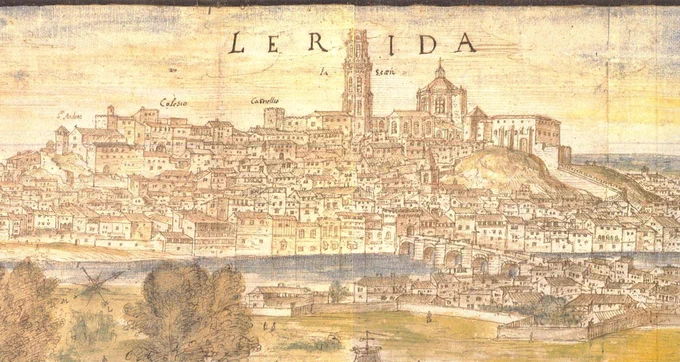


🔴 Eid Takbir being recited in the AyaSofya Mosque in Istanbul


Illegal engineer invades Greek Orthodox Church to disrupt the liturgy.. gets jumped on the spot. Even the grandma on the left was ready to throw hands! This is the difference between the West and the East.


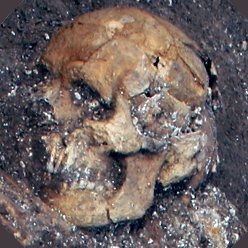
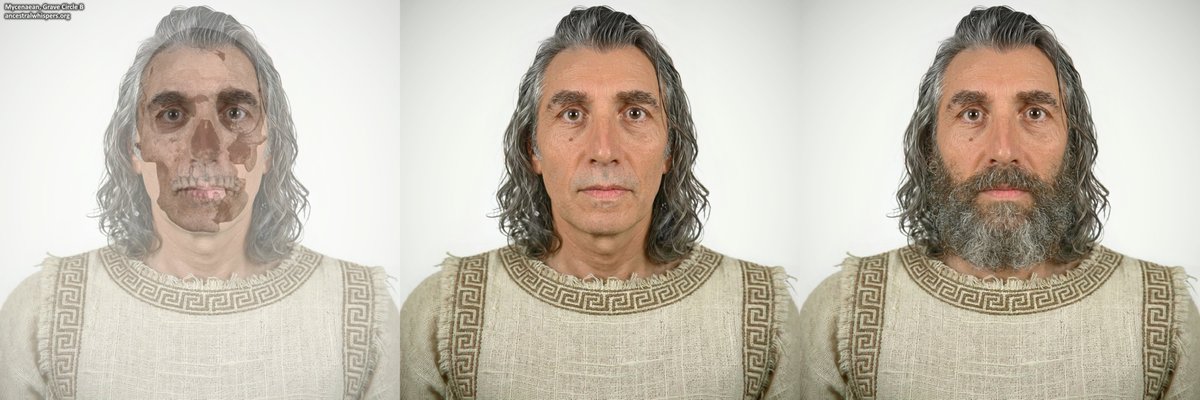
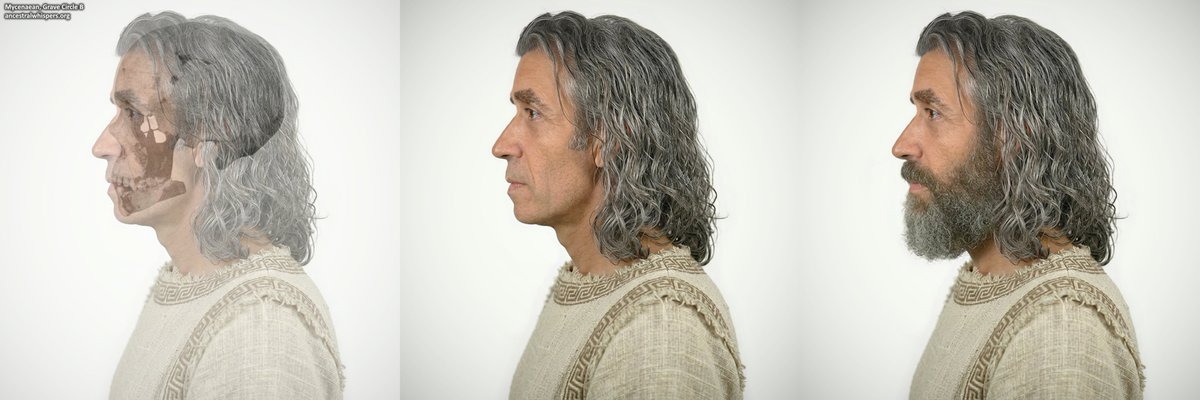
Facial reconstruction of a 3,600-year-old Mycenaean Greek In the middle of the 20th century, archaeologists discovered in Mycenae Grave Circle B, another royal cemetery that preceded Grave Circle A. The burial complex was discovered accidentally in 1951 when workers were excavating a nearby 13th-century BCE tomb known as the Tomb of Clytemnestra. Grave Circle B consists of 26 graves, dated to 1675–1550 BC, including 14 shaft graves. The shafts, up to 12 meters deep, were marked by burial mounds or stone stelae. The cemetery was probably used for about 100 years. The remains of 35 individuals were found in the graves. The large number of undisturbed graves allowed archaeologists to gain insight into the life of the Mycenaean elite of that time. In the women’s graves, many ornaments were found: earrings, necklaces, and gold and silver pins. Alongside the male skeletons were swords, daggers, and arrowheads; men’s clothing was decorated with gold. In one of the graves, a helmet made entirely of boar’s tusks was discovered. There are more female skeletons than male ones, and overall the female burials are richer. A unique find is a posthumous mask made of electrum, which was not placed on the deceased’s face but kept in a wooden box beside him. Another interesting artifact is a duck-shaped bowl made of rock crystal. Unlike the remains from Grave Circle A, the skeletons from the burials of Grave Circle B are well preserved. The bones of the men show traces of combat injuries, suggesting that some of these individuals likely died in battle. As early as the 1950s, it was suggested that members of several (probably four) noble families were buried in Cemetery B over 3–4 generations. To test this hypothesis, in 1995 anthropologists reconstructed faces from seven skulls found in the burials. Researchers discovered a clear resemblance between two individuals — Z59 and F51 — and divided the seven buried individuals into three groups: “heart-shaped,” “elongated,” and “beak-shaped” faces. In 2008, a genetic study was conducted on 22 skeletons from Grave Circle A. Samples were taken from mandibles and clavicles. Mitochondrial DNA was successfully obtained from four individuals, showing that a man and woman from the same grave (where the posthumous mask was found) were brother and sister. Researchers believe that both men and women of the royal lineage in this ancient society inherited power by right of birth. The skull of an individual from grave Sigma (Σ131) is particularly well preserved. It is the only one in which the lower jaw was present. It is believed that he may have been the founder of the dynasty that established this cemetery, since his grave is one of the earliest in Circle B. There were no pottery or metal objects in his grave, but the burial was marked by a large heap of stones. The anthropologist Lawrence Angel reckoned that he lived to be about 55 years old, judging from the exostoses on his shoulders and feet. Although today these would not be considered precise indicators of age—and his dental age may have been slightly younger than 55—he was still the oldest of all those buried in Circle B. Angel described him as a massively built man, big enough to draw attention in a crowd, and estimated his height at 1.75 m. He suffered from osteoporosis and had a large abscess above the upper right permanent lateral incisor.

Achilles was from Hyperborea. The Northern Lands outside of the Ice Wall.