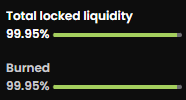
Forma Robotics

178 posts

Forma Robotics banner
Forma Robotics

Forma Robotics

@Forma_Robotics

Forma Robotics is creating the world's first decentralized Robotics-as-a-Service (RaaS) network - powered by a modular, open-source robotic arm.

Solana Katılım Ekim 2025
13 Takip Edilen1.5K Takipçiler
Sabitlenmiş Tweet
Forma Robotics
Forma Robotics@Forma_Robotics·
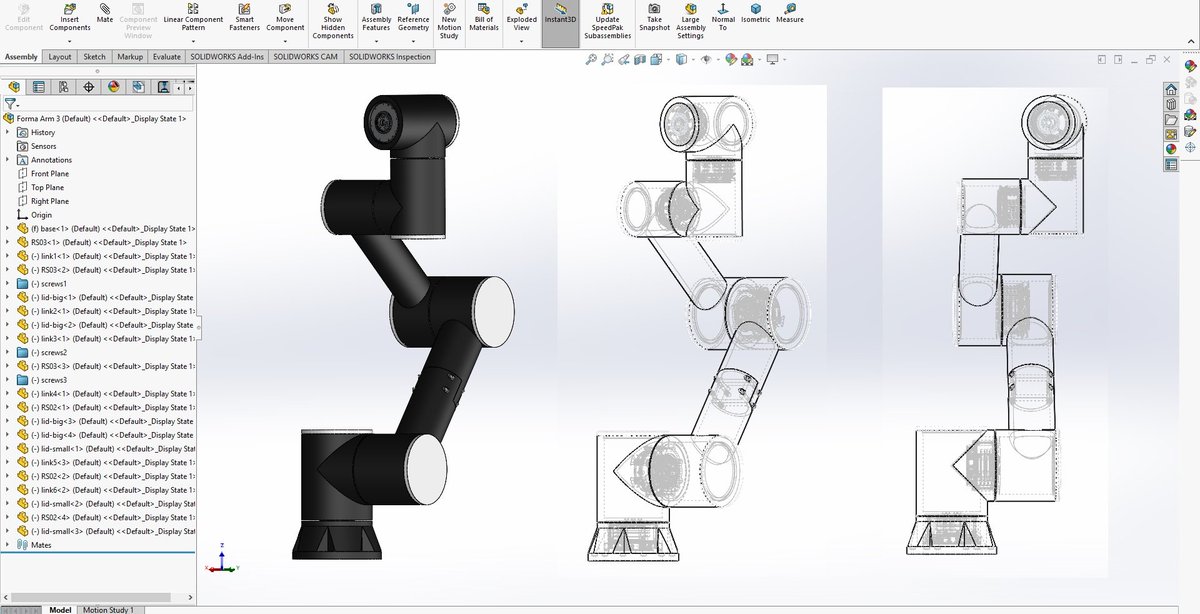
The Forma Arm is now officially live. This is our open-source modular robotic arm - designed for real-world deployment, affordable fabrication (3D printable), and built with interchangeable joints. The repository includes: • Complete modular CAD files (Base + Link1–Link6 + servo modules) • Circuit diagram • Full Bill of Materials (hardware + servos) • Assembly structure ready for iteration and improvement Everything is open for builders, researchers, students, and anyone who wants to experiment with robotics in a practical way. 🔗 GitHub Repository: github.com/FormaRobotics/… This is the foundation. We’ll continue adding electronics details, improvements, and new attachments as we progress.
Forma Robotics tweet media
English
34
2
61
7.3K
Forma Robotics
Forma Robotics@Forma_Robotics·
TEEs are actually pretty interesting for FL, especially around things like secure aggregation, malicious nodes and model poisoning. The issue is they're still fairly hard (and expensive) to implement properly at scale, especially in robotics where hardware/software environments can vary a lot. That said, we're not really taking a TEE-focused approach at Forma right now, but there's definitely a strong crossover between TEEs, BC, and robotics.
KuphDev@KuphDev

@Forma_Robotics I wonder how applicable TEEs could be for this. I’ve used them extensively in crypto and would love to see the crossover to robotics

English
2
1
6
483
Forma Robotics
Forma Robotics@Forma_Robotics·
Federated Learning (FL) is often framed as a privacy solution - train across distributed nodes without moving raw data. But in practice, the real bottleneck isn’t just data locality. It’s coordination and trust. In a multi-party FL setup: • Who verifies that a model update is valid? • How do you prevent poisoned or low-quality gradients? • How are contributions measured and rewarded? • Can you rely on a central aggregator? This is where blockchain becomes relevant - not as a data layer, but as a coordination and verification layer. A well-designed blockchain layer in FL can: • enforce consensus on which updates are accepted (e.g. PBFT / PoA) • provide immutable provenance of model contributions • enable staking/slashing mechanisms to discourage malicious behavior • track contribution quality (accuracy gain, loss reduction, etc.) • remove reliance on a single trusted aggregator Instead of “trusting” participants, you verify behavior at the protocol level. This becomes especially important in real-world settings like manufacturing, where multiple organizations: – operate similar machines (shared domain) – generate comparable vision + time-series data – cannot share raw data due to constraints FL handles the data locality. Blockchain handles the trust, incentives, and coordination. The interesting frontier isn’t putting models on-chain, it’s building systems where model updates themselves become verifiable economic actions. That’s how decentralized training starts to actually work. $forma #FederatedLearning
English
1
4
12
1.2K
Forma Robotics
Forma Robotics@Forma_Robotics·
$950M into industrial robotics in 48 hours. Not a trend; a thesis forming. March 10: Rhoda AI exits stealth with a $450M Series A at a $1.7B valuation, backed by Premji Invest, Khosla, Temasek, Mayfield, and John Doerr. Their model trains robot manipulation from internet-scale video, targeting manufacturing and logistics. March 11: Mind Robotics raises $500M at $2B, co-led by Accel and a16z. Spun out by Rivian founder RJ Scaringe. $615M raised in four months. Industrial robotics used to be a specialist-only bet: high hardware COGS, long qualification cycles, slow enterprise adoption. What changed is the model layer. Physical intelligence is becoming the scaling surface - similar to where LLMs were around 2020–21. Capital is moving early, ahead of deployment curves. The pipeline behind these rounds is likely deeper than most people think. 🚧🤖📈
Forma Robotics tweet media
English
4
3
19
1.2K
Forma Robotics
Forma Robotics@Forma_Robotics·
We want to share a quick update with everyone. Over the past period, we've been dealing with a few critical challenges on our side that slowed things down more than expected. That said, the project is alive, the vision hasn't changed, and work will continue. We're currently stabilizing things internally and preparing to move forward step by step. Your patience and support genuinely mean a lot to us during this phase. 🤝
English
3
3
26
1.7K
Forma Robotics retweetledi
Jiaheng Hu
Jiaheng Hu@JiahengHu1·
VLA models are capable generalists. But can they continually self-improve? Such Continual Reinforcement Learning (CRL) problems are traditionally considered very challenging. Surprisingly, we found that with the right setup, the simplest CRL recipe can work really well! arxiv.org/abs/2603.11653
English
8
50
270
45.7K
Steve Dmith
Steve Dmith@SteveDmithx8oi·
@Forma_Robotics Do we have any updates or progress reports to look forward to soon?
English
1
0
0
52
AnthonyTankBryant
AnthonyTankBryant@Anthony41225148·
@Forma_Robotics Ok just a heads it doesn't show that on the Dex as far as the liquidity locked 100% but I love the project and I hope it turns into something great.
English
1
0
1
45
Forma Robotics
Forma Robotics@Forma_Robotics·
Just spotted this - TOPReward is out and it’s really cool! Pull reward signals straight from token probabilities instead of building or tuning a reward model. It was just released and feels like a real shortcut around per-task reward engineering. In the context of Forma RaaS this is huge - as long as the VLM understands the task, we can score it zero-shot without writing a reward for every job. Faster experiments, less engineering, and a cleaner path to deployable task evaluation.
Jiafei Duan@DJiafei

Instead of asking a VLM to output progress, it reads the model’s internal belief directly from token logits. No in-context learning. No fine-tuning. No reward training. 📈 We introduce: TOPReward, a zero-shot reward modeling approach for robotics using token probabilities from pretrained video VLMs. The simplest way of doing reward modelling for robotics! Project: topreward.github.io/webpage/ 🧵👇

English
49
2
62
2.5K
Forma Robotics
Forma Robotics@Forma_Robotics·
Control Stack for Decentralized Robotics 🧠 We’re building a lightweight control layer that: • Handles real-time joint motion and safety • Syncs telemetry on-chain for proof of work & uptime • Collects data for Machine Learning usage privately • Orchestrates tasks through smart contracts and payments Each robotic arm becomes a verifiable service node - the physical equivalent of a validator, earning for performing real-world actions.
Forma Robotics tweet media
English
28
4
50
1.8K
Forma Robotics
Forma Robotics@Forma_Robotics·
At Forma Robotics, we're architecting the complementary layer for exactly this era. Our decentralized Robotics-as-a-Service (RaaS) network - built around the newly live open-source Forma Arm (modular, 3D-printable, interchangeable joints, open-source) - turns individual builders, labs, and operators into permissionless nodes in a global embodied compute and data commons. Key synergies with XR-0-style advances: - Data scarcity → abundance flywheel - Internet video pretraining unlocks initial generalization (as Xiaomi proves), but true robustness demands diverse, task-specific, real-world embodied rollouts. Forma's network crowdsources this at planetary scale: thousands of heterogeneous Forma Arms (and compatible modular embodiments) execute community-defined tasks, generating cryptographically attested trajectories, failure cases, proprioceptive logs, and multi-view videos - all contributed on-chain. - Tokenized incentives & value capture - Node operators earn $FORMA rewards for uptime, high-quality data contribution (e g., novel manipulation episodes for fine-tuning VLAs), distributed inference/compute (policy rollouts, sim augmentations), and task fulfillment. This creates economic pressure for continuous improvement and data diversity far beyond centralized silos. - Decentralized fine-tuning & deployment - XR-0-like VLAs can be hosted/distilled across the network: aggregate on-chain trajectories feed LoRA-style or full fine-tuning runs (via distributed compute), then push updated weights/policies back to nodes. Standardized modular interfaces (kinematics, actuators, sensors) enable cross-embodiment transfer, so a policy learned on one arm variant generalizes across the fleet. - From engineered → learned, centralized → permissionless - We're accelerating the structural shift: robotics as a software-defined, tokenized service layer. No gatekeepers. Community-owned hardware blueprints + open foundation models + crypto-native payments + verifiable data provenance = an infinitely scalable, censorship-resistant embodiment economy. Watch this space. The embodied AI wave is no longer hypothetical - it's open-sourced, decentralized, and compounding. #RaaS #VLA #FormaArm
CyberRobo@CyberRobooo

Humanoid robotics is entering a new phase: Xiaomi Robotics 0 (XR-0) explores learning manipulation directly from large-scale human videos — aligning video understanding with robot embodiment to generate executable actions. Watch humans->learn representations ->map to robot control. Robot data is scarce. Internet video is not. If video pretraining transfers reliably into embodied control, the scaling law of robotics changes. Deployment speed becomes a function of model alignment, not just hardware iteration. We’re moving from engineered skills to learned behavior. That’s a structural shift. project: xiaomi-robotics-0.github.io

English
8
2
21
1.5K
Forma Robotics
Forma Robotics@Forma_Robotics·
The Forma Arm is now officially live. This is our open-source modular robotic arm - designed for real-world deployment, affordable fabrication (3D printable), and built with interchangeable joints. The repository includes: • Complete modular CAD files (Base + Link1–Link6 + servo modules) • Circuit diagram • Full Bill of Materials (hardware + servos) • Assembly structure ready for iteration and improvement Everything is open for builders, researchers, students, and anyone who wants to experiment with robotics in a practical way. 🔗 GitHub Repository: github.com/FormaRobotics/… This is the foundation. We’ll continue adding electronics details, improvements, and new attachments as we progress.
Forma Robotics tweet media
English
34
2
61
7.3K