Free To Choose

8.2K posts

Free To Choose banner
Free To Choose

Free To Choose

@FreeToChooseNet

Free To Choose® Network is a global media 501(c)(3) nonprofit that brought you Milton Friedman’s original 1980 10-part television series, Free To Choose.

Erie, PA Katılım Mart 2009
5.4K Takip Edilen31.7K Takipçiler
Free To Choose
Free To Choose@FreeToChooseNet·
California Dreamin'? More like California Leavin', amirite? And Californians are. Leaving, that is. Despite gorgeous scenery, decent natural resources, and stunning weather, the economic situation there is, politely, a shambles. It's one of the few states in the country experiencing a net outflow of residents, including high-value workers and entrepreneurs. Why? @LouPerez and @PhilWMagness are on the case, so grab a beverage, pop in your earbuds, and listen along on this week's episode of Happy Hour Econ. happyhourecon.org
English
0
2
4
345
Free To Choose
Free To Choose@FreeToChooseNet·
Defense isn't just about dollars and equipment. It's about the people who dedicate their lives to protecting our freedom, the workers who build what they need, and the families who support them through it all. As we prepare to honor the fallen on Memorial Day, The True Cost of Defense examines the military's price, tangible and intangible, for those who remain. freetochoosenetwork.org/programs/true_…
English
0
0
1
125
Free To Choose
Free To Choose@FreeToChooseNet·
Oh, California. You used to be cool. But between its laissez-faire heyday and today, something happened. And now California is bogged down with piles of regulations, sky-high costs of living, and alarming levels of poverty, crime, and homelessness. In this week's episode of Happy Hour Econ, comedian @LouPerez and economist @PhilWMagness ponder the multi-billion-dollar high-speed train wreck that is California. Now available to download from your preferred podcast purveyor or listen on our website! happyhourecon.org
English
0
1
4
471
Free To Choose
Free To Choose@FreeToChooseNet·
Economists broadly agree that trade barriers harm economies—yet protectionism remains widespread. Why? The political math is simple: benefits concentrate in protected industries, while costs spread invisibly across millions of consumers. Even the language reveals the trick: tariffs "protect" you from low prices.
English
1
1
12
283
Free To Choose
Free To Choose@FreeToChooseNet·
Every major corporate expansion seems to trigger questions about environmental impact, community displacement, and social responsibility. And amid all this clamor, it’s a question that bears thinking about: What is the “social responsibility” of a business? Milton Friedman already answered this question back in 1970: it's to make money. But that answer is a lot more nuanced than it appears on the surface. Our latest capitalism blog explores what it actually means for a business's social responsibility to be profitable. blog.freetochoosenetwork.org/2026/05/do-bus…
Free To Choose tweet media
English
1
0
2
185
Free To Choose
Free To Choose@FreeToChooseNet·
There's a lot more to Adam Smith than The Wealth of Nations. Smith considered himself a "moral scientist." He cared deeply about right and wrong, and he cared deeply about what the actual evidence said about the pursuit of moral good. Far from the heartless stereotype of modern media, economics, as we understand it, came from a place of profound compassion and concern backed by scientific understanding.
English
1
12
25
680
Free To Choose
Free To Choose@FreeToChooseNet·
Why is it that $500,000 can buy you a huge house on 15 acres in West Virginia but barely a dank basement apartment with a hotplate in San Francisco? @LouPerez and @PhilWMagness are so glad you asked. Pull up a stool and join our favorite comedian-economist duo as they chat about the housing market and why it is the way that it is on this week's episode of Happy Hour Econ. happyhourecon.org
English
1
2
8
571
Free To Choose
Free To Choose@FreeToChooseNet·
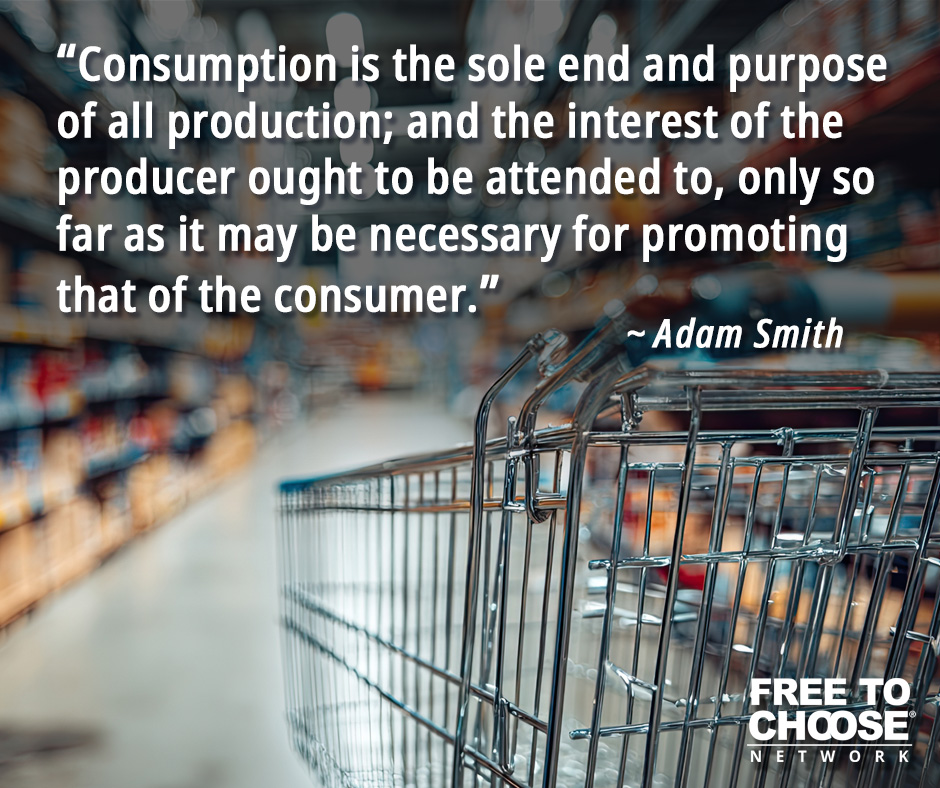
Smith is talking about customer sovereignty here. Yes, the producer's profits, property rights, incentive structures, and so on matter. They serve to enable and motivate those producers to satisfy consumer demands and desires. But the moment the producer's interests come into conflict with consumer interests, consumer interests win. Or they should, anyway. And this goes beyond simple price signaling and consumer demand for Labubus or whatever. Using state power to restrict competition, fix prices, impose excessive regulatory schemes, or add taxes all negatively impact consumer welfare and overall economic health. The customer is king. And that has much broader implications than many people give it credit for.
Free To Choose tweet media
English
0
1
3
179
Free To Choose
Free To Choose@FreeToChooseNet·
Everybody knows that we're dealing with a housing affordability crisis right now. But just because everybody knows something doesn't make it true. Not universally, at least. True, in some places—usually urban centers or certain industry focal points—housing is incredibly expensive. In other places throughout the country, not so much. But why? Well, it's not any one thing. Pull up a stool and grab a beverage with comedian @LouPerez and economist @PhilWMagness as they talk about housing prices on this week's episode of Happy Hour Econ. Now available to listen! happyhourecon.org
English
0
1
7
540
Free To Choose
Free To Choose@FreeToChooseNet·
Economists have agreed on free trade for generations—yet tariffs persist. Why? Friedman points to a powerful lesson: expert consensus alone doesn't drive policy. Special interests do.
English
1
3
22
460
Free To Choose
Free To Choose@FreeToChooseNet·
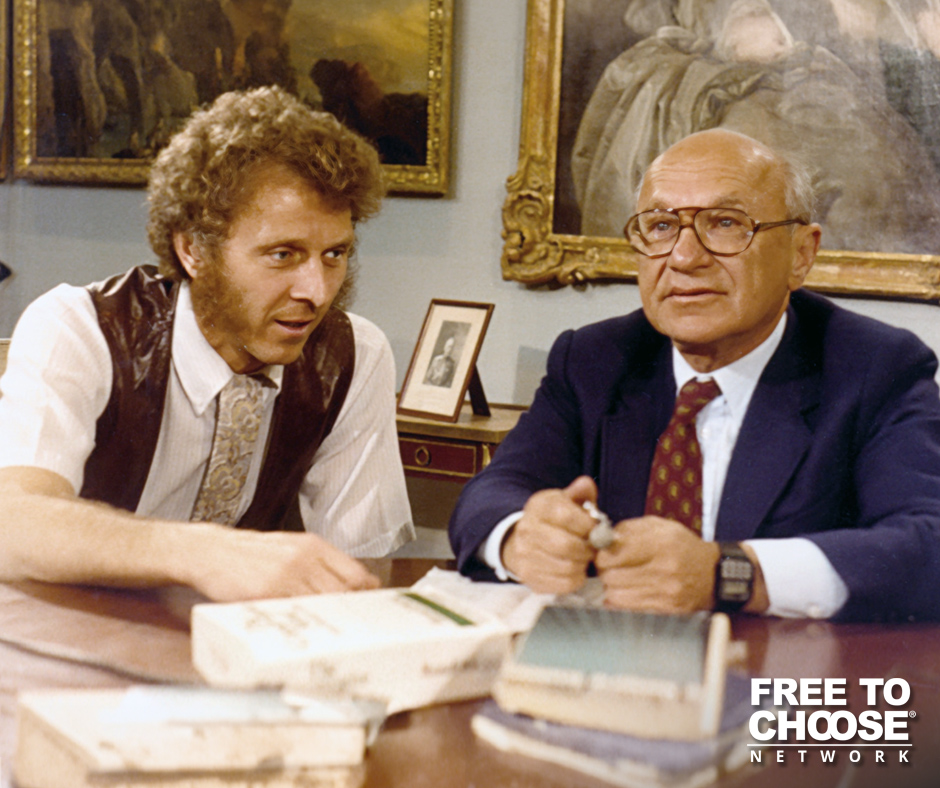
Today, we honor the memory of Bob Chitester, the visionary founder of Free To Choose Network, who, through the power of storytelling, brought Milton Friedman's ideas to millions. In his own words, Bob believed that "storytelling and entertainment will always be the guidestar" in communicating the complex ideas of liberty and free markets. As the producer who convinced PBS to broadcast "Free To Choose" in 1980, Bob forever changed how economic ideas reach the public, focusing on human experiences rather than abstract theories. His friendship with Milton and Rose Friedman went beyond professional collaboration—it was a meeting of minds that sparked a movement. His ability to translate economic principles into compelling human stories continues to inspire our work today.
Free To Choose tweet media
English
1
4
8
170
Free To Choose
Free To Choose@FreeToChooseNet·
Honestly, the word "protectionism" is a misnomer. What are trade restrictions protecting, exactly? It's certainly not the pocketbooks of everyday people. It's not even local jobs, in the long run. "Protectionist" policies are just another intervention in the economy, restricting choices and decreasing wealth creation. Labeling it anything else, like "protection" or "patriotism," is just marketing.
English
3
4
11
530
Free To Choose
Free To Choose@FreeToChooseNet·
First recorded in 2024, host Dennis McCuistion is joined by David Walker, former U.S. Comptroller General and head of the Government Accountability Office, for a discussion about America's mounting fiscal crisis as federal debt reaches $34 trillion and threatens the nation's economic future. Walker emphasizes that the real concern isn't just the debt amount but the debt-to-GDP ratio, which stands at 120% and is projected to reach 192% within 30 years. Listen now: blog.freetochoosenetwork.org/podcast/episod…
Free To Choose tweet media
English
0
1
1
189
Free To Choose
Free To Choose@FreeToChooseNet·
There's no such thing as "personal freedom" and "economic freedom." There is only freedom, full stop.
English
0
1
11
184
Free To Choose
Free To Choose@FreeToChooseNet·
Do people in "food deserts" really not have ready access to nutrition? Or have they just made choices some social scientists wouldn't have picked for themselves? Pull up a stool and join @LouPerez and @PhilWMagness for the latest episode of Happy Hour Econ, available now! happyhourecon.org
Free To Choose tweet media
English
0
3
4
453
Free To Choose
Free To Choose@FreeToChooseNet·
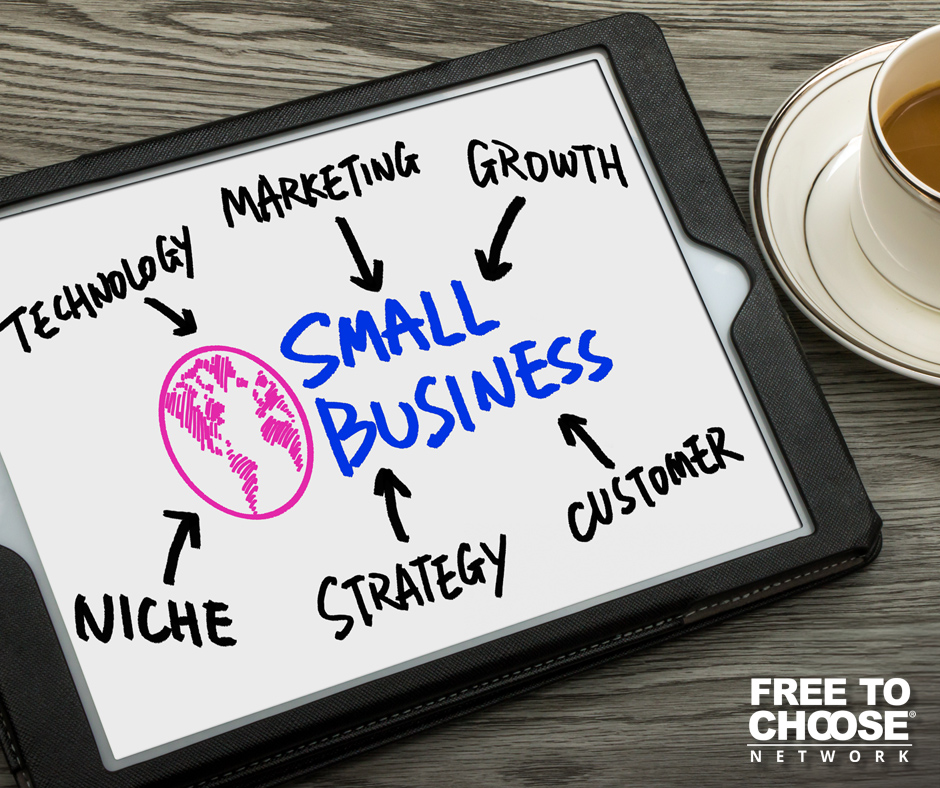
Small businesses are the lifeblood of the economy. Entrepreneurs take risks, solve problems, and create value that lifts entire communities. National Small Business Week is a reminder that when people are free to pursue their ideas, remarkable things happen. FTCN's Featured Finds blog series features stories and insights for entrepreneurs navigating the challenges and opportunities of building a business. Explore the full collection on our website! blog.freetochoosenetwork.org/category/featu…
Free To Choose tweet media
English
0
0
0
116
Free To Choose
Free To Choose@FreeToChooseNet·
Ready for a spicy start to the week? Comedian @LouPerez and economist @PhilWMagness have beef with the notion of food deserts in this week's episode of Happy Hour Econ, and no sacred cow is safe. Just let 'em cook. Now available for listening on your preferred podcast platform or the website! happyhourecon.org
English
0
1
3
378
Free To Choose
Free To Choose@FreeToChooseNet·
"Two economists, three opinions"—except on this one issue. Since 1776, the economics profession has maintained extraordinary consensus: free trade makes nations better off. Even when John Maynard Keynes abandoned the position in 1931, he didn't claim tariffs were economically superior. He simply admitted the political system wouldn't allow for the better policy. Two centuries of professional agreement. Consistently ignored by the very governments economists advise. If you've ever wondered why economic recommendations seem to go unheeded, the history of trade policy is your answer. The gap between what economists know and what politicians will do has remained unchanged since Adam Smith.
English
1
5
15
719
Free To Choose
Free To Choose@FreeToChooseNet·
From a Q&A with Milton Friedman. The problem with America's monetary policy can't be solved with better accounting. No audit, no matter how thorough, can fix what's wrong with the Federal Reserve system.
English
2
3
9
388
Free To Choose
Free To Choose@FreeToChooseNet·
Another Professor James Buchanan clip from the archives: The United States Constitution did not set up a democracy. The Founders were, rightly, concerned with how power could be abused. And tyranny doesn't stop being tyranny because a majority of voters support it. The limitations the Constitution places on government power don't exist to be mean or prevent good things from happening. They exist so that the minority doesn't get crushed under the boot heel of the majority.
English
1
11
22
616