Gavrilo Princip 🩸🩸🩸

2.1K posts

Gavrilo Princip 🩸🩸🩸

Gavrilo Princip 🩸🩸🩸

@FreedomInHell

A head full of fears has no space for dreams

Stuck in a dream Katılım Ocak 2022
140 Takip Edilen452 Takipçiler
Gavrilo Princip 🩸🩸🩸
@DCinvestor @Cultmander76 How much did Tuckers russian sugardaddy pay you for above tweet? Joe Kent is traumatised hence he was a easy target for people like Tucker to manipulate and start leaking. People found out, kept him out of briefing so he resigned before getting fired. Simple
English

1
0
3
57
DCinvestor
DCinvestor@DCinvestor·
i am no Tucker Carlson super fan, but this is one of the most important interviews in American history all citizens who care about the future of the republic should watch it he will be demonized ad nauseam by the powers that be, but Joe Kent is thoughtful, and he is a patriot who has given everything to his country
Tucker Carlson@TuckerCarlson

Joe Kent on why we actually went to war with Iran.

English
61
125
1.5K
141.4K
Gavrilo Princip 🩸🩸🩸
Gavrilo Princip 🩸🩸🩸@FreedomInHell·
A lot of what you describe already exists in Cult DAO. No token weighted governance. No VC capture. Direct onchain voting on what deserves funding. An opinionated, mission driven collective deciding what rises. Its been running, publicly, for years. Feels like the OG case study no one wants to mention.
English
2
8
29
1.4K
vitalik.eth
vitalik.eth@VitalikButerin·
How I would do creator coins We've seen about 10 years of people trying to do content incentivization in crypto, from early-stage platforms like Bihu and Steemit, to BitClout in 2021, to Zora, to tipping features inside of decentralized social, and more. So far, I think we have not been very successful, and I think this is because the problem is fundamentally hard. First, my view of what the problem is. A major difference between doing "creator incentives" in the 00s vs doing them today, is that in the 00s, a primary problem was having not enough content at all. In the 20s, there's plenty of content, AI can generate an entire metaverse full of it for like $10. The problem is quality. And so your goal is not *incentivizing content*, it's *surfacing good content*. Personally, I think that the most successful example of creator incentives we've seen is Substack. To see why, take a look at the top 10: substack.com/leaderboard/te… substack.com/leaderboard/cu… substack.com/leaderboard/wo… Now, you may disagree with many of these authors. But I have no doubt that: 1. They are on the whole high quality, and contribute positively to the discussion 2. They are mostly people who would not have been elevated without Substack's presence So Substack is genuinely surfacing high quality and pluralism. Now, we can compare to creator coin projects. I don't want to pick on a single one, because I think there's a failure mode of the entire category. For example: Top Zora creator coins: coingecko.com/en/categories/… BitClout: businessofbusiness.com/articles/insid… Basically, the top 10 are people who already have very high social status, and who are often impressive but primarily for reasons other than the content they create. At the core, Substack is a simple subscription service: you pay $N per month, and you get to see the person's articles. But a big part of Substack's success is that they did not just set the mechanism and forget. Their launch process was very hands-on, deliberately seeding the platform with high-quality creators, based on a very particular vision of what kind of high-quality intellectual environment they wanted to foster, including giving selected people revenue guarantees. So now, let's get to one idea that I think could work (of course, coming up with new ideas is inherently a more speculative project than criticizing existing ones, and more prone to error). Create a DAO, that is *not* token-based. Instead, the inspiration should be Protocol Guild: there are N members, and they can (anonymously) vote new members in and out. If N gets above ~200, consider auto-splitting it. Importantly, do _not_ try to make the DAO universal or even industry-wide. Instead, embrace the opinionatedness. Be okay with having a dominant type of content (long-form writing, music, short-form video, long-form video, fiction, educational...), and be okay with having a dominant style (eg. country or region of origin, political viewpoint, if within crypto which projects you're most friendly to...). Hand-pick the initial membership set, in order to maximize its alignment with the desired style. The goal is to have a group that is larger than one creator and can accumulate a public brand and collectively bargain to seek revenue opportunities, but at the same time small enough that internal governance is tractable. Now, here is where the tokens come in. In general, one of my hypotheses this decade is that a large portion of effective governance mechanisms will all have the form factor of "large number of people and bots participating in a prediction market, with the output oracle being a diverse set of people optimized for mission alignment and capture resistance". In this case, what we do is: anyone can become a creator and create a creator coin, and then, if they get admitted to a creator DAO, a portion of their proceeds from the DAO are used to burn their creator coins. This way, the token speculators are NOT participating in a recursive-speculation attention game backed only by itself. Instead, they are specifically being predictors of what new creators the high-value creator DAOs will be willing to accept. At the same time, they also provide a valuable service to the creator DAOs: they are helping surface promising creators for the DAOs to choose from. So the ultimate decider of who rises and falls is not speculators, but high-value content creators (we make the assumption that good creators are also good judges of quality, which seems often true). Individual speculators can stay in the game and thrive to the extent that they do a good job of predicting the creator DAOs' actions.
English
884
389
2.9K
542.7K
Roman Storm 🇺🇸 🌪️
Thank you @VitalikButerin for your principled support and for articulating exactly why privacy tools are a necessity, not a crime. To the community: Vitalik’s voice is powerful, but yours is too. If you believe in the right to build and use open-source privacy software, please take 5 minutes to write a letter of support. It makes a massive difference. 🔗 freeromanstorm.com/write-letter
vitalik.eth@VitalikButerin

@rstormsf Done. Re-posting the contents for public consumption:

English
34
79
550
33.1K
vitalik.eth
vitalik.eth@VitalikButerin·
“Ethereum was not created to make finance efficient or apps convenient. It was created to set people free” This was an important - and controversial - line from the Trustless Manifesto ( trustlessness.eth.limo ), and it is worth revisiting it and better understanding what it means. “efficient” and “convenient” have the connotation of improving the average case, in situations where it’s already pretty good. Efficiency is about telling the world's best engineers to put their souls into reducing latency from 473 ms to 368ms, or increasing yields from 4.5% APY to 5.3% APY. Convenience is about people making one click instead of three, and reducing signup times from 1 min to 20 sec. These things can be good to do. But we must do them under the understanding that we will never be as good at this game as the Silicon Valley corporate players. And so the primary underlying game that Ethereum plays must be a different game. What is the game? Resilience. Resilience is the game where it’s not about 4.5% APY vs 5.3% APY - rather, it’s about minimizing the chance that you get -100% APY. Resilience is the game where if you become politically unpopular and get deplatformed, or if a the developers of your application go bankrupt or disappear, or if Cloudflare goes down, or if an internet cyberwar breaks out, your 2000ms latency continues to be 2000ms. Resilience is the game where anyone, anywhere in the world will be able to access the network and be a first-class participant. Resilience is sovereignty. Not sovereignty in the sense of lobbying to become a UN member state and shaking hands at Davos in two weeks, but sovereignty in the sense that people talk about "digital sovereignty" or "food sovereignty" - aggressively reducing your vulnerabilities to external dependencies that can be taken away from you on a whim. This is the sense in which the world computer can be sovereign, and in doing so make its users also sovereign. This baseline is what enables interdependence as equals, and not as vassals of corporate overlords thousands of kilometers away. This is the game that Ethereum is suited to win, and it delivers a type of value that, in our increasingly unstable world, a lot of people are going to need. The fundamental DNA of web2 consumer tech is not suited to resilience. The fundamental DNA of _finance_ often spends considerable effort on resilience, but it is a very partial form of resilience, good at solving for some types of risks but not others. Blockspace is abundant. Decentralized, permissionless and resilient blockspace is not. Ethereum must first and foremost be decentralized, permissionless and resilient block space - and then make that abundant.
English
1.2K
1.3K
7.2K
1.1M
Gavrilo Princip 🩸🩸🩸 retweetledi
Mr O’Moduluszk
Mr O’Moduluszk@MrOmodulus·
$CULT DAO @wearecultdao. Is the rebellion against this.
vitalik.eth@VitalikButerin

Welcome to 2026! Milady is back. Ethereum did a lot in 2025: gas limits increased, blob count increased, node software quality improved, zkEVMs blasted through their performance milestones, and with zkEVMs and PeerDAS ethereum made its largest step toward being a fundamentally new and more powerful kind of blockchain (more on this later) But we have a challenge: Ethereum needs to do more to meet its own stated goals. Not the quest of "winning the next meta" regardless of whether it's tokenized dollars or political memecoins, not arbitrarily convincing people to help us fill up blockspace to make ETH ultrasound again, but the mission: To build the world computer that serves as a central infrastructure piece of a more free and open internet. We're building decentralized applications. Applications that run without fraud, censorship or third-party interference. Applications that pass the walkaway test: they keep running even if the original developers disappear. Applications where if you're a user, you don't even notice if Cloudflare goes down - or even if all of Cloudflare gets hacked by North Korea. Applications whose stability transcends the rise and fall of companies, ideologies and political parties. And applications that protect your privacy. All this - for finance, and also for identity, governance and whatever other civilizational infrastructure people want to build. These properties sound radical, but we must remember that a generation ago any wallet, kitchen appliance, book or car would fulfill every single one of them. Today, all of the above are by default becoming subscription services, consigning you to permanent dependence on some centralized overlord. Ethereum is the rebellion against this. To achieve this, it needs to be (i) usable, and usable at scale, and (ii) actually decentralized. This needs to happen at both (a) the blockchain layer, including the software we use to run and talk to the blockchain, and (b) the application layer. All of these pieces must be improved - they are already being improved, but they must be improved more. Fortunately, we have powerful tools on our side - but we need to apply them, and we will. Wishing everyone an exciting 2026. Milady.

English
12
50
121
3.8K
Gavrilo Princip 🩸🩸🩸
Gavrilo Princip 🩸🩸🩸@FreedomInHell·
You laughed at $Cult DAO, a community that is still alive and building on your blockchain years later. Yet you choose to publicly support a community whose leaders and insiders launched a CULT token that collapsed and burned its own community with only a Dead telegram chat left as a reminder. Apparently it is more interesting to signal support for a culture defined by abuse, edgelord behavior, and often outright racist language than to support a DAO that actually funded things that mattered to crypto. Tornado Cash being one example. That choice says a lot about what you are willing to legitimize. Milady.
English
6
9
58
3.2K
vitalik.eth
vitalik.eth@VitalikButerin·
Welcome to 2026! Milady is back. Ethereum did a lot in 2025: gas limits increased, blob count increased, node software quality improved, zkEVMs blasted through their performance milestones, and with zkEVMs and PeerDAS ethereum made its largest step toward being a fundamentally new and more powerful kind of blockchain (more on this later) But we have a challenge: Ethereum needs to do more to meet its own stated goals. Not the quest of "winning the next meta" regardless of whether it's tokenized dollars or political memecoins, not arbitrarily convincing people to help us fill up blockspace to make ETH ultrasound again, but the mission: To build the world computer that serves as a central infrastructure piece of a more free and open internet. We're building decentralized applications. Applications that run without fraud, censorship or third-party interference. Applications that pass the walkaway test: they keep running even if the original developers disappear. Applications where if you're a user, you don't even notice if Cloudflare goes down - or even if all of Cloudflare gets hacked by North Korea. Applications whose stability transcends the rise and fall of companies, ideologies and political parties. And applications that protect your privacy. All this - for finance, and also for identity, governance and whatever other civilizational infrastructure people want to build. These properties sound radical, but we must remember that a generation ago any wallet, kitchen appliance, book or car would fulfill every single one of them. Today, all of the above are by default becoming subscription services, consigning you to permanent dependence on some centralized overlord. Ethereum is the rebellion against this. To achieve this, it needs to be (i) usable, and usable at scale, and (ii) actually decentralized. This needs to happen at both (a) the blockchain layer, including the software we use to run and talk to the blockchain, and (b) the application layer. All of these pieces must be improved - they are already being improved, but they must be improved more. Fortunately, we have powerful tools on our side - but we need to apply them, and we will. Wishing everyone an exciting 2026. Milady.
English
2.9K
2.1K
13.4K
1.4M
Binance
Binance@binance·
One thing you’re manifesting for 2026 👀
English
1.2K
122
1.4K
189.8K
CoinMarketCap
CoinMarketCap@CoinMarketCap·
Reply to this post and I will reply back.
English
3.1K
187
2.8K
305.8K
WallStreetBets
WallStreetBets@wallstreetbets·
Shill me a project actually building something useful please
English
1.6K
139
1.2K
159.3K
Modulus
Modulus@ModulusZK·
“Nobody gets fired for suggesting another zkVM” is the zk equivalent of “Nobody gets fired for buying IBM”. You might keep the job, but you also keep yourself from trying something radically different.
English
6
37
103
2.6K
Destiny
Destiny@MrGcso·
#Modulus aims to give Bitcoin superpowers, privacy plus programmability while keeping Bitcoin exactly as it is. No changes. No forks. No drama. Just pure innovation. @ModulusZK. It will all make sense by the time #ModulusZK launches. I can't wait. $CULT @wearecultdao
English
1
6
44
622
Gavrilo Princip 🩸🩸🩸 retweetledi
Gradient
Gradient@useGradient·
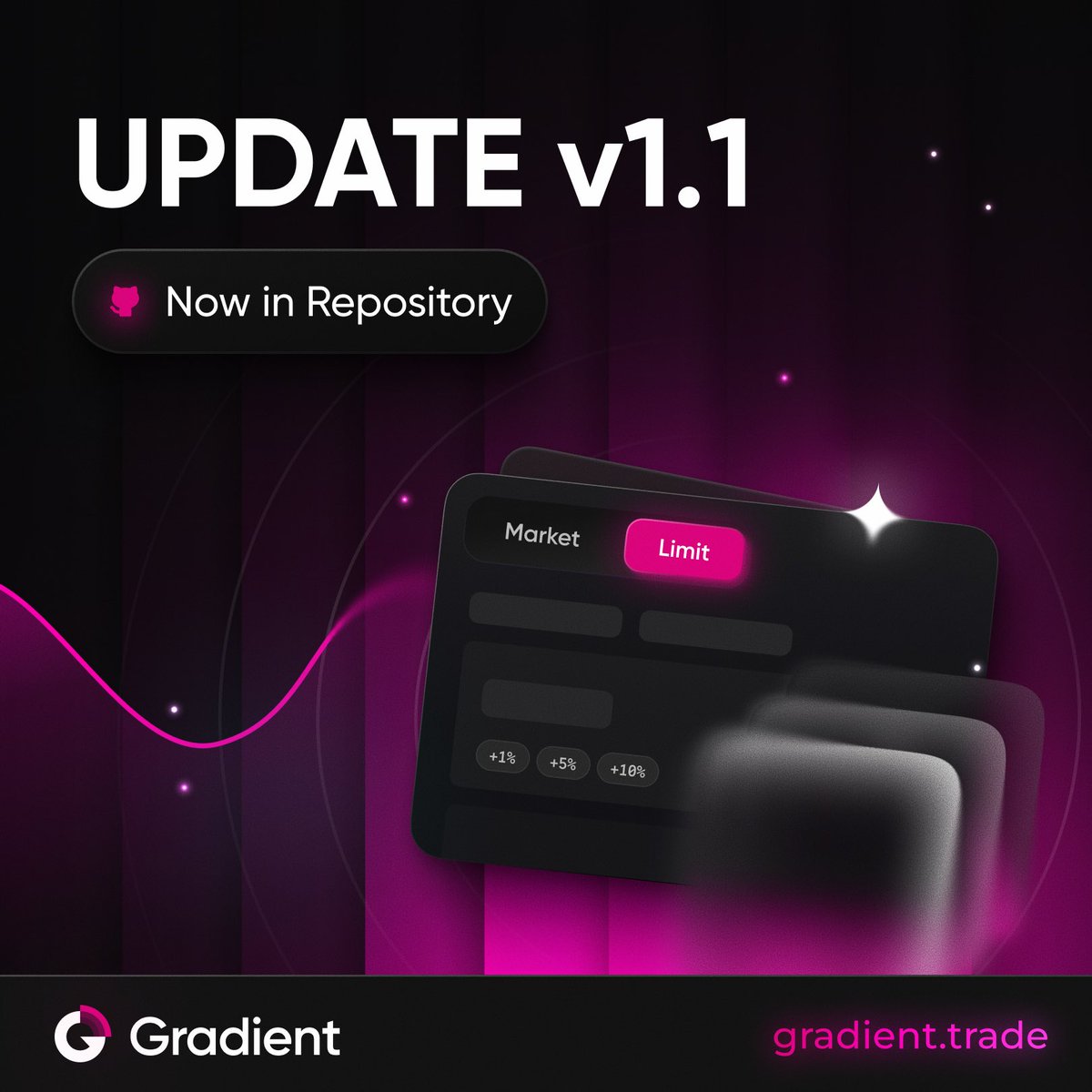
The core smart contracts powering Gradient’s v1.1 update are now viewable in our public repository. These 4 new smart contracts enable: - Public market making and dynamic liquidity provision. - Support for v3 token pairs. - Auto-fallback / DEX execution. - Dynamic fee distribution for partner tokens. View the contracts below. github.com/GradientDevelo…
Gradient tweet media
English
13
39
121
5.9K
Gavrilo Princip 🩸🩸🩸
Gavrilo Princip 🩸🩸🩸@FreedomInHell·
@SterlinLujan Worth mentioning Titos Yugoslavia. It was an early attempt to find a middle point between capitalism and socialism. For many years, it worked better than expected. Not perfect, but everything needs time to mature. But I guess we will never find out.
English
1
0
3
62
Sterlin Lujan
Sterlin Lujan@SterlinLujan·
Ultimately, capitalism and socialism will both become obsolete, at least in the sense of being the dominant economic structures within defined geographic territories. In the age we are entering, aspects of both systems are relevant, and they interpenetrate with one another. The Marxists got some things right. The capitalists got some things right. However, most people discard nuance to adopt a stringent ideology that one is absolutely correct. Then, they proceed to die on that hill. The an-cap versus an-com debate represents one toxic instance of this bickering. What we are witnessing is the emergence of plural economic arrangements. This begins with market experimentation within the realm of programmable cryptocurrency and the "Web3" environment. This is evident in the various ways DAOs and DeFi protocols have structured their tokeneconomic systems. This experimentation evolves further as parallel societies and alternative communities emerge to implement novel adaptations of both ideas. Take, for example, @wearecultdao, which has a basis in capital accumulation as a venture fund, but has a more plural and dynamic voting apparatus and fund distribution setup. It would say it leans more capitalist, but has elements of Marxist concern over limiting the power of the "whales" holding a high volume of tokens. I could also delve into all the emergent "ReFi" models, which feature novel implementations of both economic frameworks. We can call what is happening regenerative cosmopolitanism. This means that each local community implements economic designs that are unique to their community and suitable to their internal politics. It could be a raw deployment of capitalism proper, or some form of socialist wealth distribution. However, it is more likely to be a mixture. The term also suggests that many of these teams are trying to keep the capital movement and allocation as sustainable and ecologically healthy as possible. The key is that each community member can opt into the design and parallel society that resonates most with them. This ability to opt into these communities at scale diminishes the impact of favoring one model or the other, because we can now exit into the economic experiments we deem more hospitable to our own personalities. This new approach to market action expands the economic design space and reduces the need to debate one economic ideology over another. We are at a transition threshold concerning economics and politics, which will greatly diminish our human tendency to constantly wage war over differing views on how capital should be obtained, managed, allocated, and spent. We must think forward, not backwards.
Grace Blakeley@graceblakeley

Economists don't understand capitalism

English
2
4
24
2.8K
Tommy Robinson 🇬🇧
Tommy Robinson 🇬🇧@TRobinsonNewEra·
You want to know how Pakistani Muslim rape gangs got away with their sickening crimes against British children for so long? Because of people like @owenjonesjourno Pretending it wasn't happening, and labelling the people calling it out, as "racist" etc. Now that the evidence is hugely overwhelming, Owen, and people like him, pretend they never acted like that, making out they're on the side of survivors, when in reality they called them liars. This video was 2 years apart. CC: BasilTheGreat
English
640
6.4K
30.4K
344.5K
Gavrilo Princip 🩸🩸🩸 retweetledi
SPECTRE AI
SPECTRE AI@Spectre__AI·
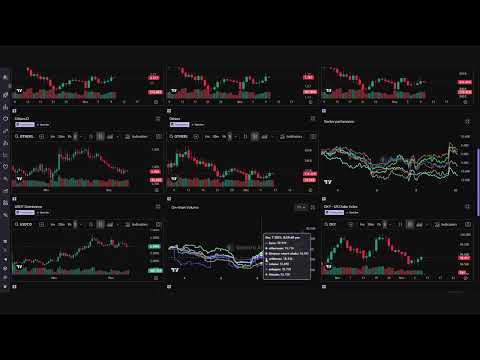
We really appreciate @IncomeSharks for diving into the $SPECT terminal and sharing his perspective on his Youtube channel. His walk-through highlights how the platform fits into real, day-to-day market analysis. Make sure to subscribe to IncomeSharks YT Channel: youtube.com/watch?v=Fh_VQh… It’s exciting to see the platform being used in practical, everyday market workflows. Thank you for the post @CastilloTrading
YouTube video
YouTube
Castillo Trading@CastilloTrading

Shark @IncomeSharks does a really good job doing a rundown on the @Spectre__AI terminal. Very informative platform to be utilizing for everyday market analysis and data. Few things down the pipeline with prediction markets data, Macro data, +more. youtu.be/Fh_VQhuAzfk

English
14
25
80
4.5K