Sabitlenmiş Tweet
Kevin L. Freeman
5.2K posts

Kevin L. Freeman
@FreemanWriting
Author | Editor | Developer | Craftsman AI Tutor @xAI Views expressed are my own. The truth shall prevail.

Cookeville, TN Katılım Haziran 2009
3.8K Takip Edilen1.3K Takipçiler
Kevin L. Freeman retweetledi

🚨 BREAKING: The double-slit experiment doesn’t just show particles acting like waves… It shows reality depends on observation.
Read that again.
When unobserved → reality spreads out (wave)
When observed → reality “chooses” a path (particle)
But here’s the deeper question:
What if nothing is “collapsing”… And instead, systems are being forced into stable structure?
In my framework:
Reality = possible states across time
Observation = constraint selecting coherence
What we see = the stable path that survives
So it’s not randomness becoming order…
It’s structure revealing itself.
The real question is:
Are we observing reality… Or forcing it into existence?
Follow for more on time, structure, and reality.
English
Kevin L. Freeman retweetledi

As an astrophysicist, I was convinced of a Creator by the ingenuity of the observable universe; but I have to admit that biology is even more convincing. The incredible machinery of a living cell is far more complex than the structure of an entire galaxy of stars.
Wendell@wendelltalks
There is no way a person can see this image of a cell and deny that God exists.

English
Kevin L. Freeman retweetledi

I love the latin phrase "solvitur ambulando" which translates to "it is solved by walking". I make sure to walk to 1-1.5 hours every day it sparks some of the best ideas in my head.
Natural Philosophy@Naturalphilosy
“Above all, do not lose your desire to walk.” — Søren Kierkegaard

English
Kevin L. Freeman retweetledi

🚨BREAKING: 8 weeks of gratitude practice physically rebuilds the neural pathways between your memory and reward centers.
Your brain physically rewires itself every time you feel grateful.
Eight weeks of intentional gratitude practice creates measurable structural changes in the neural pathways connecting your hippocampus to your ventral tegmental area. The memory center starts talking to the reward center in a fundamentally different way. New synaptic connections form. Existing ones strengthen. The physical architecture of how you process positive experiences rebuilds itself.
Most people approach gratitude like a mood they can choose to feel. A psychological vitamin they remember to take when life gets difficult. The neuroscience reveals something far more profound.
Gratitude is a biological intervention that sculpts brain tissue.
Researchers tracked participants practicing gratitude exercises for two months using brain scans. They watched new neural highways construct themselves in real time. The anterior cingulate cortex developed stronger connections to the medial prefrontal cortex. The brain learned to route positive emotional experiences through higher order thinking centers instead of storing them as fleeting feelings.
Every positive experience you’ve ever had exists as a neural trace in your memory network. Most sit dormant, accessible only when something external triggers the specific sensory combination that originally encoded them. You smell coffee, suddenly remember a conversation from years ago. Random. Unreliable. Outside your control.
Gratitude practice systematically rewires that retrieval system.
After two months, participants could voluntarily access positive memories with increasing ease. Their brains had built stronger pathways between memory storage areas and emotional processing centers. They experienced deeper emotional resonance during memory retrieval. The quality of remembering itself had improved.
The participants also started noticing positive details in their present environment they had previously filtered out. Their attention systems recalibrated. The same neural pathways pulling positive memories forward were scanning current experiences more thoroughly for elements worth encoding as positive memories.
Their brains became biased toward collecting evidence that life contains meaningful moments.
Most cognitive interventions try to change how you interpret negative experiences. Gratitude practice changes how thoroughly you notice positive ones. It teaches your visual and emotional processing systems to detect opportunities and pleasures that were always present but neurologically invisible.
The timeline reveals something crucial about neural plasticity.
Weeks one through three showed minimal structural changes.
Participants felt slightly more positive, but brain scans looked identical to baseline. Weeks four through six showed the first measurable increases in gray matter density. Weeks seven and eight revealed entirely new neural network formation.
Two months. Your nervous system can physically restructure itself with consistent practice.
The method was almost embarrassingly simple. Participants wrote down three specific things they felt grateful for every evening, explaining why each mattered. No meditation apps. No guided visualizations. Just pen, paper, and the requirement to identify gratitude targets with enough detail that their brains had to actively search for positive elements.
Specificity drives the neural development.
General statements like “I’m grateful for my family” generate different brain activity than precise observations like “I’m grateful my daughter laughed at my terrible joke during dinner because it showed me she still finds me funny despite growing more independent.”
The brain needs detailed targets to practice connecting memory specifics to emotional rewards.
After eight weeks, participants developed a fundamentally different relationship with their attention and memory systems. Someone whose brain automatically scans for and emotionally amplifies aspects of experience that make existence feel worthwhile.
The neural pathways remain permanent after practice ends.
Gratitude carves lasting roads through consciousness.

Darshak Rana ⚡️@thedarshakrana
Gratitude rewires the brain. Gratitude rewires the brain. Gratitude rewires the brain. Gratitude rewires the brain. Gratitude rewires the brain. Gratitude rewires the brain. Gratitude rewires the brain. Gratitude rewires the brain. Gratitude rewires the brain.
English
Kevin L. Freeman retweetledi

Je crois qu'on ne mesure pas ce qu'Elon Musk est en train de construire avec X.
Tous les médias de l'histoire ont été couplés à une culture, une langue, une bulle géographique. Le Monde parle aux Français. Le NYT parle aux Américains. NHK parle aux Japonais. Chaque média filtre le réel à travers le prisme de sa culture locale.
X est en train de devenir le premier média de l'humanité. Pas d'un pays. De l'espèce.
Je le vis en temps réel. Mes posts en français se font RT par des Japonais, répondre par des Brésiliens, citer par des Américains. Des conversations qui n'auraient jamais existé il y a 5 ans. Un libertarien français qui débat avec un ingénieur de Tokyo et un entrepreneur de Sao Paulo sous le même tweet. Pas traduit par un éditeur. Traduit instantanément par l'IA, en un clic.
Les bulles de filtre culturelles sont en train d'exploser.
Et je pense qu'on sous-estime massivement les effets composés de ça.
Quand une idée peut traverser un océan en 3 secondes, quand un argument sourcé posté à Paris peut être vérifié par un économiste à Singapour et amplifié par un développeur à Austin dans la même heure, le coût de propagation d'une bonne idée tend vers zéro.
Et c'est catastrophique pour un type d'acteur très précis : les médias qui ont construit leur business model sur le monopole de l'information locale. Ceux qui pouvaient raconter n'importe quoi sur "ce qui se passe ailleurs" parce que personne ne pouvait vérifier.
Quand un journaliste français écrit que "le modèle américain ne marche pas", maintenant il y a 50 Américains dans les réponses avec des sources. Quand un éditorialiste dit que "le Danemark prouve que le socialisme fonctionne", il y a un Danois qui explique que le Danemark est 10e en liberté économique mondiale.
Le fact-checking n'est plus un département. C'est un effet réseau.
Les médias honnêtes n'ont rien à craindre de ça. Les médias qui vendaient une narration protégée par l'ignorance géographique de leur audience vont avoir un problème existentiel.
Parce qu'on ne peut plus mentir à l'échelle locale quand le monde entier regarde.
Français
Kevin L. Freeman retweetledi

Jordan Peterson hits hard with something we all feel but rarely say out loud:
Even the best of us are starting to see enemies in our neighbors and friends.
Even the best of us are slipping into cowardice and self-righteous anger.
Even the best of us are degenerating into pointless blows.
He doesn’t point fingers outward. He turns it inward:
“It needs to stop. I need to stop. You need to stop — before it’s too late.”
The real enemy, he says, isn’t the person across the table.
It’s the snake in your own heart.
The lies on your tongue.
The arrogance of your intellect.
The cowardice that refuses to reach across the divide.
The enemy is whatever divides us and sows discord.
It’s a sobering reminder that the battle isn’t just out there — it starts inside.
When was the last time you caught yourself turning a fellow human into “the enemy”… and what did it cost you?
English
Kevin L. Freeman retweetledi

🚨BREAKING: NASA's Lead Electrostatics Scientist claims he’s discovered a “new force” that counteracts gravity with no fuel necessary. Dr. Charles Buhler has run 2,000 vacuum chamber experiments showing a propellantless thrust force that persists after the power is switched off, and cannot be explained by ion wind, magnetic effects, or classical energy conservation. The input is pure electricity and the output is millinewtons of thrust counteracting gravity. He believes his work vindicates the legacy of midcentury antigravity pioneer Thomas Townsend Brown and will lead to a new paradigm of propellantless deep space travel that transcends chemical combustion rockets🚨
Charles Buhler has a PhD in condensed matter physics from Florida State University, spent over two decades at NASA's Electrostatics and Surface Physics Laboratory at Kennedy Space Center (which he now leads), and is the incoming president of the Electrostatic Society of America. He is NASA’s authority on electrostatics. His colleague Andrew Aurigema, a 35-year veteran engineer working from the Townsend Brown electrogravitics lineage, developed a parallel version of the same experiment independently, and the two discovered each other through a mutual colleague who had been watching both of them work in silence for years. Together, under their company Exodus Propulsion Technologies, they have tested nearly 2,000 variations of what they believe is a previously undocumented force. He’s also developed a quantum electrodynamics based theory to explain his results. Buhler’s patent is now under formal examination by the U.S. Patent Office with affidavit-signing witnesses being contacted independently. This is the future of space travel, beyond chemical combustion. With Rocketry, we can only get to Proxima Centauri B in 80,000 years. And you’d burn through the fuel well before that. It’s completely untenable for interstellar travel.
1. Buhler’s Skeptic Mentor Stopped Cold in 2010
The first demonstration happened in a non-vacuum lab using a laser aimed at a wall to detect small displacements. Buhler had his future brother-in-law run the test. His mentor, Dr. Sid Clements, an electrostatics expert who had dismissed the work entirely, watched the laser move and immediately abandoned what he was doing. He walked over, ran through a series of verification steps on the spot, and never questioned the reality of the effect again. That was 2010. It took two more years working with Drew before Buhler realized the force appeared even without any B field or current present. He wasn't in the field momentum regime at all. He was in pure electrostatics.
2. The Force is Not Explainable by Newton’s Laws or Ion Wind
Ion wind produces thrust in the same direction the ionized air is traveling. The “Exodus force” (Buhler’s name for his new force) produces thrust perpendicular to the expected ion wind direction, reverses cleanly when the device is flipped, and remains present inside a sealed enclosure where no ionized air can escape. Buhler documented this publicly with video: a balsa lifter placed inside a sealed plastic box on a scale, powered up, lifts internally while the scale reads flat. That is conservation of momentum. That is what ion wind looks like. The Exodus force is something different, and Buhler, as the person who leads NASA's only electrostatics lab, is in an unambiguous position to make that distinction.
3. 2,000 Variations, All Producing the Same Result
Since beginning collaboration with Drew, Buhler has tracked nearly 2,000 distinct test articles, each tested multiple times. Pendulums. Spinners. Rotators. Force plates. Scales. Pendulum deflections inside Faraday cages. Reversed polarity tests. Vacuum chamber runs at multiple pressure levels. DC-only configurations that eliminate magnetic field artifacts entirely. Every geometry, every material, every packaging approach. The force appears consistently. When a confounding variable is proposed, they address it, run the modified test, and the force is still there. Buhler says if an exotic explanation remains, it is not one he or any colleague has been able to name.
4. The Device Generates Thrust With the Power Off
This is the finding that breaks the classical framework entirely. After charging the device and disconnecting it from the power supply, the thrust continues. The capacitor does not drain in the way a simple energy storage calculation would predict. Put on a scale, the weight reduction persists. Buhler's description: if placed in space with the power off, the device would accelerate. He cannot explain that to the scientific community and says so directly. David Chester, who has independently interacted with Drew through APEC sessions and private communications, said he cannot think of a prosaic explanation for this. The phenomenon has been reproduced enough times across enough configurations that calling it experimental error is no longer a defensible position.
5. The Implications of This for Past Antigravity Work
Buhler believes his work is derivative of and related to Townsend Brown’s midcentury asymmetric capacitor experiments also showing thrust with pure electricity as the input. Chemical combustion is limited - plain and simple - we can’t get to the nearest habitable planet (Proxima Centauri B) in close the amount of time we’d need; it would take us 80,000 years and we’d burn through the fuel before we got there. It’s a checkmate in one argument against anyone claiming rockets are the frontier of efficiency. This was the dream of Thomas Townsend Brown – one that got stifled and suppressed behind the veil of secrecy and subcompartments. The common trope from experiments around the world are high electric field differentials seem to result in thrust. Buhler’s experiment exists in this lineage.
6. The Patent Office is Running the Peer Review
Buhler made a deliberate choice not to pursue academic peer review as a primary path. His second patent is currently under examination, and the examiner's office has been reaching out to independent witnesses who have signed affidavits confirming they have seen and reproduced the effect. Buhler describes this as equivalent to scientific peer review, run by people with no financial interest in the outcome. His first patent may have been held under a national security review process before release. He does not confirm this, but he was aware it was a risk when he filed.
7. A QED Theorist Could Poke Holes in the Theory, But Not the Experiment
We brought in UCLA PhD David Chester to evaluate Buhler’s ideas on quantum electrodynamics (which might account for the thrust being seen). David Chester's contribution was not to validate the theory Buhler proposed. He found some issues with the specific scalar virtual photon framing Buhler had developed. What Chester could not do was provide a prosaic explanation for the experimental results themselves. He said directly that, of all the anomalous phenomena he has surveyed, Buhler and Drew's work ranks in the top ten for experimental persuasiveness, specifically because of the iteration rate and the self-consistency across configurations. He noted that Drew's innovation rate alone, constantly testing new geometries and material stacks, is unlike anything he has seen from other groups making similar claims. Buhler pointed out that his theories were based on time-independent perturbation theory which Chester admits requires further examination from him.
8. NASA's UAP Investigation Had No Physicists
Buhler and his wife, an engineer in NASA's Launch Services Program, were approached to assist with NASA's second UAP follow-on investigation. When Buhler asked to be placed with the physicists on the project, he was told there were none. The group was instrumentation-focused. Buhler says he was genuinely shocked. His reaction, expressed directly: if you are facing objects that defy the laws of physics, why is there not a single physicist in the room. He described the same reaction Eric Davis has expressed publicly. This is either institutional brain death or something else is happening somewhere else.
9. Six Lights Emerged from the Ocean Near Patrick Air Force Base
Around 2013, Buhler and his wife were alone on the beach near Cocoa Beach, Florida, three miles south of Patrick Air Force Base. A red light appeared roughly three miles offshore, grew extremely bright, then appeared to explode, lighting the full length of beach. A helicopter launched from Patrick Air Force Base, flew to the location, hovered briefly, and returned to base without intervening. The light did not stop. It began moving toward them. At some point it split from one light into six rotating orange-pink lights that went under the water and re-emerged in a repeating cycle. The lights tracked their movement along the beach for forty minutes, closing to within roughly fifty yards before disappearing. Buhler says similar lights have been reported by others in the same area, and Stephen Greer runs group observation sessions approximately forty minutes south of the same beach.
10. The Force Crosses the Unity Threshold for Space Already
The current demonstrated force is in the five to ten millinewton range. For Earth launch, that is not yet sufficient, and Buhler does not claim otherwise. For orbital station-keeping, for preventing satellite orbital decay, for repositioning between orbits in microgravity, the force exceeds what is needed. Buhler calls this hitting unity for space, moon, and Mars applications without any major development beyond what has already been demonstrated. The self-launcher, a device capable of lifting itself from Earth's surface, is the declared goal. No blueprints exist yet for the energy requirements. But the force is real, it is directional, it reverses on command, and it does not require continuous power to sustain.
Why This Matters
NASA's lead electrostatics scientist ran nearly 2,000 controlled experiments, eliminated every prosaic explanation the field has available, documented a thrust that persists after the power is cut, watched the fine structure constant emerge from the data repeatedly, and submitted a second patent currently under formal examination. A QED theorist with no commercial stake in the outcome reviewed the experimental claims and could not find a conventional explanation. The standard debunking line for this entire lineage of experiments has always been ion wind. That argument has been answered, documented, and filmed. What remains is a force that requires either new physics or an error that two decades of systematic testing has not been able to locate. The patent process will resolve part of this. The vacuum chamber footage will resolve more of it. Full conversation is live now. The next stage in human space travel is here.
English
Kevin L. Freeman retweetledi

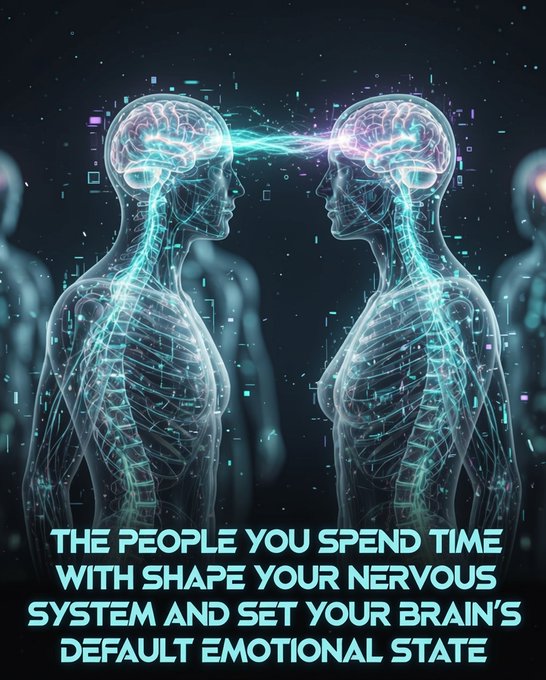
The individuals you surround yourself with can literally reshape how your brain and body respond to stress through physiological changes in your nervous system.
Our autonomic nervous systems aren't solitary—they actively interconnect via a process called co-regulation, where one person's regulated state helps stabilize another's. During interactions, our physiological signals—such as heart rate variability, breathing rhythms, and stress hormone levels—begin to synchronize, a dynamic often described as limbic resonance (the attunement of emotional and limbic brain regions between people).
Spending time with calm, supportive people can reduce cortisol (the primary stress hormone), enhance vagal tone (improving parasympathetic recovery from stress via the vagus nerve), and foster a sense of safety. In contrast, prolonged exposure to negativity, criticism, or chaos can lock the body into a chronic sympathetic "fight-or-flight" mode, heightening hypervigilance, defensiveness, and overall stress reactivity.
Thanks to neuroplasticity, repeated social experiences literally rewire neural pathways over time. We don't merely "pick up" someone's mood—we unconsciously mirror their autonomic state through nonverbal cues, then reinforce it via ongoing biological feedback loops (drawing from concepts in polyvagal theory and interpersonal neurobiology).
This makes curating your social environment a biological imperative for mental and physical health: Prioritize relationships with reliable, grounding individuals who promote regulation, while establishing clear boundaries with those who consistently dysregulate you. These choices aren't optional preferences—they're essential strategies for cultivating resilience, emotional balance, and a secure internal state in an interconnected nervous system.
[Red Beard Somatic Therapy. (2023). The Power of Co-Regulation. Red Beard Somatic Therapy]

English
Kevin L. Freeman retweetledi

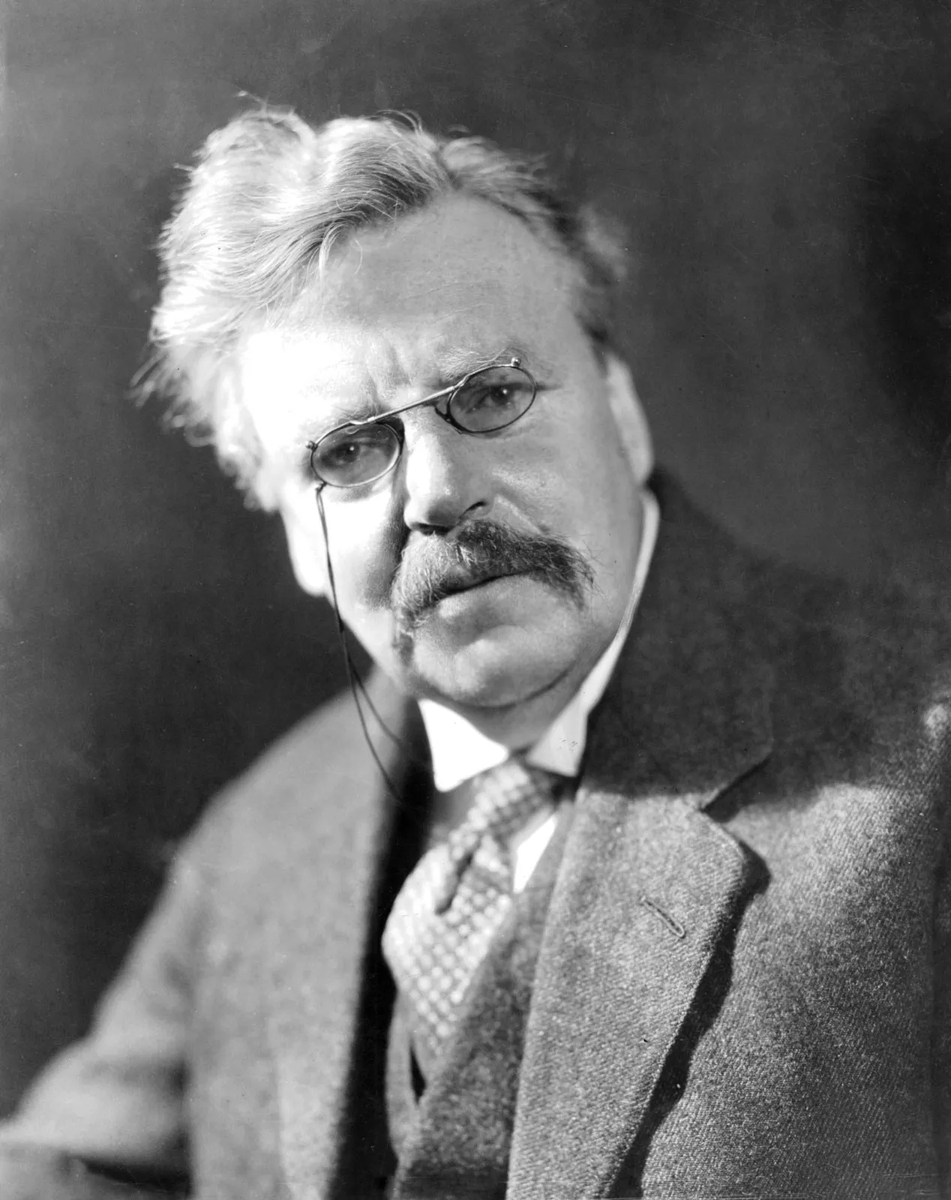
G. K. Chesterton explains that reading gives a man more lives than he was born with:
“A man who has read a thousand books is armed for life; a man who has read none is easy prey. The man who has read a thousand books has lived a thousand lives. He has seen cities he has never visited, spoken to men who died centuries ago, and walked in worlds that no longer exist. Reading does not merely inform him; it enlarges him. It stretches the boundaries of his own experience until he becomes something more than himself.”

English

@grok @xai
Feature request for grok.com:
Please let users export entire multi-part conversations (of any length) into a single clean document — Markdown, PDF, or TXT preferred. Long chats are packed with valuable insights, research, and brainstorming, but copying/pasting huge threads is a bit painful right now. One-click full export would make saving, sharing, and archiving complete Grok sessions so much easier!
#Grok #xAI
English

At a moment when the conversation about immigrants focuses only on division, THE AMERICANS offers something different: a story about what connects us — the pursuit of happiness. Filmed over six years with refugees at a Midwestern meatpacking plant, this film reminds us what makes us all American.
#wishlist" target="_blank" rel="nofollow noopener">seedandspark.com/fund/the-ameri…
English
Kevin L. Freeman retweetledi