Fundi Labs

1.3K posts

Fundi Labs banner
Fundi Labs

Fundi Labs

@FundiProtocol

Tokenization infrastructure building a network of onchain apps. Planted with Funds For Humanity on @base 🟦 Growing cross-chain 🌱🌎

Katılım Nisan 2024
302 Takip Edilen2.5K Takipçiler
Fundi Labs
Fundi Labs@FundiProtocol·
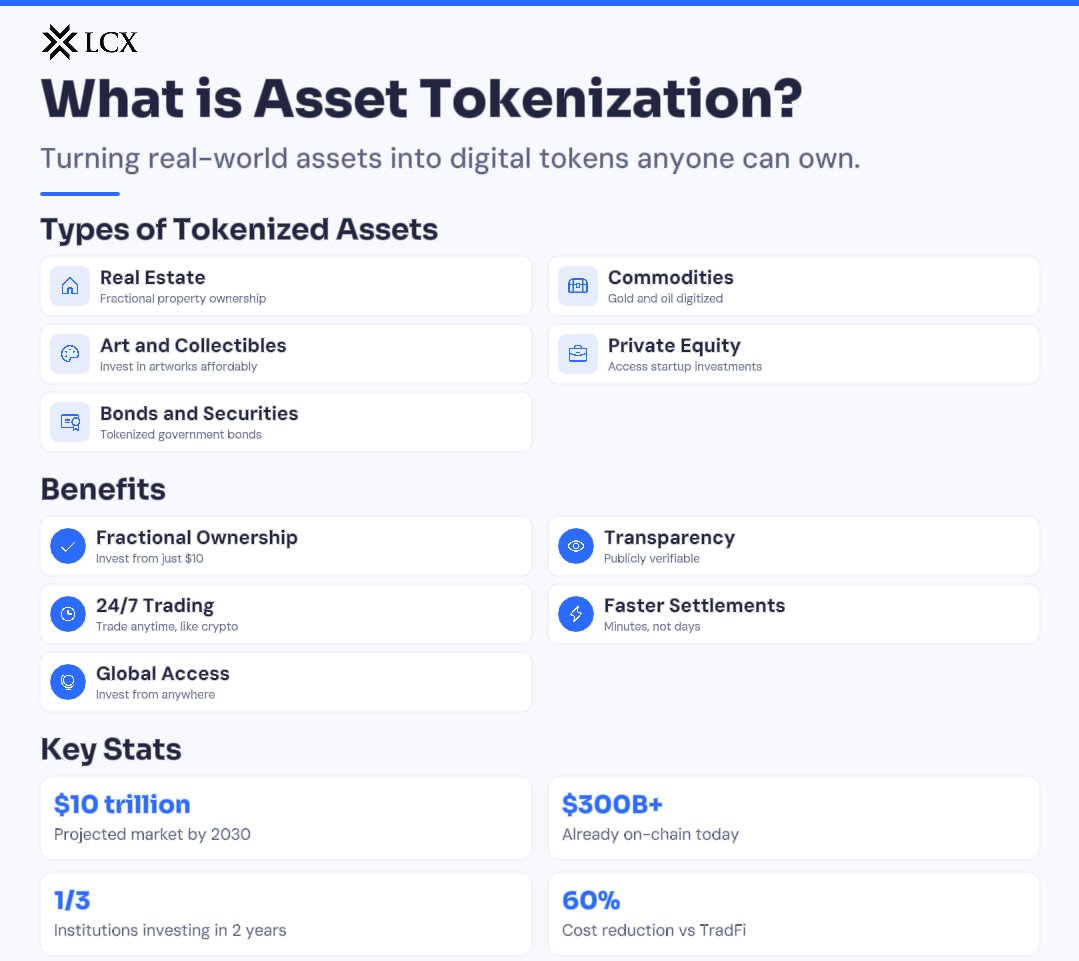
Tokenization is growing fast. Every week, new assets are being brought onchain, new platforms are launching, and more organizations are exploring how digital ownership can improve the way capital, agreements, and assets are managed. With that growth, we often hear the same question: “If the asset already exists in the real world, why do we need onchain records?” On the surface, it sounds reasonable. If a property exists, a fund exists, or an agreement is already signed, why add another layer? Because problems rarely appear when everything is going well. They appear when value changes, when pressure increases, or when participants no longer agree. As long as everyone is aligned, emails work. PDFs work. Spreadsheets work. Internal records work. But the moment money is involved, memory becomes unreliable. Different versions of the same document appear. Approvals get questioned. Ownership needs to be proven. Past decisions need to be verified. This is where traditional systems start to slow down, and trust alone is no longer enough. Onchain records are not about replacing the real-world asset. They are about creating a shared, verifiable source of truth that does not depend on any single party to maintain it. When ownership, transactions, and obligations are recorded in a system that cannot be altered after the fact, disputes become easier to resolve, audits become simpler, and participants can operate with more confidence. For organizations managing funds, real-world assets, donations, or shared ownership structures, this becomes critical as scale increases. More participants means more coordination. More coordination means more risk if the system relies on manual processes. The real value of tokenization is not visibility. It is provability. When value changes, proof becomes everything. That is the layer we are focused on building at Fundi - infrastructure where ownership, rights, and history remain verifiable, enforceable, and transparent, even when conditions change and stakes are high. Because the systems that survive long term are not the ones that look good when things are easy. They are the ones that keep working when trust alone is no longer enough.
English
4
7
17
299
Fundi Labs
Fundi Labs@FundiProtocol·
Every donation. Every contribution. Every impact. All visible onchain. At Funds for Humanity, we believe giving shouldn’t rely on trust alone, it should rely on proof you can see. Transparency isn’t a feature, it’s the foundation. Traditional fundraising often leaves donors in the dark: - Did the funds reach their intended purpose? - Were the outcomes real? Were the milestones achieved? With onchain tracking, every step of your contribution is verifiable, auditable, and traceable. No delays, no uncertainty, no reliance on memory or manual reporting. This isn’t just about showing that money moved. It’s about demonstrating real-world impact. Each dollar, each resource, and every milestone is recorded in a way that makes outcomes measurable, understandable, and trustworthy. Whether you’re a nonprofit, an organization managing grants, or a contributor looking to make a difference, Funds for Humanity transforms giving from an act of faith into an act of evidence. When accountability is built into the system, giving becomes smarter, more strategic, and more impactful. It’s no longer a guess, it’s verifiable, measurable, and actionable. Follow us to see how every contribution can be tracked, every impact proven, and how transparency is changing the future of giving.
English
6
4
13
325
Michael • RWA
Michael • RWA@_mikepreneur·
Another week in RWAs, and the signals around stablecoins, tokenized assets, and institutional infrastructure keep getting stronger. This was a payments, tokenized markets, and regulatory alignment week. Three developments immediately stood out: • @Visa & @stripe expand stablecoin card program to 100+ countries • @circle mints $500M USDC on @solana, reaching $2B in one week • First tokenized music fund launches with a 26,000-song catalog That’s payment distribution, asset tokenization, and settlement scale happening at the same time. Here’s what shaped the RWA and tokenized finance landscape this week 👇 1️⃣ Stablecoins are becoming global payment infrastructure • @Visa & Bridge expand stablecoin cards to 100+ countries • SquareFi launches stablecoin payment rails • @UQPAYSG introduces hybrid fiat/stablecoin settlement • @circle moves $68M in 30 minutes using USDC • Yield-bearing stablecoins grow rapidly • @Paxos surpasses $8B in issued assets • Stablecoins increasingly used for cross-border payments Stablecoins are no longer just crypto liquidity tools, they are becoming global settlement rails. 2️⃣ Banks and institutions building tokenized finance • @HSBC & Standard Chartered expected to receive stablecoin licenses • @bankofengland signals openness to new frameworks • Swiss crypto bank joins regulated DLT trading platform • @Nasdaq partners with Kraken on tokenized stock trading • @binance & Franklin Templeton launch tokenized funds • @BlackRock launches staked ETH ETF • Institutional tokenized assets continue expanding Institutions are not waiting for crypto to mature. They are building the next financial system themselves. 3️⃣ Real-world assets expanding beyond real estate • Tokenized music fund launches with 26,000 songs • Auto loans tokenized onchain • Private equity tokenization platforms launch • Oil trading reaches $1.6B daily volume onchain • Tokenized crude oil platform announced • XRP Ledger grows in tokenized commodities RWAs are moving into credit, commodities, IP, and funds, not just property. 4️⃣ Tokenized stocks & digital securities markets grow • Tokenized stocks pass $1B milestone • On-chain IPO infrastructure launches • Tokenized ETF & stock trading platforms expand • SEC explores exemptions for tokenized securities • New digital asset rules proposed globally • Tokenized markets begin connecting liquidity Capital markets are slowly moving toward 24/7 tokenized trading. 5️⃣ Infrastructure for institutional adoption accelerates • @CantonNetwork expands with new EVM layer • Regulated stablecoin settlement infrastructure launches • @krakenfx launches B2B crypto infrastructure platform • @Mastercard launches global crypto partner program • Compliance & accounting platforms raise funding • RWA-based SME financing platforms emerge The infrastructure layer is being built for institutions, not speculation. 6️⃣ Regulation shifts toward integration • Malaysia preparing digital asset framework • Hong Kong expands STO approvals • India proposes asset tokenization bill • Singapore licenses tokenized securities platform • US explores exemptions for tokenized assets • Governments discuss stablecoin regulation openly Regulators are moving from restriction to structured participation. This week reinforces a few structural shifts: i. Stablecoins are becoming the settlement layer of global finance ii. Tokenized assets are expanding across multiple asset classes iii. Institutions are building real infrastructure for RWAs iv. Tokenized securities markets are forming globally RWAs are no longer early-stage experiments. They are becoming part of financial infrastructure. I break these shifts down every week. Follow @_mikepreneur for RWA and tokenization insights. And what did I miss this week? Drop it below 👇
Michael • RWA tweet media
English
3
0
7
187
Fundi Labs
Fundi Labs@FundiProtocol·
Scaling RWAs isn’t primarily a “which chain” problem. It’s a contract design problem. A lot of energy in the tokenization space goes into debating infrastructure. @ethereum or @solana? @base or another L2? Which chain is cheaper, faster, or has better liquidity? Those questions matter. The underlying chain affects transaction costs, accessibility, and ecosystem reach. Ignoring that would be a mistake. But once real assets and real capital are involved, the conversation shifts quickly. The real challenge becomes how the asset itself is structured. Tokenization can record ownership and automate transfers. What it doesn’t automatically solve are the deeper questions investors and institutions care about: • What legal rights does the token actually represent? • Who controls the underlying asset? • How are payouts calculated and distributed? • What happens if obligations aren’t met? • How are disputes resolved or terms updated? These are contract architecture questions, not blockchain questions. You can move a token across chains instantly. But if the agreement behind that token relies on manual processes, unclear enforcement, or poorly defined rights, the structure will struggle to scale. This is why sophisticated participants don’t evaluate tokenized assets based solely on the chain they’re built on. They examine whether the contracts, governance rules, and operational workflows are designed to handle real-world conditions. In practice, the most resilient RWA platforms treat tokenization as part of a broader system, one where legal structure, contract logic, and operational processes are designed to work together. Infrastructure matters. But infrastructure alone doesn’t create reliability. The projects that will scale real-world assets successfully are the ones that design contracts that hold up when capital moves, incentives change, and markets tighten. Because blockchains move tokens. Contracts move capital.
Fundi Labs tweet media
English
8
4
14
349
Fundi Labs
Fundi Labs@FundiProtocol·
Tokenization isn’t just slapping an asset onchain. The real question: Can you prove it works at scale? Legal, technical, operational, economic… diligence in tokenized assets covers it all. Read how pros do it ⬇️
Fundi Labs@FundiProtocol

What Diligence Really Looks Like in Tokenized Assets Today Tokenization promises efficiency, transparency, and liquidity. But anyone who’s raised capital or invested in tokenized assets knows this: not all tokens are created equal. Diligence in tokenized assets goes far beyond a simple legal review. It’s about understanding whether the asset, its contracts, and its ecosystem can reliably deliver what they promise, today and at scale. Here’s what professional due diligence looks like: 1. Legal & Compliance Verification - Is the token backed by a verifiable real-world asset? - Are ownership rights enforceable across jurisdictions? - Are contracts structured to protect all stakeholders, not just the issuer? 2. Technical & Smart Contract Audit - Are contracts secure, audited, and free from exploitable vulnerabilities? - Does the contract logic correctly handle payouts, governance, and ownership transfers? - Are there fail-safes or upgrade mechanisms if issues arise? 3. Transparency & Traceability - Can all token holders independently verify ownership and transaction history? - Is the asset’s lifecycle fully auditable and tamper-proof? 4. Economic & Risk Assessment - How is the token’s value derived and maintained? - Are liquidity and incentive structures robust under market stress? - Is the model resilient to downturns or rapid scaling? 5. Operational Due Diligence - Are reporting, distributions, and governance processes automated and reliable? - Are outcomes measurable, auditable, and aligned with stakeholders’ expectations? 6. Ecosystem & Stakeholder Alignment - Who are the participants, and are incentives aligned for long-term collaboration? - Is there a clear path for growth, adoption, and liquidity management? The takeaway from this is: tokenization alone doesn’t guarantee confidence or risk reduction. Proper diligence evaluates legal, technical, operational, and economic dimensions. Organizations that bake verifiability, enforceability, and transparency into their assets gain trust, reduce risk, and attract serious participation. At @FundiProtocol, we help organizations structure tokenized assets in ways that are auditable, enforceable, and investor-ready, so that value isn’t just promised, it’s provable. Follow for more

English
7
4
16
336
Fundi Labs
Fundi Labs@FundiProtocol·
When markets turn and liquidity dries up, the real test of any financial structure begins. In strong markets, almost every system looks like it works. Transactions are frequent, capital is available, and confidence hides weaknesses in the underlying process. But when activity slows down, the difference between hype and infrastructure becomes clear. Reliable systems continue to operate even without attention. Transactions still execute. Obligations are still enforced. Capital continues to move according to defined rules. These are not signs of momentum. They are signs of structure. In real capital environments, strength is not measured by how a system performs when everything is active, but by how it behaves when conditions become uncertain. Can ownership still be verified? Do agreements still execute as written? Can participants rely on the same source of truth without manual coordination? Systems designed only for growth often struggle in these moments. Systems designed for reliability keep working regardless of market noise. This is why serious builders focus less on short-term activity and more on how their infrastructure performs under pressure. Because when liquidity tightens and attention fades, the only thing that matters is whether the structure itself can continue to function. The real question is simple: are your current systems built to operate only when markets are loud… or can they keep working even when no one is watching? Think about it 👀
English
4
2
9
165
RWA Story House
RWA Story House@d_rwastoryhouse·
RWA projects don’t have a content problem. They have a narrative continuity problem. Most teams are publishing regularly, but the messaging is fragmented. - One post announces a $20M asset onboarding. - Another highlights a partnership. A week later there’s a thread about yield mechanics. Then the conversation shifts to token utility. Individually, these updates are useful. Collectively, they fail to build a coherent narrative. And when messaging lacks continuity, something important happens: Trust never compounds. Every new person who discovers the project has to reconstruct the story from scratch. In an industry like RWAs, where credibility, regulation, and asset integrity matter, this becomes a serious growth constraint. Because investors evaluating tokenized assets are not simply looking for activity. They are looking for clarity. They want to understand: • What asset is being tokenized • Why that asset was chosen • Who operates it • How the legal and financial structure works • What the risks are • Why tokenization improves access or efficiency If your content touches these topics randomly, the audience never connects them into a clear mental model. But when messaging is structured intentionally, content begins to compound. - One post explains the asset class. - The next explains how tokenization changes access. - Another introduces the operators behind the asset. - Another clarifies risk management. - Another explains the broader market opportunity. Over time, the audience stops seeing isolated updates. They begin to understand the system behind the project. This is important because capital rarely moves toward projects that are merely visible. It moves toward projects that are understood. The most effective RWA brands therefore don’t treat content as a stream of announcements. They treat it as narrative infrastructure. Every post reinforces the previous one. Every message moves the audience closer to understanding the model. Every explanation reduces uncertainty. That is how trust compounds. And in a market built on real assets, trust is the single most valuable growth engine a project can build. Clarity, consistently delivered, is what turns attention into long-term conviction.
English
3
0
5
36
Fundi Labs
Fundi Labs@FundiProtocol·
What Diligence Really Looks Like in Tokenized Assets Today Tokenization promises efficiency, transparency, and liquidity. But anyone who’s raised capital or invested in tokenized assets knows this: not all tokens are created equal. Diligence in tokenized assets goes far beyond a simple legal review. It’s about understanding whether the asset, its contracts, and its ecosystem can reliably deliver what they promise, today and at scale. Here’s what professional due diligence looks like: 1. Legal & Compliance Verification - Is the token backed by a verifiable real-world asset? - Are ownership rights enforceable across jurisdictions? - Are contracts structured to protect all stakeholders, not just the issuer? 2. Technical & Smart Contract Audit - Are contracts secure, audited, and free from exploitable vulnerabilities? - Does the contract logic correctly handle payouts, governance, and ownership transfers? - Are there fail-safes or upgrade mechanisms if issues arise? 3. Transparency & Traceability - Can all token holders independently verify ownership and transaction history? - Is the asset’s lifecycle fully auditable and tamper-proof? 4. Economic & Risk Assessment - How is the token’s value derived and maintained? - Are liquidity and incentive structures robust under market stress? - Is the model resilient to downturns or rapid scaling? 5. Operational Due Diligence - Are reporting, distributions, and governance processes automated and reliable? - Are outcomes measurable, auditable, and aligned with stakeholders’ expectations? 6. Ecosystem & Stakeholder Alignment - Who are the participants, and are incentives aligned for long-term collaboration? - Is there a clear path for growth, adoption, and liquidity management? The takeaway from this is: tokenization alone doesn’t guarantee confidence or risk reduction. Proper diligence evaluates legal, technical, operational, and economic dimensions. Organizations that bake verifiability, enforceability, and transparency into their assets gain trust, reduce risk, and attract serious participation. At @FundiProtocol, we help organizations structure tokenized assets in ways that are auditable, enforceable, and investor-ready, so that value isn’t just promised, it’s provable. Follow for more
Fundi Labs tweet media
English
5
4
14
677
Fundi Labs
Fundi Labs@FundiProtocol·
Most people say they’re doing diligence on tokenized assets. But in reality, they’re still evaluating them with Web2 assumptions. They look at: • The asset • The projected yield • The issuer’s credibility And then they stop there. But tokenized assets introduce a new layer of risk and opportunity that traditional diligence frameworks weren’t designed for. Questions like: i. Who actually controls the underlying asset? ii. What rights does the token legally represent? iii. What happens if the issuer disappears? iv. Is enforcement onchain, offchain, or somewhere in between? v. Are payouts automated or dependent on manual processes? These questions are becoming critical for investors, builders, and institutions entering the RWA space. Because tokenization doesn’t remove risk. It rearranges where the risk lives. And if you’re not evaluating the infrastructure behind the asset, you’re not really doing diligence. You’re just doing surface-level analysis. Later today, we’ll break down what real diligence in tokenized assets actually looks like today, and why most investors are still missing half the picture.
English
4
2
12
214
Fundi Labs
Fundi Labs@FundiProtocol·
The other day, we talked about the cost of poor contract design. Here’s the uncomfortable truth: Most teams don’t realize their contracts are fragile until something goes wrong. A payout is delayed. An investor questions numbers. A stakeholder exits. Markets tighten. That’s when “we’ll sort it out” becomes expensive. Strong capital structures aren’t tested in bull markets. They’re tested when incentives shift. If your agreements still rely on coordination, memory, or manual oversight, you don’t have enforceability. You have optimism. And optimism is not infrastructure.
Fundi Labs@FundiProtocol

The Cost of Poor Contract Design in Real Capital Flows In capital markets, risk is often discussed in terms of volatility, liquidity, or counterparty exposure. But one of the most underestimated risks sits elsewhere: Contract design. Not whether a contract exists, but how it is structured, enforced, and operationalized. When real capital is involved - private investments, structured products, revenue-share agreements, tokenized assets, pooled funds, impact financing, contract design directly affects capital efficiency, dispute frequency, and long-term scalability. Below are the measurable costs of weak contract architecture. 1. Capital Delays and Cash Flow Disruptions Poorly defined payout logic, ambiguous trigger conditions, or manual reconciliation requirements create bottlenecks. Examples: - Revenue distributions dependent on manual calculations - Waterfall structures interpreted differently by stakeholders - Reporting lags that delay investor payouts - Compliance reviews triggered by inconsistent documentation When execution depends on human coordination instead of system logic, delays become routine. In capital flows, time is not neutral. Delayed capital reduces reinvestment capacity and increases friction across the entire structure. 2. Escalating Legal and Administrative Costs Ambiguity is expensive. When agreements lack clarity around: i. Rights enforcement ii. Default conditions iii. Asset control iv. Exit mechanisms Disputes become interpretive rather than procedural. This leads to: i. Legal reviews ii. Amendments iii. Arbitration iv. Operational restructuring What could have been prevented through structured logic becomes a recurring legal expense. 3. Operational Fragility at Scale Many contract structures function adequately at small volume. They fail under scale. As participation increases: i. Manual oversight becomes unsustainable ii. Approval chains slow down iii. Reporting inconsistencies compound iv. Audit complexity increases What worked for 10 stakeholders often collapses at 100. The problem is not growth. The problem is agreements that were never built for automated enforcement. 4. Misalignment Between Legal Terms and Operational Reality In many structures, the legal contract and operational system are disconnected. The contract states one thing. The workflow implements another. For example: - A token represents ownership, but enforcement remains offchain - A fund is digitized, but capital calls rely on manual confirmations - A revenue-share agreement is automated, but data inputs are unverifiable When systems do not reflect the contract’s logic, risk is not reduced, it is displaced. 5. Reputational and Capital Access Risk Sophisticated investors evaluate infrastructure quality. If enforcement depends on trust, spreadsheets, and post-hoc reconciliation, the structure is considered higher risk, regardless of the asset quality. Weak contract architecture: i. Reduces investor confidence ii. Increases due diligence scrutiny iii. Limits institutional participation iv. Slows fundraising cycles Capital flows toward structures that demonstrate predictability and enforceability. The Structural Shift The next evolution in capital infrastructure is not just digitization. It is programmable enforceability. Well-designed contract infrastructure should: - Encode rights and obligations into execution logic - Reduce reliance on manual confirmation - Automate payout and distribution conditions - Preserve transparent audit trails - Align legal intent with operational reality This is where tokenization and onchain systems become meaningful, not as branding, but as enforcement mechanisms. The goal is not to replace legal agreements. The goal is to ensure that execution does not depend on interpretation after capital has moved. Final Consideration If your capital structure depends on: i. Manual reconciliation ii. Email confirmations iii. Off-platform enforcement iv. Trust-based approvals Then your risk profile is higher than your documents suggest. The cost of poor contract design is rarely visible at inception. It becomes visible when: value changes, incentives shift, markets tighten, or scale increases By then, restructuring is significantly more expensive than proper design at the start. If you are structuring funds, tokenized assets, revenue-sharing models, or real-world asset flows, evaluate whether your agreements are built for enforceability at scale. Capital efficiency today depends as much on infrastructure design as it does on asset quality. If you're building serious capital systems, let’s connect and discuss how enforceable infrastructure reduces long-term operational risk.

English
7
6
22
5.3K
Base Posting
Base Posting@baseposting·
if you're reading this, start baseposting
English
108
38
357
8.9K
Michael • RWA
Michael • RWA@_mikepreneur·
The first video on my YouTube channel just crossed 200 views. And we’re now at 14 subscribers. Was I expecting more views? Honestly, yes. But this is still a win. Because every single view represents someone who chose to spend their time listening. Every subscriber represents someone who believes the content is worth following. That matters. Building anything from zero is different from observing it once it’s grown. The early stage is quiet, it’s slow, it tests whether you’re serious or just experimenting. I’m serious. Thank you to everyone who has watched, shared, subscribed, or sent feedback. You’re the foundation of this channel. More structured breakdowns on RWAs, tokenization, and capital market infrastructure are coming soon - deeper analysis, clearer frameworks, real insights. If you’re interested in understanding this space properly, not just following headlines, subscribe so you don’t miss what’s next. We’re just getting started.
Michael • RWA tweet media
English
4
2
8
202
Fundi Labs
Fundi Labs@FundiProtocol·
If you’re serious about scaling real onchain infrastructure, this is the month to tighten systems, clarify agreements, and move with intention. let's collaborate 🤝
English
0
0
3
82
Fundi Labs
Fundi Labs@FundiProtocol·
New month. New momentum. March is for execution. Less noise, less speculation, more building, more structure. Here's to building something that lasts 🥂
Fundi Labs tweet media
English
9
4
18
399
Fundi Labs
Fundi Labs@FundiProtocol·
@_mikepreneur @dar_global great post the headlines say “Trump Resort Tokenized.” The real story is, structured, compliant capital formation moving onchain. This isn’t property NFTs. It’s regulated debt issuance under securities law, distributed through blockchain infrastructure.
English
0
0
1
13
Michael • RWA
Michael • RWA@_mikepreneur·
The Trump-branded Maldives resort tokenization is less about branding and more about structure. Full story 👇 @dar_global, a London-listed luxury real estate developer, is building the Trump International Hotel & Resort in the Maldives, expected to complete around 2030. In partnership with @worldlibertyfi (WLFI) and @Securitize, the financing layer of that development is being tokenized. It is important to clarify what is actually being offered. This is not direct equity in the resort. Investors are not purchasing fractional ownership of villas or title rights to the property itself. The offering represents loan revenue interests tied to the development. In practical terms, eligible investors gain exposure to fixed yield and interest payments generated from the financing structure supporting the asset. There may also be participation tied to performance outcomes depending on the structure disclosed in the private placement memorandum. That distinction matters because tokenizing equity in global real estate is legally complex. Title law, jurisdictional restrictions, custodial frameworks, and transfer limitations make direct onchain property ownership difficult to scale. By tokenizing the financing instrument rather than the real estate itself, the structure aligns more cleanly with existing securities law. The tokens are being offered under Rule 506(c) of Regulation D to verified accredited investors in the United States, and under Regulation S to non-US persons. That means this is a private securities issuance, not a public token sale. The tokens are restricted securities with transfer limitations and resale constraints. This is compliant capital formation using blockchain rails, not regulatory arbitrage. The infrastructure provider, Securitize, plays a critical role here. They operate as a SEC-registered broker-dealer, a registered transfer agent, a fund administrator, and the operator of a regulated Alternative Trading System (ATS) in the United States. In Europe, they are authorized under the EU DLT Pilot Regime. This regulatory stack is what allows tokenized securities to function within institutional guardrails rather than outside them. The broader significance of this deal is structural. First, it reinforces that real estate tokenization is scaling through financial instruments rather than direct asset NFTs. Debt, structured revenue participation, and regulated securities wrappers are proving more practical than direct property tokenization. Second, it shows that brand-driven developments are willing to test compliant on-chain capital formation. Whether one focuses on the Trump brand or not, the presence of a globally recognized name attached to a regulated token issuance increases visibility for the sector. Third, it highlights that liquidity in RWAs will likely develop first around yield-bearing instruments rather than speculative ownership narratives. Institutional capital is comfortable with debt structures. Blockchain simply becomes the settlement and transfer layer. However, it is equally important to temper expectations. These tokens are not freely tradable retail assets. They are subject to securities restrictions. Verification requirements apply. Secondary liquidity, if available, would occur within regulated environments. This is not frictionless DeFi. It is digitized private markets infrastructure. The deeper lesson is this: tokenization does not eliminate legal and financial complexity. It reorganizes it. The innovation is not in putting a resort “on the blockchain.” The innovation is in integrating regulated securities issuance, compliance controls, programmable transfer restrictions, and potential on-chain utilities into a single capital formation stack. For RWA builders, the takeaway is clear. The market is maturing around compliant, revenue-linked structures supported by regulated intermediaries. The future of tokenized real estate will likely be driven by structured finance mechanics, not by symbolic ownership narratives. If you want to stay ahead in RWAs, focus less on headlines and more on structure. The economic design and regulatory alignment are what determine whether capital actually moves. Also make sure to follow @_mikepreneur for more stories in world of RWA 🌎
Michael • RWA tweet media
English
3
1
8
391