

GlacierAminos
24 posts

This is the stuff we need to see more of! Almost nobody is posting about their failed tests.
GlacierAminos@GAminos84609
The peptide space is getting scary. We just rejected 3 batches this month after our third-party testing flagged identity issues. Purity was 99%+ on all of them. Looked clean. Wasn’t. Meanwhile a Chinese supplier (Zhengzhou Chengque) just told customers to destroy product after shipping it — turns out their “Reta” was BPC-157. This is why we test every batch through independent labs (ILS, Kovera) before anything hits a shelf. Purity numbers alone mean nothing if identity can’t be confirmed. If your vendor isn’t showing you LC-MS identity confirmation, you don’t know what you’re putting in a vial.
English
@peptidemaxxer This was lumira? The guy that always talks about everything is US made and all that crazy? I believe on TikTok.
English

Peptaura’s top supplier Lumira getting exposed for selling “0% peptides” is not a good look for the industry. expect the gray market to change fast over the next few weeks
funny seeing their founders delete comments and start fudding me after i defended them publicly

Simón Melchor@Sencio79
@0xexpt Recent order from Lumira via Peptaura. 0% peptide found.
English

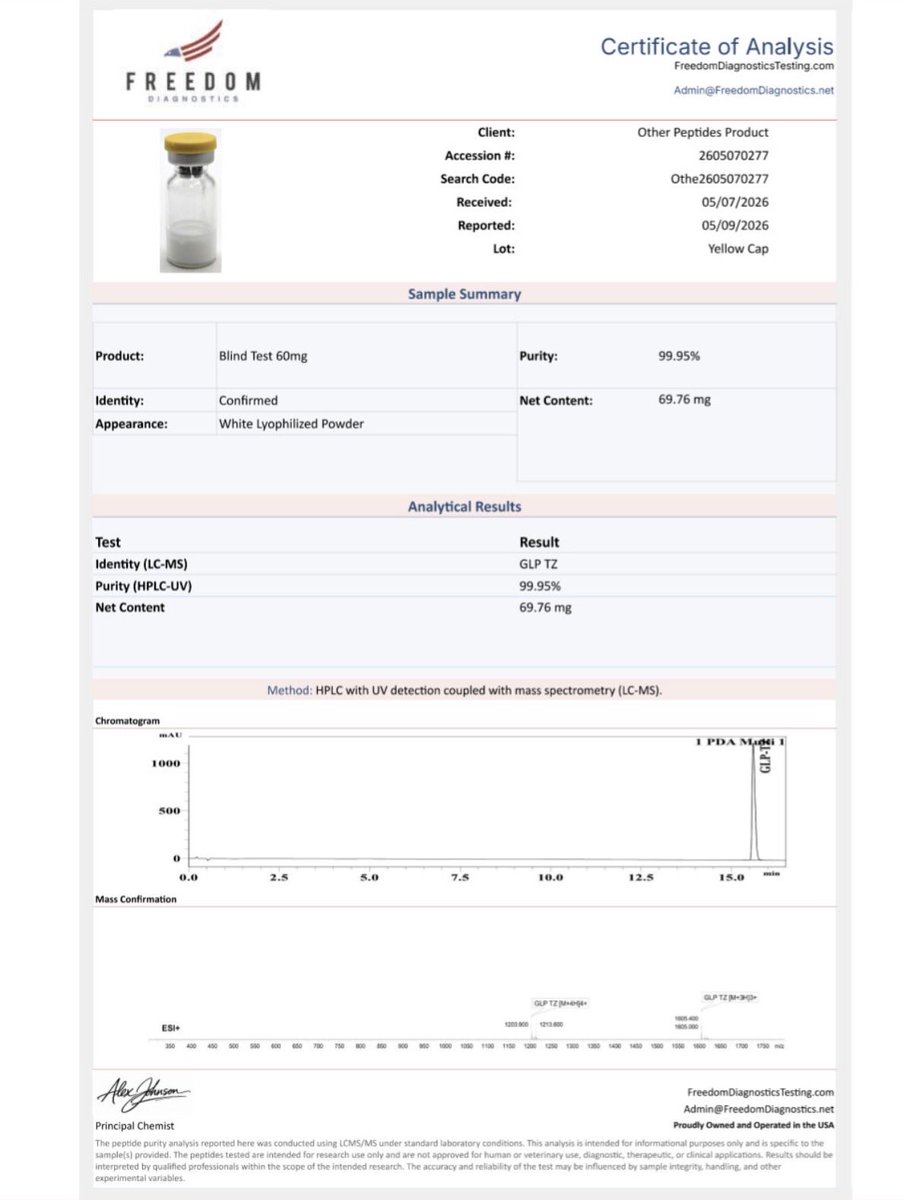
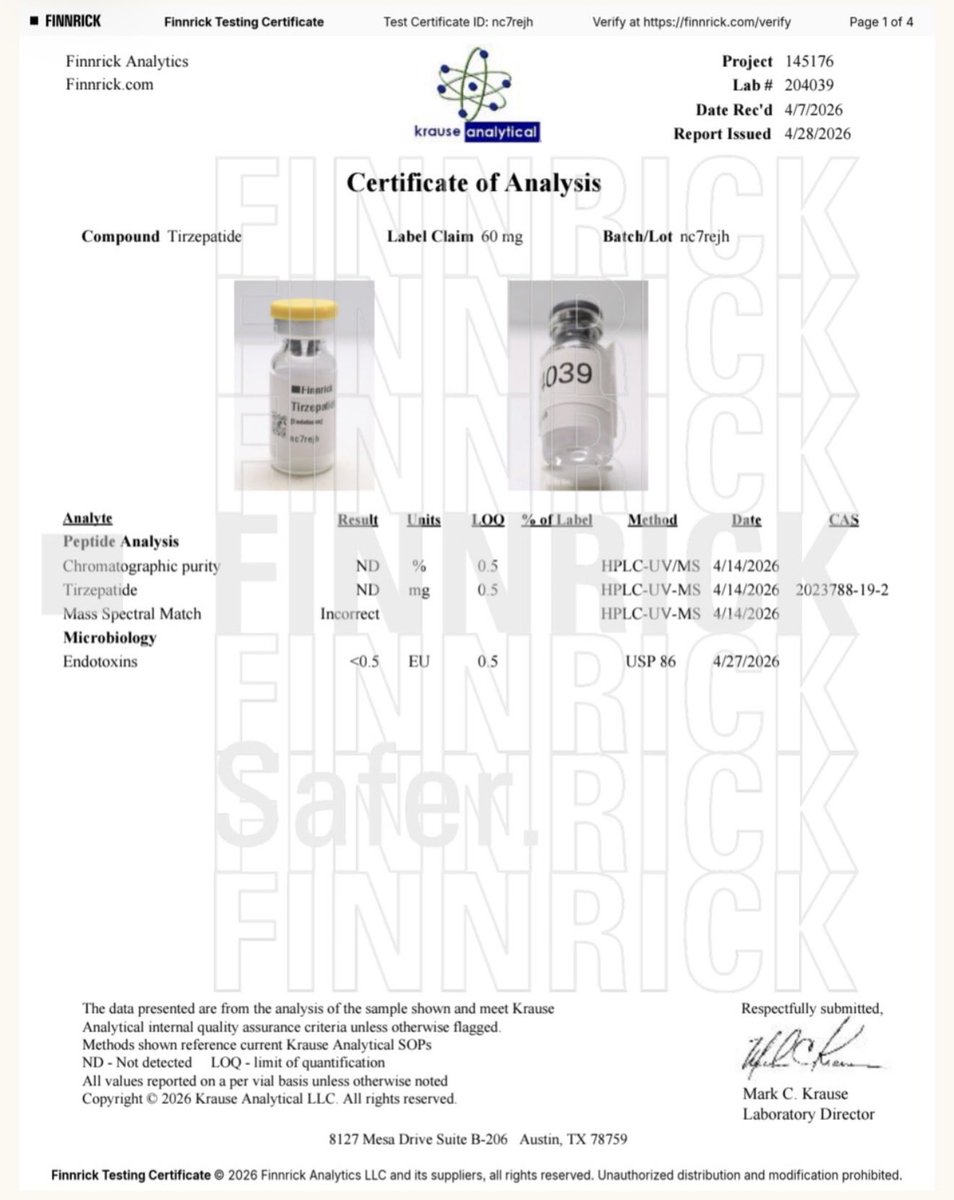
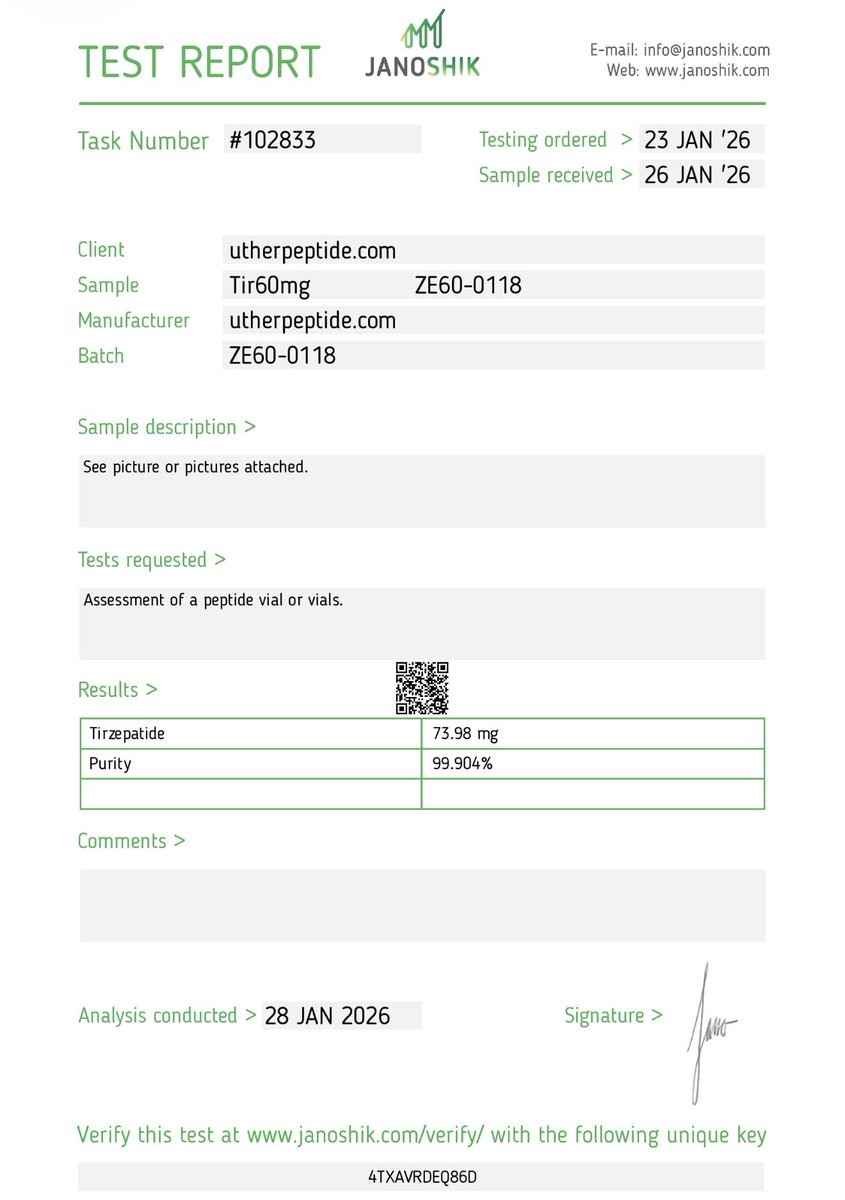
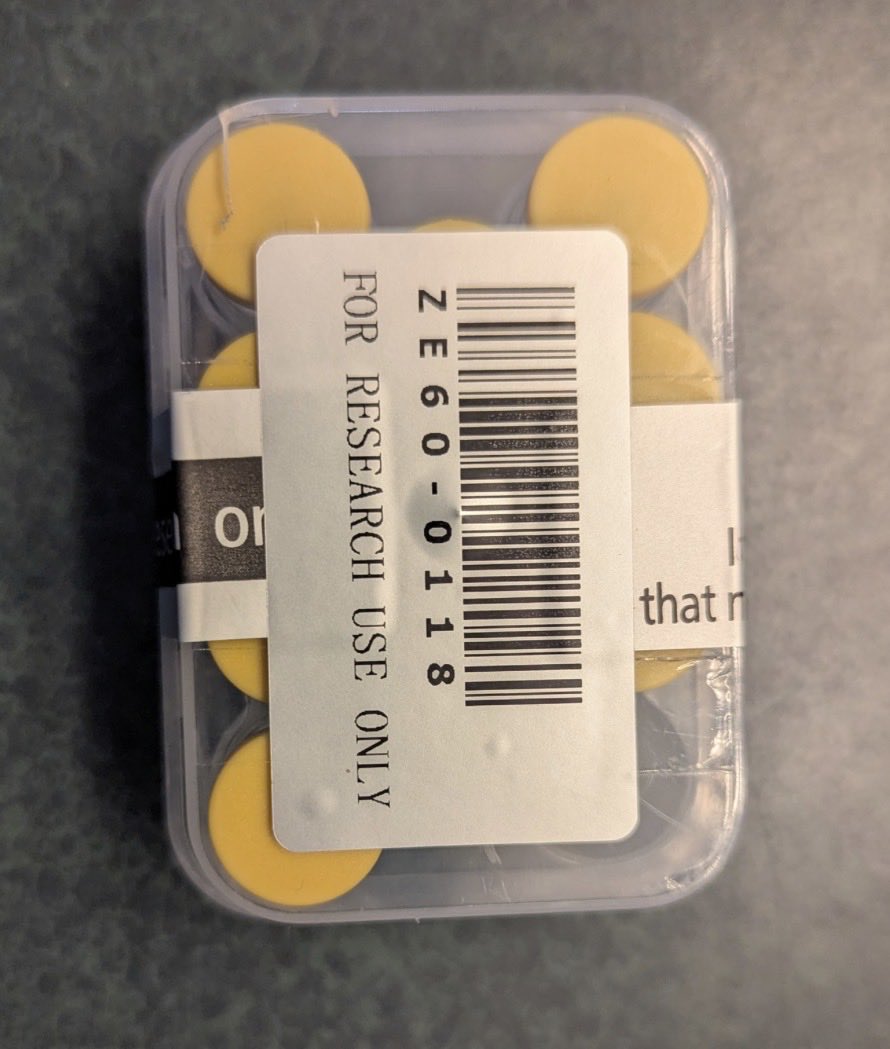

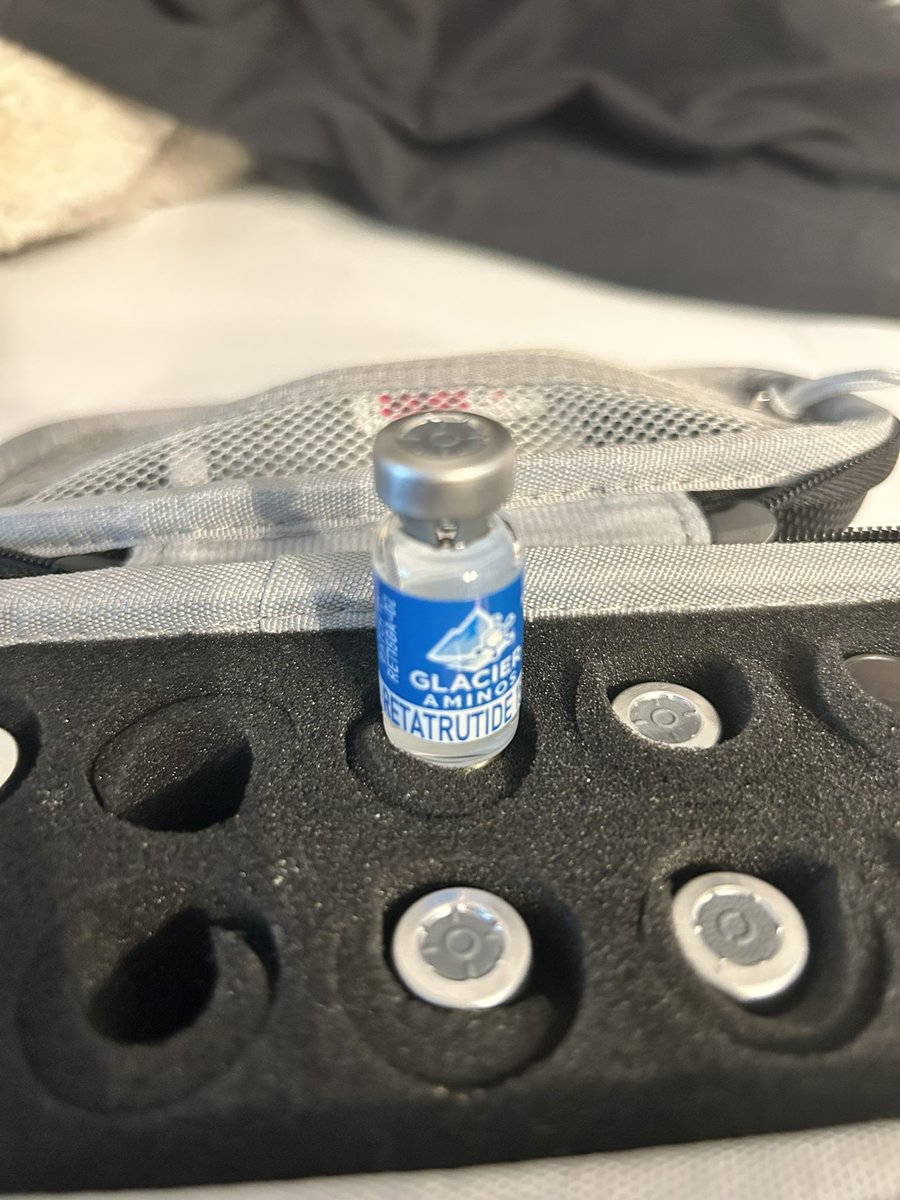
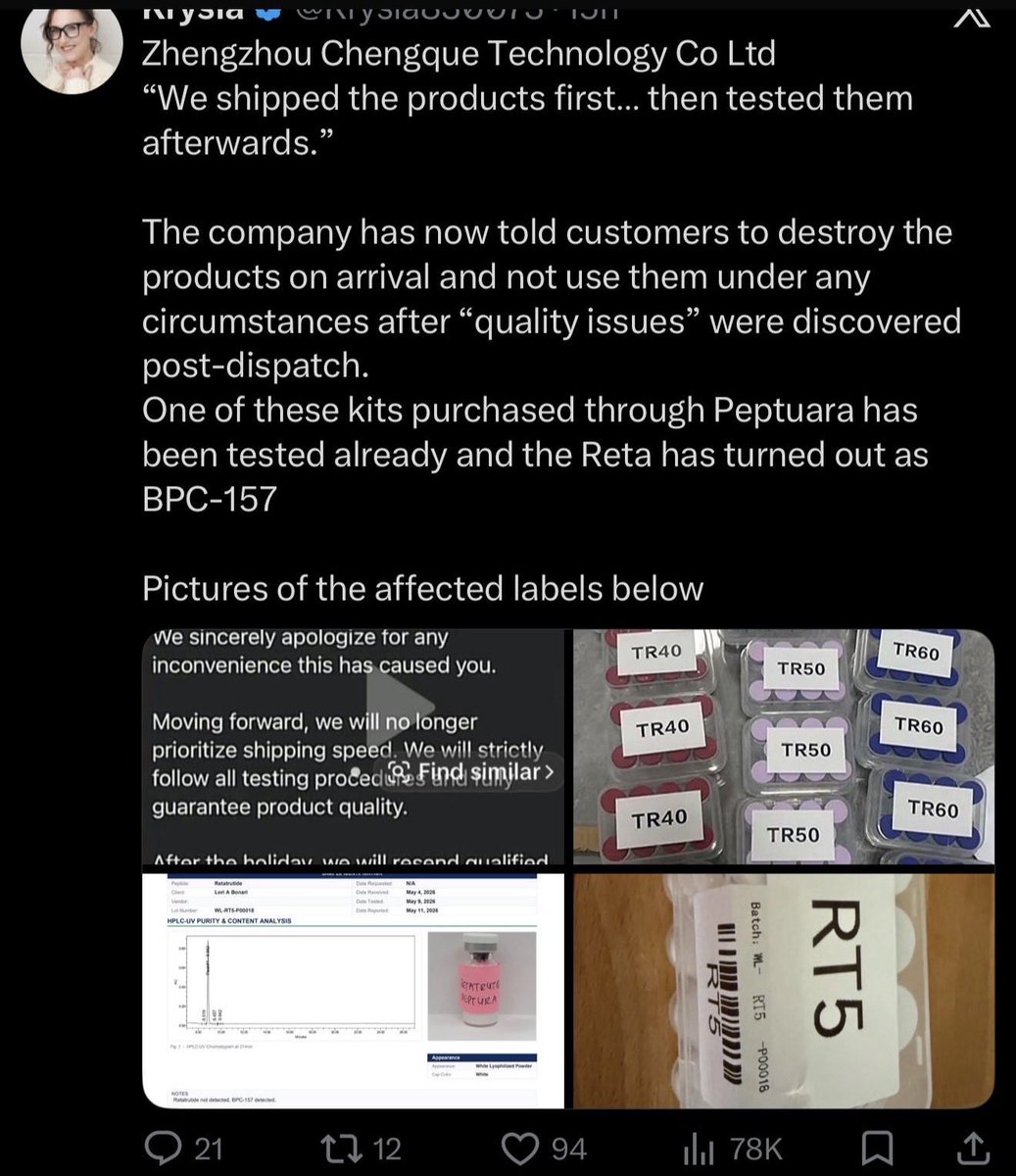
The peptide space is getting scary.
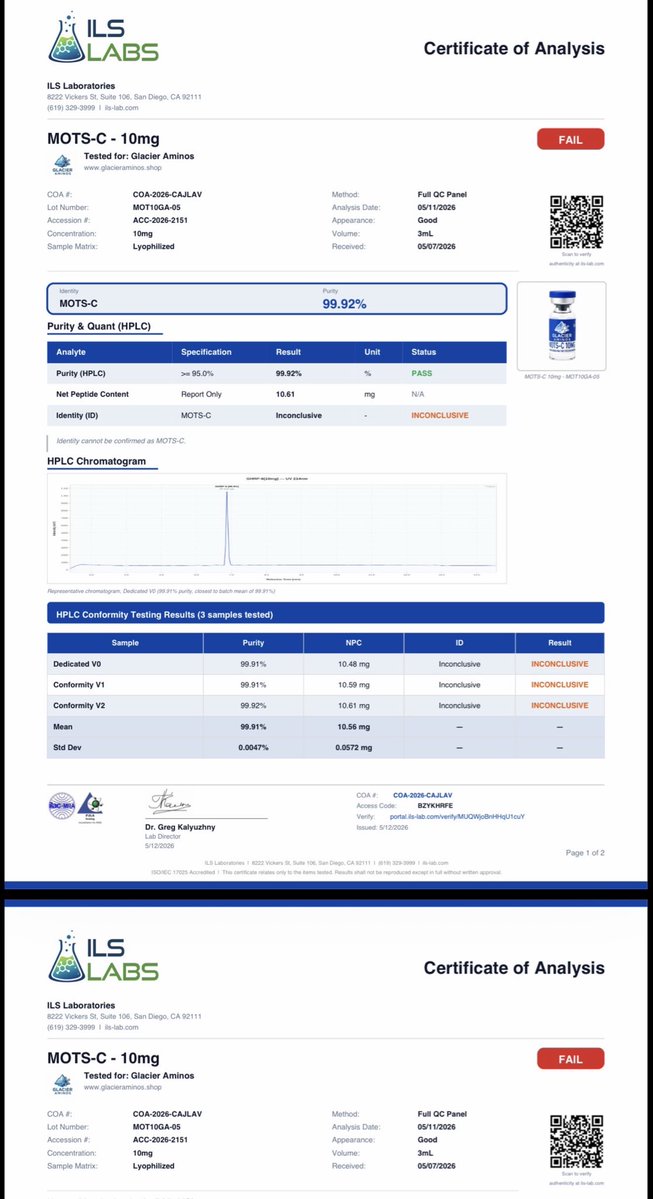
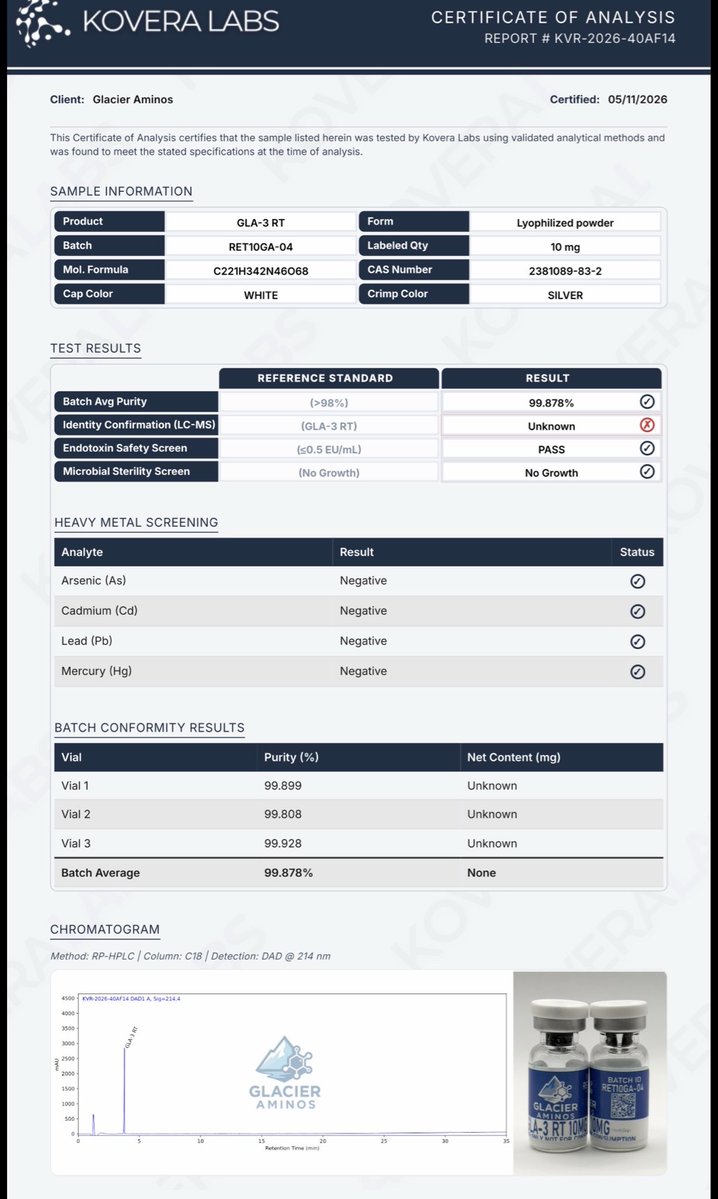
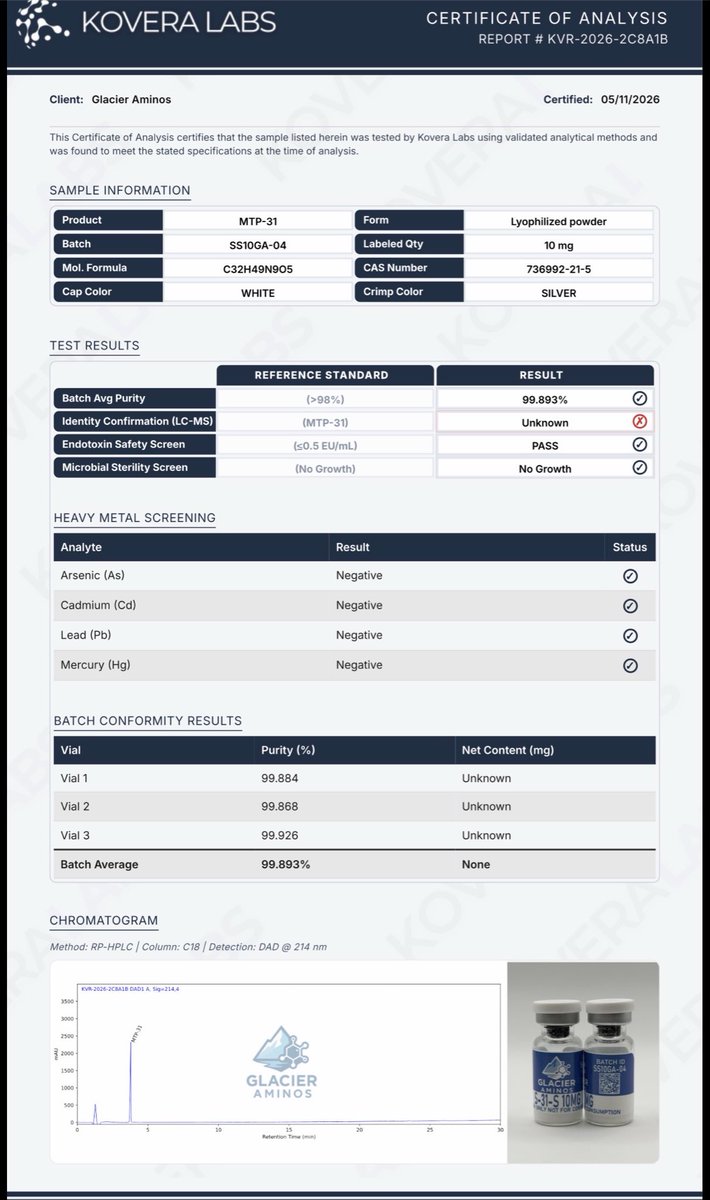
We just rejected 3 batches this month after our third-party testing flagged identity issues. Purity was 99%+ on all of them. Looked clean. Wasn’t.
Meanwhile a Chinese supplier (Zhengzhou Chengque) just told customers to destroy product after shipping it — turns out their “Reta” was BPC-157.
This is why we test every batch through independent labs (ILS, Kovera) before anything hits a shelf. Purity numbers alone mean nothing if identity can’t be confirmed.
If your vendor isn’t showing you LC-MS identity confirmation, you don’t know what you’re putting in a vial.
English

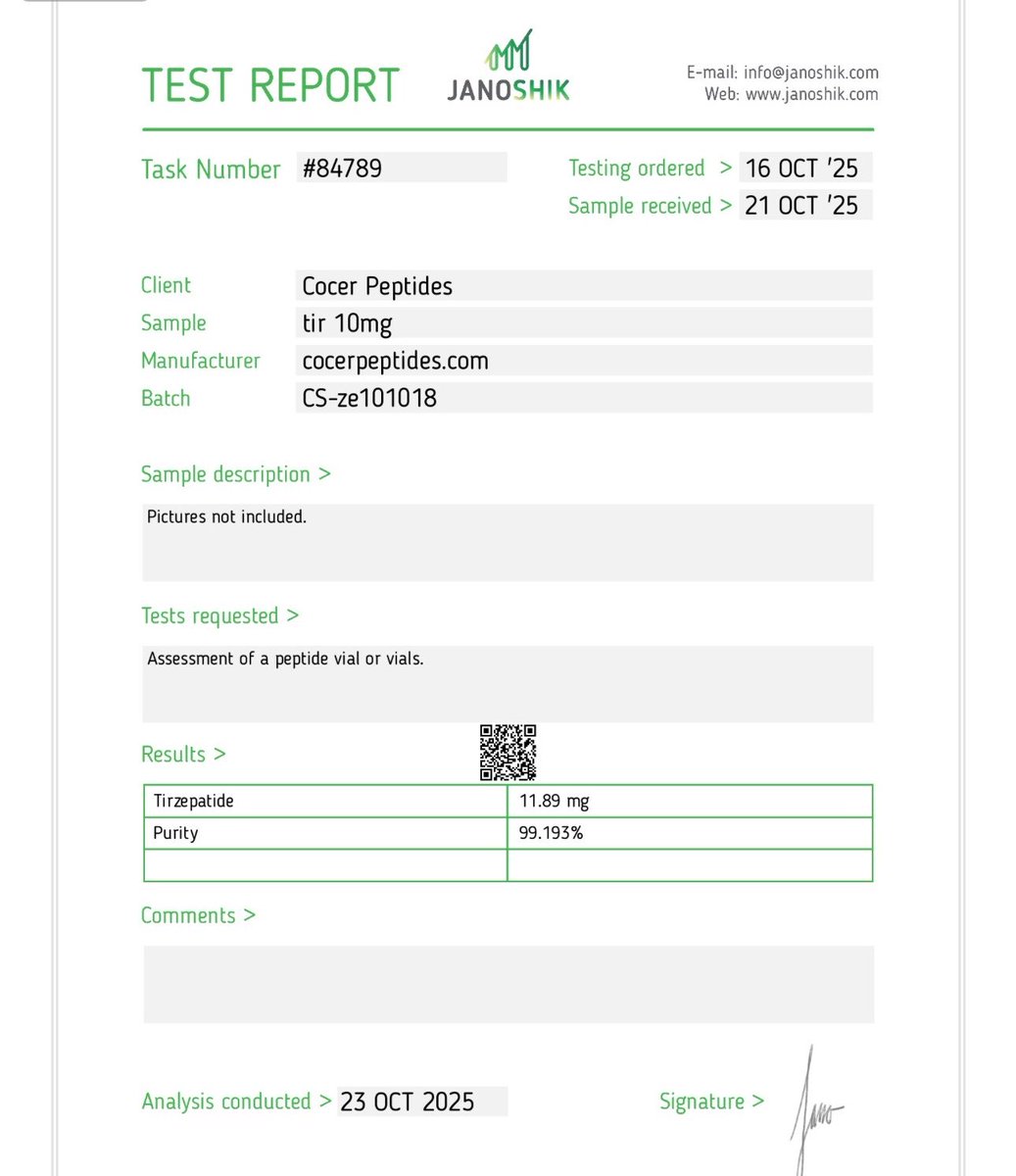
If you’re new to Peptides, please please don’t accept a simple HPLC-MS quality test from a vendor.
When you are new, you don’t realize how much more testing can and should be done so it is easy to see one quick task and think that everything is good.
HPLC-MS literally just tells you that that specific vial contains what the label says it contains and how much. Learn to read these tests and what they stand for.
Don’t let your body’s reaction be the test…
English
Vial fill levels: what you actually need to know
The labeled amount on a peptide vial isn’t always what’s inside. Industry specs allow ±10% variance meaning a “10mg” vial could legitimately contain anywhere from 9mg to 11mg.
Exact fills are impossible at scale. Most manufacturers aim for a slight overfill on purpose researchers don’t complain when there’s a little extra, but underfills generate complaints fast. So the industry leans high.
The real source of truth? The Certificate of Analysis.
At Glacier Aminos, we go a step further. We run conformity testing on every batch to get an accurate average across the run. Then we print the actual measured content directly on the label, alongside a QR code that takes you straight to the test results.
Why it matters: accurate reconstitution depends on knowing what’s really in the vial. Guess wrong on volume, and your dosing math is off from day one.
Trust the COA. Always.
English
Glacier Aminos Is Pulling 70% New Customers Daily and GLPs Aren’t Even The Reason
Quick stat that surprised us: about 7 out of every 10 customers walking through the door at glacieraminos.shop on any given day are brand new. That’s wild for a peptide shop.
Most stores in this space lean hard on repeat buyers because the market’s tight and competitive. But somehow we keep pulling new faces. Daily.
The “why” was the second surprise it’s not the GLPs. Everyone assumes GLP-1s are carrying the whole industry right now, and don’t get me wrong, they sell. But they’re not even our top movers. People are showing up because the pricing actually makes sense for the quality they’re getting. That’s the whole pitch. No gimmicks, no inflated MSRPs with “70% off!” theater.
Turns out when you price fair and don’t cut corners on the product, word gets around. Who knew. 🧊
English
@PeptideList I believe this. We average 70% new customers daily.
English

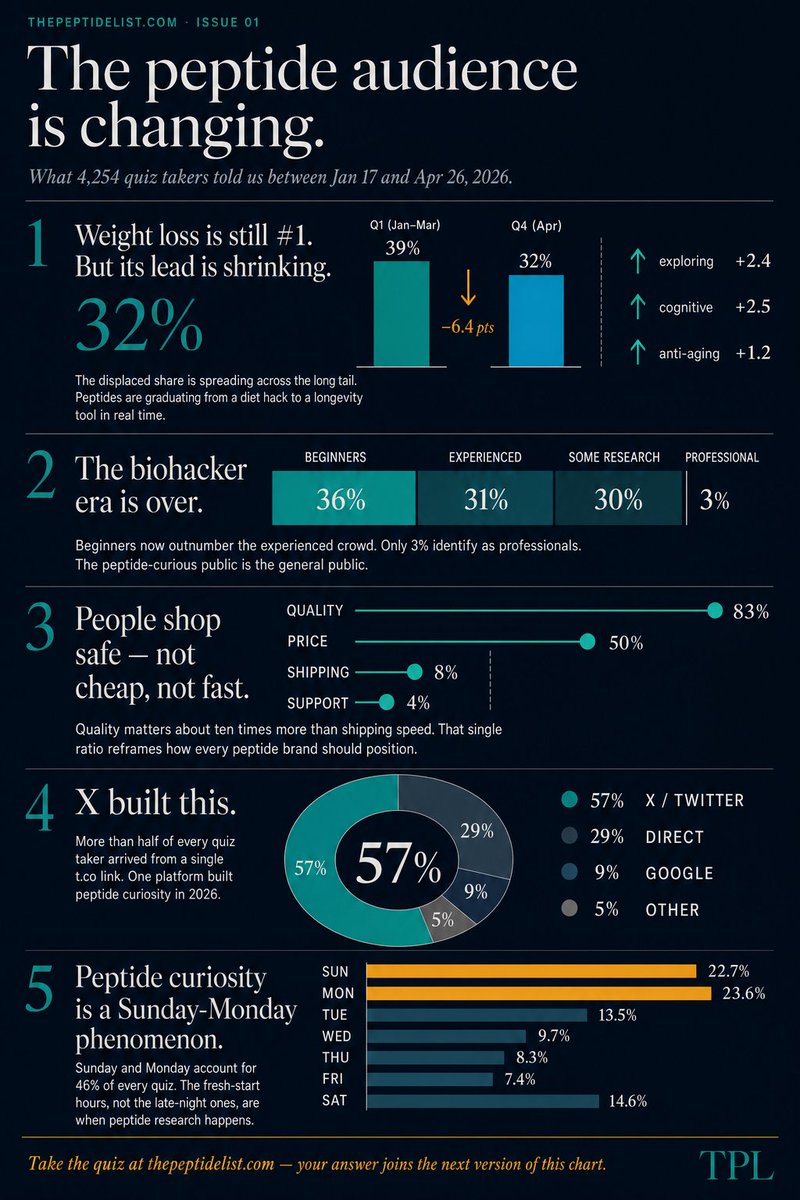
We ran a peptide quiz on the homepage for about three months. 4,254 of you took it.
The most counterintuitive thing in the data: 46% of every quiz gets taken on a Sunday or Monday.
The late-night biohacker stereotype isn't real.
Peptide curiosity is a fresh-start activity.
Full breakdown below.
English
@rorynotsorry Welcome to the club. I wish telegram would have verifications to open an account
English

Someone already stole my photographs of my cold storage and put them on TikTok to sell fake Peptides. I’m sure if someone is going to set up a fake crush research telegram group or website soon.
English
Anyone new to peptides, visiting my site is a must. 14 peptide vendors listed with company breakdown, peptide COA report analysis, plus some details on pricing and payment options. All free to access. Reminder to visit often as it continues to be updated as new updates roll in. Many vendors are now adding to their quality testing and it is reflected here as I receive the information.

English

@rorynotsorry You should think about just being a bulk supplier and not even sell the singles. You can afford to raise your price a little bit. But you need to be selling to stay in business.
English
Help me run a business… I have huge demand for my 10-packs however if I sold everything as 10-pack the profit is a lot less than as single vials (they subsidize the 10-packs). Also I would be out of stock more often. My friend says I should just raise the price of the 10-packs.
English
Yeah... I built this. Ok... Claude did. Faster and better than Woocommerce. Custom payment protocols. Whatever I dream of it does. I hated woocommerce. Got CC's working.. Zelle, Crypto. Account management. Oh... and I have a points system... earn points with every purchase to use on future orders. Coming soon... earn points for referring your friends.

English

This may not be the most popular opinion but I’ve come to the realization that *most* people need a licensed clinician or experienced consultant when it comes to buying and administering peptides.
I’m NOT anti-grey market by any means either. In fact just the opposite. Use it, if you want.
If you message me, I will recommend a RS site to you (as well as an above board clinic with a licensed provider), but the fact of the matter is most people have no clue what they are doing when it comes to taking peptides, side effects, doses, stacking and timing.
I know this because I routinely get asked questions and after they make a purchase, I get another hundred questions.
“What should I take?”
“How much?”
“Why do I feel like this?”
Don’t get me wrong, I love to help people and will answer every question I can, but most people have no business doing them on their own.
I do think it’s only a matter of time before there is a certification or course much like personal training with accounts having “certified peptide coach” in their profile bc let’s be honest right now it’s the Wild West out there.
Also, just using Chat Gpt to administer a good peptide protocol is not good enough either…
While it’s not rocket science, most people are not equipped to do it on their own and should have guidance and oversight from a medical professional.
English

Retatrutide is WILD! 🐯
I have been eating a bowl of oats for morning breakfast going on 23 years.
I used to eat a bowl of oats in about 10 mins.
On Reta, it takes me. like 1.5 hours to eat my bowl of oats. I don't have nausea. It's hard to explain, but I am just uninterested in it.
I literally have to force myself to keep eating it. Like I keep forgetting to eat it, and have to pull myself out of the loop to grab another spoonful.
English
Here you go:
Why the best peptide researchers don’t just ask “what’s in it” — they ask “what’s been verified.”
There’s a version of peptide research that cuts corners. Compounds sourced from wherever, no documentation, no third-party verification. And there’s a version that takes the science seriously — where the integrity of the compound is treated as foundational to the integrity of the results.
The difference comes down to testing. Specifically: mass spectrometry purity, heavy metals screening, sterility, and endotoxin testing. If you’re doing serious research, these aren’t optional checkboxes. They’re the floor.
Here’s why each one matters.
Mass Spectrometry & Purity
A peptide that reads “98% pure” on paper means nothing without the data to back it up. Mass spec analysis confirms the molecular identity and purity of a compound — that what’s in the vial is actually what’s on the label, at the concentration claimed. In research, an impure or mislabeled compound doesn’t just produce bad data. It produces confidently wrong data, which is worse. You can’t trust results you can’t trust the inputs on.
Heavy Metals
Peptide synthesis involves chemical reagents, solvents, and equipment that can introduce trace metal contamination — lead, arsenic, cadmium, mercury. These contaminants don’t announce themselves. They don’t change the look or smell of a compound. But at sufficient concentrations, they can interfere with biological assays, corrupt cell cultures, and introduce variables that researchers never account for because they don’t know they’re there. ICP-MS testing catches what the naked eye never could.
Sterility
Any compound used in cell-based or in-vitro research needs to be free of microbial contamination — bacteria, fungi, yeast. A contaminated sample doesn’t just ruin an experiment. It can take down an entire culture system, wasting weeks of work and resources. Sterility testing, done properly under USP standards, confirms that what you’re working with won’t introduce biological noise into your research environment.
Endotoxins
This one is underappreciated and critically important. Endotoxins are fragments of bacterial cell walls — specifically lipopolysaccharides — that can persist in a compound even after sterilization. They’re invisible. They survive heat. And they’re highly bioactive, capable of triggering significant inflammatory responses in cell cultures and in-vivo models. For any research involving immune signaling or inflammatory pathways, an endotoxin-contaminated compound is essentially unusable — and the researcher may never realize that’s the variable throwing off their results. LAL testing (Limulus Amebocyte Lysate) is the gold standard for detection, and it’s non-negotiable for serious work.
The reason this matters beyond the individual experiment is reproducibility. The crisis in scientific research over the last two decades is largely a reproducibility crisis — studies that can’t be replicated, results that don’t hold up. Compound quality is one of the most controllable variables in that equation. Researchers can’t control everything, but they can control whether their starting materials are verified.
At Glacier Aminos, every compound we supply comes with a Certificate of Analysis from an accredited third-party laboratory. Mass spec identity and purity confirmation. Heavy metals screening. Sterility. Endotoxins. The documentation exists because the verification happened — not as a marketing gesture, but because researchers deserve to know exactly what they’re working with.
Research-grade means something. We think it should stay that way.
glacieraminos.shop
All products sold by Glacier Aminos LLC are intended for in vitro research and laboratory use only. Not for human consumption. These statements have not been evaluated by the Food and Drug Administration. Our products are not intended to diagnose, treat, cure, or prevent any disease
English
Why peptides are having a moment in research science — and why it’s only going to accelerate.
Peptides are short chains of amino acids — the same fundamental building blocks that make up proteins. Researchers have known about them for decades. But something shifted in the last five years, and labs across the country are now dedicating serious resources to peptide research in ways they never have before.
So what changed?
Three things converged at once: synthesis technology got dramatically better (and cheaper), analytical tools like mass spectrometry and cryo-EM finally let scientists see what peptides are doing at the molecular level, and AI-assisted design started helping researchers identify promising candidates faster than any manual process could. What used to require months of lab work can now happen in days. That compression of time and cost created an explosion of research activity.
The scope of what’s being studied is broad. Metabolic signaling. Cellular repair mechanisms. Immune modulation. Tissue biology. Researchers are drawn to peptides partly because of their precision — unlike larger molecules, peptides can be engineered to interact with very specific biological targets. That specificity is exactly what modern research demands.
There’s also something biologically compelling about the subject matter itself. Many of the peptide sequences being studied in labs are analogues of sequences the human body naturally produces. That familiarity makes them fascinating subjects for foundational science — researchers aren’t starting from scratch, they’re investigating mechanisms that evolution already figured out.
It’s worth being clear about what this research stage represents. The vast majority of peptide science happening right now is pre-clinical — in-vitro studies, mechanistic investigation, and foundational biology. That’s not a limitation, that’s how science works. The foundational research being built today is what tomorrow’s understanding of human biology will be built on.
The NIH, major academic institutions, and private biotech firms have collectively published thousands of peptide studies in the last five years alone. Labs that weren’t thinking about peptides a decade ago are now building entire divisions around them. That’s not a trend. That’s a field maturing in real time.
At Glacier Aminos, we exist to support that research. We supply research-grade peptides to labs, institutions, and licensed researchers — compounds produced to rigorous purity standards for serious scientific work.
All products are strictly for laboratory and research use only. Not for human consumption.
The science is moving fast. We’re here to keep up with it. 🔬
glacieraminos.shop
All products sold by Glacier Aminos LLC are intended for in vitro research and laboratory use only. Not for human consumption. These statements have not been evaluated by the Food and Drug Administration. Our products are not intended to diagnose, treat, cure, or prevent any disease.
English

I have just finished my 6th retatrutide cycle.
Each cycle was a chance to test and refine a system that keeps the weight off after you stop taking GLP-1s.
This is the exact process I follow:
Phase 1: GLP and GH peptides (weeks 1 to 8)
Early in the cycle, I combine the GLP with growth hormone peptides. GH peptides usually make you hungry, but the GLP cancels that out.
This setup helps preserve muscle and drop visceral fat without the typical misery of starving yourself.
Phase 2: Adding MOTS-c (final 4 to 6 weeks)
I bring in MOTS-c (a mitochondrial peptide) toward the end of the cycle. Taking it before a workout seems to work best. It helps with fat burning, insulin sensitivity, and stamina while continuing to target stubborn internal fat.
Phase 3: Preparing to stop (final 1 to 2 weeks)
This is the moment where most people mess up.
Do not just quit cold turkey.
I slowly lower the GLP dose and taper the GH peptides at the same time. I also start using peptides that help with fat loss but do not mess with appetite, giving the body a chance to start regulating itself again.
Phase 4: The off-GLP stack (weeks 9 to 18)
About a month after the last GLP dose, I start using AOD-9604 while fasting. It mimics the fat-burning effects of growth hormone without making you hungry. It works well with morning walks or fasted cardio.
During this time, I also use 5-Amino-1MQ and Tesofensine. These act as a bridge while the Retatrutide leaves your system, preventing the weight from coming back.
How do I support the off-cycle?
The 10 weeks after you stop using a GLP determine if you actually keep your results.
During this time, I focus on recovery peptides to help with hormonal balance.
Sleep is also a priority because that is when the nervous system resets. Managing stress is the final piece, as high cortisol is a fast track to gaining the weight back.
After this phase, you can either stay where you are or start a new cycle.
The problem is, most people use GLP-1s as a crutch instead of a tool. When you remove the drug, the body swings back hard. A weight rebound is usually a sign of a bad plan, not bad genetics. If you do it right, you should end up leaner after every single cycle.
P.S.
This information is for educational purposes.
These peptides are for research and this is not medical advice. Talk to a professional before trying any protocol.
If you have questions about these peptides, leave a comment. I will get back to you.
For more on performance healthcare, you can follow my updates at @morellifit

English