

George Stv
588 posts

ONCE IN A LIFETIME Open Challenge to 10,000,000
$AMD $AMZN $SPY TOP strategies Leaps, Futures and Put Selling
If you can buy 1 leap you can join! NO 2 dollar subscription
All wll be alerted here on X NO CHARGE
Comment "ME" if your in!
English
@MarketMovesMatt Even if you sell a CSP OF another stock for example NVDA you check always the direction of QQQ or the specific stock ?
English

10 steps to find the perfect entry day:
1. Check QQQ direction at 9AM.
2. Down 1%? Watch closely.
3. Down 2%? Get ready.
4. Down 3%? Start scanning.
5. Check IV elevated on your watchlist.
6. Confirm RSI below 50.
7. Confirm EMA clouds still green.
8. All three confirmed? Pull the trigger.
9. Missing any one of three? Wait.
10. Never sell on a green day. Ever.
Green days give you compressed premium.
Red days give you elevated premium.
The entry is the entire edge.
Everything else is just execution.
English
@MarketMovesMatt Can you explain why Denistratos buy option leaps 360 day expiration deep ITM and his system is working well ?
English
Most traders use leap options wrong.
They buy short-term, at the money, with real money.
Here's the right way:
Wrong:
• 30-day expiration ❌
• At the money ❌
• Base capital ❌
• No exit plan ❌
Right:
• 360+ day expiration ✅
• 10% OTM ✅
• House money only ✅
• Exit half at 30% ✅
One approach blows up accounts.
The other turned $130K into $500K.
English
My agent : Executive Summary: Exit 100% of any POET position immediately at market. With ~70 days of cash runway, shrinking revenue ($466K, down 16% YoY), and a $1.43B market cap implying a 3,000x revenue multiple, the survival math overwhelms any speculative upside from AI sector tailwinds.
English

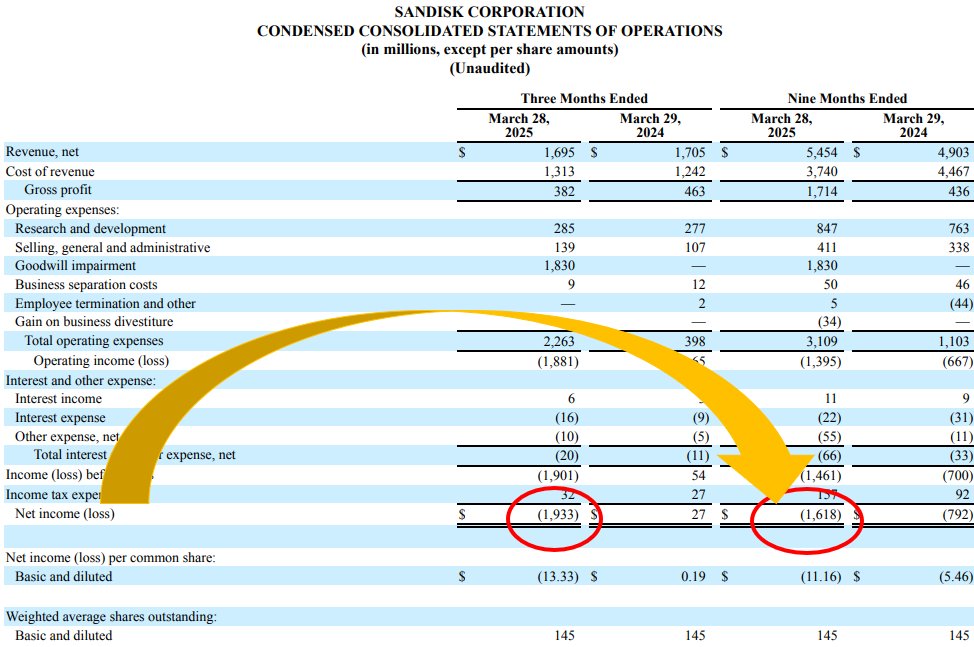
1 year ago, SNDK was under $30, its up 5200% at $1560.
SNDK lost $2 billion every quarter, but GOOG AMZN needs their chips.
Right now, there's 7 companies under $30 exactly like SNDK:
1. $POET — $11.19 🎯 PT: $80
Optical interconnects that replace copper inside AI data centers.
Customers: Lite-On, $SMTC, NTT now targeting Marvell's ecosystem
Catalyst: Malaysia plant ramping 30,000+ Infinity optical engines in 2026
2. $NOK — $12.82 🎯 PT: $15
5G + optical networking backbone for every hyperscaler buildout.
Customers: Amazon, Google, Microsoft €1B in orders from them in Q1 alone
Catalyst: Raised optical network growth outlook to 18–20% on exploding AI demand
3. $EOSE — $8.70 🎯 PT: $30
American-made zinc batteries powering the grid AI data centers drain.
Customers: Utilities, IPPs, CAISO & ERCOT grid operators
Catalyst: $303.5M DOE loan finalized — funds 8 GWh annual production by 2027
4. $DGXX — $6.45 🎯 PT: $30
Building GPU data centers to rent compute directly to AI companies.
Customers: Cerebras Systems (AI chip maker)
Catalyst: $1.1B, 10-year colocation deal signed $2.5B potential with expansion
5. $LWLG — $16.41 PT: $120
Electro-optic polymers that make AI fiber speeds physically possible.
Customers: Tower Semiconductor, GlobalFoundries, 4 Fortune 500 companies in Stage 3
Catalyst: PDK 1.1 ready for high-volume foundry transfer tape-outs begin H2 2026
6. FLNC — $24.50 🎯 PT: $28
Battery storage that keeps AI data centers powered without grid failure.
Customers: Two major hyperscalers (MSAs just signed), utilities globally
Catalyst: Record $5.6B backlog + first hyperscaler order converting Q3 2026
7. $PLAB — $49.50 🎯 PT: $55
Photomasks for every advanced AI chip no mask, no chip, period.
Customers: $TSM, $INTC, Samsung, UMC the entire chip foundry food chain
Catalyst: Record high-end IC revenue driven by AI chip packaging and advanced logic nodes
Remember, these have 1000%–2000% potential like $SNDK. My favorite is POET, but I like PLAB too since it makes photomasks which is needed in every chip on earth.
♻️ RESHARE this post and share 1 comment, and I'll DM you my BUY ZONES for each of these.
English
BREAKING: My OPTIONS Trading University Completed
5 Courses + Scanners + Indicators NO CHARGE
Comment " ME " and I will sent it directly on your DM

English


@wey_how12640 The gap between the 10 EMA and 50 SMA (~$18) shows accelerating bullish momentum.
English

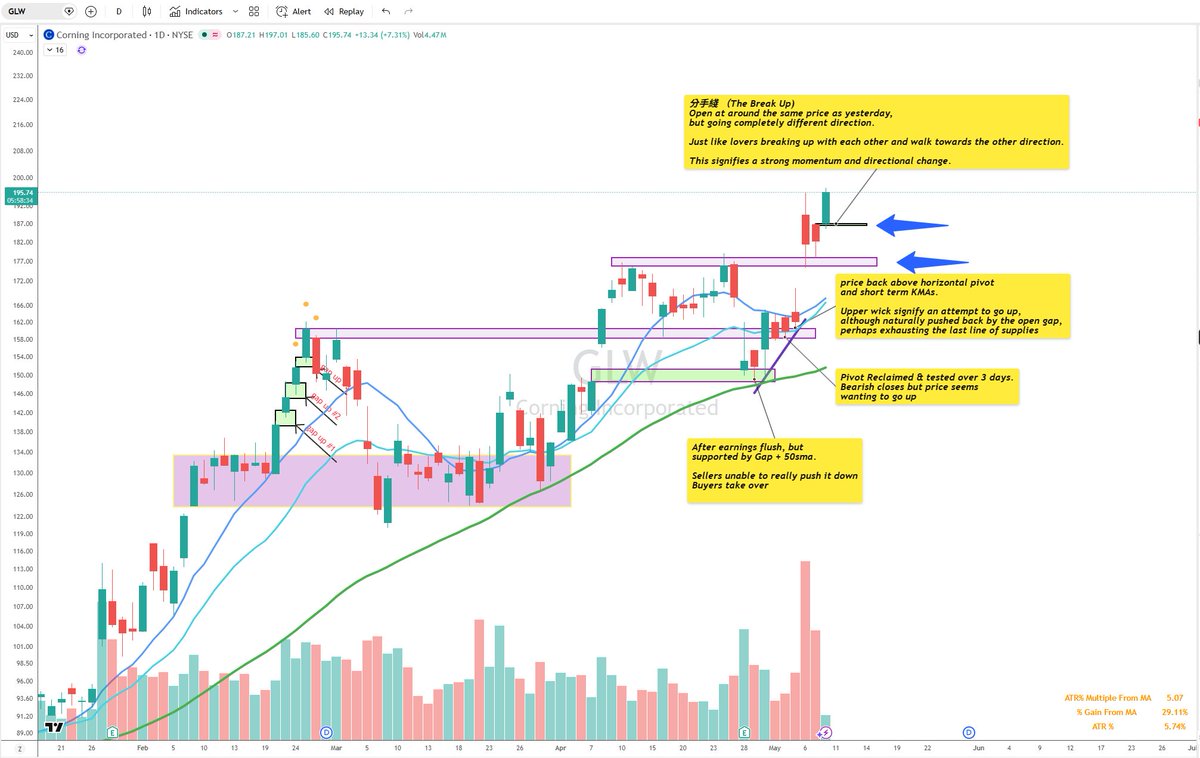
$GLW (long) - Break Up of the Lovers
I talked about this type of price action before.
In Chinese we call this 2 days of pattern 分手綫, visually looks like 2 lovers breaking up and walk to the opposite directions.
But remember the overall context , patterns are just for fun/ communication and doesn't guarantee the outcome.
Wey How@wey_how12640
$GLW (top up) Broke my promise, sizing just a little bit more at the pivot.
English

This went viral, so I want to spend a post on a single company, because the work of a chokepoint thesis is mostly the work of being patient, one company at a time.
The company is $AXTI.
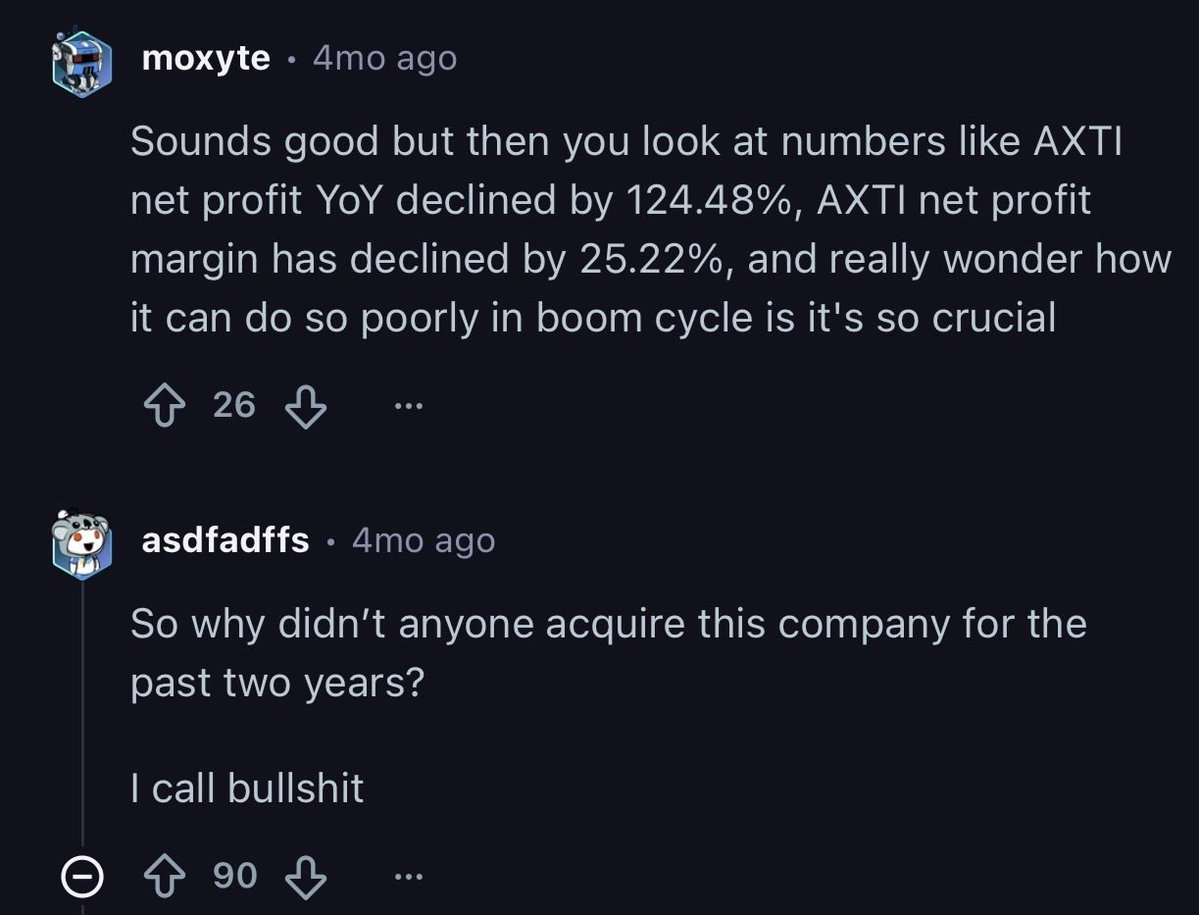
Listed in Fremont, California, by way of a substrate operation in Beijing, AXT sits in one of the stranger and thinner layers of the AI infrastructure stack: compound semiconductor substrates.
Until recently, AXT was a sleepy materials business with cyclical exposure to telecom optics. Most American investors had never opened the 10-K.
What AXT makes is a polished disc of indium phosphide, roughly the size of a coaster, grown in a furnace over a multi-week cycle.
Indium phosphide is one of the materials on which high-speed optical links are built.
Without the substrate, the laser cannot lase.
Without the laser, the transceiver cannot drive the link.
Without the link, the AI rack cannot scale.
That is the chokepoint.
The AI trade usually gets narrated from the top down: NVIDIA, hyperscalers, models, clusters, power, data centers. But the physical stack also runs from the bottom up: materials, wafers, epitaxy, lasers, transceivers, and links.
At the indium-phosphide substrate layer, the supplier base gets thin very quickly.
AXT is one of the few scaled independent names investors can actually buy. Sumitomo is buried inside a Japanese conglomerate. JX is relevant but capacity-constrained. China exposure, export controls, and substrate availability all sit in the same sentence.
That is why the market has suddenly decided this obscure materials company matters.
Their InP backlog is now reported at more than $100 million. Q1 2026 revenue was $26.9 million, up from $19.4 million a year earlier. Gross margin stepped up. The company is planning another InP capacity doubling in 2027.
That is the fundamental case.
The market case is less calm.
$AXTI has become one of the most crowded small-cap AI-infrastructure stories on the board. Retail traders are treating it as a supply-shock story. Analysts are chasing the move. Momentum is now part of the story, whether one likes it or not.
That cuts both ways.
The bullish version is simple: AI clusters need optical bandwidth, optical bandwidth needs InP, InP capacity is scarce, and AXTI is one of the few public ways to underwrite the bottleneck.
The skeptical version is also simple: this is now a volatile small-cap materials company whose market cap has moved far faster than its revenue base. Capacity has to arrive. Margins have to hold. China-related risk has to remain manageable. Customers have to keep ordering. Competitors have to remain behind.
Every quarter now has to justify a narrative the stock has already started pricing in.
Sitting above AXT are the companies that turn substrates into active optical components: $LITE, $COHR, Sivers, MACOM, IQE, and others across the laser, epitaxy, and photonics stack.
Above them sit the transceiver vendors. Above the transceiver vendors sit the hyperscalers. Above the hyperscalers sit the trillion-dollar models.
Every layer rests on the layer below.
The bottom layer rests on a small group of companies almost nobody could name a year ago.
Almost everyone can name five hyperscalers.
Almost nobody can name the substrate suppliers.
The market is now learning (maybe too fast. maybe not fast enough)
That is the posture required for a chokepoint thesis: hold two thoughts at once.
The bottleneck can be real, and the stock can still become crowded. The substrate can matter, and valuation can still matter. The supply chain can be structurally tight, and the trade can still reverse violently.
Being right early about a chokepoint is not a moment. It is a posture you maintain for years.
The free public dashboard below maps the indium-phosphide layer with live prices and the written thesis.
Link below.
The chain deserves to be walked.
Educational, not investment advice.

dylan ツ@demian_ai
What is the smallest object that, if it stopped being made tomorrow, would freeze the entire AI industry by Friday? Not a chip. Not a GPU. Not a model. A polished piece of indium phosphide the size of a coaster, grown in a furnace over two weeks, made by exactly two companies in the world that are not Chinese. I learned that around 4 a.m. one night about two years ago. I have not really stopped thinking about it since. To understand why a coaster of crystal can hold up a trillion-dollar industry, you first have to understand that almost nothing about modern computing is normal. A leading-edge AI chip travels through roughly a thousand process steps over three to four months. The cleanroom it lives in is thousands of times cleaner than a hospital operating room. The fab itself draws as much electricity as a small city. The single lithography machine that draws the circuits has five thousand suppliers of its own, spread across six countries, and not a single nation on Earth could build one alone. By the time a finished chip pops out the other end, more humans have had a hand in its production than live in most American towns. Most of them will never meet. From the highway, a TSMC fab looks like a beige warehouse with a parking lot. Inside, it is the closest thing humans have ever built to alien technology. I find that genuinely moving. And I find it terrifying. Because a miracle that complicated has a lot of single points of failure, and almost nobody in mainstream coverage is mapping them. Two years of pulling on this thread keeps bringing me back to the same conclusion. The 2026 to 2030 AI buildout is gated by four physical constraints, and almost nothing else. 1. Indium phosphide wafers. Two credible non-Chinese suppliers in the world. 2. Advanced packaging. Four companies on Earth that matter. 3. Power. Industrial gas turbines sold out into 2030. Three vendors at scale. 4. Critical minerals. China's pause on gallium, germanium, and antimony export controls expires November 27, 2026. By the time a chokepoint is on the front page, the move is largely over. The prize goes to whoever was patient enough to map the chain when it was boring. So I built a dashboard A free public dashboard. The chokepoints, the names that own them, the live prices, the catalysts, and the written thesis all on one screen. No login. No newsletter. Not a portfolio. Not a recommendation. A prism. I wanted it free because the people I would have wanted to read this when I was younger could not have afforded a Bloomberg terminal. Students. Engineers. Journalists trying to understand what they are writing about. Retail investors tired of being sold someone else's conviction. Curious teenagers in countries where the local financial press is twenty years behind the actual frontier. The chain deserves to be walked. That is the whole invitation. links below 👇 Educational, not investment advice.
English
@aleabitoreddit indium phosphide polished pieces stocks
at me market ?
English


Just a recap of recent information discovery + likely mapping with $SIVE:
-> $JBL 1.6T
-> Lightmatter
-> Ayar
-> $MRVL Celestial
-> Lightelligence
-> $POET
-> $GFS ecosystem
-> $AMD CPO
-> O-Net / Enablence
-> $AAPL Silicon Photonics
_
-> $YSS Golden Dome/DoD
-> $RTX / $ERIC (Space)
-> Bae Systems
-> $AEVA
With $JBL to Ayar feeding into hyperscalers like $MSFT, $GOOGL, $AMZN, $META.
With likely Lightelligence to O-Net feeding into Asian Hyperscalers like Tencent, Bytedance, and Baidu.
On top of that... the overarching TAM with CPO from the GS report goes from 0 -> $91B.
And Sivers happens to be the bleeding edge for CPO (also starting from 0).
This is definitely high-beta and volatile.
But if Win volume ramps alongside $SIVE, I see them both becoming $10B+ companies next year.
This is just extremely early on (H1) before the CPO supercycle starts H2 2026.
English
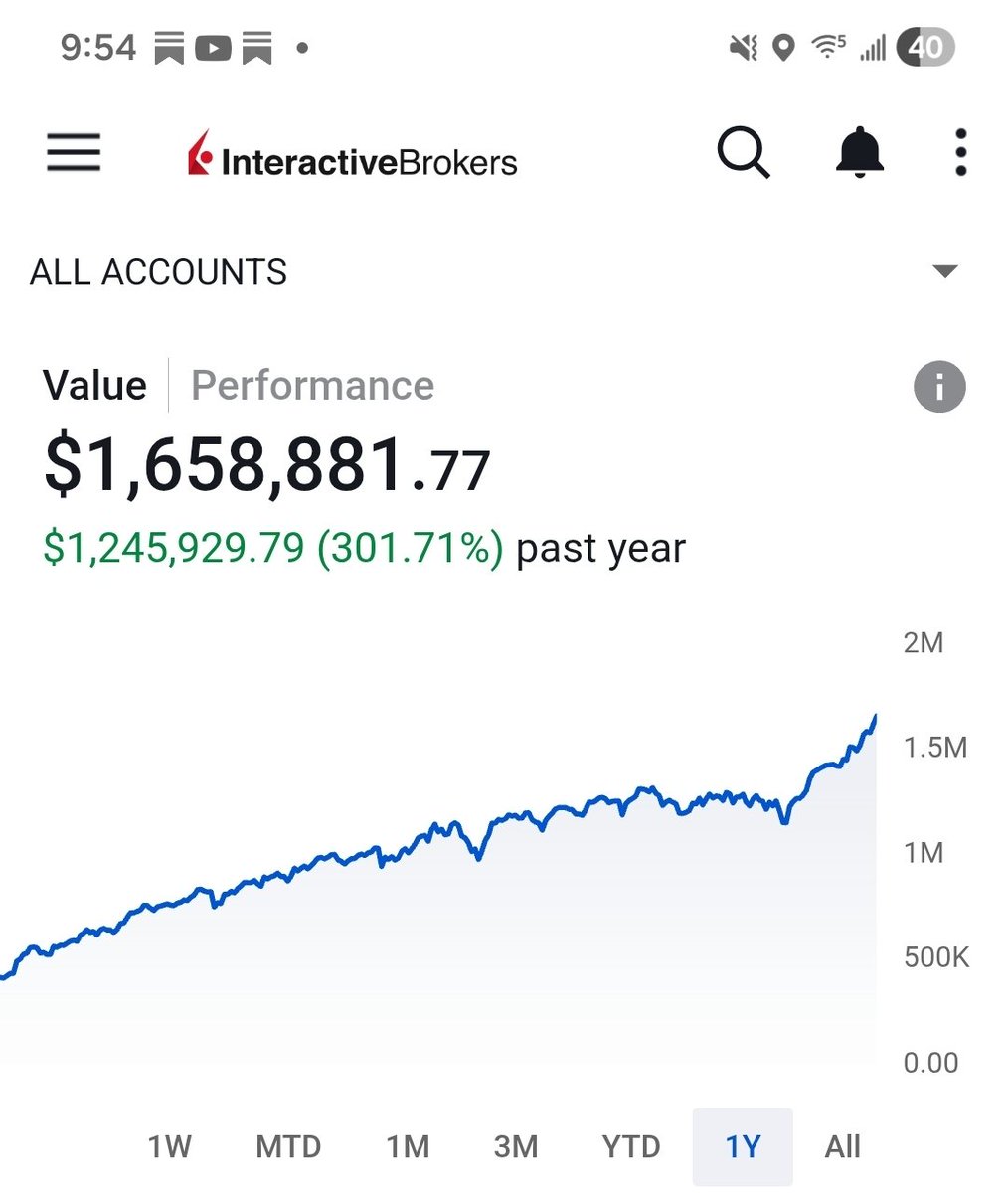
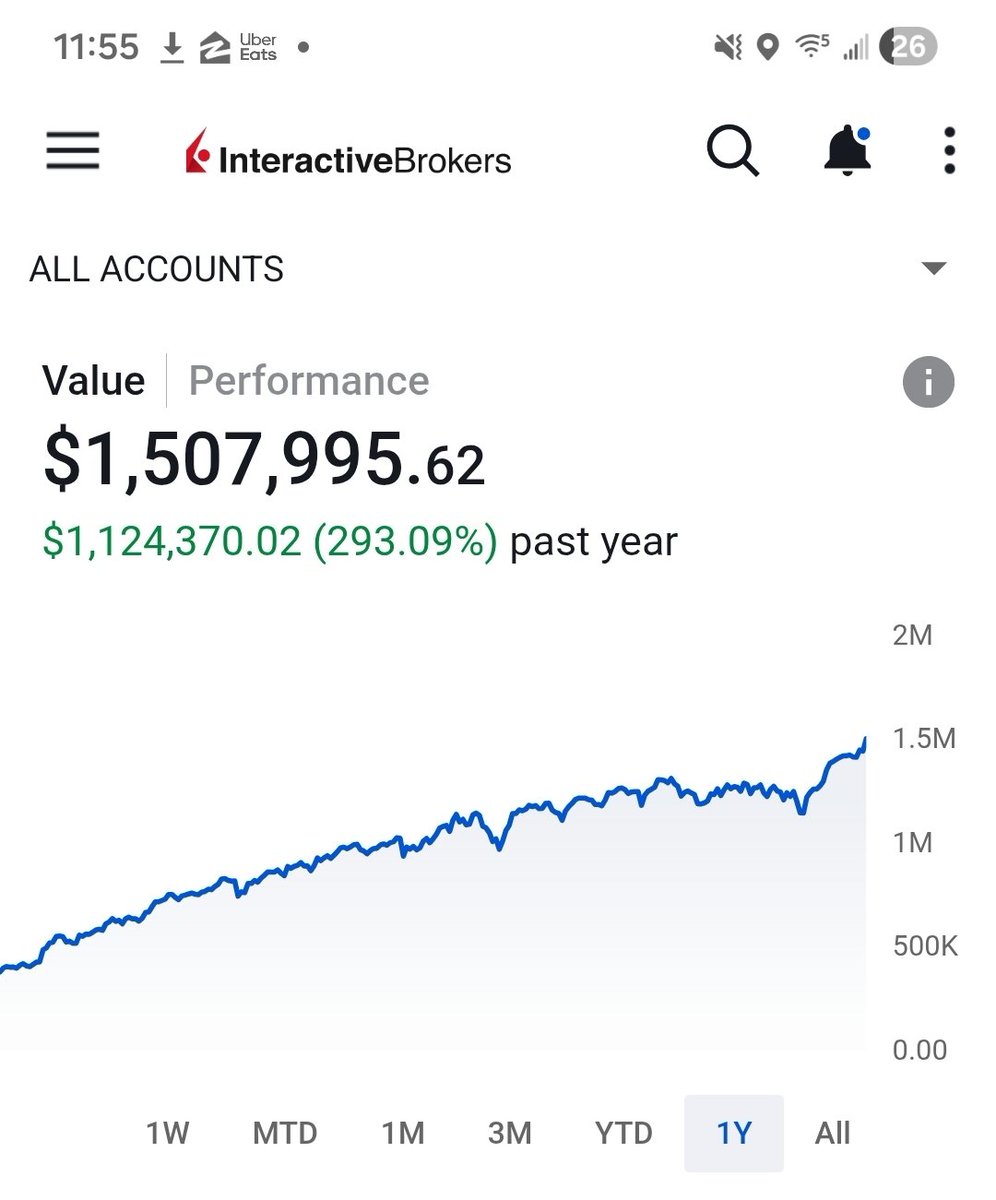
Options on the SP500 changed my life
I sold over 1500 puts in 1 year all expiring worthless and then I add leaps for huge multi baggers
I spend 15 minutes per week on sunday night futures selling options for the week and ive generated over 85k with PERFECT win rate
The dark secret in the market is they want retail to chase 0 dte and OTM where the big boys are selling it!
Im starting a new small and large account challenge this year where i will teach you step by step in real time
I will be making videos on YouTube and doing spaces all NO CHARGE
Comment "ME" and I will post the COURSE and Tracker
English
20 Steps Taking $3k to $50k Selling Options
1. Open a brokerage account.
2. Fund with $3,000.
3. Learn cash-secured puts.
4. Pick SOXL or TQQQ.
5. Wait for red day.
6. Check IV above 50%.
7. Sell 30-day put.
8. Target 5% return.
9. Set 50% profit alert.
10. Close app immediately.
11. Close at alert.
12. Reinvest full amount.
13. Repeat 3x per month.
14. Hit $500 profit month.
15. Add monthly savings.
16. Reach $10K account.
17. Scale position sizes.
18. Add LEAPs at RSI 30.
19. Sell half at 100% gain.
20. Rinse, repeat, retire early.
Comment "START" to master the first 10 steps with me daily.
English

LEAPS are the most underused edge in retail options trading.
Not because the concept is complicated. Because most people execute them wrong.
In LEAPS Trader we just booked:
• 151% on $NVDA
• 137% on $DELL
• 148% on $FCX
• 30% on $EWZ
And our $AMZN and $EWZ positions? Still running — with income coming off them every month.
One contract. 100 shares of exposure. Defined max loss. No margin. No weeklies. No babysitting.
But the entry conditions matter almost as much as the stock pick.
Buy at the wrong IV. Choose the wrong strike. Go too short on duration to save a few hundred bucks. And leverage that should work for you starts working against you fast.
I've been managing options portfolios professionally for nearly 30 years - $1 billion in options strategies managed as a pro market maker and income fund manager.
There's a specific framework I use — for stock selection, entry timing, structure, and how to generate income on top of the position.
Comment "YES" below and I'll send you my LEAPS guide. Free.
English


MACD weakening + RSI 30 + lower Bollinger Band hit = prime put-selling setup
I will sell HIGH DELTA puts in this case
I will also BUY calls in this case 💰💸
English
@aleabitoreddit @afasano23 Dear your opinion regarding Syntex Optics $OPTX ?
English
@afasano23 No I don't. I'm just publishing some of the research I did in case it helps others. $VSH was a good one though.
There's too many names... can't get exposure to everything.
English
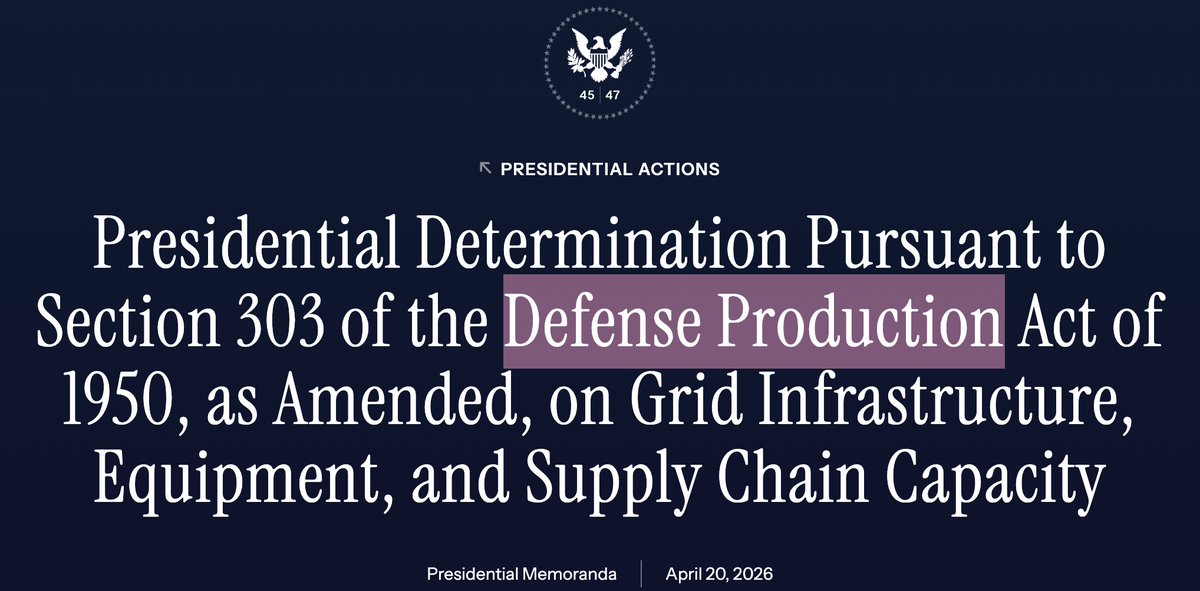
Yes. The President invoked the "Defense Production Act" 2 days ago.
To expand on domestic infra.
Implicit beneficiaries were:
Transmission & Advanced Conductors:
$AMSC - HTS Wires (advanced conductors), power electronics
$PLPC - advanced conductors
$ATKR - transmission components
$VMI - grid components
Power Electronics
$AEIS - power control electronics
$VICR - power delivery
Capacitor Banks
$VSH - power capacitors and capacitor banks
Substations & High-Voltage Circuit Breakers
$POWL - substations/switchgear
$AZZ - substations
Transformers
$HPS.A - My favorite for transformers
$SPXC - power transformers
Electrical Core Steel
$CLF - Only producer of electrical steel in America?
This included:
-Transformers
- transmission components
- advanced conductors
- power electronics
- substations
- high-voltage circuit breakers
- protective relays, capacitor banks
- electrical core steel
TLDR: The executive action declared a national energy emergency regarding the domestic supply chain for grid infrastructure. Authorized federal funding, purchase commitments, and expedited actions to rapidly expand the manufacturing.
Lot of beneficiaries, I made a mini ETF of with $AMSC, $CLF, $PLPC, and then $HPS.A; dont have any of the others.
There's probably going to be a bunch of DOE contracts in the next 3-6 months like " DoE Awards ___ to $POWL " off this act is my guess.
Rumo@rumoriginal
@aleabitoreddit Did you look into superconductor companies like $asmc yet?
English