
Sabitlenmiş Tweet

Artemis II—Humanity’s Return to the Lunar Frontier!!!
🇺🇸 🇨🇦 😎 🚀 🧑🚀 🌔 🛰️
|Apr 1, 2026| |Video by NASA|
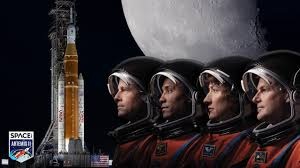
Today, April 1, 2026, the eyes of the world turn toward Launch Complex 39B at the Florida Kennedy Space Center. A crewed spacecraft, powered by the Space Launch System (SLS) rocket—is slated to carry humans beyond Earth's orbit and toward the Moon. This mission, known as Artemis II, is a "stress test" for the systems that will eventually sustain life on the lunar surface and, one day, Mars.
The Artemis II Crew include: 1) Commander Reid Wiseman (NASA): Lead pilot and mission commander. A U.S. Navy Captain and veteran of the International Space Station (ISS). 2) Pilot Victor Glover (NASA): Navigator and second-in-command. The first Black person to journey to the Moon. 3) Cristina Koch (NASA): Engineer and technical lead. The first woman to journey to the Moon. 4) Jeremy Hansen: is a Canadian astronaut from the Canadian Space Agency (CSA).
Mission Objectives: 1) The Check-up: After launch, Orion stays in a high Earth orbit for 24 hours. NASA wants to ensure the life-support systems (air and water) are working perfectly while the crew is still close enough to Earth to "turn around" if there's a leak or malfunction. 2)The Moon Shot: Orion fires its main engine (Trans-Lunar Injection) to break Earth's gravity. The crew spends about two days traveling 240,000 miles to the Moon. 3)The Lunar Flyby: Orion passes behind the "far side" of the Moon. They use the Moon's gravity to push the spacecraft back toward Earth. 4)The Journey Home: The crew coasts back through the vacuum of space, performing final navigation tests and communicating with Earth via the Deep Space Network. 5) Reentry & Splashdown: After parachutes deploy, they splash down in the Pacific Ocean, where the U.S. Navy ship will be waiting to pick them up.
To conclude, the Artemis II mission is more than a 10-day journey. It officially closes the gap between the uncrewed tests of the past and the upcoming Artemis III lunar landing, ensuring that the next generation of explorers has a safe and proven path to the Moon, Mars, and beyond.
Key Sources: 1) "The Artemis II Mission Overview," the official mission page for the most up-to-date launch status and crew bios. 2) "The NASA Artemis II Reference Guide" provides technical reference for the SLS rocket and Orion spacecraft. 3) "The Artemis II Press Kit" is the best source for detailed mission timelines and splashdown procedures.
youtu.be/Vg-EQ7MOu6I?si…

YouTube
English