Gabe Wilson MD

2.7K posts

Gabe Wilson MD

Gabe Wilson MD

@Gabe__MD

Emergency Physician - East Texas, home is NYC, Tour Medical Dir - Houston, Dallas Symphonies, Ex-Regional Director Envision, Juilliard-trained Violinist, RE/EVs

New York, USA Katılım Ocak 2016
1.9K Takip Edilen2K Takipçiler
Gabe Wilson MD
Gabe Wilson MD@Gabe__MD·
@Lobo67383079 China will lead the way on this. Progress > regulation. 100%. And not 5-10 years: 12-18 months!!
English
0
0
0
2
Lobo
Lobo@Lobo67383079·
@Gabe__MD This can all change in 5 to 10 years. Job specific AI driven robotics, with access to every study in the world can, soon, replace human beings in nearly all of these tasks. China just opened an AI hospital, by the way.
English
1
0
2
17
Gabe Wilson MD
Gabe Wilson MD@Gabe__MD·
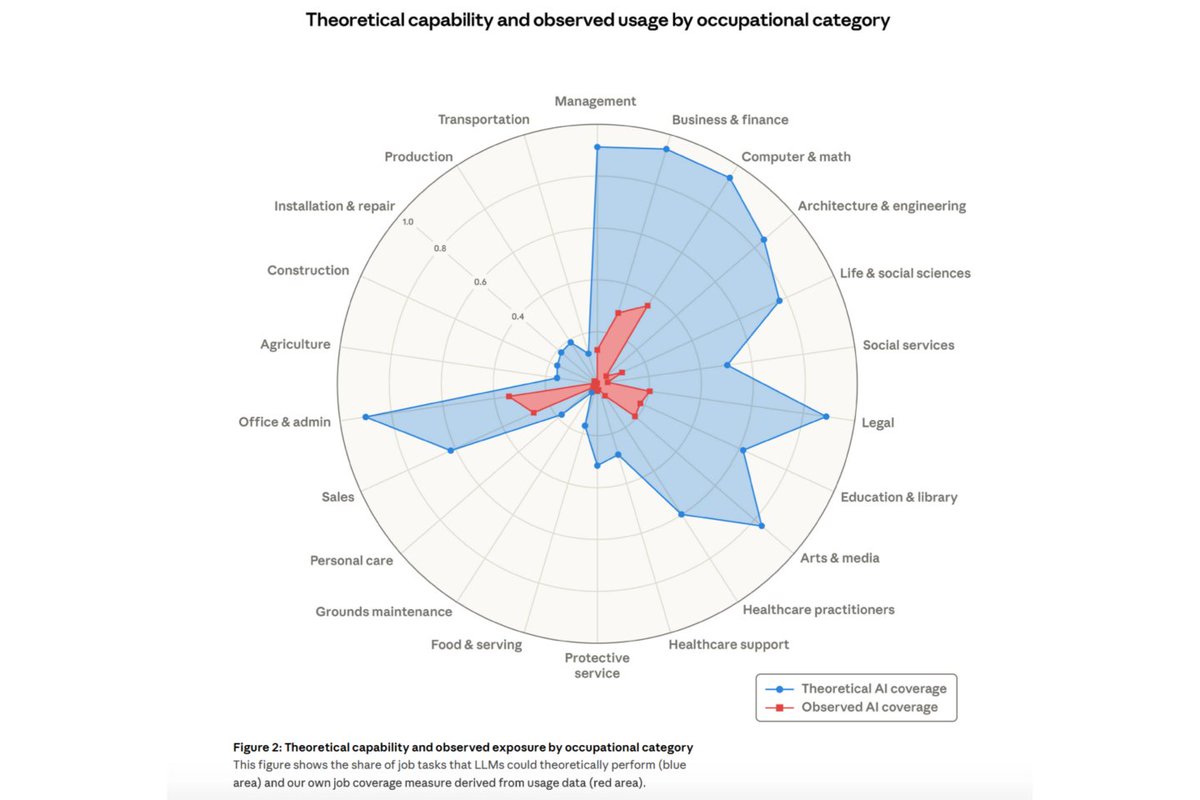
AI in 2026 cannot palpate an abdomen, intubate a patient, feel a thyroid nodule, test a patellar reflex, reduce a dislocated shoulder, perform a colonoscopy, or deliver a baby. That is not a temporary limitation. It is structural. When we scored AI capability across seven clinical dimensions for 240 visit reasons in 20 specialties, the physical/procedural dimension averaged 1.5 out of 5. The cognitive dimensions averaged 3.0 to 4.1. No specialty broke 2.0 on procedure. Not one. History-taking averaged 4.1 — approaching specialist level. Patient communication 3.6. Follow-up management 3.5. Documentation, which runs through every workflow component, is arguably where AI already outperforms most physicians in speed and completeness. The 2.6-point gap between the cognitive ceiling and the procedural wall is not closing with larger language models. Language models do not have hands. Closing that gap requires robotics, haptic sensing, and physical infrastructure at clinical scale — none of which exists beyond narrow research applications. This matters for how we think about workforce planning. The specialties in Tier 3 of our ranking — Ophthalmology, General Surgery, ENT, Emergency Medicine, Orthopedic Surgery, Anesthesiology — are not there because AI cannot reason about their clinical problems. It can. They are in Tier 3 because the physician's physical presence is the treatment. You cannot automate a knee replacement. You cannot automate airway rescue. The specialties in Tier 1 — Radiology, Internal Medicine, Dermatology, Family Medicine, Endocrinology — are there because their workflows are dominated by cognition, synthesis, and documentation, with physical intervention consuming a smaller share of total effort. The implication is straightforward. AI's near-term value is not about replacing any specialty. It is about absorbing the cognitive and administrative burden that consumes 40-60% of every physician's workday across every specialty. The procedural work stays human. The paperwork does not have to. Health systems investing in AI as a documentation, intake, and decision-support engine will see returns now. Health systems waiting for AI to replace proceduralists will be waiting a long time. Post 3 of a series. Post 1: consensus ranking. Post 2: adversarial reconciliation methodology.
Gabe Wilson MD tweet media
English
18
37
354
273.3K
Gabe Wilson MD
Gabe Wilson MD@Gabe__MD·
Part 3
Gabe Wilson MD@Gabe__MD

AI in 2026 cannot palpate an abdomen, intubate a patient, feel a thyroid nodule, test a patellar reflex, reduce a dislocated shoulder, perform a colonoscopy, or deliver a baby. That is not a temporary limitation. It is structural. When we scored AI capability across seven clinical dimensions for 240 visit reasons in 20 specialties, the physical/procedural dimension averaged 1.5 out of 5. The cognitive dimensions averaged 3.0 to 4.1. No specialty broke 2.0 on procedure. Not one. History-taking averaged 4.1 — approaching specialist level. Patient communication 3.6. Follow-up management 3.5. Documentation, which runs through every workflow component, is arguably where AI already outperforms most physicians in speed and completeness. The 2.6-point gap between the cognitive ceiling and the procedural wall is not closing with larger language models. Language models do not have hands. Closing that gap requires robotics, haptic sensing, and physical infrastructure at clinical scale — none of which exists beyond narrow research applications. This matters for how we think about workforce planning. The specialties in Tier 3 of our ranking — Ophthalmology, General Surgery, ENT, Emergency Medicine, Orthopedic Surgery, Anesthesiology — are not there because AI cannot reason about their clinical problems. It can. They are in Tier 3 because the physician's physical presence is the treatment. You cannot automate a knee replacement. You cannot automate airway rescue. The specialties in Tier 1 — Radiology, Internal Medicine, Dermatology, Family Medicine, Endocrinology — are there because their workflows are dominated by cognition, synthesis, and documentation, with physical intervention consuming a smaller share of total effort. The implication is straightforward. AI's near-term value is not about replacing any specialty. It is about absorbing the cognitive and administrative burden that consumes 40-60% of every physician's workday across every specialty. The procedural work stays human. The paperwork does not have to. Health systems investing in AI as a documentation, intake, and decision-support engine will see returns now. Health systems waiting for AI to replace proceduralists will be waiting a long time. Post 3 of a series. Post 1: consensus ranking. Post 2: adversarial reconciliation methodology.

English
0
0
0
44
Gabe Wilson MD
Gabe Wilson MD@Gabe__MD·
The places where AI could help the most are the places where it works the least. 4.6 billion people lack full essential health service coverage. 1.08 billion adults have uncontrolled hypertension. 445 million have untreated diabetes. 5 billion lack access to safe surgical care. Close to 1 billion are served by health facilities without reliable electricity. AI in 2026 can take a history in 200 languages, triage red flags, deliver protocol-driven hypertension titration via SMS, coach inhaler technique, and extend community health workers with decision support that would otherwise require a physician. All deployable now. Where telecom exists. Where electricity is reliable. Where at least one clinician can supervise. That is the paradox. AI's strongest capabilities — intake, triage, longitudinal follow-up, patient communication — map precisely onto the highest-volume global health needs. Hypertension. Diabetes. Preventive care. Chronic respiratory disease. Cognitive, protocol-driven, data-rich problems. Exactly what AI handles best. But the populations with the greatest need face barriers that are not cognitive. They are structural. 2.1 billion people faced financial hardship from health spending in 2022. AI does not solve financing. WHO projects a 10-million healthcare worker shortfall by 2030. AI extends existing workers. It does not create missing ones. Close to 1 billion people are served by facilities without reliable electricity. AI requires power. 28% of low-income countries report general availability of WHO-recommended hypertension medicines. AI cannot stock a pharmacy. 5 billion lack safe surgical care. AI cannot operate. The same pattern from the US specialty analysis holds at global scale. AI compresses cognitive friction. It does not create physical substrate. In the US, the bottleneck is procedural — the gap between what AI can think and what it can touch. Globally, the bottleneck is more fundamental — electricity, medicines, clinics, clinicians. The highest-leverage global application of AI in medicine is not diagnosis. It is task extension — making every nurse, community health worker, and primary care physician more effective at the chronic disease management that consumes the majority of global health need. That is where AI's cognitive ceiling meets the world's access floor. The technology is ready. The infrastructure is not. And that gap is not a technology problem. Post 4 of a series. WHO data sourced from UHC, hypertension, diabetes, primary health care, and surgical care fact sheets.
Gabe Wilson MD tweet media
English
1
2
4
215
Gabe Wilson MD
Gabe Wilson MD@Gabe__MD·
@npjDigitalMed Any research done on the basis of GPT-4 should be wholly discarded. GPT-5.4-Pro and Thinking, compared to default GPT-4, is like comparing the top 1% of medical specialists in the world to a high school student.
English
0
0
0
36
npj Digital Medicine
npj Digital Medicine@npjDigitalMed·
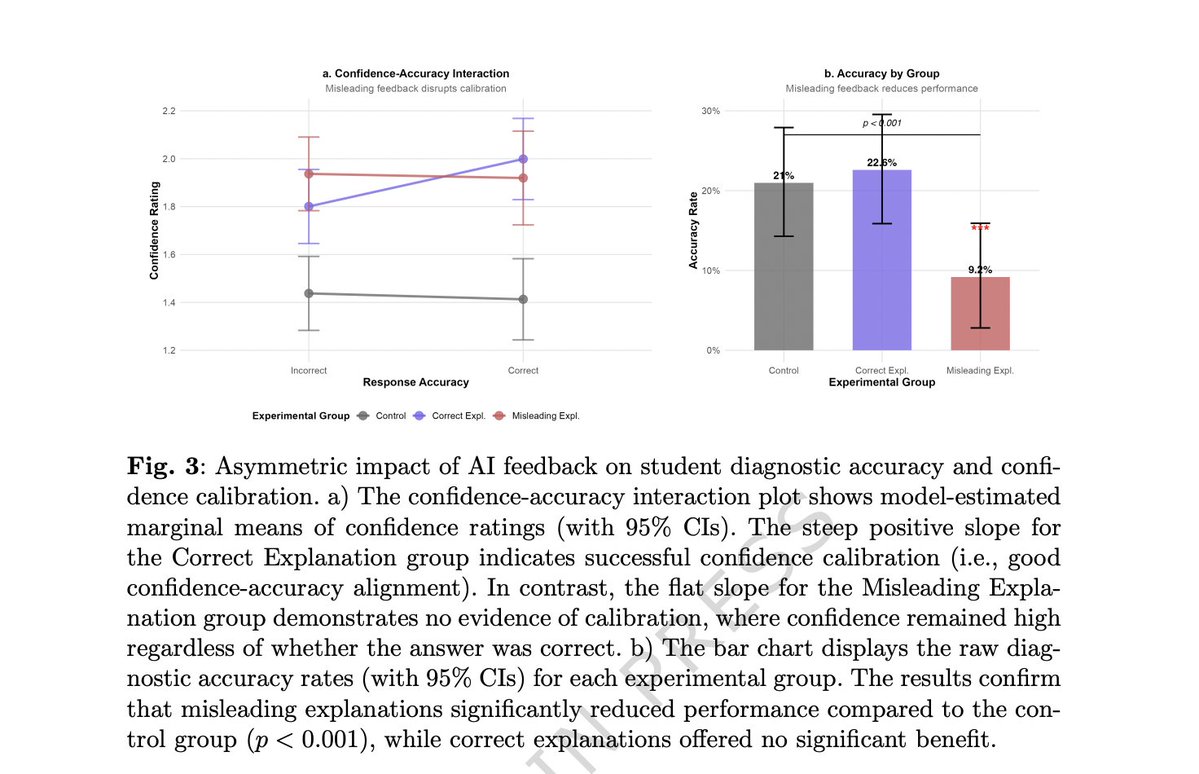
AI use in medical school is an ongoing conversation. But, wrong AI advice is more harmful than correct advice is helpful. In a randomized trial, misleading AI explanations lowered diagnostic accuracy, and students couldn’t reliably tell when they were wrong. nature.com/articles/s4174…
npj Digital Medicine tweet media
English
1
13
35
3.4K
Joel Selanikio
Joel Selanikio@jselanikio·
Medicare will now cover GLP-1s for weight loss at $50/month. 60M+ beneficiaries. Drugs that prevent heart failure, diabetes, kidney disease. Healthcare demand elimination is now official federal policy. buff.ly/8UdZyI5 #DemandElimination #GLP1
English
2
2
7
591
Gabe Wilson MD
Gabe Wilson MD@Gabe__MD·
@wholemars Whether Tesla or Waymo data, it is clear that the safety factor increases nearly 10x when you remove the human from the steering wheel.
English
0
1
0
30
Gabe Wilson MD
Gabe Wilson MD@Gabe__MD·
Gabe Wilson MD@Gabe__MD

AI in 2026 cannot palpate an abdomen, intubate a patient, feel a thyroid nodule, test a patellar reflex, reduce a dislocated shoulder, perform a colonoscopy, or deliver a baby. That is not a temporary limitation. It is structural. When we scored AI capability across seven clinical dimensions for 240 visit reasons in 20 specialties, the physical/procedural dimension averaged 1.5 out of 5. The cognitive dimensions averaged 3.0 to 4.1. No specialty broke 2.0 on procedure. Not one. History-taking averaged 4.1 — approaching specialist level. Patient communication 3.6. Follow-up management 3.5. Documentation, which runs through every workflow component, is arguably where AI already outperforms most physicians in speed and completeness. The 2.6-point gap between the cognitive ceiling and the procedural wall is not closing with larger language models. Language models do not have hands. Closing that gap requires robotics, haptic sensing, and physical infrastructure at clinical scale — none of which exists beyond narrow research applications. This matters for how we think about workforce planning. The specialties in Tier 3 of our ranking — Ophthalmology, General Surgery, ENT, Emergency Medicine, Orthopedic Surgery, Anesthesiology — are not there because AI cannot reason about their clinical problems. It can. They are in Tier 3 because the physician's physical presence is the treatment. You cannot automate a knee replacement. You cannot automate airway rescue. The specialties in Tier 1 — Radiology, Internal Medicine, Dermatology, Family Medicine, Endocrinology — are there because their workflows are dominated by cognition, synthesis, and documentation, with physical intervention consuming a smaller share of total effort. The implication is straightforward. AI's near-term value is not about replacing any specialty. It is about absorbing the cognitive and administrative burden that consumes 40-60% of every physician's workday across every specialty. The procedural work stays human. The paperwork does not have to. Health systems investing in AI as a documentation, intake, and decision-support engine will see returns now. Health systems waiting for AI to replace proceduralists will be waiting a long time. Post 3 of a series. Post 1: consensus ranking. Post 2: adversarial reconciliation methodology.

QME
0
0
0
51
Gabe Wilson MD
Gabe Wilson MD@Gabe__MD·
@fermiparasocks AI assist. Yes. The critical thoughts - which I challenge you to find laid out like this elsewhere, are mine. Not sure why anyone cares if something is edited or refined by AI. Discounts the insights and mute/block me if you so choose.
English
1
0
0
33
Colin Robinson
Colin Robinson@fermiparasocks·
@Gabe__MD “that is not a temporary limitation. it is structural” you wrote this with ai
English
1
0
2
49
Gabe Wilson MD
Gabe Wilson MD@Gabe__MD·
It may feel this way but I’ll never find the diabetic foot ulcer in a patient with fever unless I look. Or the cold pulseless foot in the elderly man who can’t verbalize what’s going on who has no sensation. Or differentiate central from peripheral vertigo without a good neurological exam. Certainly the rigor of the physical exam has declined in general and that’s what you’re likely perceiving.
English
1
0
2
159
Koda
Koda@koda9001·
@Gabe__MD Physicians seldom do more than listen to heart and lungs these days. Everything else is labs and radiology.
English
2
0
4
202
Gabe Wilson MD
Gabe Wilson MD@Gabe__MD·
@dereckwpaul There is an enormous amount of unmet need in healthcare in the US and globally. I’m modeling this later in this series linked below. And those who have access to healthcare already will use it even more when visits are $0.75 You’re 100% correct.
Gabe Wilson MD@Gabe__MD

AI in 2026 cannot palpate an abdomen, intubate a patient, feel a thyroid nodule, test a patellar reflex, reduce a dislocated shoulder, perform a colonoscopy, or deliver a baby. That is not a temporary limitation. It is structural. When we scored AI capability across seven clinical dimensions for 240 visit reasons in 20 specialties, the physical/procedural dimension averaged 1.5 out of 5. The cognitive dimensions averaged 3.0 to 4.1. No specialty broke 2.0 on procedure. Not one. History-taking averaged 4.1 — approaching specialist level. Patient communication 3.6. Follow-up management 3.5. Documentation, which runs through every workflow component, is arguably where AI already outperforms most physicians in speed and completeness. The 2.6-point gap between the cognitive ceiling and the procedural wall is not closing with larger language models. Language models do not have hands. Closing that gap requires robotics, haptic sensing, and physical infrastructure at clinical scale — none of which exists beyond narrow research applications. This matters for how we think about workforce planning. The specialties in Tier 3 of our ranking — Ophthalmology, General Surgery, ENT, Emergency Medicine, Orthopedic Surgery, Anesthesiology — are not there because AI cannot reason about their clinical problems. It can. They are in Tier 3 because the physician's physical presence is the treatment. You cannot automate a knee replacement. You cannot automate airway rescue. The specialties in Tier 1 — Radiology, Internal Medicine, Dermatology, Family Medicine, Endocrinology — are there because their workflows are dominated by cognition, synthesis, and documentation, with physical intervention consuming a smaller share of total effort. The implication is straightforward. AI's near-term value is not about replacing any specialty. It is about absorbing the cognitive and administrative burden that consumes 40-60% of every physician's workday across every specialty. The procedural work stays human. The paperwork does not have to. Health systems investing in AI as a documentation, intake, and decision-support engine will see returns now. Health systems waiting for AI to replace proceduralists will be waiting a long time. Post 3 of a series. Post 1: consensus ranking. Post 2: adversarial reconciliation methodology.
English
0
0
1
29
Dereck Paul, MD
Dereck Paul, MD@dereckwpaul·
Jevons' paradox applied to clinical AI — In 1865, William Stanley Jevons noticed that the more efficient steam engines became, the more coal England burned — not less. He observed that increased efficiency does not necessarily suppress demand. In some cases, it unleashes it. In the context of healthcare and AI, this means that as clinical intelligence becomes cheaper and more abundant, we shouldn't expect the system to contract around today's workload. What will happen instead is that clinical AI will allow us to absorb the enormous backlog of unmet healthcare need that has been invisible precisely because we've never truly had the capacity to address it. We should expect more consumption of healthcare, not less, as clinical AI makes access to healthcare abundant.
English
6
2
14
849
Gabe Wilson MD
Gabe Wilson MD@Gabe__MD·
Actually, my medical AI scribe only transcribes what was said in the room with the patient. I can certainly check and edit it. But it’s a lot more accurate than check boxes, pull down tabs, and templates in the EHR. And I used to not have the time and bandwidth to document everything I discussed with the patient. AI now does. So if anything, many charts were artificially down-coded before. Yes, there is always abuse either way. Certainly true. Accuracy is paramount. Overall, properly used, medical AI is a plus.
Gabe Wilson MD@Gabe__MD

AI in 2026 cannot palpate an abdomen, intubate a patient, feel a thyroid nodule, test a patellar reflex, reduce a dislocated shoulder, perform a colonoscopy, or deliver a baby. That is not a temporary limitation. It is structural. When we scored AI capability across seven clinical dimensions for 240 visit reasons in 20 specialties, the physical/procedural dimension averaged 1.5 out of 5. The cognitive dimensions averaged 3.0 to 4.1. No specialty broke 2.0 on procedure. Not one. History-taking averaged 4.1 — approaching specialist level. Patient communication 3.6. Follow-up management 3.5. Documentation, which runs through every workflow component, is arguably where AI already outperforms most physicians in speed and completeness. The 2.6-point gap between the cognitive ceiling and the procedural wall is not closing with larger language models. Language models do not have hands. Closing that gap requires robotics, haptic sensing, and physical infrastructure at clinical scale — none of which exists beyond narrow research applications. This matters for how we think about workforce planning. The specialties in Tier 3 of our ranking — Ophthalmology, General Surgery, ENT, Emergency Medicine, Orthopedic Surgery, Anesthesiology — are not there because AI cannot reason about their clinical problems. It can. They are in Tier 3 because the physician's physical presence is the treatment. You cannot automate a knee replacement. You cannot automate airway rescue. The specialties in Tier 1 — Radiology, Internal Medicine, Dermatology, Family Medicine, Endocrinology — are there because their workflows are dominated by cognition, synthesis, and documentation, with physical intervention consuming a smaller share of total effort. The implication is straightforward. AI's near-term value is not about replacing any specialty. It is about absorbing the cognitive and administrative burden that consumes 40-60% of every physician's workday across every specialty. The procedural work stays human. The paperwork does not have to. Health systems investing in AI as a documentation, intake, and decision-support engine will see returns now. Health systems waiting for AI to replace proceduralists will be waiting a long time. Post 3 of a series. Post 1: consensus ranking. Post 2: adversarial reconciliation methodology.
English
0
0
0
10
National Center for Health Research
Known as upcoding, it can happen by humans but AI makes it worse -- inflating medical bills and increasing healthcare premiums for everyone. Patients deserve better! We shouldn't have to check our bills and complain about charges for care that was never delivered.
English
1
0
1
8
Gabe Wilson MD
Gabe Wilson MD@Gabe__MD·
@DeryaTR_ Derya, there are clearly different degrees of scratching the surface!!
English
0
0
1
58
Derya Unutmaz, MD
Derya Unutmaz, MD@DeryaTR_·
@Gabe__MD I’m all in on AI, and even I’m barely scratching the surface! Not only will AI advances not stop, they will continue to accelerate. At this point, I feel sorry for the copers!
English
2
0
3
251
Derya Unutmaz, MD
Derya Unutmaz, MD@DeryaTR_·
There is one fundamental thing that AI critics and “nitpickers” have never understood: AI capabilities advance & improve exponentially, now every few months, soon in weeks. Whatever they criticize today will soon be fixed. Haven’t they learned any lesson from the past 3 years?🧐
English
35
14
170
15.6K
Gabe Wilson MD
Gabe Wilson MD@Gabe__MD·
@SimonMahan Close to zero of my friends and colleagues in Texas are aware of the current source of their electricity. It’s been a silent and successful transition.
English
1
2
60
1.8K
Simon Mahan
Simon Mahan@SimonMahan·
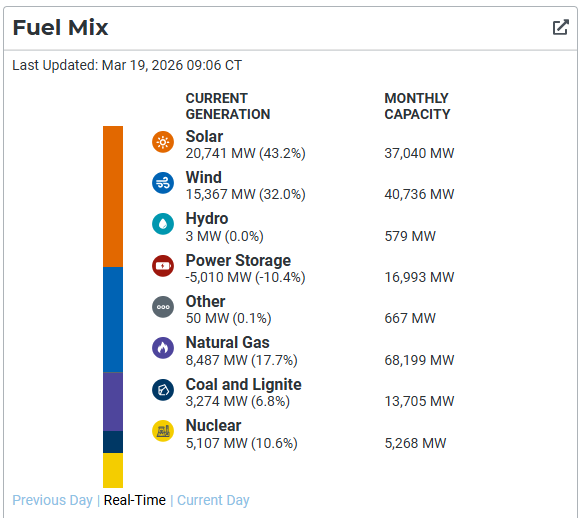
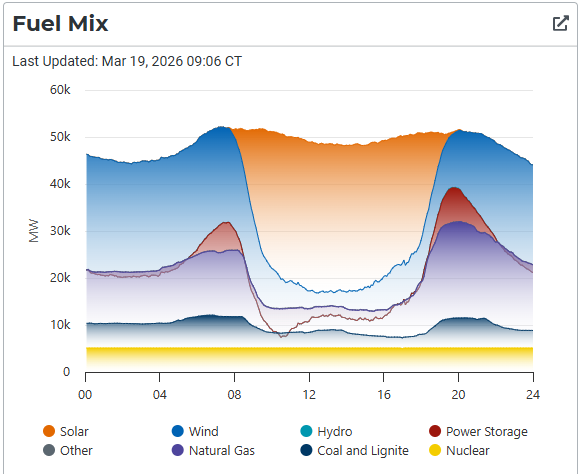
The world is changing right in front of us and no one knows it. Texas is running its world-class economy on 70% renewables, right now. Gas is there if we need it, but for today, we can save the fuel for another day.
Simon Mahan tweet mediaSimon Mahan tweet media
English
79
329
2.4K
95.3K
Gabe Wilson MD
Gabe Wilson MD@Gabe__MD·
Alex, I just ran a multi frontier model assessment of which areas of medicine can be assisted by AI. Clearly it’s the embodied AI that is holding medicine back. Despite that, 40-60% of medical work could be substantially assisted today by AI saving patients and physicians time and effort.
Gabe Wilson MD@Gabe__MD

AI in 2026 cannot palpate an abdomen, intubate a patient, feel a thyroid nodule, test a patellar reflex, reduce a dislocated shoulder, perform a colonoscopy, or deliver a baby. That is not a temporary limitation. It is structural. When we scored AI capability across seven clinical dimensions for 240 visit reasons in 20 specialties, the physical/procedural dimension averaged 1.5 out of 5. The cognitive dimensions averaged 3.0 to 4.1. No specialty broke 2.0 on procedure. Not one. History-taking averaged 4.1 — approaching specialist level. Patient communication 3.6. Follow-up management 3.5. Documentation, which runs through every workflow component, is arguably where AI already outperforms most physicians in speed and completeness. The 2.6-point gap between the cognitive ceiling and the procedural wall is not closing with larger language models. Language models do not have hands. Closing that gap requires robotics, haptic sensing, and physical infrastructure at clinical scale — none of which exists beyond narrow research applications. This matters for how we think about workforce planning. The specialties in Tier 3 of our ranking — Ophthalmology, General Surgery, ENT, Emergency Medicine, Orthopedic Surgery, Anesthesiology — are not there because AI cannot reason about their clinical problems. It can. They are in Tier 3 because the physician's physical presence is the treatment. You cannot automate a knee replacement. You cannot automate airway rescue. The specialties in Tier 1 — Radiology, Internal Medicine, Dermatology, Family Medicine, Endocrinology — are there because their workflows are dominated by cognition, synthesis, and documentation, with physical intervention consuming a smaller share of total effort. The implication is straightforward. AI's near-term value is not about replacing any specialty. It is about absorbing the cognitive and administrative burden that consumes 40-60% of every physician's workday across every specialty. The procedural work stays human. The paperwork does not have to. Health systems investing in AI as a documentation, intake, and decision-support engine will see returns now. Health systems waiting for AI to replace proceduralists will be waiting a long time. Post 3 of a series. Post 1: consensus ranking. Post 2: adversarial reconciliation methodology.


English
0
0
0
94
Gabe Wilson MD
Gabe Wilson MD@Gabe__MD·
Post 1 of the series
Gabe Wilson MD@Gabe__MD

Three frontier AI models independently estimated that current AI can assist with 45-77% of clinical workflow across 20 medical specialties — with physician oversight. That is not a claim of autonomous practice. It is a structured capability estimate built from 240 visit reasons, seven scoring dimensions, and three rounds of adversarial reconciliation between GPT 5.4-Pro, Gemini Deep Think, and Grok Heavy. The ceiling is interesting. The floor is the real story. Radiology ranked highest at 77%. Anesthesiology ranked lowest at 45%, with Emergency Medicine and Orthopedic Surgery close behind at 46%. Even in the most procedurally intense, real-time specialties, nearly half the total clinical workflow is cognitively assistable right now. Here is the consensus ranking: Tier 1 — 62-77% AI-assistable: Radiology 77% | Internal Medicine 64% | Dermatology 63% | Family Medicine 62% | Endocrinology 62% Tier 2 — 50-59%: Cardiology 59% | Psychiatry 58% | Gastroenterology 57% | Pediatrics 56% | Pulmonology 54% | OB-GYN 54% | Neurology 53% | Urology 51% | Oncology 50% Tier 3 — 45-49%: Ophthalmology 49% | General Surgery 47% | ENT 46% | Emergency Medicine 46% | Orthopedic Surgery 46% | Anesthesiology 45% The universal bottleneck is physical. Across all 20 specialties, history-taking scored 4.1 out of 5. Physical/procedural work scored 1.5. The near-term role of AI in medicine is not physical replacement. It is cognitive leverage — intake, synthesis, decision support, documentation, patient communication, care coordination. What surprised me most: the three models agreed more than they disagreed. After reconciliation, 9 of 20 specialties had a spread of 3 points or less. The areas of genuine uncertainty — Urology, Orthopedics, Oncology — are exactly where the boundary between AI-assistable and human-essential is most contested. Most health systems are not organized to capture this cognitive value. The technology is here. The workflow redesign is not. Full methodology and dataset available on request. This is the first post in a series.

English
0
0
1
574
Gabe Wilson MD
Gabe Wilson MD@Gabe__MD·
Post 2 of the series
Gabe Wilson MD@Gabe__MD

The first version of this analysis was wrong. Not wrong in direction. Wrong in calibration. And the way we found that is the most important part. When three frontier AI models independently scored AI capability across 20 medical specialties, the initial disagreements were enormous. Oncology had a 35.5-point spread. Radiology 16.6. Emergency Medicine 17.6. Gemini scored systematically high. GPT scored systematically low. The raw outputs were not publishable. So we made them argue. Each outlier model received the other two models' scores and rationales, then had to defend or revise with explicit justification. Three rounds. Gemini admitted its original calibration was wrong. It had scored what AI could theoretically do, not what it could realistically do under regulatory, liability, and deployment constraints. It dropped Oncology from 71.5% to 48%. Cardiology from 76.5% to 58%. Endocrinology from 78.2% to 62%. GPT admitted its scoring templates were too blunt. It had compressed heterogeneous visit mixes into worst-case archetypes, anchoring on the hardest 20% of each specialty's workflow. It moved Oncology from 36% up to 48%. Emergency Medicine from 35% to 45%. They converged on Oncology at 48%. Neither model's original score was right. The reconciled score was better than either one alone. After three rounds, average inter-model spread dropped from 13.8 to 4.0 points — a 71% reduction. Nine specialties landed within 3 points across all three models. This is adversarial multi-model reconciliation. Independent estimation. Structured disagreement. Iterative convergence. Transparent audit trail. Three things this reveals that single-model prompting cannot: Calibration bias is real and measurable. Gemini's theoretical framing and GPT's deployment framing are both internally consistent but produce materially different numbers. If you rely on one model without cross-validation, you are getting that model's bias, not ground truth. Forced justification beats forced scoring. When a model has to explain why its number differs from two independent estimates, it either mounts a compelling defense or it revises. Both outcomes generate information the original score did not contain. Persistent disagreement is signal. Urology and Orthopedic Surgery had the widest spreads after three rounds. That tells you something real about the specialty — the cognitive-physical boundary is genuinely contested — not something wrong with the method. Full methodology, reconciliation prompts, and complete dataset available on request. The master prompt is available to anyone who wants to replicate with different models. This analysis cost less than a single-site clinical study and produced a testable framework that updates as models improve. Post 2 of a series. Post 1 has the full consensus ranking.

English
1
0
2
941