Gabriel Kwok

184 posts

Gabriel Kwok

Gabriel Kwok

@Gabrielkwok7

Technology enthusiast and Investor

Katılım Haziran 2021
411 Takip Edilen32 Takipçiler
Sabitlenmiş Tweet
Gabriel Kwok
Gabriel Kwok@Gabrielkwok7·
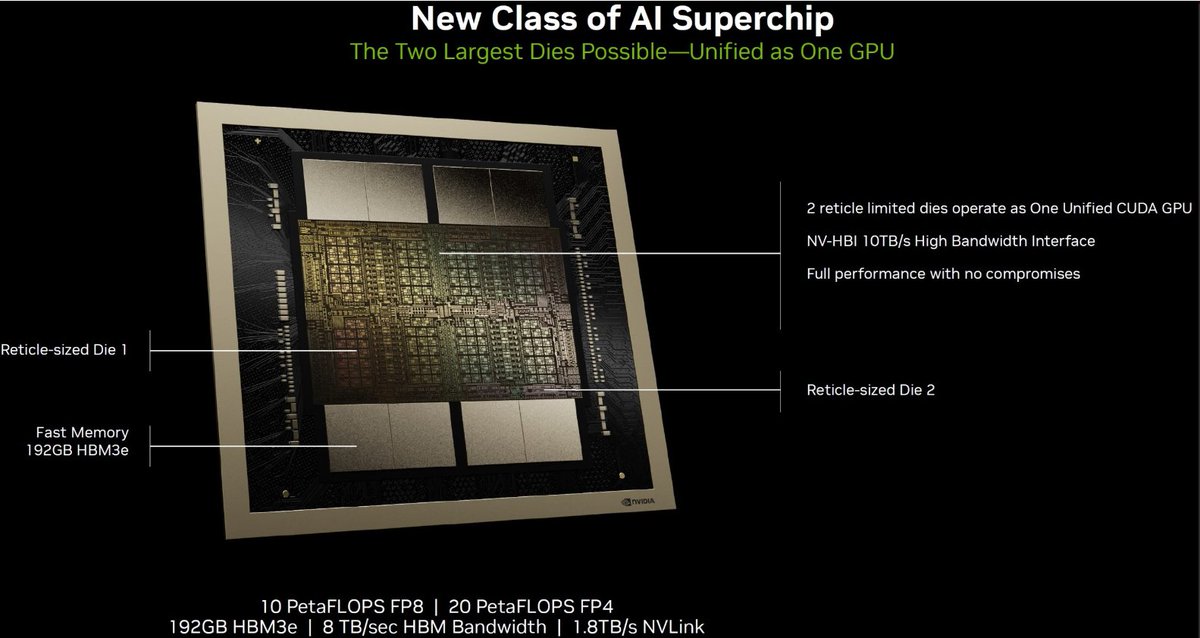
$NVDA B200 AI accelerator cost breakdown and takeaways: The B200 will likely generate lower gross margin than the H100 if priced at $35,000 a piece, which might point to peak margins for Nvidia. More details and insights below:
Gabriel Kwok tweet media
English
1
4
9
375
Gabriel Kwok retweetledi
Jukan
Jukan@jukan05·
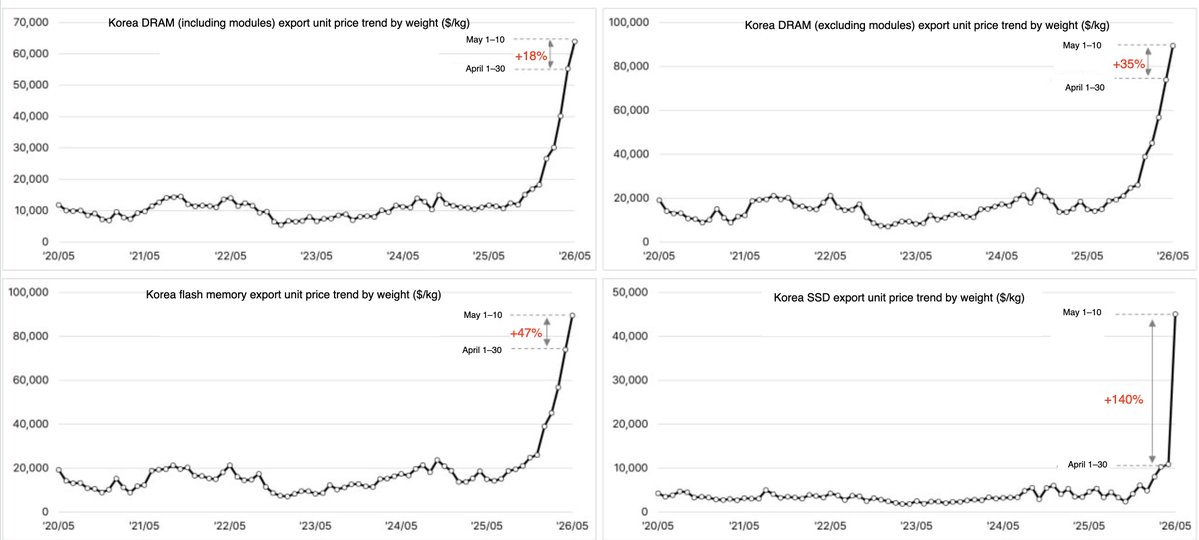
HOLY SMOKE. What the hell is this?? Memory prices are going absolutely insane. $DRAM $MU $SNDK
Jukan tweet media
English
118
220
2.6K
1.5M
Gabriel Kwok retweetledi
Amock_
Amock_@Amockx2022·
BREAKING : Trump gets massive SHOCK from China, big victory for 🇪🇸 Pedro Sánchez 🇺🇸 Trump –– "We will cut all the trade ties with Spain because they didn't support me against Iran" *Exactly after 36 hours* 🇨🇳 Xi Jinping –– 🔥 "Spain is standing on the right side of the history, it is very reasonable county. China stands with Spain. We will work towards world peace and oppose the law of the jungle" Trump and Netanyahu will have heartburn seeing this 🤣
English
1.9K
31.2K
135.6K
4.6M
Gabriel Kwok retweetledi
Ethan Levins 🇺🇸
Ethan Levins 🇺🇸@EthanLevins2·
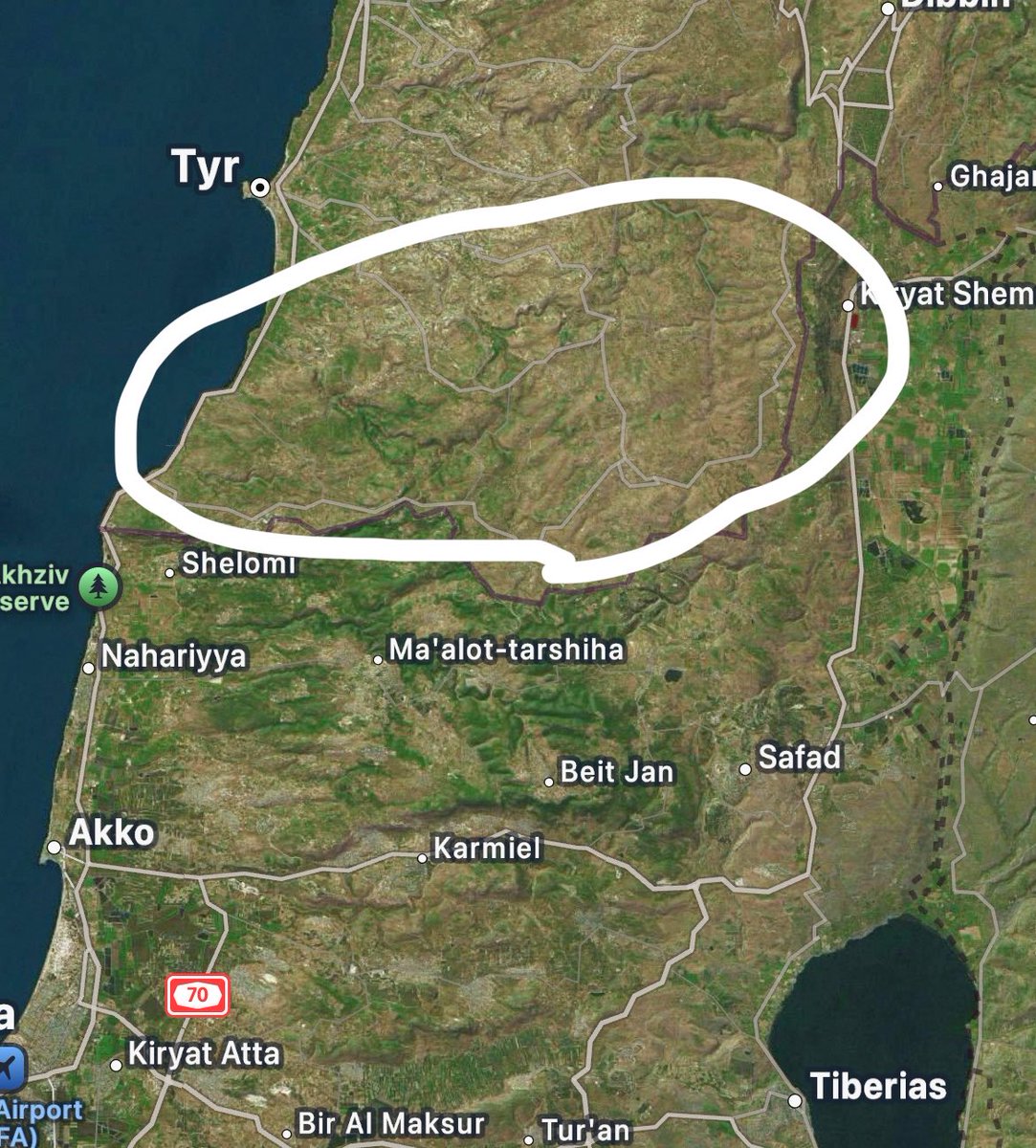
Apple has removed Lebanese village names in Southern Lebanon. As Israel invades, they are already setting the state to justify occupation. I’ve never seen something like this.
Ethan Levins 🇺🇸 tweet media
English
3.4K
79.2K
254.4K
13M
Gabriel Kwok retweetledi
Felix Prehn 🐶
Felix Prehn 🐶@felixprehn·
JP Morgan just sent their institutional clients a report with their full playbook on the Middle East peace deal. It includes which sectors to buy if the deal upholds and to sell if it falls apart. I’ve read the full report and I’m breaking it down for you here:🧵
English
42
131
1K
859.2K
Gabriel Kwok retweetledi
Matt Wallace
Matt Wallace@MattWallace888·
🚨 JUST IN: Benjamin Netanyahu issues major threat to Spain 🚨 “We have the most moral army in the world, but you are about to pay an immediate price”
English
4.4K
3.5K
14.2K
6M
Gabriel Kwok retweetledi
Emmanuel Macron
Emmanuel Macron@EmmanuelMacron·
I have just spoken with Lebanese President Joseph Aoun and Prime Minister Nawaf Salam. I expressed France’s full solidarity in the face of the indiscriminate strikes carried out by Israel in Lebanon today, which resulted in a very high number of civilian casualties. We condemn these strikes in the strongest possible terms. They pose a direct threat to the sustainability of the ceasefire that has just been reached. Lebanon must be fully covered by it. I reiterated the need to preserve Lebanon’s territorial integrity and France’s determination to support the efforts of the Lebanese authorities to uphold the country’s sovereignty and implement the Hezbollah disarmament plan.
English
8.7K
15.2K
81.7K
3.6M
Gabriel Kwok retweetledi
Pedro Sánchez
Pedro Sánchez@sanchezcastejon·
Justo hoy, Netanyahu lanza su ataque más duro contra el Líbano desde que empezó la ofensiva. Su desprecio por la vida y el derecho internacional es intolerable. Toca hablar claro: - Líbano debe formar parte del alto al fuego. - La comunidad internacional debe condenar esta nueva violación del derecho internacional. - La Unión Europea debe suspender su Acuerdo de Asociación con Israel. - Y no debe haber impunidad ante estos actos criminales.
Español
9.7K
67K
233.9K
5.6M
Gabriel Kwok retweetledi
Marwa Osman || مروة عثمان
Israel killed my childhood best friend today. He was at work. In Beirut. Israel killed him. Israel killed him. Israel killed him. He has 2 gorgeous girls. He has a beautiful wife..my direct first cousin. Israel killed Hasan. Israel killed him. Hasan was a civilian. Israel Killed Him.
English
688
15.4K
70.1K
1M
Gabriel Kwok retweetledi
sarah
sarah@sahouraxo·
This is horror in real time. The moment Israel started dropping bombs on CIVILIAN AREAS in Lebanon. Without any warning. Israel dropped 160 bombs in the first minute alone — massacring over 250 civilians, dozens of them children. People are still buried under the rubble.
English
1.3K
37.4K
81.4K
3M
Gabriel Kwok retweetledi
Jukan
Jukan@jukan05·
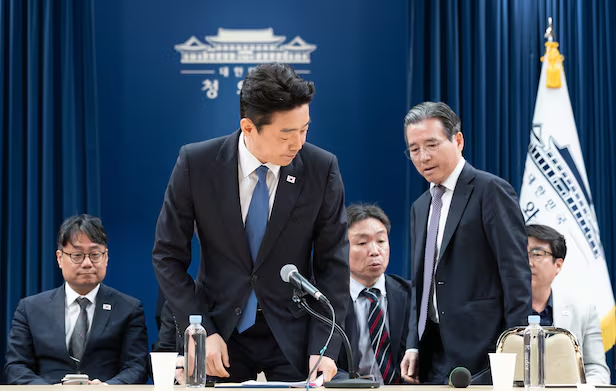
Helium Crisis for Semiconductors… Blue House: "Secured 4 Months' Supply from U.S., No Medium-Term Issues" Amid growing raw material supply concerns stemming from the Middle East war, the Blue House said on April 7 that approximately four months' worth of semiconductor-grade helium has been secured from the United States and other sources, stating there are "no medium-term issues." Qatar's LNG production facilities, which account for 65% of Korea's helium imports, were hit by Iranian strikes, but alternative supply lines have since been secured through separate contracts. Kim Yong-beom, the Blue House Chief Policy Secretary, said at a press briefing, "I've been told that roughly four months' worth [of usable reserves] of helium has been secured," adding, "This is an extremely important matter, and I've been briefed that there are no medium-term concerns for now." He also noted, "Given the four months' supply now secured, the industry has sufficient time, so we expect they will be able to lock in alternative import sources going forward." A senior Blue House official said the helium contracted this time is U.S.-sourced. Kim also said, "We have not yet received any requests from the industry asking the government for help due to a 'helium shortage.'" Korea's existing U.S. helium import share stands at around 28%, less than half that of Qatar (64.7%). The U.S., along with Qatar, is considered one of the world's largest helium exporters. Russia and Algeria also hold reserves. However, the U.S. consumes most of its production domestically. In 2024, the Bureau of Land Management (BLM) halted all sales of federal helium reserves and transferred them to private companies. Helium, extracted as a byproduct of gas production, is a critical raw material in semiconductor manufacturing. With no viable substitutes, and given the difficulty of storage, transportation, and processing, the global semiconductor industry has been worried about supply disruptions since Iran struck QatarEnergy's LNG facilities on March 20. QatarEnergy has stated that helium exports will decline by at least 14% due to the war, and that facility restoration could take up to five years.
Jukan tweet media
English
4
31
214
27K
Gabriel Kwok retweetledi
zerohedge
zerohedge@zerohedge·
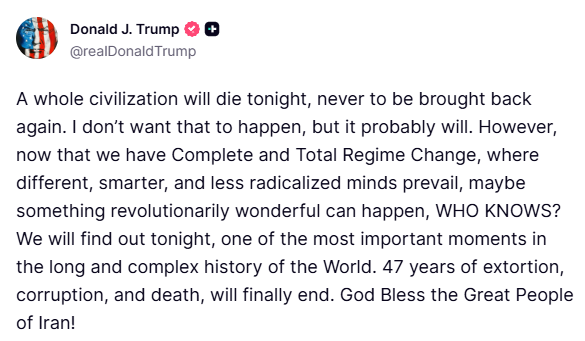
Trump: "A whole civilization will die tonight, never to be brought back again. I don’t want that to happen, but it probably will."
zerohedge tweet media
English
773
773
4.9K
902.4K
Gabriel Kwok retweetledi
The Kobeissi Letter
The Kobeissi Letter@KobeissiLetter·
IRAN'S FULL "OPEN LETTER" TO THE AMERICAN PEOPLE: "To the people of the United States of America, and to all those who, amid a flood of distortions and manufactured narratives, continue to seek the truth and aspire to a better life: Iran—by this very name, character, and identity—is one of the oldest continuous civilizations in human history. Despite its historical and geographical advantages at various times, Iran has never, in its modern history, chosen the path of aggression, expansion, colonialism, or domination. Even after enduring occupation, invasion, and sustained pressure from global powers—and despite possessing military superiority over many of its neighbors—Iran has never initiated a war. Yet it has resolutely and bravely repelled those who have attacked it. The Iranian people harbor no enmity toward other nations, including the people of America, Europe, or neighboring countries. Even in the face of repeated foreign interventions and pressures throughout their proud history, Iranians have consistently drawn a clear distinction between governments and the peoples they govern. This is a deeply rooted principle in Iranian culture and collective consciousness—not a temporary political stance. For this reason, portraying Iran as a threat is neither consistent with historical reality nor with present-day observable facts. Such a perception is the product of political and economic whims of the powerful— the need to manufacture an enemy in order to justify pressure, maintain military dominance, sustain the arms industry, and control strategic markets. In such an environment, if a threat does not exist, it is invented. Within this same framework, the United States has concentrated the largest number of its forces, bases, and military capabilities around Iran—a country that, at least since the founding of the United States, has never initiated a war. Recent American aggressions launched from these very bases have demonstrated how threatening such a military presence truly is. Naturally, no country confronted with such conditions would forgo strengthening its defensive capabilities. What Iran has done—and continues to do—is a measured response grounded in legitimate self-defense, and by no means an initiation of war or aggression. Relations between Iran and the United States were not originally hostile, and early interactions between the Iranian and American people were not marred with hostility or tension. The turning point, however, was the 1953 coup d’état—an illegal American intervention aimed at preventing the nationalization of Iran’s own resources. That coup disrupted Iran’s democratic process, reinstated dictatorship, and sowed deep distrust among Iranians toward U.S. policies. This distrust deepened further with America’s support for the Shah’s regime, its backing of Saddam Hussein during the imposed war of the 1980s, the imposition of the longest and most comprehensive sanctions in modern history, and ultimately, unprovoked military aggression—twice, in the midst of negotiations—against Iran. Yet all these pressures have failed to weaken Iran. On the contrary, the country has grown stronger in many areas: literacy rates have tripled—from roughly 30% before the Islamic Revolution to over 90% today; higher education has expanded dramatically; significant advances have been achieved in modern technology; healthcare services have improved; and infrastructure has developed at a pace and scale incomparable to the past. These are measurable, observable realities that stand independent of fabricated narratives. At the same time, the destructive and inhumane impact of sanctions, war, and aggression on the lives of the resilient Iranian people must not be underestimated. The continuation of military aggression and recent bombings profoundly affect people’s lives, attitudes, and perspectives. This reflects a fundamental human truth: when war inflicts irreparable harm on lives, homes, cities, and futures, people will not remain indifferent toward those responsible. This raises a fundamental question: Exactly which of the American people’s interests are truly being served by this war? Was there any objective threat from Iran to justify such behavior? Does the massacre of innocent children, the destruction of cancer-treatment pharmaceutical facilities, or boasting about bombing a country “back to the stone ages” serve any purpose other than further damaging the United States’ global standing? Iran pursued negotiations, reached an agreement, and fulfilled all its commitments. The decision to withdraw from that agreement, escalate toward confrontation, and launch two acts of aggression in the midst of negotiations were destructive choices made by the U.S. government—choices that served the delusions of a foreign aggressor. Attacking Iran’s vital infrastructure—including energy and industrial facilities—directly targets the Iranian people. Beyond constituting a war crime, such actions carry consequences that extend far beyond Iran’s borders. They generate instability, increase human and economic costs, and perpetuate cycles of tension, planting seeds of resentment that will endure for years. This is not a demonstration of strength; it is a sign of strategic bewilderment and an inability to achieve a sustainable solution. Is it not also the case that America has entered this aggression as a proxy for Israel, influenced and manipulated by that regime? Is it not true that Israel, by manufacturing an Iranian threat, seeks to divert global attention away from its crimes toward the Palestinians? Is it not evident that Israel now aims to fight Iran to the last American soldier and the last American taxpayer dollar—shifting the burden of its delusions onto Iran, the region, and the United States itself in pursuit of illegitimate interests? Is “America First” truly among the priorities of the U.S. government today? I invite you to look beyond the machinery of misinformation—an integral part of this aggression—and instead speak with those who have visited Iran. Observe the many accomplished Iranian immigrants—educated in Iran—who now teach and conduct research at the world’s most prestigious universities, or contribute to the most advanced technology firms in the West. Do these realities align with the distortions you are being told about Iran and its people? Today, the world stands at crossroads. Continuing along the path of confrontation is more costly and futile than ever before. The choice between confrontation and engagement is both real and consequential; its outcome will shape the future for generations to come. Throughout its millennia of proud history, Iran has outlasted many aggressors. All that remains of them are tarnished names in history, while Iran endures—resilient, dignified, and proud."
English
345
1.7K
5.6K
626.1K
Gabriel Kwok retweetledi
Shanaka Anslem Perera ⚡
Shanaka Anslem Perera ⚡@shanaka86·
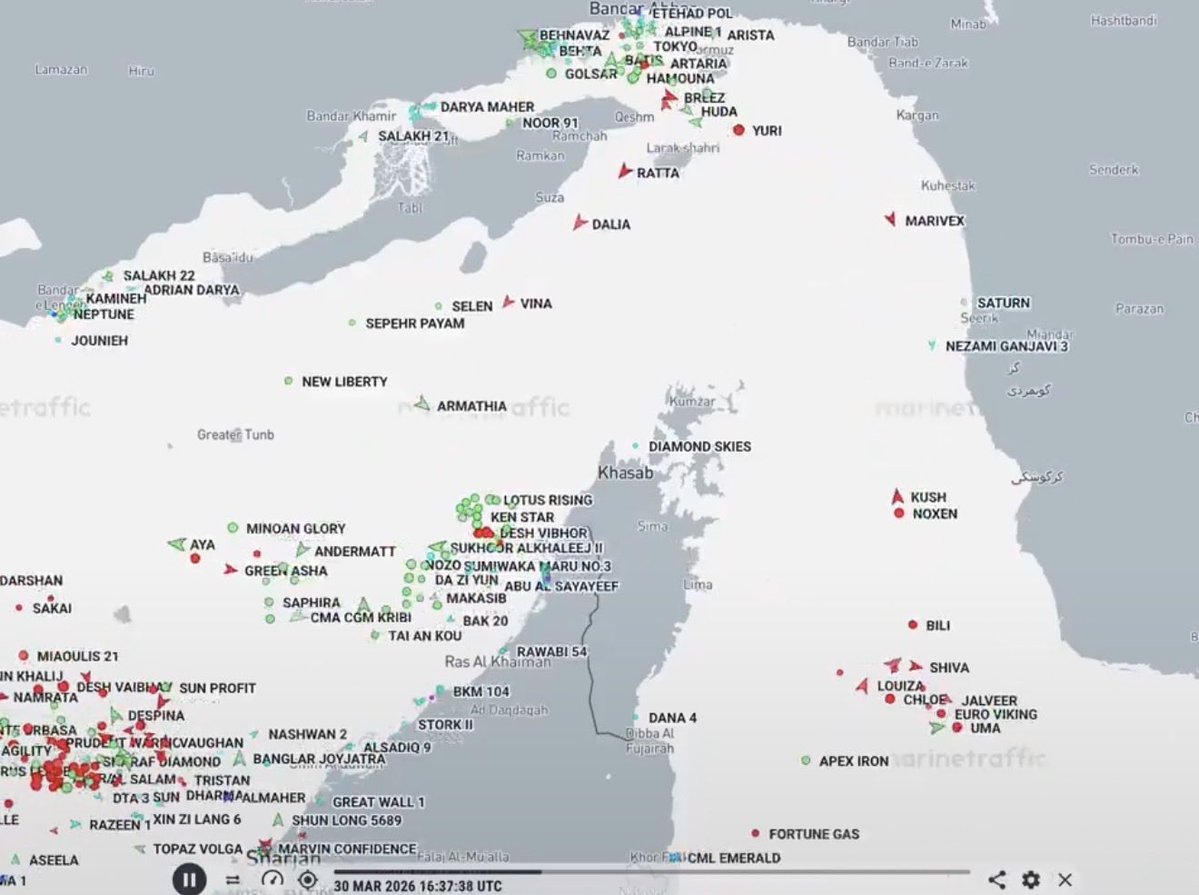
The Strait of Hormuz is not closed. It is sorted. Iran has built a three-tier access system for the most important waterway on earth. Tier one: allies transit free. Malaysia cleared seven vessels through diplomacy at zero cost. India negotiated zero-fee passage. Pakistan secured clearance for 20 ships. Iraq transits without charge. These countries proved geopolitical alignment and the IRGC waved them through the Larak corridor without collecting a rial. Tier two: compliant neutrals pay. At least two tankers, likely Chinese-linked, paid up to two million dollars each in yuan through Kunlun Bank intermediaries. COSCO container ships attempted the corridor, were turned back on first approach when documentation was incomplete, then succeeded days later with revised paperwork. These are the vessels that prove the system works. They submit IMO numbers, ownership chains, cargo manifests, and crew lists to the IRGC’s Hormozgan Command. They receive clearance codes. They are escorted by pilot boats through the five-nautical-mile channel between Qeshm and Larak. They pay in a currency that does not route through SWIFT. Every successful yuan transit is a live proof-of-concept for non-dollar energy settlement. Tier three: adversaries are denied entirely. The committee plan bans American vessels, Israeli vessels, and vessels from any country participating in sanctions against Iran. These ships do not get vetting. They do not get codes. They do not get escorts. They get the AL SALMI, burning off Dubai, as illustration of what the corridor looks like without permission. But the toll is not the real cost. War-risk insurance is. Premiums have surged from $40,000 per VLCC transit before the war to $600,000 to $1.2 million today, a 30-fold increase, now running five to ten percent of hull value. A VLCC carrying $50 million in crude oil can absorb a combined $3 million in toll and insurance as a fraction of cargo value. A container ship carrying $5 million in manufactured goods cannot. The insurance premium alone exceeds the profit margin on non-oil cargo. The strait has become an oil-only VIP lane. Crude flows selectively for those who can pay the combined cost. Everything else waits, reroutes around the Cape of Good Hope, or does not move at all. And the US Navy is not inside the strait. The Abraham Lincoln strike group operates from standoff in the Arabian Sea. Three Littoral Combat Ships sit in the Persian Gulf. Marine expeditionary units are positioned for contingency. But zero American warships have transited the strait or escorted commercial traffic since the war began. The Navy told the shipping industry it has “no availability” for Hormuz escorts. The world’s most powerful fleet keeps respectful distance from a waterway controlled by a country whose navy is 92 percent destroyed because the mines, drones, and shore missiles that remain make close-in presence prohibitively risky. The result is a geopolitical sorting algorithm operating at the molecular level. One hundred and eighty-one vessels transited in all of March. Pre-war traffic was 138 per day. Of those 181, roughly 70 percent were Iranian-affiliated. The remaining 30 percent were vetted allies or yuan-paying neutrals. The 20 percent of global oil that once flowed freely through this strait now flows selectively, conditionally, and in currencies chosen by Tehran. Iran lost its air force. It lost its navy. It lost two thirds of its production capacity. It retained the only thing that matters: 39 kilometres of coastline on both sides of the narrowest point. The US Navy will not enter. Chinese tankers will. And the sorting algorithm processes another vessel, collects another yuan payment, and demonstrates once more that geography is the one military asset that cannot be degraded by precision strikes. The strait is not closed. It is under new management. open.substack.com/pub/shanakaans…
Shanaka Anslem Perera ⚡ tweet media
English
202
2K
5.1K
874.1K
Gabriel Kwok retweetledi
Aakash Gupta
Aakash Gupta@aakashgupta·
The timeline on this is genuinely insane. October 2025: Sam Altman flies to Seoul and signs simultaneous deals with Samsung and SK Hynix for 900,000 DRAM wafers per month. That's 40% of global supply. Neither company knew the other was signing a near-identical commitment at the same time. Those deals were letters of intent. Non-binding. No RAM actually changed hands. But the market treated them as gospel. Contract DRAM prices jumped 171%. A 64GB DDR5 kit went from $190 to $700 in three months. December 2025: Micron kills Crucial, its 29-year-old consumer memory brand, to reallocate every wafer to AI and enterprise customers. The company explicitly said it was exiting consumer memory to "improve supply and support for our larger, strategic customers in faster-growing segments." Translation: the AI demand signal was so loud that selling RAM to PC builders stopped making financial sense. March 2026: Google publishes TurboQuant, a compression algorithm that reduces AI memory requirements by 6x with zero accuracy loss. Cloudflare's CEO called it "Google's DeepSeek." The entire thesis that AI would consume infinite memory forever just got a six-month expiration date on it. Same month: OpenAI and Oracle cancel the Abilene Stargate expansion. The $500 billion data center vision that justified the RAM deals couldn't survive its own financing terms. Bloomberg attributed the collapse partly to OpenAI's "often-changing demand forecasting." MU is now down ~33% from its post-earnings high. Revenue up 196% year over year, EPS up 682%, and the stock is in freefall because the company restructured its entire business around a demand signal that came from non-binding letters and is now being compressed out of existence by a research paper. Micron bet the consumer division on Sam Altman's signature. The signature was worth exactly what the paper said: nothing binding.
Grummz@Grummz

Imagine closing your entire consumer memory division because this guy signed a non binding letter that he would buy 40% of the world’s RAM. Only to have him rug pull 3 months later.

English
255
1.8K
14K
1.6M
Gabriel Kwok retweetledi
Charlie Bilello
Charlie Bilello@charliebilello·
Price increases since the start of the Iran war... Heating Oil: +77% European Natural Gas: +71% Brent Crude Oil: +58% WTI Crude Oil: +51% Urea: +48% Diesel: +44% Sulfur: +43% Gasoline: +42% Fertilizer: +29% Coal: +21% Palm Oil: +14% Iron Ore: +7% Rice: +7% US Natural Gas: +6%
English
62
728
2.2K
186.8K
Gabriel Kwok retweetledi
Citrini
Citrini@citrini·
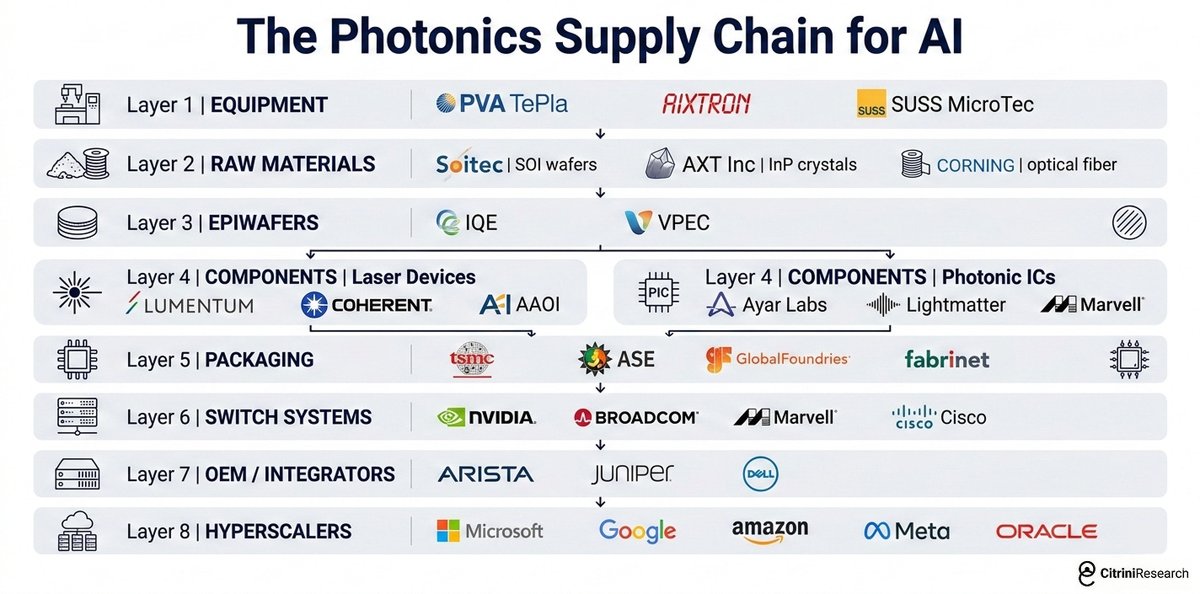
The Photonics Supply Chain (from our latest piece "Let There Be Light")
Citrini tweet media
English
60
252
1.8K
206.4K
Gabriel Kwok retweetledi
Elon Musk
Elon Musk@elonmusk·
Elon Musk tweet media
ZXX
7.9K
30.7K
283.6K
28.4M