Sabitlenmiş Tweet
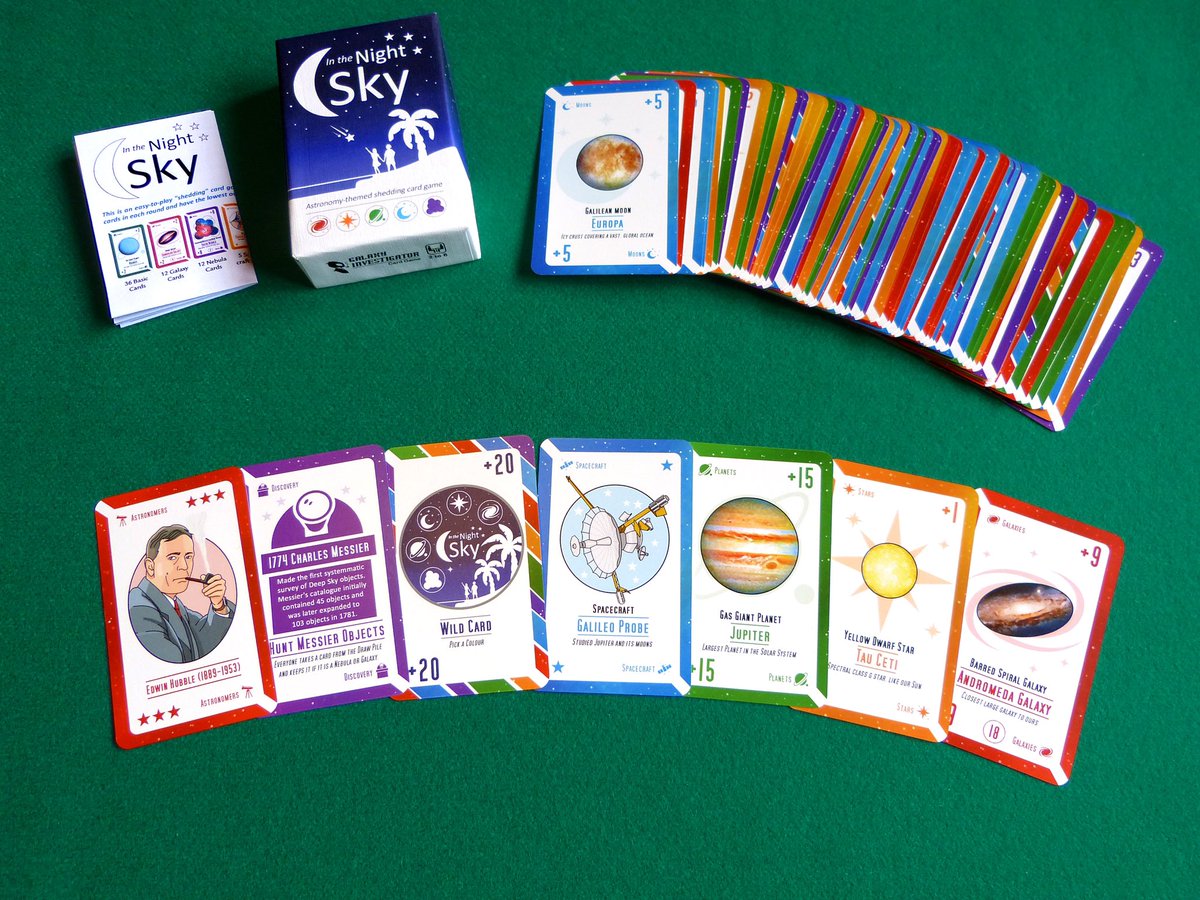
Free to download #astronomy card game at the Galactic Eye website galacticeye.co.uk/card-game - Print them, cut them out and get going 😄👍 🔭
English
Steve H
2.8K posts
@Galactic_Eye_
Visit the GALACTIC EYE SPACE LIBRARY: Alien Life, The Solar System, The Universe, Space Technology, Vector Diagrams, Star Charts, Space-Themed Music, Books...
Voyager 1, the farthest human-made object from Earth, is expected to reach a distance of about one light-day on November 15, 2026. A light-day is the distance that light travels in a single day—roughly 26 billion kilometers (about 16 billion miles). This means that by that time, any signal sent from Earth to Voyager 1, or from Voyager 1 back to Earth, will take a full 24 hours to travel one way. This incredible distance highlights just how far the spacecraft has journeyed since its launch in 1977, moving steadily away from our planet at a speed of over 60,000 kilometers per hour. Originally launched to study the outer planets, Voyager 1 completed historic flybys of Jupiter and Saturn, capturing groundbreaking images and data. After completing its primary mission, it continued traveling outward and eventually entered interstellar space, the region beyond the influence of the Sun’s solar wind. Even after decades, Voyager 1 is still sending valuable scientific data back to Earth, although its power is slowly decreasing over time. Reaching one light-day distance is not just a milestone of distance, but also a powerful reminder of human achievement and curiosity. It shows how far our technology has advanced and how we have extended our presence far beyond our home planet. Despite being so far away, Voyager 1 still carries the famous Golden Record, a message intended for any potential extraterrestrial life that might encounter it in the distant future. As it continues its silent journey through the vastness of space, Voyager 1 stands as a symbol of exploration, representing humanity’s desire to understand the universe beyond our Solar System. #Voyager1 #solarsystem #universe





BREAKING🚨: CERN finds the tiny "Glitch" in physics explaining why the universe.







Life in Venus atmosphere? Six years ago was proposed the presence of phosphine in the Venus’s atmosphere, a potential biosignature. Many doubts have been cast on these observations and… what’s the origin of these proposed phosphine? Image: Akatsuki / PLANET-C Project Team/JAXA