Gavin Kelly

894 posts

Gavin Kelly banner
Gavin Kelly

Gavin Kelly

@GavinKellyLatin

Professor of Latin Literature and Roman History, University of Edinburgh

Edinburgh, UK Katılım Temmuz 2018
830 Takip Edilen1.1K Takipçiler
Gavin Kelly
Gavin Kelly@GavinKellyLatin·
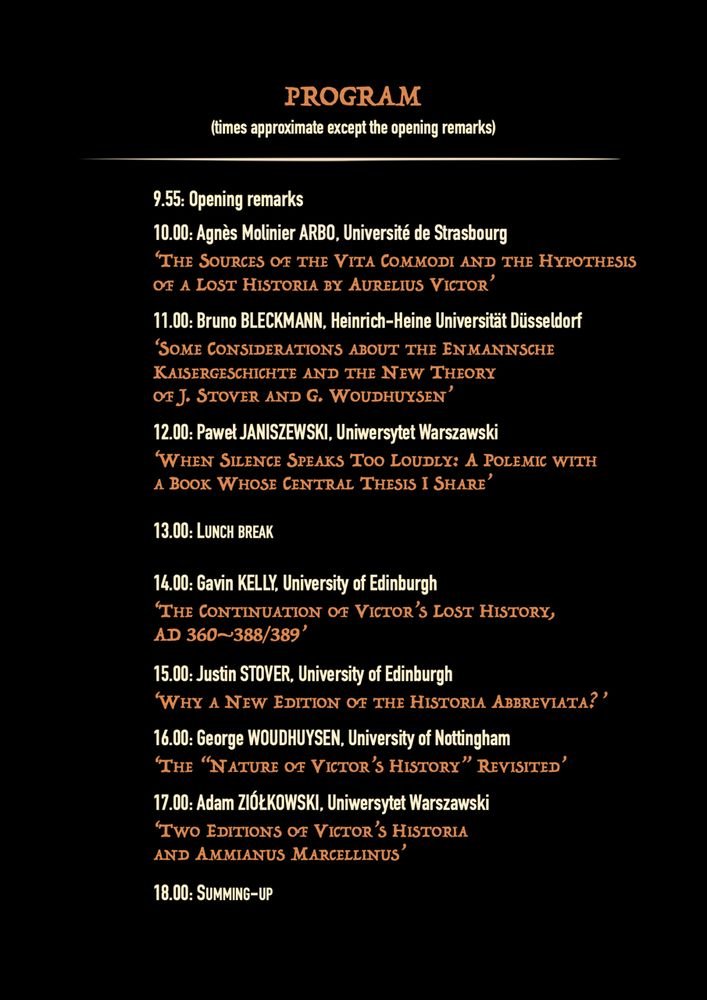
The Last Historians of Rome project is holding an afternoon conference on Livy in Late Antiquity at the University of Nottingham, on Wednesday 18 March. Write to George Woudhuysen (details on poster) if you want to attend in person or online. Will be great to see you there!
Gavin Kelly tweet mediaGavin Kelly tweet media
English
0
6
12
508
Gavin Kelly
Gavin Kelly@GavinKellyLatin·
@JamesWHankins1 Julian mentions the conversion of Constantine, as does Zosimus. The story in both delays the conversion to 326, after Constantine had executed his son and killed his wife: pagan priests told hm that such sins could not be expiated, while Christian ones said they could.
English
0
0
5
120
eburke
eburke@JamesWHankins1·
The Late Roman Empire concept reflects a disposition, going back at least to Gibbon, to ignore the Byzantine continuation of Rome and also to ignore Christianity as much as possible. I learned somewhere that no late ancient pagan source mentions the conversion of Constantine. Not sure whether it is true, but I wouldn't be surprised.
Lucius Gellius Publicola 🏺@Lucius_Gellius

Parution : quand je lis "Bas empire romain", je bloque un peu comme quand je lis "chute de l'empire romain"! Je préfère parler d'Antiquité tardive! Si ce n'avais pas été Tiphaine Moreau, docteur en Histoire romaine et spécialiste de la période, qui a écrit ce livre de 400 pages paru aux @EditionsPerrin en janvier 2026, je ne l'aurai même pas ouvert ! Alors pourquoi le choix de ce titre "Bas-Empire" au lieu d'Antiquité tardive" ? Le choix du terme "Bas-Empire" est délibéré et ancré dans l'historiographie classique, mais il n'est pas "désuet" pour autant – il sert plutôt de pont entre traditions anciennes et approches modernes. Ce vocable, popularisé au XVIIIe siècle par des historiens comme Edward Gibbon dans Histoire du déclin et de la chute de l'Empire romain, évoque traditionnellement une période de décadence et d'affaiblissement, par opposition au "Haut-Empire" des Ier-IIe siècles. Il porte une connotation péjorative, impliquant un "bas" niveau culturel ou politique, ce qui a conduit les historiens contemporains, depuis les travaux de Peter Brown dans les années 1970, à préférer "Antiquité tardive" pour souligner les continuités, les transformations et la vitalité culturelle (par exemple, l'essor du christianisme ou les échanges avec les "barbares"). Tiphaine Moreau opte pour "Bas-Empire" precisément pour réconcilier ces deux visions : elle intègre les acquis de l'"Antiquité tardive" (résiliences, adaptations sociétales) tout en revisitant le savoir classique sur cette ère de crises. Ce titre n'est donc pas un archaïsme gratuit, mais un choix méthodologique pour "réviser la boussole" et "compléter le puzzle" historiographique, en évitant les excès déclinistes tout en reconnaissant les faiblesses structurelles de l'Empire. L'ouvrage suit un plan chronologique clair, divisé en chapitres couvrant les grandes phases : la crise du IIIe siècle (anarchie militaire, invasions), les réformes de Dioclétien et Constantin (tétrarchie, christianisation), les troubles du IVe siècle (usurpations, migrations barbares) et l'agonie du Ve siècle (sac de Rome en 410, chute en 476). L'auteur intercale des "paliers thématiques" (économie, armée, religion, administration) pour approfondir les mécanismes de résilience, comme l'adaptation de l'État romain face aux pressions extérieures et internes. Plutôt que de dépeindre une "chute brutale", elle met l'accent sur un effondrement lent, fait de transformations progressives : l'intégration des barbares dans l'armée, la décentralisation du pouvoir, ou la persistance d'un héritage culturel qui relativise les discours déclinistes actuels (par analogie avec nos crises contemporaines). L'approche est minutieuse et fouillée, s'appuyant sur des sources primaires (textes antiques, archéologie) et une bibliographie actualisée. Le sous-titre "Les derniers feux de l'Occident romain" évoque non pas une extinction totale, mais des lueurs persistantes, soulignant la capacité de l'Empire à se réinventer malgré les crises Le livre est particulièrement érudit mais accessible avec un luxe de détails, offrant un panorama exhaustif qui enrichit la compréhension des dynamiques complexes (par exemple, le rôle du christianisme comme facteur de cohésion ou de division). En renversant la vision d'un déclin inéluctable, l'aiteur met en lumière la "résilience extraordinaire" de l'État romain, ce qui rend l'ouvrage pertinent pour réfléchir à des thèmes actuels comme les migrations ou les effondrements civilisationnels, sans verser dans l'analogie forcée. L'auteur évite les jugements moraux, préférant une analyse factuelle qui "brosse un panorama propre à réviser la boussole" sur les derniers siècle de l'empire romainnd'Occident.

English
6
5
49
5.4K
Gavin Kelly
Gavin Kelly@GavinKellyLatin·
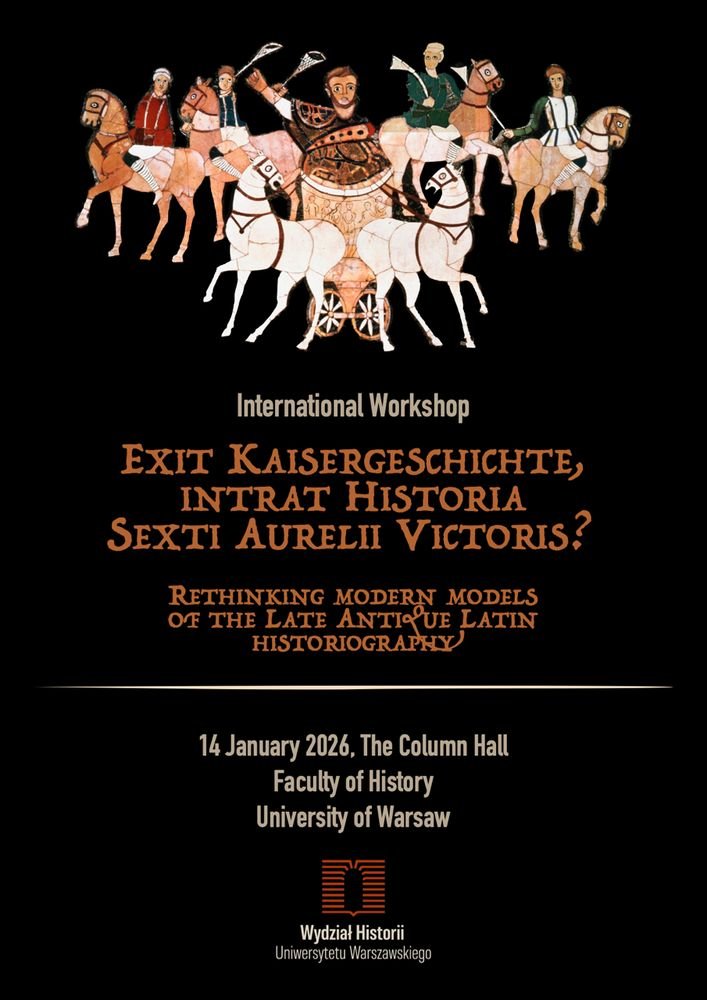
author and poster
Gavin Kelly tweet media
English
0
0
3
70
Gavin Kelly
Gavin Kelly@GavinKellyLatin·
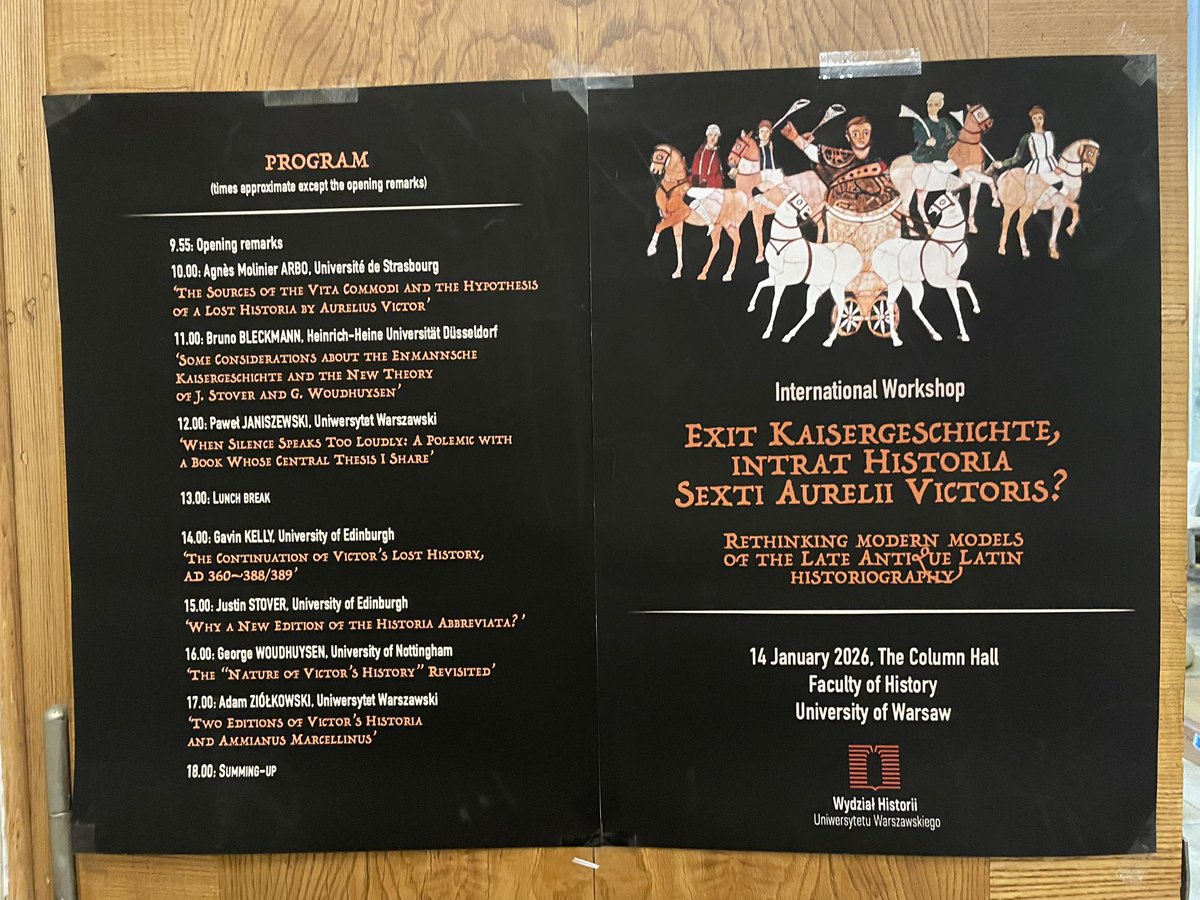
the programme
Gavin Kelly tweet media
English
1
0
5
83
Gavin Kelly
Gavin Kelly@GavinKellyLatin·
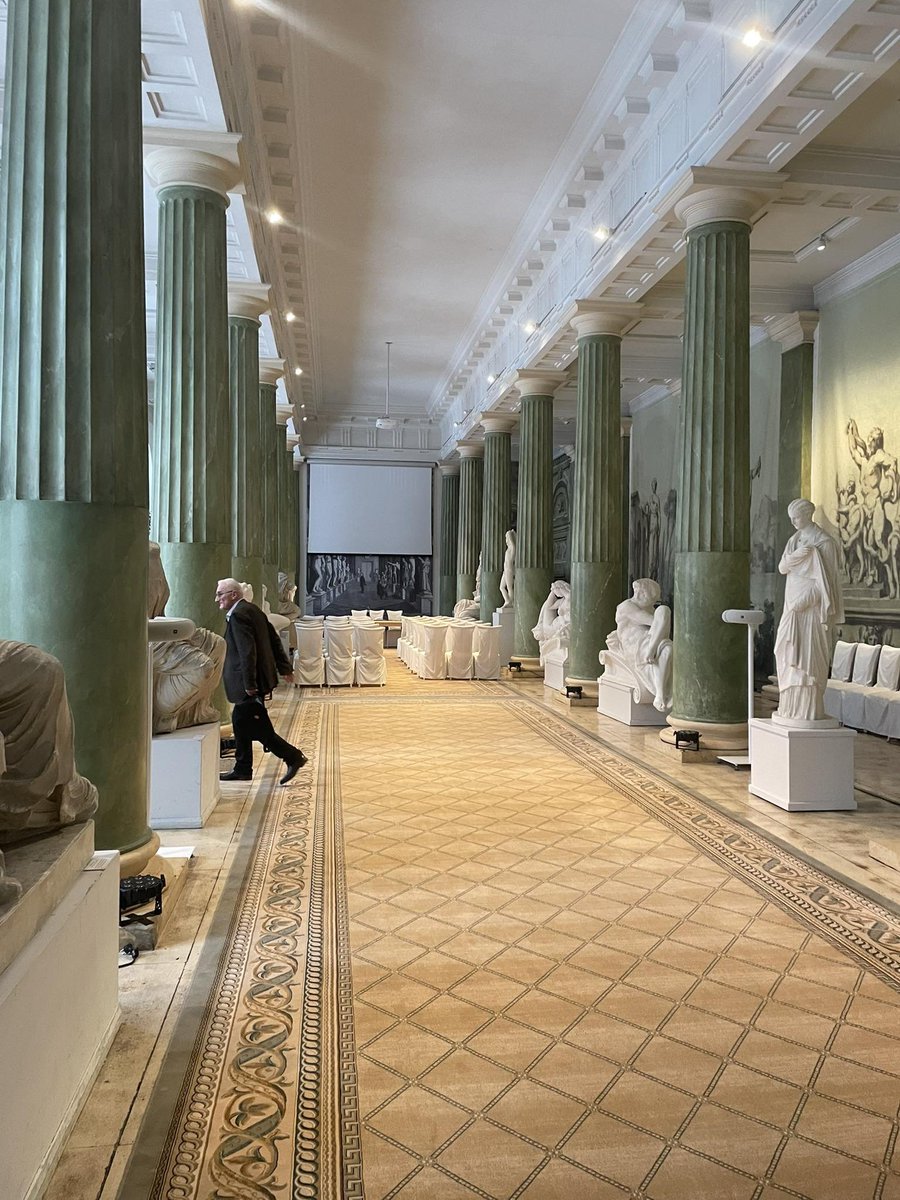
In Warsaw for a conference to discuss Aurelius Victor and Stover and Woudhuysen's book: grand surroundings...
Gavin Kelly tweet media
English
1
0
6
139
Gavin Kelly
Gavin Kelly@GavinKellyLatin·
Should you be in Warsaw next week, do come along!
Gavin Kelly tweet mediaGavin Kelly tweet media
English
0
1
3
213
Paul McKenna
Paul McKenna@PaulMcKenna4·
In Latin we know that ‘eu’ is not a diphthong (don’t we? Yes, we do). So how to deal with ‘neu’ at Georgics 2.37, for example? I suppose we take it as nēv(e) 🤷‍♂️
English
2
0
3
1K
Mark Thakkar
Mark Thakkar@brunellus·
@GavinKellyLatin The mark above ‘intentus’ (which looks like ‘b’ but could conceivably be ‘σ’) is also found above ‘nimium’, so does it simply pinpoint the emended word?
English
2
0
1
83
Gavin Kelly
Gavin Kelly@GavinKellyLatin·
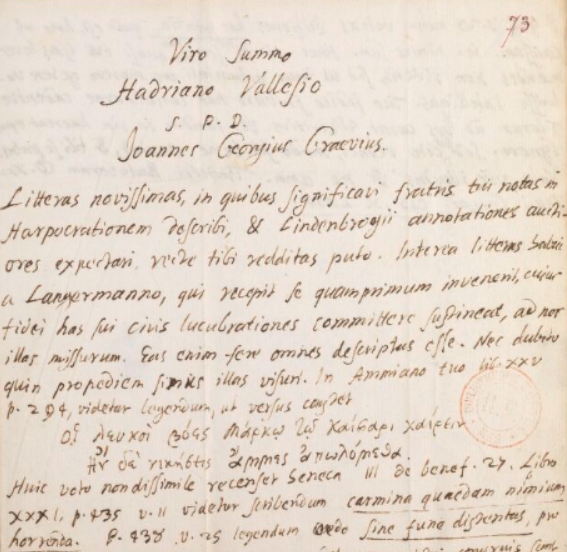
I have published a letter from the 17th-century classicist Johann Georg Graevius to his French colleague Adrien de Valois on the blog of the Last Historians of Rome project. It shows how Graevius procured annotations by Friedrich Lindenbrog for Valois' Ammianus edition... +
Gavin Kelly tweet media
English
2
3
13
604
Antigone Journal
Antigone Journal@AntigoneJournal·
TIL that Cecil Rhodes was so obsessed with Gibbon's Decline and Fall, but so devoid of Latin and Greek, that he spent £8,000 (now £1m?) having all of the secondary texts that Gibbon quoted translated into English just for him. The project was abandoned at the Church Fathers.
Antigone Journal tweet media
English
43
163
2.6K
103.3K
Jeremy Wayne Tate
Jeremy Wayne Tate@JeremyTate41·
Imagine giving a graduation speech at Harvard entirely in Latin with no notes. Unreal.
English
86
196
1.7K
181.9K
Gavin Kelly
Gavin Kelly@GavinKellyLatin·
@DrFrancisYoung In these cases I cite the original publication, and then '(Reprinted in author, book title (place, date), chapter X).'
English
0
1
2
67
Dr Francis Young
Dr Francis Young@DrFrancisYoung·
I am trying to work out how to cite a single-volume collection of a scholar's papers where the chapters *retain the page numbering of the original journals where they were published*, so there are no consecutive page numbers throughout the book 😱
GIF
English
18
1
62
6.8K
Gavin Kelly
Gavin Kelly@GavinKellyLatin·
@GeorgyKantor And, as Tony Woodman pointed out, Carmen composuit Quintus Horatius is a first Asclepiad, a line in one of Horace's metres.
English
1
1
7
422
Georgy Kantor
Georgy Kantor@GeorgyKantor·
'Carmen composuit Q. Horatius Flaccus': this mention of Horace in the record of the Augustan Secular Games (line 149) is the only mention of poetry in a surviving official act of the Roman state. Had a great time revisiting the epigraphic museum at the Terme di Diocleziano today.
Georgy Kantor tweet mediaGeorgy Kantor tweet media
English
2
13
68
3.3K
Gavin Kelly
Gavin Kelly@GavinKellyLatin·
@lwahlgrensmith Cf. the five or so settings of the same passage (When David heard...) by English composers in the wake of the death of Henry Prince of Wales 15 years earlier (Tomkins, Weelkes, Milton, East, Ramsey). In the air of early 17th c. England?
English
1
0
2
37
Lena Wahlgren-Smith
Lena Wahlgren-Smith@lwahlgrensmith·
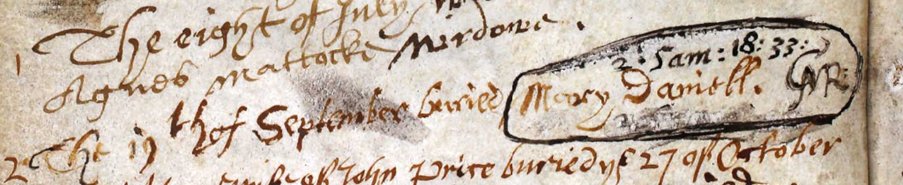
Reading burial registers this morning, suddenly finding the personal. 2 Sam. 18:33: "The king was shaken. He went up to the room over the gateway and wept. As he went, he said: “O my son Absalom! My son, my son Absalom! If only I had died instead of you—O Absalom, my son, my son!
Lena Wahlgren-Smith tweet media
English
2
0
6
119
Gavin Kelly
Gavin Kelly@GavinKellyLatin·
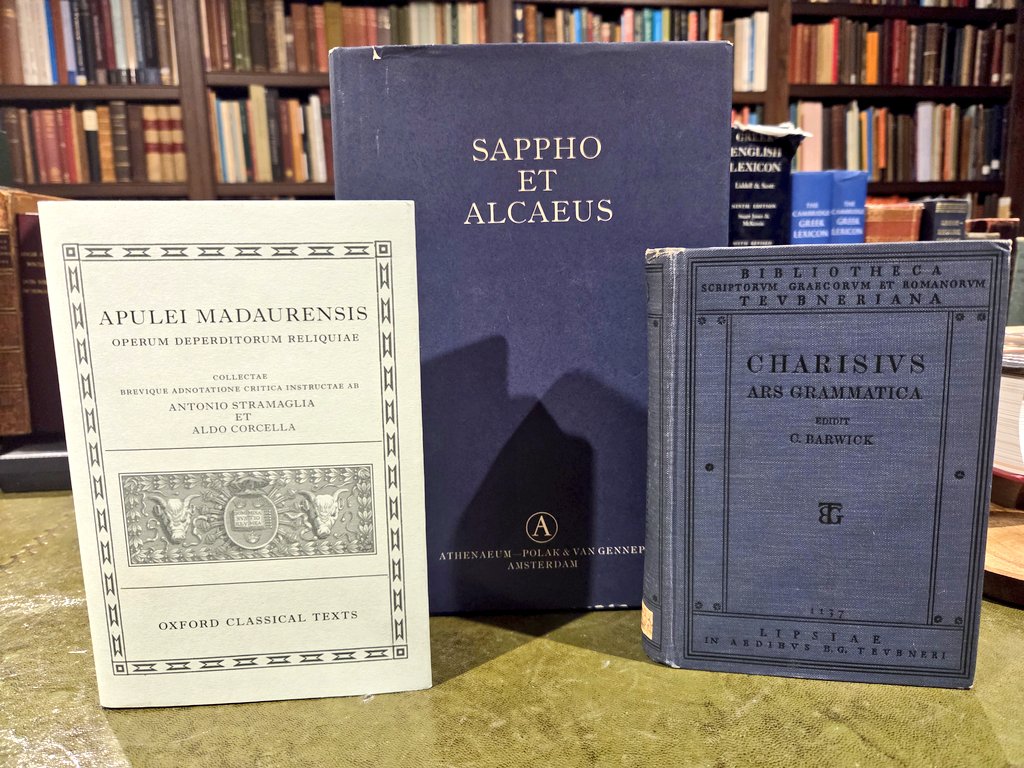
@AntigoneJournal With Apuleius, I like the fact that the editor's names are placed in the ablative case so that the Latin and Italian names are the same.
English
1
2
16
1.4K
Antigone Journal
Antigone Journal@AntigoneJournal·
Some fresh arrivals, old and new. What's the most recent Classical text you bought? (Pictures welcome!)
Antigone Journal tweet media
English
21
18
205
9.1K
Gavin Kelly retweetledi
Peter Sarris
Peter Sarris@peter_sarris·
Dreadful move on the part of the @uOttawa : closing admissions in Greek & Roman Honours programme (after having already closed down MA in Late Antiquity. The death-knell of Latin and Greek, taught there since 1848. O temporal! O mores!
English
5
29
170
12.5K
Gavin Kelly
Gavin Kelly@GavinKellyLatin·
@DanielHadas2 @theo_nash when you cross the road on a two-way street in left-hand-drive countries, you look right first, then left; the reverse in right-hand-drive countries. But often people step into the road after the first glance and if they get the direction wrong It is scary / leads to accidents.
English
1
0
1
56
Daniel Hadas
Daniel Hadas@DanielHadas2·
@theo_nash @GavinKellyLatin I don't get how this helps. On a two-way street, cars come from right and left. On a one-way street, it depends in what direction you're walking. Am I missing something? 1/
English
2
0
0
36