
Geoffrey Cain

2.1K posts

Geoffrey Cain banner
Geoffrey Cain

Geoffrey Cain

@geoffrey_cain

Author: Steve Jobs in Exile | Samsung Rising | The Perfect Police State. Covering tech, business, and reinvention. https://t.co/A30FLk9GV8

New York Katılım Nisan 2012
959 Takip Edilen17K Takipçiler
Sabitlenmiş Tweet
Geoffrey Cain
Geoffrey Cain@geoffrey_cain·
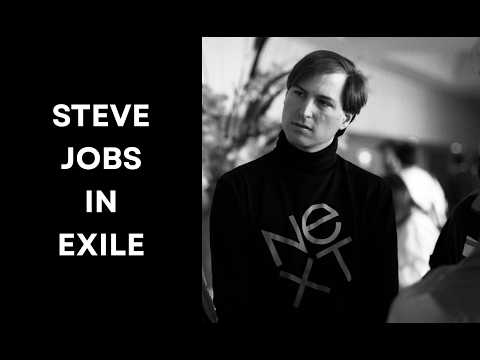
Today is launch day for Steve Jobs in Exile. I spent almost four years digging into Steve's stretch in the wilderness -- 1985 to 1997, after Apple pushed him out and before it brought him back. I expected the record to be complete. What more could there be on the most written-about entrepreneur alive? I was wrong. An archivist at Carnegie Mellon told me I was the first person in about fifteen years to open the NeXT archive. People had been holding letters, tapes, memos, recordings in their closets for decades, waiting to show someone. More than a hundred of them sat down with me. They didn't tell me about the genius-or-tyrant caricature. This was a younger Steve, mostly off-camera, nearly bankrupt, learning the hard way. Out now, order link below.
Geoffrey Cain tweet media
English
58
100
882
385.1K
JFK Files
JFK Files@read_jfk_files·
i watched an old talk by Alan Kay from around 1997. He recounts meeting and talking to Tim Berners-Lee, where Tim showed him the prototype of the world wide web. Alan asked Tim what he thought about Doug Engelbart's "the Mother of All Demos"? Tim told Alan he didn't know who that was. The piont being, genius and world shaking breakthroughs often happen in total isolation with no awareness of the shoulders of the giants upon which they stand.
English
1
0
1
19
Geoffrey Cain
Geoffrey Cain@geoffrey_cain·
In 1990, the World Wide Web was invented on Steve Jobs' computer. Steve ignored it. This is the story I tell in my new book Steve Jobs in Exile. Here is what it should tell the rest of us about the moment we are in now. Steve was running NeXT, an unsuccessful computer company. He had been pushed out of Apple five years earlier and was burning his fortune trying to build a successor to the Macintosh. The machine NeXT sold was a matte-black magnesium cube -- expensive and beautiful and not selling. In October of that year, on the other side of the Atlantic, a British physicist named Tim Berners-Lee took delivery of a NeXT Cube at CERN, the physics laboratory on the Swiss-French border. He used it to invent the World Wide Web. The web ran on the Cube for its first year of existence. The revolution was happening on Steve's hardware, and yet Steve ignored it. Here is the question I keep thinking about from my book. If Steve Jobs, the most visionary tech mind of his generation, missed the Web, the most civilization-shaping tech of his lifetime, how are the rest of us supposed to see anything coming? Berners-Lee had been asking his boss at CERN for a NeXT Cube for months. His boss finally signed off, hoping to test the exotic Cube. "He suggested that I should buy one of these NeXT machines I'd been talking about so enthusiastically," Berners-Lee later told Fresh Air. "And if we needed a sort of test project to run on the NeXT machine ... 'Why not just do this hypertext thing you're talking about?'" The "test project" evolved into the World Wide Web. The problem Berners-Lee was trying to solve was not a glamorous one. CERN employed thousands of scientists from over a hundred countries, most cycling through on short assignments and taking their knowledge with them when they left. Berners-Lee was trying to keep institutional knowledge from walking out the door. He wanted a system that worked the way human memory does, where any piece of information could connect to any other without permission or central control. Through late 1990, he coded in his gray-floored office. The Cube's object-oriented system let him build in months what would have taken a year on anything else. By December, the first website info.cern.ch went online. The World Wide Web now existed, running on a single black NeXT Cube in CERN's Building 31. Berners-Lee scrawled a warning on it in red ink: "This machine is a server. DO NOT POWER IT DOWN!!" Underneath the elegant interface he was building HTTP, HTML, and the server software that would deliver web pages. These three inventions would form much of the invisible plumbing of our modern connectivity. When a colleague of Berners-Lee's brought a demo of the Web to NeXT's headquarters in California, he could not get anyone there to pay attention. Nobody even dared show it to Steve, afraid he would dismiss it. NeXT was busy with its own internet plans, which Steve eventually killed. So back to the question. If Steve Jobs missed the web, how are the rest of us supposed to see whatever comes next? The honest answer is that we cannot. Nobody can. The rest of us are not going to outpattern-match Steve Jobs. But here is what I learned writing Steve Jobs in Exile. Transformations almost always begin in obscurity, on the margins, solving boring problems with boring tools. The web did not look revolutionary in 1990. It looked like a tool for sharing physics papers. We are in another such moment now. AI is the obvious changemaker. But the biggest transformations are rarely the obvious ones. The next one is happening somewhere right now, and it is trickier to spot than any sweeping proclamation about AI. We will recognize it, if we recognize it at all, from the unglamorous work few people are focused on. I will not speculate on what Steve would have made of AI today. But if he could miss the Web, the rest of us are going to have to look harder. Photo of the original CERN NeXT Cube courtesy of Robert Scoble.
Geoffrey Cain tweet media
English
42
59
455
467.2K
Geoffrey Cain
Geoffrey Cain@geoffrey_cain·
@moskowitz It took many decades to for him to win the market, and many failures.
English
1
0
1
443
Bruce F. Webster
Bruce F. Webster@bfwebster·
@geoffrey_cain I understood the thinking behind the optical disk, but it was flaky as hell. 🤣 Hard drives were a big upgrade.
English
1
0
2
220
Geoffrey Cain
Geoffrey Cain@geoffrey_cain·
The Canon optical disk at NeXT is a forgotten story and probably the strongest example of Steve Jobs missing the mark -- in ways that later came close to bankrupting him personally (2-3 years of runway left). The lesson: if the industry is moving in one direction, don't move in another. People buy tech for compatibility and ease of use, not novelty.
stevemur@stevemur

In 1985, he and Bud Tribble came to my college (@SCSatCMU), which was one of the first investors in NeXT. I was lucky enough to be invited to dinner. I asked him "What size hard drive are you thinking about for the new NeXT box?", to which he stared at me and said "That's the stupidest question I've ever heard. Do you know about the magneto optical drive?"... qr.ae/pFsTaj

English
3
3
24
6.2K
Geoffrey Cain
Geoffrey Cain@geoffrey_cain·
@dwarkesh_sp Great interview. This also lays out, perhaps without realizing, why Fukuyama's End of History is accurate.
English
0
0
3
234
Dwarkesh Patel
Dwarkesh Patel@dwarkesh_sp·
All dictators in the modern world face the same fundamental dilemma. You need a modern economy in order to actually be competitive internationally. If you don't modernize, there are risks from outside. But industry and education create new potential sources of resistance - like labor unions, or university-educated intellectuals. If you do modernize, there are risks from inside. Get the balance wrong in either direction and you lose power.
English
20
33
299
28.5K
Geoffrey Cain
Geoffrey Cain@geoffrey_cain·
@lulumeservey Can't wait for this. (We are in the process of buying a beautiful home.)
English
0
0
2
197
Geoffrey Cain
Geoffrey Cain@geoffrey_cain·
Even Steve Jobs missed some of the biggest moments in tech made on his own machine. Normal, though -- no one can predict for sure (not even Steve) where the future is headed.
Jay Cross@jaycrosstweets

@geoffrey_cain I was surprised to find out that the web was invented on a NeXT machine. And also that Doom was! Your book said the creator wanted to put "created on NeXTSTEP" in the credits, but Steve said no because he didn't care for games, and then Doom became huge 🤯

English
0
1
13
1.6K
Geoffrey Cain retweetledi
Jeremy Osborne
Jeremy Osborne@jeremylosborne·
Lots of lessons in @geoffrey_cain’s new book Steve Jobs in Exile, but this one may be the most important.
Jeremy Osborne tweet media
English
0
2
12
4K
Geoffrey Cain
Geoffrey Cain@geoffrey_cain·
Steve Jobs said this when he was hitting rock bottom in his career. He was at NeXT and no product he made was selling. Adversity forges character. From Steve Jobs in Exile. Out now.
Geoffrey Cain tweet media
English
2
4
24
1.1K
Geoffrey Cain retweetledi
BookLab by Bjorn
BookLab by Bjorn@poorbjorn·
@Kulambq Stay humble, stack stats, and read slowly. It’s a simple life, really
BookLab by Bjorn tweet media
English
0
1
4
497
Geoffrey Cain
Geoffrey Cain@geoffrey_cain·
@guywelch2000 @ComputerHistory @Apple It usually takes many years for the history to be written. For example the first definitive books about the Great Depression in 1929 were written in the 1950s.
English
1
0
1
30
Geoffrey Cain
Geoffrey Cain@geoffrey_cain·
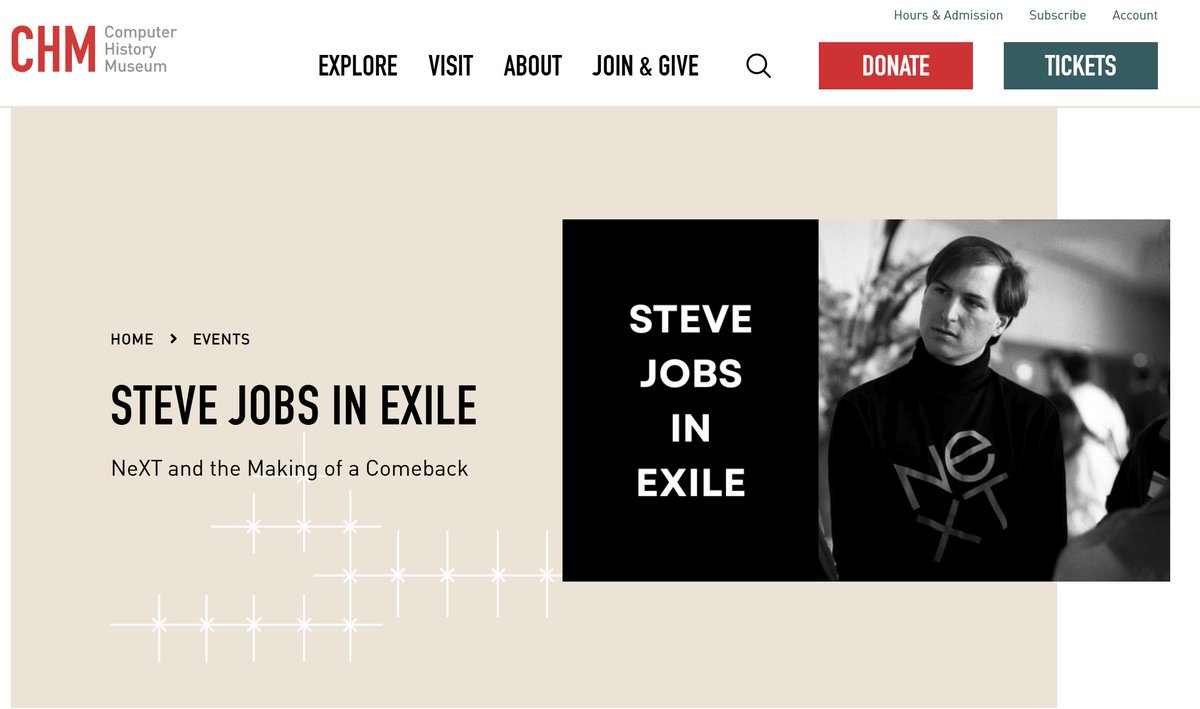
I'll moderate a panel about STEVE JOBS IN EXILE at the @ComputerHistory Museum tonight, featuring NeXT and @Apple all-stars: Dan'l Lewin, Bud Tribble, Avie Tevanian, Rich Page (by video). 7pm Pacific time. In-person tickets are sold out, but you can join on YouTube here: youtube.com/live/WnZeiw8q4…
YouTube video
YouTube
Geoffrey Cain tweet media
English
4
8
55
5K