
Sabitlenmiş Tweet
Mauricio
81.5K posts


Mauricio
@GestazionCL
La estabilidad política y económica se logra al implementar un Estado de Bienestar. Otras soluciones son o inestables o autoritarias. Sexo, Basket y Rock & Roll
La serena, Chile Katılım Temmuz 2011
1K Takip Edilen1.1K Takipçiler
Mauricio retweetledi

American workers just took home their smallest share of the nation's wealth since 1947 — even as corporate profits soar.
Why? This chart has the answer.
English

🔑 #DFFull | Exención transitoria del IVA en viviendas podría rebajar los dividendos en hasta $ 113 mil mensuales
df.cl/mercados/banca…
Español
@AgriculturaFM Si nosotros tenemos mas ¡todos tendrán más!
En teoría...y si no, da lo mismo.
Español

#Economia | Presidenta de la CPC alerta por debilidad económica y urge aprobar Plan de Reconstrucción Nacional
radioagricultura.cl/noticias/econo…
Español

Ministro Mas califica como “drama social” alza en el desempleo y llama a aprobar megarreforma: “No hay tiempo que perder” cnnchile.com/pais/ministro-…
Español
Mauricio retweetledi

Alguna vez se dijo que Brasil era "Belindia" (porque convivían territorios parecidos a Bélgica con otros parecidos a India).
La verdad es que era una buena caracterización. Los pobres brasileños tienen un nivel de ingresos muy similar al de los pobres de India, mientras que los ricos brasileños uno bastante cercano al de los ricos belgas.

Daniel Schteingart@danyscht
La combinación de ser una región de ingresos medios con alta desigualdad supone dos cosas. Las élites latinoamericanas viven materialmente cerca de las europeas. Los pobres latinoamericanos, en cambio, viven dramáticamente peor que los pobres europeos.
Español

Quiroz evita comprometer cambios específicos a megarreforma y tensiona al oficialismo latercera.com/politica/notic…
Español
Mauricio retweetledi

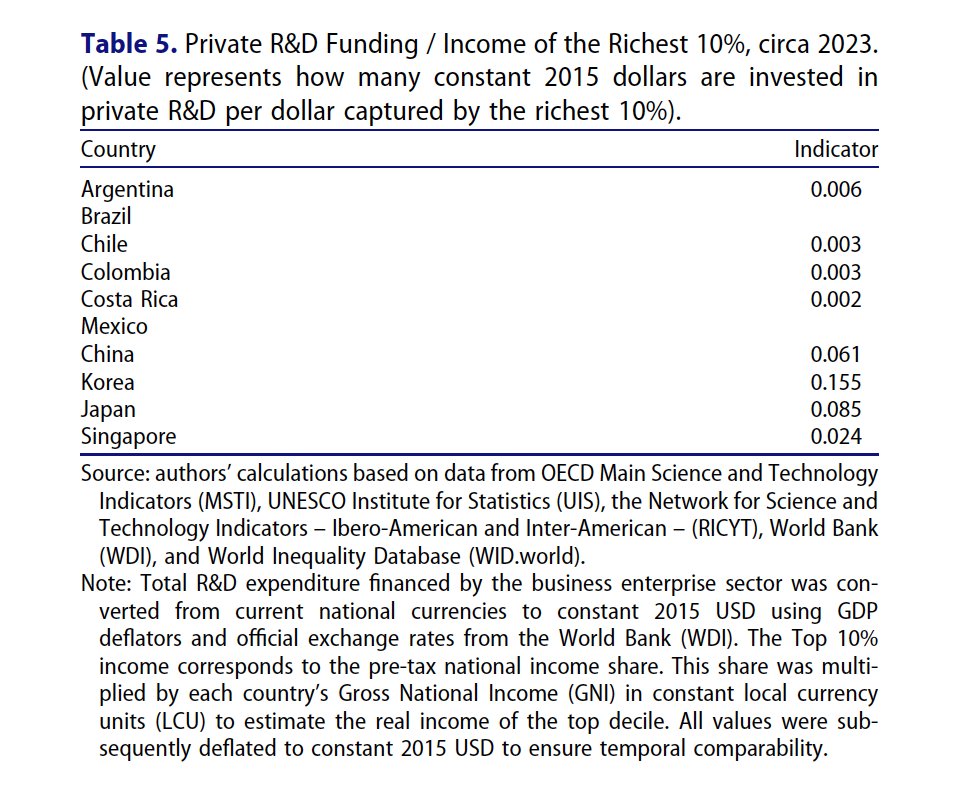
Esto es totalmente cierto. La falta de innovación y predominio del rentismo es la característica más prístina de la elite económica chilena. (1/5)
Daniel Matamala@DMatamala
Ricardo Hausmann @ricardo_hausman fundador del @HarvardGrwthLab sobre reformas del gobierno: “Con eso no van a ir muy lejos. Chile está estancado en ingresos medios, porque le falta el motor fundamental de los países ricos: innovar en nuevos productos y nuevos procesos” LO QUE IMPORTA: Un país demasiado simple youtu.be/H18sbJLATrU?si…
Español

"Tener casi 950 mil personas sin trabajo es un drama social": Gobierno lamenta las cifras de desempleo
biobiochile.cl/noticias/econo…
Español

Casi el 80% de los trabajadores en Chile asegura que su sueldo le dura menos de dos semanas, y el 90% declara no tener capacidad de ahorro
theclinic.cl/2026/05/29/cas…
Español
Mauricio retweetledi

El dato más grave del estudio no es que el sueldo dure menos de dos semanas. Es que millones de trabajadores ya no logran construir estabilidad ni futuro pese a tener empleo. Chile normalizó una economía donde trabajar no garantiza ahorro, independencia ni seguridad financiera. Mientras el sistema político discute crecimiento y cifras macroeconómicas, la ciudadanía vive atrapada entre deuda, arriendos y sobrevivencia mensual. Cuando incluso la clase trabajadora pierde capacidad de proyectarse, la crisis deja de ser económica y comienza a convertirse en una fractura social estructural.
Español

Carter Bryant looked SGA RIGHT IN THE EYES and TRUCKED HIM
English
@adnradiochile Sufran por Vitacura. Que todos tengan menos para que Vitacura tenga más.
Español

Hacienda confirma pérdida de US$ 70 millones al fondo municipal por exención de contribuciones adnradio.cl/2026/05/28/hac…
Español
Mauricio retweetledi

@danyscht @UnequalScenes El lugar es real. Se encuentra en la comuna de Padre Hurtado región metropolitana.
Un sector altamente poblado en sitios que no superan los 200m2 colinda con un sector de parcelas de agrado con 5000m2 de terreno.

Español
Mauricio retweetledi

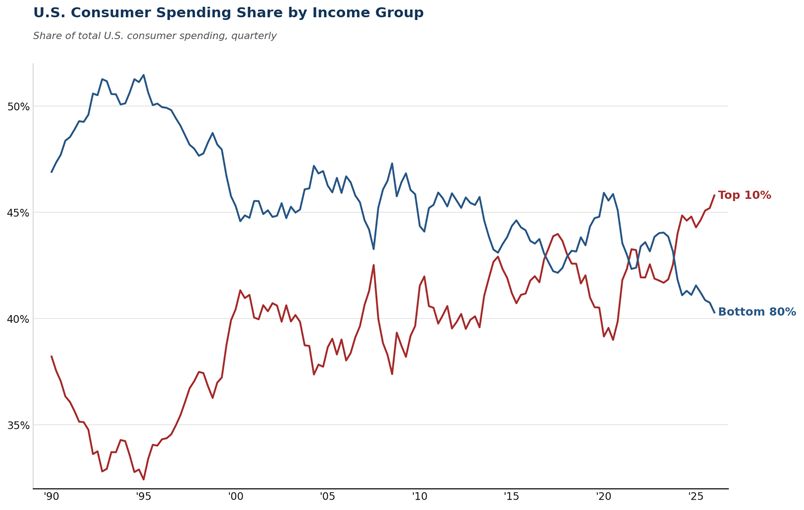
Under Trump, the highest income Americans are getting wealthier and spending more.
The bottom 80% are seeing their wealth eroded by inflation, forcing them to cut back drastically.
My @Morning_Joe Chart
English
Mauricio retweetledi

Resultados bajada límites de velocidad a 30 km/h en ciudades europeas:
▫️-23% colisiones y atropellos
▫️-37% fallecidos
▫️-18% emisiones
▫️-2,5 dB ruido
▫️-7% consumo combustible

Español
Sí...o sea, saltarse la manufactura no es tan sencillo como algunos quieren hacerlo parecer
Daniel Matamala@DMatamala
Ricardo Hausmann @ricardo_hausman fundador del @HarvardGrwthLab sobre reformas del gobierno: “Con eso no van a ir muy lejos. Chile está estancado en ingresos medios, porque le falta el motor fundamental de los países ricos: innovar en nuevos productos y nuevos procesos” LO QUE IMPORTA: Un país demasiado simple youtu.be/H18sbJLATrU?si…
Español
Mauricio retweetledi

Pope Leo XIV: "Among these ideologies, I consider particularly insidious the one that suggests that every person must earn or justify his or her own worth, to the point of attributing greater value to those who are more efficient or effective. From this perspective, persons end up being reduced to a means of achieving results, a resource to be used and exploited, and are no longer recognized as a proper end in themselves who should never be instrumentalized. The value of persons, however, does not depend on what they achieve or produce. There are rights that apply to everyone simply by virtue of being human, and no human power can legitimately deny or arbitrarily limit them." #MagnificaHumanitas

English
@RnaudBertrand OK. I buy it. But...what if Chine and Vietnam just do everything (or close)? You are just services and agriculture? And that's enough?
English

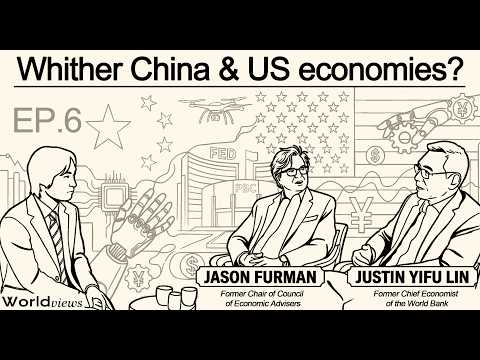
This is absolutely fascinating: Jason Furman, one of the foremost economists in the U.S. and former chair of the Council of Economic Advisers, explains why the so-called "China shock" is a myth.
According to him, "85 to 95% of Americans benefited" from trade with China, and "China has been part of helping [the US economy] work, not hurting it work."
In other words, the narrative that China "stole" American jobs and wages is the exact opposite of reality.
Furman's logic is pretty ironclad:
1) He points out, which is factual, that "the slowdown of wage growth and the rise of inequality began in the 1970s, when there basically was no trade with China." It then accelerated in the 1980s-90s when China trade was small, and **slowed down** after 2000. And "since about 2013," when trade with China was at its highest, "we've had pretty fast real wage growth," with "the fastest real wage growth for moderate income households."
In other words, the timing doesn't fit: if China was the cause, the problem should have gotten worse as trade with China increased. Instead, it got better.
2) A common narrative one hears about China is "who cares about affordable goods, we need well-paying jobs." But Furman points out it's actually one and the same thing: "the way we measure jobs is how much your wages can buy. If you improve purchasing power, you are making every single job in the economy better."
In very concrete terms, if salaries stay flat but Chinese imports make goods 10% cheaper, your purchasing power just went up 10%, as if you got a 10% wage hike. This makes every single job in the economy better.
In effect "jobs vs. cheap goods" is a false dichotomy: cheap goods ARE better jobs.
3) Furman also points out, rightly, that the majority of what U.S. imports from China isn't consumer goods: "more than half of what we import is actually inputs into the manufacturing process itself."
In other words, Chinese imports make U.S. manufacturing MORE competitive as it decreases their input costs. If you were to cut all Chinese imports, you'd cripple U.S. manufacturing as it would no longer be able to compete on price with anyone. And, as per point 2 above, you'd also destroy Americans' purchasing power, making every single U.S. worker worse off.
4) Last but not least, Furman says that the "China shock" literature is fundamentally flawed, as it "doesn't answer the most important question, which is what the net effect was." It "doesn't consider other causes for the job losses, doesn't look at all the places that gained jobs and wages, and doesn't integrate the consumer side."
All in all, he believes that if one were to actually calculate the net effect of trade with China on the U.S. economy, it'd show that "85 to 95% of Americans benefited." And even for the 5-15% who lost out, Furman says these people were failed by "our labor policies, our social safety net" - not by China.
What Furman is saying is more relevant than ever because, both in the U.S. and in Europe, this notion that China is somehow "stealing" Western jobs and prosperity has become the unquestioned premise of so many of today's policies.
Nobody even debates it anymore, it's almost universally assumed correct.
In my own country France, Macron keeps repeating it all the time, leading the charge in Europe to slap tariffs on Chinese imports, warning that China is "killing its own customers" and that it's a question of life or death for European industry (reuters.com/world/china/fr…). He literally called last week for the EU to build its own version of America's Section 301 - the same protectionist tool Trump uses (politico.eu/article/emmanu…).
BUT, if Furman is right, and the data strongly suggests he is, France and Europe are about to inflict economic self-harm in the name of a problem that doesn't exist.
Much more affordable cars, for instance, would literally give every single European a big wage hike. It's Furman's argument on "85 to 95% benefiting" vs 5% to 15% losing out: the vast majority of Europeans would see their money go further, while a small number of jobs in legacy automakers would be disrupted. Instead of helping those workers transition, Europe wants to prevent making everyone better off.
Anyhow, please do watch the whole podcast, which has many other fascinating insights because Furman also debates with Justin Yifu Lin, the former Chief Economist of the World Bank and State Council Counsellor of China.
They're both interviewed by my friend @Hansong_Li - also a professor and an immensely smart man - in his excellent new podcast "worldviews" (imho one of the best new podcasts our there). The video is here: youtube.com/watch?v=TAj2FB…
YouTube
English
@FantasyGalaxies It was too much in the prequels. Too staged. Just fancy lights moving around.
English

The difference between prequel and sequel lightsaber fights is painful💀
English