Sabitlenmiş Tweet

Alexander "Sasha" Shulgin (June 17, 1925 – June 2, 2014) was an American chemist, biochemist, pharmacologist, and psychopharmacologist renowned for his pioneering work with psychoactive compounds. He is best known for introducing MDMA (commonly called ecstasy) to psychologists in the late 1970s for its potential in psychotherapy and for synthesizing and testing over 230 psychoactive substances, many of which he explored personally.
Born in Berkeley, California, Shulgin showed early intellectual promise, entering Harvard University at 16 on a scholarship to study organic chemistry. He left during his second year to join the U.S. Navy during World War II. After the war, he completed a Ph.D. in biochemistry at the University of California, Berkeley, in 1954. His career began with stints at Bio-Rad Laboratories and Dow Chemical, where he developed Zectran, the first biodegradable pesticide, earning him significant freedom to pursue his interests.
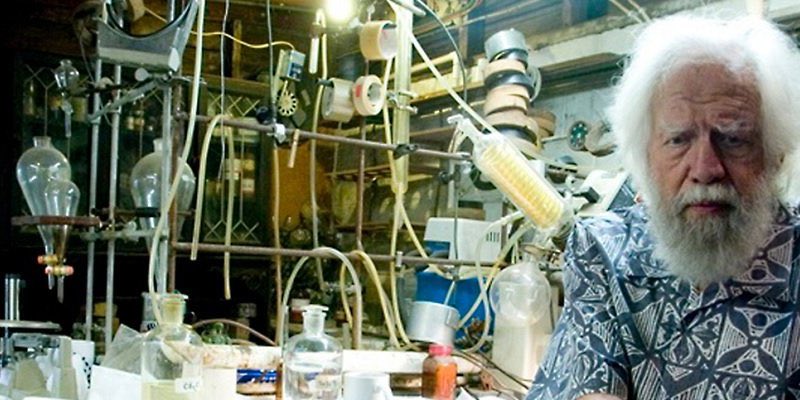
Shulgin’s fascination with psychedelics ignited in 1960 after experiencing mescaline, prompting him to leave Dow in 1966 and establish a home laboratory in Lafayette, California. There, he synthesized novel compounds, including the 2C family (like 2C-B) and DOx series (like DOM), testing them on himself, his wife Ann, and a small group of friends. He documented these experiences meticulously, often using his Shulgin Rating Scale to measure their effects, ranging from subtle shifts to profound, life-altering experiences.
In 1976, a student introduced him to MDMA, originally synthesized by Merck in 1912 but largely ignored. Shulgin refined its synthesis and shared it with psychologist Leo Zeff, who used it therapeutically, sparking its spread among therapists before it became a recreational drug. This unintended popularity earned him the nickname "godfather of ecstasy," though he lamented its shift from medical to party use.
With his wife Ann, whom he married in 1981, Shulgin co-authored *PiHKAL* (1991) and *TiHKAL* (1997), blending autobiography with detailed chemical recipes and subjective reports on phenethylamines and tryptamines, respectively. These books, while influential in psychedelic circles, drew scrutiny from the Drug Enforcement Administration (DEA). Despite a prior cooperative relationship—advising the DEA and holding a Schedule I research license—the agency raided his lab in 1994, fined him, and revoked his license after *PiHKAL*’s publication.
Shulgin’s work bridged science and counterculture, influencing both therapeutic research and underground exploration. He died of liver cancer in 2014 at 88, leaving a legacy of curiosity-driven discovery and a complex relationship with authority, celebrated by psychonauts and researchers alike.
English