GlassHouse Research

767 posts

GlassHouse Research banner
GlassHouse Research

GlassHouse Research

@GlassH_Research

Team of forensic accountants/analysts on the look out for fraudulent companies.

NYC Katılım Eylül 2013
159 Takip Edilen11.5K Takipçiler
Sabitlenmiş Tweet
GlassHouse Research
GlassHouse Research@GlassH_Research·
Today we are publishing our report on Exchange Income Corporation (TSX: EIF). EIC is marketed as a stable Canadian dividend compounder. Our research finds the underlying economics look very different. Two issues stand out: 1️⃣ Regional One aircraft asset recycling 2️⃣ Lack of free cash flow and dividend sustainability Full report: glasshouseresearch.com
English
3
7
40
28K
Alfonso Garcia
Alfonso Garcia@alfonso_gapa·
@GlassH_Research Very interesting insight. Do you have any docs/proof supporting the inventory they are moving into into Capital Assets is actually "Aged-out/stagnant"?
English
1
0
0
93
GlassHouse Research
GlassHouse Research@GlassH_Research·
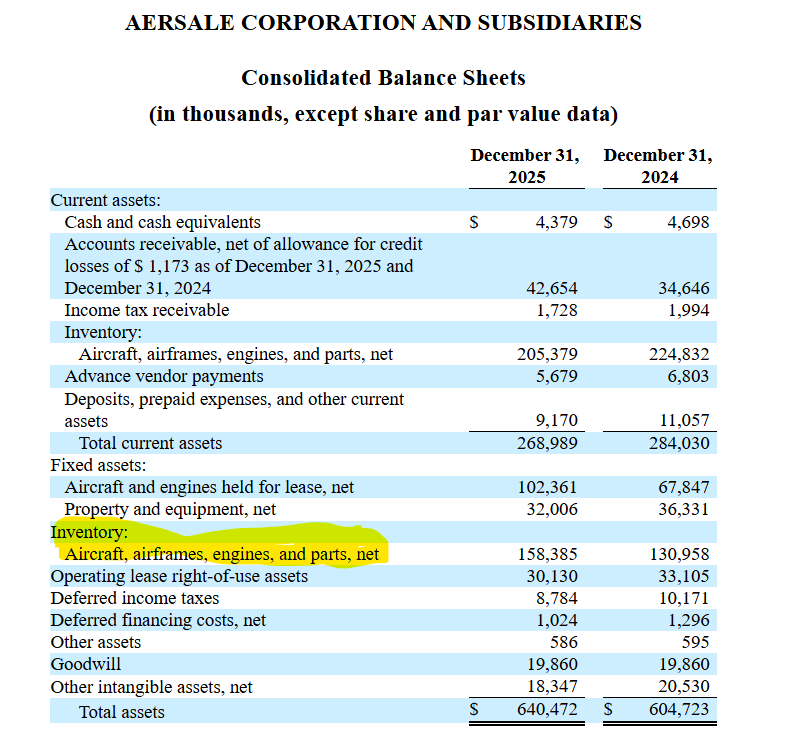
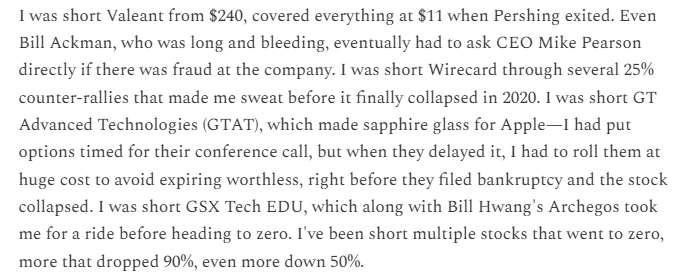
Story time: When I first started in short activism as a CPA (you’d be surprised... basically no short activists doing accounting work actually have a CPA license, BTW), my boss sent me on a wild goose chase targeting GT Advanced Technologies $GTAT. They claimed to be making unbreakable sapphire screens for the next iPhone, but the CEO was dumping stock like crazy. Boss’s orders: Camp out at their factory for a week and literally count cars in and out. (I was a pure spreadsheet junkie before this.) CEO goes on @CNBC defending his sales as a 10b5-1 plan (it wasn’t) and bragging that the factories were running day and night on the Apple deal. Reality? Max 10 cars all week. Then bam, random filing the next week, bankruptcy, stock to $0, most assets surrendered to Apple. Never seen anything like it. We’ve seen a lot of wild stuff in the short biz over the years. But with $EIF $EIF.TO, it’s the first time I’ve come across an accounting trick I genuinely haven’t seen anyone else pull. A direct peer like AerSale correctly moves aged inventory into long-term assets. Exchange Income Corp hides its aged-out inventory inside Capital Assets (dodging most DSI screens we use), then applies an obscure inventory valuation method I’ve never encountered before. Even as an accounting professor who’s seen pretty much everything. It lets them manufacture artificial margins. Props to management for the creativity… but we believe it will reverse hard and end badly. Time will tell. Would love to hear the craziest accounting gimmicks you’ve come across!
GlassHouse Research tweet media
English
3
4
111
15.9K
Mojo
Mojo@MrMojoRisinX·
I was involved in GTAT as well (excerpt from Inside the Mind of Mojo). Nice investigative work! (There is a lot more to that story, that prob won't ever come to the surface...)
Mojo tweet media
GlassHouse Research@GlassH_Research

Story time: When I first started in short activism as a CPA (you’d be surprised... basically no short activists doing accounting work actually have a CPA license, BTW), my boss sent me on a wild goose chase targeting GT Advanced Technologies $GTAT. They claimed to be making unbreakable sapphire screens for the next iPhone, but the CEO was dumping stock like crazy. Boss’s orders: Camp out at their factory for a week and literally count cars in and out. (I was a pure spreadsheet junkie before this.) CEO goes on @CNBC defending his sales as a 10b5-1 plan (it wasn’t) and bragging that the factories were running day and night on the Apple deal. Reality? Max 10 cars all week. Then bam, random filing the next week, bankruptcy, stock to $0, most assets surrendered to Apple. Never seen anything like it. We’ve seen a lot of wild stuff in the short biz over the years. But with $EIF $EIF.TO, it’s the first time I’ve come across an accounting trick I genuinely haven’t seen anyone else pull. A direct peer like AerSale correctly moves aged inventory into long-term assets. Exchange Income Corp hides its aged-out inventory inside Capital Assets (dodging most DSI screens we use), then applies an obscure inventory valuation method I’ve never encountered before. Even as an accounting professor who’s seen pretty much everything. It lets them manufacture artificial margins. Props to management for the creativity… but we believe it will reverse hard and end badly. Time will tell. Would love to hear the craziest accounting gimmicks you’ve come across!

English
2
0
11
4.3K
GlassHouse Research
GlassHouse Research@GlassH_Research·
Excited to present this case study again at @HarvardHBS this upcoming week! Funny, I used to have brush up on the Catalent thesis all over again, but then I noticed all the students just wanted the tea on the short activist space/industry. Especially, taking shit about chicken man lol. hbs.edu/faculty/Pages/…
English
1
0
9
2.5K
Jehoshaphat Research
Jehoshaphat Research@JehoshaphatRsch·
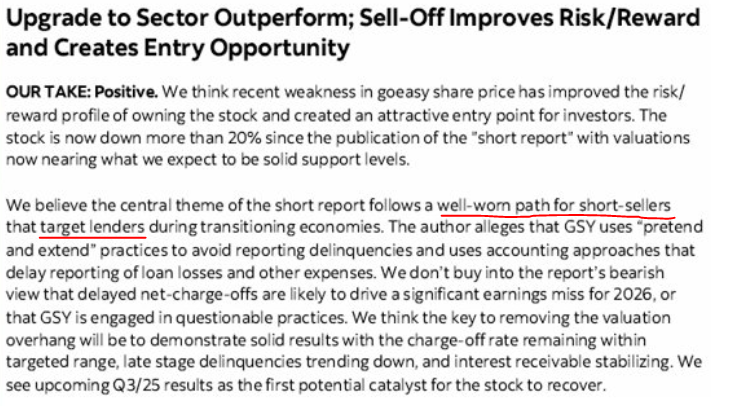
$GSY: Another house of cards supported by aggressive accounting collapses. Jehoshaphat Research alleged in September 2025 that goeasy was understating its loan delinquencies and charge-offs. This opinion was based on both forensic accounting analysis and interviews with former employees and competitors. It was a controversial opinion (see image below for an example of pushback). GSY has just announced it will be catching up on those understated charge-offs the only way it can - by taking gigantic charge-offs and write-downs. The company is also withdrawing its three-year guidance, suspending its share buyback, receiving a temporary reprieve from its debt covenants, acknowledging its past understatements of delinquency rates, advising investors that go-forward charge-off rates will be dramatically higher - in the mid-teens - and indicating that this will persist for a long time. GSY will also, wisely, be concentrating its growth in areas of core competency and slimming down its operational cost base. Almost none of this should be a surprise, but it will be to some. Under its old management, GSY grew too fast. But worse, it chose to obscure the costs of that growth with accounting games and misleading promises. We wish good luck to new management as they tackle the task of cleaning up the mess left by old management, and hope the cleanup does not cost too many employees their jobs. This company, and future shareholders in whatever is left of it, will be better off with more honest accounting and more measured, healthy growth.
Jehoshaphat Research tweet mediaJehoshaphat Research tweet media
Jehoshaphat Research@JehoshaphatRsch

We are short goeasy $GSY, a Canadian subprime lender with easy to borrow stock. Below is a summary of the key opinions in this idea; for the full short thesis including a downloadable PDF, please see the Jehoshaphat Research website. 1) Investors believe GSY has a “secret sauce” of novel, brilliant underwriting. We agree – well, sort of. The secret sauce is accounting, rather than underwriting, creativity. A number of aggressive accounting policies and rule changes have massaged charge-offs, delinquencies, opex, earnings and ROE into more favorable-looking short-term performance. 2) We believe the combination of all these accounting shenanigans has inflated pre-tax earnings by hundreds of millions of dollars, and has delayed a similar amount of charge-offs into the near future. We estimate a ~$300m “snowball” of charge-offs that has been rolled up and will start melting all over the balance sheet in the next few quarters. 3) While an X post doesn’t lend itself to a full laundry list of accounting games (see our full PDF for all these opinions), one that lends itself well to a single image (see below) is GSY suddenly "deciding" to no longer charge off deadbeat car loans at 180 days past due. You can see the immediate effect of this decision on charge-off numbers. This is a great way to be able to tell investors that charge-offs are coming down. And technically, they are! 4) Another fun one: GSY appears to have “re-bucketed” ~8% of its loan book into a lower-risk category, despite no apparent change in credit score. This would probably explain a crash in a key loan loss provision rate in the exact same quarter and since, which we identified by comparing several years’ worth of such data. 5) Why doesn’t anyone talk about unpaid interest receivable at this company? We’ll start the conversation: It’s exploding and it may be the single most useful indicator of borrower stress at GSY. This explosion contrasts sharply with relatively muted past due rates, but dovetails perfectly with the idea of tons of “hidden” past-dues. 6) Investors like GSY for its high reported ROE, of course. But you can scrub the ROE to remove the effect of all these accounting changes and irregularities, and if you do that, you’ll find a business that isn’t even earning its cost of capital. This is to say nothing of the high likelihood of GSY missing earnings dramatically in the coming quarters from all these artificially delayed credit losses. Whether event-driven or deeply fundamental and long-term, there are good catalysts to make this short work. 7) GSY appears to have stopped its vaunted buyback in mid-April, based on daily SEDI data. Maybe that’s just because they think the stock is too expensive...or maybe it’s because their debt level is overextended at the worst possible time, with the company staring down a “backlog” of unreported charge-offs? Whatever it is, pausing the buyback for 5+ months blows up the capital return narrative that certain investors own GSY for. 8) If you follow GSY, you know that the CFO just put in his (short) notice last week. You also know that the longtime CEO resigned from that role at the beginning of this year. Both of these gentlemen pursued unusual stock sales before doing so. This is probably what you’d do too, if your job were soon going to entail having to explain where all these "surprise" charge-offs were coming from. (Maybe this is why GSY hasn’t been able to identify even an interim CFO yet, let alone a permanent one.) Go ahead and ask the sell-side analysts about this one if you’re inclined, but be prepared to explain a lot to them if you do. 8 out of 9 covering analysts have a “Buy” rating on this sublime subprime lender, so they probably haven’t been exposed to a lot of debate about it before. We always leave some of the more interesting things for readers of the full report, so we encourage you to visit our website and download the full PDF of our short thesis, paying attention as well to our very important disclaimer. Comments and corrections welcome at our website or our email address.


English
8
18
183
95K
Marc Cohodes
Marc Cohodes@AlderLaneEggs·
@GlassH_Research $EIF is a mess but the Auditors and Regulators in Arctic Mexico simply dont care.. I could prove they used Hobby Shop parts on their aircraft and no one cared.. Terrible company and I wish you good luck... 50/50 they investigate you but thats not news up there..
English
2
0
3
900
GlassHouse Research
GlassHouse Research@GlassH_Research·
Today we are publishing our report on Exchange Income Corporation (TSX: EIF). EIC is marketed as a stable Canadian dividend compounder. Our research finds the underlying economics look very different. Two issues stand out: 1️⃣ Regional One aircraft asset recycling 2️⃣ Lack of free cash flow and dividend sustainability Full report: glasshouseresearch.com
English
3
7
40
28K
GlassHouse Research
GlassHouse Research@GlassH_Research·
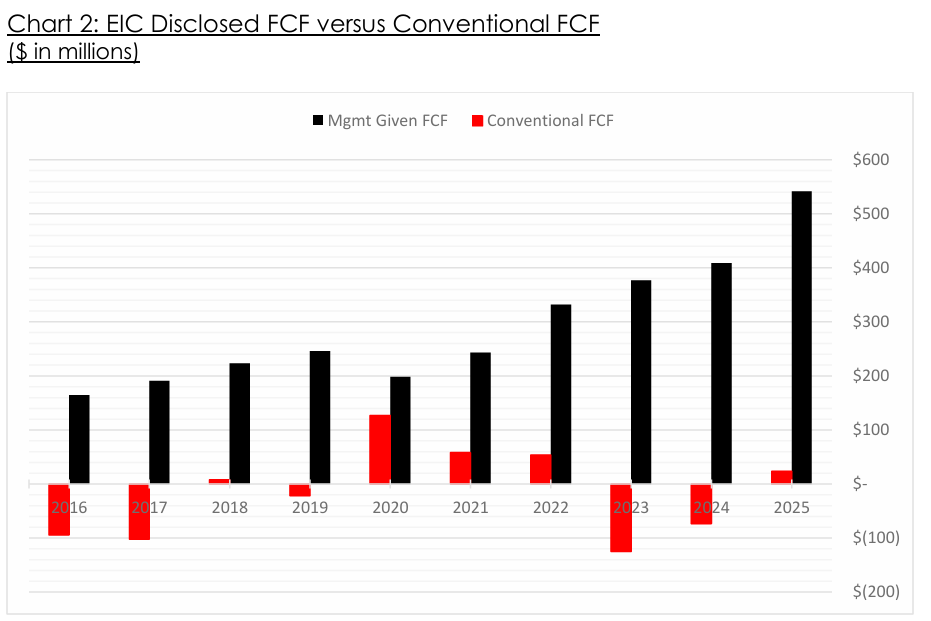
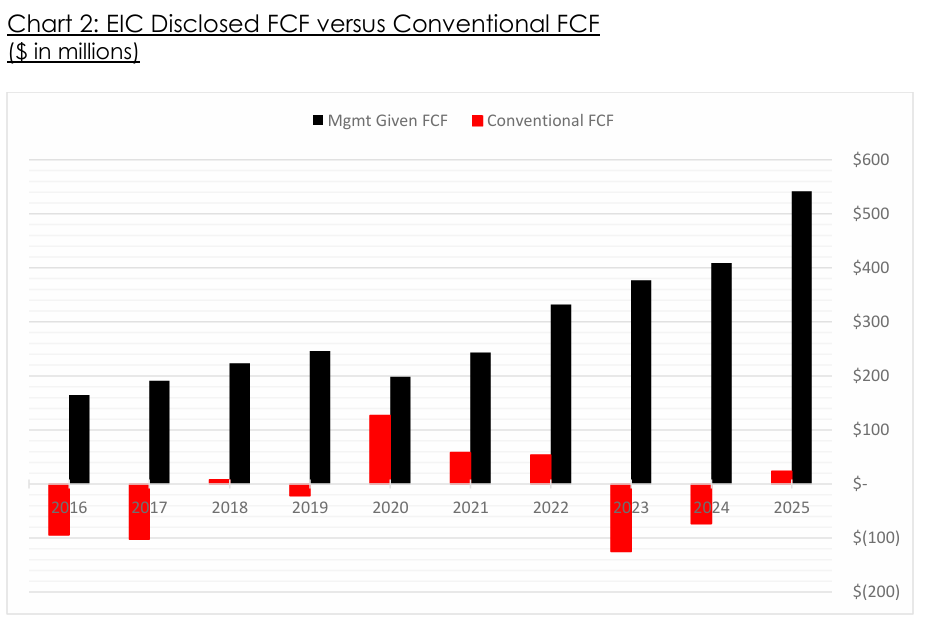
Is this 'stable' Canadian dividend stock actually burning cash? Exchange Income ( $EIF $EIF.TO) sells itself as a reliable compounder. We dug in: satellite photos show dozens of planes gathering dust in Arizona, conventional FCF is near-zero/negative despite management's rosy metric, and dividend coverage looks shaky. Key red flags: (1) Aircraft 'recycling' hiding depreciation tricks? (2)Real cash flow vs. adjusted version: $541M reported → only $23M actual in 2025 Is $EIF's dividend at risk? Yes / No / Too early to tell?
GlassHouse Research tweet media
English
1
0
2
1.4K
GlassHouse Research
GlassHouse Research@GlassH_Research·
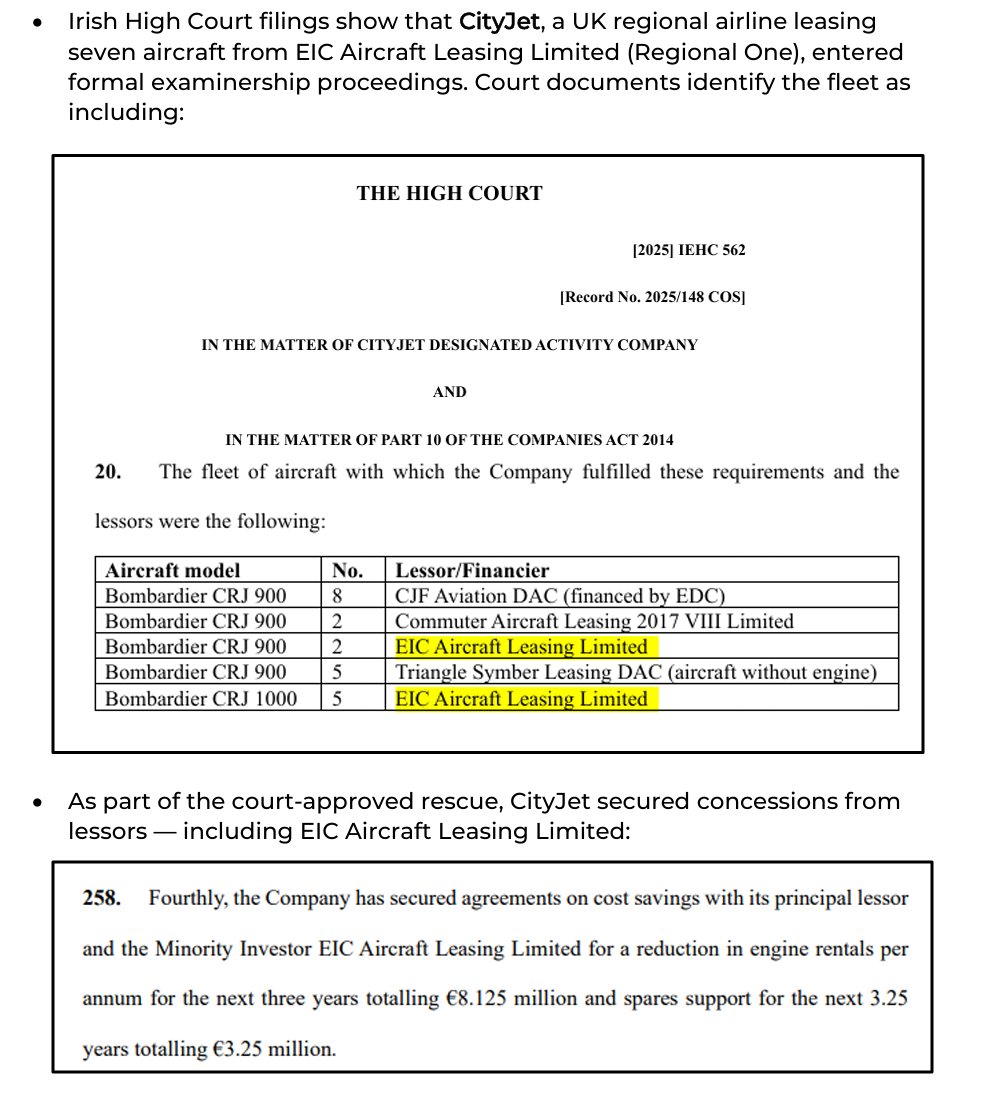
Our investigation also identified a case where EIC/Regional One assumed an ownership stake in a customer instead of receiving lease payments. The lessor effectively became an investor in the distressed airline.
GlassHouse Research tweet media
English
0
0
0
829
GlassHouse Research
GlassHouse Research@GlassH_Research·
EIC’s dividend appears well covered based on a management metric called: Free Cash Flow less Maintenance CapEx But the economics look different when measured using conventional free cash flow. Management reports Free Cash Flow of: 2025: $541M 2024: $409M 2023: $377M But conventional free cash flow was only: 2025: $23M 2024: −$73M 2023: −$125M
GlassHouse Research tweet media
English
1
0
3
1.3K
GlassHouse Research
GlassHouse Research@GlassH_Research·
Our on-the-ground research identified Regional One aircraft parked in formation at an Arizona airfield, gathering dust. Many appear neither prepared to return to service nor dismantled for parts — highly unusual for this industry. $EIF $EIF.TO
GlassHouse Research tweet media
GlassHouse Research@GlassH_Research

Today we are publishing our report on Exchange Income Corporation (TSX: EIF). EIC is marketed as a stable Canadian dividend compounder. Our research finds the underlying economics look very different. Two issues stand out: 1️⃣ Regional One aircraft asset recycling 2️⃣ Lack of free cash flow and dividend sustainability Full report: glasshouseresearch.com

English
0
1
7
2.2K