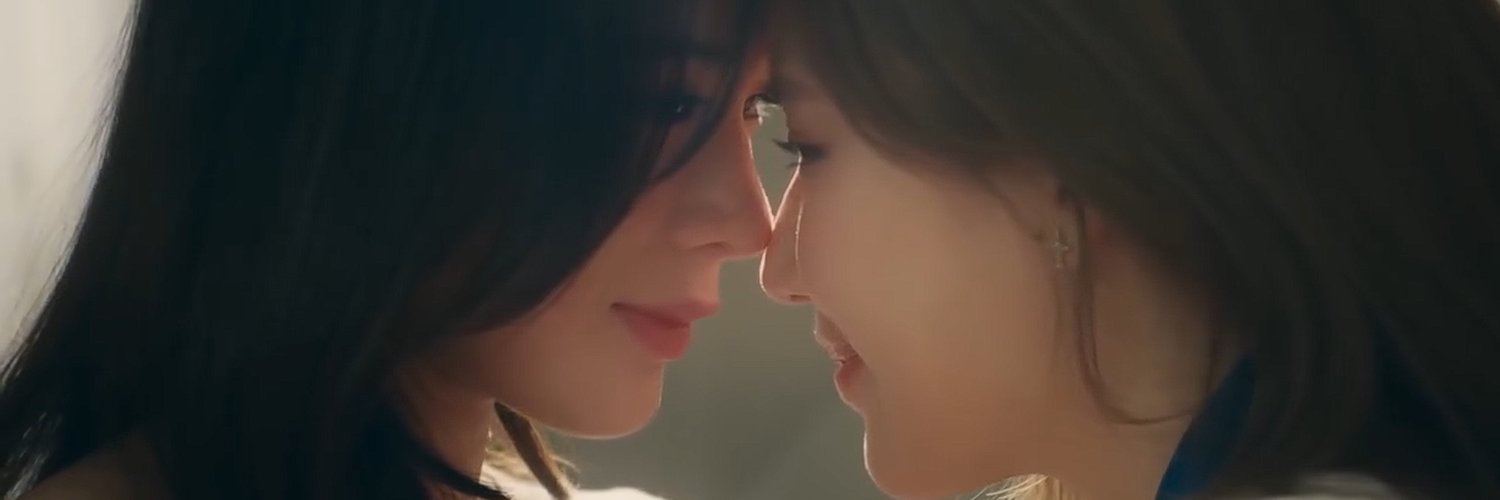

RIN - a soul brought to life by Janeyeh Methika There are characters who enter a story like a passing breeze, and there are those who settle into the heart like a quiet glimmer, growing deeper the longer you look. Rin belongs to the latter. She is not the kind of female lead built to dazzle at first sight, nor someone who easily softens others with gentle appearances alone. Rin carries a more elusive kind of charm: the sense of a soul that has learned to love very early on, loving even before meeting, loving through intuition, through memory, through emotions that cannot quite be put into words. What makes Rin special in Love Design lies not only in the fact that she loves a stranger for three years before truly meeting them, but also in how the story allows that love to grow: not loud, not imposing, not possessive, but quiet, enduring, and dignified. Rin is a character shaped by beautifully balanced contradictions: sharp yet warm, impulsive yet capable of restraint, free spirited yet not irresponsible, strong yet unafraid to acknowledge her own fragility. These contrasts make her feel vividly human, rather than an idealized figure meant only to be admired. A GIRL BOTH SHARP EDGED AND AS VAST AS AN OCEAN The first impression of Rin may not be immediately likable. She speaks directly, reacts quickly, and can be so sharp that it unsettles others. When Aokbab walks into the bakery and comments on the crack in the wall, Rin responds with a cold clarity: any renovation without the owner’s consent is a violation. It is a very Rin kind of line. On the surface, it may sound rigid, even unapproachable, but within the depth of her character, it reveals not coldness, but principle. Rin respects boundaries. She may be free, unconventional, unwilling to stand still within social molds, but she never confuses freedom with carelessness. She has a clear awareness of others’ rights, of limits that must be honored, of distances that should not be crossed simply for personal interest. This is an essential quality, because it shows that beneath her seemingly unruly exterior is someone thoughtful, considerate, and capable of placing respect above ego. For that reason, Rin is not cold in the sense of emotional distance. Her sharpness is simply a form of armor. Beneath it lies a sensitive, perceptive soul, one that cares deeply in ways that are often quiet and understated. This becomes even clearer in the way she designs the café for her sister. In her heart, Japanese style is the aesthetic that resonates most closely with her, reflecting her inner self: restrained, clean, rich in silence. Yet she chooses to adjust to her sister’s preference and adopts a countryside style instead. There is no dramatic resistance, no exaggerated resentment. She steps back for someone she loves. It is a small detail, but it speaks volumes about Rin. She does not live to please others, but once someone has a place in her heart, she is willing to adjust even the things that are deeply personal. Her gentleness does not lie in sweet words, but in her quiet willingness to yield. It is a form of emotional maturity: knowing what she wants, yet not allowing that desire to become absolute. THREE YEARS OF NURTURING A FLOWER IN HER HEART While most love stories begin with a meeting, Rin’s begins with an absence. She falls in love with someone whose name she does not know, whose face she has never seen, whose voice she has never heard. That love begins with a forgotten sketchbook, with drawings that carry a quiet sorrow, with the feeling that behind those lines is someone who has hidden away the very things she herself once lost. This is an important artistic detail of her character. Rin does not fall in love with a physical form, but with a trace of the soul. What moves her is not appearance, but the way someone sees the world, transforms sadness into images, leaves behind emotions that others can touch. In other words, she does not love because she sees a person, but because she recognizes a part of her own soul within theirs. Three years of waiting is no ordinary span of time. It transforms curiosity into a journey, and that journey into a love that feels almost fated. Rin walks through the streets depicted in the drawings not only to find the artist, but to reconnect with a thread of emotion that once saved her. Perhaps because she has known loss, because she has touched unnamed emptiness, she can recognize the sorrow in those drawings as something beautiful. The message she leaves in the sketchbook reveals a heart that moves through empathy, not possession. And that is Rin’s greatest beauty: she does not love to claim. She loves because she has been moved. She loves like someone standing before a half opened door, realizing that on the other side is another lonely soul. In that moment, love is no longer about possession, but about recognition: the realization that someone else carries the same wounds, the same quiet sadness, the same longing to be seen. NOT GIVING UP, BUT NEVER FORCING One of Rin’s most beautiful qualities lies in the way she loves Aokbab. Her love is not loud, not rushed, and certainly not driven by conquest. This is what allows her to transcend the usual trope of the pursuer. She does not treat winning someone’s heart as a victory. Nor does she try to pull them out of darkness by force. She stays, she waits, she asks, and she knows when to stop. When she realizes that the person before her is the one she has been searching for over three years, she does not immediately explode with emotion. She does not rush forward to confess everything. She keeps that truth to herself, understanding that even the most beautiful truths must be given at the right time, especially when the other person is still held captive by the past, not yet able to fully reach the present. This reveals something deeply insightful about Rin: she understands that love is not always about moving forward. Sometimes it is about stepping back so the other person does not feel cornered. Sometimes it is about standing at the edge long enough for them to choose to step in. Her love does not invade. It supports more than it claims. Her small gestures reflect this spirit. The first embrace is not too tight. On the mountaintop, she does not decide in Aokbab’s place. By the sea, she lets go at the right moment. These gestures may seem small, but they reveal something profound: Rin respects the freedom of the one she loves to the point of placing their choices above her own need for certainty. And because of that, when she reaches out her hand, it carries weight. It is not the gesture of someone pulling another along, but of someone opening a possibility. If you want to, take my hand. In that quiet offering, her love reaches its most beautiful form: present, without coercion. A FLAME SUSTAINED BY PATIENCE Rin is not a flawless symbol. She does not exist in the elevated state of a heart untouched by pain. On the contrary, it is her very human cracks that make her real and believable. She feels jealousy. She feels fear. She feels insecurity. She has sat alone in the dark, silently enduring words from Aokbab’s past that cut into her like slow, invisible wounds. The remark that Aokbab would not like someone younger is not merely an attack. It strikes at Rin’s deepest fear: that she is not mature enough, not steady enough, not worthy of lasting trust. In that moment, she withdraws. This matters, because it shows that love does not make a person invulnerable. If anything, love is often where old wounds become most visible. Yet instead of turning that pain into resentment, Rin transforms it into patience. This is where her depth truly lies. She is not strong because she never falls. She is strong because even when she falls, she rises again. Even when she hurts, she stays. Even when she fears, she continues to love with everything she has. She does not force Aokbab to love her immediately. She simply chooses to remain long enough so that when the other person is ready to turn back, she is still there. In love, sometimes staying is harder than moving forward. Rin chooses the harder path. LOVE AS SUPPORT, NOT POSSESSION One of Rin’s most profound moments comes when Aokbab collapses after the shock of having her work plagiarized again. It is when past and present overlap, pulling her back into the very place that once hurt her most. And Rin arrives in time. Her words that Aokbab no longer has to fight alone are not grand declarations, nor dramatic vows. They are simple, almost gentle. Yet that simplicity makes them believable. Because what truly saves people is rarely grand promises, but steady presence. Rin does not play the hero. She comes without power or glory, only with a heart warm enough to stand beside someone who can barely stand. And sometimes, that ordinary presence is the most extraordinary thing. Love here is not a force that erases storms, but a shared space small enough that two people must stand close, must trust, must lean on each other to get through. It is not rescue from the outside, but companionship from within. When Aokbab finally dares to bring out the designs she once kept hidden, Rin cries. But those are not just tears of emotion. They are the tears of someone witnessing the person she loves finding herself again. On a deeper level, they are the tears of a heart that understands that in love, the greatest victory is not holding on to someone, but seeing them come back to life within their own world. GROWTH DOES NOT DIMINISH LOVE, IT GIVES IT FORM By the end of the journey, Rin is no longer the impulsive girl she once was. She is still straightforward, still a little playful, but in the way she loves, she has changed. She grows not by losing herself, but by learning to place love within a larger space. When Aokbab brings up marriage, Rin’s initial hesitation is not rejection, but a sign of a still developing perspective. She once believed that pure love did not need rituals or formal commitments. But for Aokbab, a solemn promise carries the power to heal. Rin needs time to understand that, and what matters is that she does. She does not stubbornly cling to her old views. She does not shut herself off or treat change as defeat. Instead, she quietly returns, quietly adjusts, even moving her studio home and working through the nights to prepare for a shared future. That is the clearest sign of mature love: the ability to change without losing oneself, to slow down without growing cold, to make space for the future while preserving sincerity. From a love that began with drawings, Rin arrives at a love that can step into real life. And when she kneels in Kitakyushu, using the very paired drawing that first connected them, it feels as though fate has gently closed a perfect circle. Three years ago, love began through drawings. Three years later, drawings become the way she confesses, and they choose to walk the rest of life together. THE MOST BEAUTIFUL LOVE IS THE ONE THAT STAYS Rin is a rare character: not perfect, not saintlike, not shaped into an unconditional ideal, yet carrying a heart capable of loving deeply. She is sharp yet gentle, independent yet not indifferent, impulsive yet self aware, wholehearted yet never possessive. In her, love is not an explosion, but a quiet current. It passes through waiting, through insecurity, through patience, through loss, and ultimately becomes support. She is not a savior. She is a companion, someone who holds your hand not when you are at your strongest, but when you are at your weakest, and still chooses to stay. If love were a painting, Rin is the one who loved it even when it was unfinished, before it had color, before it had light, before it had taken full form. And perhaps that is the deepest beauty that Love Design offers: Love is not about seeing someone as perfect. Love is about seeing them unfinished and still choosing to stay and complete the rest together. #LoveDesignSeries #Janeeyeh #9779s