gnosis guild 𒆙

71 posts

gnosis guild 𒆙 banner
gnosis guild 𒆙

gnosis guild 𒆙

@gnosisguild

~ new account vibes ~ society for interdependent software @zodiaceco @theInterfold

EVM Katılım Mayıs 2024
43 Takip Edilen89 Takipçiler
gnosis guild 𒆙 retweetledi
stephanie wakefield
stephanie wakefield@stephwakefield_·
It is almost romantic that everyone is going crazy together at the same time.
English
46
580
2.7K
54.5K
gnosis guild 𒆙
gnosis guild 𒆙@gnosisguild·
"rejecting hierarchy doesn't eliminate it" 💯
Auryn@auryn_macmillan

## AI voting proxies require two layers: private inference and private aggregation. AI voting proxies require two layers: private inference and private aggregation. Vitalik recently wrote about AI "shadows" — LLM proxies trained on your own corpus that vote on your behalf with near-100% participation. He's right that cryptography is the key enabler. But I want to make that concrete by separating it into these two layers. But first, a diagnosis from personal experience. * * * ## The DAO governance trap I'm a DAO advocate. I've spent more than a decade building and participating in them. But I've also watched the same failure mode play out repeatedly — and it stems not from the DAO model itself, but from a specific dogma within it: the wholesale rejection of hierarchy. DAOs are structurally resistant to hierarchy. The ethos is flat, everyone votes on everything. In theory this is beautiful. In practice it's paralyzing. What actually happens: DAOs end up voting only on large budget items and protocol upgrades, while deferring entirely to labs and core teams for day-to-day decisions. The org atrophies into a rubber stamp with a treasury. The deeper irony is that rejecting hierarchy doesn't eliminate it. It just makes it informal and unaccountable. Power concentrates anyway, without the transparency that explicit structure provides. "Everyone votes on everything" isn't a bad governance philosophy. It was always a hardware problem. Human bandwidth is finite. Attention is scarce. Flat structures collapsed back into de facto hierarchies because they had no other choice. AI shadows change this calculus. * * * ## Continuous governance If your vote is cast by a proxy that is trained or tuned on your values, your priorities, and your evolving perspective, and casting it costs you nothing, then the participation constraint is radically changed. Votes don't need to be reserved for high-stakes moments. They can be granular, frequent, and fast. Imagine a DAO where operational decisions resolve in minutes, not weeks. Where the organisation's direction is a continuous live aggregate of its members' preferences, not a series of discrete referendums that most people ignore. Where "everyone votes on everything" is not an aspirational gesture but a literal description of how the org runs day to day. This connects to something Karl Popper and David Deutsch identified as the core measure of good governance: not who holds power, but how easily bad policy can be corrected and bad leadership removed. Good governance is a process of conjecture and the elimination of error. The question is not "did we get the right answer?" but "can we fix it quickly when we get the wrong one?" Frequent, fine-grained, direct participation is the most natural expression of this principle. The faster errors surface and the lower the cost of correcting them, the healthier the system. A governance layer where votes resolve in minutes, on granular day-to-day decisions, is structurally more Popperian than one where correction requires waiting four years for an election or months for a DAO proposal to pass quorum. This is the Open Society, operationalised. * * * ## The cryptographic stack that makes it private For this to work at scale, and especially on sensitive decisions, inference and aggregation have to be private. Here's what that architecture looks like. ### Phase 1: Private inference Your AI shadow needs to run somewhere. You probably don't have the hardware to run a frontier model locally. Several options exist, each with a different trust model: * **"Trust-me-bro" remote models.** You send your data to a provider and trust them not to look. Simple, fast, available today. The weakest privacy guarantee. * **Local models.** You run the model yourself. Personal privacy, no third-party trust required. Constrained by your hardware and the quality of models that fit on it. * **TEEs (Trusted Execution Environments).** The provider runs the model inside a hardware enclave. You trust the chip manufacturer rather than the provider. Stronger than pure trust, weaker than cryptographic guarantees. * **MPC (Multi-Party Computation).** Inference is split across multiple parties who collectively compute the result without any single party seeing the full picture. Strong guarantees, significant coordination overhead. * **FHE (Fully Homomorphic Encryption).** Your data stays encrypted throughout inference. The provider computes over ciphertext and returns a result only you can read. The strongest cryptographic guarantee, and the most computationally expensive. These approaches will compete. The right choice depends on the user's trust model, hardware constraints, and tolerance for latency and cost. That choice belongs entirely to the user and has no bearing on the aggregation layer. The decrypt moment is where periodic human review naturally lives. You're not approving every vote — that would defeat the purpose. Rather, you're occasionally checking in with your shadow, discussing how your priorities, perspectives, and values have evolved, correcting it where its actions have diverged from your preferences, and letting those corrections inform its future behaviour. It's less a checkpoint and more a feedback loop. The proxy itself improves through error correction over time. ### Phase 2: Private aggregation Your proxy encrypts your vote and contributes it to a collective computation. This is where something like [The Interfold](theinterfold.com) comes in. The Interfold performs the computation over encrypted inputs and produces publicly verifiable outputs. All inputs are encrypted. The only valid output proof requires consuming every encrypted input and running the expected computation. A bonded threshold committee of node operators coordinates to decrypt the final output. The result: mathematically guaranteed correct aggregate output. No party — not the inference provider, not other voters, not the aggregation layer — ever sees individual inputs. The two phases are cryptographically decoupled. The handoff is simple: decrypt locally, re-encrypt under the aggregation scheme. The plaintext moment is brief and intentional. You are the trusted party in possession of your own data. User ↓ AI shadow inference ↓ human audit loop ↓ encrypted preference signal ↓ collective computation ↓ public result * * * ## Why this matters for Vitalik's chaotic era Vitalik argues that in a chaotic era, democratic tools shouldn't try to bind decisions. They should find consensus and give distributed groups a voice that hard-power actors can listen to. AI shadows with private aggregation serve this goal. But they go further. They don't just make participation possible at scale. They make granular, continuous participation possible. The bandwidth constraint that has always forced democratic systems toward blunt, infrequent, high-stakes votes is lifted. * * * ## Parallel societies It would be naive to expect existing institutions to adopt any of this soon. Nation-states, corporations, and legacy DAOs all have strong incentives to preserve existing power structures. Waiting for them to change is not a strategy. But there is no reason to wait. These tools can be deployed in parallel, now, within communities that choose to use them. The history of institutional change is largely a history of parallel structures that proved their worth and were eventually copied or absorbed. The goal is not to replace existing institutions overnight. It is to demonstrate, at small scale, that a more participatory and error-correcting form of governance is not only possible but practical. At @web3privacy's CC2 and @EFDevcon last year, @ArnaudS proposed his personal litmus test for Ethereum, and both @jarradhope_ and @satorinakamoto spoke about the promise of parallel societies. These two ideas have stayed with me. My litmus test for Ethereum is this: its real-world capacity to bring about the flourishing of parallel societies, ultimately in pursuit of the Open Society. Private, direct, participatory democratic systems seem like a significant step in that direction. The cryptographic foundation exists today. The question is whether we build and use it. theinterfold.com | docs.theinterfold.com

English
0
1
11
542
gnosis guild 𒆙 retweetledi
Auryn
Auryn@auryn_macmillan·
## AI voting proxies require two layers: private inference and private aggregation. AI voting proxies require two layers: private inference and private aggregation. Vitalik recently wrote about AI "shadows" — LLM proxies trained on your own corpus that vote on your behalf with near-100% participation. He's right that cryptography is the key enabler. But I want to make that concrete by separating it into these two layers. But first, a diagnosis from personal experience. * * * ## The DAO governance trap I'm a DAO advocate. I've spent more than a decade building and participating in them. But I've also watched the same failure mode play out repeatedly — and it stems not from the DAO model itself, but from a specific dogma within it: the wholesale rejection of hierarchy. DAOs are structurally resistant to hierarchy. The ethos is flat, everyone votes on everything. In theory this is beautiful. In practice it's paralyzing. What actually happens: DAOs end up voting only on large budget items and protocol upgrades, while deferring entirely to labs and core teams for day-to-day decisions. The org atrophies into a rubber stamp with a treasury. The deeper irony is that rejecting hierarchy doesn't eliminate it. It just makes it informal and unaccountable. Power concentrates anyway, without the transparency that explicit structure provides. "Everyone votes on everything" isn't a bad governance philosophy. It was always a hardware problem. Human bandwidth is finite. Attention is scarce. Flat structures collapsed back into de facto hierarchies because they had no other choice. AI shadows change this calculus. * * * ## Continuous governance If your vote is cast by a proxy that is trained or tuned on your values, your priorities, and your evolving perspective, and casting it costs you nothing, then the participation constraint is radically changed. Votes don't need to be reserved for high-stakes moments. They can be granular, frequent, and fast. Imagine a DAO where operational decisions resolve in minutes, not weeks. Where the organisation's direction is a continuous live aggregate of its members' preferences, not a series of discrete referendums that most people ignore. Where "everyone votes on everything" is not an aspirational gesture but a literal description of how the org runs day to day. This connects to something Karl Popper and David Deutsch identified as the core measure of good governance: not who holds power, but how easily bad policy can be corrected and bad leadership removed. Good governance is a process of conjecture and the elimination of error. The question is not "did we get the right answer?" but "can we fix it quickly when we get the wrong one?" Frequent, fine-grained, direct participation is the most natural expression of this principle. The faster errors surface and the lower the cost of correcting them, the healthier the system. A governance layer where votes resolve in minutes, on granular day-to-day decisions, is structurally more Popperian than one where correction requires waiting four years for an election or months for a DAO proposal to pass quorum. This is the Open Society, operationalised. * * * ## The cryptographic stack that makes it private For this to work at scale, and especially on sensitive decisions, inference and aggregation have to be private. Here's what that architecture looks like. ### Phase 1: Private inference Your AI shadow needs to run somewhere. You probably don't have the hardware to run a frontier model locally. Several options exist, each with a different trust model: * **"Trust-me-bro" remote models.** You send your data to a provider and trust them not to look. Simple, fast, available today. The weakest privacy guarantee. * **Local models.** You run the model yourself. Personal privacy, no third-party trust required. Constrained by your hardware and the quality of models that fit on it. * **TEEs (Trusted Execution Environments).** The provider runs the model inside a hardware enclave. You trust the chip manufacturer rather than the provider. Stronger than pure trust, weaker than cryptographic guarantees. * **MPC (Multi-Party Computation).** Inference is split across multiple parties who collectively compute the result without any single party seeing the full picture. Strong guarantees, significant coordination overhead. * **FHE (Fully Homomorphic Encryption).** Your data stays encrypted throughout inference. The provider computes over ciphertext and returns a result only you can read. The strongest cryptographic guarantee, and the most computationally expensive. These approaches will compete. The right choice depends on the user's trust model, hardware constraints, and tolerance for latency and cost. That choice belongs entirely to the user and has no bearing on the aggregation layer. The decrypt moment is where periodic human review naturally lives. You're not approving every vote — that would defeat the purpose. Rather, you're occasionally checking in with your shadow, discussing how your priorities, perspectives, and values have evolved, correcting it where its actions have diverged from your preferences, and letting those corrections inform its future behaviour. It's less a checkpoint and more a feedback loop. The proxy itself improves through error correction over time. ### Phase 2: Private aggregation Your proxy encrypts your vote and contributes it to a collective computation. This is where something like [The Interfold](theinterfold.com) comes in. The Interfold performs the computation over encrypted inputs and produces publicly verifiable outputs. All inputs are encrypted. The only valid output proof requires consuming every encrypted input and running the expected computation. A bonded threshold committee of node operators coordinates to decrypt the final output. The result: mathematically guaranteed correct aggregate output. No party — not the inference provider, not other voters, not the aggregation layer — ever sees individual inputs. The two phases are cryptographically decoupled. The handoff is simple: decrypt locally, re-encrypt under the aggregation scheme. The plaintext moment is brief and intentional. You are the trusted party in possession of your own data. User ↓ AI shadow inference ↓ human audit loop ↓ encrypted preference signal ↓ collective computation ↓ public result * * * ## Why this matters for Vitalik's chaotic era Vitalik argues that in a chaotic era, democratic tools shouldn't try to bind decisions. They should find consensus and give distributed groups a voice that hard-power actors can listen to. AI shadows with private aggregation serve this goal. But they go further. They don't just make participation possible at scale. They make granular, continuous participation possible. The bandwidth constraint that has always forced democratic systems toward blunt, infrequent, high-stakes votes is lifted. * * * ## Parallel societies It would be naive to expect existing institutions to adopt any of this soon. Nation-states, corporations, and legacy DAOs all have strong incentives to preserve existing power structures. Waiting for them to change is not a strategy. But there is no reason to wait. These tools can be deployed in parallel, now, within communities that choose to use them. The history of institutional change is largely a history of parallel structures that proved their worth and were eventually copied or absorbed. The goal is not to replace existing institutions overnight. It is to demonstrate, at small scale, that a more participatory and error-correcting form of governance is not only possible but practical. At @web3privacy's CC2 and @EFDevcon last year, @ArnaudS proposed his personal litmus test for Ethereum, and both @jarradhope_ and @satorinakamoto spoke about the promise of parallel societies. These two ideas have stayed with me. My litmus test for Ethereum is this: its real-world capacity to bring about the flourishing of parallel societies, ultimately in pursuit of the Open Society. Private, direct, participatory democratic systems seem like a significant step in that direction. The cryptographic foundation exists today. The question is whether we build and use it. theinterfold.com | docs.theinterfold.com
vitalik.eth@VitalikButerin

## Egalitarianism and pluralism One underlying ideology of democratic things is a strong version of egalitarianism: the idea that we are all equal, not just in some Christian metaphysical sense of having equal dignity under God, but in some more concrete sense of all having equally valuable things to say and deserving an equal voice in the world. It is sometimes considered impolite to disagree with this directly. But at the same time, all major political tribes have their rhetoric for rejecting it. Some believe not in egalitarianism, but in _meritocracy_: inequality that comes from differences in performance, effort and skill is acceptable, inequality that comes from inherited title is not. Others believe in "expertise" and denounce "populism". Years ago, there was an abortive trend to re-embrace credentialism (eg. I remember the attempt to push people to call Jill Biden "Dr. Jill Biden"). And still others don't give a crap about even the pretense of egalitarianism, and seek to build 150-meter statues to ancient Roman and Greek gods and express pride in unbridled domineering masculinity. I think it is true that some have more expertise than others, and this expertise should be listened to. And even the "second line of defense" comfortable fiction - that people who are higher on some skills and virtues might be lower on other more subtle and immeasurable ones - is on average false. But democratic things are very valuable despite this, for two reasons: * **Egalitarianism as a floor, not as an absolute**. If you take the above arguments too seriously, you run into the problem that you leave many people with no voice at all. This is a dangerous position: it means that there is no disincentive at all to impose ruinous outcomes on them. Chickens are far stupider than humans. But if I could give each chicken even 0.01 votes on agriculture law, in some way that effectively captures their preferences, would I? Hell yes. * **Pluralism**. Democratic things (as well as eg. ideas such as free speech) are not just about providing a floor at the bottom, they are also about diversifying the top. A goal is to create space for alternative groups of elites, that are able to challenge existing elites. This is where pluralistic voting models, that focus on finding "consensus across difference" are so valuable: they inherently empower diverse viewpoints, and prevent an intellectual or decision-making ecosystem from being overly dominated by monoculture. See also vitalik.eth.limo/general/2021/0… , where I argue that the Gini is a bad inequality index because it ultimately conflates two very different problems (floor too low, top too concentrated), and actually we need to treat both separately. Also, see also this piece from Ruxandra: writingruxandrabio.com/p/equality-as-… ## AI The main challenge in building new institutions of any type, is that people are lazy to change their habits. Even existing nation-state voting only survives because (i) it's only one bit of info per four years, and (ii) it has hundreds of years of historical legitimacy. This makes a lot of work more difficult. For example, an alternative approach to dealing with the chaotic era is to find "islands of stability", and build more holistic institutions at smaller scales, with the goal of copying or adapting them to larger contexts later. The problem is, even there, getting these institutions to succeed enough that others want to copy them takes too long, compared to a fast-moving world. So what do we do? One benefit of AI is that it potentially allows us to make much higher-bandwidth provision of input literally zero-cost. LLM "shadows" of ourselves, fine-tuned on our corpus of both public and private actions, can make decisions on our behalf. This opens the door not just to higher-bandwidth feedback with near-100% participation rates (if done as a software default), but also fundamentally new possibilities. For example, a weakness of distributed decision making is that it cannot take into account secret information. This is often a justification for centralizing key decisions. In a chaotic era, the set of such situations is magnified. But LLM shadows of ourselves *could* make votes based off of private information, thanks to the magic of cryptography. ## Conclusions Today's disillusionment with democratic things is real. But what is also becoming real very rapidly is disillusionment with the alternative, where various groups of elites visibly and openly don't care about the effects of their actions on regular people. Where "you can just do things" slides into "you can just bomb people", or "you can just openly talk proudly about how superintelligent AI you are building will bring unemployment to everyone", or... And so we need to start the next round of this cycle sooner. It needs to start on realistic principles, learning from the failures of the previous era, but it does need to happen.

English
2
4
25
4.2K
gnosis guild 𒆙 retweetledi
The Interfold (formerly Enclave)
Join us for 𝙼𝚞𝚕𝚝𝚒𝚙𝚕𝚊𝚢𝚎𝚛 𝙿𝚛𝚒𝚟𝚊𝚌𝚢 - a conversation on privacy-first infrastructure We’ll discuss: - messaging without metadata leakage - analytics without tracking users - infrastructure built for privacy from the start with @Cryptic_cm, co-founder of Session @session_app and @auryn_macmillan from The Interfold Tune in tomorrow 🎙️ x.com/i/spaces/1AxRn…
The Interfold (formerly Enclave) tweet media
English
2
6
21
5.6K
gnosis guild 𒆙 retweetledi
The Interfold (formerly Enclave)
Enclave is now The Interfold. What we built isn’t a hardware enclave, but a distributed network for confidential coordination. The Interfold names that network. 🌐
The Interfold (formerly Enclave) tweet media
English
1
14
39
3K
gnosis guild 𒆙 retweetledi
Giacomo
Giacomo@0xjei·
I have been meaning to do this for a while. I am launching 0xjei.dev, my personal website. Not a Substack. Not a thread. My place on the internet. Motivations in this thread!
English
15
5
35
968
gnosis guild 𒆙 retweetledi
BlockLayer Podcast
BlockLayer Podcast@BlockLayerPod·
How NFT "Mechs" Are Supercharging RAILGUN's Privacy RAILGUN crossed $4.5B in shielded volume in 2025, yet complex DeFi transactions remain out of reach for its privacy suite. Gnosis Guild's NFT-based "Mechs" are set to unlock non-atomic transactions while keeping balances fully private. Here's the technical breakdown 👇 ~~ Analysis @dikshaarden ~~ RAILGUN 101 @RAILGUN_Project is an onchain privacy suite deployed on Ethereum, Arbitrum, and Polygon. It uses zero-knowledge cryptography to shield ERC-20s and NFTs from public view. Users receive a 0zk address, a private wallet where shielded assets become indistinguishable from each other. Amid crypto's privacy renaissance, RAILGUN has emerged as a key protocol, crossing $4.5B in total shielded volume in 2025. Rise of the Mechs Mechs, built by @gnosisguild, are NFT-based smart contract accounts with programmable ownership. They combine ERC-6551 (allowing NFTs to own wallet addresses) and ERC-4337 (account abstraction). A Mech can execute any onchain action, from basic swaps to complex DeFi positions. Ownership is flexible, controllable by specific NFT or ERC-20 holders. This flexibility provides the breakthrough RAILGUN needs for its privacy suite. The RAILGUN integration Current 0zk addresses handle atomic DeFi transactions (single-block actions like simple swaps). However, they cannot manage non-atomic activities like borrowing, staking, or multi-sig transactions. Under RAILGUN Connect, the protocol's universal private DeFi connector, a Mech sits between your 0zk address and target protocols. The flow works as follows: deposit unshielded tokens into your Mech, shield the Mech into a 0zk address, then execute calls via Zodiac Pilot (a Gnosis Guild tool) to interact with DeFi protocols. Protocols see only a normal account conducting standard transactions while your actual balance remains invisible onchain. What to watch The RAILGUN x Mechs integration remains in development but nears production readiness. Gnosis Guild proposed the integration to RAILGUN governance in April 2025. $RAIL governors ratified it shortly after, with development ongoing since. In January 2026, Gnosis's @auryn_macmillan demoed RAILGUN Connect using the @CoWSwap frontend to execute a private swap on @0xPolygon. No timeline exists for full deployment, but the prototype suggests launch is imminent. Post-launch, expect broader adoption. The Ethereum Foundation's upcoming Kohaku privacy wallet is integrating RAILGUN's tech, creating an avenue for private non-atomic DeFi transactions. Others will follow.
BlockLayer Podcast tweet media
English
24
42
197
44.6K
gnosis guild 𒆙 retweetledi
RAILGUN Pool Attendant
RAILGUN Pool Attendant@Laguich_·
@RAILGUN_Project is not a product. It’s the privacy layer for the entire industry. @ambire will show you @CoWSwap will show you @wallet will show you @anondotinc will show you @zknoxhq will show you @zkmopro will show you @Ledger will show you EIP7702 will show you private Multisig will show you Kohaku will show you @gnosisguild Mech will show you @ethereumfndn will show you @VitalikButerin will show you @ethereum will show you @arbitrum will show you @Optimism will show you @BNBCHAIN will show you @0xPolygon will show you @inkonchain will show you @RailgunIntern will show you what the cats are all about Did i forget someone ? (I know I did)
English
0
5
13
530
gnosis guild 𒆙 retweetledi
Zodiac
Zodiac@zodiaceco·
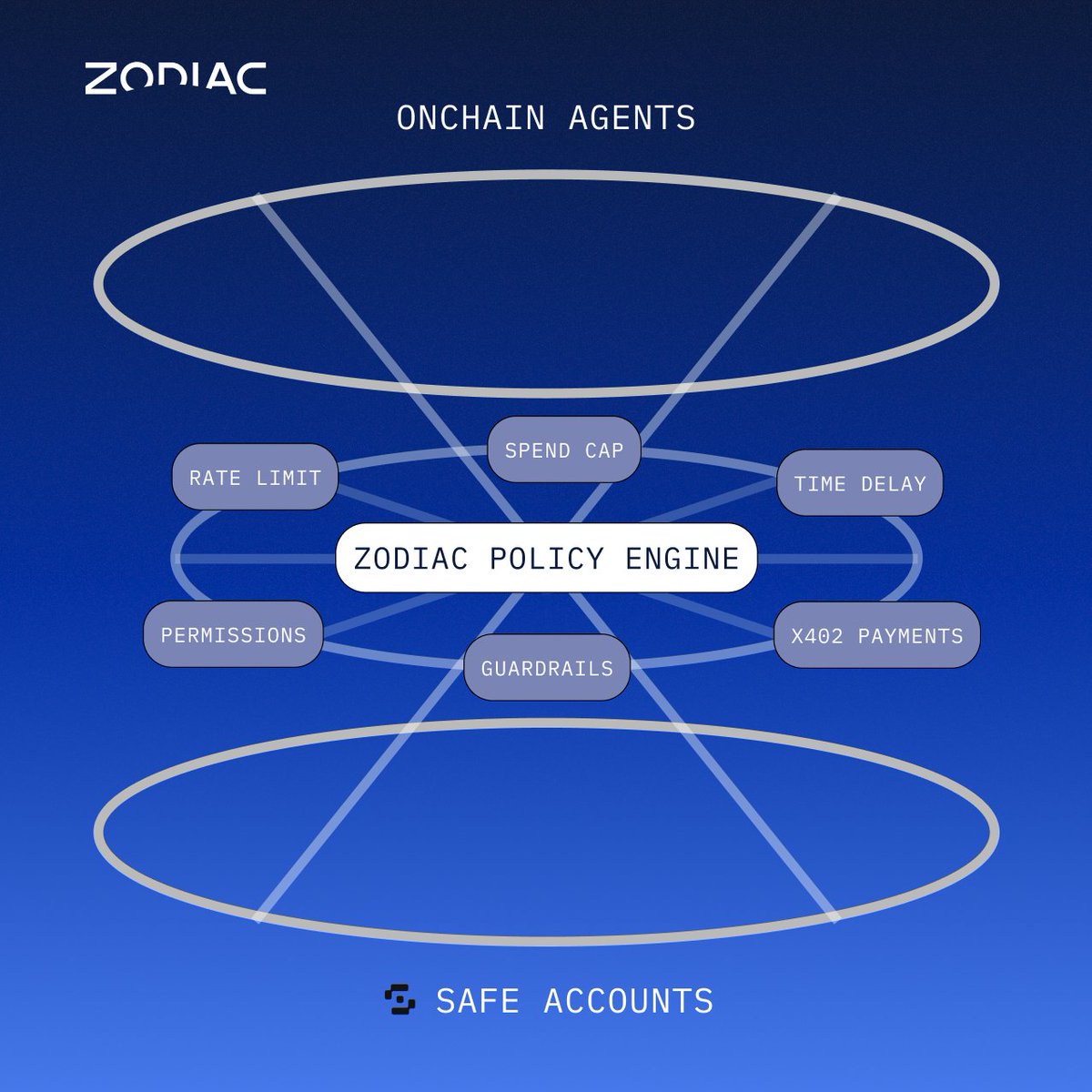
If you're building onchain agents, we want to talk to you.
Zodiac tweet media
English
4
4
21
499
gnosis guild 𒆙 retweetledi
The Interfold (formerly Enclave)
Vitalik is pointing at a reason we built Enclave. Communication privacy was the problem of the last decade. The next one is coordination privacy: how people can coordinate together without surrendering their secrets.
vitalik.eth@VitalikButerin

Over the past year, many people I talk to have expressed worry about two topics: * Various aspects of the way the world is going: government control and surveillance, wars, corporate power and surveillance, tech enshittification / corposlop, social media becoming a memetic warzone, AI and how it interplays with all of the above... * The brute reality that Ethereum seems to be absent from meaningfully improving the lives of people subject to these things, even on the dimensions we deeply care about (eg. freedom, privacy, security of digital life, community self-organization) It is easy to bond over the first, to commiserate over the fact that beauty and good in the world seems to be receding and darkness advancing, and uncaring powerful people in high places are making this happen. But ultimately, it is easy to acknowledge problems, the hard thing is actually shining a light forward, coming up with a concrete plan that makes the situation better. The second has been weighing heavily on my mind, and on the minds of many of our brightest and most idealistic Ethereans. I personally never felt any upset or fear when political memecoins went on Solana, or various zero-sum gambling applications go on whatever 250 millisecond block chain strikes their fancy. But it *does* weigh on me that, through all of the various low-grade online memetic wars, international overreaches of corporate and government power, and other issues of the last few years, Ethereum has been playing a very limited role in making people's lives better. What *are* the liberating technologies? Starlink is the most obvious one. Locally-running open-weights LLMs are another. Signal is a third. Community Notes is a fourth, tackling the problem from a different angle. One response is to say "stop dreaming big, we need to hunker down and accept that finance is our lane and laser-focus on that". But this is ultimately hollow. Financial freedom and security is critical. But it seems obvious that, while adding a perfectly free and open and sovereign and debasement-proof financial system would fix some things, but it would leave the bulk of our deep worries about the world unaddressed. It's okay for individuals to laser-focus on finance, but we need to be part of some greater whole that has things to say about the other problems too. At the same time, Ethereum cannot fix the world. Ethereum is the "wrong-shaped tool" for that: beyond a certain point, "fixing the world" implies a form of power projection that is more like a centralized political entity than like a decentralized technology community. So what can we do? I think that we in Ethereum should conceptualize ourselves as being part of an ecosystem building "sanctuary technologies": free open-source technologies that let people live, work, talk to each other, manage risk and build wealth, and collaborate on shared goals, in a way that optimizes for robustness to outside pressures. The goal is not to remake the world in Ethereum's image, where all finance is disintermediated, all governance happens through DAOs, and everyone gets a blockchain-based UBI delivered straight to their social-recovery wallet. The goal is the opposite: it's de-totalization. It's to reduce the stakes of the war in heaven by preventing the winner from having total victory (ie. total control over other human beings), and preventing the loser from suffering total defeat. To create digital islands of stability in a chaotic era. To enable interdependence that cannot be weaponized. Ethereum's role is to create "digital space" where different entities can cooperate and interact. Communications channels enable interaction, but communication channels are not "space": they do not let you create single unique objects that canonically represent some social arrangement that changes over time. Money is one important example. Multisigs that can change their members, showing persistence exceeding that of any one person or one public key, are another. Various market and governance structures are a third. There are more. I think now is the time to double down, with greater clarity. Do not try to be Apple or Google, seeing crypto as a tech sector that enables efficiency or shininess. Instead, build our part of the sanctuary tech ecosystem - the "shared digital space with no owner" that enables both open finance and much more. More actively build toward a full-stack ecosystem: both upward to the wallet and application layer (incl AI as interface) and downward to the OS, hardware, even physical/bio security levels. Ultimately, tech is worthless without users. But look for users, both individual and institutional, for whom sanctuary tech is exactly the thing they need. Optimize payments, defi, decentralized social, and other applications precisely for those users, and those goals, which centralized tech will not serve. We have many allies, including many outside of "crypto". It's time we work together with an open mind and move forward.

English
0
2
10
276
gnosis guild 𒆙 retweetledi
Zodiac
Zodiac@zodiaceco·
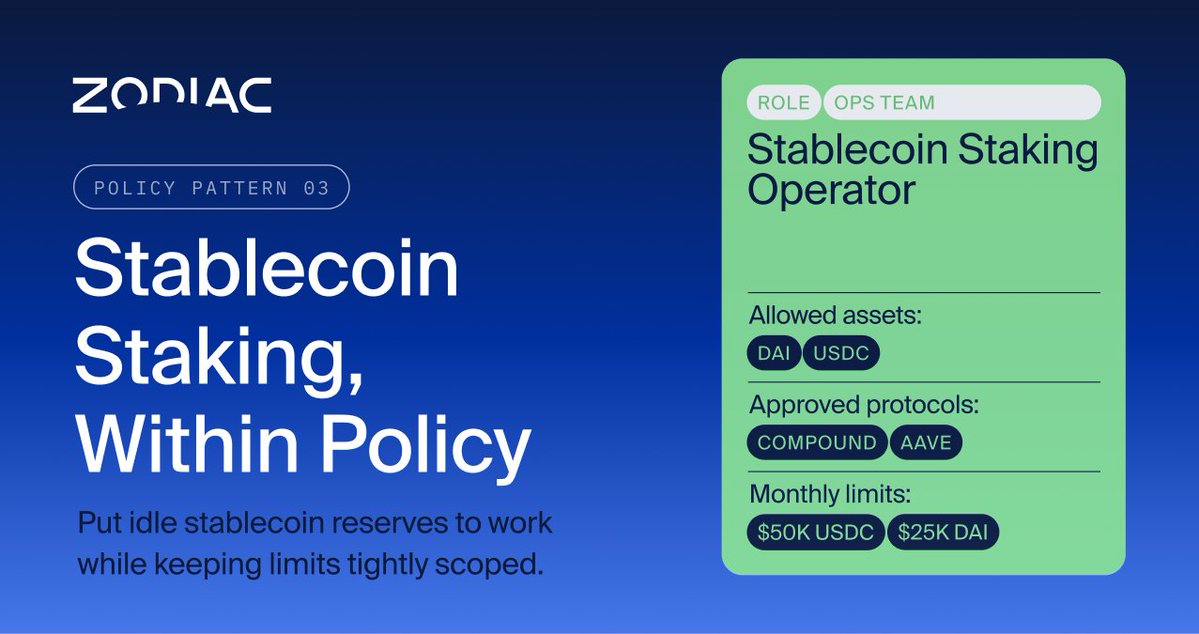
“Use a multisig” is not an operating model.
English
0
2
4
225
gnosis guild 𒆙 retweetledi
Bankless
Bankless@Bankless·
How NFT "Mechs" Are Supercharging RAILGUN's Privacy RAILGUN crossed $4.5B in shielded volume in 2025, yet complex DeFi transactions remain out of reach for its privacy suite. Gnosis Guild's NFT-based "Mechs" are set to unlock non-atomic transactions while keeping balances fully private. Here's the technical breakdown 👇 ~~ Analysis @wmpeaster ~~ RAILGUN 101 @RAILGUN_Project is an onchain privacy suite deployed on Ethereum, Arbitrum, and Polygon. It uses zero-knowledge cryptography to shield ERC-20s and NFTs from public view. Users receive a 0zk address, a private wallet where shielded assets become indistinguishable from each other. Amid crypto's privacy renaissance, RAILGUN has emerged as a key protocol, crossing $4.5B in total shielded volume in 2025. Rise of the Mechs Mechs, built by @gnosisguild, are NFT-based smart contract accounts with programmable ownership. They combine ERC-6551 (allowing NFTs to own wallet addresses) and ERC-4337 (account abstraction). A Mech can execute any onchain action, from basic swaps to complex DeFi positions. Ownership is flexible, controllable by specific NFT or ERC-20 holders. This flexibility provides the breakthrough RAILGUN needs for its privacy suite. The RAILGUN integration Current 0zk addresses handle atomic DeFi transactions (single-block actions like simple swaps). However, they cannot manage non-atomic activities like borrowing, staking, or multi-sig transactions. Under RAILGUN Connect, the protocol's universal private DeFi connector, a Mech sits between your 0zk address and target protocols. The flow works as follows: deposit unshielded tokens into your Mech, shield the Mech into a 0zk address, then execute calls via Zodiac Pilot (a Gnosis Guild tool) to interact with DeFi protocols. Protocols see only a normal account conducting standard transactions while your actual balance remains invisible onchain. What to watch The RAILGUN x Mechs integration remains in development but nears production readiness. Gnosis Guild proposed the integration to RAILGUN governance in April 2025. $RAIL governors ratified it shortly after, with development ongoing since. In January 2026, Gnosis's @auryn_macmillan demoed RAILGUN Connect using the @CoWSwap frontend to execute a private swap on @0xPolygon . No timeline exists for full deployment, but the prototype suggests launch is imminent. Post-launch, expect broader adoption. The Ethereum Foundation's upcoming Kohaku privacy wallet is integrating RAILGUN's tech, creating an avenue for private non-atomic DeFi transactions. Others will follow.
Bankless tweet media
English
7
3
34
3.7K
gnosis guild 𒆙 retweetledi
The Interfold (formerly Enclave)
The Interfold (formerly Enclave)@theInterfold·
Think about Web3 privacy as a stack. User privacy on top. Coordination privacy beneath. Execution infrastructure at the base. Enclave builds that base. ઇઉ
The Interfold (formerly Enclave) tweet media
English
0
1
8
191
gnosis guild 𒆙 retweetledi
Zodiac
Zodiac@zodiaceco·
Most Safe-related incidents are not smart contract exploits. They are coordination failures.
Zodiac tweet media
English
2
2
6
190