Michał_

29.9K posts

Michał_ banner
Michał_

Michał_

@GoddammitMan

Game/Level Designer @ BoomBit Games【Streetart, Architecture, Plants, Cats, NBA, Bloodborne & Hideo Kojima】【RPG4life】【Horror freak】【Unity-UE5】🇵🇱🇬🇧

Kołobrzeg/Gdańsk/Wrocław, PL Katılım Şubat 2012
637 Takip Edilen1.2K Takipçiler
Michał_
Michał_@GoddammitMan·
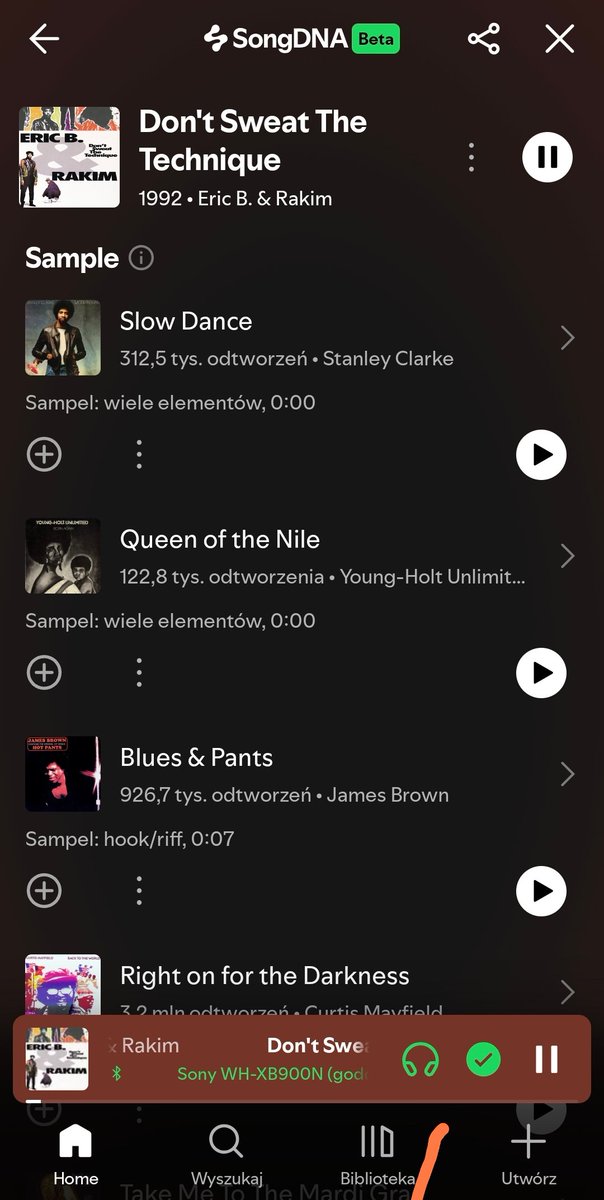
Ok, ale SongDNA, które w apce pokazuje jakie sample zostały wykorzystane w utworach, to bardzo fajna rzecz. Nie trzeba googlać samemu, wszystko w jednym miejscu.
Michał_ tweet media
Polski
0
0
0
2
Michał_ retweetledi
Curiosity
Curiosity@CuriosityonX·
Quantum physics says that you can never actually touch anything.

English
1.3K
2.1K
22.5K
14.5M
Michał_ retweetledi
cinesthetic.
cinesthetic.@TheCinesthetic·
Before and after CGI: Blade Runner 2049 — a stunning look at how the film’s world was brought to life.
English
27
560
8.8K
707.2K
Michał_
Michał_@GoddammitMan·
A wiec wiosna, bo pierwszy mecz padla na zewnętrznym korcie zaliczony. I to w międzynarodowym składzie na mecz, bo Białorusinka, Brazylijczyk, Portugalka i ja. Całkiem fajny sport! :)
Polski
0
0
5
110
Michał_
Michał_@GoddammitMan·
Prawie każda g_wniana gra, ma w sobie często choćby mały element, który jest dobry i można wykorzystać/rozwinąć dalej. Czy to element UI, czy mechanika, czy pomysł na świat. Zbiór tak połączonych elementów może dać rezultat w postaci innej, dobrej, gry.
Jake Lucky@JakeSucky

"You cannot be an exceptional game designer without playing the sh*t out of as much as you can... you learn just as much from a sh*tty game that you do from an amazing game" Jeff Kaplan gives his advice to aspiring game makers

Polski
1
1
10
356
Michał_ retweetledi
Jake Lucky
Jake Lucky@JakeSucky·
"You cannot be an exceptional game designer without playing the sh*t out of as much as you can... you learn just as much from a sh*tty game that you do from an amazing game" Jeff Kaplan gives his advice to aspiring game makers
English
21
164
2.7K
212.7K
Michał_ retweetledi
Anish Moonka
Anish Moonka@anishmoonka·
Your brain has a “wandering mode” that kicks in when you’re not focused on anything. In depressed people, this mode gets stuck on repeat, looping the same negative thoughts over and over. A 2025 brain scan study found that horror movies temporarily break that loop. Researchers scanned the brains of 84 people with depression before and after showing them horror clips. The part of the brain responsible for replaying bad thoughts disconnected from the part that decides what to pay attention to. The bigger the disconnect, the more the person actually enjoyed the movie. Your brain can’t replay your worst memories when something on screen is trying to eat someone. But scarier isn’t always better. The same team tested 216 people and found a sweet spot. Fear and enjoyment rise together, but only to a point, then enjoyment drops off. People with moderate depression needed a harder scare to hit that sweet spot. People with severe depression barely felt anything at all. A 2021 study surveyed 310 people during the first COVID lockdown. Horror fans reported less depression, less anxiety, and better sleep than non-fans, even after the researchers accounted for personality differences. People who watched zombie and apocalyptic movies specifically said they felt more prepared for the pandemic. Margee Kerr, a sociologist at the University of Pittsburgh, put brain sensors on 100 people before and after sending them through an extreme haunted house. About half came out in a better mood. Their brains had calmed down the same way a runner’s brain calms down after a long run. When you get scared, your body dumps dopamine (the “reward” chemical), endorphins (natural painkillers), and adrenaline all at once. When the scare ends, the comedown feels good. Mathias Clasen, who runs the Recreational Fear Lab in Denmark (yes, that’s a real lab), splits horror fans into three types: people who watch for the adrenaline rush, “white knucklers” who push through fear to prove something to themselves, and “dark copers” who straight up treat horror movies like medicine for their anxiety or depression. The catch: you have to choose to watch. That’s the whole thing. Being forced into a scary situation doesn’t help, it makes things worse. People with severe anxiety can become more jumpy, not less. A University of Wisconsin study found kids under 14 who watched horror had a higher chance of developing anxiety as adults. 93% of 1,600 Danish kids enjoy at least one scary activity according to a 2025 study, but the line between helpful fear and harmful fear comes down to one thing: whether you’re the one holding the remote.
Creepy.org@creepydotorg

Recent studies suggest that horror movies help with depression and anxiety, as well as decrease negative thoughts.

English
53
1.2K
10.6K
1.1M
Michał_ retweetledi
hunnicure🎀🔌【VTUBER】
reminder that pink mercy raised over $25 million dollars for BCRF, which makes it the greatest video game skin of all time.
GIF
English
45
344
4.6K
215.8K
Michał_ retweetledi
Anish Moonka
Anish Moonka@anishmoonka·
Your brain treats every complaint like a rep at the gym, building the neural pathway that makes the next one easier. The most-cited proof for this, a “Stanford study” about how complaining shrinks your brain, is a ghost. A neuroscience blog traced every citation back in 2016. It leads nowhere. The study doesn’t exist. The real science is messier. And way more interesting. Stanford neuroscientist Robert Sapolsky did spend decades studying what happens to the brain when stress hormones stay elevated for too long. In a 1990 study, he showed that sustained exposure to cortisol (the hormone your body dumps into your bloodstream when you’re stressed) caused brain cells to physically wither in monkeys. Specifically, it hit the hippocampus, the part of your brain that handles memory and problem-solving. Vietnam veterans with PTSD had this region 26% smaller than combat vets without it. People with recurring depression, up to 15% smaller. The connection from complaining to that kind of damage comes from a 1949 principle called Hebb’s Law: neurons that fire together wire together. Every time you repeat a thought pattern, the pathway carrying it gets a little stronger and a little more automatic. Your brain is lazy. It will always take the shortest route. And complaining fires up the same stress circuits that release cortisol. The average person complains between 15 and 30 times a day. Most of it is so reflexive you don’t even register it. Each one is a tiny cortisol drip. Stack enough of those drips over months and you’re in the same chronic stress territory Sapolsky’s research warns about. Brain scans of people stuck in negative thought loops show that even their resting brain works differently, staying locked in repetitive cycles instead of actually recovering. Here’s what caught me though. The damage runs in reverse too. A researcher named Britta Holzel at Massachusetts General Hospital scanned people’s brains before and after an 8-week mindfulness program. The hippocampus, the exact same region that chronic stress eats away at, got physically denser in the scan. Eight weeks. There are also patients with a condition called Cushing’s syndrome where a tumor floods their body with cortisol for years. When doctors fix the tumor and cortisol drops back to normal, the brain starts rebuilding. And UC Davis found that people who practiced daily gratitude had stress hormone levels 23% lower than people who didn’t. The tweet is right that complaining rewires your brain for negativity. The study everyone shares as proof was never conducted. But the actual science underneath says something scarier: the damage is so slow and automatic that most people won’t notice it happening. Eight weeks of deliberately doing the opposite can start to physically undo it.
All day Astronomy@forallcurious

🚨: Constant complaining can train your brain to notice more negativity

English
11
101
752
63.5K
Michał_
Michał_@GoddammitMan·
Dzieciaki wraz z rodzicami, idący topić Marzanny w stawach/rzekach, to mój ulubiony widok wczorajszego i dzisiejszego dnia. Bardzo fajnie, że wciąż kultywowany jest ten zwyczaj. :)
Polski
0
0
4
72
Michał_
Michał_@GoddammitMan·
W ostatnim tygodniu, w pociagowych podróżach, przeczytałem dwie książki: "Poklatkowa rewolucja" Petera Wattsa oraz "Kwiaty na poddaszu" Virginii Andrews. Pierwsza to chłodne i bezlitosne sci-fi, o tym jak zbędni możemy (jesteśmy) byc w przyszłości, w dobie wysoce rozwiniętej AI. Jak to inteligencja bez świadomości jest skuteczniejsza od nas. Wszystko to pogmatwanym sposobem pisania Wattsa i z fajnym twistem ukrytym w książce (szukanie czerwonych literek do "uzupełnienia" treści). A druga to cholernie duszny, emocjonalny dramat. Dramat. Emocjonalny koszmar pokazujący jak rodzina potrafi zniszczyć samą siebie. Dwa zupełnie inne klimaty, ale obie BARDZO POLECAM. Zostaną w glowie na długo.
Michał_ tweet mediaMichał_ tweet media
Polski
0
0
6
153
Michał_
Michał_@GoddammitMan·
@Fidoojunioor Da się lepiej, bardziej ze smakiem, spójrz jeszcze raz na te arty:)
Polski
0
0
1
13
Damian FItas
Damian FItas@Fidoojunioor·
@GoddammitMan Tylko skoro Felicia od zawsze była femme fatale , i postacią która kokietuje w sumie kogo się da swoimi wdziękami to thirst trap ? Aż sprawdziłem kilka okładek i tak jest bisuciasta i dupiasta. Już nie zachowujmy się jak stare dziady wieszcząc upadek obyczajów.
Polski
1
0
0
55
Michał_ retweetledi
DiscussingFilm
DiscussingFilm@DiscussingFilm·
First trailer for the ‘SEKIRO’ anime series. Coming soon to Crunchyroll.
English
1.1K
18.3K
150.2K
11.9M
Michał_ retweetledi
Michi
Michi@NekoMichiUBC·
In Chinese we have an idiom 画蛇添足 (adding legs to a painting of a snake) which refers to when someone adds unnecessary embellishments to a piece of work that deviate from the original intent, thus ruining it in the process.
NVIDIA GeForce@NVIDIAGeForce

Announcing NVIDIA DLSS 5, an AI-powered breakthrough in visual fidelity for games, coming this fall. DLSS 5 infuses pixels with photorealistic lighting and materials, bridging the gap between rendering and reality. Learn More → nvidia.com/en-us/geforce/…

English
138
7.4K
49.7K
726.1K
Michał_ retweetledi
Anish Moonka
Anish Moonka@anishmoonka·
Five days of bad sleep can drop your effective IQ by 15 points, according to sleep researcher Stanley Coren’s analysis of multiple studies. That takes someone with average intelligence down to the threshold where learning becomes genuinely difficult. The molecular reason is wild. Your brain prepares blueprints for building memory proteins on a 24-hour schedule. But it only actually builds them when you sleep. Skip the sleep, and the construction crew never shows up. Two 2019 studies in Science, from the University of Zurich and LMU Munich, mapped this in mice. Every day, brain cells shipped molecular blueprints to their synapses (the tiny gaps where neurons talk to each other) in two batches: one before waking, one before sleeping. The pre-sleep batch carried instructions for proteins that repair and strengthen those connections. When researchers kept the mice awake, the blueprints still arrived on schedule. But the cells never built the proteins. A companion study found sleep deprivation shut down 98% of the protein activation cycles at those synapses. A 2016 Penn study found that just 5 hours of sleep loss cut the activity of the brain’s main protein-building switch in the hippocampus (the memory center) by 55%. That alone blocked long-term memory formation. But when researchers restored just one protein in the chain, the mice formed memories normally even while sleep-deprived. The fix was that specific. The damage is physical too. A separate 2016 study in eLife found 5 hours without sleep activated a protein that cuts apart the scaffolding holding brain connections together in the hippocampus. Three hours of recovery sleep rebuilt them. A 2024 University of Edinburgh team found that 6 hours of sleep deprivation didn’t reduce total synapse count, but reduced the variety of connection types. The remaining synapses recycled proteins more slowly, a pattern the researchers said looks like aging brains. Then there’s the Alzheimer’s angle. A 2019 Washington University study in Science found sleep deprivation doubled levels of tau (the protein whose tangles are most closely tied to Alzheimer’s cognitive decline) in mouse brain fluid. In humans from the same lab, one night of total sleep deprivation raised tau in spinal fluid by 50% and beta-amyloid (the other Alzheimer’s protein) by 30%. Chronic sleep deprivation in the mice caused tau tangles to spread to new brain regions within four weeks. One in three American adults sleeps fewer than 7 hours a night, per CDC data. That’s roughly 83 million people whose brains are shipping protein blueprints every night with nobody there to build them.
Night Sky Today@NightSkyToday

BREAKING🚨: Sleep deprivation literally shuts down the brain’s production of critical proteins needed for memory and learning.

English
16
446
2.8K
201.7K
Michał_ retweetledi
Sgt Sref
Sgt Sref@sergeantsref·
--sref 658225328 1389363564
Sgt Sref tweet mediaSgt Sref tweet mediaSgt Sref tweet mediaSgt Sref tweet media
8
895
11K
278.5K