Charlene Lew

1.7K posts

Charlene Lew banner
Charlene Lew

Charlene Lew

@GoodDrLew

Professor that cares about the impact of thinking, decision-making and behaviour | Gordon Institute of Business Science @GIBS_SA

Johannesburg Katılım Ocak 2012
648 Takip Edilen499 Takipçiler
Charlene Lew retweetledi
Tim Ferriss
Tim Ferriss@tferriss·
How writers can rise above the noise in a world of AI-generated content:
English
19
28
185
30.6K
PhD_Genie
PhD_Genie@PhD_Genie·
What is the best word in academia?
English
61
4
42
30.8K
Charlene Lew retweetledi
Koenfucius 🔍
Koenfucius 🔍@koenfucius·
“Correlation does *not* imply causation” is not the last word—it’s only the beginning. @cesarchavezp29 tracks how modern economics has been approaching causality (and the causality fallacy… and its reverse): bit.ly/4cpiLsm
Koenfucius 🔍 tweet media
English
0
3
2
269
Charlene Lew
Charlene Lew@GoodDrLew·
@SpencrGreenberg When you watch a magician, you enter a tacit agreement to be amused by being deceived. Therefore, even though the magician lies about it being psychological, any form of magic is a lie. Not unethical, as you agree to it.
English
0
0
1
24
Spencer Greenberg 🔍
Spencer Greenberg 🔍@SpencrGreenberg·
Is it unethical for a magician to pretend they are doing their tricks using psychology when they are actually using classic magic techniques (like sleight of hand) and they continue to claim this untruth when not on stage (e.g., during interviews about how they do their work)?
English
11
1
8
2.6K
Charlene Lew retweetledi
Massimo
Massimo@Rainmaker1973·
This young man is going places
English
223
4.2K
22K
460.9K
Charlene Lew
Charlene Lew@GoodDrLew·
The importance of living up to one's moral ideals
Arnaud Bertrand@RnaudBertrand

Venezuela killed the US. Or rather, it revealed it was already dead. In the history of the US’s relation with Latin America, what just happened in Venezuela is hardly unique: the U.S. government has intervened to change governments in Latin America a total of 41 times (revista.drclas.harvard.edu/united-states-…). What is unprecedented however is the brazenness, the unabashedly predatory nature of the intervention. Trump is not pretending this is about anything else than resource extraction. He explicitly stated "we're going to be taking out a tremendous amount of wealth out of the ground" and that this wealth would “go to the United States of America in the form of reimbursement for the damages caused us by that country." (npr.org/2026/01/03/g-s…). Stunningly, the US isn’t even insisting on regime change. They’re quite happy for the Chavista government to stay in place under acting president Delcy Rodríguez as long as she “does what we want,” (said Trump: edition.cnn.com/2026/01/04/pol…), vowing to bomb the country again if she didn’t. In other words, there is absolutely zero pretense there: submission to the U.S.’s will is the only variable that matters. Never before in its entire history has the U.S. been so nakedly… bad. This might sound almost trivial. “So what if they admit they’re bad, at least they’re not hypocritical about it anymore,” you might tell yourself. Some might even find that refreshing in its honesty. Quite the contrary. The story a nation tells itself is not trivial - it is everything. We, human beings, for better or worse, are structured by mythology and self-deception. Think about yourself, what drives your own behavior? You have, doubtlessly, ideals you want to live up to. If you have kids you have ideals of what a good parent ought to be. If you have a spouse you have ideals of what fidelity and partnership mean. If you have a job you have some conception of integrity. You probably fall short - we all do - but the ideals still structure your behavior. They give you something to reach for, they provide the terms in which you can be criticized - including by your own internal dialogue. They make it possible for you to do better tomorrow. The hypocrisy - the gap between ideal and reality - is not the problem. It's the proof that the ideal still has a hold on you, that you can still be called back to it. As the saying goes, hypocrisy is the tribute vice pays to virtue. Now imagine you renounce all this. Imagine you stop being a hypocrite in the sense that you abandon your ideals entirely, that you start owning up to your worst self and become comfortable with your vices. You cheat on your spouse and stop pretending it bothers you. You neglect your children and make peace with it. Have you thus become “refreshingly honest”? Maybe. But you’ve also died inside. You’ve become something deeply broken - beyond shame, beyond appeal. You’ve lost the internal architecture that makes moral life possible. The little light that said “this is not who I want to be” is extinguished. That is what the United States just did. The consequences of this are, frankly, terrifying. What happens when a nation stops telling itself it should be good? This is precisely what I try to answer in my latest article: open.substack.com/pub/arnaudbert…

English
0
0
0
99
Charlene Lew retweetledi
Igor Grossmann, PhD @igi.bsky.social
Can we predict the past? 🔮 New open-access paper in American Historical Review proposes 'Retrodiction'—using gaps in the archival record to test historical theories. Interdisciplinary collab feat. David Gill, Marc Trachtenberg, @PTetlock @cendripetalfrce, and more 🧵👇
English
2
9
28
4.5K
Charlene Lew
Charlene Lew@GoodDrLew·
I've had all these Christmas days. Lovely message. Today I'm blessed to be with my sons.
English
0
0
1
16
Charlene Lew retweetledi
Fr. David Paternostro, SJ
Fr. David Paternostro, SJ@DavidPaternostr·
Next time I teach logical fallacies to the freshmen, I am totally using this video
English
62
3.6K
36.6K
1.1M
Charlene Lew retweetledi
AI being dumb
AI being dumb@ChatgptLunatics·
ZXX
30
645
7.2K
240.8K
Charlene Lew retweetledi
Stanford Graduate School of Business
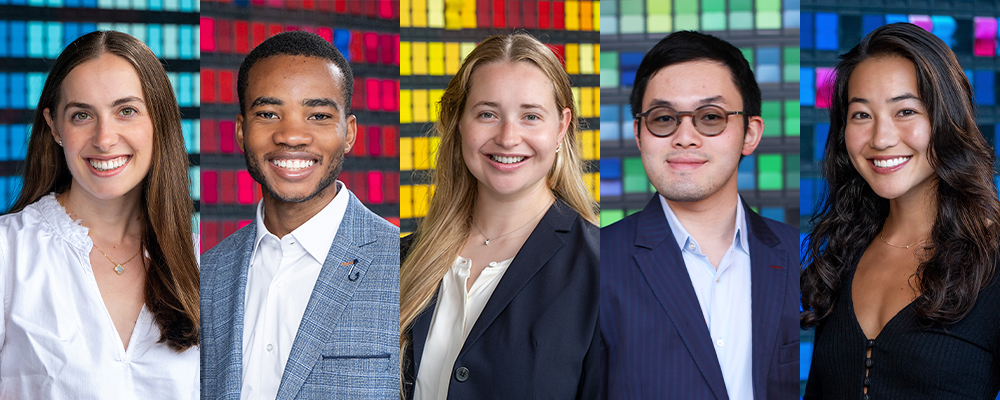
The Siebel Scholars program honors top students from leading graduate schools in business, computer science, bioengineering, and energy science. Meet five second-year Stanford MBAs recognized for their achievements and commitment to shaping the future. brnw.ch/21wWxBi
Stanford Graduate School of Business tweet media
English
2
1
8
3K
Charlene Lew retweetledi
Business Insider
Business Insider@BusinessInsider·
A 101-year-old says the key to his longevity is refusing to act his age
English
2
2
28
68.3K
Charlene Lew retweetledi
Koenfucius 🔍
Koenfucius 🔍@koenfucius·
Does deliberate cognitive effort reduce or boost the tendency to resist belief-incongruent information (hence for wilful ignorance)? Hutmacher eg al argue it depends on the underlying goal—accuracy goals → less bias; directional goals → more bias: buff.ly/BxLvTGa
Koenfucius 🔍 tweet media
English
0
2
1
329
Charlene Lew retweetledi
Ethan Mollick
Ethan Mollick@emollick·
Hey Claude: "Please create the PowerPoint shared by the high powered management consultants hired by Hamlet after seeing his fathers ghost" That was the only prompt. Loved that Claude made this from the McKinsey Elsinore office (with the right colors!), also that SWOT analysis!
Ethan Mollick tweet mediaEthan Mollick tweet mediaEthan Mollick tweet mediaEthan Mollick tweet media
English
66
256
2.2K
224K
Charlene Lew
Charlene Lew@GoodDrLew·
@koenfucius @SpencrGreenberg Interesting contingencies proposed. Could it be that people use social media excessively because of mental health? The inverse mechanism certainly also plays a role.
English
1
0
0
24
Koenfucius 🔍
Koenfucius 🔍@koenfucius·
@SpencrGreenberg I think that makes good sense, but it is somewhat unsurprising—as your non-prescription drug analogy suggests. Doesn’t it really boil down to “some practices are largely fine in moderate use, yet problematic for (rare) extreme, excessive use”?
English
1
0
1
81
Spencer Greenberg 🔍
Spencer Greenberg 🔍@SpencrGreenberg·
It's interesting how studies on the negative effects of social media on mental health are mixed: some find an effect, some don't (or only find a very small effect). Some take this as proof that social media is actually fine for mental health. My hypothesis is different. I think that the effects of social media are extremely heterogeneous based on app, population, and dosage: that in some subgroups, some social media apps (when used in high doses) have substantially negative effects on mental health, but in other subgroups, using other social media apps in moderate doses has no negative effect on mental health. For instance, 13-year-old girls in the US using TikTok or Instagram for 4 hours a day may be very differently impacted than 25-year-old men in Denmark using Twitter/X or WhatsApp for 30 minutes per day. The current studies may be like trying to answer the generic question: "Do non-prescription drugs have a negative mental health effect?" This question can't be answered because it combines too many dissimilar things. In particular, the answer hinges on which drugs we're talking about (cannabis vs. fentanyl), the age of the person doing the drug (teenagers vs. adults), and the quantity of drug use (occasional vs. extreme usage). If my hypothesis is true, then getting to the bottom of the true impacts of social media on mental health will require carefully designed studies that subdivide by app and by population (ideally after preliminary research is done to figure out what apps and which populations are reasonable to group together - for instance, it may be essential to segment by gender and rough age group, but it's important to get these segmentations right if the research is going to make progress). Another thing that makes this research so tricky is that social media literally adapts itself to what you pay attention to. So if you tend to click on upsetting things, it will show you more upsetting things, which can create a self-reinforcing cycle, whereas if you click on things that are interesting and pleasant, you'll get more of those instead. So even at the level of the individual, social media can provide highly varied experiences. It's instructive to compare your social media feed to a friend's (on the same app). When I've done this, it's been remarkable to see just how different our experiences on that app are. Overall, my best guess is that most people’s social media use would be found to have little or no negative causal link to mental health. But I would predict that there is a moderately sized causal negative link to mental health for: • Teenage girls scrolling Instagram a large amount (e.g., checking it >25 times daily) • Teenage boys playing video games non-socially, very large amounts (e.g., > 5 hours per day) • People who are already predisposed to worry a lot about the state of the world, scrolling Twitter a large amount (e.g., > 3 hours daily) • I also would predict a negative impact on attention or focus for those who use TikTok a lot (>5 hours daily) • But I would predict little to no average negative mental health effects for apps that a person uses only 20 minutes per day or less, since I think that's unlikely to be a high enough dose to cause problems for many people I'd be curious to know: what would you predict in terms of links between specific app usage and mental health?
English
7
5
35
3.1K