Sabitlenmiş Tweet
GrecoRomanCiv
4.9K posts

GrecoRomanCiv
@GrecoRomanCiv
Forever captivated by the wonders of Greek and Roman civilization. A true history lover - I wish I could just retire and read books
Katılım Aralık 2020
153 Takip Edilen4.9K Takipçiler
GrecoRomanCiv retweetledi

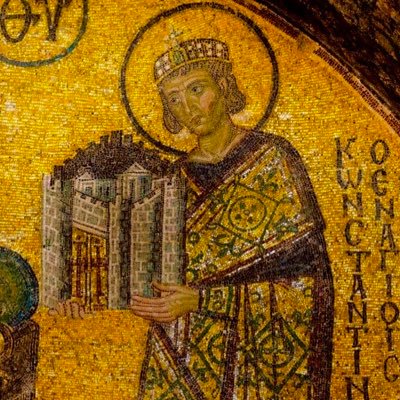
“The Byzantine empire was not called by that name in its own time, and indeed the term ‘Byzantine' was used only to describe inhabitants of Constantinople, ancient Byzantion on the Bosphorus. The subjects of the emperor at Constantinople referred to themselves as Rhomaioi, Romans, because as far as they were concerned Constantinople, the city of Constantine I, the first Christian ruler of the Roman empire, had become the capital of the Roman empire once Rome had lost its own pre-eminent position, and it was the Christian Roman empire that carried on the traditions of Roman civilisation. In turn, the latter was identified with civilised society as such, and Orthodox Christianity was both the guiding religious and spiritual force which defended and protected that world, but was also the guarantor of God's continuing support. Orthodoxy means, literally, correct belief, and this was what the Byzantines believed was essential to their own survival.”
“Thus, from the modern historian's perspective, 'Byzantine' might be paraphrased by the more long-winded 'medieval eastern Roman' empire, for that is, in historical terms, what 'Byzantium' really meant.”
Source: Byzantium at War, 600-1453 by John Haldon

English
GrecoRomanCiv retweetledi

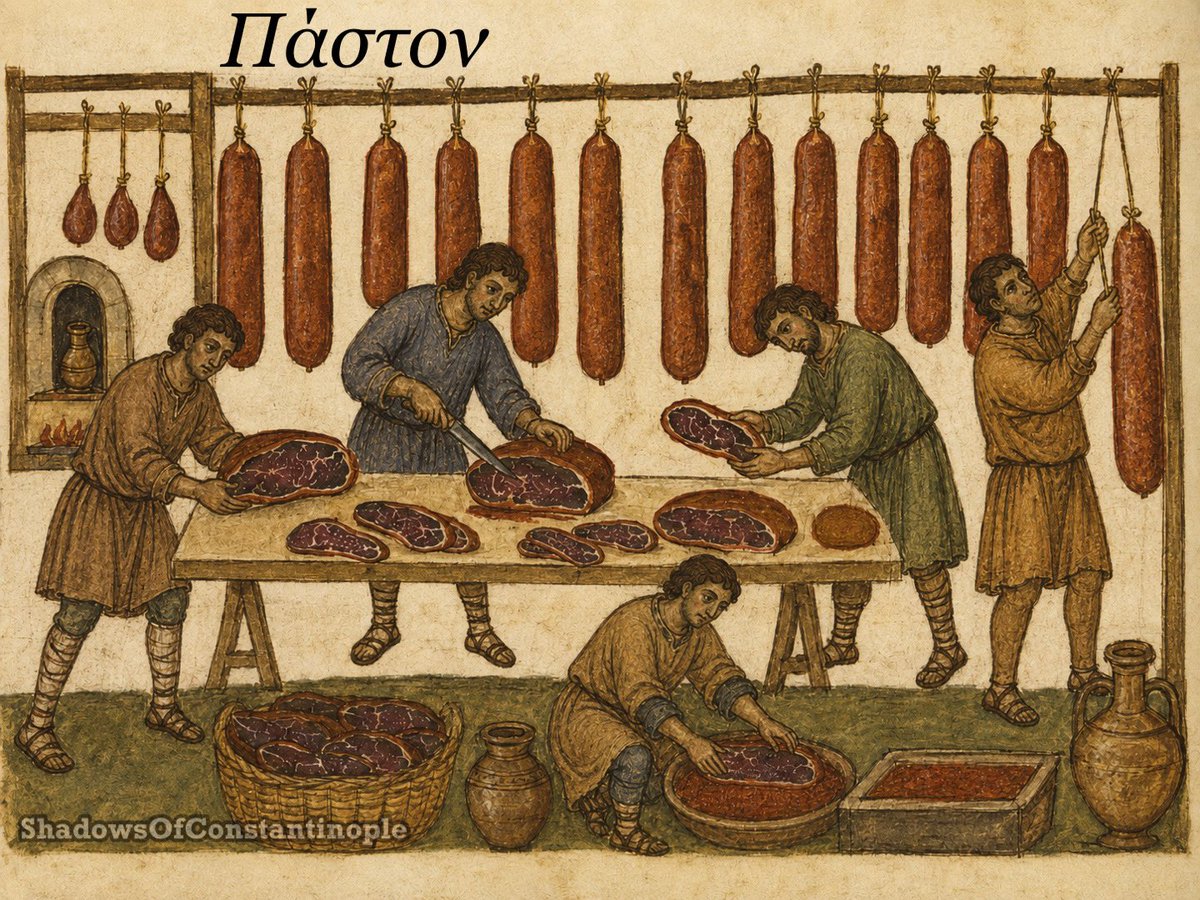
The Eastern Roman origins of Pastrami:
They had “a form of cured beef they called paston and the Turks called pastirma; it remains a Cappadocian specialty, associated particularly with the city of Kayseri. Its name will sound strangely familiar to New Yorkers, and pastirma looks and tastes very much like pastrami. In fact the word pastrami derives from the Turkish via Romanian and Yiddish. Having inherited pastirma from the Byzantines, the Turks took it with them when they conquered Hungary and Romania, where it became a specialty of the Jewish communities; they would later bring it to America: thus the great staple of New York's Jewish delicatessens turns out to be a legacy of Byzantium.”
Shows how food is often an evolution not just “invented” in a straight forward way.
Source: A Byzantine Journey by John Ash

English
GrecoRomanCiv retweetledi

Even in the 13th century, at a time of a relative surge of Hellenism in the Eastern Roman Empire at Nicaea, Theodore II Laskaris still looked back mostly to the early Roman Empire for models of statesmanship:
Theodore had a “wide-ranging knowledge of examples of good and bad rulers. He refers to leaders and monarchs from the Old Testament (Moses, David, Solomon) and draws his models of statesmanship mostly from Roman history: Brutus, Hannibal, Cato, Pompey, Caesar, Antony, Gaius, Nero, Titus, Trajan, Hadrian, and Marcus Aurelius. Paragons of justice for him were Caesar, the founder of ‘the monarchy,’ and Trajan. Late antique emperors appear less frequently in his writings: Maximian, Constantine, Licinius, Theodosius, and Justinian. Greek heroic and historical figures (Achilles, Agamemnon, Odysseus, Cyrus, Alcibiades, Philip, and Demetrios Poliorketes) are even rarer, showing that he sought models for his rule chiefly in the Roman era. The one exception is Alexander, whom Theodore saw as a world conqueror, an enlightened ruler trained by Aristotle, and a friend of philosophers.”
I find this interesting that perhaps one of the Eastern Roman Emperors most affiliated with Hellenism still looked to the ancient Romans so much, as well as legendary Alexander the Great.
Source - The Byzantine Hellene: The Life of Emperor Theodore Laskaris and Byzantium in the 13th Century by Dimiter Angelov

English
GrecoRomanCiv retweetledi

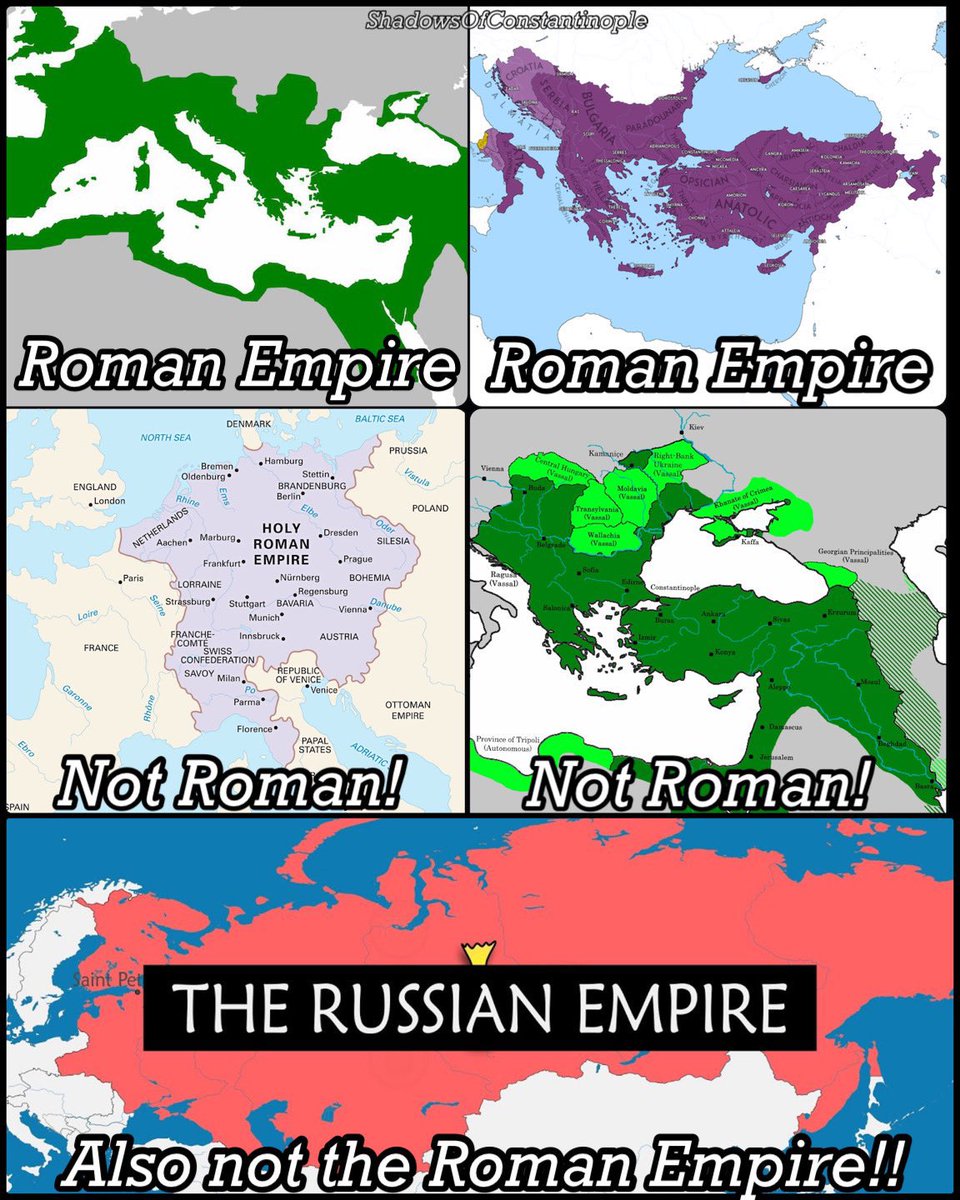
Only ONE Roman Empire (27BC-1453AD)
Imitated in name or title, but never in reality!

Alexander Thatcher@ThatchEffendi
The Ottoman Empire was a continuation of the Byzantine Empire
English
GrecoRomanCiv retweetledi

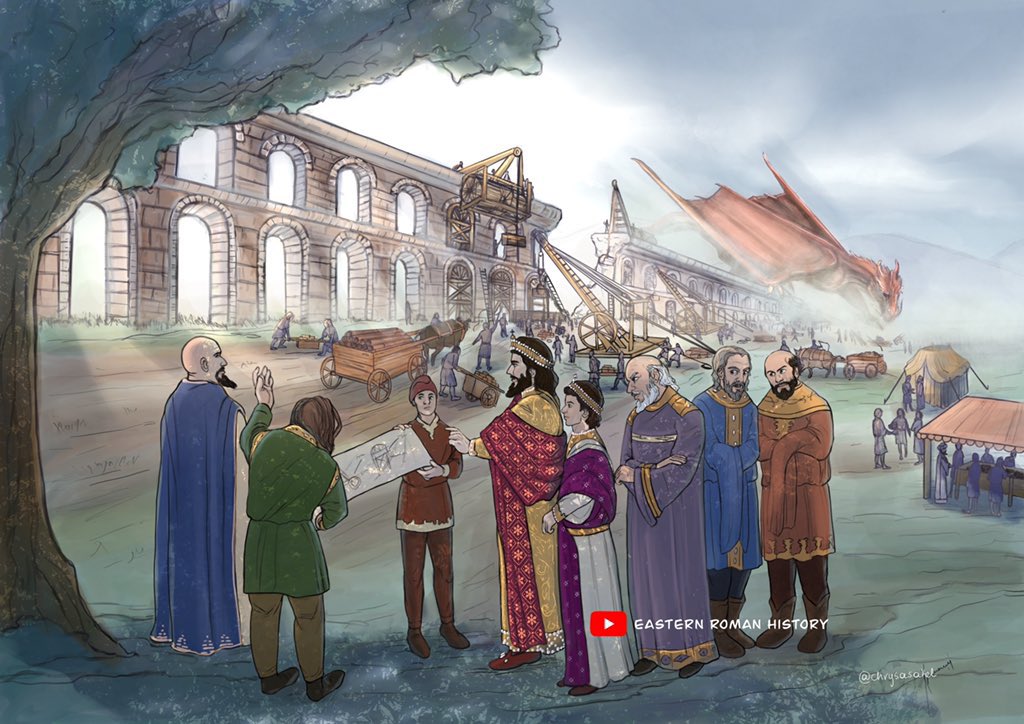
An Eastern Roman Dragon story!
The 8th century restoration of the aqueduct of Valens, cut by the Avars in 626, was “sufficiently impressive to spill over into other arenas, generating the legend of Constantine V as a dragon slayer, according to which Constantine dispatched a dragon blocking an aqueduct, whose appalling smell killed many.”
I totally believe this story, of course….
Source: Byzantium in the Iconoclast Era, 650-850: A History by Leslie Brubaker and John Haldon
Illustration by @byzantinetales

ShadowsOfConstantinople@RomeInTheEast
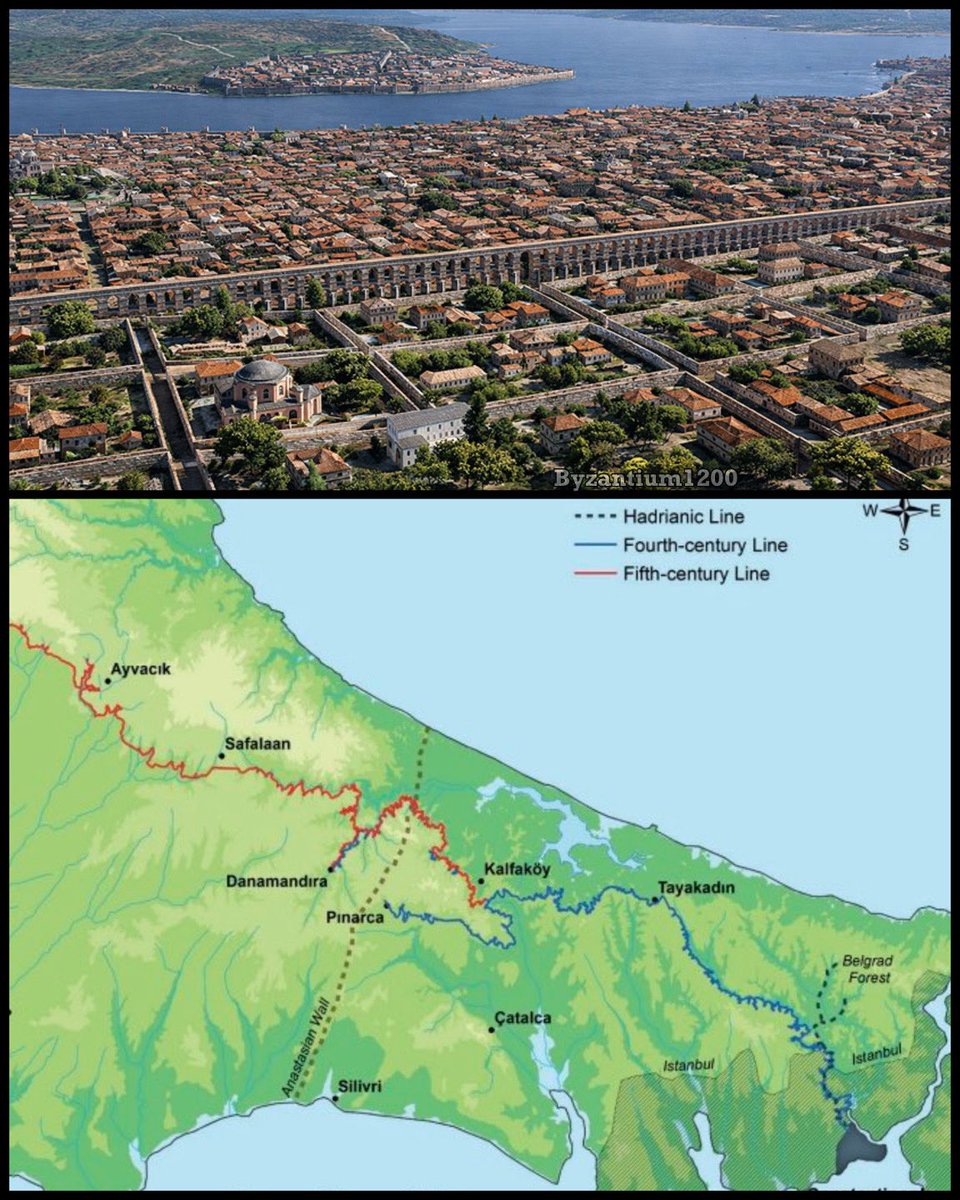
The “longest water supply line from the ancient world” was that made for Constantinople! It was “at least 2.5x the length of the longest recorded Roman aqueducts.” Constantinople was strategically perfectly located, but water was lacking and required engineering solutions🧵
English
GrecoRomanCiv retweetledi

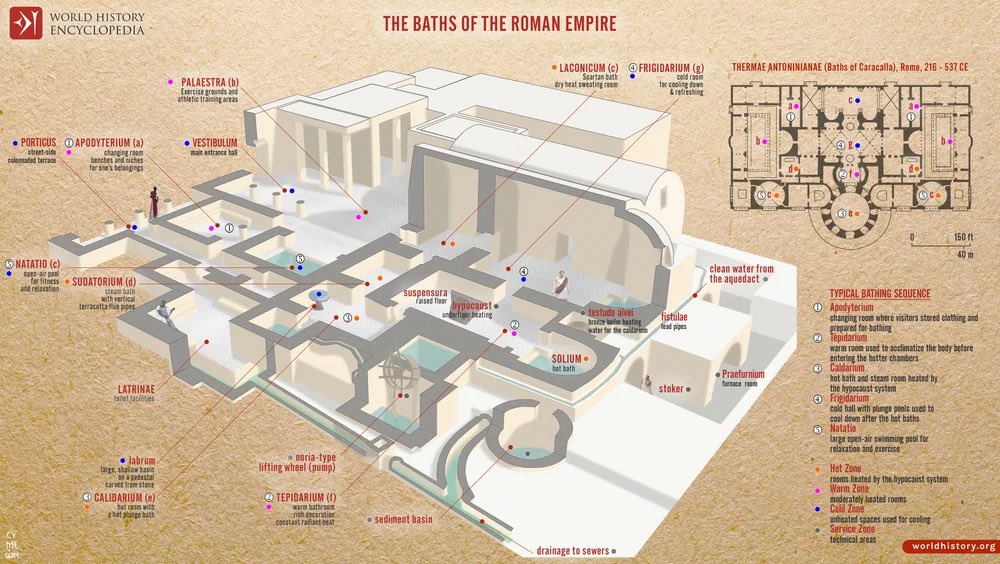
The whole “dirty Europeans didn’t have hygiene” argument is anti-Western/Islamist propaganda.
The Arabs got their hammam bathing culture not from the Arabian peninsula where there isn’t even one river, but from the Romans who had public baths in the cities they conquered.

Vatanabeus@nabe1975
ローマ帝国で石鹸が使われ始めたのは紀元2世紀頃で、石鹸作りの技術はゲルマニアやガリアから伝えられたとされる。中世に入っても石鹸製造の技術はヨーロッパに残り、8世紀頃にはイタリア半島やイベリア半島で石鹸作りが盛んになった。原料も獣脂からオリーブ油へと変わり、洗練されていく。
English
GrecoRomanCiv retweetledi