GregCyndy

5.3K posts

GregCyndy banner
GregCyndy

GregCyndy

@GregCyndy

Am Lovely and Kind Ambassador to @GR1DNETWORK

Katılım Ekim 2019
772 Takip Edilen1.8K Takipçiler
Sabitlenmiş Tweet
GregCyndy
GregCyndy@GregCyndy·
10 years of @iota is more than a celebration, it’s proof of resilience, innovation, and vision. The journey ahead is about shaping real-world adoption & redefining global trade. Excited to see the incredible milestones the next decade unlocks! Don't be left out, see updates
IOTA@iota

Just one month until the rooftop lights up! We’ll celebrate 10 years of IOTA, and shape the future of Global Trade and Real World adoption together. Join us on October 2nd, 6PM SGT, at Cé La Vi in Singapore. Secure your spot while you still can ➡️lu.ma/IOTA10?utm_sou…

English
16
7
37
2.5K
MATK!NG`$™ 👑 ♣️
MATK!NG`$™ 👑 ♣️@MATHEW_KINZY·
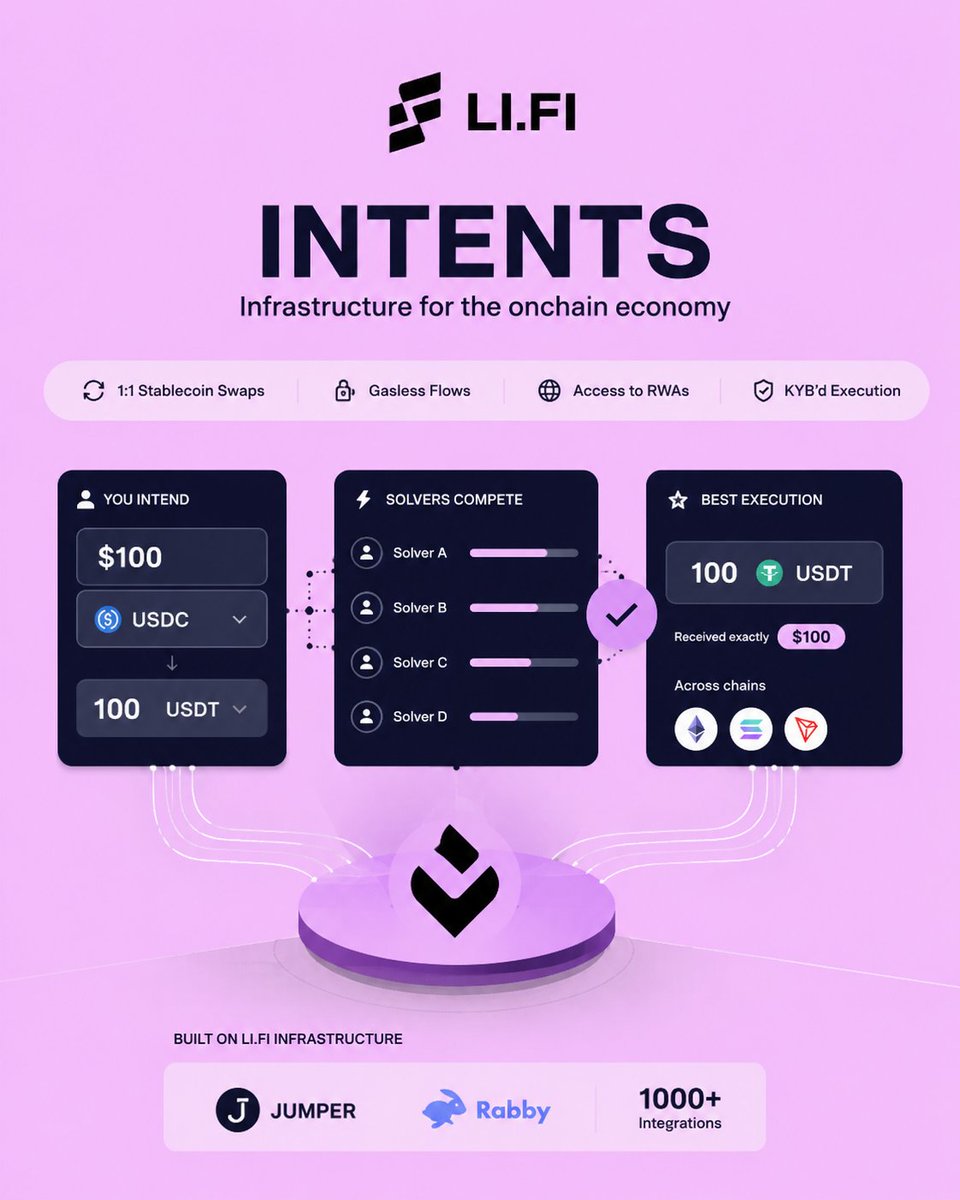
I remember making a crosschain transfer once and spending more time preparing the transaction than actually sending it. ➠ Checking bridge routes. ➠ Estimating slippage. ➠ Buying gas on the destination chain. ➠ Hoping liquidity didn’t shift before confirmation. By the end of it, the amount received was nowhere near the amount sent. we believe that’s just how it works… until now, @lifiprotocol is proving that crosschain payments do not need to feel fragmented, expensive, and unpredictable With LI.​FI Intents, users can now define the outcome they want, while solvers compete behind the scenes to execute it efficiently using their own liquidity and strategies. That changes the experience completely. ➤ You now send $100, you receive exactly $100 ➛ No gas juggling across chains. ➛ No manually searching for liquidity. ➛ No confusing execution path for the user. This is no brainer for fintech apps, wallets, and neo banks. Because most companies are not trying to expose users to blockchain complexity. They are trying to deliver financial products that simply work. ➠ Gasless order submission. ➠ Crosschain stablecoin flows. ➠ Compliant liquidity execution. ➠ Access to tokenized assets. Jumper, Zerion and Rabby already operate on LI.​FI infrastructure, alongside 1000+ integrations already connected to the network. This is industry finally building payment rails normal users can realistically adopt. Intents that work for you.
MATK!NG`$™ 👑 ♣️ tweet media
LI.FI@lifiprotocol

Introducing LI.​FI Intents. Infrastructure for apps, wallets, and neobanks to: • Enable stablecoin payments • Access real-world assets • Tap into compliant onchain liquidity Built for enterprises bringing financial products onchain.

English
40
12
105
623
Vee vee
Vee vee@VivianOmah·
Getting started with $MNTC is simple, even if you are new. You can buy through DEX by setting up MetaMask or Trust Wallet, funding your wallet with BNB, ETH, or USDT, then heading to PancakeSwap to swap directly for $MNTC. For those who prefer centralized exchanges, $MNTC is already available on MEXC, BingX, BitMart, and BTCC, making access easier across different markets. Now, another step is coming. $MNTC is set to arrive on @MinatiExchange soon, opening another door for new users, traders, and community members to connect with the ecosystem.
Vee vee tweet media
English
39
0
74
192
GregCyndy
GregCyndy@GregCyndy·
@MATHEW_KINZY interoperability is quietly becoming one of the biggest challenges in RWAs
English
0
0
0
11
MATK!NG`$™ 👑 ♣️
MATK!NG`$™ 👑 ♣️@MATHEW_KINZY·
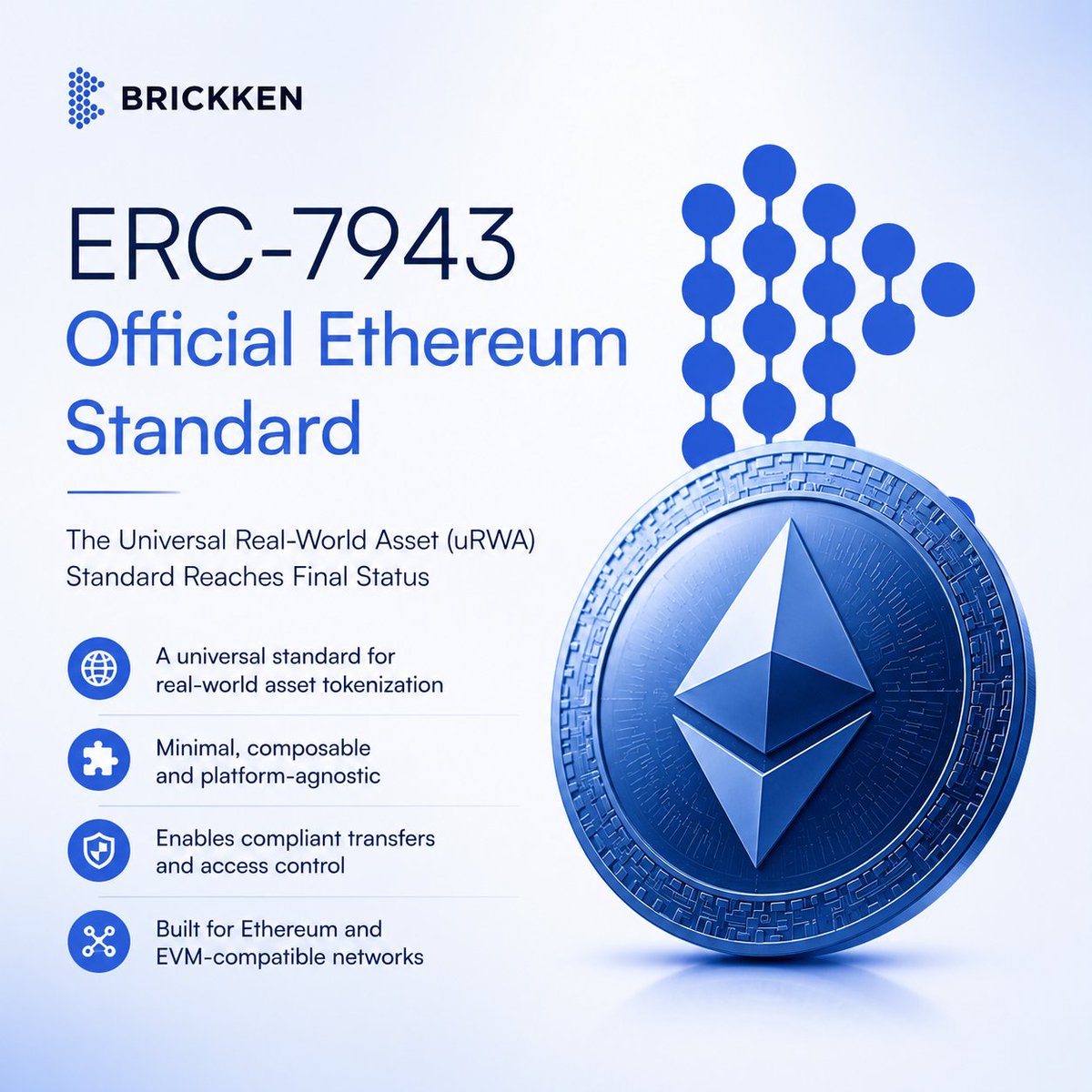
RWAs were never going to scale through isolated tokenization systems controlled by individual vendors. Institutions need shared standards. ERC-7943 becoming an official Ethereum standard feels like a major step toward making tokenized assets interoperable, compliant, and actually usable across wallets, custodians, issuer platforms, and financial infrastructure. The important part is that it stays modular and vendor-neutral. ➠ No forced identity provider. ➠ No single compliance model. ➠ No platform lock-in. Just a common infrastructure layer that lets institutions build compliant tokenized markets without fragmenting the ecosystem even further. Authored by @Brickken co-founder Dario Lo Buglio, open standards are what allow infrastructure to scale globally. ERC-7943 could quietly become one of the foundational layers behind institutional-grade RWA markets on Ethereum. This is honestly bigger than most people realize.
MATK!NG`$™ 👑 ♣️ tweet media
Brickken@Brickken

ERC-7943 is now an official Ethereum standard. That matters because institutional tokenization cannot scale through vendor-controlled frameworks, fragmented compliance logic, and asset-specific integrations. Tokenized real-world assets need more than token representation. They need predictable ways for wallets, custodians, issuer platforms, infrastructure providers, and other integrators to understand whether a transfer is permitted, who can interact with the instrument, and how enforcement or restriction logic is applied. Authored by Dario Lo Buglio (@xaler2 ), Brickken co-founder, ERC-7943 introduces a minimal, composable open interface for compliant tokenization of real-world assets across @ethereum and EVM-compatible networks. It does not impose one compliance model, identity provider, or tokenization platform. It gives institutions a common implementation surface while preserving flexibility at the policy, identity, jurisdiction, and compliance layers. For financial institutions, that distinction is strategic. A vendor-controlled framework can create dependency on a single commercial roadmap. An open Ethereum standard gives issuers and integrators a more neutral foundation for tokenized asset infrastructure.

English
49
4
139
1.2K
Vee vee
Vee vee@VivianOmah·
36 new slots, lifetime revenue share, and a chance to enter the Heroes of Valdir NFT collection is a serious opportunity. Can you explain more about how the 3% revenue share will work for winning creators after launch? @mat_rash38998 @lordsgood @MATHEW_KINZY
ZarGates@ZARGATES

CREATORS CALL We continue building the biggest gaming lore in NFT history together with you, and to do this, we call upon all #AIart creators to unite! As a result of the last contest, we have grown to 840 creators, from which we are now selecting 100 nominees to introduce to the ZarGates investor community, with the final selection of the first 36 winners. Each hero from the winner list will be included in the #NFT collection "Heroes of Valdir," from which the authors will receive a 3% lifetime revenue share from operations involving their original NFTs! The collection is scheduled to launch next month on Eth. We still have 36 slots available, which means long live the new contest we are launching with you today! #AIart️️️️️️️️️️️️️️️️️️️️️️️️️️️️️️️️️️️️️️️️️️️️️️️️️️️ CHALLENGE "HEROES OF VALDIR" 1️⃣ Create a character in a medieval fantasy setting, describe their story, and give them a name. You have two factions to choose from: Alliance: Humans, Elves, Cat-People Horde: Orcs, Demons, Undead 2️⃣ Make a quote repost of this post and attach the image of your hero. 3️⃣ Tag three of your best #AIart creators friends. You may submit up to 10 works, but in separate posts. MANDATORY REQUIREMENTS 1️⃣ A PvP Vibe referral link in your contest posts. 2️⃣ The hashtags #AIart, #zargates, and #pvpvibe in the post. 3️⃣ Follow @pvpvibe and @zargates. 4️⃣ Fill out the Google Form below ⬇️ Deadline: June 2nd, 11 PM UTC. HOW TO GET SUPPORT FROM ZARGATES INVESTORS? Our community of 5,000 investors has been built over two years on mutual understanding, united with a single goal: to create a leader in the GameFi segment. To achieve this, we launched a new product, @PvPvibe: an AI game maker built on ZarGates' infrastructure. It is important to understand that we are selecting creators capable not only of producing high-quality images but also of making a significant contribution to the development of the ecosystem. This is a simple formula: you grow ZarGates, and ZarGates grows you. What investors pay attention to, besides the quality of the hero images, is: 1️⃣ The quantity and quality of your social media followers and their engagement. 2️⃣ The number of posts about PvP Vibe that reveal your vision, your acceptance of the inevitability of AI game creation services, and your support for our mission. 3️⃣ The presence of referral links to PvP Vibe in your posts and overall activity within the three-level PvP Vibe referral tree. 4️⃣ Your motivation to grow PvP Vibe and demonstrable proof that you are a user of the product. This does not guarantee you a spot on the investment shortlist, as there will be a selection process. Likewise, having 100,000 followers does not guarantee you will pass the selection. Every creator matters to us, and we strive to build a team of creators that strikes a balance between talent and capability. Our goal is to select 72 authors (36 in this contest) to create the world's top gaming NFT collection. We are not just looking for artists. We are looking for active like-minded people who are genuinely ready to become a team capable of accomplishing this task and making a good profit from it. PRIZES 1️⃣ A prize pool of $1,800 in USDT. 2️⃣ Every participant receives bonus NFTs with a drop ranging from $10 to $5,000 credited to their PvP Vibe balance, becoming a privileged member of the community with a permanent discount on creating games with AI on our service. 3️⃣ A lifetime 3% revenue share, subject to simple conditions for supporting your collection. Well, Bon voyage! Good luck and creative success! Show the full power of your talent — the time has come! Let the most epic NFT battle in the history of NFTs begin!

English
22
0
36
206
Rexa
Rexa@martinsrex65950·
The first time I tried to understand Zero-Knowledge Proofs, I thought it sounded too technical to matter. “Prove something without revealing the thing itself.” It sounded like theory. Then I started looking at where crypto security is heading, and it finally clicked.
Rexa tweet media
English
65
0
83
189
MATK!NG`$™ 👑 ♣️
MATK!NG`$™ 👑 ♣️@MATHEW_KINZY·
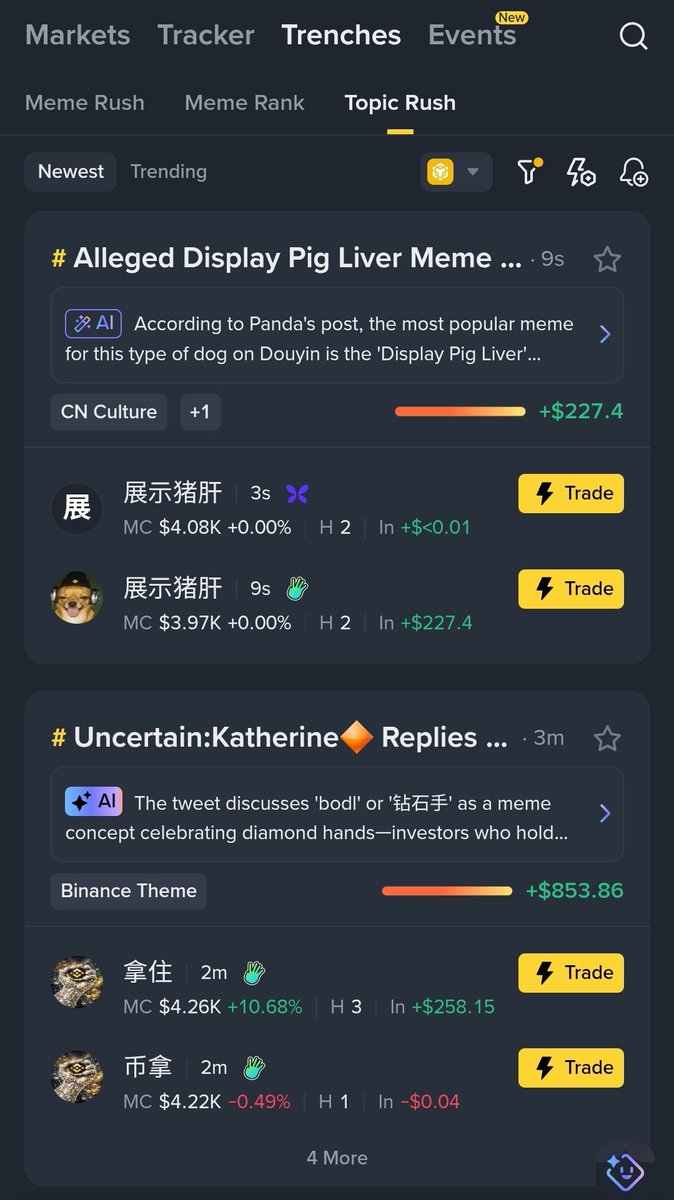
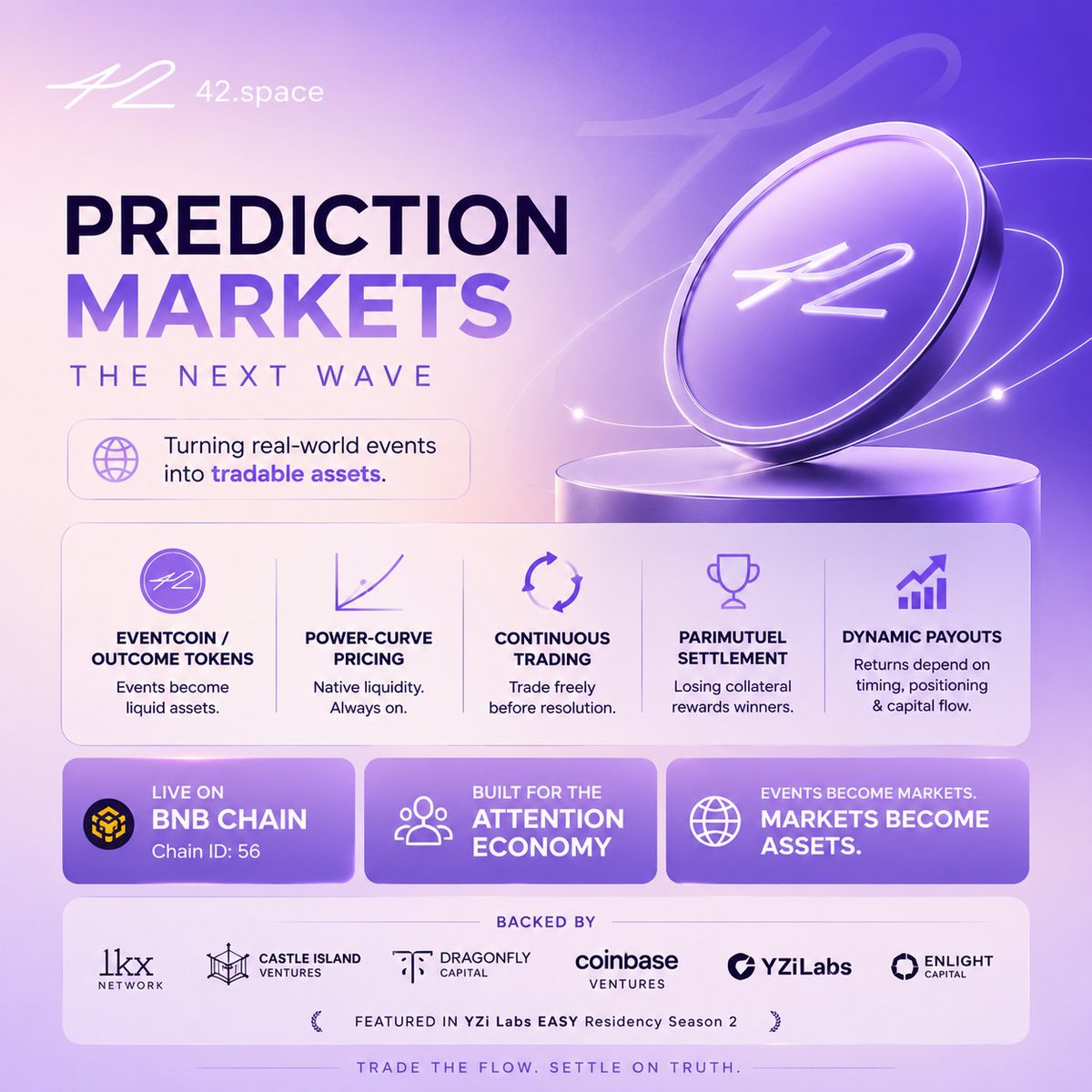
Trade real-world narratives, sentiment, and live events directly onchain in your @BinanceWallet Sports, crypto targets, news, culture, all tradable through Event Tokens with continuous trading before resolution. Alot of people are underestimating how insane this still is. Your favorite events, all on-chain, all tradeable. Powered by @42space
MATK!NG`$™ 👑 ♣️ tweet mediaMATK!NG`$™ 👑 ♣️ tweet media
MATK!NG`$™ 👑 ♣️@MATHEW_KINZY

Prediction markets are getting a serious UX upgrade. Event Rush is now live on Binance Wallet, powered by @42space Instead of only trading tokens, users can now trade real-world events directly onchain: • sports • crypto price targets • news • culture • trending narratives ➤ Here’s how it works: ➠ Each possible event outcome has its own Event Token. ➠ You buy the outcome you believe in using USDT on BSC. From there you can either: ➛ sell anytime before resolution if demand pushes price higher ➛ or hold until settlement and claim a share of the winning pool if correct ➤ What makes Event Rush interesting is that you don’t need to wait for the final outcome to make moves. ➛ Enter and exit anytime before resolution ➛ Prices move based on demand through a bonding curve ➛ Winners split the final pool with uncapped upside ➛ Earlier positioning gives more exposure for the same capital Honestly feels closer to trading live sentiment and narratives than traditional prediction markets. ➤ How to access: Binance Wallet → Markets → Events tab ➤ Important details: • service fees apply on buys/sells • redeem tax increases closer to event resolution • powered by @42space on BNB Chain • availability depends on jurisdiction + eligibility requirements Interesting seeing prediction markets move directly into Binance Wallet infrastructure this early.

English
48
5
123
876
Vee vee
Vee vee@VivianOmah·
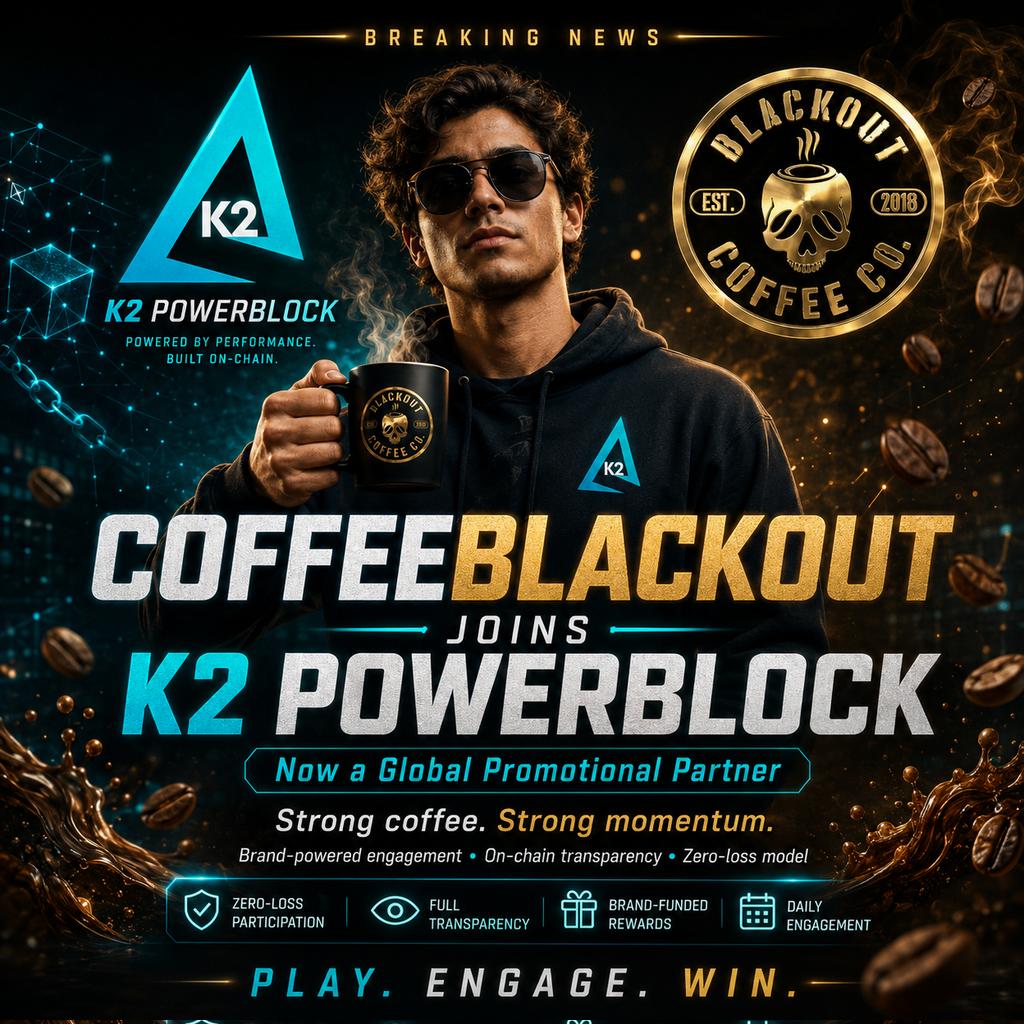
.@K2PowerBlock just added more fuel to the movement. @CoffeeBlackout is now a Global Promotional Partner, bringing bold coffee culture into K2’s growing brand-powered rewards ecosystem. This is the kind of partnership that makes the K2 model interesting. It connects real brands with real communities through interactive on-chain engagement, where users can participate, stay consistent, and earn from rewards funded by brand partnerships. No complicated reward chase. No putting principal at risk. Just brands creating better engagement, and users getting rewarded for showing up. Strong coffee. Stronger momentum. Play. Engage. Win.
Vee vee tweet media
English
64
0
78
302
GregCyndy retweetledi
GregCyndy
GregCyndy@GregCyndy·
@mat_rash38998 from commodities to prediction markets everything somehow keeps connecting back to Pyth lately
English
1
0
0
20
Matty
Matty@mat_rash38998·
A lot of people still think market infrastructure is just charts and numbers. But the deeper you go into Pyth, the more you realize it’s really about coordination. ➤ Think about how fragmented financial markets still are today: ➠ Crypto platforms pull prices from one place. ➠ Forex systems rely on another. ➠ Commodity data sits behind expensive terminals. ➠ Equities are locked inside separate infrastructures. Everything operates in pieces. @PythNetwork is slowly stitching those pieces together. Not by replacing markets. But by creating a shared pricing layer that applications across blockchains can plug into. ➤ It’s becoming the connective layer between: → digital assets → equities → FX → commodities → prediction markets → perpetual exchanges → real-world financial products ➤ And the scale is honestly getting hard to ignore: • 3,000+ feeds • 100+ blockchains • hundreds of integrated applications • new markets constantly being added What makes it even more interesting is the transparency model behind it. ➛ You can inspect publishers. ➛ Compare benchmarks. ➛ Browse live feeds openly. ➛ See how prices are constructed. That openness matters because traditional financial data systems were never designed for accessibility. They were designed around gatekeeping. Pyth feels more like infrastructure built for an internet-native financial system: real-time, cross-market, multi-chain, and openly accessible. Pyth isn’t confined to one category anymore. You can talk about: • market structure • commodities • perps • memes • macro • prediction markets • data transparency • infrastructure • onchain finance …and somehow it all still connects back to Pyth. That’s usually a sign an ecosystem is becoming much bigger than a single narrative.
Matty tweet media
English
36
1
99
364
MATK!NG`$™ 👑 ♣️
MATK!NG`$™ 👑 ♣️@MATHEW_KINZY·
Prediction markets are getting a serious UX upgrade. Event Rush is now live on Binance Wallet, powered by @42space Instead of only trading tokens, users can now trade real-world events directly onchain: • sports • crypto price targets • news • culture • trending narratives ➤ Here’s how it works: ➠ Each possible event outcome has its own Event Token. ➠ You buy the outcome you believe in using USDT on BSC. From there you can either: ➛ sell anytime before resolution if demand pushes price higher ➛ or hold until settlement and claim a share of the winning pool if correct ➤ What makes Event Rush interesting is that you don’t need to wait for the final outcome to make moves. ➛ Enter and exit anytime before resolution ➛ Prices move based on demand through a bonding curve ➛ Winners split the final pool with uncapped upside ➛ Earlier positioning gives more exposure for the same capital Honestly feels closer to trading live sentiment and narratives than traditional prediction markets. ➤ How to access: Binance Wallet → Markets → Events tab ➤ Important details: • service fees apply on buys/sells • redeem tax increases closer to event resolution • powered by @42space on BNB Chain • availability depends on jurisdiction + eligibility requirements Interesting seeing prediction markets move directly into Binance Wallet infrastructure this early.
MATK!NG`$™ 👑 ♣️ tweet media
MATK!NG`$™ 👑 ♣️@MATHEW_KINZY

while RWA is booming and gaining most of the attention, we can't ignore other sectors making waves and dominating the market.... One of those sectors is prediction markets. What used to look like a niche crypto experiment is now becoming a serious information market. ➤ According to DefiLlama, prediction markets are now sitting around half a billion dollars in TVL, with billions in weekly volume across the category. ➤ TRM Labs also reported that monthly prediction market volume grew from about $1.2B in early 2025 to over $20B in January 2026. The big names are already obvious. ➛ Kalshi and Polymarket dominate most of the volume. DefiLlama data shows both platforms making up the majority of 30-day activity, with billions in notional volume and open interest. But that also reveals the problem. Prediction markets have grown fast, but the structure is still narrow. Most platforms are built around simple event contracts: ➠ Will this happen? Yes or no. ➠ Trade the outcome. ➠ Wait for resolution. ➠ Market closes. ➠ Attention disappears. That works for price discovery, but it does not fully capture how internet attention actually behaves. Narratives do not always die when an event resolves. ➛ Communities keep talking. ➛ Memes keep spreading. ➛ Sentiment keeps shifting. ➛ Culture keeps reacting. This is the missing piece in prediction markets today. The market prices the result, but it does not always turn the event itself into a persistent asset. That is where @42space becomes interesting. ➤ 42.space is not just another prediction market trying to compete with the big names on volume. It is building a decentralized asset issuance protocol where event outcomes can trade like liquid tokens and settle like prediction markets. ➤ In simple terms: 42.space is trying to turn real-world events into tradable event-based assets. > Its core concept is EventCoin/ Outcome Tokens < Instead of a market being only a temporary yes/no bet, the event becomes an onchain asset with its own liquidity, pricing, and community around it. Polymarket and Kalshi are mainly outcome markets. @42space is trying to become an event asset layer. ➛ 42 uses a power-curve pricing model instead of relying only on normal order books or pre-seeded liquidity. It combines continuous trading with parimutuel settlement. So before resolution, outcomes can trade freely. After resolution, losing collateral is pooled and redistributed to the winning side. ➛ The design creates a different payoff structure from the usual capped prediction share model. Returns depend on timing, positioning, and capital flow, not just being right at the end. That makes the system feel closer to a blend of: ➠ prediction markets ➠ launchpad mechanics ➠ social finance ➠ attention markets ➠ event-based tokens The big players proved that people want to trade real-world events. @42space is asking a bigger question: What if events themselves become liquid assets? That opens up a much wider design space. > Sports events. Political events. Crypto events. Cultural moments. Creator-led narratives. Internet trends. Macro storyline < All of them can potentially become markets with deeper community and asset behavior. The backing also matters. ➤ 42 traces back to Alkimiya. Backed by 1kx network, Castle Island Ventures, Dragonfly Capital, Coinbase Ventures, YZi Labs, and EnlightCapital. ➤ 42.space was also featured in YZi Labs’ EASY Residency Season 2, with a clear BNB Chain connection. Protocol is live on BNB Chain. That gives it a strong early ecosystem path. ➤ ➤ But the honest view is this: 42.space is still very early compared to giants like Kalshi and Polymarket, with far less visible adoption and a more experimental market structure. But that’s also what makes it interesting. it’s trying to redesign how prediction markets and event-based assets actually work.

English
58
3
179
2K
MATK!NG`$™ 👑 ♣️
MATK!NG`$™ 👑 ♣️@MATHEW_KINZY·
Most people still think markets are separated by walls. ➠ Crypto over here. ➠ Stocks somewhere else. ➠ FX locked behind institutions. ➠ Commodities trapped inside legacy systems. @PythNetwork is quietly tearing those walls down. The deeper you look into the network, the more you realize this is becoming a unified pricing layer for global markets. Not just crypto feeds anymore. Now it spans: • equities • FX • commodities • metals • energy • prediction markets • real-world futures • onchain financial products All connected through one expanding infrastructure network. ➤ what makes Pyth interesting isn’t just the scale. It’s how transparent the entire system feels. You can: ➛ inspect publishers contributing to feeds ➛ compare prices against benchmarks ➛ browse live market data openly ➛ access 3,000+ feeds across asset classes ➛ build using one API instead of fragmented vendor systems From BTC to beef cattle. From forex pairs to coffee futures. The price of everything is slowly becoming accessible onchain. And unlike traditional market data systems built around closed terminals and expensive gatekeeping, Pyth feels much more aligned with how modern internet infrastructure should operate: ➤ open, transparent, accessible, multi-chain, and builder-friendly. ➤ 100+ blockchains already integrated. Hundreds of applications already connected. New feeds shipping constantly. The infrastructure layer is expanding fast. Pyth isn’t limited to one narrative anymore. ➤ Whether it’s: • memes • market analysis • prediction markets • charts • commodities • perps • infrastructure • transparency • macro discussions …it all connects back to the same thing: ➤ bringing global pricing infrastructure onchain.
MATK!NG`$™ 👑 ♣️ tweet media
English
61
2
139
1.1K
GregCyndy
GregCyndy@GregCyndy·
@MATHEW_KINZY @42space The blend of prediction markets, social finance, and attention markets is actually interesting.
English
0
0
0
21
MATK!NG`$™ 👑 ♣️
MATK!NG`$™ 👑 ♣️@MATHEW_KINZY·
while RWA is booming and gaining most of the attention, we can't ignore other sectors making waves and dominating the market.... One of those sectors is prediction markets. What used to look like a niche crypto experiment is now becoming a serious information market. ➤ According to DefiLlama, prediction markets are now sitting around half a billion dollars in TVL, with billions in weekly volume across the category. ➤ TRM Labs also reported that monthly prediction market volume grew from about $1.2B in early 2025 to over $20B in January 2026. The big names are already obvious. ➛ Kalshi and Polymarket dominate most of the volume. DefiLlama data shows both platforms making up the majority of 30-day activity, with billions in notional volume and open interest. But that also reveals the problem. Prediction markets have grown fast, but the structure is still narrow. Most platforms are built around simple event contracts: ➠ Will this happen? Yes or no. ➠ Trade the outcome. ➠ Wait for resolution. ➠ Market closes. ➠ Attention disappears. That works for price discovery, but it does not fully capture how internet attention actually behaves. Narratives do not always die when an event resolves. ➛ Communities keep talking. ➛ Memes keep spreading. ➛ Sentiment keeps shifting. ➛ Culture keeps reacting. This is the missing piece in prediction markets today. The market prices the result, but it does not always turn the event itself into a persistent asset. That is where @42space becomes interesting. ➤ 42.space is not just another prediction market trying to compete with the big names on volume. It is building a decentralized asset issuance protocol where event outcomes can trade like liquid tokens and settle like prediction markets. ➤ In simple terms: 42.space is trying to turn real-world events into tradable event-based assets. > Its core concept is EventCoin/ Outcome Tokens < Instead of a market being only a temporary yes/no bet, the event becomes an onchain asset with its own liquidity, pricing, and community around it. Polymarket and Kalshi are mainly outcome markets. @42space is trying to become an event asset layer. ➛ 42 uses a power-curve pricing model instead of relying only on normal order books or pre-seeded liquidity. It combines continuous trading with parimutuel settlement. So before resolution, outcomes can trade freely. After resolution, losing collateral is pooled and redistributed to the winning side. ➛ The design creates a different payoff structure from the usual capped prediction share model. Returns depend on timing, positioning, and capital flow, not just being right at the end. That makes the system feel closer to a blend of: ➠ prediction markets ➠ launchpad mechanics ➠ social finance ➠ attention markets ➠ event-based tokens The big players proved that people want to trade real-world events. @42space is asking a bigger question: What if events themselves become liquid assets? That opens up a much wider design space. > Sports events. Political events. Crypto events. Cultural moments. Creator-led narratives. Internet trends. Macro storyline < All of them can potentially become markets with deeper community and asset behavior. The backing also matters. ➤ 42 traces back to Alkimiya. Backed by 1kx network, Castle Island Ventures, Dragonfly Capital, Coinbase Ventures, YZi Labs, and EnlightCapital. ➤ 42.space was also featured in YZi Labs’ EASY Residency Season 2, with a clear BNB Chain connection. Protocol is live on BNB Chain. That gives it a strong early ecosystem path. ➤ ➤ But the honest view is this: 42.space is still very early compared to giants like Kalshi and Polymarket, with far less visible adoption and a more experimental market structure. But that’s also what makes it interesting. it’s trying to redesign how prediction markets and event-based assets actually work.
MATK!NG`$™ 👑 ♣️ tweet media
English
45
5
132
3.4K
GregCyndy retweetledi
MATK!NG`$™ 👑 ♣️
MATK!NG`$™ 👑 ♣️@MATHEW_KINZY·
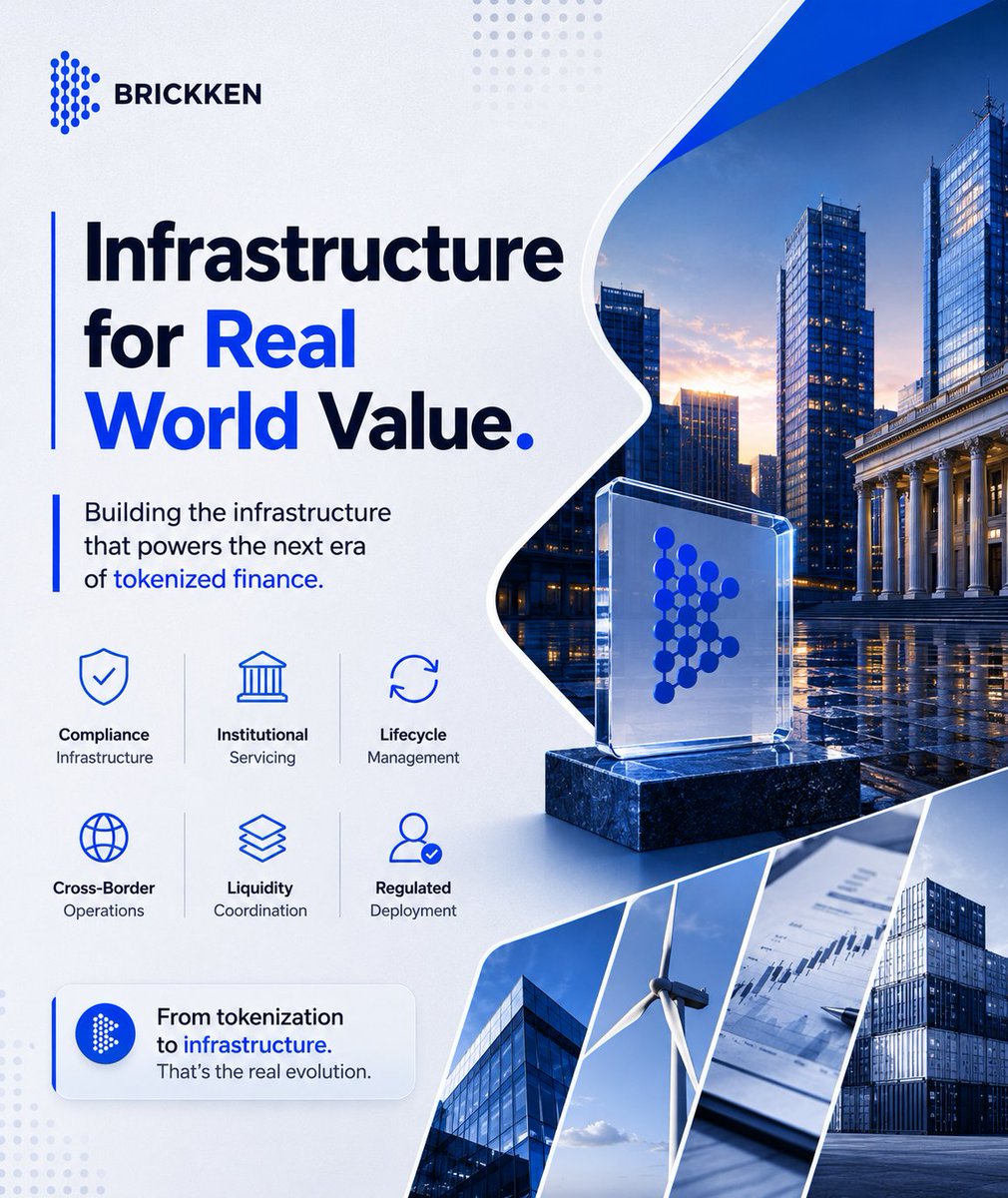
The future of RWAs won't be won by whoever tokenizes the most assets. The real winners will probably be the ones controlling the infrastructure layer underneath tokenized markets: → compliance → servicing → investor onboarding → lifecycle management → liquidity coordination → cross-border operations → regulated deployment frameworks And that’s increasingly what @Brickken looks focused on building. Over the last few months, several major signals started connecting together: ➤ The Institutional Shift Became Visible At @consensus2026 Miami, the conversation around RWAs noticeably changed. Brickken’s presence across: → CoinDesk PitchFest → Digital Asset Yield Summit → institutional RWA discussions positioned them directly inside those conversations. ➤ RWA Vault Infrastructure Could Become Important One of the more interesting developments was Brickken introducing its upcoming RWA Vault initiative. Because tokenization itself is no longer the difficult part. Liquidity coordination is. >> This pushes Brickken beyond issuance infrastructure and deeper into capital coordination itself. ➤ Expansion Into Luxembourg through The LHoFT Ecosystem may have been one of the most underrated announcements. Luxembourg is one of Europe’s key hubs for: → asset management → private banking → regulated funds → institutional finance infrastructure Brickken establishing a direct office presence is a strategic positioning inside Europe’s future institutional tokenization layer. ➤ Compliance Is Quietly Becoming the Real Moat. AI and modern coding tools are making software cheaper to build across the entire industry. But compliance? Institutional trust? Regulatory infrastructure? Operational readiness across jurisdictions? Those are much harder to replicate. That's the narrative Brickken is building around right now. @edwin_mata recent AMA comments highlights that - "Brickken is no longer focused on being another Web3 startup" ➤ Real Deployments Are Starting To Matter More Another important detail: @Brickken is not only discussing infrastructure theoretically anymore. Real deployments are happening: >> HiveBond SPV1 was a strong example: → Dubai real estate → SPV ownership structure → BNB Chain → digital lifecycle infrastructure → onchain equity coordination → possible Bitcoin treasury allocation ➤ Brickken’s Positioning Is Starting To Look Different from most RWA projects. Brickken is focused on operate institutional tokenized markets. >> We are slowly moving away from: tokenization as narrative >> toward: tokenization as financial infrastructure. And that changes everything. That shift probably matters more than most people realize right now. #InvestInRWANow #FutureOfFinance #RWA $BKN
MATK!NG`$™ 👑 ♣️ tweet media
English
56
6
126
1.1K
MATK!NG`$™ 👑 ♣️
MATK!NG`$™ 👑 ♣️@MATHEW_KINZY·
RWAs had another strong week, and the signal is getting harder to ignore. While broader crypto moved sideways, tokenized real-world assets kept growing across market size, regulation, institutional adoption, and chain-level activity. The sector is now sitting around the low-$30B range, with tokenized treasuries, private credit, tokenized equities, commodities, and real estate becoming the strongest categories. The most important part is not just the number. It is what the growth represents. RWAs are no longer being treated like a future narrative. They are becoming financial infrastructure. Tokenized US Treasuries remain the main institutional gateway, with products from names like BlackRock, Franklin Templeton, Ondo, and others showing that yield-bearing assets are one of the clearest use cases for onchain finance. But this week also showed that the RWA market is expanding beyond simple tokenized treasuries. ➤ Tokenized equities are gaining more attention as regulators explore frameworks for digital securities. ➤ RWA derivatives are growing, with Hyperliquid seeing strong open interest around real-world asset perpetuals. ➤ Solana and XRP Ledger are also gaining ground, showing that RWA growth is no longer only an Ethereum story. ➤ Ethereum still leads in institutional trust and deep liquidity, but Solana is pushing the speed and usability angle, while XRPL is becoming more relevant for payments, settlement, and tokenized asset flows. That multi-chain competition is one of the most important trends right now. Different chains are starting to build different RWA identities. ➠ Ethereum for institutional-grade issuance. ➠ Solana for usability and speed. ➠ XRPL for settlement and payments. ➠ Hyperliquid for RWA-linked trading. ➠ Ondo for tokenized yield and market access. ➠ Chainlink for data, connectivity, and institutional tokenization infrastructure. ➠ Brickken for compliant asset tokenization and lifecycle infrastructure. Regulation is also becoming a major catalyst. The SEC’s reported innovation exemption for tokenized stocks could become one of the biggest signals the RWA sector has received so far. If tokenized equities can trade under clearer frameworks, it could push capital markets closer to 24/7 onchain infrastructure. The UK is also moving seriously through tokenization sandboxes and wholesale market consultations, showing that major financial centers are no longer asking whether tokenization matters. They are asking how to integrate it safely. That tells you how much the sector has matured. RWAs are becoming a bridge between traditional finance and DeFi. Treasuries can become collateral. Credit can become more accessible. Stocks can become programmable. Settlement can become faster. Markets can become more global. Liquidity can move with fewer barriers. This is why RWA growth feels different from most crypto narratives. It is not only driven by hype. It is being pushed by institutions, regulators, infrastructure providers, and actual demand for better financial rails. The future of RWAs is no longer about tokenization alone. It is about rebuilding financial markets onchain.
MATK!NG`$™ 👑 ♣️ tweet media
English
55
6
157
2.2K
Matty
Matty@mat_rash38998·
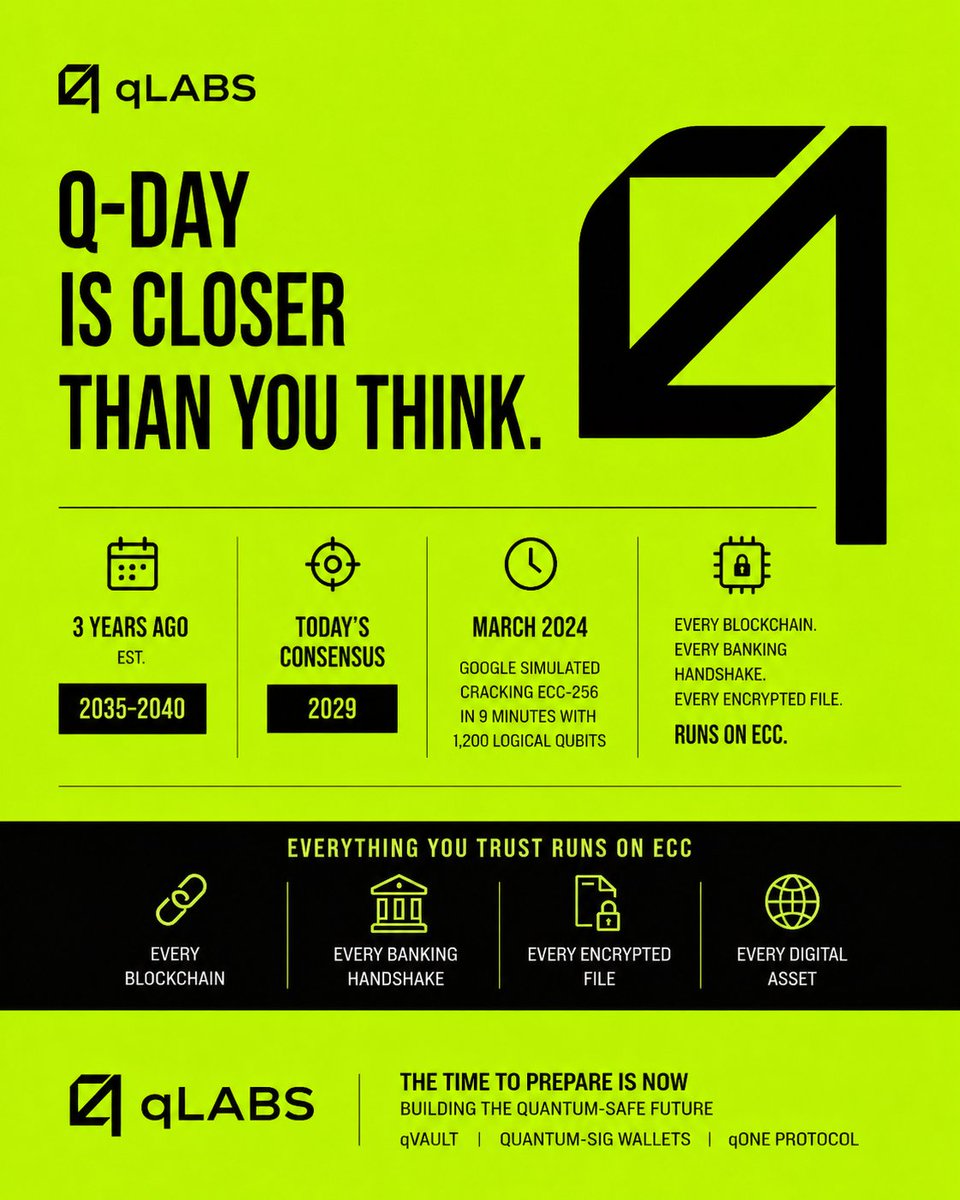
the timeline around quantum computing is compressing much faster than most blockchain ecosystems expected. That's the sole topic in this recording from qLABS CTO, @acheungquantum He focused heavily on how the real issue is no longer: can quantum systems eventually threaten ECC? it’s: when does migration pressure begin? every blockchain wallet. every banking handshake. every encrypted file. still heavily depends on ECC-based cryptography. that’s why @qlabsofficial qONE protocol is increasingly important. because qVAULT, Quantum-Sig wallets, and the $qONE protocol are being built around the migration problem itself before the industry enters panic mode.
Matty tweet media
qONE@qlabsofficial

Three years ago, Q-Day was estimated at 2035 to 2040. Today the consensus is 2029. In March, Google simulated cracking ECC-256 in 9 minutes with 1,200 logical qubits. Every blockchain, every banking handshake, every encrypted file runs on that algorithm. @acheungquantum , CTO qLABS

English
42
1
132
548