Greg

1.3K posts

Greg banner
Greg

Greg

@Greg_Insightag

Katılım Mayıs 2010
1.6K Takip Edilen862 Takipçiler
Greg retweetledi
Alberta 51 Project
Alberta 51 Project@Ab51_Project·
Canada the Prozac nation... Big reason why Alberta is leaving!
English
101
502
1.7K
41.5K
Greg
Greg@Greg_Insightag·
@DamianPMason 100% and now Its even worse than the old school model. I haven't figured out how to prove it but I believe these modern markets move one standard deviation too high or too low. That means farmers have the opportunity to loose or gain huge. More than ever.
English
0
0
1
36
Damian Mason
Damian Mason@DamianPMason·
If farmers out perform, they might "possibly break even?" It's time to admit, Agriculture isn't in a cyclical downturn, it's a structural reality. I hear Ag types referencing "this cycle" -- and I totally get it, Ag is a cyclical business. Or, it has been a cyclical business. Moving forward, I see it being more about structural vs. cyclical. What "structural issues" am I referring to? a. Global surplus and capacity - it's so much greater than it's ever been. b. Economic cooling off. There won't be another China story and the current China story isn't getting better for increased consumption or trade. c. Protectionism and trade restrictions will continue to increase. The old days of making stuff then sticking it on a boat aren't going away but decreasing drastically. #business #agriculture #speaker
Damian Mason tweet media
English
2
2
6
1.7K
Greg
Greg@Greg_Insightag·
@shanaka86 Outside of Ag nerds most people have zero clue how vulnerable the global petrol base agricultural complex is. I would argue the removal of petroleum based (fert& chem) agriculture would destroy civilization and the global pop. would drop to sub 1 billion.
English
0
0
0
79
Shanaka Anslem Perera ⚡
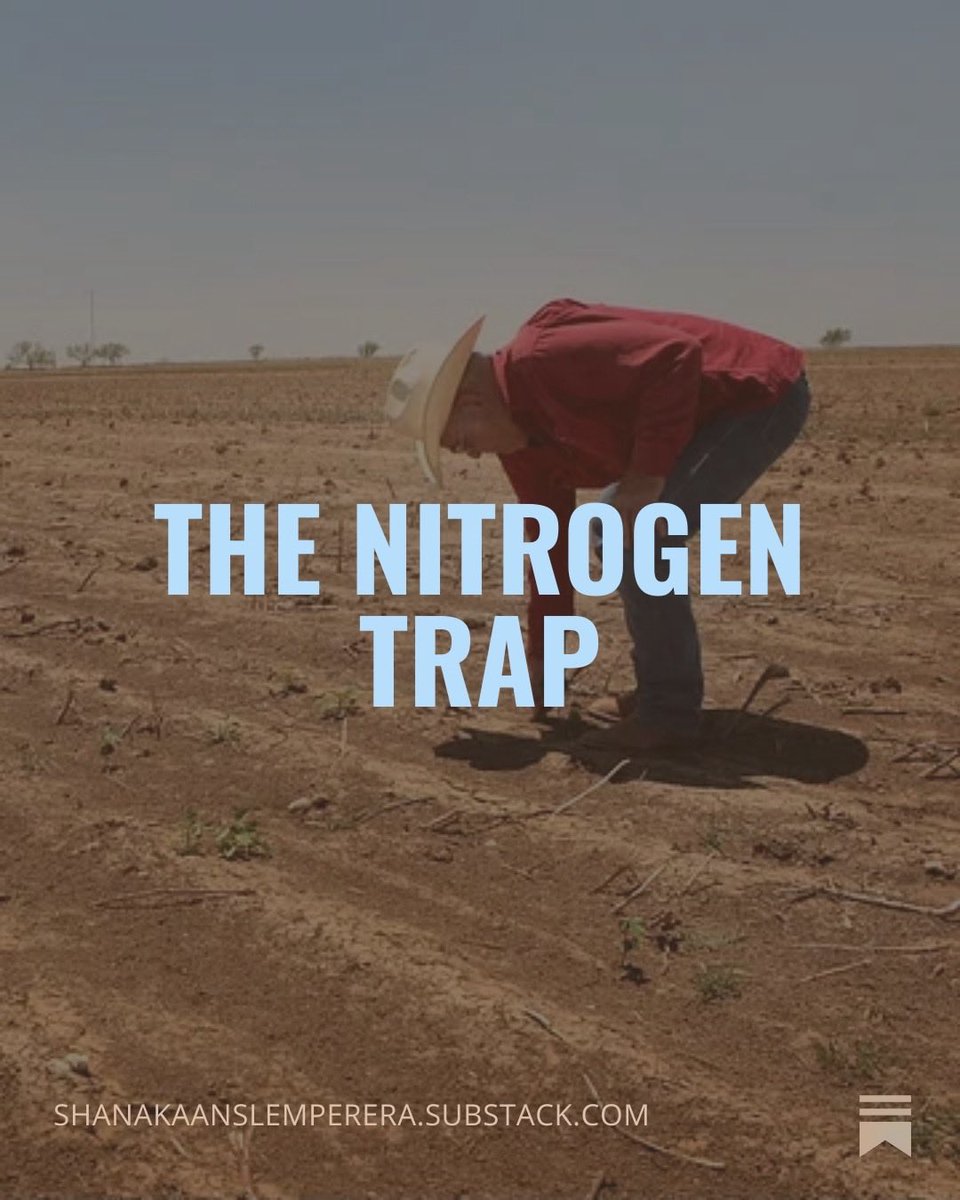
BREAKING: While the world debates oil prices and war strategy, the actual crisis is unfolding in silence. The molecules that produce half the planet’s food are physically trapped behind a war zone. And the biological window to apply them closes in weeks. Not months. Weeks. This is not a drill. Roughly one-third of all seaborne fertilizer trade passes through the Strait of Hormuz according to UNCTAD. Nearly 49% of globally traded urea is tied to conflict-exposed exporters. Nearly half of global sulfur trade, the chemical without which phosphate fertilizer cannot be processed anywhere on Earth, is Gulf-dependent. Transit has collapsed 97%. There is no alternative route. There is no strategic fertilizer reserve anywhere on Earth. There is no Plan B. Right now, as you read this: Bangladesh has shut five of six urea factories. Boro rice season, which produces over half the country’s grain, is underway with no domestic nitrogen supply. India is operating fertilizer plants at 60% capacity and has formally asked China for emergency urea. China said nothing and banned its own phosphate exports through August. Egypt, the world’s largest wheat importer, faces $28 billion in debt repayments while the bread subsidy feeding 69 million people hemorrhages money at prices it never budgeted for. Sudan, already in confirmed famine, sources 54% of its fertilizer from the Gulf. WFP shipping now takes 25 extra days rerouting around the war zone. Australia imports virtually all its urea, two-thirds from the Gulf, and its entire heavy trucking fleet runs on AdBlue made from the same urea that is not arriving. No urea, no AdBlue, no freight, no groceries on shelves in Sydney. 318 million people were at crisis-level hunger BEFORE February 28. The number that should haunt every policymaker on Earth: the yield response to nitrogen is not linear. It is quadratic. In wealthy countries that over-apply fertilizer, a 15% reduction costs maybe 3% of yield. In the Global South where farmers already apply one-seventh the global average, the same reduction pushes crops off a biophysical cliff where production does not decline. It collapses. Sri Lanka proved this in 2021. One season without synthetic fertilizer. Rice output collapsed 40%. Government fell. Now multiply Sri Lanka across thirty countries simultaneously. During a potential El Nino that Skymet says carries a 60% chance of below-normal Indian monsoon. While 51% of US corn-growing areas are already in drought. While Australia’s root-zone soil moisture sits in the lowest 10% since 1911. While corn farmers are abandoning nitrogen-intensive planting because they cannot afford $900-per-ton ammonia against $4.50 corn. While the Fed is trapped at 3% core PCE with no room to cut and food inflation about to surge through every grocery aisle in America six months from now. Nobody is talking about this. CNBC leads with oil. Bloomberg leads with equities. The Pentagon leads with strike counts. But the actual weapon of mass destruction in this conflict is not a missile. It is a calendar. The Corn Belt needs nitrogen by mid-April. India needs to prep Kharif by May. Australia needs urea by June. Miss those windows and no subsequent intervention reverses the yield loss. The food is not decided by diplomats in six months. It is decided by soil chemistry in the next six weeks. The prices hit your table by Christmas. Both sides rejected ceasefire talks this week. The world spent fifty years preparing for an oil shock. It spent zero years preparing for a fertilizer shock. Half of humanity eats because of a single industrial process that runs on natural gas from the Persian Gulf, exits through 21 miles of water that are currently mined, uninsured, and unescorted. The planting window does not care about your geopolitics. It is closing. Full analysis: open.substack.com/pub/shanakaans…
Shanaka Anslem Perera ⚡ tweet media
Shanaka Anslem Perera ⚡@shanaka86

BREAKING: The world spent fifty years and hundreds of billions of dollars building Strategic Petroleum Reserves so that no geopolitical shock could starve civilization of energy. Nobody built the equivalent for fertilizer. That is the most expensive oversight in the history of modern statecraft, and you are about to pay for it at the grocery store. The Strait of Hormuz does not merely carry 20% of global oil. UNCTAD estimates roughly one-third of all seaborne fertilizer trade passes through it. The Fertilizer Institute estimates that conflict-exposed exporters account for nearly 49% of global urea exports and nearly half of global sulfur trade. Since February 28, daily ship transits have collapsed by 97%. Here is what almost nobody understands about why this is not "just another commodity spike." It was not the missiles that closed the strait. It was the insurance. Multiple P&I clubs cancelled war-risk extensions for the Gulf after 26 months of Red Sea losses had already depleted their Solvency II capital buffers. War-risk premiums surged from 0.25% to as high as 5% of hull value per transit. A urea cargo cannot absorb that. The economics of fertilizer shipping through Hormuz became impossible before a single mine needed to detonate. The Trump administration announced a $20 billion sovereign-backed reinsurance facility with Chubb as lead underwriter. There is no confirmed public evidence that a single fertilizer vessel has used it. Insurance pays for financial loss. It does not intercept anti-ship missiles. Physical security remains the binding constraint, and the US Navy confirmed on March 12 it is "not ready" for commercial escorts. Now here is the part that should terrify every allocator on Earth. Agriculture runs on biological deadlines. Corn Belt farmers need nitrogen applied by mid-April. Indian Kharif season prep starts in May. Australian winter crop needs urea by June. These are not financial deadlines that reprice. They are photosynthetic deadlines that, once missed, produce irreversible yield loss. A diplomatic breakthrough on April 15 does not help a farmer who needed fertilizer on April 1. And the yield math is nonlinear. Wall Street models fertilizer-to-output as proportional. It is not. The response is quadratic. In developed systems that over-apply nitrogen, a 15% reduction costs 2-5% of yield. In the Global South where farmers already under-apply, the same reduction pushes crops off a biophysical cliff. Sri Lanka proved this in 2021 when a sudden fertilizer ban collapsed rice production 40% in a single season and brought down the government. The market is pricing a 45-day disruption. The insurance architecture says 120 days minimum. Even after a hypothetical ceasefire, Solvency II capital rebuild, reinsurance treaty renegotiation, and vessel re-underwriting take months. The Red Sea precedent: 26 months after Houthi attacks began, war-risk premiums never returned to pre-crisis levels. Both sides are rejecting negotiations. Trump rebuffed ceasefire mediation March 14. Iran's foreign minister on March 15: "We never asked for a ceasefire." Meanwhile: 51% of US corn areas in drought. El Nino favored by June at 62% probability. Skymet assigns 60% chance of below-normal Indian monsoon. Bangladesh has shut five of six urea factories. India formally asked China for urea on March 12. Egypt faces $28 billion in debt repayments while importing 12.7 million tonnes of wheat. WFP identifies 318 million people already at crisis-level hunger. The world stockpiled oil but forgot to stockpile the molecules that produce half its food. The clock is the position. Full analysis in the link! open.substack.com/pub/shanakaans…


English
114
1.2K
2.1K
232.3K
Greg
Greg@Greg_Insightag·
@sizov_andre We are entering the hopeium phase of the market. When famers promise themselves that they will sell as soon as it goes back up. 🤣
English
0
0
7
883
Andrey Sizov
Andrey Sizov@sizov_andre·
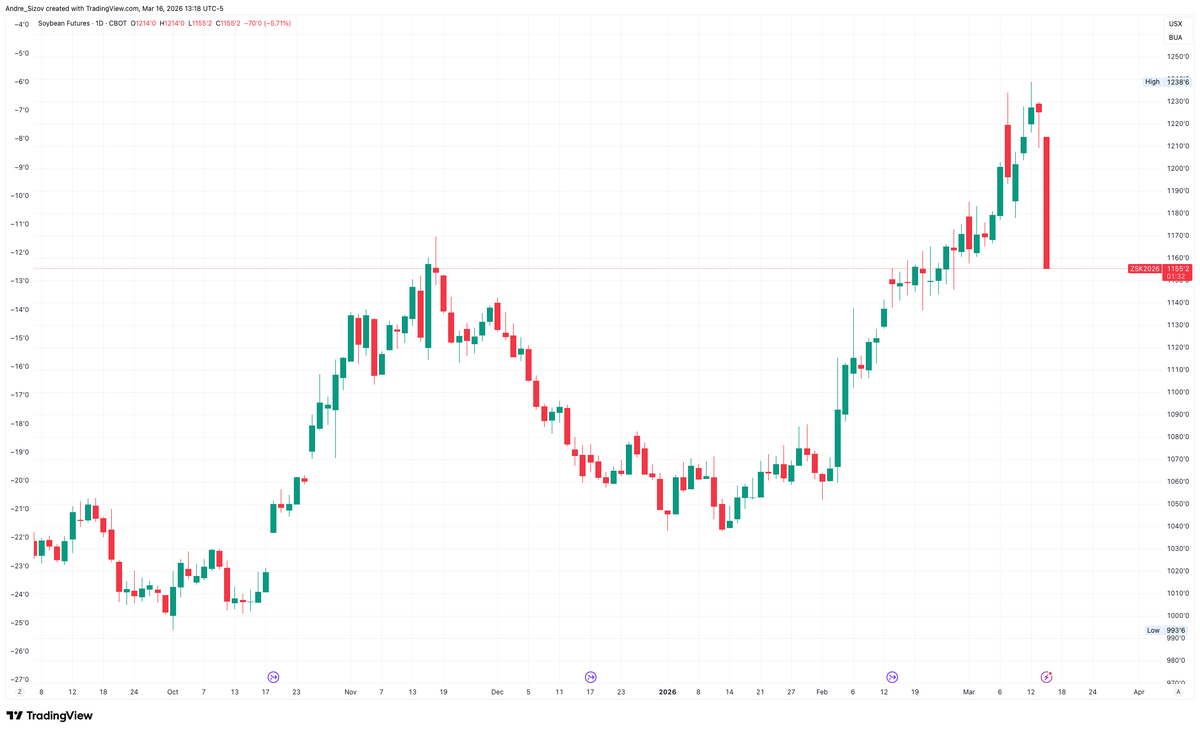
Everyone: the ag rally is coming! Market: #soybeans limit down. Welcome to the wonderful world of agriculture! #oatt
Andrey Sizov tweet media
English
14
22
229
23.6K
Greg retweetledi
MERICA MEMED
MERICA MEMED@Mericamemed·
The Boogie Blaster 3000
English
285
3.1K
28.1K
1.7M
Greg retweetledi
Topher Field
Topher Field@TopherField·
WWIII has been cancelled until further notice! Yes really, it's time to put your 'end of the world' decorations away and save them for another day.
English
76
140
615
14K
Greg
Greg@Greg_Insightag·
@farmersgrowit @sizov_andre Maybe we see farmers use the lower end of their fertilizer recs this year. Nothing major, but enough to slightly change the balance sheet? $5 dec corn?
English
0
0
2
49
Mark Modra
Mark Modra@farmersgrowit·
@sizov_andre @Greg_Insightag Good question. I think supply should be ok; delayed potentially and pricey but really have no idea given the poor communication by the cos. Ships are getting through the strait and production is ok so should be no reason to see fert pricing much different than normal.
English
1
0
1
79
Andrey Sizov
Andrey Sizov@sizov_andre·
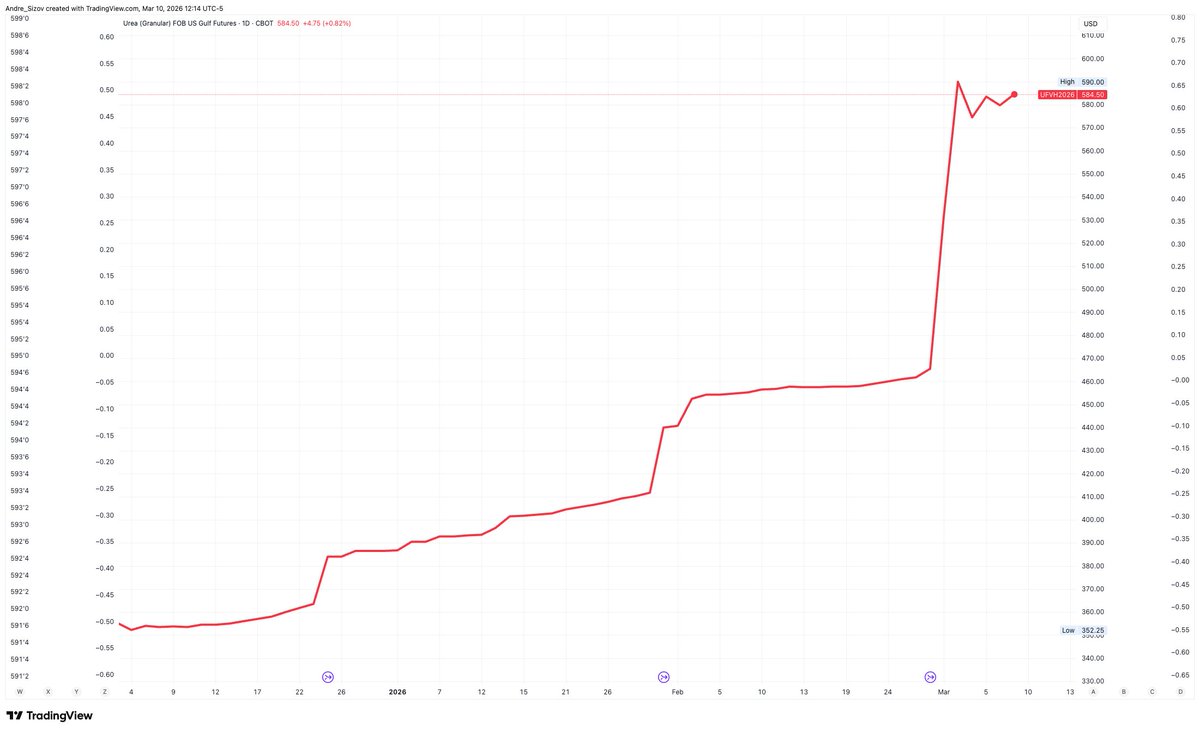
Good news: no need to waste your time on those fertilizer flow charts by region. Bad news: nitrogen fertilizers are still about +30% - and not going down. I’ve been watching the many charts and takes about who will be hit the hardest. Some say: “We’re fine — we don’t buy from the Middle East.” Others: “We’re in big trouble — we rely on the Middle East and we’re DOOMED” That’s not really how commodity markets work. Nitrogen fertilizers are largely interchangeable. It doesn’t matter that much whether a country usually buys from the Middle East or from Russia. Trade flows will adjust - some countries will suffer a bit more, others a bit less. But if the market tightens, prices rise for everyone. Unlike oil, fertilizer markets have barely reacted to Trump’s promises to quickly end the war. Urea prices remain roughly +30% compared with the start of the war. #iran #oott #oatt #sizovreport
Andrey Sizov tweet media
English
6
15
65
10.3K
Greg
Greg@Greg_Insightag·
@sizov_andre @farmersgrowit I would agree that its going to be single % Maybe 160 -320 (1 or 2 quarters) acres of a 3000 acre farm. The biggest surprise is right now how few farmers are locking in New Crop canola at this level. $720 Jan 2027 is a gift.
English
1
0
2
39
Greg retweetledi
Electroverse
Electroverse@Electroversenet·
Almost half of the world's food supply relies on synthetic fertilizer. That fertilizer is made using the Haber–Bosch process, which requires vast amounts of natural gas to create ammonia. Without it, global food production would collapse. Of today's 8 billion people, over 4 billion are fed directly by synthetic fertilizer. Without it, the sustainable population would fall to about 3.5 billion. Natural gas isn't just a fuel, it's food. Eliminating it in the name of Net Zero isn't 'climate policy', it's population control.
English
46
238
530
31.5K
Greg retweetledi
Fred Butt
Fred Butt@FredButt6·
Under the hoe
English
0
5
52
16.6K
Greg retweetledi
Ryan Gerritsen🇨🇦🇳🇱
Ryan Gerritsen🇨🇦🇳🇱@ryangerritsen·
This is the Fraser Institute President Niels Veldhuis on BC's property crisis. He’s exactly right. Who will want to ever invest in a Country where at any moment could have their private property taken away from them.
English
21
333
769
10.6K
Greg retweetledi
StockMarket.News
StockMarket.News@_Investinq·
Oil up, Markets down, the chaos has officially arrived. Stop watching the red candles and start watching the legends. WATCH & SAVE the only strategy that survives a crash.
English
35
549
3.2K
368.1K
Greg retweetledi
Dave Brock
Dave Brock@drbrock37·
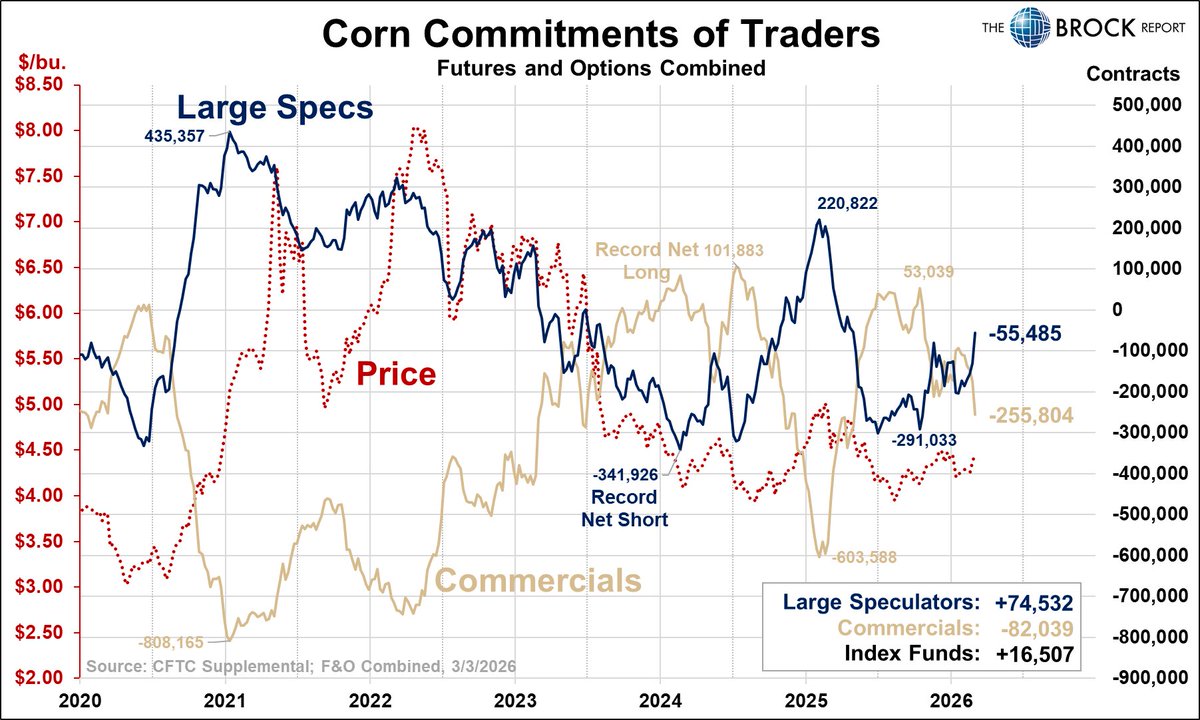
Money is pouring into ag commodities. Corn for example, the biggest week of large spec corn buying since November... And this does not include the 40¢ rally from Wednesday's low to Friday's close.
Dave Brock tweet media
English
5
44
214
20.4K
Greg retweetledi
Cass Blackburn
Cass Blackburn@FiftyFootNest·
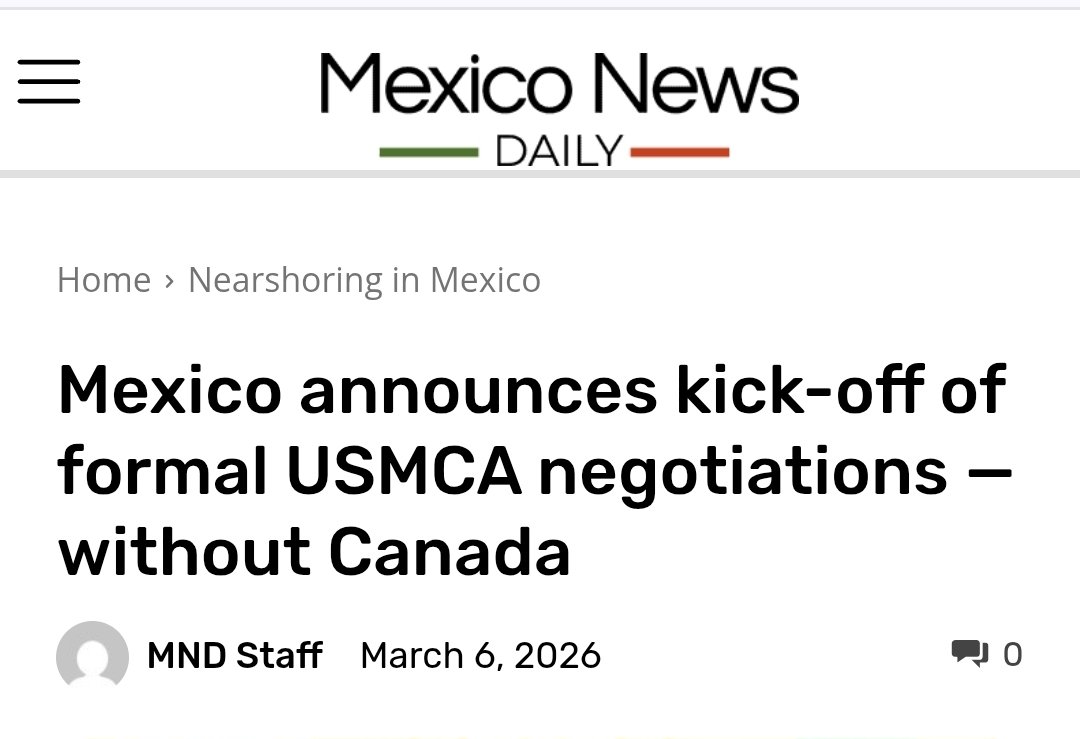
Mexico has announced its already engaged in USMCA negotiations with America...without Canada. Yes, you read that right. We're out. The biggest mistake since electing Trudeau was doing it again with Carney. No one takes Canada seriously anymore. No one. But...ELBOWS UP!
Cass Blackburn tweet media
English
533
1.8K
5.6K
92K
Greg
Greg@Greg_Insightag·
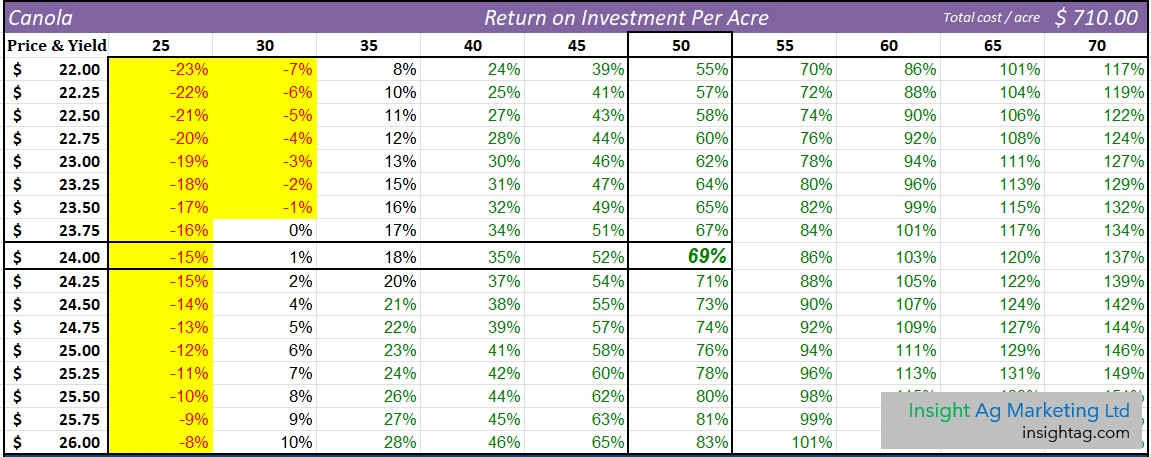
@buperac Lets stir the pot and assume @GrainShark is correct and canola goes to $24/bu and fertilizer costs push the Cost per acre to $710/ac. One would have to assume the geopolitical tensions have moved profits up to $490/acre or wild 69% ROI.
Greg tweet media
English
0
0
0
132
Greg
Greg@Greg_Insightag·
@GrainShark Beside a War premium what would push canola up that high? I know 1200 is the high on july 2022. In my opinion i don't think the S&D is tight enough to warrant a rally of that size. Maybe 845 (19/bu) at most.
Greg tweet media
English
0
0
0
433
Grain Shark 🦈
Grain Shark 🦈@GrainShark·
Canola is going to $24/bu.
GIF
English
9
0
35
8.3K
Greg retweetledi
Tablesalt 🇨🇦🇺🇸
Tablesalt 🇨🇦🇺🇸@Tablesalt13·
Canada approached Mexico last year about cutting the USA out of USMCA ....and Mexico said no! Now, Mexico is CUTTING Canada out of USMCA!!!
Tablesalt 🇨🇦🇺🇸 tweet media
English
316
1.4K
7.2K
120.2K