@RutgersAltRoute I spread kindness by welcoming others into group work, listening without any judgment, offering help when someone seems overwhelmed, promoting collaboration and reinforcing positive behavior. Small check-ins with students each day create a safer, kinder space in the classroom.
For our final question, be specific, as your practices can give other educators ideas to consider. #TeacherEd#SafeSchools
Q5: Kindness can be an antidote to bullying, it builds empathy and creates positive environments. Share how you spread kindness in or beyond the classroom.
@RutgersAltRoute A5: I spread kindness by letting the students know how thankful I am to be an ESL teacher and how much joy teaching them brings me. I do this when we have 'Conversation Time' and when I express enthusiasm when they succeed in lessons. #TeacherEd#SafeSchools
@_coco_lolo_@RutgersAltRoute@_coco_lolo_ great post! Making sure students understand the difference is a great way to make sure everyone, both staff and students are on the same page . Thanks for sharing!
@RutgersAltRoute A4: We can teach students the difference between upstanders and bystanders. Teaching them safe strategies to such as reporting and offering support. We can also foster a culture of kindness in classroom and schools settings. #TeacherEd#SafeSchools
Every year, bullying impacts countless young lives, but silence helps it grow. #TeacherEd#SafeSchools
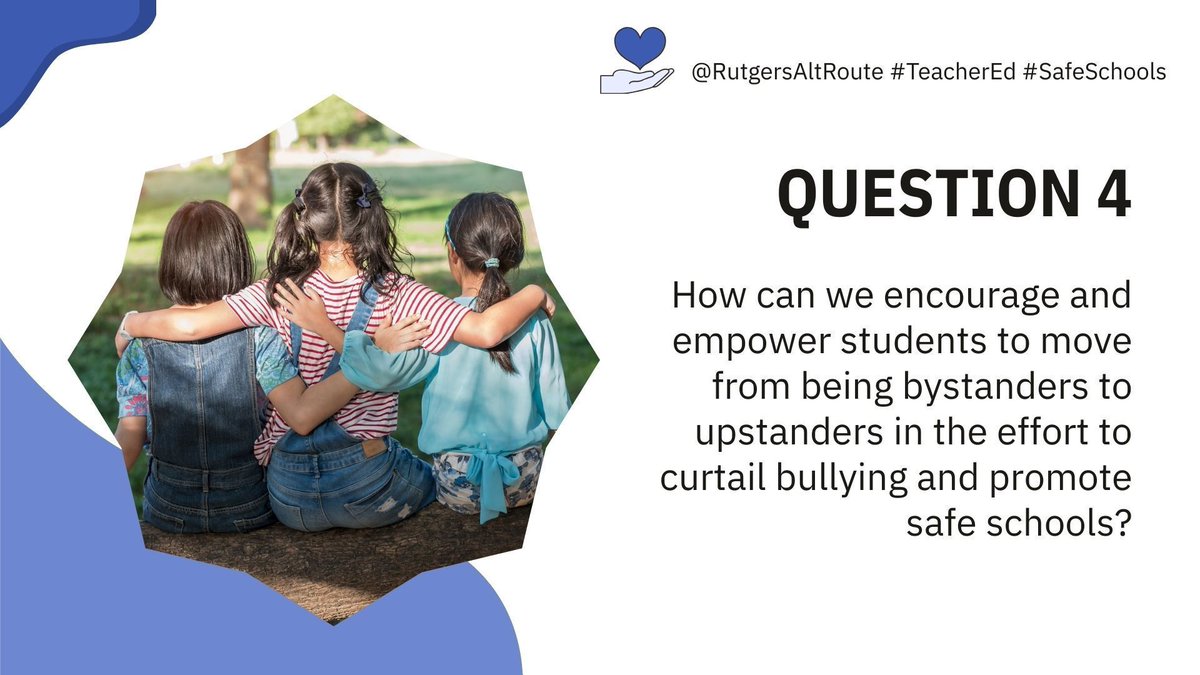
Question 4: How can we encourage and empower students to move from being bystanders to upstanders in the effort to curtail bullying and promote safe schools?
@RutgersAltRoute A4: Students must understand they’re part of a community where people care for one another. From there, they learn that caring includes standing up for others. History lessons, films, and fables help teach kindness and the importance of being an upstander. #TeacherEd#SafeSchools
@KimberlyWares@RutgersAltRoute Great post! It is challenging to not judge when getting involved in a conflict, but refraining from judgement makes a huge difference in conflict resolution outcomes. @KimberlyWares thanks for sharing.
@RutgersAltRoute Adults should listen without judgment, take reports seriously, and ensure student safety. Teaching coping skills, involving counselors, and sharing trusted resources help students feel supported. #TeacherEd#SafeSchools
A student’s role in bullying can vary. They can bully, be bullied, or witness bullying. Think about the social and emotional needs of those involved. #TeacherEd#SafeSchools
Q3: What are effective ways for adults to respond or resources to share when students seek their support?
@RutgersAltRoute A3 Adults should provide an environment where students feel heard. Validating their feelings builds trust. If the student is in danger, they should be removed from the situation, monitored, and the appropriate staff should be notified
#TeacherEd#SafeSchools
@RutgersAltRoute A2 Physical altercations have occurred in school, which make it difficult for students to focus on the academics and day-to-day. If you are worried about physical threats, you are not fully engaged or feel fully comfortable in the classroom.
Harassment, intimidation, and bullying threaten our best #safeschools efforts. They range from verbal and physical assaults to social and cyber. #TeacherEd#Safeschools
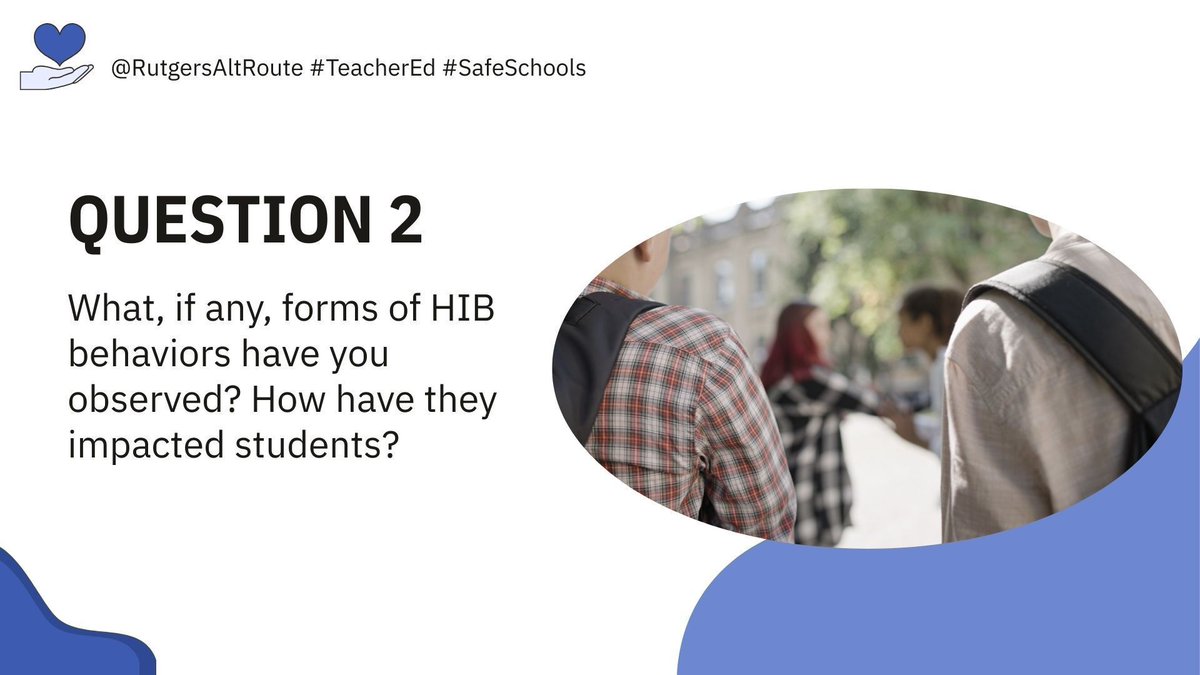
Q2: What, if any, forms of HIB behaviors have you observed? How have they impacted students?
@RutgersAltRoute A2: I have seen students laugh at a Special Ed student who has trouble with speech while she was speaking in front of the class. This made the student more afraid to speak in front of the class than she initially was.
#TeacherEd#SafeSchools
@RutgersAltRoute A1. By building strong relationships with my students from day one. Fostering a positive atmosphere where they can approach me and I actively listen to them. Also, letting them know about the resources we have at the school so they may receive extra support. #TeacherEd
For Q1, think about your classroom environment and practices, including the physical setup, classroom management, and social-emotional skills you’ve taught #TeacherEd#SafeSchools
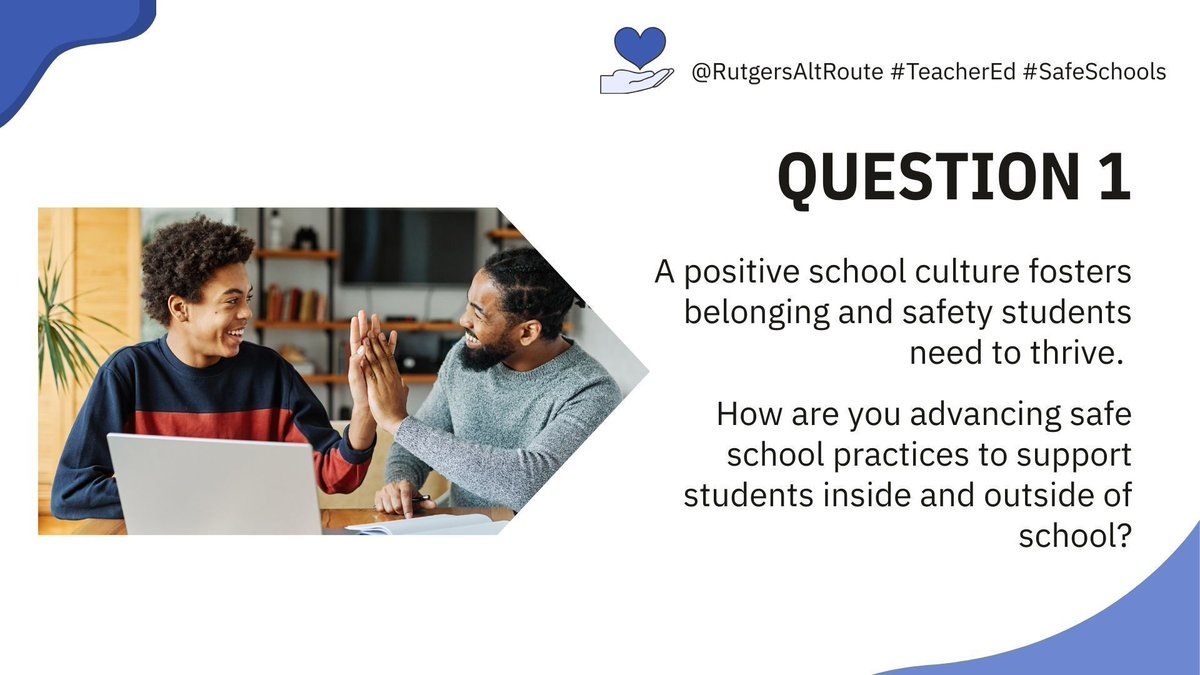
Q1: How are you advancing safe school practices to support students inside and outside of school?
@RutgersAltRoute A1: As an ESL teacher I make sure activities allow students to feel comfortable speaking conversational English in front of others in addition to talking about how they feel. I make sure that students are respectful to their peers regardless of level #TeacherEd#SafeSchools
Welcome to the #TeacherEd#SafeSchools chat! Let us know you're here by replying with your name & what you teach.
REMINDER for Rutgers Alternate Route teachers please complete the SIGN IN form to have your participation in the chat documented: go.rutgers.edu/SafeSchoolsIN
@RutgersAltRoute TikTok is a great resource to be exposed to different teaching strategies/resources that others are using. I have found plenty of websites and techniques recommendations from other teachers on TikTok. #TeacherEd#EdTech
In Question 5, we will examine how teachers use technology to connect with resources and each other. Tag any professional communities you are a part of! #TeacherEd#EdTech
What's your experience leveraging technology to expand knowledge and exchange ideas with other educators.
@RutgersAltRoute A5: My team and I use tools like Benchmark, the ELL Data Hub, and Excel to share data, track growth, plan SGOs, and scaffold lessons. These platforms help us collaborate and make informed decisions to support individual students and groups more effectively. #TeacherEd#EdTech
@SeidnerJacob@RutgersAltRoute I couldn't imagine being an educator without tools like email and Google classroom. The pace of today's world demands this tech.
We want to hear your ideas for engaging parents and families. Consider how you connect students’ out-of-school learning to form partnerships with families. #TeacherEd#EdTech
How do/can you use technology to facilitate active and regular engagement with parents and caregivers?
@RutgersAltRoute This is a challening one. Cheating of course comes to mind first, but I do worry with the ease of finding quick responses students won't challenge their thinking and push their critical thinking muscles. A.I. can write a script, but without a human behind it it seems cold.
@AMWheelock@RutgersAltRoute I share these concerns. I think ultimately teachers need to let students know that for testing purposes, they will need to actually understand the material and they disservice themselves when grading time comes if they don't actually understand what use AI for.
While many educators find AI very useful, there are clear challenges with this technology. Let’s break down the challenges of using AI in education. #TeacherEd#EdTech
Question 3: What challenges does artificial intelligence use in education present? How can we address them?