Carl-Gustav Lindén

4.3K posts

Carl-Gustav Lindén

Carl-Gustav Lindén

@Gusse

Professor (Data/Computational Journalism) at @UiB. Multitasker OS: writer, researcher, communications specialist, journalist and more.

Helsinki, Finland. Katılım Nisan 2008
2.6K Takip Edilen1.5K Takipçiler
Carl-Gustav Lindén retweetledi
Aakash Gupta
Aakash Gupta@aakashgupta·
The New York Times made news the loss leader for a $2 billion digital revenue machine, and this chart is the receipt. News-only subscribers dropped 65% since June 2022. Bundle subscribers grew 227%. That looks like a news collapse. But the NYT deliberately killed its standalone news product. They stopped marketing it. They made it nearly impossible to buy a news-only subscription on their website. They priced the full bundle (News + Games + Cooking + Athletic + Wirecutter) at $2/month introductory, cheaper than a standalone Games subscription. News-only ARPU is $13.33. Bundle ARPU is $12.92. Single non-news product ARPU is $3.36. Those 4.3 million single-product subscribers paying $3.36/month? They’re not the business. They’re the funnel. The NYT CEO said it explicitly on the earnings call: single products are “funnels to get people to subscribe” to the bundle. Games now accounts for over 50% of time spent inside the NYT app. Wordle, Connections, and the Mini pull 10+ million weekly players who never intended to read a news article. But half of all NYT subscribers now pay for the bundle, and bundle subscribers retain longer, engage more, and accept price increases. The bundle just went from $25 to $30/month. The result: digital revenue crossed $2 billion for the first time in 2025. Free cash flow hit $550 million. Adjusted operating margins reached 24% in Q4. Berkshire Hathaway just took a billion-dollar position. While the Washington Post cut 300 journalists last week, the Times added 1.4 million subscribers. This chart shows a news company that built an attention ecosystem where Wordle gets you in the door, Cooking keeps you at breakfast, The Athletic owns your commute, and by the time you think about canceling, you’d lose four products instead of one. The NYT figured out that the way to fund journalism in 2026 is to make sure you can’t quit the crossword.
Fiscal.ai@fiscal_ai

The New York Times is no longer a news company. $NYT

English

125
653
3.2K
1.1M
Carl-Gustav Lindén retweetledi
Republicans against Trump
Republicans against Trump@RpsAgainstTrump·
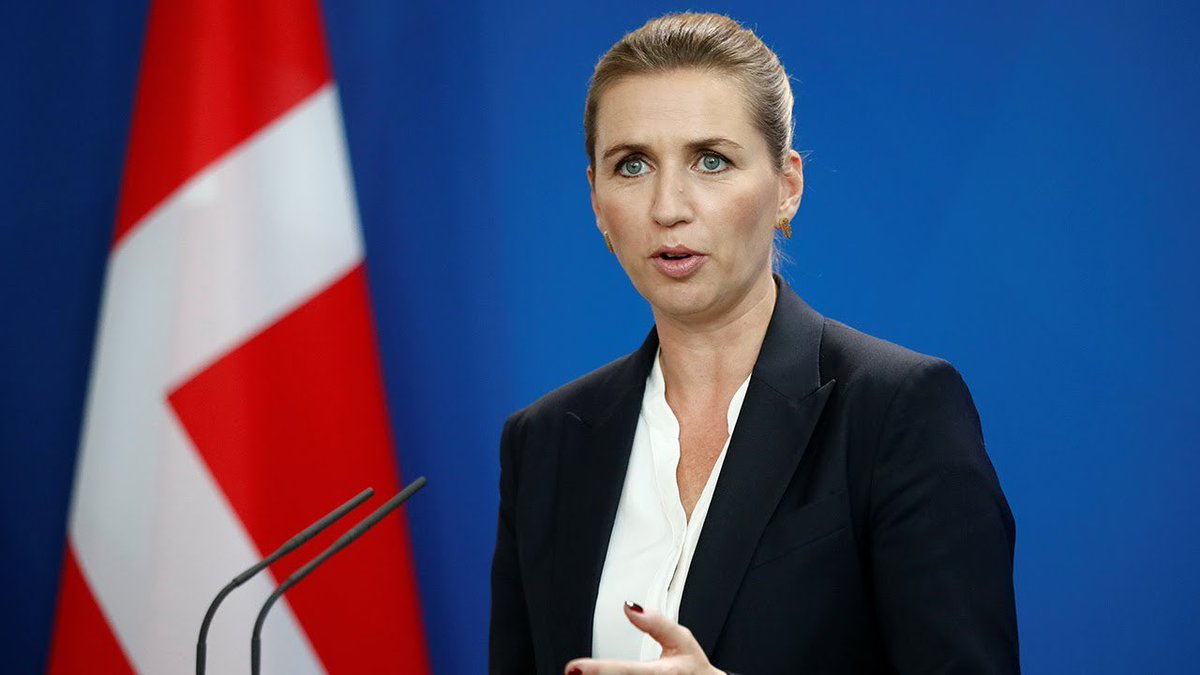
NEW: Donald Trump did not back down from threats during a conversation with Danish Prime Minister Mette Frederiksen. According to Frederiksen, Trump reiterated the possibility of imposing tariffs if Denmark does not give up Greenland. "The US side suggested that, unfortunately, there might be a situation where we collaborate less with Americans in the economic sphere.” “We are in a serious situation” Frederiksen stated. Russia and China couldn't be happier to see the US weakibgbitself by picking fights with its allies.
Republicans against Trump tweet mediaRepublicans against Trump tweet media
English
1.6K
3.5K
19.7K
1.5M
Carl-Gustav Lindén retweetledi
Rasmus Kleis Nielsen
Rasmus Kleis Nielsen@rasmus_kleis·
Come work with me! I'm looking for postdocs to work together on a project called "Power over platforms?" focused on civil society groups and others who seek to influence how platform companies behave. Project outline: rasmuskleisnielsen.net/2024/11/11/new… Links in🧵w/details on the jobs 1/2
English
4
101
166
26.4K
Carl-Gustav Lindén retweetledi
Barack Obama
Barack Obama@BarackObama·
Nobody says it better than Michelle. Watch this – and then make sure you’re ready to vote tomorrow: IWillVote.com
English
16K
38.9K
246.4K
32.1M
Carl-Gustav Lindén
Carl-Gustav Lindén@Gusse·
@markdeuze Maybe not a consortium but a loose association of disjointed academics without a clue? DAWAC
English
1
0
1
324
Carl-Gustav Lindén retweetledi
Mark Deuze
Mark Deuze@markdeuze·
FYI I would like to report that, as an academic, I have nothing in the pipeline, no grant applications, no membership in any consortia, and no work planned regarding AI, platforms, or misinformation. I suspect they'll soon drag me off campus kicking and screaming. #medialife
English
10
8
170
15K
NORDIS
NORDIS@nordishub·
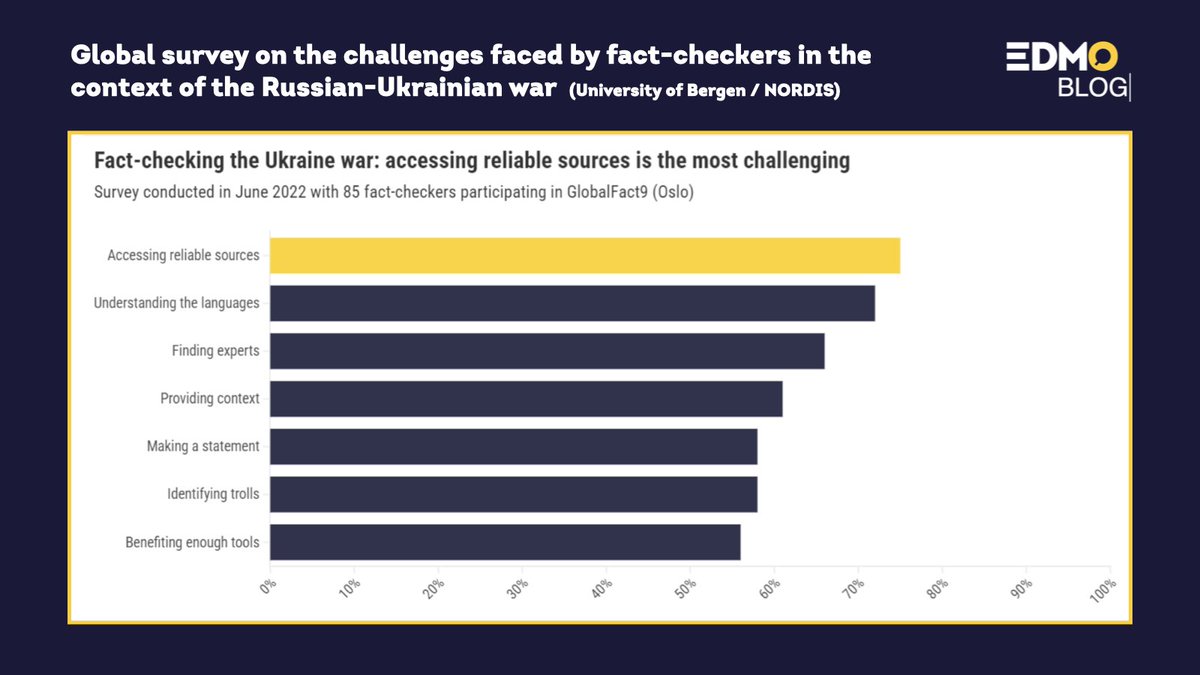
Laurence Dierickx from NORDIS will present “Dealing with biases and hallucinations: The ethical uses of (gen)AI tools in the European news media sector” at the 10th European Communication Conference on Communication & Social (Dis)order. 📅 Sept 24-27, 2024 📍 Ljubljana, Slovenia 🔗 ecrea2024ljubljana.eu #ECC2024 #AIResearch #Journalism #EDMO #NORDIS
English
1
1
7
566
Carl-Gustav Lindén retweetledi
Gary Marcus
Gary Marcus@GaryMarcus·
I really can’t be part of this any more. I hope you will read my book (giving away the profits) Taming Silicon Valley, which comes out Tuesday. In light of Elon’s apparently advocating political violence against Harris, the need to speak truth to power seems even more urgent. Goodbye, and good luck.
English
54
36
392
77K
Carl-Gustav Lindén retweetledi
Daron Acemoglu
Daron Acemoglu@DAcemogluMIT·
A thread about what is wrong with the influence of Elon Musk and other tech billionaires. Another thread about content moderation will follow later this week. Obviously, the problem isn’t that Musk is expressing his opinions, which is his freedom of speech. It isn’t that Musk has turned into a big supporter of Trump. It isn’t even that Musk is posting AI-generated fake images of Kamala Harris: cnn.com/2024/09/03/med… My concerns are more sociological and political economic. My starting point is that in any society some individuals have more, much more power than others. Once upon a time, this may have been linked to physical strength or military prowess. Today, it is often related to what Simon Johnson and I called “persuasion power” in Power and Progress. amazon.com/Power-Progress… Persuasion power is rooted in status or prestige: those with greater status can more easily persuade others. Where status comes from and how unequally it is distributed vary greatly across societies. In the United States, status became linked to money and wealth, and income and wealth inequality skyrocketed. This meant a very steep status hierarchy. That is problematic for several reasons. First, status – and relatedly persuasion power – are largely zero-sum affairs. More status for somebody means less status for another. A steeper status hierarchy makes some people happy, and others unhappy and dissatisfied. Investment in zero-sum activities is often inefficient and excessive, as compared to investment in non-zero-sum activities. Compare, for example, the social value of spending money on pure gold multi-million-dollar Rolex watches versus spending time to learn some new skills. Both may have intrinsic values for the investors (due to the beauty of the watch and the pride of acquiring new knowledge). But, on the whole, the first type of investment signals that you are richer and more able to undertake conspicuous consumption, and it can easily get out of hand – with people spending huge sums in order to edge ahead of others they see themselves in competition with. The second type of investment, on the other hand, increases your human capital also contributes to society. The first is largely zero-sum the second is largely non-zero-sum. Second, there are evolutionary and social foundations for linking persuasion power to status and prestige – it is individually rational to learn from people who have expertise and it is reasonable to link this expertise to success. This type of learning is also good for communities, because it enables them to coordinate on certain best practices. amazon.com/Secret-Our-Suc… But when status gets linked to wealth and wealth inequality becomes very large, this social justification is lost. Consider the following thought experiment. Who has greater expertise on carpentry? A good, master carpenter or a hedge fund billionaire? If we think about it this way, we would probably conclude the former. But when wealth becomes status, we may start attaching more and more importance to views of hedge fund billionaires on carpentry. This example was purposefully simple and sharp. Let’s take another one to see why the “wealth is status” social equilibrium is problematic. Whose views on freedom of speech you want to attach more importance to? A tech billionaire or a philosopher who has grappled with ethical questions related to the freedom of speech? Third, even more problematic is the fact that in most societies, wealth inequality has an arbitrary dimension. Take Wilt Chamberlain and Lebron James. We may argue endlessly about which one is better, but clearly, they were both exceptionally talented basketball players. Chamberlain is estimated to have had a wealth of $10 million at the time of his death. Lebron James’s wealth today is estimated at $1.2 billion. These different outcomes are largely arbitrary. Chamberlain happened to live at a time when there were sports stars did not get compensated as much. This is partly about technology (everybody can watch Lebron James today), partly about norms (we’ve have made it much more acceptable for people to be paid hundreds of millions of dollars), and partly about taxes (if the US today had the kinds of tax rates that it had in the 1950s, it would not generate such large wealth inequality). Similarly, if the tech sector did not become so central to the economy and did not have a winner-take-all aspect (which was also partly a choice of how we organize several markets and sectors), tech billionaires would not have become so rich. Bill Gates or Elon Musk are not any wiser because they are taxed less. But they have much more wealth because they are taxed so little. But then in a “wealth is status” social equilibrium, their status and social influence multiplies because they are taxed so little. Fourth, there is something even more pernicious which Simon Johnson and I explored in Power and Progress using the example of Ferdinand de Lesseps. In fact, we thought this was so important that we devoted the first full chapter, Chapter 2, of the book to it. Lesseps gained tremendous status in late 19th century France, coming to be identified as the “Le Grand Français” (the great Frenchman), because of his success (and luck) in successfully completing the Suez Canal. He showed great skills in convincing politicians both in Egypt and France and some foresight in seeing that maritime international trade would become very important. He was also tremendously lucky in that his hopes that technological solutions to the way that he wanted to build the canal (without locks, which was initially impossible because of the amount of digging excavation that would be necessary) were developed just-in-time to save the project. But then what did Lesseps do with this prestige? He became reckless, unhinged and cocky, pushing the Panama Canal project in an unworkable direction, which ultimately led to the deaths of more than 20,000 people and to financial ruin for many more (including his own family). Persuasion power also makes you unrestrained, which can be socially dangerous and disruptive. Simon and I thought that Lesseps’s story was relevant precisely because the same dynamics were being played out with many tech leaders today. Fifth, some very rich people choose not to use the status conferred on them by their wealth to centrally influence critical debates (think of Warren Buffett). Some like Bill Gates or Elon Musk do. It follows as a corollary of what I have argued so far that this is not desirable, because their status is excessive, and they are now influencing key social choices beyond their expertise. It is not tech billionaires’ fault that US policy is fueling massive inequality (though they benefit from it handsomely and many of them then use their status in order to keep taxes low and regulations light). But it is their responsibility if they start misusing the huge status that this wealth inequality affords them. It is their responsibility if they turn into bullies and start punching down on people who disagree with them, because they themselves start believing that everybody should respect their opinion on every topic. It is absolutely their responsibility if they use their platform for further polarizing society. Finally, if we are in such a situation the last thing we want is to give even bigger forums – for example, in the form of their own social network – to these people who already have excess status and influence, and this is doubly true if they have a tendency to punch down.
English
439
519
2.1K
690.4K
Carl-Gustav Lindén retweetledi
Mark Deuze
Mark Deuze@markdeuze·
From my forthcoming book: two-thirds of media professionals (in journalism, film/TV, games, advertising, music & social media) say their work negatively impacts their mental health and wellbeing – despite loving their colleagues and their craft. linkedin.com/feed/update/ur…
English
0
11
25
3K
Carl-Gustav Lindén
Carl-Gustav Lindén@Gusse·
So happy to see our chapter on AI in journalism published. No, it did not start with ChatGPT as so many seem to think. AI has been present in journalism for decades already, helping reporters in so many ways!
English
2
1
18
922
Carl-Gustav Lindén
Carl-Gustav Lindén@Gusse·
Personally, I have been quite sceptical towards the recent AI hype in journalism, not just because it is grounded in the Silicon Valley ideology. It also lacks a historical perspective.
English
0
0
2
100
Carl-Gustav Lindén retweetledi
@timnitGebru (@dair-community.social/bsky.social)
Have you heard of expert systems? Probably not. That was the "AI" that was gonna change humanity that billions were being poured into in the 80s. The same news orgs hype stuff up during "AI summers" without even looking into their archives to see what they wrote decades ago.
English
22
97
469
39.4K