

DigitalGarden
16.5K posts


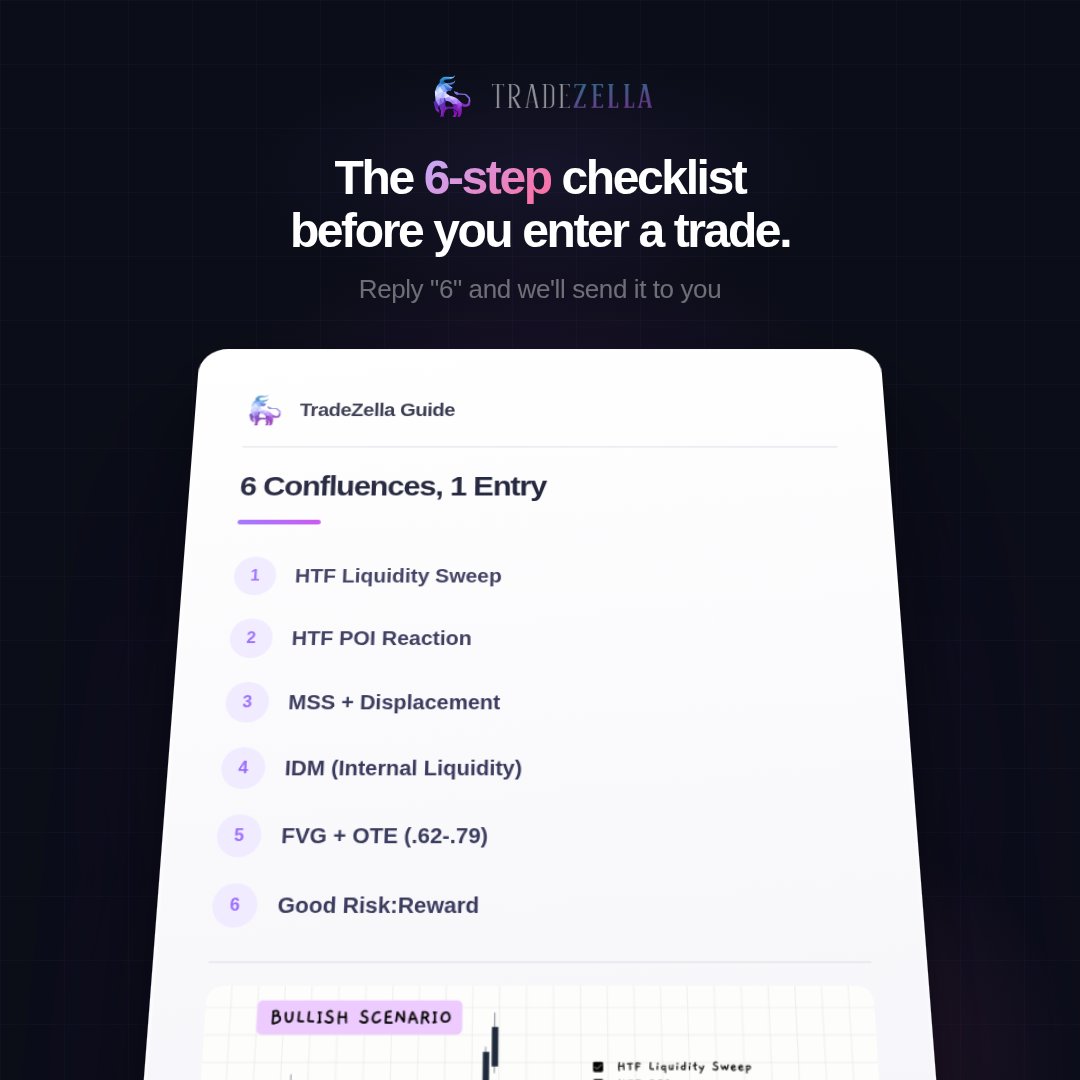
You don't need to memorize 100 setups.
6 confirmations, applied to both long and short scenarios — that's the whole model.
We broke it down step by step with chart examples.
Reply "6" and we'll send it over DMs 👇
English


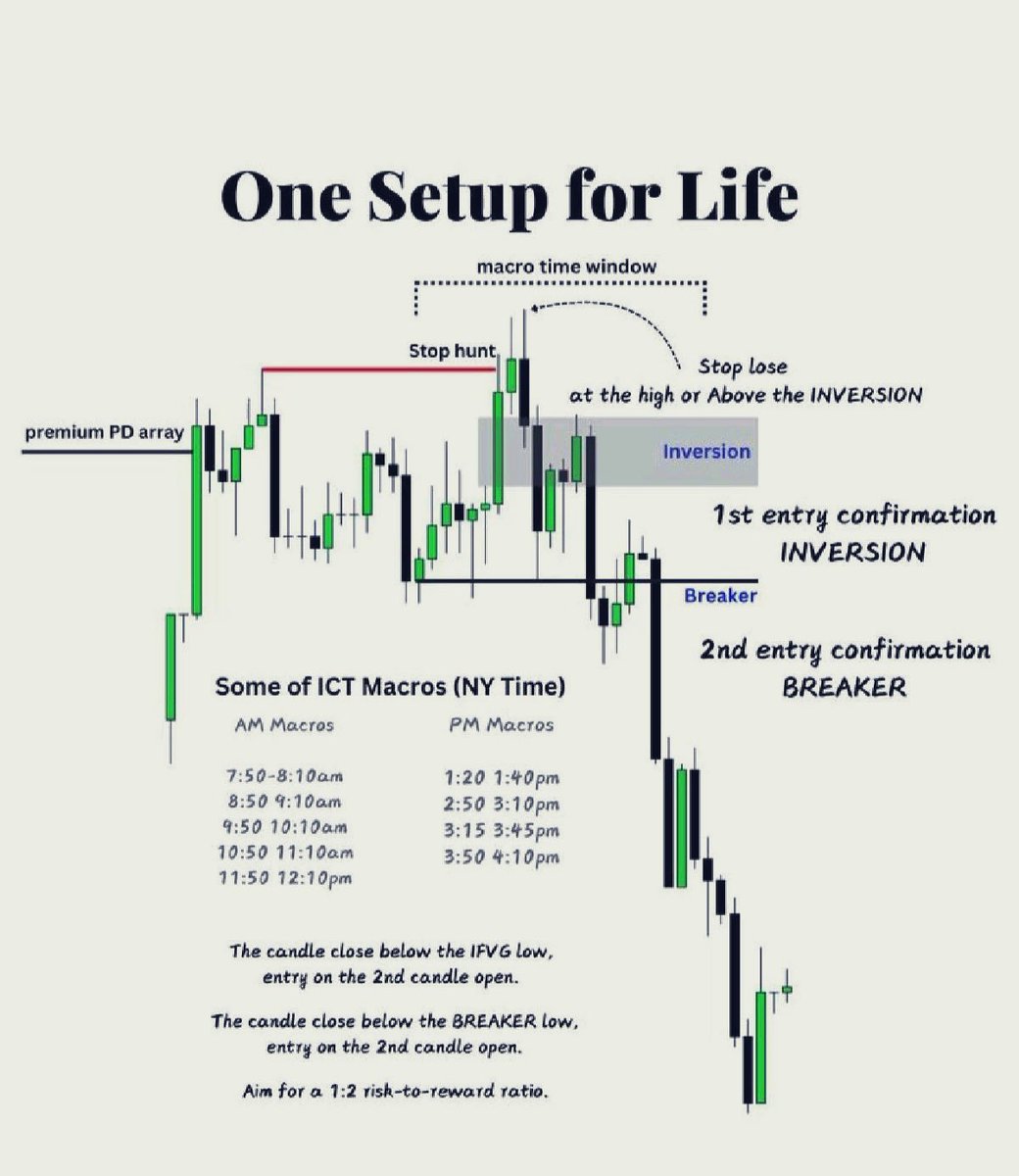
I only trade from 8:10–9:30am EST.
That’s where CRT gives me the clearest directional bias.
First, I let the market set the CRT High and CRT Low.
Then I watch which side gets swept that’s my bias.
After the sweep, I wait for the inversion and breaker to confirm the real intention.
One window.
One CRT range.
One direction.
One setup.
R'Varma@RakeshVarm56205
@elite_mentor1 Can you please tell us the perfect time and the Bias.. I am confused about the bias and execution . Please give me the clarity boss regarding the above
English
DigitalGarden retweetledi
Most traders think discipline is simply about willpower.
It’s not.
If it were, far more traders would be consistently profitable.
Most traders already want to be disciplined.
They’ve read the books.
They’ve written the rules.
They’ve promised themselves:
“This time I’ll follow my plan.”
And yet… under pressure, something else takes over.
What’s missing isn’t effort.
It’s self-awareness.
And this is where many traders get it wrong, especially independent traders.
They confuse passion with self-awareness.
They think:
“I’m obsessed with the market, I study constantly, I care deeply…”
That’s not self-awareness.
That’s intensity.
And intensity without awareness often amplifies the very patterns that sabotage you.
Real discipline is not forcing yourself to behave.
Real discipline is understanding what’s driving your behavior in the first place.
Because every trading decision is state-dependent.
You are not just trading the market.
You are trading your Inner Market.
In real time, your physiology is always shifting:
➡️Dopamine > chasing opportunity, reinforcing impulsive trades
➡️Cortisol > stress, urgency, fear-based decisions
➡️HRV > your capacity to stay regulated under pressure
At the same time:
👉Thoughts arise
👉Emotions move through you
👉Narratives get constructed - “I’m missing out”, “I need to make it back”, “This is the one”
And then…
You click buy or sell.
Most traders think that click is a decision.
But very often it’s more of an expression.
An expression of:
👉urgency
👉fear
👉the need to be right
👉the need to not miss out
👉the need to chnge how you feel
This is why willpower fails.
Because you’re asking the thinking mind to override a state it doesn’t even recognize.
Self-awareness changes the game.
When you can recognize, in real time:
** what state you’re in
** why that state is there
** what it’s pushing you to do
…you create space between impulse and action.
And that space is where discipline actually lives.
This is the work.
Not more indicators.
Not more information.
Not another strategy.
But developing a real-time awareness of your Inner Market:
➡️The physiology
➡️The emotions
➡️ The narratives
➡️ The patterns of behavior that follow
Because once you can see it clearly…
You stop using the market to regulate yourself.
You stop negotiating with your rules.
You stop needing the next trade to fix the last one.
And that’s when discipline stops feeling like force…
…and starts becoming a natural byproduct of awareness.
Most traders try to control their behavior.
The ones who actually improve learn to understand it.
That’s the difference.
If this post resonates, R/T, follow me, like, and BOOKMARK this post.
#tradingmindset #tradingpsychology $ES_F $NQ_F $SPY $QQQ
English
DigitalGarden retweetledi
Most traders are looking for better setups.
Very few are looking for a better fit.
And that’s one of the most underappreciated aspects of sustainable success in trading.
Because trading isn’t just about the market…
It’s about the relationship between you and the way you engage with it.
Trading, by nature, requires you to override deeply wired human tendencies:
> FOMO
> Loss aversion
> Urgency under uncertainty
> The need to be right
> The desire to avoid discomfort
Now layer on top of that:
There are dozens of markets
And within each market…
Hundreds of ways to trade.
So the real question isn’t:
“What’s the best strategy?”
It’s:
“What actually fits me?”
Your:
👉Risk tolerance
👉 Risk capacity
👉Time horizon
👉Ability to process information
👉Emotional reactivity
👉Level of self-control
All of that matters.
More than most want to admit.
But here’s where it gets distorted:
Social media.
Influencers.
Endless education.
Everyone is showing you their way.
Their "P&L".
Their timeframe.
Their style.
And without realizing it…
You start trying to trade someone else’s nervous system.
This is what I see all the time in my 1:1 work.
A trader struggling…
Not because they lack intelligence or work ethic.
But because they’re operating in a style that doesn’t fit who they are.
And when we start doing the deeper work…
Something shifts.
They might:
**Change timeframes
**Adjust holding periods
**Refine position sizing
**Sometimes even switch markets entirely
Not because they’re giving up, but because they’re finally aligning.
As a coach with 25 years plus experience, I've seenthis over and over.
Self-awareness is not the same as passion.
You can be passionate about trading fast…
And completely unsuited for it.
➡️You can be drawn to high frequency action…
➡️And lack the regulation required to execute it well.
➡️You can want a certain identity as a trader…
➡️That has nothing to do with what actually works for you.
And even when self-awareness starts to develop…
It often gets pulled off track by comparison.
“What are they trading?”
“How much are they making?”
“Am I behind?”
That noise disconnects you from your own signal.
Real self-awareness is quieter.
More honest.
Less exciting.
But far more powerful.
It asks:
🔑What kind of environment do I actually perform best in?
🔑When does my decision-making degrade?
🔑What level of risk can I truly tolerate—not just intellectually, but emotionally?
🔑Where does my edge align with my personality?
Because the goal isn’t to force yourself into a mold.
It’s to find the intersection between your edge and your nature.
That’s where sustainability lives.
That’s where consistency starts to emerge.
In the end, trading isn’t just pattern recognition on a chart.
It’s pattern recognition within yourself.
And the traders who last…
Aren’t the ones who copy the most.
✅They’re the ones who see themselves most clearly.
You don’t need a better strategy.
You need a strategy that fits the operator.
Because you’re not just trading the market.
You’re trading your own Inner Market.
If this post resonates, R/T, follow me, like, and BOOKMARK this post. #tradingmindset #tradingpsychology $ES_F $NQ_F $SPY $QQQ
English

DigitalGarden retweetledi

DigitalGarden retweetledi
Most traders think risk management is about protecting capital.
That’s true…
But it’s incomplete.
A more powerful way to understand it:
Risk management creates psychological space.
And psychological space is what allows you to actually use your edge.
Here’s what I mean.
In trading, everything happens fast.
Price moves.
P&L fluctuates.
Your nervous system reacts.
That reaction is the stimulus.
What you do next...clicking buy/sell, adding size, hesitating...that’s your response.
Most traders don’t realize:
Their problem isn’t strategy… it’s the lack of space between stimulus and response.
👉When risk is too large…
👉When size creeps up…
👉When too much P&L is on the line…
You collapse that space.
And when space collapses, something very predictable happens:
You stop trading your plan
And start trading your state
* Urgency replaces intention
* Reaction replaces execution
* Emotion replaces structure
This is what I see all the time in my 1:1 work.
A kind of default response pattern:
👉Big green candle > > chase
👉Red P&L >> revenge or “make it back”
👉Chop >> overtrade to relieve discomfort
Not because the trader lacks knowledge.
But because there’s no psychological space to choose differently.
Risk management changes that.
Not just financially…
But neurologically.
When your size is aligned…
When your downside is defined…
When your nervous system doesn’t feel under threat…
Something subtle but powerful happens:
✅You gain distance from the moment.
One of my clients said it perfectly:
“It feels like I have space inside now… instead of urgency.”
That’s the shift.
From compression... to spaciousness
From reactivity... to intentionality
And this is where real performance lives.
Because your edge doesn’t come from:
More indicators
More information
More prediction
It comes from your ability to:
➡️Perceive clearly
➡️Decide deliberately
➡️Execute consistently
None of that happens under pressure.
Risk management is what makes that possible.
It creates a buffer between:
What the market is doing
And what you feel compelled to do about it
✅That internal buffer is your edge.
So instead of asking:
“How much can I make on this trade?”
Ask:
“Does my risk allow me to stay in control of my mind?”
Because if it doesn’t…
You’re not trading the market.
You’re trading your nervous system.
And when there’s internal space…
✅You don’t need to force trades
✅You don’t need to chase moves
✅You don’t need the next trade to fix the last one
You can finally do the thing that sounds simple...but isn’t:
Trade from intention, not urgency.
Risk management doesn’t just protect your capital.
🌟It protects your ability to choose🌟
If this post resonates, R/T, follow me, like, and BOOKMARK this post. #tradingmindset #tradingpsychology $ES_F $NQ_F $SPY $QQQ
English
@FloydWilliams46 I think I got it, so the higher the timeframe level the more optimal. M>W>D highs or lows?
English

@HC71618 Depends where price is currently trading. If its near the Monthly open, thats the level. Same for weekly H/L or Previous Days etc etc
English
Knowing where the trapped traders are is critical.
That’s where forced exits live.
That’s where momentum starts.
That’s where the easy trades hide.
I’m not predicting direction — I’m identifying pain.
Find the trap.
Wait for the reclaim.
Play the exit. 📉➡️📈
Trade behavior, not opinions.

English
DigitalGarden retweetledi


@mTraderNDX 1:1 feels like a coin toss and makes me over trade. 1:2 is where it's at. Forces me to be more selective.
English

I love 1:1 RR.
But after two losses in a row,
I cut size and look for 1:2.
That’s what saves me.
English

DigitalGarden retweetledi

DigitalGarden retweetledi
