
Holly Cronau retweetledi
Holly Cronau
1.1K posts



Holly Cronau retweetledi

Holly Cronau retweetledi

Why in the Lord’s Prayer do we ask our heavenly Father not to lead us into temptation? God tempts no one (James 1:13), so why make that kind of request?
The mistake we make is that we do not view the full thought within the prayer. Jesus does not simply say, “Lead us not into temptation.” He continues: “but deliver us from evil.” That is crucial.
Asking God not to do something, but instead to do something else, is a pattern of prayer firmly established in the Psalms, and that pattern is continued in the Lord’s Prayer.
This is why praying the Psalms is so crucial. The Lord’s Prayer is, in many ways, a digest of all 150 psalms. If we do not hear it with psalm-shaped ears, we will misunderstand it.
In the Psalms, we repeatedly see this “not this, but this” form:
“O Lord, do not be far off; come quickly to my aid” (Ps. 22:19)
“Do not forsake me, O Lord… make haste to help me” (Ps. 38:21–22)
“Do not deliver me over to the desire of my adversaries… have regard for the covenant” (Ps. 74:19–20)
“Do not incline my heart to any evil… set a guard, O Lord, over my mouth” (Ps. 141:4; 141:3)
Sometimes the negative comes first, sometimes the positive, but together they form one complete thought.
O Lord, do not do this, but do that.
That same pattern is at work in the Lord’s Prayer. “Lead us not into temptation, but deliver us from evil” is not two separate ideas. You cannot take either part in isolation.
Together they form a single request: Father, do not let us fall into temptation, but instead rescue us and deliver us from evil.
God is not going to tempt anyone. Rather, we are praying that he would preserve us, guard us, and deliver us from any evil that may harm us or lead us into what is contrary to his will.
That is what we are asking: rescue us, deliver us from every evil of body and soul.
And we understand this only when we hear the Lord’s Prayer through the voice of the Psalms.
_____
We read Matthew 6 today in Bible in One Year. Join us at any time at 1517.org/oneyear

English
Holly Cronau retweetledi
John the Baptist is uncivilized. With locust legs in his teeth, uncut hair, and a camel-hair wardrobe, he will never be hired by a Fortune 500 company or make the cover of GQ. Mamas don’t want their babies to grow up and be John the Baptists.
He makes us uncomfortable, doesn't he? Not simply because of his appearance or diet, but because he refuses the life we call normal. He lives outside the civilized structures we trust. No home, no polished identity, no white-picket fence and two-car garage.
The wilderness is his dwelling, the Jordan his altar, and repentance his message.
When asked who he is, John refuses all titles. Not the Christ. Not Elijah. Not the Prophet. He is only a voice: “Make straight the way of the Lord.” He exists for one purpose, a singular, consuming focus on the coming Messiah. Everything about him draws attention away from himself and toward another.
And so he calls us out, away from our civilizing of sin. Away from the illusion that our job, family, possessions, or comfort are of ultimate importance. Away from the lie that sin can be managed.
In the wilderness, those illusions collapse. There, stripped of distractions, we see the truth of our condition. The law exposes us. Pride withers. Excuses fall silent. We sit in the dust and remember what we are: from dust, and to dust.
This is why we resist John. The old Adam recoils at being unmasked. His words scrape against us like sandpaper. He will not soften the law or offer a pleasant version of repentance. He calls us to turn, because wrath is real and sin is deadly.
John calls us out into the wilderness, where the only life is where there is water. There stands Jesus in the Jordan. John points: “Behold, the Lamb of God, who takes away the sin of the world.”
In that water, Christ gives us his life. What the law exposes, he heals. What sin has parched, he refreshes. Here conscience finds peace, hearts find rest, and sinners find forgiveness.
The wilderness of repentance becomes the place of salvation, because there Christ meets us in the baptismal water into which he has placed himself for us.

English
Holly Cronau retweetledi

In The Shawshank Redemption, when Andy locks himself in the office and plays Mozart over the prison speakers, something shifts. For a few minutes, the walls don’t feel as heavy, the bars don’t feel as real. Every man in that yard just stops and listens.
Red later says he has no idea what those women were singing about, but it made them feel free. That’s what the scene really is. Not about music, but about what it represents. A reminder that even in the darkest place, something inside you can’t be taken away.
English
Holly Cronau retweetledi

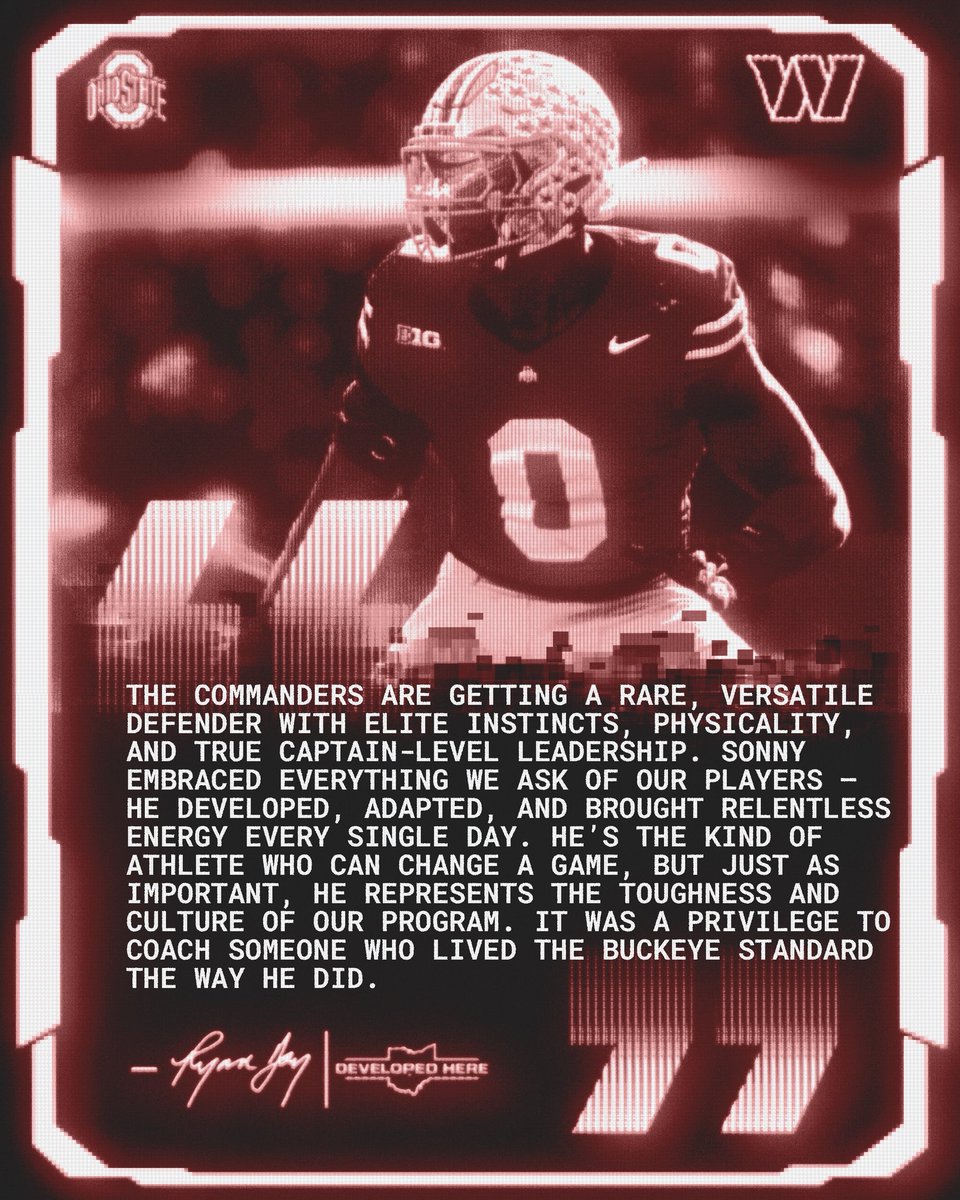
Ryan Day told James Laurinaitis when he became Ohio State’s linebackers coach that his job was to make Ohio State “Linebacker U“ again.
“And look how quickly he did it,” Day said after Arvell Reese and Sonny Styles were selected in the top seven picks of the 2026 NFL draft.
English
Holly Cronau retweetledi
Holly Cronau retweetledi

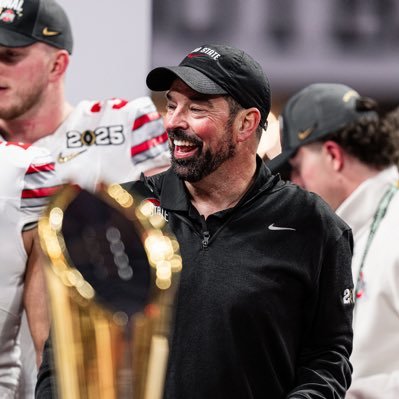
"Caleb Downs made more plays in college than anybody in the draft..
He's so instinctive and he's a phenomenal person..
He is a football junkie and he's a thumper"
Coach Saban #PMSLive
English
Holly Cronau retweetledi
Like many of you, I grew up hearing the Sunday school lesson of the fiery furnace from Daniel 3, which we read today in Bible in One Year.
Only later did I realize that this short but well-known narrative carries a deeper and broader message, one that stretches backward to the Exodus and forward to the work of Christ.
Here’s what I mean.
The account of Shadrach, Meshach, and Abednego is indeed about three faithful young Jews who refused to bow before Nebuchadnezzar’s golden image. But this mini-story also has a mega-story tucked inside it.
We might call it the “Gospel of the Fiery Furnace.”
Like many individuals in the Bible, these three men represent a broader group. Just as Abraham embodies all Israel and David represents his royal descendants, so these three young men embody the corporate people of God, whom only he can rescue.
Consider the overlap between the Daniel and Exodus narratives. Both take place when Israel is in exile. Both involve hostile kings, Pharaoh and Nebuchadnezzar, who oppose the people of God. Both center on idolatry. Both rulers mock the Lord: “Who is the LORD?” (Exod. 5:2) and “Who is the god who will deliver you?” (Dan. 3:15).
Both accounts also feature a furnace. Egypt itself is called the “iron furnace” (Deut. 4:20), while the three men are cast into a blazing one in Babylon (Dan. 3:23).
In both, God sends his messenger to deliver his people (Exod. 23:20; Dan. 3:28). And in both, the king is forced to acknowledge the superiority of Israel’s God (Exod. 12:31–32; Dan. 3:28–30).
Shadrach, Meshach, and Abednego stand for all the people of God. As the Lord brought Israel out of Egypt’s furnace, so he will bring Israel out of Babylon’s fire, and ultimately he will bring about an even greater deliverance.
Jesus, the Messenger of the Father, who brought Israel out of the iron furnace and rescued Shadrach and his friends, vacated his own furnace of death. He experienced his own exile and return that we, in him, might experience it as well.
All these stories are woven together in the life of Jesus. Ultimately, Daniel 3 is about Christ, as are Exodus and every other book of the Scriptures. He is their fullness and fulfillment.

English
Holly Cronau retweetledi

Am I imagining things? 😂 Julian Sayin just opened the Spring Game with a Sayin rushing TD
English
Holly Cronau retweetledi
Holly Cronau retweetledi

Holly Cronau retweetledi
Not a single word from Abel is recorded in Scripture. Cain murders him, and Cain has something to say. But the victim of violence? the recipient of hate? the righteous one? Not a syllable.
Cain has words, Abel none.
But Abel does speak in a different language. He utters crimson eloquence, red rhetoric so profound his speech pierces heaven's veil to lodge in the ears of God.
How so? The Lord says, "The voice of your brother's blood is crying to me from the ground" (Gen. 4:10).
You see what's happening?
1. Blood has a voice.
2. Blood cries out to God.
3. Blood is heard by heaven.
Far, far later, the author of Hebrews wrote about another crimson eloquence, about more red rhetoric. He says that the blood of Jesus "speaks better than the blood of Abel" (12:24).
Whatever Abel's blood said to God, Christ's blood said it better.
The voice of Jesus's blood, crying out from the ground beneath the cross, piercing the heavens, lodging in the ears of God, speaks one and only one message: "Father, forgive them."
That eloquent blood pronounces the absolution of the world, you included.
Believe it. It is for you.
_____
We read Hebrews 12 today in Bible in One Year. Join us at 1517.org/oneyear

English
Holly Cronau retweetledi
The Hebrew verb for sanctify is קדשׁ (qadash), which means “to make holy or remove from common use." Sanctification is often misunderstood merely as moral improvement or good works. While good works are important, they do not make us holy; God does.
Holiness belongs exclusively to God (Rev. 15:4; Isa. 6:3). Humans cannot sanctify themselves any more than they can make themselves divine. Holiness is a 100% God thing and a 0% human thing.
We can exercise ourselves into physical shape or study ourselves into mental shape, but we cannot sanctify ourselves into holy shape. So when the Bible speaks of people “consecrating” or “sanctifying” themselves (Lev. 11:44; Exod. 19:22), it does not mean they make themselves holy. Rather, they are to remain in the holiness God has already given them.
Holiness is always received from God, never self-generated.
In the Old Testament, holiness was about proximity to God. The closer something was to his presence, the holier it was, whether people, places, or objects. God's holiness rippled outward from the inner sanctum of the temple, the Holy of Holies, to the Holy Place, the holy courts, holy city, and holy land.
In the New Testament, holiness is no longer tied to the Jerusalem temple but to Jesus Christ, the embodied temple. He is the true Holy of Holies (John 1:14; 2:21), the one who sanctifies us through his sacrifice (Heb. 10:10). His blood makes us holy (Heb. 13:12), and we are sanctified in him (1 Cor. 6:11).
Even ongoing sanctification is God’s work, not ours. Paul prays, “May the God of peace himself sanctify you completely” (1 Thess. 5:23). Jesus prays, “Sanctify them in the truth; your word is truth” (John 17:17). The Holy Spirit draws us into Christ’s presence, "holying" us through Baptism, the Word, and the Lord’s Supper.
Good works naturally flow from sanctification, but they are not its cause but its effect. Because God sanctifies us, good works result.
Holiness is not what we do but what God does in us and for us through Jesus Christ.
ADDITIONAL RESOURCES ON THIS TOPIC:
-Article: "What is Sanctification? Revisiting the Old Testament for the Answer" 1517.org/articles/what-…
-Video: "Sanctification: A Matter of Proximity" : youtube.com/watch?v=VOhUH7…
_________
Join our online community of Bible readers and students! For more information and to sign up, visit 1517.org/oneyear
YouTube

English
Holly Cronau retweetledi

Holly Cronau retweetledi

This Easter, I invite you to look at Jesus, consider what he said and did, and ask for yourself what I believe is the most important question you will ever answer: Did he really leave behind an empty tomb? And if he did, what does that mean for you?
This video was made possible and in collaboration with my friends at @ChildlikeMedia.
English
Holly Cronau retweetledi
Today we remember that God washes our feet.
The fingers that crafted the universe scrub scum from between toes.
The hands that painted the cosmos wash feet painted with dirt and sweat.
The One before whom all angels bow gets on his knees to labor as a slave.
We become clean, he becomes filthy.
In doing this, Jesus our God gives us a humble epiphany, a revelation of who he is. He is the God who makes his glory visible in lowliness and servitude.
He is the God who gives
-his cheek to the betraying lips of Judas
-his face to the slapping hand of the high priest
-his countenance to the spit of the Sanhedrin.
He is the God who gives
-his head to the thorns
-his feet to the spikes
-his side to the spear.
He is the God who embraces rejection, shame, torture, and death, to give himself to you.
And here is why: because that’s who God is. He is the God who is love. Therefore he loves you by giving to you. For God so loved the world that he gave his only Son. What he gives you is nothing less than himself.
God gives, you receive. This is everything.
He not only washes your feet; he washes you clean, body and soul, through the holy bath in his name. He fills the baptismal font with water from his spear-pierced side and kneels there to wash off the dirt and sweat and grime of your evil.
He feeds you himself, his body, his blood. Every natural food we take into our bodies is transformed into our bodies. We don't become corn on the cob or hamburgers. But the supper of our Lord is different. This food transforms you into that which it is. You, the church, are the body of Christ. You are what you eat.
So, come and eat. Come and drink. Come to the lowly God who has joined you in your lowliness that he might exalt you in himself.
On Maundy Thursday, let us recall, with thanksgiving, how fitting it all is:
How fitting that humanity, which plunged into death by eating forbidden fruit, should receive life and immortality by a meal provided by our Savior, the Last Adam.
How fitting that sinners, their unity rent asunder by hatred and violence, should be gathered into one communion by partaking of the one loaf, baked from many scattered grains.
How fitting that we, who are hard pressed and beaten down by evil, should be comforted and uplifted by drinking from the Lord’s cup, filled with the blood of grapes that have been trampled and pressed underfoot.
How divinely and beautifully fitting, on this holy Thursday, that we have our feet lovingly washed by the very God from whom we once ran in terror and shame.
Here is our God, Jesus Christ, who comes not to be served, but to serve, and to give his life as a ransom for many.

English
Holly Cronau retweetledi

The Lord didn’t check who inside the house was worthy. He checked for blood on the doorposts.
None of us is worthy. Only the blood of Jesus can cover us.

English
Holly Cronau retweetledi
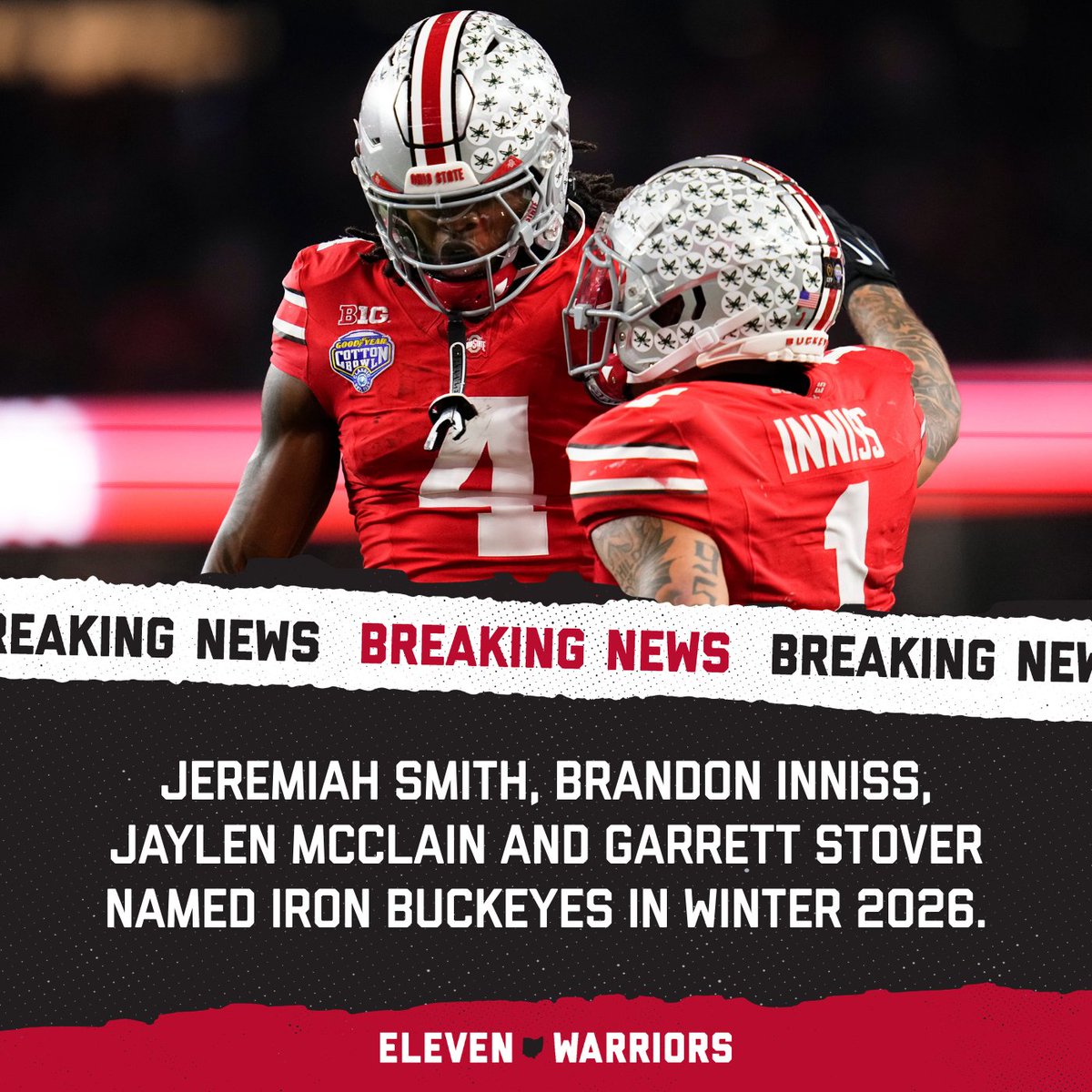
Wide receivers Jeremiah Smith and Brandon Inniss, safety Jaylen McClain and linebacker Garrett Stover are Ohio State’s Iron Buckeyes for its 2026 winter workouts.
elevenwarriors.com/ohio-state-foo…
English
Holly Cronau retweetledi

Elite is being the best player in the room and still out working everyone
Ohio Divided@BuckeyeNatty
Day 1 of spring in his final season at Ohio State Almost a guaranteed top-5 pick Jeremiah Smith is still going as hard as anyone His work ethic might be his best trait
English