Mitch Reid

2.7K posts

Mitch Reid banner
Mitch Reid

Mitch Reid

@HMITCHR40

Space and Bikes! I made a cool aurora chasing app that does all of the nerdy science for you! Check it out!

Boulder, CO Katılım Mayıs 2014
424 Takip Edilen316 Takipçiler
Sabitlenmiş Tweet
Mitch Reid
Mitch Reid@HMITCHR40·
1/ I’m an amateur space weather dork who’s been chasing #aurora from mid latitudes for the past few years. Every time there’s a storm, my phone blows up. “Can we see it tonight?” “When should I go outside?” “Is it worth driving somewhere dark?”
English

1
0
1
1.5K
Mitch Reid
Mitch Reid@HMITCHR40·
@steipete I’m curious if this will impact using Openclaw to drive a Claude Code CLI signed into my Anthropic subscription via ACP. I’ve been using the ACP bind command yall added recently quite a bit and it works well for me, will be bummed to lose that if that’s now against the rules!
English
0
0
0
1.1K
Mitch Reid
Mitch Reid@HMITCHR40·
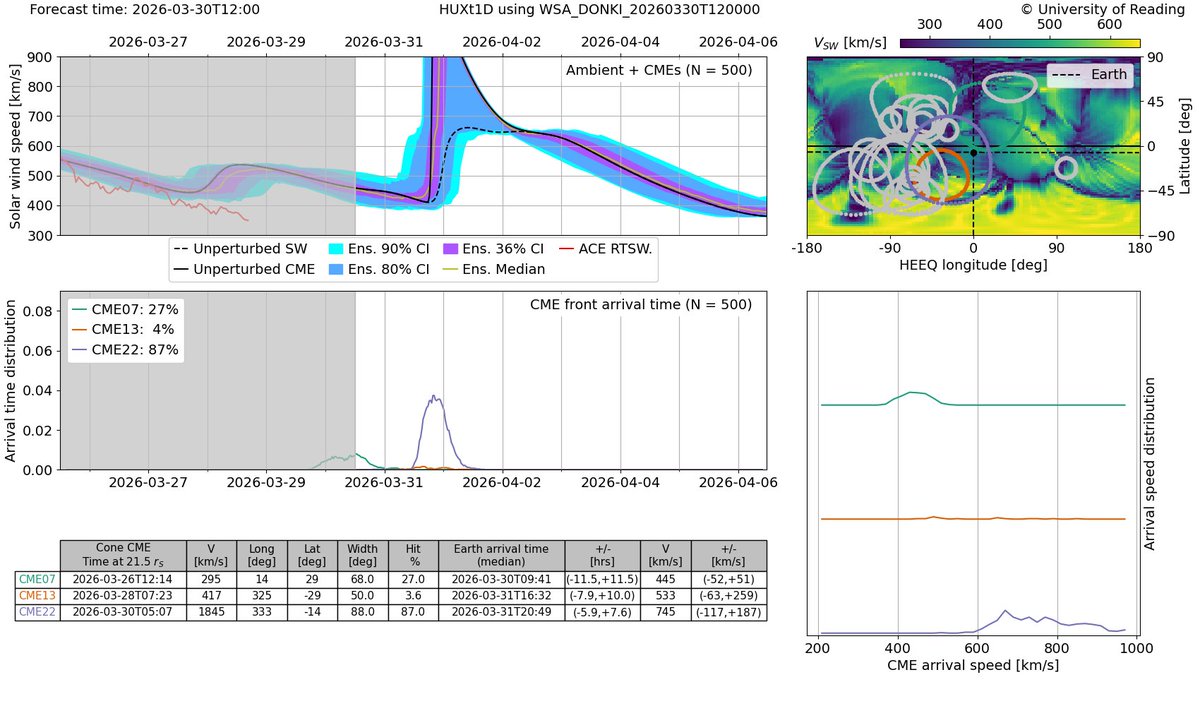
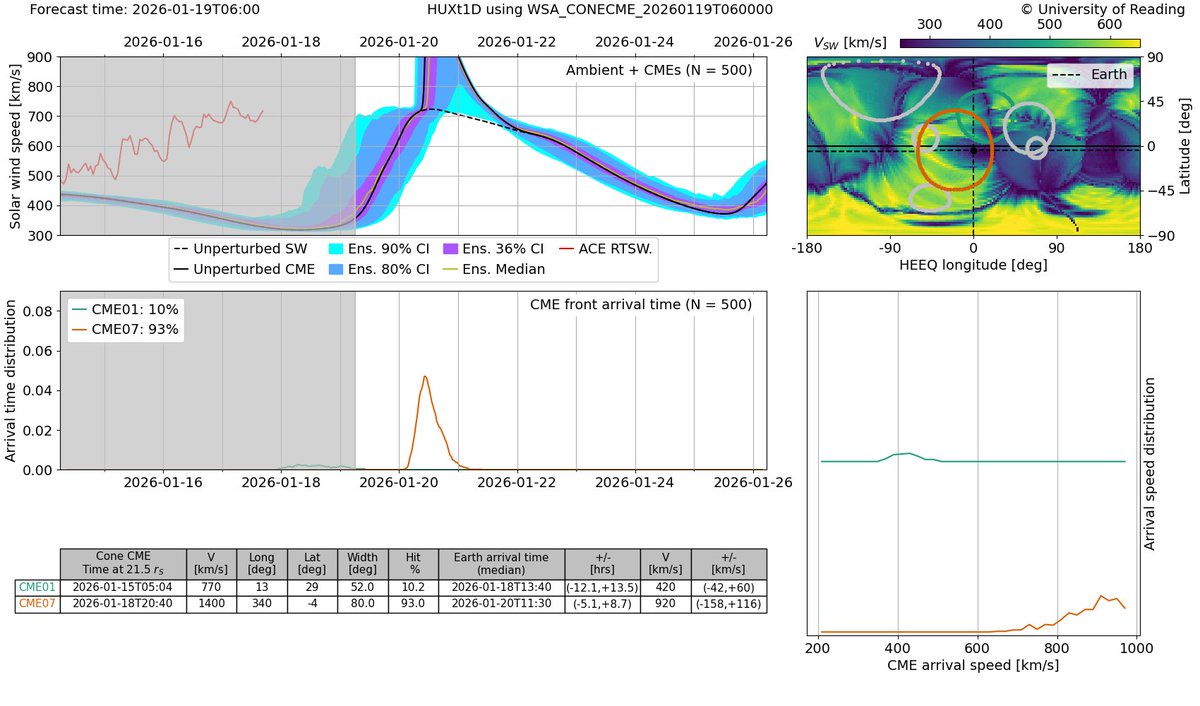
As Jure pointed out, this CME has a lot in common with the January 18th event. Similar flare duration, similar speed, similar launch geometry east of a coronal hole. If the sheath compresses a CIR on arrival like it did in January, we could be in for another show. That January 19th G4 storm is the perfect case study for why my new app, Look North, uses the Newell coupling function to assess real-time conditions. Bz dipped southward briefly on impact, spiking the storm to G4, then turned strongly northward for most of the event. Watching Bz alone, you’d have written the storm off after the first hour. But the CME was moving over 1,000 km/s with Bt exceeding 50 nT, and the Newell coupling function captures what Bz alone misses: solar wind speed, transverse field strength, and clock angle all factor into how much energy is actually reaching the magnetosphere. Same physics behind NOAA’s OVATION Prime model. Look North also incorporates the Newell viscous term, which accounts for energy transfer at the magnetopause flanks at very high solar wind speeds. That’s one of the main reasons fast “mostly northward” storms can still produce mid/low latitude visible aurora. If none of this means anything to you, that’s totally fine! That’s the whole point of Look North. My app crunches all of this in real time so you don’t have to. When a storm hits, the app watches the data come in and computes a favorability condition that continuously updates as the storm progresses. You just get a ping when the data is looking good for your personal latitude and sky conditions, and then another ping when a substorm is firing and it’s time to go outside and look up. Can’t wait to see what this one does! apps.apple.com/us/app/look-no…
Jure Atanackov@JAtanackov

There are some interesting similarities between the CME from the X1.4 flare today and the CME from the X1.9 flare on January 18th, 2026. The one that produced a fast CME with extreme Bt and the third most intense geomagnetic storm of the cycle so far. Similarities: - both were launched by long-duration flares - both were fast CMEs with speeds near 2000 km/s - both launched east of the central meridian - both launched just east of a coronal hole The 18 January CME launched into the fast solar wind stream from the coronal hole, keeping the CME fast. It likely encountered the CIR just before impact at L1/Earth, compressing it and enhancing the impact of the sheath region. It looks like something similar could happen with this CME. The difference now is that the CME launched further east of the central meridian than the January event. The chances of seeing a flux rope after the sheath are lower. Just my train of thought. Can't wait to see what the CME does! The first two images/animations are the CME today, the second two the Jan 18th event.

English
0
0
1
49
Mitch Reid
Mitch Reid@HMITCHR40·
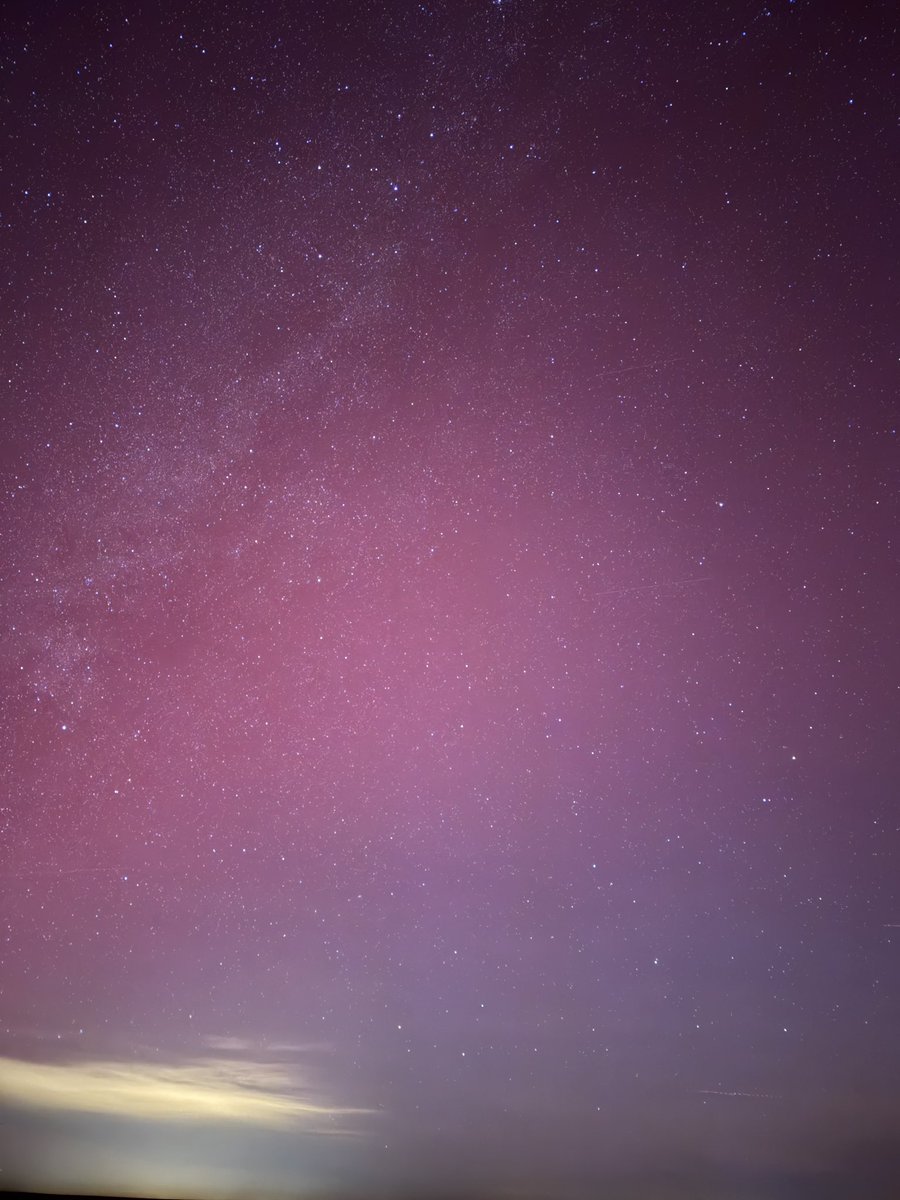
@JAtanackov As with the Jan 18 storm, Newell coupling will be the value to watch as this storm arrives at DSCOVR! That high velocity gets me fired up! Jan 19 was a solid show from northeast CO!
Mitch Reid tweet media
English
0
0
2
181
Jure Atanackov
Jure Atanackov@JAtanackov·
There are some interesting similarities between the CME from the X1.4 flare today and the CME from the X1.9 flare on January 18th, 2026. The one that produced a fast CME with extreme Bt and the third most intense geomagnetic storm of the cycle so far. Similarities: - both were launched by long-duration flares - both were fast CMEs with speeds near 2000 km/s - both launched east of the central meridian - both launched just east of a coronal hole The 18 January CME launched into the fast solar wind stream from the coronal hole, keeping the CME fast. It likely encountered the CIR just before impact at L1/Earth, compressing it and enhancing the impact of the sheath region. It looks like something similar could happen with this CME. The difference now is that the CME launched further east of the central meridian than the January event. The chances of seeing a flux rope after the sheath are lower. Just my train of thought. Can't wait to see what the CME does! The first two images/animations are the CME today, the second two the Jan 18th event.
Jure Atanackov tweet media
English
11
17
65
3.6K
Mitch Reid
Mitch Reid@HMITCHR40·
@JAtanackov Same old story! One of these days we’ll actually catch one of these fast bois head on! 🤞
English
0
0
0
104
Mitch Reid
Mitch Reid@HMITCHR40·
@Vincent_Ledvina Look North is live on iOS App Store now! I’m shipping new features nonstop, including a brand new smart aurora viewing spot finder! I’m a 1 man show who just wants to share the magic with as many people as possible :) apps.apple.com/us/app/look-no… Android version also launching soon!
English
0
0
0
44
Mitch Reid
Mitch Reid@HMITCHR40·
@Vincent_Ledvina Great breakdown as usual! All the more reason to watch live data over models on this one. For anyone not comfy reading charts themselves, my app Look North tracks DSCOVR and GOES in real time and alerts you of actual substorm activity that might push the storm to mid latitudes!
English
1
0
1
173
Vincent Ledvina
Vincent Ledvina@Vincent_Ledvina·
Heads up aurora chasers, there are some chances we will see enhanced geomagnetic activity and potential moderate / Kp 6 storming on Tuesday due to the arrival of a coronal mass ejection (CME; also known as solar storm). Impact time of the CME may be around 14 UT on March 31 according to some models. This translates to late on Tuesday morning for North American tmezones--not great, but all models have uncertainty, so I would be prepared for action on Tuesday night regardless. I will be releasing an aurora alert about this event soon with many hand-drawn, annotated images and translation of CME model information for aurora chasers. These are free alerts. You can sign up here: go.theauroraguy.com/alerts . The main message I want to convey is that because of a coronal hole right next to the CME eruption, the storm may be deflected away from Earth more than expected in the models. This means a G2 storm may be the upper end for potential effects we see from this event. Conversely, coronal holes can also "suck in" CME material and provide a more direct path for the storm. The coronal hole will likely affect Earth this week, so the CME could hitch a ride with the high-speed stream or also enhance the CIR (high-density pile-up region) ahead of the fast solar wind. There are a lot of outcomes because the close interaction between the CME and the coronal hole. There is an asymmetric full-halo shock signature, though so I would anticipate *something* to arrive at L1 even if it is not the bulk of the CME. Like always, "L1 or bust!" We won't know what will happen until it does...
Vincent Ledvina tweet media
English
4
29
146
7.5K
Cole
Cole@ColeSpaceWx·
If you like aurora… don’t look.
Cole tweet media
English
1
0
10
276
Mitch Reid
Mitch Reid@HMITCHR40·
@Vincent_Ledvina Let’s goooooooo so hype!! For any other mid latitude chasers, check out my brand new app, Look North to maximize your chances of seeing some action from this flare! apps.apple.com/us/app/look-no… x.com/hmitchr40/stat…
Mitch Reid@HMITCHR40

1/ I’m an amateur space weather dork who’s been chasing #aurora from mid latitudes for the past few years. Every time there’s a storm, my phone blows up. “Can we see it tonight?” “When should I go outside?” “Is it worth driving somewhere dark?”

English
0
0
2
1.3K
Mitch Reid
Mitch Reid@HMITCHR40·
10/ I have big plans to keep building this into the best tool for normal, mid latitude folk who just want to not miss their chances to see the #northernlights, but don’t have the time/energy to become a space weather expert :) Live on iOS App Store now: apps.apple.com/us/app/look-no…
English
0
0
1
61
Mitch Reid
Mitch Reid@HMITCHR40·
9/ While the alerts users receive are clear and simple, I promise the way I know to send them is not! My real time monitoring algorithm has been backtested against hundreds of historic storms with zero false positives on quiet days.
English
1
0
0
49
Mitch Reid
Mitch Reid@HMITCHR40·
1/ I’m an amateur space weather dork who’s been chasing #aurora from mid latitudes for the past few years. Every time there’s a storm, my phone blows up. “Can we see it tonight?” “When should I go outside?” “Is it worth driving somewhere dark?”
English
1
0
1
1.5K