🔴⚪️ Arteta on Eddie Nketiah: "I'm thrilled for him. He's consistently present, always ready to enhance his game."
"He dedicates himself to the team... he's begun 8 Premier League matches this season, which speaks to the immense trust we place in him."
🔴 Pep on Ten Hag: "Only nine matches! Just nine! United can string together four, five, six consecutive victories. Once they do that, they'll be at the summit. It's a matter of time. Allow the manager to execute their roles."
"Man United, even now, every minor development is in the headlines all day long..."
Blockchain Technology in Healthcare: The Future of Healthcare?
Blockchain technology is a promising new technology that has the potential to revolutionize the healthcare industry.
Here are some of the potential benefits of blockchain technology in healthcare:
👢**** Patient data security and privacy: Blockchain is a secure and tamper-proof way to store patient data.
🪕**** Efficiency and transparency: Blockchain can help to improve efficiency and transparency in the healthcare industry.
📸**** New healthcare opportunities: Blockchain can create new opportunities for healthcare providers and patients.
Here are some of the use cases of blockchain technology in healthcare:
🍎**** Healthcare records: Blockchain can be used to store patient healthcare records in a secure and tamper-proof way.
🍄**** Drug supply chain: Blockchain can be used to track the supply chain of drugs and medical devices to ensure their authenticity and safety.
🍅**** Clinical trials: Blockchain can be used to conduct clinical trials more efficiently and securely.
🚴♀️**** Personalized medicine: Blockchain can be used to store and analyze patient data to develop personalized medicine treatments.
Blockchain technology is still in its early stages of development, but it has the potential to have a major impact on the healthcare industry.
#blockchain#healthcare#technology#innovation#future
Stablecoins: A Stable Foundation for the Crypto Economy
Stablecoins are cryptocurrencies that are designed to maintain a stable value, typically pegged to a fiat currency like the US dollar or the euro.
Stablecoins offer a number of benefits over traditional cryptocurrencies, including:
Reduced volatility: Stablecoins are less volatile than traditional cryptocurrencies, making them a more attractive option for investors and businesses.
Improved liquidity: Stablecoins are more liquid than traditional cryptocurrencies, making them easier to buy and sell.
Enhanced usability: Stablecoins are more usable than traditional cryptocurrencies, making them a more attractive option for everyday transactions.
Here are some of the use cases for stablecoins:
Payments: Stablecoins can be used to make payments for goods and services.
Investing: Stablecoins can be used to invest in other cryptocurrencies or DeFi protocols.
Hedging: Stablecoins can be used to hedge against the volatility of traditional cryptocurrencies.
Savings: Stablecoins can be used to save money in a way that is more secure and liquid than traditional fiat currencies.
Stablecoins are playing an increasingly important role in the crypto economy. They are providing a more stable foundation for the growth of the crypto market and making cryptocurrencies more accessible and usable for a wider range of people.
#stablecoins#crypto#finance#blockchain
Crypto in Remittances and Cross-Border Payments: A Growing Trend
The use of cryptocurrency in remittances and cross-border payments is on the rise.
Here are some of the reasons for this trend:
Lower costs: Cryptocurrencies can be a more affordable way to send money internationally than traditional methods, such as wire transfers.
Speed: Cryptocurrencies can be sent quickly and easily, even to countries with limited banking infrastructure.
Transparency: Cryptocurrencies are transparent, which can help to reduce fraud and corruption.
Here are some of the benefits of using cryptocurrency for remittances and cross-border payments:
Reduced costs: Cryptocurrencies can be a more affordable way to send money internationally than traditional methods.
Increased speed: Cryptocurrencies can be sent quickly and easily, even to countries with limited banking infrastructure.
Enhanced security: Cryptocurrencies are secure, which can help to reduce fraud and corruption.
Cryptocurrencies are still a relatively new technology, but they have the potential to revolutionize the way we send money internationally.
#crypto#remittances#crossborderpayments#blockchain#decentralized#innovation
Crypto in Remittances and Cross-Border Payments: A Growing Trend
The use of cryptocurrency in remittances and cross-border payments is on the rise.
Here are some of the reasons for this trend:
Lower costs: Cryptocurrency transactions can be cheaper than traditional remittance and cross-border payment methods.
Faster speeds: Cryptocurrency transactions can be faster than traditional remittance and cross-border payment methods.
Greater convenience: Cryptocurrency transactions can be more convenient than traditional remittance and cross-border payment methods.
Here are some of the use cases of cryptocurrency in remittances and cross-border payments:
Sending money to friends and family: Cryptocurrencies can be used to send money to friends and family in other countries.
Buying goods and services: Cryptocurrencies can be used to buy goods and services from businesses in other countries.
Investing in foreign markets: Cryptocurrencies can be used to invest in foreign markets.
Cryptocurrency in remittances and cross-border payments is still in its early stages of development, but it has the potential to revolutionize the way we send money and pay for goods and services across borders.
#crypto#remittances#crossborderpayments#blockchain#adoption#innovation
Web3 and the Decentralized Internet: A Vision for the Future
Web3 is a vision for a new internet that is decentralized and controlled by users, rather than by large corporations or governments.
Here are some of the key features of Web3:
Decentralization: Web3 applications are built on blockchain technology, which means that they are not controlled by any single entity.
Ownership: Users own their data and content in Web3, rather than having it controlled by a third party.
Transparency: Web3 applications are transparent, meaning that users can see how they work.
Security: Web3 applications are more secure than traditional web applications.
Web3 has the potential to revolutionize the way we use the internet. It could make the internet more democratic, secure, and transparent.
Here are some of the potential benefits of Web3:
More user control: Users would have more control over their data and content in Web3.
Less censorship: Web3 applications would be less susceptible to censorship.
More innovation: Web3 could lead to new and innovative applications.
Of course, there are also some challenges that need to be addressed before Web3 can become a reality.
Some of the challenges of Web3 include:
Complexity: Web3 applications can be complex and difficult to use.
Scalability: Web3 applications need to be scalable in order to support a large number of users.
Security: Web3 applications need to be secure in order to protect user data.
Despite these challenges, Web3 is a promising vision for the future of the internet.
#web3#decentralized#internet#blockchain#technology#innovation
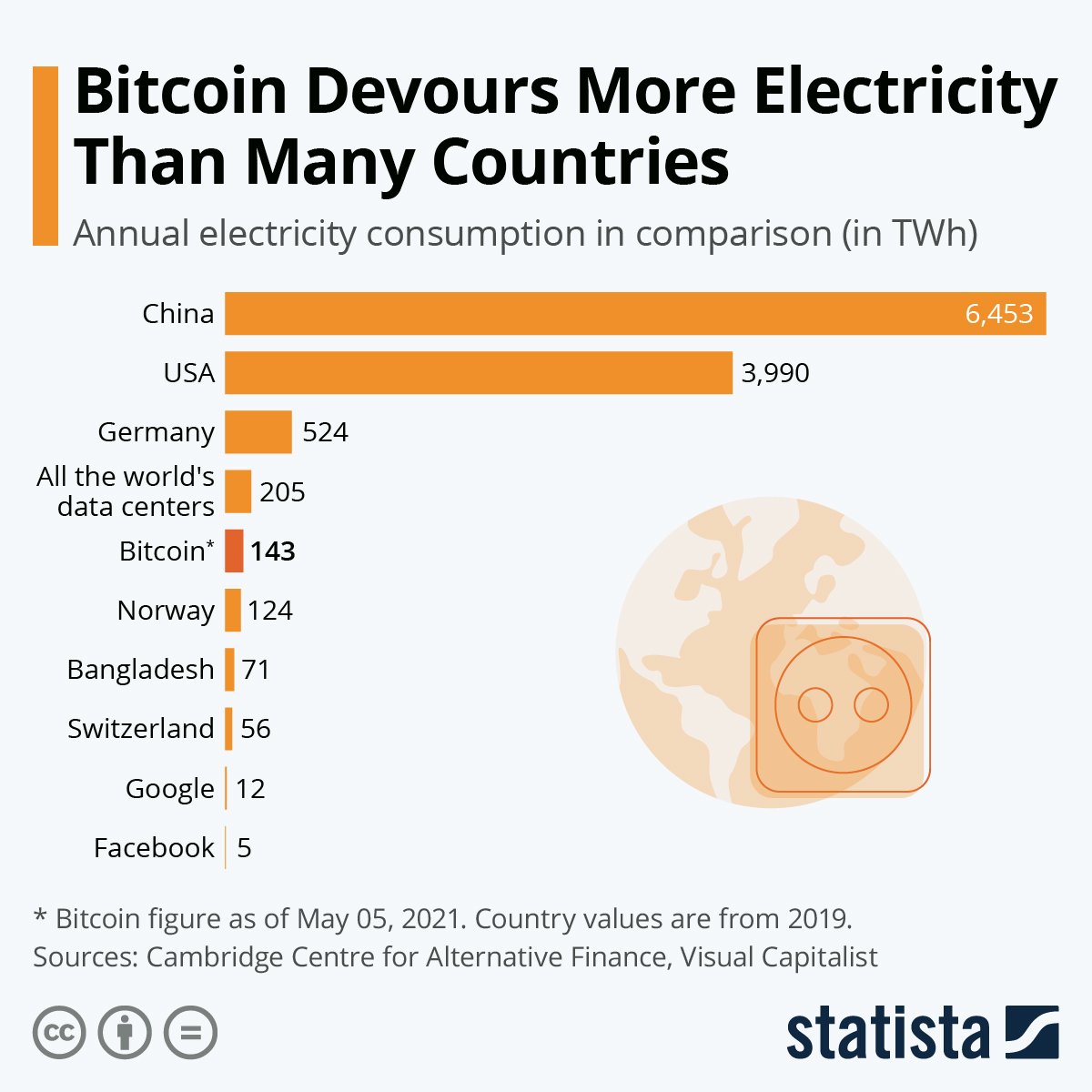
Crypto Mining and Energy Consumption on the Internet
Crypto mining is the process of adding new blocks to a blockchain. This process requires a lot of computing power, which can lead to high energy consumption.
Here are some of the factors that contribute to the energy consumption of crypto mining:
The type of consensus mechanism: Proof-of-work (PoW) is the most energy-intensive consensus mechanism. PoS is more energy-efficient, but it is still a significant consumer of energy.
The number of miners: The more miners there are, the more energy is consumed.
The efficiency of the mining hardware: More efficient mining hardware consumes less energy.
The location of the mining operations: Mining operations in countries with cheap electricity tend to consume more energy.
The energy consumption of crypto mining has been a source of concern for environmental advocates.
Some of the potential environmental impacts of crypto mining include:
Greenhouse gas emissions: Crypto mining is a major source of greenhouse gas emissions.
Water consumption: Crypto mining can consume a significant amount of water.
Waste: Crypto mining can generate a significant amount of electronic waste.
There are a number of initiatives underway to reduce the environmental impact of crypto mining.
#crypto#mining#energy#consumption#internet#blockchain#environment#sustainability
Crypto Investment Risks and Rewards
Cryptocurrency is a highly volatile asset class, and there are both risks and rewards associated with investing in it.
**Risks:
Volatility: Cryptocurrency prices can fluctuate wildly, and there is always the risk of losing money.
Fraud: There have been cases of fraud and scams involving cryptocurrency.
Regulation: Cryptocurrency is still a relatively new asset class, and there is a risk of government regulation.
**Rewards:
Potential for high returns: Cryptocurrencies have the potential to generate high returns, but there is no guarantee.
Decentralization: Cryptocurrencies are decentralized, which means they are not subject to government or financial institution control.
Innovation: The cryptocurrency industry is constantly evolving, which could lead to new and innovative applications.
**Before investing in cryptocurrency, it is important to understand the risks and rewards involved.
#crypto#investment#risks#rewards#volatility#fraud#regulation#decentralized#innovation
Crypto in Real Estate Transactions: A Growing Trend
The use of cryptocurrency in real estate transactions is on the rise.
Here are some of the reasons for this trend:
📷The growing popularity of cryptocurrency: Cryptocurrency is becoming more and more popular, and this is driving demand for crypto-related products and services from real estate agents and buyers.
🍄The increasing acceptance of cryptocurrency: Real estate agents and buyers are becoming more accepting of cryptocurrency, which is making it easier to use cryptocurrency in real estate transactions.
The potential benefits of cryptocurrency:
Cryptocurrency offers a number of potential benefits for real estate transactions, such as improved security, transparency, and efficiency.
Here are some of the use cases of cryptocurrency in real estate transactions:
Down payments: Buyers can use cryptocurrency to make down payments on real estate.
Mortgages: Buyers can use cryptocurrency to secure mortgages.
Property sales: Sellers can accept cryptocurrency as payment for their properties.
Cryptocurrency in real estate transactions is still in its early stages of development, but it has the potential to revolutionize the way we buy and sell real estate.
#crypto#realestate#transactions#blockchain#adoption#innovation
Crypto Trading Psychology: How to Control Your Emotions
Cryptocurrency trading can be a highly emotional experience.
Here are some of the emotions that can affect crypto traders:
Fear: Fear can lead to selling too early or not buying at all.
Greed: Greed can lead to buying too high or holding on to a losing position.
FOMO: FOMO can lead to buying into a hype too late.
Regret: Regret can lead to making rash decisions.
It is important to be aware of these emotions and how they can affect your trading decisions.
Here are some tips for controlling your emotions when trading cryptocurrency:
Have a trading plan: A trading plan will help you stay disciplined and make decisions based on logic rather than emotion.
Set stop losses: Stop losses will help you limit your losses if the market moves against you.
Take breaks: It is important to take breaks from trading to clear your head and avoid making emotional decisions.
Don't trade when you're emotional: If you're feeling overwhelmed or stressed, it's best to step away from the market.
By controlling your emotions, you can improve your chances of success in cryptocurrency trading.
#crypto#trading#psychology#emotions#fear#greed#fomo#regret
NFTs and Digital Art: The Future of Ownership
📌Non-fungible tokens (NFTs) are a type of digital asset that is unique and cannot be replaced. They are often used to represent ownership of digital art, such as paintings, music, or videos. NFTs have the potential to revolutionize the way we own and collect digital art.
Benefits of NFTs for Digital Art
*** Ownership:
🍄NFTs provide a secure and verifiable way to prove ownership of digital art. This is important because digital art can be easily copied and shared, making it difficult to determine who owns the original.
Authenticity:
🍅NFTs can be used to verify the authenticity of digital art. This is important because digital art can be easily manipulated or forged.
Scarcity:
🎯NFTs can be used to create scarcity for digital art. This can increase the value of the art and make it more desirable to collectors.
Transparency:
📌 NFTs can be used to track the history of ownership of digital art. This can help to ensure that the art is not stolen or counterfeited.
Challenges of NFTs for Digital Art
*** Complexity:
📸NFTs can be complex to understand and use. This can make it difficult for artists and collectors to get started with NFTs.
Environmental impact:
🦩The process of minting NFTs can have a negative impact on the environment. This is because it requires a lot of energy to process transactions on the blockchain.
Regulation:
🍪NFTs are a new technology, and there is still uncertainty about how they will be regulated. This could make it difficult for artists and collectors to sell and trade NFTs.
Conclusion
📸NFTs have the potential to revolutionize the way we own and collect digital art. However, there are still some challenges that need to be addressed before NFTs can become mainstream.
🍳As the technology continues to develop and the challenges are addressed, NFTs are likely to become an increasingly important part of the digital art world.