Hashim Ahmed
2 posts


That earnings report was garbage. Now it’s being exposed.
The Kobeissi Letter@KobeissiLetter
BREAKING: Walmart stock, $WMT, falls -4% after reporting weaker than expected earnings results.
English

Some good points, but here’s another perspective:
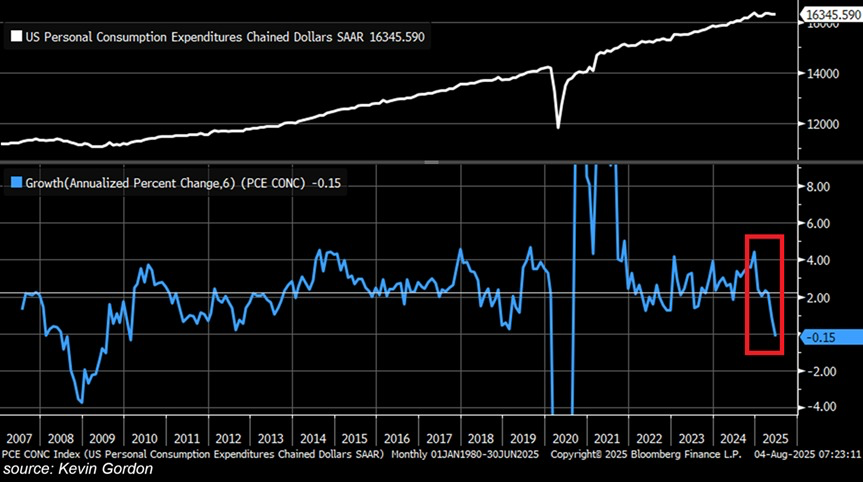
First, the comparison uses inconsistent time frames by citing a six-month aggregate decline in real personal consumption expenditures (PCE) of -0.15% for the first half of 2025, while contrasting it with quarterly figures for the personal consumption component of GDP (+0.5% in Q1 and +1.4% in Q2). This might amp up the perceived severity. If PCE were analyzed quarterly too, it'd likely show a similar pattern: about +0.5% in Q1 followed by a +1.4% rebound in Q2, as FRED data suggests. That looks more like routine fluctuations than a big downturn.
Second, it overlooks seasonal patterns in consumer spending. Q1 is often weaker due to post-holiday budget tweaks and things like weather disruptions. BEA and FRED records show Q1 GDP contributions from consumption frequently get revised down for these reasons. From 2015 to 2019, real PCE growth averaged around 2.5% to 3% annualized quarterly, with Q1 usually the softest (1% to 2%). 2025's subdued Q1 into stronger Q2 fits that norm, not some structural issue.
Third, comparing to 2020 feels off-base, since 2020-2024 was skewed by massive fiscal stimulus like the CARES Act. That caused wild surges, like a 41% annualized PCE jump in Q3 2020 from transfers and lockdown savings—households socked away about 60% to savings or debt. Pre-2020 baselines (2015–2019) make current figures, like +0.3% PCE in Q1 2019, seem pretty ordinary and not always recession signals.
Sure, inflation and labor market woes deserve attention, but this framing leans toward alarm over balance. Better to wait for Q3 data—consumers have shown resilience before.
English

US consumer spending is rapidly declining:
Personal expenditures adjusted for inflation fell -0.15% in the first 6 months of 2025, the biggest decline since the 2020 pandemic.
Excluding 2020, this marks the largest drop in 15 years.
Historically, such weakness has often signaled the onset of a recession.
Meanwhile, the personal consumption component of GDP rose at an annualized pace of +0.5% and +1.4% in Q1 and Q2 2025, the slowest 2-quarter growth since 2020.
Consumers are hurting from rising prices and a weaker labor market.

English