Jonathan Haskel

2.9K posts

Jonathan Haskel banner
Jonathan Haskel

Jonathan Haskel

@haskelecon

Professor of Economics, Imperial College Business School. External member, @BankofEngland Monetary Policy Committee. Views own, RTs not endorsements.


Imperial College Business School, Imperial College London Katılım Eylül 2010
1.1K Takip Edilen6.8K Takipçiler
Ben Zaranko
Ben Zaranko@BenZaranko·
Some personal/professional news: today is my last day at the IFS. There’s nowhere else I’d rather have spent the last nine years and leaving is such a wrench. But it’s time for something new, and I’m excited to be joining The Observer as Economics Editor from 7 April.
English
46
8
295
54.9K
Jonathan Haskel retweetledi
ESCoE
ESCoE@ESCoEorg·
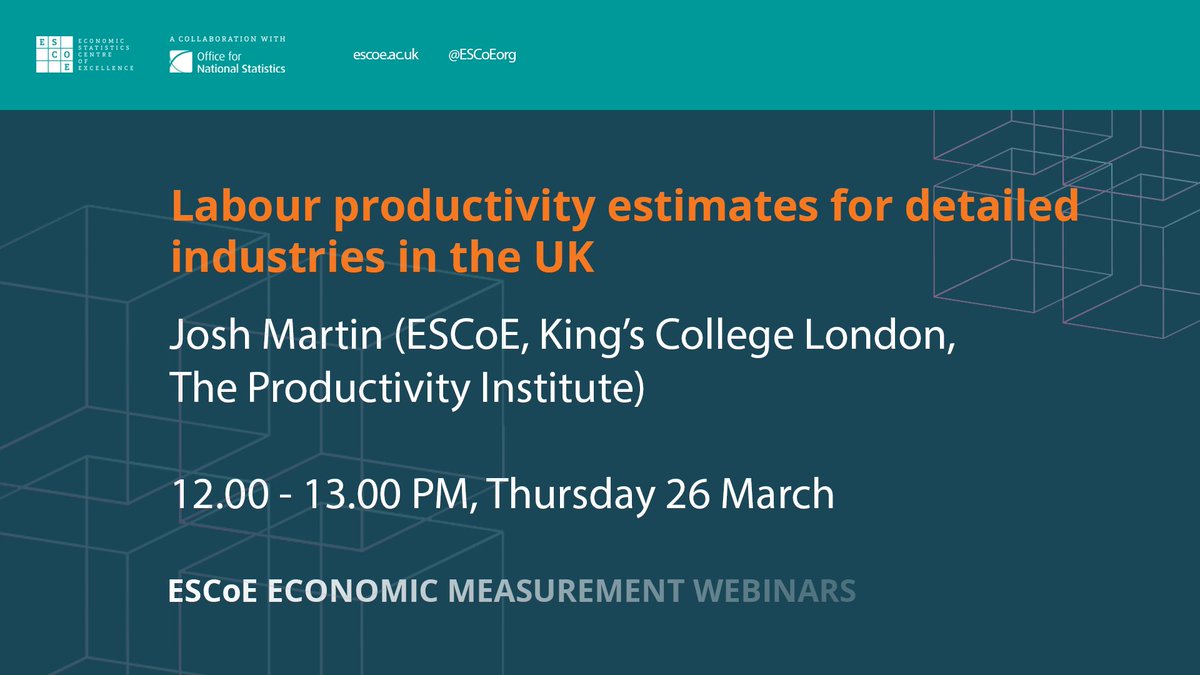
The next ESCoE webinar with @JoshMartin_econ will present productivity estimates for 184 UK industries - more than double the detail in official datasets: tinyurl.com/yj8atwyj
ESCoE tweet media
English
0
3
7
587
Richard Jones
Richard Jones@RichardALJones·
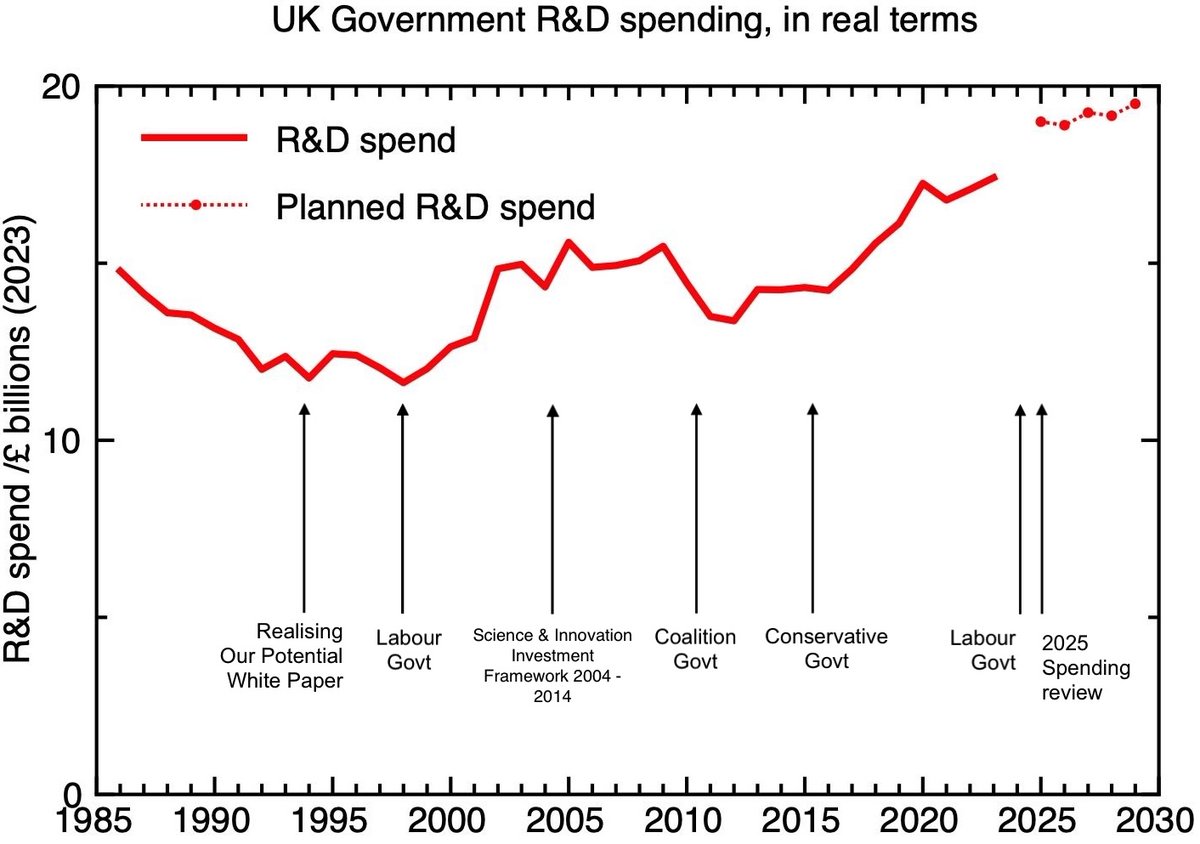
But the economic growth hasn’t arrived, yet. What happens if it doesn’t? My blogpost: The UK’s big bet on science and technology softmachines.org/?p=3268
English
3
2
11
2.1K
Richard Jones
Richard Jones@RichardALJones·
For more than a decade, there’s been a cross-party consensus behind increasing the UK govt’s R&D spending to drive economic growth - & there’s been a substantial real terms increase in the science budget...
Richard Jones tweet media
English
7
6
31
5.4K
Jonathan Haskel
Jonathan Haskel@haskelecon·
@BenRamanauskas V interesting Ben. My worry is that the policies you mention have raised U* so even at current activity levels there’s more inflationary pressure than we think. So look through but hold cuts.
English
1
0
1
113
Ben Ramanauskas
Ben Ramanauskas@BenRamanauskas·
New blog post! The Iran War will lead to an energy shock which could raise headline inflation. However, this will be transitory so the Bank of England should ignore it and, given the overall state of the economy, the Bank needs to keep cutting interest rates. Link in thread.
Ben Ramanauskas tweet media
English
5
9
35
4.7K
David Paton
David Paton@cricketwyvern·
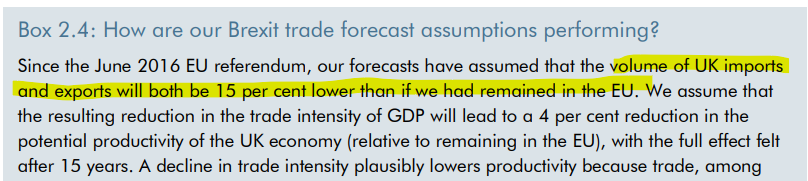
UK trade data for 2025 published yesterday. We now have 10 years of data since the EU ref & 5 since we left the customs union. Remember the OBR forecast Brexit would reduce UK trade by 15% (hence their forecast of a 4% hit to productivity). Let’s see how that is working out …
David Paton tweet media
English
93
566
1.5K
340.7K
Jonathan Haskel
Jonathan Haskel@haskelecon·
I just took my first Waymo One ride in San Francisco! Fantastic.
English
0
0
9
460
Erik Brynjolfsson
Erik Brynjolfsson@erikbryn·
Since my op-ed in the @FT was published on Monday (ft.com/content/4b51d0…), there’s been a growing debate about whether we’re beginning to see evidence that AI is boosting productivity. First, let me be clear that the aggregate productivity data by itself is far from definitive. Even with the new revisions, there is certainly a lot of noise in US productivity numbers. No doubt lots of other factors are at work. That said, my growing confidence that AI is powering higher productivity draws on evidence from a variety of sources: 1. The stunning capabilities of AI. If anything, I think the past decade of impressive improvements in machine learning and generative AI are still underrated. We are in the early stages of a massive economic transformation: digitaleconomy.stanford.edu/research-area/… 2. A growing number of micro studies document double-digit productivity gains in specific applications. @alexolegimas has a great catalog in his blog post: aleximas.substack.com/p/what-is-the-… 3. My discussions with power users who use AI for coding, customer service, research and other applications, as well as more and more business executives, convince me that the facts on the ground are (finally) changing. 4. Data from our Canaries in the Coal Mine paper show employment changes in occupations most affected by AI: digitaleconomy.stanford.edu/publication/ca… 5. And now, inklings in the aggregate productivity data are also telling the same story. These are all consistent with the hypothesis that AI is beginning to have a positive impact on productivity. The FT put a more definitive headline on my recent piece than I would have liked, but my bet (longbets.org/868/) is that we're likely to see more and more evidence as time goes on, barring some other shocks (e.g. macro mismanagement, trade wars, etc). As each quarter goes by and we see more data, I continue to update my views. No doubt, I'm currently out of sync with a lot of mainstream economists on this topic, but that’s ok by me.
English
27
106
380
87.6K
Jonathan Haskel
Jonathan Haskel@haskelecon·
@s8mb @dc_lawrence good q sam. I think: big barriers to firm entry in hospitality and/or monopsony power => marg firm has low prod & high profit => big prod gains from reallocation.
English
0
0
2
46
Sam Bowman
Sam Bowman@s8mb·
@haskelecon @dc_lawrence Yeah, interesting. What would have to be true for their model to be right? Big barriers to job switching?
English
2
0
1
140
Jonathan Haskel
Jonathan Haskel@haskelecon·
@s8mb @dc_lawrence V interesting. IMHO it’s a confusion of marginal and average. The average hospitality firm has low productivity. But capital moves between industries. So marginal hospitality firm is just as productive as a similar capital/skill firm in, say, wholesale.
English
1
1
10
290
Sam Bowman
Sam Bowman@s8mb·
I agree. And I think they have a misconception that workers get “used up” by existing businesses and you need to kill the businesses via external means to free them up for more productive uses. Kind of Austrian business cycle theory without a theory about why they don’t just move for normal profit-seeking reasons.
English
4
0
27
2.5K
Jonathan Haskel retweetledi
Richard Jones
Richard Jones@RichardALJones·
My attempt to set in context the biggest upheaval in UK science funding policy since the 1980s: UK Science Policy in Transition softmachines.org/?p=3252
English
0
2
3
614
Jonathan Haskel
Jonathan Haskel@haskelecon·
@donwinslow A brilliant story in a brilliant collection. IMHO this century’s Raymond Chandler.
English
0
0
1
131
Don Winslow
Don Winslow@donwinslow·
LONDON. Crime 101 opens IN THEATERS around the world FEB 13
Don Winslow tweet media
English
11
27
199
10.8K
Jonathan Haskel
Jonathan Haskel@haskelecon·
@billwells_1 @ONS Thx Bill. A good reason to introduce slowly. And it’s by no means all the basket. But real consumers,as you know, are transacting digitally. And it’s striking to me at any rate that the current sample looks close to the bigger scanner dataset, showing sampling is doing its job
English
1
0
0
36
Bill Wells
Bill Wells@billwells_1·
@haskelecon @ONS A little concerned this is another example of 'digital by default' hopefully it doesn't lead to collected data becoming unrepresentative - overuse of supermarkets with computers Arguable approach damages measurement? RTI/PAYE employees & UC; LFS phones [Won't mention PO Horizon]
English
1
0
0
50