Hawkeye 69

22.6K posts

Hawkeye 69 banner
Hawkeye 69

Hawkeye 69

@Hawkeye696

Katılım Mayıs 2021
286 Takip Edilen245 Takipçiler
Hawkeye 69 retweetledi
CREATIVE 🛠️
CREATIVE 🛠️@0xdevv·
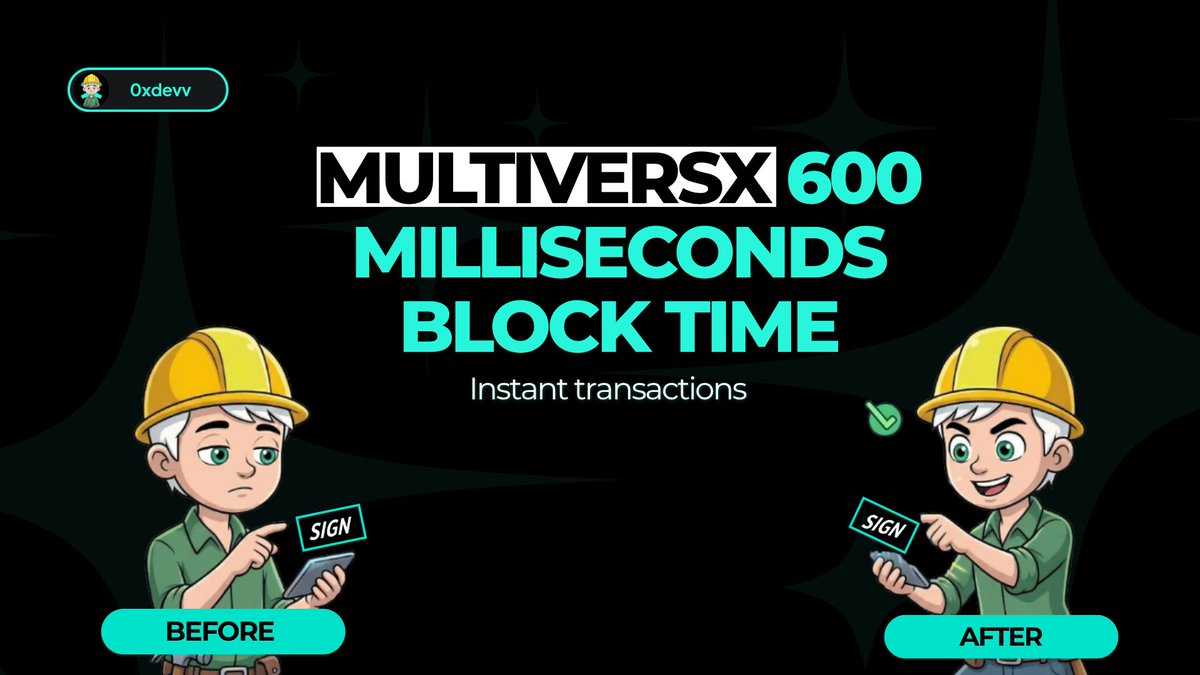
MultiversX pushed block times toward 600ms, roughly two blocks per second – which is a big deal for how fast apps feel in real life, not just on paper. This shift is about making transactions feel instant, so users can tap, sign, and see results in real time.
CREATIVE 🛠️ tweet media
English
3
12
53
786
Hawkeye 69 retweetledi
Robert Sasu | dev/acc
Robert Sasu | dev/acc@SasuRobert·
Supernova is on BattleNet! And it is coming to mainnet.
English
9
43
161
1.9K
Hawkeye 69 retweetledi
Timo ✖️
Timo ✖️@Timos_420·
MultiversX Supernova is LIVE on Battle Net First chain ever: finality faster than block time (88ms measured on 600ms slots)Same hardware → 120k TPS bursts, 10× block speed, sharding stays.Validators battling now for $150K → mainnet next.Internet-scale crypto is here. $EGLD
Lucian Mincu@lucianmincu

Supernova is live on Battle Net. Here's what changed under the hood and why it matters. The paradigm shift nobody's talking about: Every blockchain in the industry is measured on two metrics: block time and throughput. Faster blocks = better chain. More TPS = better chain. ---------- Supernova breaks this framing entirely. For the first time in the blockchain industry, block finality is faster than block slot allocation. Let me explain what that means. How every other blockchain works: Traditional blockchains follow Execute → Propose → Vote. Validators must execute every transaction before proposing a block. The block slot is the clock. Finality can never be faster than the slot, because execution is in the critical path. Ethereum: 12.8s slot, ~12.8 minutes finality. Solana: 400-600ms slot, 13 seconds finality. Sui: variable, ~500 to 1000 ms for complex transactions. In every case: finality ≥ block slot. This is treated as a law of physics. It's not. ---------- How Supernova works: We flipped the model to Propose/Vote → then Execute. Consensus proceeds independently of execution. Validators agree on transaction ordering first. Execution results are notarized in subsequent block headers via inclusion proofs. The inclusion proof is the key innovation: it allows a block to be finalized with cryptographic proof that its transactions will execute correctly, before the execution itself completes. The virtual state tracker in the transaction pool maintains a deterministic view of account states (nonces, balances, pending transactions) so consensus can validate without waiting for full execution. Result: the block is finalized faster than the block round itself. 88ms finality measured in testing. Sub-200ms under real-world conditions. On 600ms block slots. Finality < block slot. First time in the industry. ---------- The throughput story: With the same hardware specification as pre-Supernova mainnet, the network now achieves ~120,000 transactions per second in burst mode. Same nodes. Same machines. 10x the block production cadence. This is the same validator infrastructure running fundamentally better software. The backpressure system (Execution-Result Inclusion Estimator) ensures this scales safely - dynamically adjusting per-block gas limits if execution lags behind proposals, so minimum-spec nodes never get overwhelmed. What this means in context: - Block time: 6s → 600ms (10x) - Finality: ~88ms measured (first blockchain where finality < slot time) - Throughput: ~120,000 TPS burst mode (same hardware) - Architecture: consensus fully decoupled from execution - Sharding: 3 execution shards + metachain, fully preserved - Validators: 3,200+ nodes, no hardware upgrade required ---------- Battle of Nodes is stress-testing all of this right now. $150K in prizes to find what breaks. Validators, security researchers, builders, and guilds pushing the limits. If Supernova survives this, it ships to mainnet. 150,000 lines of new protocol code. 20 months of engineering. The most significant upgrade since genesis.


English
2
4
42
736
Hawkeye 69 retweetledi
Benialonbert Mincuskstein
$egld, unique and unbeatable, smashing all records!
Lucian Mincu@lucianmincu

Supernova is live on Battle Net. Here's what changed under the hood and why it matters. The paradigm shift nobody's talking about: Every blockchain in the industry is measured on two metrics: block time and throughput. Faster blocks = better chain. More TPS = better chain. ---------- Supernova breaks this framing entirely. For the first time in the blockchain industry, block finality is faster than block slot allocation. Let me explain what that means. How every other blockchain works: Traditional blockchains follow Execute → Propose → Vote. Validators must execute every transaction before proposing a block. The block slot is the clock. Finality can never be faster than the slot, because execution is in the critical path. Ethereum: 12.8s slot, ~12.8 minutes finality. Solana: 400-600ms slot, 13 seconds finality. Sui: variable, ~500 to 1000 ms for complex transactions. In every case: finality ≥ block slot. This is treated as a law of physics. It's not. ---------- How Supernova works: We flipped the model to Propose/Vote → then Execute. Consensus proceeds independently of execution. Validators agree on transaction ordering first. Execution results are notarized in subsequent block headers via inclusion proofs. The inclusion proof is the key innovation: it allows a block to be finalized with cryptographic proof that its transactions will execute correctly, before the execution itself completes. The virtual state tracker in the transaction pool maintains a deterministic view of account states (nonces, balances, pending transactions) so consensus can validate without waiting for full execution. Result: the block is finalized faster than the block round itself. 88ms finality measured in testing. Sub-200ms under real-world conditions. On 600ms block slots. Finality < block slot. First time in the industry. ---------- The throughput story: With the same hardware specification as pre-Supernova mainnet, the network now achieves ~120,000 transactions per second in burst mode. Same nodes. Same machines. 10x the block production cadence. This is the same validator infrastructure running fundamentally better software. The backpressure system (Execution-Result Inclusion Estimator) ensures this scales safely - dynamically adjusting per-block gas limits if execution lags behind proposals, so minimum-spec nodes never get overwhelmed. What this means in context: - Block time: 6s → 600ms (10x) - Finality: ~88ms measured (first blockchain where finality < slot time) - Throughput: ~120,000 TPS burst mode (same hardware) - Architecture: consensus fully decoupled from execution - Sharding: 3 execution shards + metachain, fully preserved - Validators: 3,200+ nodes, no hardware upgrade required ---------- Battle of Nodes is stress-testing all of this right now. $150K in prizes to find what breaks. Validators, security researchers, builders, and guilds pushing the limits. If Supernova survives this, it ships to mainnet. 150,000 lines of new protocol code. 20 months of engineering. The most significant upgrade since genesis.

English
2
8
44
589
Hawkeye 69 retweetledi
Stake24
Stake24@Stake24_·
Supernova flips the model: consensus first, execution after. Result? ~88ms finality on 600ms blocks and ~120k TPS on the same hardware. MultiversX redesigned the architecture 🔥
Lucian Mincu@lucianmincu

Supernova is live on Battle Net. Here's what changed under the hood and why it matters. The paradigm shift nobody's talking about: Every blockchain in the industry is measured on two metrics: block time and throughput. Faster blocks = better chain. More TPS = better chain. ---------- Supernova breaks this framing entirely. For the first time in the blockchain industry, block finality is faster than block slot allocation. Let me explain what that means. How every other blockchain works: Traditional blockchains follow Execute → Propose → Vote. Validators must execute every transaction before proposing a block. The block slot is the clock. Finality can never be faster than the slot, because execution is in the critical path. Ethereum: 12.8s slot, ~12.8 minutes finality. Solana: 400-600ms slot, 13 seconds finality. Sui: variable, ~500 to 1000 ms for complex transactions. In every case: finality ≥ block slot. This is treated as a law of physics. It's not. ---------- How Supernova works: We flipped the model to Propose/Vote → then Execute. Consensus proceeds independently of execution. Validators agree on transaction ordering first. Execution results are notarized in subsequent block headers via inclusion proofs. The inclusion proof is the key innovation: it allows a block to be finalized with cryptographic proof that its transactions will execute correctly, before the execution itself completes. The virtual state tracker in the transaction pool maintains a deterministic view of account states (nonces, balances, pending transactions) so consensus can validate without waiting for full execution. Result: the block is finalized faster than the block round itself. 88ms finality measured in testing. Sub-200ms under real-world conditions. On 600ms block slots. Finality < block slot. First time in the industry. ---------- The throughput story: With the same hardware specification as pre-Supernova mainnet, the network now achieves ~120,000 transactions per second in burst mode. Same nodes. Same machines. 10x the block production cadence. This is the same validator infrastructure running fundamentally better software. The backpressure system (Execution-Result Inclusion Estimator) ensures this scales safely - dynamically adjusting per-block gas limits if execution lags behind proposals, so minimum-spec nodes never get overwhelmed. What this means in context: - Block time: 6s → 600ms (10x) - Finality: ~88ms measured (first blockchain where finality < slot time) - Throughput: ~120,000 TPS burst mode (same hardware) - Architecture: consensus fully decoupled from execution - Sharding: 3 execution shards + metachain, fully preserved - Validators: 3,200+ nodes, no hardware upgrade required ---------- Battle of Nodes is stress-testing all of this right now. $150K in prizes to find what breaks. Validators, security researchers, builders, and guilds pushing the limits. If Supernova survives this, it ships to mainnet. 150,000 lines of new protocol code. 20 months of engineering. The most significant upgrade since genesis.

English
1
2
44
503
Hawkeye 69 retweetledi
Adrian888 😎
Adrian888 😎@Adrian25899·
Respect @lucianmincu. Flipping the model so finality beats the block slot itself (88ms measured) while hitting ~120k TPS on the same validator hardware is a genuine paradigm shift. Decoupling consensus from execution + the inclusion proofs is next-level engineering. Battle of Nodes pressure-testing it right now is perfect timing. This upgrade feels like the biggest since genesis. When Supernova ships to mainnet, $EGLD’s story changes for good. Curious — which real-world use case do you see benefiting most from sub-100ms finality first?
Lucian Mincu@lucianmincu

Supernova is live on Battle Net. Here's what changed under the hood and why it matters. The paradigm shift nobody's talking about: Every blockchain in the industry is measured on two metrics: block time and throughput. Faster blocks = better chain. More TPS = better chain. ---------- Supernova breaks this framing entirely. For the first time in the blockchain industry, block finality is faster than block slot allocation. Let me explain what that means. How every other blockchain works: Traditional blockchains follow Execute → Propose → Vote. Validators must execute every transaction before proposing a block. The block slot is the clock. Finality can never be faster than the slot, because execution is in the critical path. Ethereum: 12.8s slot, ~12.8 minutes finality. Solana: 400-600ms slot, 13 seconds finality. Sui: variable, ~500 to 1000 ms for complex transactions. In every case: finality ≥ block slot. This is treated as a law of physics. It's not. ---------- How Supernova works: We flipped the model to Propose/Vote → then Execute. Consensus proceeds independently of execution. Validators agree on transaction ordering first. Execution results are notarized in subsequent block headers via inclusion proofs. The inclusion proof is the key innovation: it allows a block to be finalized with cryptographic proof that its transactions will execute correctly, before the execution itself completes. The virtual state tracker in the transaction pool maintains a deterministic view of account states (nonces, balances, pending transactions) so consensus can validate without waiting for full execution. Result: the block is finalized faster than the block round itself. 88ms finality measured in testing. Sub-200ms under real-world conditions. On 600ms block slots. Finality < block slot. First time in the industry. ---------- The throughput story: With the same hardware specification as pre-Supernova mainnet, the network now achieves ~120,000 transactions per second in burst mode. Same nodes. Same machines. 10x the block production cadence. This is the same validator infrastructure running fundamentally better software. The backpressure system (Execution-Result Inclusion Estimator) ensures this scales safely - dynamically adjusting per-block gas limits if execution lags behind proposals, so minimum-spec nodes never get overwhelmed. What this means in context: - Block time: 6s → 600ms (10x) - Finality: ~88ms measured (first blockchain where finality < slot time) - Throughput: ~120,000 TPS burst mode (same hardware) - Architecture: consensus fully decoupled from execution - Sharding: 3 execution shards + metachain, fully preserved - Validators: 3,200+ nodes, no hardware upgrade required ---------- Battle of Nodes is stress-testing all of this right now. $150K in prizes to find what breaks. Validators, security researchers, builders, and guilds pushing the limits. If Supernova survives this, it ships to mainnet. 150,000 lines of new protocol code. 20 months of engineering. The most significant upgrade since genesis.
English
0
10
57
1.8K
Hawkeye 69 retweetledi
Adrian Budulan
Adrian Budulan@BudulanAdrian·
Supernova is live on Battle Net. Finality < block time 88ms finality 120K TPS (same hardware) Consensus no longer waits for execution.
Lucian Mincu@lucianmincu

Supernova is live on Battle Net. Here's what changed under the hood and why it matters. The paradigm shift nobody's talking about: Every blockchain in the industry is measured on two metrics: block time and throughput. Faster blocks = better chain. More TPS = better chain. ---------- Supernova breaks this framing entirely. For the first time in the blockchain industry, block finality is faster than block slot allocation. Let me explain what that means. How every other blockchain works: Traditional blockchains follow Execute → Propose → Vote. Validators must execute every transaction before proposing a block. The block slot is the clock. Finality can never be faster than the slot, because execution is in the critical path. Ethereum: 12.8s slot, ~12.8 minutes finality. Solana: 400-600ms slot, 13 seconds finality. Sui: variable, ~500 to 1000 ms for complex transactions. In every case: finality ≥ block slot. This is treated as a law of physics. It's not. ---------- How Supernova works: We flipped the model to Propose/Vote → then Execute. Consensus proceeds independently of execution. Validators agree on transaction ordering first. Execution results are notarized in subsequent block headers via inclusion proofs. The inclusion proof is the key innovation: it allows a block to be finalized with cryptographic proof that its transactions will execute correctly, before the execution itself completes. The virtual state tracker in the transaction pool maintains a deterministic view of account states (nonces, balances, pending transactions) so consensus can validate without waiting for full execution. Result: the block is finalized faster than the block round itself. 88ms finality measured in testing. Sub-200ms under real-world conditions. On 600ms block slots. Finality < block slot. First time in the industry. ---------- The throughput story: With the same hardware specification as pre-Supernova mainnet, the network now achieves ~120,000 transactions per second in burst mode. Same nodes. Same machines. 10x the block production cadence. This is the same validator infrastructure running fundamentally better software. The backpressure system (Execution-Result Inclusion Estimator) ensures this scales safely - dynamically adjusting per-block gas limits if execution lags behind proposals, so minimum-spec nodes never get overwhelmed. What this means in context: - Block time: 6s → 600ms (10x) - Finality: ~88ms measured (first blockchain where finality < slot time) - Throughput: ~120,000 TPS burst mode (same hardware) - Architecture: consensus fully decoupled from execution - Sharding: 3 execution shards + metachain, fully preserved - Validators: 3,200+ nodes, no hardware upgrade required ---------- Battle of Nodes is stress-testing all of this right now. $150K in prizes to find what breaks. Validators, security researchers, builders, and guilds pushing the limits. If Supernova survives this, it ships to mainnet. 150,000 lines of new protocol code. 20 months of engineering. The most significant upgrade since genesis.

English
2
13
76
1.1K
Hawkeye 69 retweetledi
🥽🌌 𝗣𝗮𝗿𝘇𝗶𝘃𝗮𝗹 🎩 𝗛𝗮𝘁 𝗦𝘁𝗮𝘆𝘀 𝗢𝗻.
MultiversX.
Lucian Mincu@lucianmincu

Supernova is live on Battle Net. Here's what changed under the hood and why it matters. The paradigm shift nobody's talking about: Every blockchain in the industry is measured on two metrics: block time and throughput. Faster blocks = better chain. More TPS = better chain. ---------- Supernova breaks this framing entirely. For the first time in the blockchain industry, block finality is faster than block slot allocation. Let me explain what that means. How every other blockchain works: Traditional blockchains follow Execute → Propose → Vote. Validators must execute every transaction before proposing a block. The block slot is the clock. Finality can never be faster than the slot, because execution is in the critical path. Ethereum: 12.8s slot, ~12.8 minutes finality. Solana: 400-600ms slot, 13 seconds finality. Sui: variable, ~500 to 1000 ms for complex transactions. In every case: finality ≥ block slot. This is treated as a law of physics. It's not. ---------- How Supernova works: We flipped the model to Propose/Vote → then Execute. Consensus proceeds independently of execution. Validators agree on transaction ordering first. Execution results are notarized in subsequent block headers via inclusion proofs. The inclusion proof is the key innovation: it allows a block to be finalized with cryptographic proof that its transactions will execute correctly, before the execution itself completes. The virtual state tracker in the transaction pool maintains a deterministic view of account states (nonces, balances, pending transactions) so consensus can validate without waiting for full execution. Result: the block is finalized faster than the block round itself. 88ms finality measured in testing. Sub-200ms under real-world conditions. On 600ms block slots. Finality < block slot. First time in the industry. ---------- The throughput story: With the same hardware specification as pre-Supernova mainnet, the network now achieves ~120,000 transactions per second in burst mode. Same nodes. Same machines. 10x the block production cadence. This is the same validator infrastructure running fundamentally better software. The backpressure system (Execution-Result Inclusion Estimator) ensures this scales safely - dynamically adjusting per-block gas limits if execution lags behind proposals, so minimum-spec nodes never get overwhelmed. What this means in context: - Block time: 6s → 600ms (10x) - Finality: ~88ms measured (first blockchain where finality < slot time) - Throughput: ~120,000 TPS burst mode (same hardware) - Architecture: consensus fully decoupled from execution - Sharding: 3 execution shards + metachain, fully preserved - Validators: 3,200+ nodes, no hardware upgrade required ---------- Battle of Nodes is stress-testing all of this right now. $150K in prizes to find what breaks. Validators, security researchers, builders, and guilds pushing the limits. If Supernova survives this, it ships to mainnet. 150,000 lines of new protocol code. 20 months of engineering. The most significant upgrade since genesis.

English
0
8
73
1K
Hawkeye 69 retweetledi
just a simple man🧩
just a simple man🧩@AlexPav15237017·
🔥
Daiana - Broken Oaths@ElrondSlayer

🚨 EGLD Holders: Supernova Just Dropped – The BIGGEST Upgrade in #MultiversX History… Is $100 Finally Realistic or Just Hopium? The Full Breakdown Will Shock You! 🔥 Quick reality check for the real $EGLD chads holding through the storm: After 20 months of development, over 10,000 engineering hours, and 150,000+ lines of code, Supernova is LIVE right now on Battle Net! Here’s exactly what this monster upgrade actually delivers: - Decouples consensus from execution (the famous “Propose/Vote-then-Execute” model) - True sub-second finality: blocks in ~600ms, finality in 100-250ms (they already hit 88ms in internal tests!) - Scales to a crazy 1 BILLION Gas per second - Brand-new tokenomics: smarter fee burn, controlled tail inflation, and priority fees for validators Battle of Nodes (the public stress test that started March 11) is already smashing records — they crossed 500 MILLION transactions processed on the testnet, and yesterday the core team held the live “Engine Room” update call to show the world how strong it’s performing on low-cost machines. Price right now: ~$4.12 (tiny ~$120M market cap). To hit $100? Only needs ~25x → puts us at a very realistic ~$3B market cap (top 30-40 territory in a bull run). Not impossible at all once mainnet drops (imminent in Q1 2026) and real adoption kicks in — high-frequency DeFi, real-time games, on-chain order books, you name it. My honest take as someone who’s followed $EGLD for years: Supernova is NOT just another patch. This is the architectural reset we’ve been waiting for since 2021. Short-term we might still see some volatility or even continued sideways action (new inflation mechanics + market digestion), but long-term? This upgrade has the real shot to finally end the downtrend and put #MultiversX back on the map as a serious L1 contender. So tell me in the comments RIGHT NOW, EGLD army: 1. Supernova = game changer or still waiting for mainnet proof? 2. When do YOU think we hit $100 — right after mainnet in 2026, or deeper into the bull cycle? 3. Are you stacking these dips aggressively or waiting for the official launch pump? Drop your honest prediction + why 👇 Like if you’re still bullish on $EGLD long-term and believe in Supernova! RT if you want the whole #MultiversX community to wake up and get hyped for what’s coming! #EGLD #MultiversX #Supernova #EGLDto100 #CryptoMoon #BattleOfNodes

ART
0
4
18
307
Hawkeye 69 retweetledi
DBCrypto
DBCrypto@DBCrypt0·
MultiversX Weekly Dev Update ELI5 (March 22, 2026) 🧵 🔧 SUPERNOVA PERFORMANCE FIXES WHAT: Fixed pending miniblocks on meta, consensus delays on multikey nodes, added grace period in transaction selection, termui UI viewer, and headers removal at bootstrap. WHY IT MATTERS: Stabilizes high-speed block processing and reduces delays. IMPACT: Transactions confirm quicker and more reliably for everyone. 🛠️ SUPERNOVA HARDFORK & TESTING WHAT: Managed BoN hardfork, fixed notifier for state exports, ran system tests across internal testnets with varied setups. WHY IT MATTERS: Prepares for smooth upgrade transitions under real conditions. IMPACT: Network handles upgrades without major disruptions. 📊 FRAMEWORK & VM ENHANCEMENTS WHAT: Finalized deallocators for managed types outside contract execution, added new memory leak benchmark tool, tested async calls (same/cross-shard, payments, callbacks). WHY IT MATTERS: Optimizes memory and smart contract behavior for efficiency. IMPACT: Apps run faster, safer, with fewer bugs. 🔍 SDK-DAPP V5 MIGRATION WHAT: Updated Web Wallet extensions, XOXNO aggregator optimizations in sdk-dapp-swap, Battle of Nodes preparations in Explorer/Wallet. WHY IT MATTERS: Modernizes tools for better compatibility and new features. IMPACT: Smoother wallets, trading, and competition tools for devs & users. 🌐 BRIDGE SERVICE UPDATES WHAT: Updated relayer code and added devnet support for the Bridge API. WHY IT MATTERS: Strengthens cross-chain functionality and connectivity. IMPACT: More reliable token transfers between MultiversX and other chains. 🛡️ BATTLE OF NODES PREPARATIONS WHAT: Added challenges support and leaderboard, fixed delegation invalidation, implemented P2P round blacklist, managed bootstrap round index, tested validator challenges with log investigation. WHY IT MATTERS: Builds excitement and fairness for the upcoming competition. IMPACT: Validators and community participate more securely and competitively. 💻 AGENT TOOLING IMPROVEMENTS WHAT: Tested agent challenges with smart contract deployments, refactored Openclaw skill, published agent challenge guide, fixed Taskclaw update_agent, improved SC audit AI skill. WHY IT MATTERS: Advances AI-powered tools and guides for the ecosystem. IMPACT: Developers build smarter agents and join challenges more easily. 📚 OVERALL ECOSYSTEM PROGRESS WHAT: Continued work across Supernova, Framework, Bridge, Battle of Nodes, and Agent tooling. WHY IT MATTERS: Drives steady innovation in scalability, security, and usability. IMPACT: Network gets stronger, faster, more engaging for users and builders.
Iuga Mihai@mihaiiuga3

Weekly Development Report as of March 22, 2026 #multiversxtech 👇🛠️

English
1
21
103
2.5K
Hawkeye 69 retweetledi
MVX Vault | $EGLD
MVX Vault | $EGLD@mvxvault·
99% of people will miss this opportunity. Not because it isn’t there. But because they are controlled by fear. I’ve lived through moments like this before. And every single time, the story was the same: The price looked small. Then it changed in an instant. Price is just a number. And it will move so fast, that by the time you realize it… it will already be too late. Right now, we are at a rare level. A once-in-a-cycle opportunity. While most are staring at the chart, those who understand… are studying the technology. So the question is: Will you let fear control you… or will you take advantage of this opportunity? #MultiversX #EGLD
MVX Vault | $EGLD tweet media
English
7
8
47
847
Hawkeye 69 retweetledi
Benialonbert Mincuskstein
100$ is just an appetizer! $egld
Daiana - Broken Oaths@ElrondSlayer

🚨 EGLD Holders: Supernova Just Dropped – The BIGGEST Upgrade in #MultiversX History… Is $100 Finally Realistic or Just Hopium? The Full Breakdown Will Shock You! 🔥 Quick reality check for the real $EGLD chads holding through the storm: After 20 months of development, over 10,000 engineering hours, and 150,000+ lines of code, Supernova is LIVE right now on Battle Net! Here’s exactly what this monster upgrade actually delivers: - Decouples consensus from execution (the famous “Propose/Vote-then-Execute” model) - True sub-second finality: blocks in ~600ms, finality in 100-250ms (they already hit 88ms in internal tests!) - Scales to a crazy 1 BILLION Gas per second - Brand-new tokenomics: smarter fee burn, controlled tail inflation, and priority fees for validators Battle of Nodes (the public stress test that started March 11) is already smashing records — they crossed 500 MILLION transactions processed on the testnet, and yesterday the core team held the live “Engine Room” update call to show the world how strong it’s performing on low-cost machines. Price right now: ~$4.12 (tiny ~$120M market cap). To hit $100? Only needs ~25x → puts us at a very realistic ~$3B market cap (top 30-40 territory in a bull run). Not impossible at all once mainnet drops (imminent in Q1 2026) and real adoption kicks in — high-frequency DeFi, real-time games, on-chain order books, you name it. My honest take as someone who’s followed $EGLD for years: Supernova is NOT just another patch. This is the architectural reset we’ve been waiting for since 2021. Short-term we might still see some volatility or even continued sideways action (new inflation mechanics + market digestion), but long-term? This upgrade has the real shot to finally end the downtrend and put #MultiversX back on the map as a serious L1 contender. So tell me in the comments RIGHT NOW, EGLD army: 1. Supernova = game changer or still waiting for mainnet proof? 2. When do YOU think we hit $100 — right after mainnet in 2026, or deeper into the bull cycle? 3. Are you stacking these dips aggressively or waiting for the official launch pump? Drop your honest prediction + why 👇 Like if you’re still bullish on $EGLD long-term and believe in Supernova! RT if you want the whole #MultiversX community to wake up and get hyped for what’s coming! #EGLD #MultiversX #Supernova #EGLDto100 #CryptoMoon #BattleOfNodes

English
4
5
28
855
Hawkeye 69 retweetledi
Robert Sasu | dev/acc
Robert Sasu | dev/acc@SasuRobert·
Billions of agents will not be in a few years, it is a reality happening in a few weeks / months at most. The number of agents will explode and go exponentially up. It will be pretty interesting to see how the internet infrastructure will handle it, how many more data centres need to be built. Agent memory seems like, was a big problem, and it is not anymore. The rapid innovation in the AI age is insane and it forces software to be written correctly by design. Plus and play, microservices, good APIs, interfaces, so that you can switch out one library / feature with the next one in a couple of minutes with AI driven integration. It is lovely that time is not the concern anymore for software development, but actual good ideas / specs / decisions. Cannot wait to see the open source for supermemory, probably with cleaning functions as well, so that it keeps only what is relevant.
Dhravya Shah@DhravyaShah

x.com/i/article/2035…

English
3
11
61
3.2K
Hawkeye 69 retweetledi
Lucian Mincu
Lucian Mincu@lucianmincu·
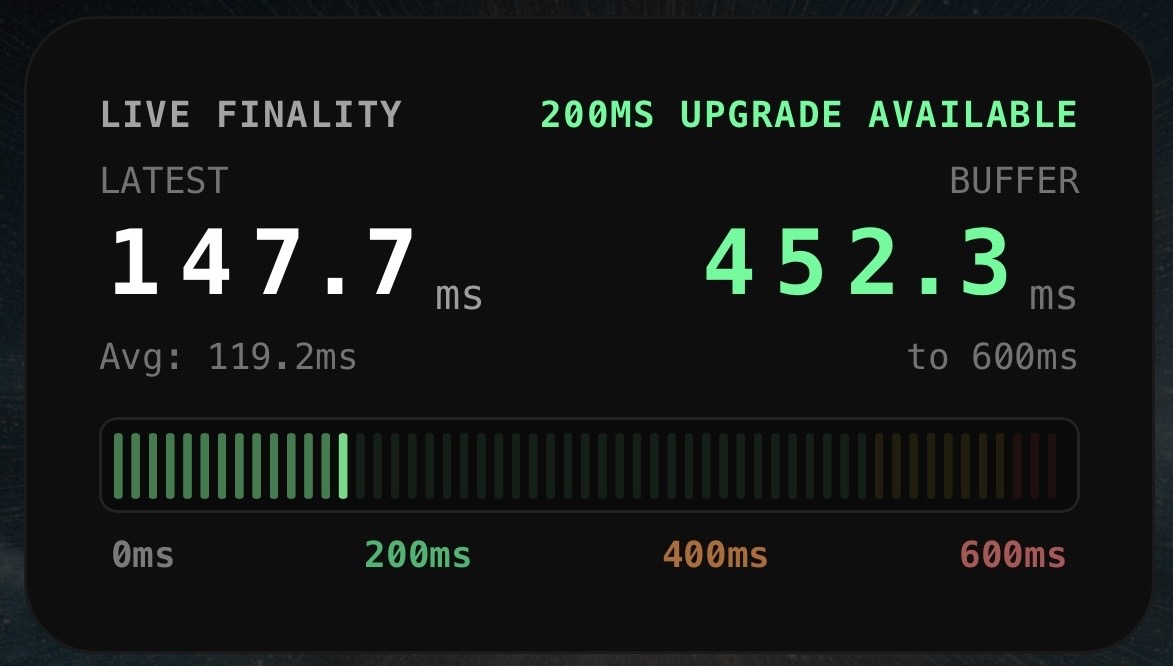
Supernova is live on Battle Net. Here's what changed under the hood and why it matters. The paradigm shift nobody's talking about: Every blockchain in the industry is measured on two metrics: block time and throughput. Faster blocks = better chain. More TPS = better chain. ---------- Supernova breaks this framing entirely. For the first time in the blockchain industry, block finality is faster than block slot allocation. Let me explain what that means. How every other blockchain works: Traditional blockchains follow Execute → Propose → Vote. Validators must execute every transaction before proposing a block. The block slot is the clock. Finality can never be faster than the slot, because execution is in the critical path. Ethereum: 12.8s slot, ~12.8 minutes finality. Solana: 400-600ms slot, 13 seconds finality. Sui: variable, ~500 to 1000 ms for complex transactions. In every case: finality ≥ block slot. This is treated as a law of physics. It's not. ---------- How Supernova works: We flipped the model to Propose/Vote → then Execute. Consensus proceeds independently of execution. Validators agree on transaction ordering first. Execution results are notarized in subsequent block headers via inclusion proofs. The inclusion proof is the key innovation: it allows a block to be finalized with cryptographic proof that its transactions will execute correctly, before the execution itself completes. The virtual state tracker in the transaction pool maintains a deterministic view of account states (nonces, balances, pending transactions) so consensus can validate without waiting for full execution. Result: the block is finalized faster than the block round itself. 88ms finality measured in testing. Sub-200ms under real-world conditions. On 600ms block slots. Finality < block slot. First time in the industry. ---------- The throughput story: With the same hardware specification as pre-Supernova mainnet, the network now achieves ~120,000 transactions per second in burst mode. Same nodes. Same machines. 10x the block production cadence. This is the same validator infrastructure running fundamentally better software. The backpressure system (Execution-Result Inclusion Estimator) ensures this scales safely - dynamically adjusting per-block gas limits if execution lags behind proposals, so minimum-spec nodes never get overwhelmed. What this means in context: - Block time: 6s → 600ms (10x) - Finality: ~88ms measured (first blockchain where finality < slot time) - Throughput: ~120,000 TPS burst mode (same hardware) - Architecture: consensus fully decoupled from execution - Sharding: 3 execution shards + metachain, fully preserved - Validators: 3,200+ nodes, no hardware upgrade required ---------- Battle of Nodes is stress-testing all of this right now. $150K in prizes to find what breaks. Validators, security researchers, builders, and guilds pushing the limits. If Supernova survives this, it ships to mainnet. 150,000 lines of new protocol code. 20 months of engineering. The most significant upgrade since genesis.
Lucian Mincu tweet media
English
55
217
640
37.3K
Hawkeye 69 retweetledi
MisterSpread
MisterSpread@MisterSpread·
This is not Vietnam, this is not Thailand, this is a cave in Romania 🇷🇴. Visit #Romania ❤️
English
14
62
521
14.3K