Simon Helleputte

129 posts

Simon Helleputte banner
Simon Helleputte

Simon Helleputte

@HelleputteSimon

PhD in Health Sciences | Research: Carbohydrates - Exercise Metabolism & Physiology - Type 1 Diabetes || Performance Coach @ All In Gent || GranfondoCyclist

Ghent, Belgium Katılım Ekim 2020
290 Takip Edilen228 Takipçiler
Simon Helleputte
Simon Helleputte@HelleputteSimon·
@jem_arnold I agree, but would add "and burning as much carbs as possible" (RER 1,00). So, purely theoretically, if an athlete just wants to crush his FTP in a lab test, aim for very high CHO intake to suppress fat oxidation and maximize total CHO oxidation....
English
0
0
1
20
Jem Arnold
Jem Arnold@jem_arnold·
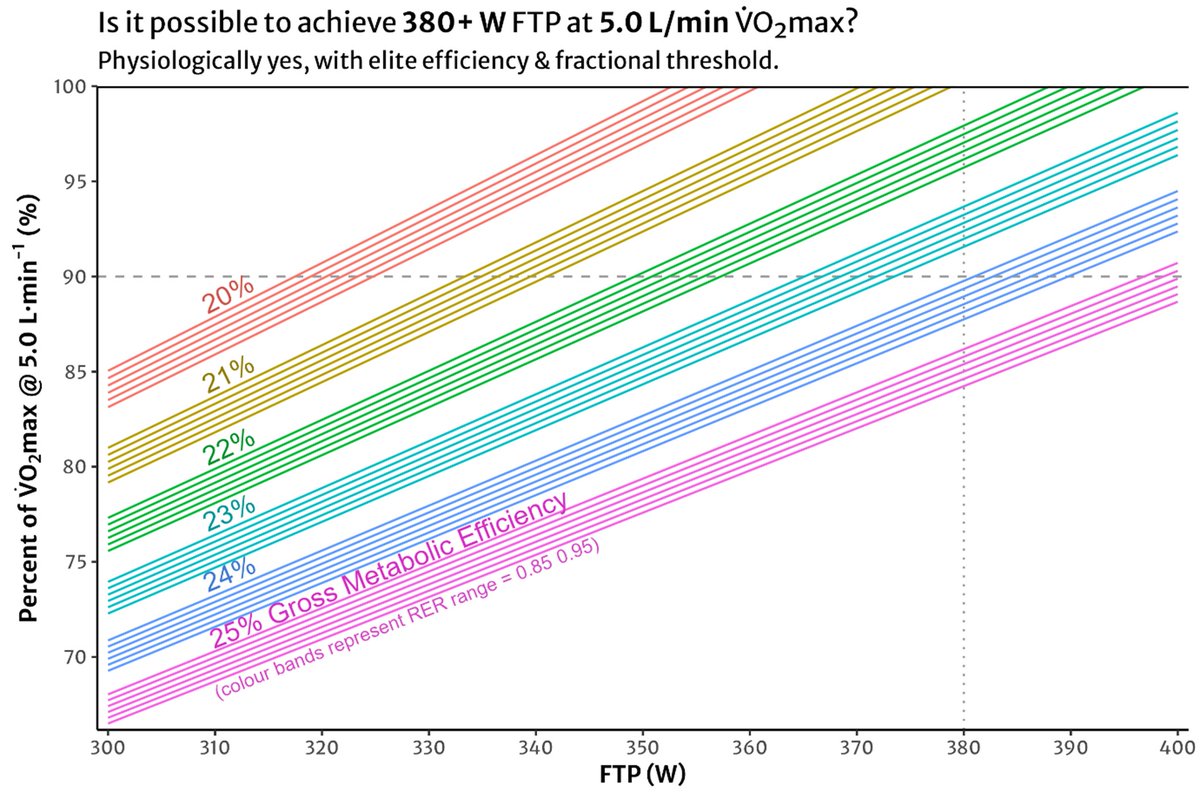
So for the specific question “is it possible to achieve an FTP of 380 W at 5.0 L/min VO2max?” Answer is yes, with elite metabolic efficiency ~24% and fractional threshold ~90 %VO2max *how* to achieve that is an entirely different question which I don't have code for (yet 😉)
English
2
0
8
656
Jem Arnold
Jem Arnold@jem_arnold·
Common question I hear: "My VO2max is x and my current threshold power is y. Is it possible for me to reach an FTP of z?” It's surprisingly simple to predict power from VO2, and vice versa We just need reasonable estimates for substrate oxidation and metabolic efficiency📊🧵/7
Jem Arnold tweet media
English
6
11
103
8.6K
Simon Helleputte
Simon Helleputte@HelleputteSimon·
@jem_arnold Agree (with regard to VO2) BUT the small RER-differences does lead to 10W difference at FTP...., which is relevant. (still, I think the variation in RER at FTP is smaller between athletes, purely based on lab experience, and also often times close to 1,00).
English
0
0
1
9
Jem Arnold
Jem Arnold@jem_arnold·
RER is a function of exercise intensity and substrate (lipid/glucose) oxidation At threshold, RER will be ~0.85-0.95, maybe up to 1.00 by the end. Along each GE isoline in the top figure, RER equates to a small difference of 2 %VO2max. GE drives the big differences
English
2
0
5
687
Simon Helleputte
Simon Helleputte@HelleputteSimon·
Our latest paper as part of the UCI series on Sports Nutrition in Professional Cycling is out: "Nutritionally Relevant Technological Advancements in Professional Cycling." We discuss CGM, portable sweat and lactate analyzers, ultrasound, ... @UCI_cycling pubmed.ncbi.nlm.nih.gov/40930506/
English
0
0
0
76
Simon Helleputte
Simon Helleputte@HelleputteSimon·
@SitkoSebastian Let's ignore frontal area - E.g. - Rider A (63kg) rides at LT2 of 315W with headwind, the latter which causes him to "lose output" ~30W or 9.5%. - Rider B (80kg) rides at LT2 of 400W with headwind, the latter which causes him to "lose output" ~30W or only 7.5%.
English
0
0
0
19
Simon Helleputte
Simon Helleputte@HelleputteSimon·
@SitkoSebastian For me, it all comes down to the fact that "a lighter rider 'loses' relatively more of his power output due to air resistance compared to a heavier rider" (since his absolute power is lower = hence a greater %-reduction in speed output for his power). Do you agree?
English
1
0
0
17
Sebastian Sitko
Sebastian Sitko@SitkoSebastian·
1/ 🚴⚡ Cycling isn’t all about W/kg: absolute power wins races too. W/kg is the go-to metric for climbing performance. But if you only focus on losing weight, you might be ignoring another key factor: absolute power. 🧵 Let’s break it down:
Sebastian Sitko tweet media
English
2
4
51
3.5K
Simon Helleputte retweetledi
Sam Scott, PhD
Sam Scott, PhD@SamNathanScott·
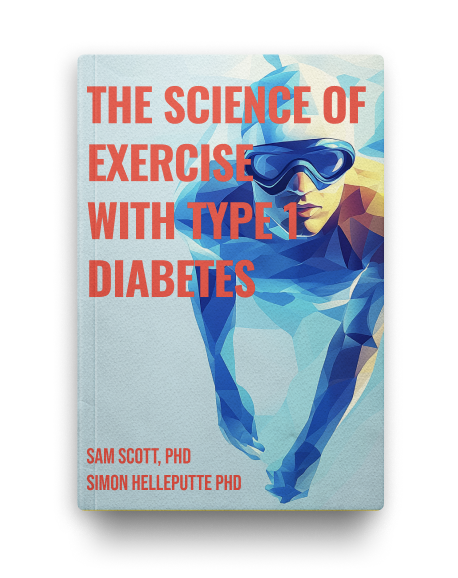
I'm thrilled to share the final cover artwork for our upcoming book, "𝙀𝙢𝙥𝙤𝙬𝙚𝙧𝙚𝙙: 𝗧𝗵𝗲 𝗦𝗰𝗶𝗲𝗻𝗰𝗲 𝗼𝗳 𝗘𝘅𝗲𝗿𝗰𝗶𝘀𝗲 𝘄𝗶𝘁𝗵 𝗧𝘆𝗽𝗲 𝟭 𝗗𝗶𝗮𝗯𝗲𝘁𝗲𝘀"! 📚🏃‍♂️ Amazon pre-order link lnkd.in/d8bGwpjU
Sam Scott, PhD tweet media
English
1
3
12
756
Simon Helleputte retweetledi
Sam Scott, PhD
Sam Scott, PhD@SamNathanScott·
In the coming weeks, we will be releasing our new book, "𝗧𝗵𝗲 𝗦𝗰𝗶𝗲𝗻𝗰𝗲 𝗼𝗳 𝗘𝘅𝗲𝗿𝗰𝗶𝘀𝗲 𝘄𝗶𝘁𝗵 𝗧𝘆𝗽𝗲 𝟭 𝗗𝗶𝗮𝗯𝗲𝘁𝗲𝘀." Now, we need your help! We've narrowed down the book cover art to a few options, and we'd love for you to vote for your favourite.
Sam Scott, PhD tweet mediaSam Scott, PhD tweet mediaSam Scott, PhD tweet mediaSam Scott, PhD tweet media
English
4
5
9
1K
Simon Helleputte retweetledi
Sam Scott, PhD
Sam Scott, PhD@SamNathanScott·
We are thrilled to announce our upcoming book on Diabetes and Exercise! After months of spending most of our evenings and weekends writing it, “𝗧𝗵𝗲 𝗦𝗰𝗶𝗲𝗻𝗰𝗲 𝗼𝗳 𝗘𝘅𝗲𝗿𝗰𝗶𝘀𝗲 𝘄𝗶𝘁𝗵 𝗧𝘆𝗽𝗲 𝟭 𝗗𝗶𝗮𝗯𝗲𝘁𝗲𝘀”, will be released as a paperback and eBook.
Sam Scott, PhD tweet mediaSam Scott, PhD tweet media
English
4
6
36
3.5K
Simon Helleputte retweetledi
ACREHAB | UGent
ACREHAB | UGent@acrehab_ugent·
💻 Ken jij onze 'From Science to Practice Webinars' al? 🎬 Dr. Simon Helleputte ging tijdens dergelijke webinar in op het belang en de toepassing van fysieke activiteit en sport bij type 1 diabetes en vertelt tijdens dit interview meer over de meerwaarde van dit navormingsformat.
Nederlands
0
1
2
187
Simon Helleputte retweetledi
Javier Gonzalez
Javier Gonzalez@Gonzalez_JT·
Our recent @IJSNEMJournal paper provides evidence that ingested glucose oxidation correlates with body size Inferences: Body size is the only factor - ❌ Body size is the most important factor- ❌ Body size is an important factor - ✅ doi.org/10.1123/ijsnem…
Javier Gonzalez tweet media
English
0
15
61
5.8K
Simon Helleputte
Simon Helleputte@HelleputteSimon·
Are you an athlete with type 1 diabetes? Please consider this wonderful app, providing Strava, glucose, HR and power in one overview📈 Gain insights into your fueling effects and try out different exercise strategies, and learn how to maintain stable blood glucose throughout!
Enhance-d@enhance_d

💥💥 BIG UPDATE! 💥💥 We are officially in Open BETA, which means you can now access our App and join the Enhance-d community! Go enhance-d.com/app and you can receive a direct link to download the BETA App #diabetes #exercise #t1d #training #diabetesmanagement #app #beta

English
1
1
5
493
Simon Helleputte
Simon Helleputte@HelleputteSimon·
Therefore, regular PA and limiting sedentary time should be encouraged to improve metabolic and cardiovascular health in this population. Future longitudinal studies should explore mutual interactions and synergistic effects of PA on these outcomes. (2/2)
English
0
0
2
80
Simon Helleputte
Simon Helleputte@HelleputteSimon·
Main conclusion: Higher levels of PA, lower sedentary behaviour and greater exercise capacity are favourably associated with long-term glycaemic control, body composition, insulin dosage, estimated insulin sensitivity and arterial stiffness in adults with T1D.
English
1
0
2
86
Simon Helleputte
Simon Helleputte@HelleputteSimon·
I think the answer lies in the middle, but also more attention is needed for the liver (!) and for research into separating exercise-stimulated glucose uptake from insulin, which is in fact not captured by these tests. Hence, more to be explored:-) (3/4)
English
1
0
1
63
Simon Helleputte
Simon Helleputte@HelleputteSimon·
Nice to see that exercise metabolism and especially insulin sensitivity - one of my main research interests - is a popular topic on the @EASDnews conference in Madrid. Nina Sloth Nielsen was presenting some interesting preliminary findings on the acute effects of exercise (1/4)
Simon Helleputte tweet mediaSimon Helleputte tweet media
English
1
0
2
190