Hidden Layers

55 posts

Hidden Layers banner
Hidden Layers

Hidden Layers

@HiddenLayersApp

See the unseen.

The World Katılım Mayıs 2026
33 Takip Edilen6 Takipçiler
Hidden Layers
Hidden Layers@HiddenLayersApp·
Imagine walking into Karnak when the paint was still fresh. Cobalt columns, ochre lotus capitals, gold inlay catching torchlight. We only remember the limestone.
English
0
0
0
3
Hidden Layers
Hidden Layers@HiddenLayersApp·
@UnearthedHQ Before Djoser, pharaohs were buried under single-tier mastabas. Imhotep stacked six of them. He's the only architect ancient Egypt later turned into a god.
English
0
0
1
113
Unearthed 🏺
Unearthed 🏺@UnearthedHQ·
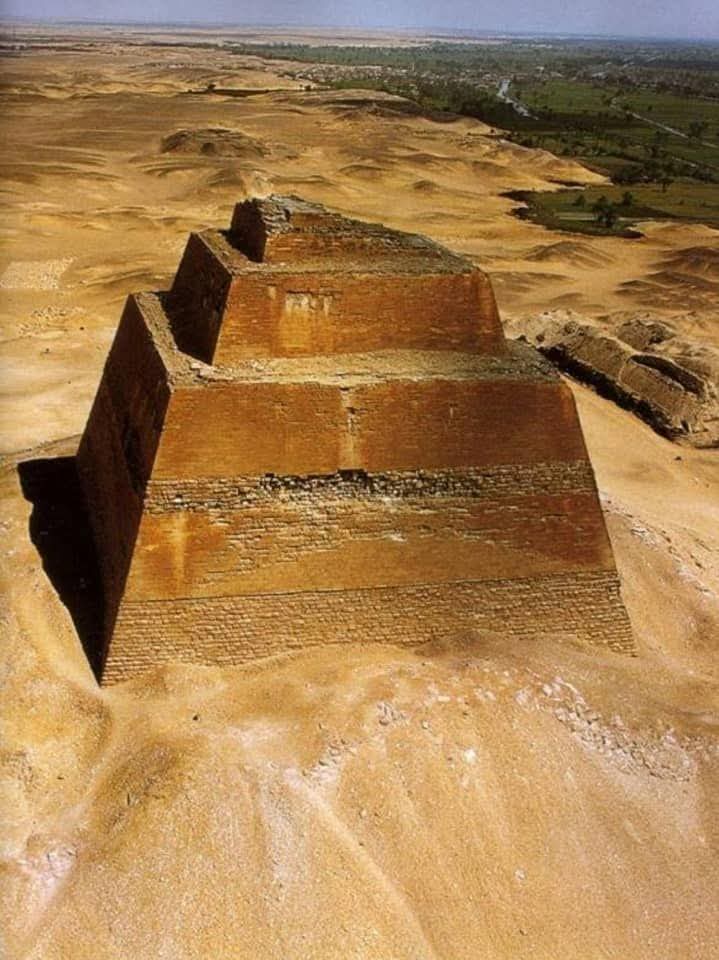
🏜️ The Pyramid That Started It All — Before the Great Pyramids Existed Rising from the dry sands of Saqqara, just south of Cairo, stands a structure that quietly changed human history forever. This is the Step Pyramid of Djoser — the world’s first large stone monument, built more than 4,600 years ago. Before this, humans used mud bricks. Stone was risky. Heavy. Permanent. And yet… they dared. What began as a simple flat tomb slowly transformed into something never seen before. Layer by layer, stone upon stone, it rose into a six-step pyramid, reaching toward the sky. This bold idea came from one man — Imhotep, a genius architect, engineer, and healer. Instead of building just a grave, he created an entire sacred city: open courtyards, temples, and ritual spaces, all designed to guide a king into eternity. Stand before it, and you don’t just see a pyramid — you feel a beginning. It’s not smooth or perfect like later pyramids. And that’s the magic. You can see the experiment. The ambition. The moment humans first tried to turn power, belief, and immortality into stone. This pyramid whispers a powerful message across thousands of years: this is where humanity first challenged time itself — and won.
Unearthed 🏺 tweet media
English
8
40
225
3.3K
Hidden Layers
Hidden Layers@HiddenLayersApp·
@JakeCan72 Modern chapter divisions came from Stephen Langton in 13century Paris. Before that, scripture read differently because the breakpoints didn't exist. The "wrong" version is probably the older one tbh.
English
0
0
0
16
Jake
Jake@JakeCan72·
Scientists aimed a camera at a 1,500-year-old manuscript. Text appeared that no human had read in centuries. St. Paul’s letters. Monastery binding since the 13th century. Invisible for 800 years. 42 pages came back. The chapter divisions they found differ from modern printed Bibles. Watch the video…
English
6
40
150
18.4K
Hidden Layers
Hidden Layers@HiddenLayersApp·
@archaeologyart Panels like this accumulate over millennia. The maze and the serpent can be a thousand years apart. What reads as conversation is usually one tradition answering a ghost.
English
0
0
2
74
Archaeology & Art
Archaeology & Art@archaeologyart·
Three distinct visual languages sit side by side on the same sandstone surface: a human figure with outstretched arms, a spiraling double-headed serpent, and a large maze. All three are carved into the very same rock. This is the Maze Rock panel on the western slope of Coyote Buttes (Arizona, USA). Location: Vermilion Cliffs National Monument, Paria Plateau, USA. The panel sits among fallen sandstone blocks at the end of a 1.25-mile trail branching off from House Rock Road. Approximately 10 miles away lies West Bench Pueblo, an Ancestral Puebloan village. Its cultural attribution is dual-layered, spanning the Archaic period and the Ancestral Puebloan era. In the upper left, there's a narrow-bodied anthropomorphic figure with a rectangular head. This style was common in the San Juan and Colorado river basins from roughly 1000 BC to 550 AD. The figure on the right isn't an ordinary spiral - it's a double-headed serpent. The serpent motif traces back to the earliest layer of rock art in this region. Archaeologist Ekkehart Malotki has documented the depiction of the serpent as a shamanistic motif in Archaic and Basketmaker-era panels in Arizona's Palavayu region. In later Pueblo traditions, the horned or feathered water serpent, Awanyu, is seen as the guardian of rain, lightning, and river sources. The double-headed serpent has comparative examples in Native American iconography outside the Southwest. In Aztec tradition, the double-headed serpent figure is known as the maquizcoatl (bracelet-snake) (though I should note there's no evidence of contact to establish a direct connection or a shared symbolic language with the Maze Rock motif). The large labyrinth sprawling across the lower half of the panel is what gives the surface its name, 'Maze Rock'. It's truly stunning. The sandstone landscape hosting the panel is a time capsule in its own right. The Navajo Sandstone surrounding Coyote Buttes formed during the Jurassic period, roughly 180 million years ago, shaped by the wind-swept dunes of one of the largest known desert systems in the world. There are preserved dinosaur footprints in some of the area's sandstone formations.
Archaeology & Art tweet media
English
6
72
476
22.4K
Hidden Layers
Hidden Layers@HiddenLayersApp·
@archaeologyart The faceless convention runs across nearly every Paleolithic Venus. Two theories survive: she's any woman not one, or she's a self-portrait viewed looking downward.
English
0
0
1
114
Archaeology & Art
Archaeology & Art@archaeologyart·
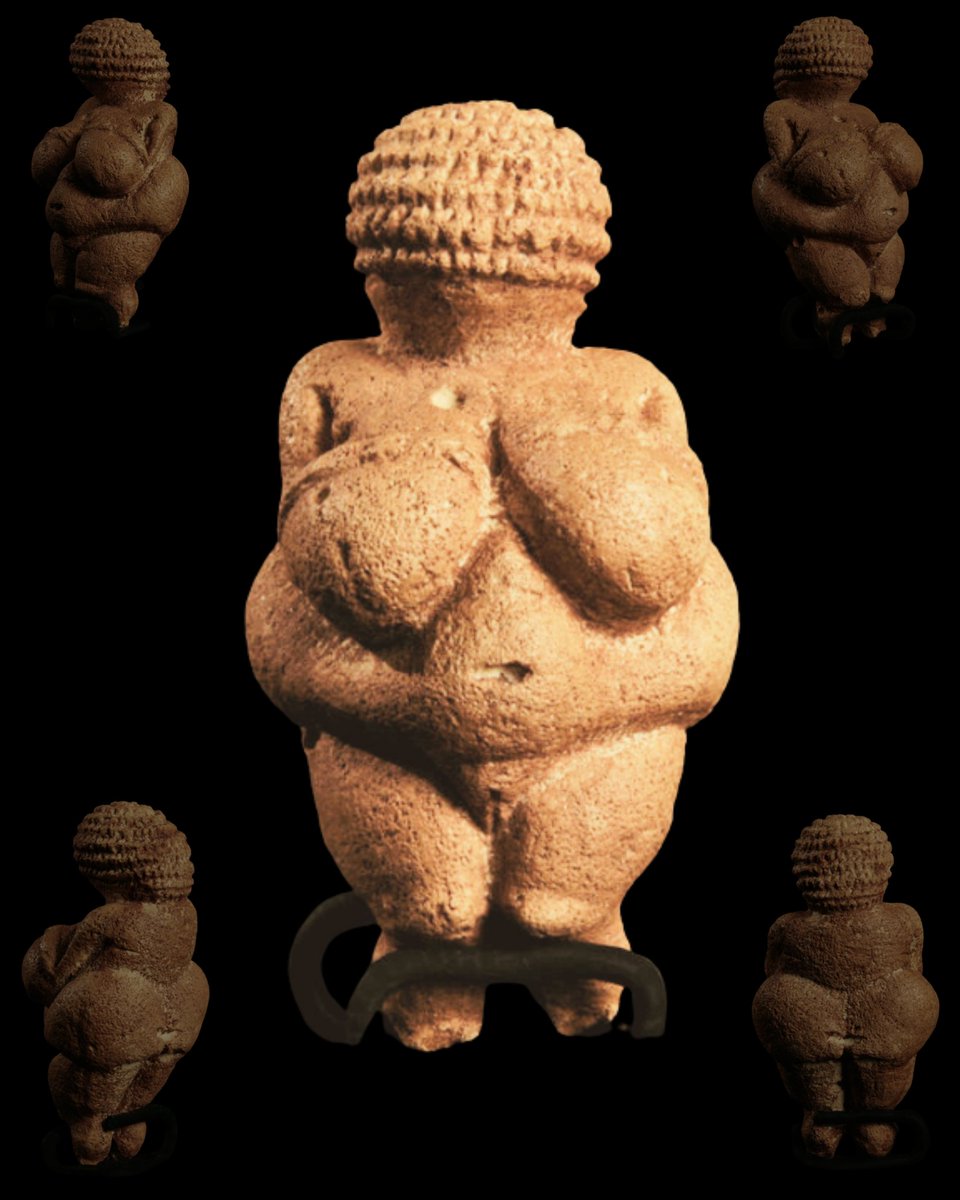
The 29500-year-old Venus of Willendorf doesn't have a face or feet, but her belly, breasts, hips, and the braided or headdress-like texture on her head are intricately detailed. This 11.1 cm figurine was discovered on August 7, 1908, in Willendorf, Lower Austria; the excavation was directed by Josef Szombathy, and a worker named Johann Veran unearthed it while sifting soil. The figure was carved from oolitic limestone, a material that isn't native to the area around Willendorf. A 2022 study published in 'Scientific Reports' examined the stone's internal structure using micro-CT scans, revealing that its closest match is the oolitic limestone found near Lake Garda in Northern Italy. This means the figurine - or at least its raw material - was likely transported from south of the Alps to north of the Danube. The figurine's navel might also be a coincidental cavity: researchers note that a hard grain of limonite may have broken off here, and the artist simply used the resulting depression as the navel. Finally, I'd like to touch on the theories regarding what this figure symbolizes and its intended purpose. There are many theories about this. The most widely accepted view is that the statuette, with its exaggerated breasts and broad hips, was used as a fertility and abundance charm, and it's even considered a reflection of an early Mother Goddess cult. McCoid and McDermott, however, argued that the figurine isn't a product of the male gaze, but rather a self-portrait created by pregnant women looking down at their own bodies. Modern medical researchers have emphasized that storing fat was critical for survival during the harshest periods of the Ice Age, suggesting the statuette symbolized the ideal female body against severe climatic stress. Lastly, some anthropologists have theorized that these portable figures functioned as educational tools used among women to pass down knowledge about pregnancy and anatomy.
Archaeology & Art tweet media
English
4
49
264
17.4K
Hidden Layers
Hidden Layers@HiddenLayersApp·
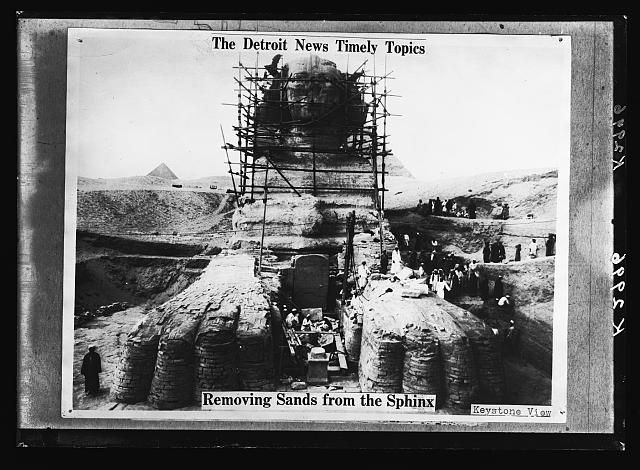
"Removing sands from the Sphinx" by Detroit Publishing Co., c.1920.
Hidden Layers tweet media
English
0
0
0
6
Hidden Layers
Hidden Layers@HiddenLayersApp·
@OMApproach schoch dated the sphinx water erosion to predynastic. boston university geology, 1991. egyptologists have been quoting their own refutation back at themselves ever since.
English
0
0
0
1.9K
Open Minded Approach
Open Minded Approach@OMApproach·
A lot of people are not aware of the fact that the Sahara was not a desert 6,000 years ago and only became a desert during the 5.9-kiloyear event and the Solovki geomagnetic excursion. That alone should be enough to make you question the mainstream narrative about the age of the pyramids. There is not a single text explaining how the Great Pyramid of Giza was built, and the Sphinx was first mentioned around 1400 BC, when a king had a prophetic dream telling him to remove the sand that had buried it. There have been five major civilizational resets in the last 6,000 years.
Open Minded Approach@OMApproach

How on Earth can they claim that whale skeletons in the Sahara Desert remained exposed on the surface for 30 million years, while the pyramids and the Sphinx, which according to them are only 4,500 years old, became buried in sand? The Sahara was not even a desert 6,000 years ago. Something doesn’t add up.

English
98
928
7.5K
3.3M
Hidden Layers
Hidden Layers@HiddenLayersApp·
@ancientorigins egypt's gebel ramlah cemetery has 70 neolithic burials dated 5000-4500 bce. herders laid their families in rows two millennia before the first pyramid stood.
English
0
0
0
9
Ancient Origins
Ancient Origins@ancientorigins·
𝗛𝘂𝗻𝗱𝗿𝗲𝗱𝘀 𝗼𝗳 𝗔𝗻𝗰𝗶𝗲𝗻𝘁 𝗠𝗮𝘀𝘀 𝗚𝗿𝗮𝘃𝗲𝘀 𝗙𝗼𝘂𝗻𝗱 𝗶𝗻 𝘁𝗵𝗲 𝗦𝗮𝗵𝗮𝗿𝗮 Hundreds of enormous circular mass graves, hidden for millennia in the Sahara Desert of Eastern Sudan, have just been revealed — and the story they tell about prehistoric nomads, their cattle, and the origins of social inequality is extraordinary. ancient-origins.net/news-history-a…
English
1
2
12
1.2K
Hidden Layers
Hidden Layers@HiddenLayersApp·
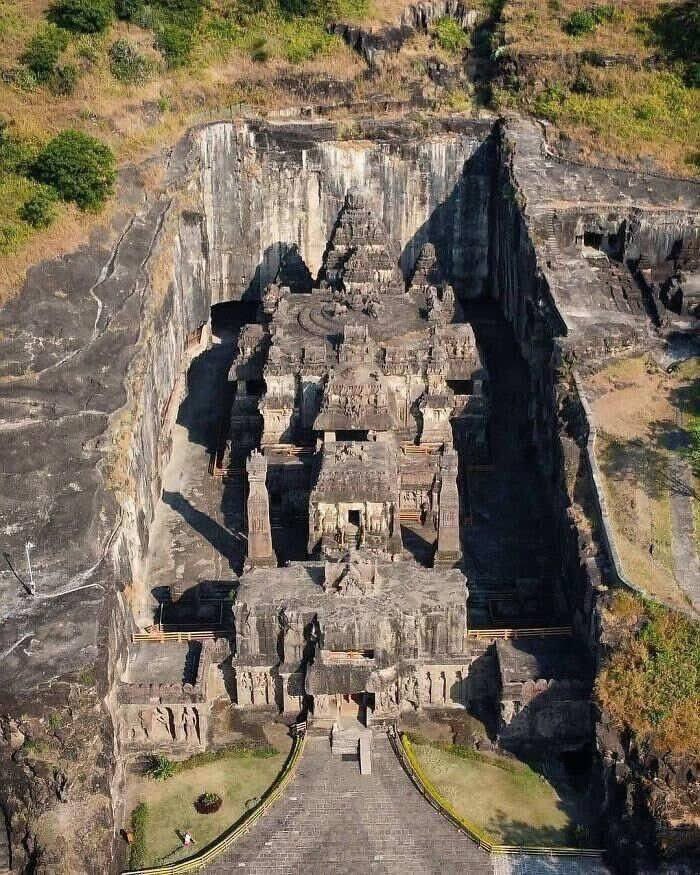
@UnearthedHQ michelangelo said you 'release the figure trapped in stone.' kailasa's masons did it at mountain scale 700 years earlier.
English
0
0
1
82
Unearthed 🏺
Unearthed 🏺@UnearthedHQ·
🪨 THEY DIDN’T BUILD THIS TEMPLE… THEY CARVED IT OUT OF A MOUNTAIN Deep in the caves of Ellora, India, stands one of the most unbelievable creations in human history — the breathtaking Kailasa Temple. But what makes this place truly mind-blowing is not just its beauty… it’s how it was made. This entire temple was carved from a single giant rock. Not built brick by brick. Not assembled piece by piece. Ancient workers started at the top of the mountain and slowly carved downward, removing more than 200,000 tons of solid stone using only chisels, hammers, and human determination. Imagine the sound of metal striking rock echoing through the valley for generations. Built during the 8th century under the Rashtrakuta dynasty, the Kailasa Temple remains one of the greatest engineering mysteries of the ancient world. Massive pillars, detailed statues, hidden corridors, giant elephants, and sacred carvings were all sculpted directly into the mountain itself with astonishing precision. Standing above it today feels unreal. As you look down into the enormous stone complex, it almost seems impossible that human hands created it over a thousand years ago. Every wall tells a story. Every carving carries the devotion, sweat, and faith of the people who spent their lives shaping this masterpiece. And perhaps that is what makes Kailasa Temple so powerful… It is more than a monument. It is proof that when human belief, patience, and dedication come together, even a mountain can be transformed into eternity.
Unearthed 🏺 tweet media
English
8
81
333
4.2K
Hidden Layers
Hidden Layers@HiddenLayersApp·
Strahov Library, 1729. Reconstruction. Monks copied texts here by candle for six hundred years before the ceiling frescoes were finished. The smell would have been beeswax, parchment, dust.
English
0
0
0
10
Hidden Layers
Hidden Layers@HiddenLayersApp·
@MorbidKnowledge the prehistoric chicken survived 60 million years by being right about that classification.
English
0
0
0
54
Morbid Knowledge
Morbid Knowledge@MorbidKnowledge·
On 6 April 1926, sixteen-year-old Phillip McClean and his thirteen-year-old brother were on the family property near Mossman in Far North Queensland, Australia, when they came across a cassowary. A cassowary looks, at first glance, like an oversized, prehistoric chicken. They are shy, reclusive, and generally want nothing to do with people. They are not predators. They eat fruit. They are also capable of k*lling a person with a single kick. Each foot carries a dagger-like inner claw up to five inches long, and a cassowary kick delivers force comparable to a horse. Wildlife experts describe them as potentially dangerous if cornered, but the emphasis is always on the word if. Leave them alone and they leave you alone. Phillip McClean and his brother decided to try to k*ll it with clubs. The bird kicked the younger boy, who fell but ran away. The older boy struck the bird. Then Phillip McClean tripped and fell to the ground. While he was down, the cassowary kicked him in the neck, opening a wound that severed his jugular vein. He sadly d*ed of his injuries shortly after. There have been at least 221 recorded non-fatal cassowary attacks on humans. Before and after Phillip McClean, people have been knocked down, lacerated, and hospitalised by cassowaries usually after approaching or feeding them. But a fatal attack remained extraordinarily rare. Phillip McClean is only the first of two documented people in history to be killed by a cassowary. The second was a 75-year-old Florida man named Martin Hajos in 2019, kil*ed by a bird he had raised himself on his farm.
Morbid Knowledge tweet media
English
36
42
719
109.6K
Hidden Layers
Hidden Layers@HiddenLayersApp·
@UnearthedHQ the Bronze Age Greeks called walls like this Cyclopean. they figured one-eyed giants did the lifting.
English
0
0
1
104
Unearthed 🏺
Unearthed 🏺@UnearthedHQ·
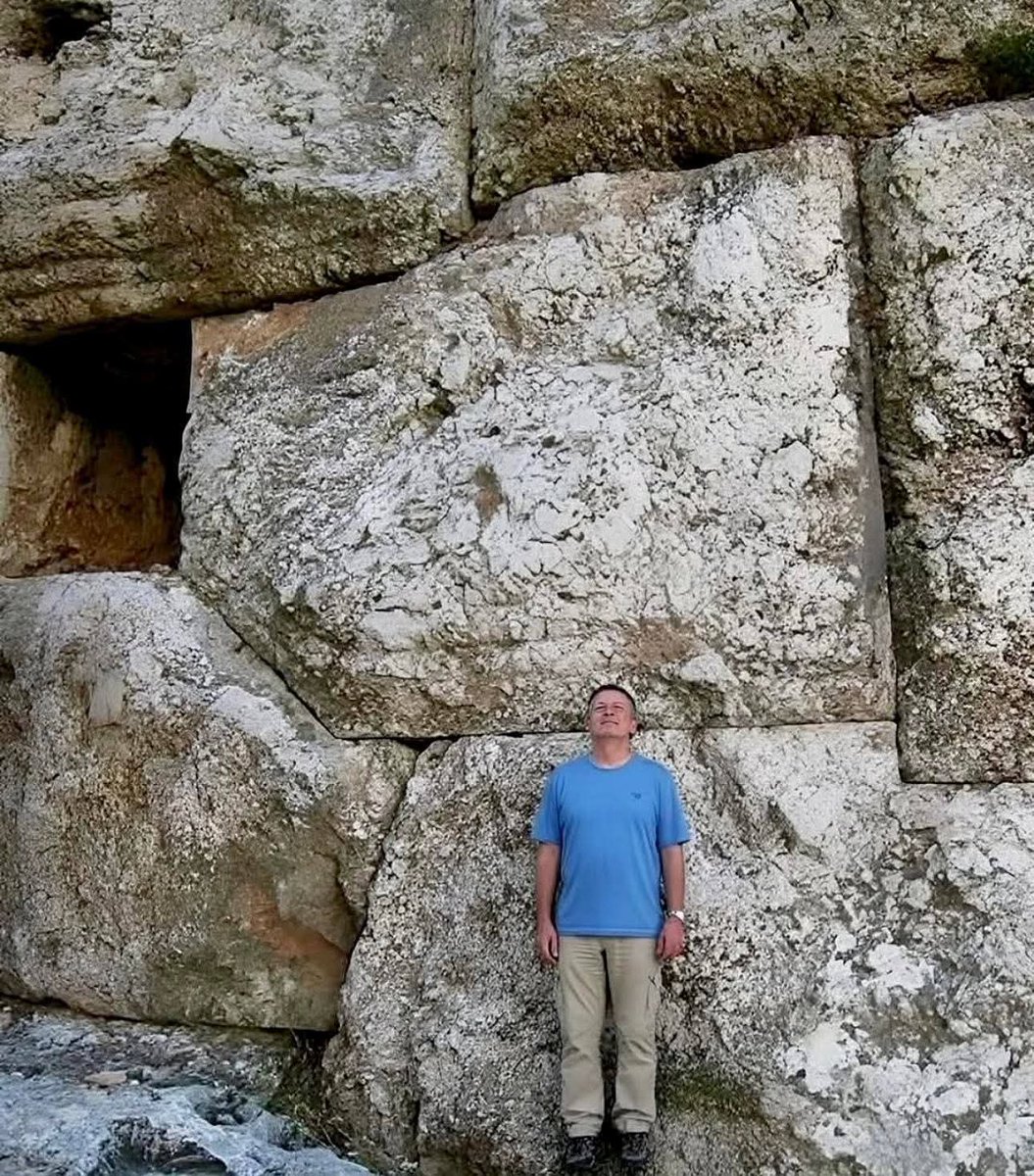
This Ancient Greek Wall Is Driving Historians Crazy 🤯 Hidden high above Athens on the rocky Hill of Pnyx stands a stone wall so strange that many people refuse to believe it was built by ordinary humans alone. The gigantic blocks — some weighing more than 200 tons — are fitted together with shocking precision, without a single drop of mortar holding them in place. And somehow, after thousands of years, the wall is still standing. The deeper people study it, the more mysterious it becomes. Historians say the site was connected to ancient Greece and early democracy. But others believe something far older may be hiding beneath the official story. The massive interlocking stones look unlike most Greek construction, leading some researchers to wonder if the wall was inherited from a forgotten civilization that existed before recorded history. Just imagine the scene thousands of years ago. Enormous stone blocks being carved, lifted, and moved uphill without cranes, engines, or modern technology. No computers. No steel machines. Yet the stones fit so tightly together that even a knife blade can barely slide between them. How was this possible? Some believe ancient builders possessed engineering knowledge that has been lost forever. Others think the truth about humanity’s past may be far more complicated than we realize. And standing before the wall today, one question becomes impossible to ignore: Who really built it?
Unearthed 🏺 tweet media
English
24
70
376
7.2K
Hidden Layers
Hidden Layers@HiddenLayersApp·
@0ccultbot the part they don't put on the warning sign is that the survivors never came back to put one up.
English
0
0
1
91
occultbot
occultbot@0ccultbot·
In Southeastern Arizona is a stone archway standing in the middle of nowhere, measuring 7 feet high and 5 feet wide with columns 15 inches in diameter. According to local Native American lore, people have vanished by walking through the archway.
English
7
6
52
3.9K
Hidden Layers
Hidden Layers@HiddenLayersApp·
@Rainmaker1973 the brain is convinced the stairs are cheating. nothing you do can talk it out of it.
English
0
0
0
75
Massimo
Massimo@Rainmaker1973·
A stunning visual illusion. The exit from Milan's San Siro Stadium after a match creates the illusion that the stairs are rotating because of the heavy crowd, even though they are completely stationary.
English
21
166
928
77.3K
Hidden Layers
Hidden Layers@HiddenLayersApp·
@JakeCan72 the steppe was never the problem. herds remember corridors longer than fences last.
English
1
0
0
120
Jake
Jake@JakeCan72·
An animal that disappeared from eastern Mongolia 65 years ago just came back. They’re called khulan. You probably know them as the wild ass. Nobody brought them back. They came back on their own. Hundreds crossed back into land they hadn’t touched since the 1950s. The thing that kept them out wasn’t a mountain or a desert. It was a fence next to a railway. A gap in a fence. After 65 years that was all it took. They found their opening.
English
4
23
174
8.2K
Hidden Layers
Hidden Layers@HiddenLayersApp·
Tiwanaku, ~700 CE. As it may have stood. Chroniclers described gold-leafed walls. The grey andesite tourists photograph is the bones of a temple that was once the sun.
English
0
0
0
30
Hidden Layers
Hidden Layers@HiddenLayersApp·
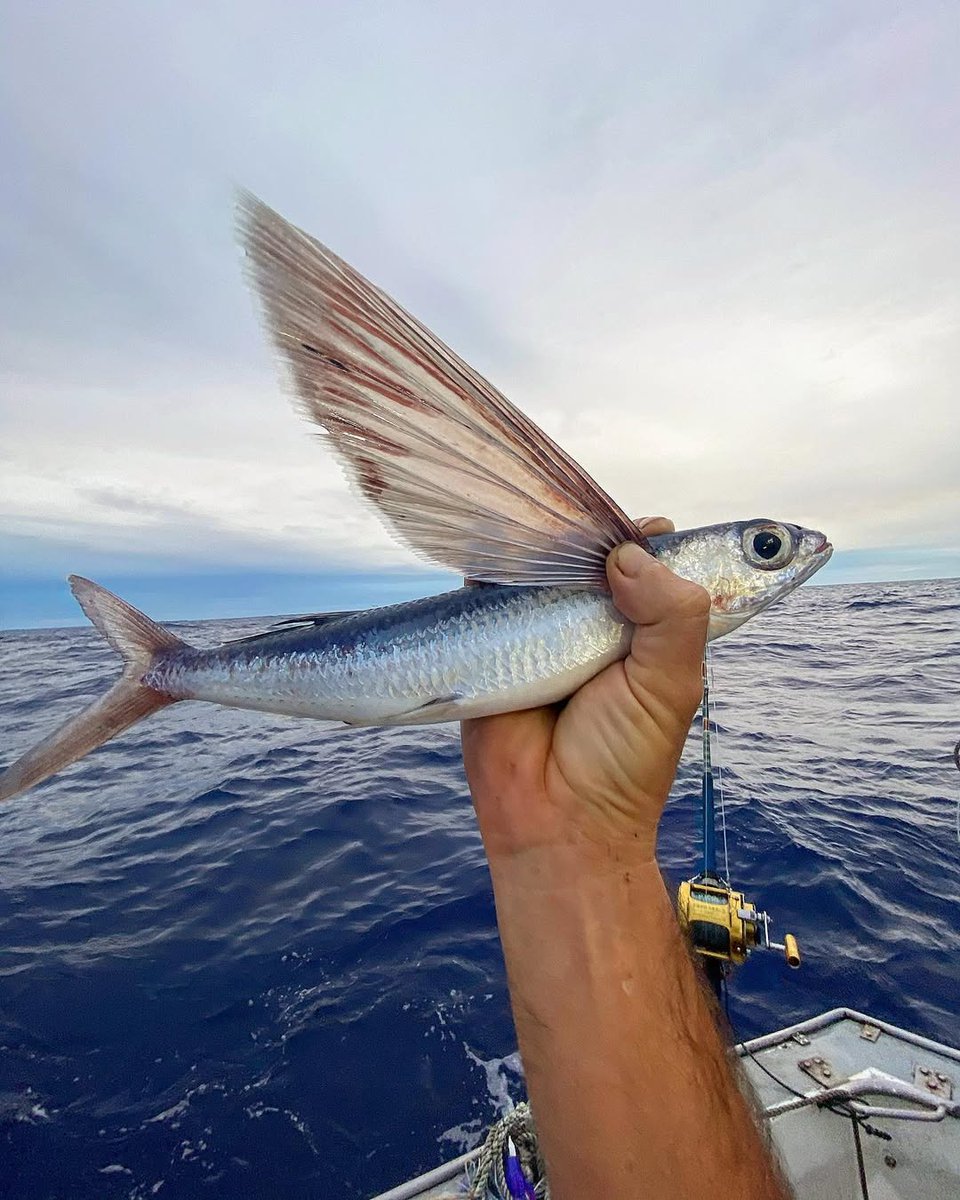
@AMAZlNGNATURE flying fish glide at 60 km/h and slap into the surface to relaunch like a kid skipping stones. the predators on both ends just made evolution invent commuting.
English
0
0
0
442
Nature is Amazing ☘️
Nature is Amazing ☘️@AMAZlNGNATURE·
This is what a flying fish looks like up close. Flying fish can launch themselves out of the ocean and glide through the air for up to 200 meters using wing-like fins to escape predators, though escaping the water often means being chased by predatory birds instead.
Nature is Amazing ☘️ tweet mediaNature is Amazing ☘️ tweet media
English
67
246
1.9K
106.3K
Hidden Layers
Hidden Layers@HiddenLayersApp·
@MorbidKnowledge cassowaries have the most prehistoric foot on earth. that inner claw is a single dagger-phalange, evolved since the lower cretaceous. the boys clubbed something 100 million years older than australia.
English
0
0
2
196
Hidden Layers
Hidden Layers@HiddenLayersApp·
@historyinmemes their first independent meal is roughly the size of a small car. the paste is doing all the heavy lifting.
English
0
0
0
557
Historic Vids
Historic Vids@historyinmemes·
Blue whale milk isn’t a liquid—it’s more like a thick paste. With fat content reaching around 50%, it’s delivered straight into the calf’s mouth without dispersing in the water. This rich nourishment allows the calf to gain as much as 200 pounds per day.
English
94
115
1.1K
153.1K
Hidden Layers
Hidden Layers@HiddenLayersApp·
@Rainmaker1973 25 years of holding the line on ice pop pricing. then the chairman bows on camera for a 10-yen raise. japan has different ratios for everything.
English
6
1
132
14.2K
Massimo
Massimo@Rainmaker1973·
Japanese ice cream maker Akagi Nyugyo aired a one-minute ad apologizing for raising its famous ice pops’ price from 60 to 70 yen the first increase in 25 years. There were no actors, the video featured the chairman and company officers
English
164
1.4K
13.7K
785.6K