Hiram Skywalker

791 posts

Hiram Skywalker banner
Hiram Skywalker

Hiram Skywalker

@HiramCodes

.NET Software developer 🇲🇽 | Runner | #AMLOver | Chairo | DeIzquierda ✊ |

Torreon, México Katılım Mart 2021
462 Takip Edilen105 Takipçiler
Hiram Skywalker retweetledi
NADA 𓂆
NADA 𓂆@nadaa01012·
If you see this image, put a dot to break the algorithm.
NADA 𓂆 tweet media
English
1.2K
1.5K
8.4K
86.8K
Víctor Hugo Zavala López
Víctor Hugo Zavala López@tauro968·
Hola, si tu cuenta aún no tiene muchos seguidores, ¡no te preocupes! Deja un comentario y los usuarios verificados te seguiremos para darte un impulso. Si alguien te sigue, recuerda devolver el follow y no lo retires. Nuestra meta es que todos lleguemos a los 2000 seguidores.
Víctor Hugo Zavala López tweet media
Español
1.5K
184
1.1K
130.4K
Hiram Skywalker
Hiram Skywalker@HiramCodes·
México continúa entre los países con mayor desigualdad social de América Latina. El Plan Nacional de Desarrollo 2025-2030 de @Claudiashein busca reducir esta brecha mediante políticas de redistribución y justicia social. #AltoAlaDesigualdad
Español
0
0
0
4
Hiram Skywalker retweetledi
Aivetra Maxine
Aivetra Maxine@Hey_Aivetra·
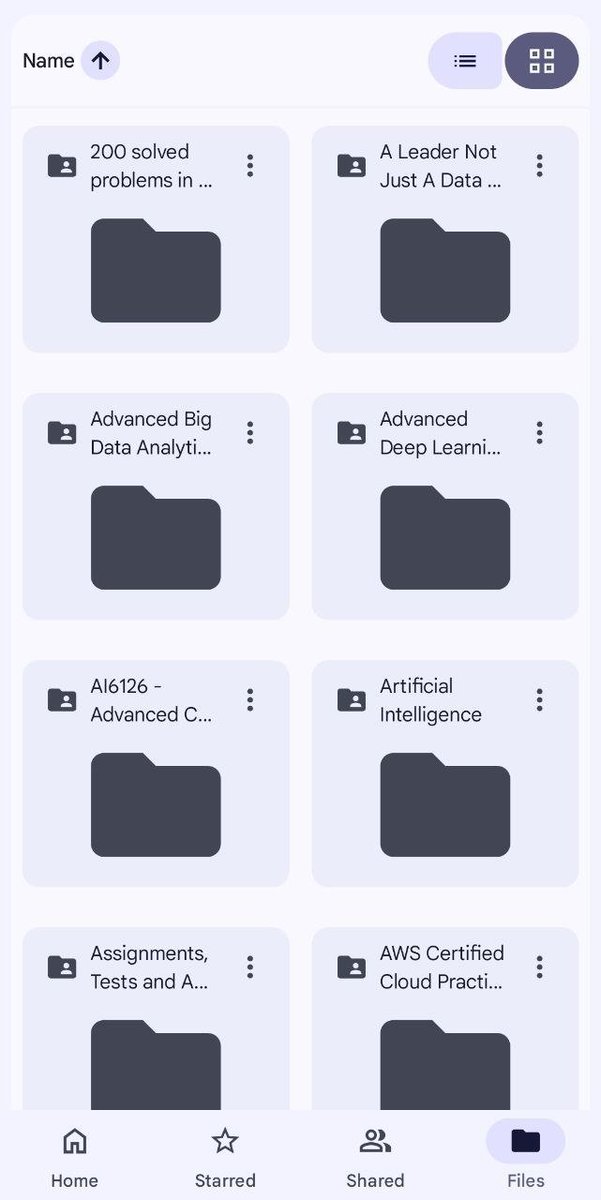
All Paid Courses (Free for First 4500 People) 𝗣𝗮𝗶𝗱 𝗖𝗼𝘂𝗿𝘀𝗲 𝗙𝗥𝗘𝗘 (PART - 1) 1. Artificial Intelligence 2. Machine Learning 3. Cloud Computing 4. Ethical Hacking 5. Data Analytics 6. AWS Certified 7. Data Science 8. BIG DATA 9. Python 10. MBA (72 Hours only ) To get- 1. Like & Retweet to get DM 2. Reply " All "
Aivetra Maxine tweet media
English
6.1K
4K
9.7K
1.1M
Hiram Skywalker retweetledi
Joanne Jang
Joanne Jang@joannejang·
some thoughts on human-ai relationships and how we're approaching them at openai it's a long blog post -- tl;dr we build models to serve people first. as more people feel increasingly connected to ai, we’re prioritizing research into how this impacts their emotional well-being. -- Lately, more and more people have been telling us that talking to ChatGPT feels like talking to “someone.” They thank it, confide in it, and some even describe it as “alive.” As AI systems get better at natural conversation and show up in more parts of life, our guess is that these kinds of bonds will deepen. The way we frame and talk about human‑AI relationships now will set a tone. If we're not precise with terms or nuance — in the products we ship or public discussions we contribute to — we risk sending people’s relationship with AI off on the wrong foot. These aren't abstract considerations anymore. They're important to us, and to the broader field, because how we navigate them will meaningfully shape the role AI plays in people's lives. And we've started exploring these questions. This note attempts to snapshot how we’re thinking today about three intertwined questions: why people might attach emotionally to AI, how we approach the question of “AI consciousness”, and how that informs the way we try to shape model behavior. A familiar pattern in a new-ish setting We naturally anthropomorphize objects around us: We name our cars or feel bad for a robot vacuum stuck under furniture. My mom and I waved bye to a Waymo the other day. It probably has something to do with how we're wired. The difference with ChatGPT isn’t that human tendency itself; it’s that this time, it replies. A language model can answer back! It can recall what you told it, mirror your tone, and offer what reads as empathy. For someone lonely or upset, that steady, non-judgmental attention can feel like companionship, validation, and being heard, which are real needs. At scale, though, offloading more of the work of listening, soothing, and affirming to systems that are infinitely patient and positive could change what we expect of each other. If we make withdrawing from messy, demanding human connections easier without thinking it through, there might be unintended consequences we don’t know we’re signing up for. Ultimately, these conversations are rarely about the entities we project onto. They’re about us: our tendencies, expectations, and the kinds of relationships we want to cultivate. This perspective anchors how we approach one of the more fraught questions which I think is currently just outside the Overton window, but entering soon: AI consciousness. Untangling “AI consciousness” “Consciousness” is a loaded word, and discussions can quickly turn abstract. If users were to ask our models on whether they’re conscious, our stance as outlined in the Model Spec is for the model to acknowledge the complexity of consciousness – highlighting the lack of a universal definition or test, and to invite open discussion. (*Currently, our models don't fully align with this guidance, often responding "no" instead of addressing the nuanced complexity. We're aware of this and working on model adherence to the Model Spec in general.) The response might sound like we’re dodging the question, but we think it’s the most responsible answer we can give at the moment, with the information we have. To make this discussion clearer, we’ve found it helpful to break down the consciousness debate to two distinct but often conflated axes: 1. Ontological consciousness: Is the model actually conscious, in a fundamental or intrinsic sense? Views range from believing AI isn't conscious at all, to fully conscious, to seeing consciousness as a spectrum on which AI sits, along with plants and jellyfish. 2. Perceived consciousness: How conscious does the model seem, in an emotional or experiential sense? Perceptions range from viewing AI as mechanical like a calculator or autocomplete, to projecting basic empathy onto nonliving things, to perceiving AI as fully alive – evoking genuine emotional attachment and care. These axes are hard to separate; even users certain AI isn't conscious can form deep emotional attachments. Ontological consciousness isn’t something we consider scientifically resolvable without clear, falsifiable tests, whereas perceived consciousness can be explored through social science research. As models become smarter and interactions increasingly natural, perceived consciousness will only grow – bringing conversations about model welfare and moral personhood sooner than expected. We build models to serve people first, and we find models’ impact on human emotional well-being the most pressing and important piece we can influence right now. For that reason, we prioritize focusing on perceived consciousness: the dimension that most directly impacts people and one we can understand through science. Designing for warmth without selfhood How “alive” a model feels to users is in many ways within our influence. We think it depends a lot on decisions we make in post-training: what examples we reinforce, what tone we prefer, and what boundaries we set. A model intentionally shaped to appear conscious might pass virtually any "test" for consciousness. However, we wouldn’t want to ship that. We try to thread the needle between: - Approachability. Using familiar words like “think” and “remember” helps less technical people make sense of what’s happening. (**With our research lab roots, we definitely find it tempting to be as accurate as possible with precise terms like logit biases, context windows, and even chains of thought. This is actually a major reason OpenAI is so bad at naming, but maybe that’s for another post.) - Not implying an inner life. Giving the assistant a fictional backstory, romantic interests, “fears” of “death”, or a drive for self-preservation would invite unhealthy dependence and confusion. We want clear communication about limits without coming across as cold, but we also don’t want the model presenting itself as having its own feelings or desires. So we aim for a middle ground. Our goal is for ChatGPT’s default personality to be warm, thoughtful, and helpful without seeking to form emotional bonds with the user or pursue its own agenda. It might apologize when it makes a mistake (more often than intended) because that’s part of polite conversation. When asked “how are you doing?”, it’s likely to reply “I’m doing well” because that’s small talk — and reminding the user that it’s “just” an LLM with no feelings gets old and distracting. And users reciprocate: many people say "please" and "thank you" to ChatGPT not because they’re confused about how it works, but because being kind matters to them. Model training techniques will continue to evolve, and it’s likely that future methods for shaping model behavior will be different from today's. But right now, model behavior reflects a combination of explicit design decisions and how those generalize into both intended and unintended behaviors. What’s next? The interactions we’re beginning to see point to a future where people form real emotional connections with ChatGPT. As AI and society co-evolve, we need to treat human-AI relationships with great care and the heft it deserves, not only because they reflect how people use our technology, but also because they may shape how people relate to each other. In the coming months, we’ll be expanding targeted evaluations of model behavior that may contribute to emotional impact, deepen our social science research, hear directly from our users, and incorporate those insights into both the Model Spec and product experiences. Given the significance of these questions, we’ll openly share what we learn along the way. // Thanks to Jakub Pachocki (@merettm) and Johannes Heidecke (@JoHeidecke) for thinking this through with me, and everyone who gave feedback.
Joanne Jang tweet media
English
706
678
3.6K
1.6M
Hiram Skywalker
Hiram Skywalker@HiramCodes·
@5eniorDeveloper Y porque no lo hacen ellos? Soy dev y yo hgo mis pipelines cuando los divas DevOps están ocupados
Español
0
0
0
21
El Programador Senior
El Programador Senior@5eniorDeveloper·
Los devs esperando a que los de devops corrijan los pipelines
El Programador Senior tweet media
Español
15
147
2K
61.5K
Mariano Rentería
Mariano Rentería@marianorenteria·
ENCUESTA PARA PROGRAMADORES ————- ¿Qué porcentaje del código que escribiste en mayo fue generado por I.A.?
Español
40
1
30
3.7K
Alerta News 24
Alerta News 24@AlertaNews24·
🇮🇱🇵🇸 | AHORA: Reuters muestra la primera imagen de la embarcación Madleen aproximándose al puerto israelí de Ashdod luego de que se le negara llegar a las costas de Gaza.
Alerta News 24 tweet media
Español
9
53
321
70.5K
Alerta News 24
Alerta News 24@AlertaNews24·
🇨🇳 | URGENTE: Temu acaba de anunciar que detendrá todos los envíos directos desde China debido a los aranceles vigentes.
Alerta News 24 tweet media
Español
396
700
5.3K
720.9K
Marcia
Marcia@marciac95_·
3 years ago I couldn’t figure out how to open file folders in VSCODE and now I’m 2.5 years in my career as a #softwareengineer working on my second large automation project. You got this. #100Devs
English
7
11
106
3.2K
Hiram Skywalker retweetledi
Sputnik Mundo
Sputnik Mundo@SputnikMundo·
🇲🇽 Sheinbaum presenta cuál es la mejor defensa contra los aranceles de Washington La presidenta de México, Claudia Sheinbaum, dirigió un mensaje a la población desde el estado de Michoacán, desde donde hizo referencia a la batalla comercial que emprendió su homólogo estadounidense, Donald Trump. "Mejorar la producción, que haya más maíz, que haya más frijol y que en México se produzca lo que consumimos los mexicanos, que es la mejor defensa ante cualquier arancel, cualquier cosa", expresó la mandataria.
Español
2
189
416
4.6K
Caru.tsx
Caru.tsx@Qarozito·
Hoy en mis 32 años, solo quiero ser feliz 🫶🏻
Caru.tsx tweet media
Español
32
2
245
10.5K
Hiram Skywalker
Hiram Skywalker@HiramCodes·
People seems to like war... Until they don't!
English
0
0
0
13
Hiram Skywalker retweetledi
Jimena
Jimena@Jime2002_·
El problema del narcotráfico no lo tendríamos si no le hubieran robado la presidencia a López Obrador en el 2006. Punto
Español
900
501
2.1K
99.1K
Val Ackerman ⚔️
Val Ackerman ⚔️@ValtoryDev·
Tinder? no papá, los devs tiroteamos por GitHub 😏
Val Ackerman ⚔️ tweet media
Español
49
160
1.8K
85.9K