RomRom

1.2K posts

RomRom

RomRom

@HoaTranRom

🌐 On-chain everywhere @CNPYNetwork

Viet Nam Katılım Haziran 2024
1.2K Takip Edilen550 Takipçiler
Sabitlenmiş Tweet
RomRom
RomRom@HoaTranRom·
"No Canton without TR7ST, no TR7ST without 7Ridge." 🔥🌀 7Ridge(@7RIDGE1) isn’t just an app… it’s the TRUST ENGINE of Canton. Imagine logging into 5 different apps. Normally: passwords, KYC spam, data leaks. With 7Trust (by 7Ridge): 👉 One verified credential 👉 Works across apps 👉 Your secrets stay secret 👁️‍🗨️ They don’t see your data. They just see ✅ “you’re legit.” That’s privacy + interoperability in ACTION. Oh and btw… 7Ridge is also: ⚖️ Part of Canton governance 🛡️ A validator keeping the network honest 📊 Handling on-chain data with stealth mode So yeah, 7Ridge isn’t background noise — it’s the 🔑 that makes @CantonNetwork apps actually usable without turning you into free data. Infographic below, but beware… it might change how you think about identity forever 👇 #CantonGraphics #CantonNetwork #Web3Identity
RomRom tweet media
English
3
0
14
644
RomRom
RomRom@HoaTranRom·
@ThngBi157273 Bác add tele em với: @hoatranit em tính hỏi con bê tông (Conc) á mà. Thanks Bác
Tiếng Việt
0
0
0
3
RomRom retweetledi
Eazy
Eazy@Eazyxbt·
See you on discord Aro fam, may the best man win the prizes 😌
Eazy tweet mediaEazy tweet media
English
127
110
151
1.2K
RomRom
RomRom@HoaTranRom·
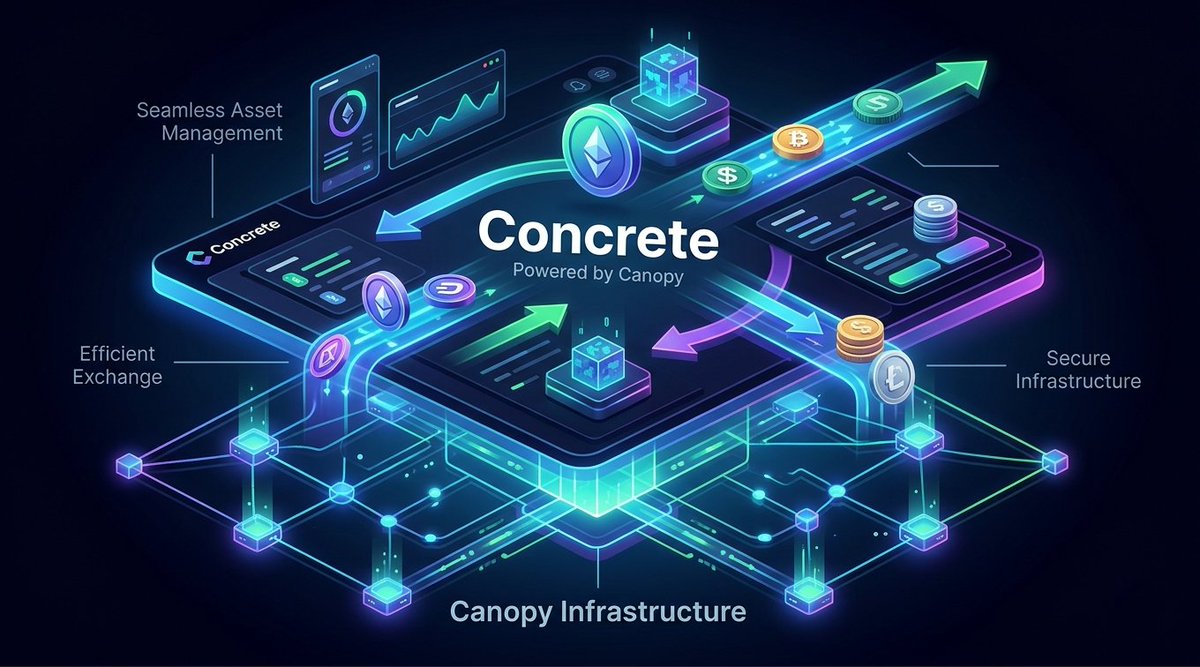
For a long time, I believed the idea that “DeFi is trustless.” No middlemen. No need to trust anyone. Just trust the code. But the more time I spent onchain, the more I realized something simple: Trust never disappeared — it just moved. We trust smart contracts to behave correctly. We trust oracles to provide accurate data. We trust governance to make good decisions. We trust bridges to stay secure. So the real question isn’t “is DeFi trustless?” It’s: **where is the trust, and how is it designed?** Sometimes, what looks decentralized is just… an illusion. Multisigs, low-participation DAOs, delayed timelocks — they can give a sense of safety, but don’t always hold up under real stress. That’s why I’m starting to think about DeFi differently: Not as trustless systems, but as systems that **engineer trust**. Clear roles. Defined permissions. Real constraints. And the ability to respond when things go wrong. This is what makes a system resilient — not just decentralized on paper, but functional in reality. That’s also what I find interesting about **Concrete**. Instead of hiding trust behind narratives, it makes it explicit — combining onchain enforcement with structured roles and operational design. Because in the end, code alone isn’t enough. The future of DeFi won’t be about removing trust. It will be about designing it better. Explore Concrete at concrete.xyz
RomRom tweet media
English
0
0
0
4
RomRom
RomRom@HoaTranRom·
On-Chain Stablecoin NeoBank is here — and it’s changing everything. Say goodbye to traditional banking headaches: - No more bank accounts - No seed phrases or wallet stress - Zero hidden fees - No chargebacks - Instant settlement in stablecoins + full self-custody AllScale = The First On-Chain Stablecoin NeoBank Receive payments from anywhere in the world → Money lands in your wallet instantly. Perfect for creators, freelancers, and micro-businesses who want to scale globally with the ease of ShopeePay — but fully on-chain. From 3–5 day waits → settled in seconds. From complicated crypto → smooth everyday payments. This is the future of money: On-chain. Self-custodial. Actually usable. Ready to switch to stablecoin neobanking? 👇@allscaleio #AllScale #StablecoinNeoBank #OnChainPayments #AllScaleCheckout
English
0
0
1
13
RomRom
RomRom@HoaTranRom·
One pattern I’ve seen again and again in DeFi: A new protocol launches. APY looks amazing. Capital rushes in. A few weeks later, yield drops and liquidity moves somewhere else. It happens so often that I started asking a different question: Not “what pays the most today?” But “what can actually last?” To me, a sustainable DeFi strategy means returns that can survive different market cycles — not just one hype phase. Usually there’s a big difference between: Temporary yield → driven by token emissions and incentives Real yield → driven by trading fees, lending demand, arbitrage, real activity The first can attract fast capital. The second is usually more durable. I’ve also learned that headline APY hides a lot: Gas costs Slippage Rebalancing friction Changing market correlations A strategy can look great on paper and perform very differently in reality. That’s why I’m paying more attention to **risk-adjusted yield** and systems that actively manage capital. This is where **Concrete vaults** are interesting. Instead of pure yield chasing, they focus on **managed DeFi**, adapting across opportunities and aiming for more sustainable returns. For example, @ConcreteXYZ DeFi USDT offers up to ~8.5% stable yield. It may look less exciting than short-term spikes, but consistency often wins over time. I think the future of DeFi won’t belong to the highest APY. It will belong to the strategies that last. Explore Concrete at: app.concrete.xyz/earn
RomRom tweet media
English
0
0
0
7
Trần Đình Vũ
Trần Đình Vũ@jbdinhvu55·
Ngày 15/4, CSGT truy đuổi em học sinh lớp 12 gây TNGT, sau đó anh CSGT này quay đầu bỏ đi, gọi cứu hộ hay gì đó, không biết có trở lại hiện trường không thì không biết. Vụ việc xảy ra tại Cư Pơng ( Krong Búk cũ ) được biết em học sinh này đã không qua khỏi
Tiếng Việt
174
56
1.2K
260.6K
RomRom
RomRom@HoaTranRom·
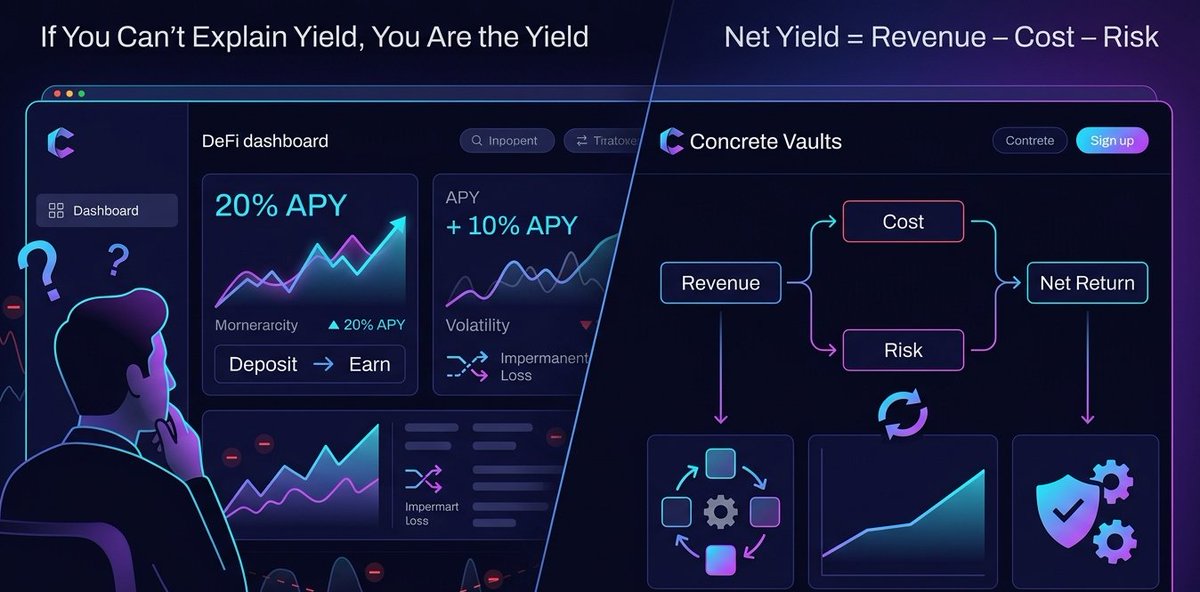
At first, DeFi felt simple to me. Deposit → earn → watch the APY go up. Dashboards made everything look easy. Numbers updated in real time, yields looked attractive, and returns seemed to compound automatically. But I rarely asked the most important question: Where is that yield actually coming from? Over time, I realized that the number you see isn’t the full story. A high APY doesn’t account for things like impermanent loss, rebalancing costs, volatility, or execution friction. What looks like 20% can end up being much lower in reality. And not all yield is the same. Some comes from real activity like trading fees or lending. Some comes from incentives that may not last. That’s when something clicked for me: If you don’t understand the system, you might be the one subsidizing it. Providing liquidity without modeling risk. Chasing rewards while absorbing downside. Same system — different outcomes. The difference is understanding. That’s why I’m starting to see a shift from yield chasing → yield engineering. Instead of guessing, it’s about structured exposure, managing risk, and focusing on net returns. This is where **@ConcreteXYZ Vaults** make sense. They automate allocation, rebalance strategies, and reduce manual mistakes — turning DeFi into something more like a system than a gamble. Because in the end, yield isn’t just a number. It’s revenue minus cost, adjusted for risk. Explore Concrete at app.concrete.xyz
RomRom tweet media
English
0
0
0
7
RomRom
RomRom@HoaTranRom·
@saudien95nt có tip nào tăng follow verifed không bác ơi
Tiếng Việt
1
0
1
12
Sâuđiên95🐬TermMax
Sâuđiên95🐬TermMax@saudien95nt·
6 ngày build X cụa tuôi. Đi du học thì bị bóp tương tác. Target thì trong 3 tháng phải được 5M view. Ăn được tiền của ngoại Musk cũng “trần ai khoai củ” lắm. Mà thôi kệ đi, biết đâu lúc nhận đc payX cũng là lúc mình về hưu. Lấy tiền đó dưỡng già cũng được😵‍💫😵‍💫😵‍💫
Sâuđiên95🐬TermMax tweet media
Sâuđiên95🐬TermMax@saudien95nt

Dấu hiệu của sự “bí còn ten”. Sắp thành nô lệ content đến nơi rồi. Help me🥹🥹🥹

Tiếng Việt
106
0
109
7.5K