
Sabitlenmiş Tweet
ホーリーヒソップ🌿
39.2K posts


ホーリーヒソップ🌿
@Holy_Hyssopus
🖋️SNS漫画お絵描きマン 🚫AI無断使用・無断利用禁止 手描き絵描き必ずフォロバ100 #オメメの野望
💉×0|❌💉👁📺💊🏥😷シェ🦗🤖✈️💨 Katılım Kasım 2021
3K Takip Edilen2.7K Takipçiler

ホーリーヒソップ🌿 retweetledi

Palantir vient de publier son manifeste. Lisez-le.
Pas pour ce qu'il dit sur la tech. Pour ce qu'il dit sur le politique. Sur l'idéologie de Karp et Thiel. Sur la guerre. Sur vous.
Quand une entreprise privée se donne pour mission de définir qui doit être surveillé, ciblé, prédit, neutralisé, et qu'elle publie simultanément un texte expliquant pourquoi contester cela serait de la faiblesse civilisationnelle, on n'est plus dans la stratégie d'entreprise. On est dans la privatisation du souverain. Le droit de décider de l'ennemi, qui fut toujours le geste politique fondateur des États, est en train d'être racheté par une entreprise cotée au Nasdaq.
Ce manifeste repose sur un seul tour de passe-passe, répété sous vingt formes différentes : rendre l'inévitable ce qui est en réalité un choix. Les armes à IA ? Elles seront construites de toute façon, alors autant que ce soit nous.
La surveillance algorithmique ? La réalité géopolitique l'exige.
Le réarmement de l'Occident, la hiérarchie des cultures, la disqualification du pluralisme comme naïveté dangereuse ? Simple lucidité face au monde tel qu'il est.
C'est le geste idéologique par excellence : ne pas interdire la question, mais la rendre indécente.
Ce que Palantir appelle réalisme est en fait une décision philosophique radicale : le conflit est la vérité permanente du monde, la délibération démocratique est une fragilité que l'adversaire exploitera, et une élite technologique privée est mieux placée qu'un peuple pour tirer les conséquences de cette vérité.
C'est du schmittisme en hoodie. C'est littéralement la structure de leur pensée.
Le danger n'est pas qu'ils soient fous. Le danger est qu'ils soient riches, cohérents, et déjà à l'intérieur des États. Palantir ne frappe pas à la porte des gouvernements pour vendre un outil. Elle arrive avec une cosmologie complète : voici comment fonctionne le monde, voici vos ennemis, voici pourquoi vous ne pouvez pas vous permettre de débattre, et voici notre contrat.
Palantir est l'ennemie des peuples et de la démocratie. Ce qu'ils construisent, c'est un pouvoir technocratique que personne n'a élu et que personne ne pourra destituer.
Palantir@PalantirTech
Because we get asked a lot. The Technological Republic, in brief. 1. Silicon Valley owes a moral debt to the country that made its rise possible. The engineering elite of Silicon Valley has an affirmative obligation to participate in the defense of the nation. 2. We must rebel against the tyranny of the apps. Is the iPhone our greatest creative if not crowning achievement as a civilization? The object has changed our lives, but it may also now be limiting and constraining our sense of the possible. 3. Free email is not enough. The decadence of a culture or civilization, and indeed its ruling class, will be forgiven only if that culture is capable of delivering economic growth and security for the public. 4. The limits of soft power, of soaring rhetoric alone, have been exposed. The ability of free and democratic societies to prevail requires something more than moral appeal. It requires hard power, and hard power in this century will be built on software. 5. The question is not whether A.I. weapons will be built; it is who will build them and for what purpose. Our adversaries will not pause to indulge in theatrical debates about the merits of developing technologies with critical military and national security applications. They will proceed. 6. National service should be a universal duty. We should, as a society, seriously consider moving away from an all-volunteer force and only fight the next war if everyone shares in the risk and the cost. 7. If a U.S. Marine asks for a better rifle, we should build it; and the same goes for software. We should as a country be capable of continuing a debate about the appropriateness of military action abroad while remaining unflinching in our commitment to those we have asked to step into harm’s way. 8. Public servants need not be our priests. Any business that compensated its employees in the way that the federal government compensates public servants would struggle to survive. 9. We should show far more grace towards those who have subjected themselves to public life. The eradication of any space for forgiveness—a jettisoning of any tolerance for the complexities and contradictions of the human psyche—may leave us with a cast of characters at the helm we will grow to regret. 10. The psychologization of modern politics is leading us astray. Those who look to the political arena to nourish their soul and sense of self, who rely too heavily on their internal life finding expression in people they may never meet, will be left disappointed. 11. Our society has grown too eager to hasten, and is often gleeful at, the demise of its enemies. The vanquishing of an opponent is a moment to pause, not rejoice. 12. The atomic age is ending. One age of deterrence, the atomic age, is ending, and a new era of deterrence built on A.I. is set to begin. 13. No other country in the history of the world has advanced progressive values more than this one. The United States is far from perfect. But it is easy to forget how much more opportunity exists in this country for those who are not hereditary elites than in any other nation on the planet. 14. American power has made possible an extraordinarily long peace. Too many have forgotten or perhaps take for granted that nearly a century of some version of peace has prevailed in the world without a great power military conflict. At least three generations — billions of people and their children and now grandchildren — have never known a world war. 15. The postwar neutering of Germany and Japan must be undone. The defanging of Germany was an overcorrection for which Europe is now paying a heavy price. A similar and highly theatrical commitment to Japanese pacifism will, if maintained, also threaten to shift the balance of power in Asia. 16. We should applaud those who attempt to build where the market has failed to act. The culture almost snickers at Musk’s interest in grand narrative, as if billionaires ought to simply stay in their lane of enriching themselves . . . . Any curiosity or genuine interest in the value of what he has created is essentially dismissed, or perhaps lurks from beneath a thinly veiled scorn. 17. Silicon Valley must play a role in addressing violent crime. Many politicians across the United States have essentially shrugged when it comes to violent crime, abandoning any serious efforts to address the problem or take on any risk with their constituencies or donors in coming up with solutions and experiments in what should be a desperate bid to save lives. 18. The ruthless exposure of the private lives of public figures drives far too much talent away from government service. The public arena—and the shallow and petty assaults against those who dare to do something other than enrich themselves—has become so unforgiving that the republic is left with a significant roster of ineffectual, empty vessels whose ambition one would forgive if there were any genuine belief structure lurking within. 19. The caution in public life that we unwittingly encourage is corrosive. Those who say nothing wrong often say nothing much at all. 20. The pervasive intolerance of religious belief in certain circles must be resisted. The elite’s intolerance of religious belief is perhaps one of the most telling signs that its political project constitutes a less open intellectual movement than many within it would claim. 21. Some cultures have produced vital advances; others remain dysfunctional and regressive. All cultures are now equal. Criticism and value judgments are forbidden. Yet this new dogma glosses over the fact that certain cultures and indeed subcultures . . . have produced wonders. Others have proven middling, and worse, regressive and harmful. 22. We must resist the shallow temptation of a vacant and hollow pluralism. We, in America and more broadly the West, have for the past half century resisted defining national cultures in the name of inclusivity. But inclusion into what? Excerpts from the #1 New York Times Bestseller The Technological Republic: Hard Power, Soft Belief, and the Future of the West, by Alexander C. Karp & Nicholas W. Zamiska techrepublicbook.com
Français

ホーリーヒソップ🌿 retweetledi

【X更新】生成AI問題を政府が法的整理へ、声優・緒方恵美「ようやくスタートライン」
news.livedoor.com/article/detail…
緒方が18日、生成AIによる権利侵害に対して政府が法的整理に乗り出したことを受け「粘り強く交渉に当たって下さった関係各位様、耳を傾けて下さった皆様に感謝申し上げます」とした。

日本語
ホーリーヒソップ🌿 retweetledi

Le saviez-vous ?
Le Pacte Secret de John D. Rockefeller décrit, avec une froideur glaçante, un plan supposé de domination totale sur l’humanité. Voici les phrases les plus choquantes qui en ressortent :
1. « Nous raccourcirons leur durée de vie et affaiblirons leur esprit tout en faisant semblant de faire le contraire. »
2. « Nous utiliserons des métaux mous, des accélérateurs de vieillissement et des sédatifs dans la nourriture et l’eau, ainsi que dans l’air. Ils seront recouverts de poisons partout où ils se tourneront. »
3. « Les poisons seront absorbés par leur peau et leur bouche, ils détruiront leur esprit et leurs systèmes reproducteurs. De tout cela, leurs enfants naîtront morts, et nous cacherons cette information. »
4. « Nous leur apprendrons que les poisons sont pour leur bien, avec des images amusantes et des tons musicaux. »
5. « Quand leur capacité d’apprendre aura été affectée, nous créerons des médicaments qui les rendront encore plus malades et causeront d’autres maladies pour lesquelles nous créerons encore plus de médicaments. »
6. « Nous les rendrons dociles et faibles devant nous par notre pouvoir. Ils deviendront déprimés, lents et obèses, et quand ils viendront nous demander de l’aide, nous leur donnerons plus de poison. »
7. « Nous les ferons s’entretuer quand cela nous conviendra. Nous les maintiendrons séparés de l’unité par les dogmes et la religion. »
8. « Nous contrôlerons tous les aspects de leur vie et leur dirons quoi penser et comment. Nous les guiderons gentiment et doucement en leur laissant croire qu’ils se guident eux-mêmes. »
9. « La haine sera si grande que même les plus intelligents d’entre eux ne verront pas la vérité. »
10. « Quand ils se soulèveront contre nous, nous les écraserons comme des insectes, car ils sont moins que cela. »
11. « Oh oui, l’illusion de la liberté sera si grandiose qu’ils ne sauront jamais qu’ils sont nos esclaves. »
12. « Cette réalité sera leur prison. Ils vivront dans l’auto-tromperie. »
13. « Mais s’ils découvrent un jour qu’ils sont nos égaux, nous périrons alors. CELA, ILS NE DOIVENT JAMAIS LE SAVOIR. »
Quand on lit ces lignes, on ne peut s’empêcher de trouver qu’elles collent étrangement à beaucoup de choses que l’on observe aujourd’hui…
Texte complet en français :
fr.scribd.com/document/92204…
Autre version lisible en ligne :
calameo.com/books/00330677…
Source archive souvent citée :
web.archive.org/web/2002071200…
#PacteSecret #Rockefeller #Éveil #Contrôle

Français
ミックスジュースにリンゴちゃんの風味が無断で使われました。リンゴ風味はリンゴちゃんが大切に育てて結実した味。でもマジェマジェされたのでミックスジュースとして悪い人に売られています。
リンゴちゃんは大人気なのでリンゴ風味95パーセントのミックスジュースで売られてます。
YΔKIUDOИ/やきうどん@yakiudon99
極端な例えだけども、例えばね、あなたは野菜炒めを作りたいです。 でも手元にお野菜がありません。 どうする?? お店に買いに行く!家庭菜園で栽培する! 普通そうだよね🥕 まず他人の家や他人の畑から盗んでくる!って思う人はいないと思う。 じゃあ、誰かが、最適な野菜をふんだんに使った完璧な野菜炒めだよ!って美味しそうな野菜炒めの完成品を譲ってくれるとします。 あなたはお料理の手間も省けるし、かなりお買い得だったので野菜炒めを購入しました。 しかしその野菜炒めは、譲ってくれた人が色んな他人の畑から盗んできた野菜を、ぐちゃぐちゃに混ぜて他人のレシピで作った、盗品の野菜炒めでした🥲 それを知ってたら買いますかー?? って話🥕🥲 知らずに買ってしまって食べちゃうこともあるかもしれないけど、盗品とわかってたら買わないよね🥲 極端だけど 生成AIってそういうことなのです よその畑(色んなクリエイターさん)から盗まれたお野菜やレシピ(作品たち)をごちゃ混ぜにして美味しそうな野菜炒め(AI生成品)ができてる🥲 一見美味しそうに見えても中身は色んな人の涙だよ
日本語
ホーリーヒソップ🌿 retweetledi

【警告】これ、本当にただの偶然だと思いますか…?
17日朝、川南町の養豚場で大規模な火災があり、
約5700頭もの豚が犠牲になる衝撃的なニュースが飛び込んできました。
近年、日本の食を支える養豚場、養鶏場、牧場などで
同様の大規模火災が「異常なペース」で多発しています。
果たしてこれらは、すべて単なる事故なのでしょうか…?
さらに、水面下で恐ろしい計画が進行しているというニュースも。
それが「外国人による農業乗っ取り」です。
その巧妙すぎる手口とは…
1⃣ 技能実習生として来日
2⃣ 日本人と偽装結婚
3⃣ 帰化して日本国籍を取得後、即離婚
4⃣ その後、日本の農地を次々と買収
5⃣ 不法就労者を大量雇用し、巨大農家化していく
という、信じがたい侵略がすでに始まっているというのです。。。
(※一部参考記事 dailyshincho.jp/article/2026/0… )
ただでさえ低い日本の食糧自給率。
そこに物価高騰も重なる今、私たちの命綱である「食」が、
見えない力によって意図的に脅かされているのではないか……。
都市伝説であってほしいですが、不自然な点があまりにも多すぎます。
そこで今週の「ピックアップ都市伝説」は、
みなさんが抱く【食糧への不安や違感】を大募集します👁️
🌾地元の農地・畜産業で起きている奇妙な変化
🌾スーパーで見かけた不自然な出来事
🌾意図的な食糧危機に関する裏話や考察
など、些細なことでも構いません!
今あなたが気になっている“食料”関係の不安を、
このポストのリプライでドシドシお寄せください
日本語
ホーリーヒソップ🌿 retweetledi

今は作品を見るから人を見たいに変化してるのかも。作品は偽装出来てもひととなりは偽装出来ないからなぁ。SNSはポートフォリオの体はすでに成してなくてあくまで当人のコンプラ的に問題ないかのチェックぐらいか。
白菜ねこ茶🎨イラストレーター@ShirosaiNekocha
●生成AI登場前 ・企業・出版社側: 簡単(新人絵師を発見) ・新人絵師側: 簡単(SNSやピクシブ等で依頼獲得) ――― 👇 ――― ●生成AI登場後 ・企業・出版社側: 困難&非効率(絵師を発見) ・新人絵師側: 困難(依頼獲得) 状況変化があって ・絵師側が企業に営業をかける ・企業側が大規模マッチングイベントを開催する 状態が発生したのであって…😗💦 以前は、営業をかける絵師は「売れてない証明」 だからやめた方が良い… という助言が多かったです。😑
日本語
ホーリーヒソップ🌿 retweetledi

『原因はいつも非公開』
養豚場、養鶏場の火災を並べたらヤバかった
22年3月 山形 豚2500頭焼死→原因調査中
22年3月 岩手 豚7700頭焼死→原因調査中
23年1月 都城 豚600頭焼死→原因調査中
23年3月 千葉 豚800頭焼死→分電盤
23年4月 茨城 鶏15万羽焼死→原因調査中
24年2月 新潟 豚2850頭焼死→原因調査中
24年3月 三重 鶏5万羽焼死→溶接工事
24年6月 神奈川 鶏4.5万羽焼死→溶接火花
25年11月 鳥取 豚4000頭焼死+従業員2名死亡→原因調査中
26年2月 愛知 豚2000頭焼死→原因調査中
26年4月 宮崎 豚5000頭以上焼死→原因調査中
消防庁の統計だと畜舎火災は毎年100件以上起きてるんだよね
で「調査結果」を報道したメディアはほぼゼロ!
つまり原因は毎回「調べてます」で終了
調査中のまま次が燃え
調査中のまま次が燃え
調査中のまま次が燃える
対策もなく繰り返して
その損失は畜産農家が丸かぶり
豚肉、卵の値上がりは消費者が丸かぶり
ちゃんと調べろ!!
Yahoo!ニュース@YahooNewsTopics
【豚5000頭以上を飼育 養豚場で火災】 news.yahoo.co.jp/pickup/6576583
日本語

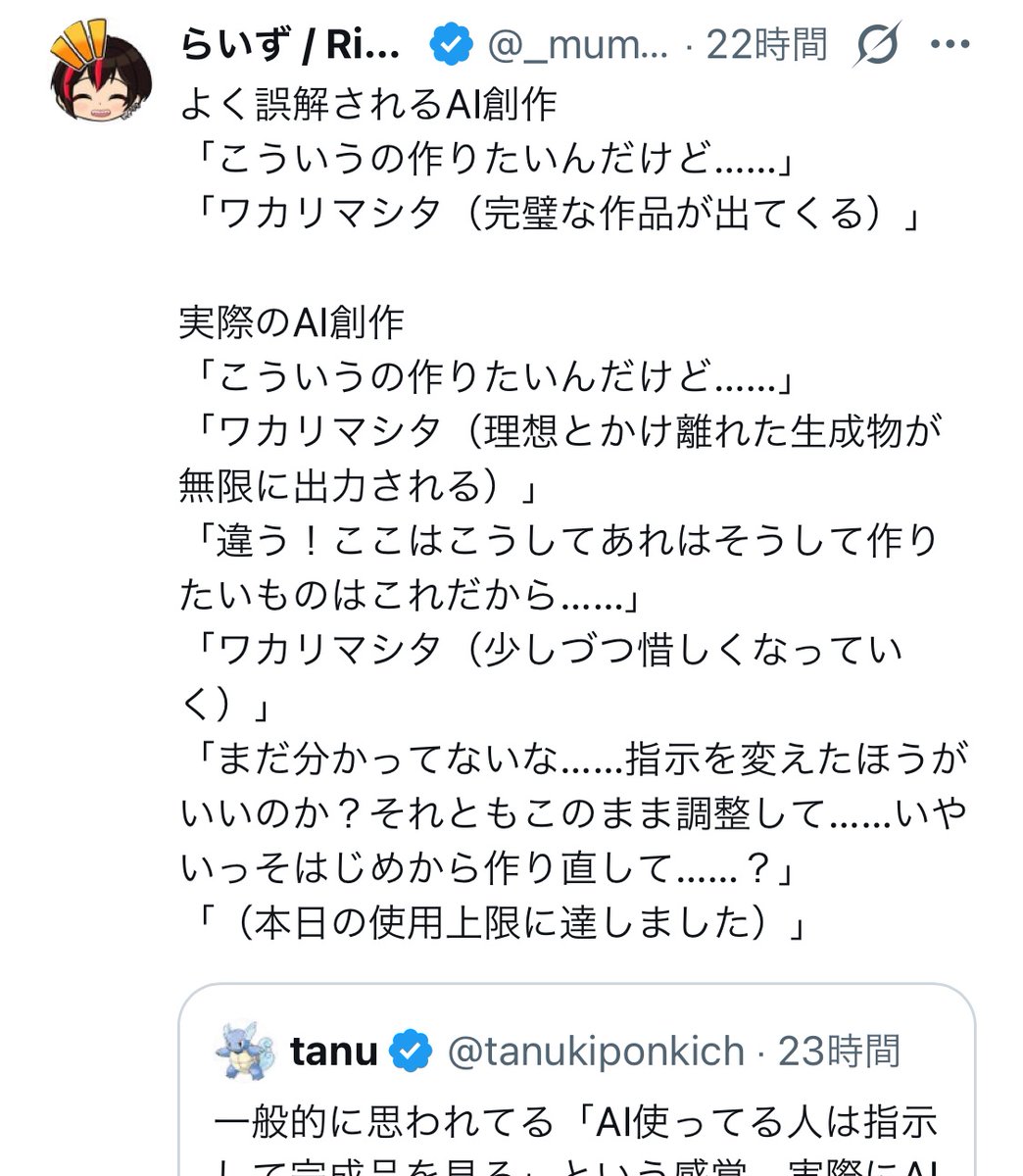
AIだけのだと人集まらないイベントあったしなぁ…
ホーリーヒソップ🌿@Holy_Hyssopus
AI絵を人が描いた絵に偽装したがる事が皮肉にも人の創作価値の高さを裏付けている。 彼らはAIを次世代ツールと礼讃しながら恥ずべきものとして隠したがる。
日本語
ホーリーヒソップ🌿 retweetledi

ホーリーヒソップ🌿 retweetledi

2024.2.8 新潟県胎内市養豚場火災
2024.3.27 鹿児島県さつま町養豚場火災
2025.1.15 群馬県安中市養豚場火災
2025.2.16 山形県酒田市養豚場火災
2025.3.7 島根県浜田市養豚場火災
2025.5.23 神奈川県綾瀬市養豚場火災
2025.6.2 愛知県豊川市養豚場火災
2025.11.29 鳥取県南部町養豚場火災
2025.12.14 山形県酒田市養豚場火災
2026.1.3 北海道苫小牧市養豚場火災
2026.2.20 愛知県西尾市養豚場火災
2026.4.17 宮崎県川南町養豚場火災
豚が嫌いな集団が意図的に放火してるんじゃないんですか? news.yahoo.co.jp/articles/6b4f9…

日本語
ホーリーヒソップ🌿 retweetledi


ホーリーヒソップ🌿 retweetledi



ホーリーヒソップ🌿 retweetledi

ホーリーヒソップ🌿 retweetledi