HuMaLearn

18 posts

HuMaLearn

HuMaLearn

@HuMaLearn

Human-Centered Machine Learning Team in the Faculty of Computer Science at the University of Namur, Belgium. Members of PReCISE / NaDI and TRAIL.

Katılım Aralık 2021
126 Takip Edilen35 Takipçiler
HuMaLearn retweetledi

Maxime ANDRÉ
Maxime ANDRÉ@mxmadr·
An article about the @CSLabsNamur 📰 #_ga=2.201446931.307765194.1648202627-449866463.1635715367" target="_blank" rel="nofollow noopener">lesoir.be/432024/article…
English
0
5
9
0
HuMaLearn
HuMaLearn@HuMaLearn·
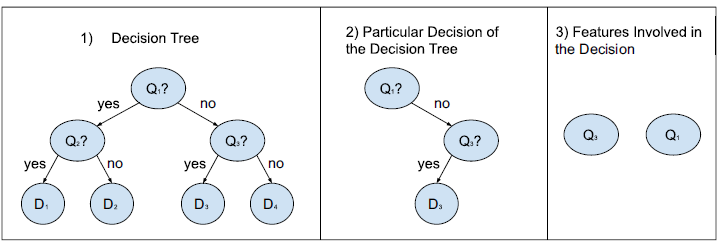
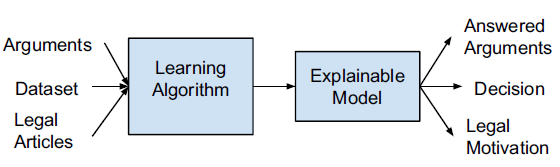
on ML model interpretability and explainability in the context of private and public decision making. It then explains how those legal requirements can be implemented into machine-learning models and concludes with a call for more inter-disciplinary research on explainability.
English
0
0
1
0
HuMaLearn
HuMaLearn@HuMaLearn·
"Legal requirements on explainability in machine learning" - DL and black-box models are more and more popular today. Yet, they may not be accepted ethically or legally because of their lack of explainability. This paper presents the increasing number of legal requirements...
HuMaLearn tweet media
English
1
0
1
0
HuMaLearn
HuMaLearn@HuMaLearn·
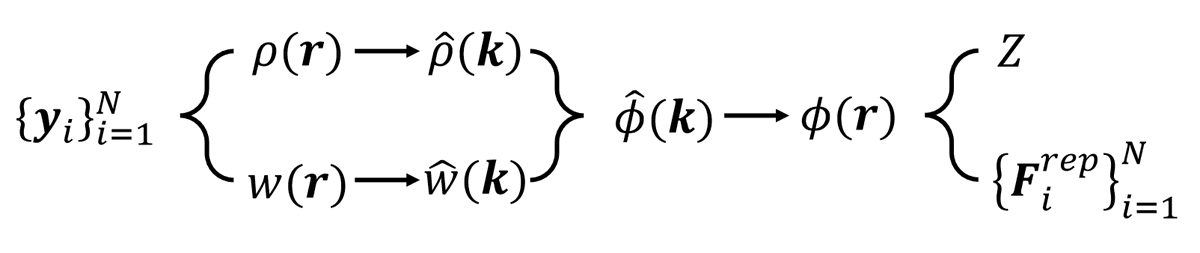
We show how the Particle-Mesh algorithm can be directly transposed in the particular case of t-SNE by first computing a potential in space and deriving from it the movements of points in the low dimensional space. By using FFTs, this leads to a significant speedup of t-SNE. (3/3)
HuMaLearn tweet media
English
0
0
1
0
HuMaLearn
HuMaLearn@HuMaLearn·
“Accelerating t-SNE using Fast Fourier Transforms and the Particle-Mesh Algorithm from Physics” aims to close the gap between t-SNE and the Particle-Mesh algorithm used to solve the N-body problem in physics when N is large. (2/3)
English
1
0
1
0
HuMaLearn
HuMaLearn@HuMaLearn·
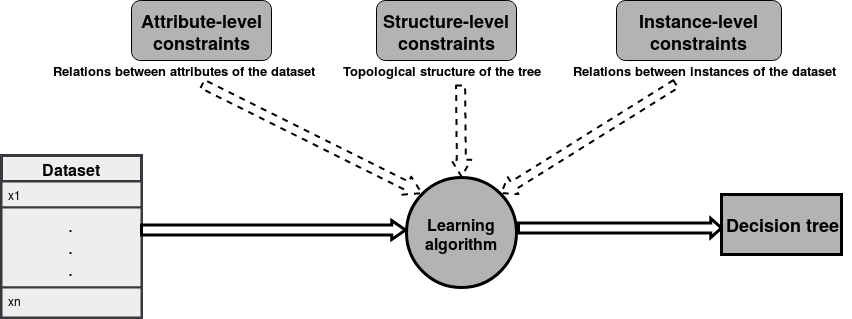
We define a flexible taxonomy of constraints applied to decision trees and methods for their treatment in the literature. Then, we benchmark state-of-the art depth-constrained decision tree learners with respect to predictive accuracy and computational time. (3/3)
English
0
0
2
0
HuMaLearn
HuMaLearn@HuMaLearn·
The results suggest that state-of-the-art models for action recognition still lack sufficient internal representation power to capture the high level of variations of a sign language. (6/n)
English
0
0
1
0
HuMaLearn
HuMaLearn@HuMaLearn·
Baseline SLR experiments are conducted on LSFB-ISOL and the reached accuracy measures are compared with those obtained on previous datasets. (5/n)
English
1
0
1
0