HUBBLE

6.5K posts

HUBBLE banner
HUBBLE

HUBBLE

@HUBBLE_space

Official @ESA feed for #Hubble Space Telescope — the space-based observatory which has revolutionised modern astronomy. #BFFinSpace with @ESA_Webb

space Katılım Nisan 2010
435 Takip Edilen923.4K Takipçiler
HUBBLE
HUBBLE@HUBBLE_space·
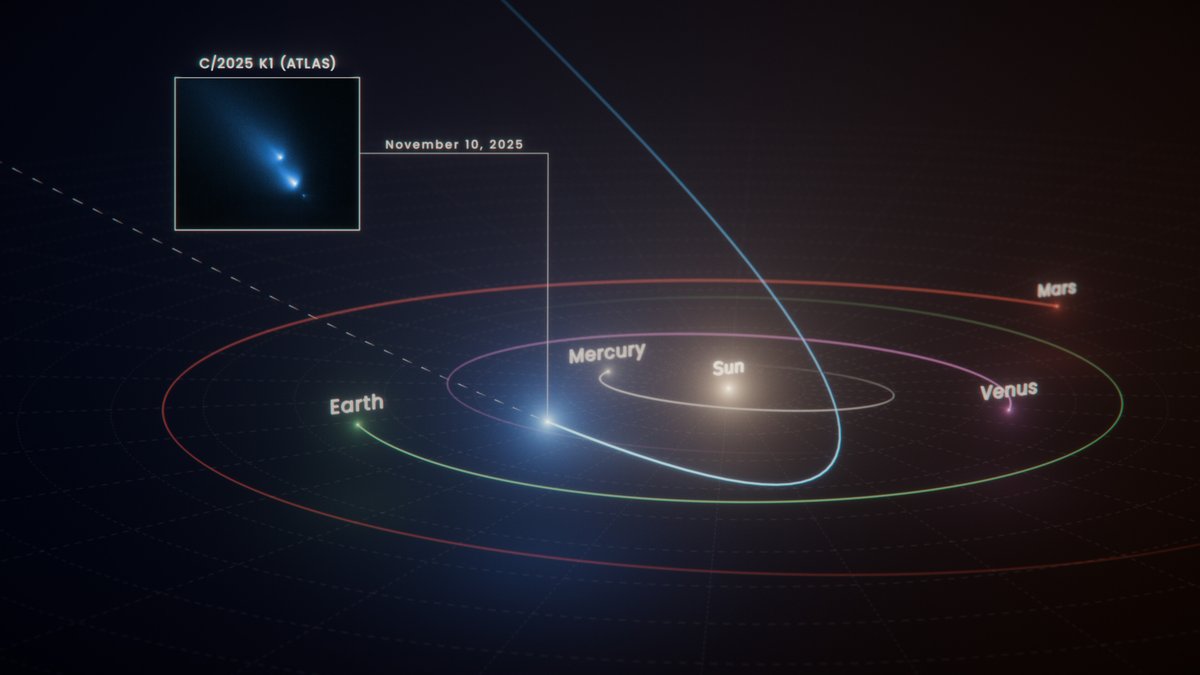
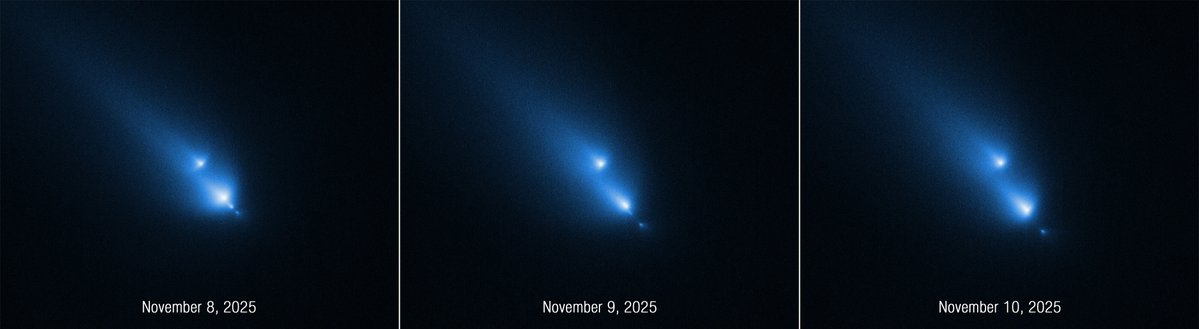
Imagine their surprise when the ‘regular comet’ K1 fragmented into at least four pieces while Hubble was watching! Each piece had a distinct coma (the fuzzy gas-and-dust envelope surrounding a comet’s icy nucleus), and could be clearly resolved by Hubble. 2/2 Read more here: esahubble.org/news/heic2606/ 📷 @NASA , @ESA , D. Bodewits (Auburn). J. DePasquale (STScI)
English
0
4
27
2.9K
HUBBLE
HUBBLE@HUBBLE_space·
The comet K1 was making its way out of the Solar System ☄️ when it crumbled into pieces. Astronomers had always wanted to use Hubble to watch a comet break up 🤞 but these observations are very difficult to schedule and were never successful. 1/2
English
6
67
289
13.4K
HUBBLE
HUBBLE@HUBBLE_space·
Our #HubbleTopImage features a galaxy blowing bubbles! 🫧 This is the dwarf irregular galaxy Holmberg II, which has an indistinct shape punctuated by huge glowing bubbles of gas. These were created by the energetic lifecycles of many generations of stars. High-mass stars form amid dense regions of gas, then expel stellar winds that blow this gas away 🌬️ At the very end of their lives, they explode in as a supernova. Shock waves rip through these less dense regions blowing out and heating the gas, forming the delicate shells we see today! Read more: ow.ly/JWxa50Yv7XV #HubbleTopImage 📷 @NASA & @ESA
HUBBLE tweet media
English
12
108
481
11.1K
HUBBLE
HUBBLE@HUBBLE_space·
@NASA @esa The results will complement the detailed view of a long-period comet that ESA will obtain from the upcoming mission Comet Interceptor, as well as helping astronomers to select the mission’s target. 4/4
English
0
3
36
3.5K
HUBBLE
HUBBLE@HUBBLE_space·
The comet is now a collection of fragments about 400 million km from Earth. Located in the constellation Pisces, it is heading out of the Solar System, unlikely to ever return 👋 Read more: esahubble.org/news/heic2606/ 📷 @NASA , @ESA , D. Bodewits (Auburn). Image processing: J. DePasquale (STScI) 3/4
HUBBLE tweet media
English
1
19
79
5.5K
HUBBLE
HUBBLE@HUBBLE_space·
🆕 A comet has been caught crumbling! ☄️ Comet K1 had just passed close to the Sun 🌞 heading out of the Solar System when Hubble turned its eye towards it and caught something unexpected.. 1/4
HUBBLE tweet media
English
10
144
566
29.2K
HUBBLE
HUBBLE@HUBBLE_space·
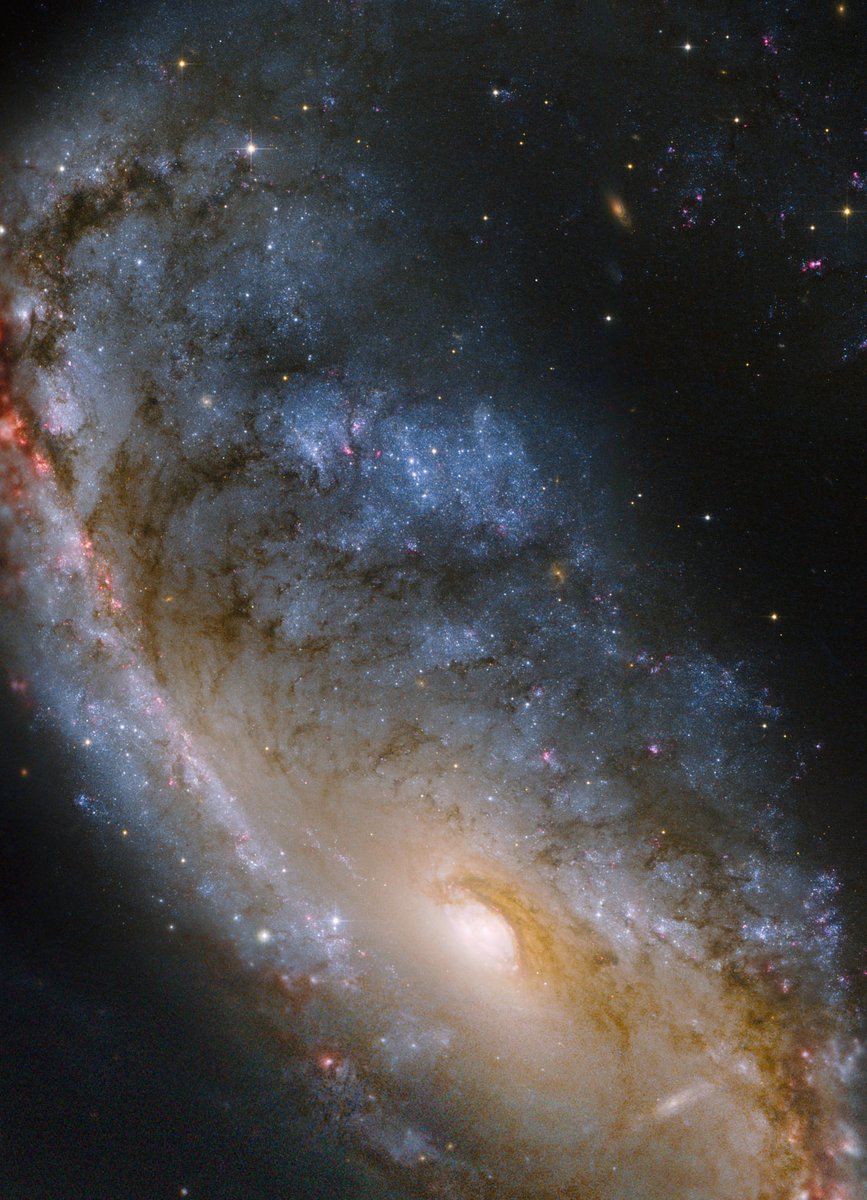
Our #HubbleTopImage features the Meathook Galaxy! The Meathook Galaxy (NGC 2442) has a dramatically lopsided shape – one spiral arm is tightly folded in on itself while the other extends far out from the nucleus. This is thought to be due to gravitational interactions with another galaxy at some point in its history. This close-up from Hubble, shared in 2011, focuses on the galaxy’s nucleus and the more compact of its two spiral arms, which was the site of a supernova in 1999! 💥 Read more: ow.ly/O6ur50YscSG #HubbleTopImage 📷 @NASA , @ESA
HUBBLE tweet media
English
6
137
696
15.7K
HUBBLE
HUBBLE@HUBBLE_space·
This episode of #SpaceSparks looks at the Cat’s Eye Nebula 🐱👁️ which was imaged by two telescopes for our latest ESA/Hubble Picture of the Month! 🔗 ow.ly/ILCr50YrFym
English
5
51
223
10.5K
HUBBLE
HUBBLE@HUBBLE_space·
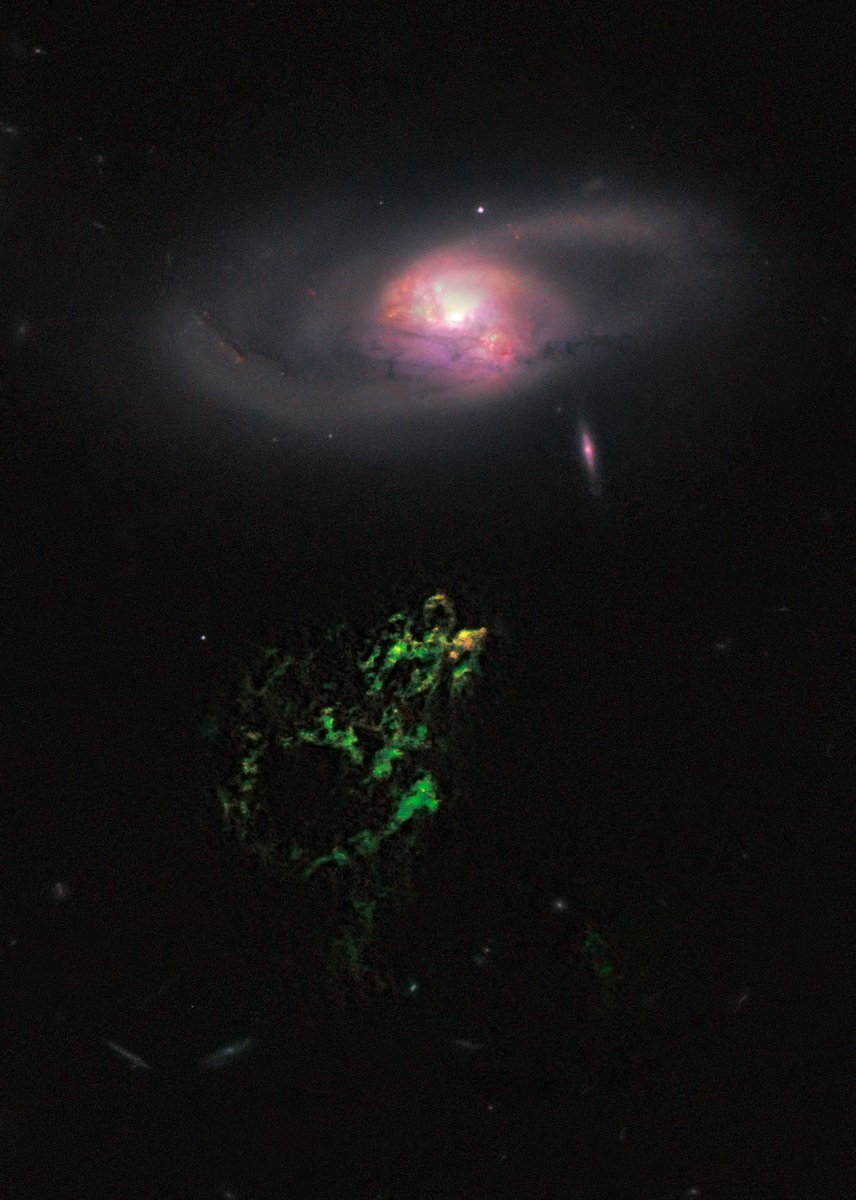
Our #HubbleTopImage zooms in on a space oddity! The bizarre green blob of gas in this image is known as Hanny’s Voorwerp. It is the only visible part of a streamer of gas stretching 300,000 light-years around the spiral galaxy IC 2497 – visible because a beam of light from the galaxy’s core has illuminated it 🔦 This beam came from a quasar, a bright object powered by a black hole. Read more: ow.ly/6Q5i50Yp3sb #HubbleTopImage 📷 @NASA , @ESA , William Keel (University of Alabama, Tuscaloosa), and the Galaxy Zoo team
HUBBLE tweet media
English
7
118
571
15.7K
HUBBLE
HUBBLE@HUBBLE_space·
I spy a Cat’s Eye! 🐱👁️ Access more space-themed .gifs at our giphy page: ow.ly/882F50Yp3oQ
GIF
English
5
44
207
6.4K
HUBBLE
HUBBLE@HUBBLE_space·
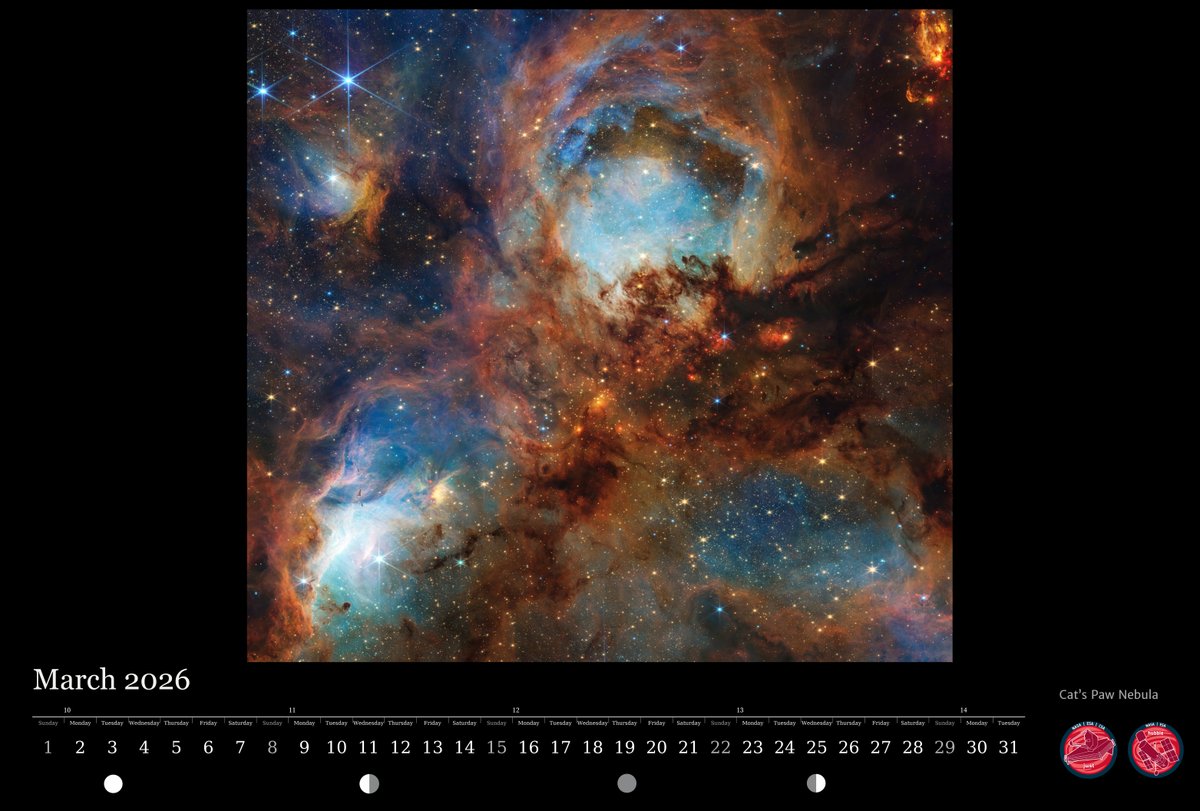
In the 2026 ESA/Hubble and ESA/Webb calendar, the month of March scratches beyond the surface of the Cat’s Paw Nebula 🐈 in an image captured by @esa_webb to celebrate its third science anniversary. Ready to print .pdf here: ow.ly/hNS850Yp3ne 📷 @NASA , @ESA , @csa_asc , @stsci
HUBBLE tweet media
English
6
40
239
7.5K
HUBBLE
HUBBLE@HUBBLE_space·
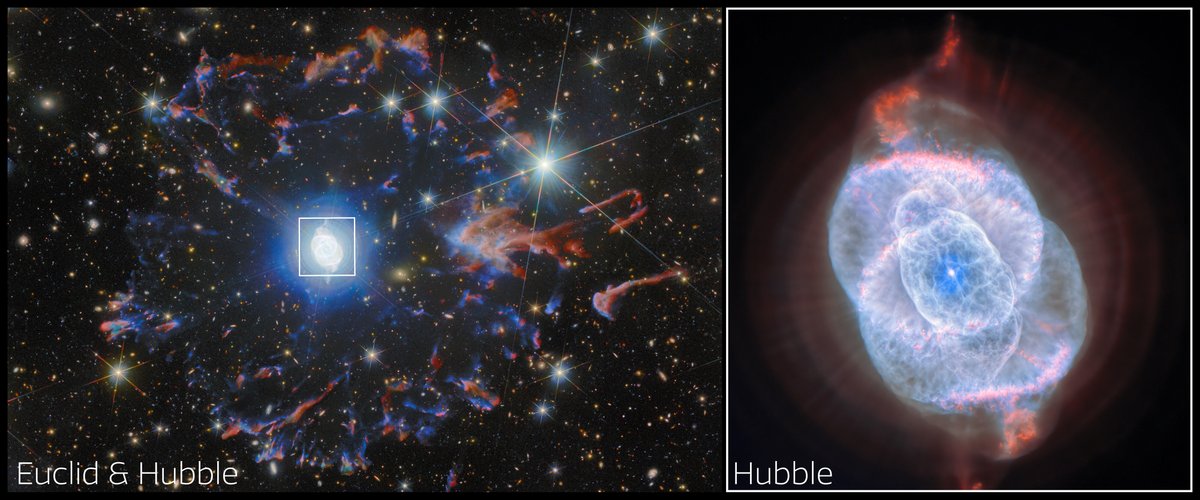
In Euclid’s view, the arcs and filaments of the nebula’s bright central region are situated within a halo of colourful fragments of gas zooming away from the star 🌬️ Meanwhile, Hubble’s data reveal concentric shells and jets of high-speed gas and dense knots sculpted by shock interactions. These are believed to record episodic mass loss from the dying star, a kind of cosmic ‘fossil record’ of its final evolutionary stages. 2/3
English
2
24
153
7.4K
HUBBLE
HUBBLE@HUBBLE_space·
Our ESA/Hubble Picture of the Month features one cosmic eye 👁️ spied by two observatories! The Cat’s Eye Nebula (NGC 6543) is one of the most visually intricate remnants of a dying star. In 1995, Hubble revealed structures in it that helped us understand how planetary nebulae form. Now, Hubble has joined forces with @ESA_Euclid to create a new image of the nebula! 1/3
HUBBLE tweet media
English
6
92
399
18.7K
HUBBLE
HUBBLE@HUBBLE_space·
In a galaxy, dark mostly resides in a large, diffuse “halo” that spins around the outer regions of the disc. Within the Solar System there is comparatively very little dark matter, and it doesn’t move along with the orbits of the planets, instead moving with this huge, fast-moving halo around the whole galaxy. Only a few kilograms of dark matter pass through the Earth at any given time, and only a few grams in the atmosphere, but it’s not hovering there - it’s passing through all the time.
English
1
0
1
31
Lost my Password
Lost my Password@lostmy_pass1000·
@HUBBLE_space How much is estimated blackmatyer witin our athmosphere or is it caught up and long gone paired up in our bouble of a capsule?
English
1
0
0
33
HUBBLE
HUBBLE@HUBBLE_space·
A dark matter-dominated galaxy is hiding here! 🕶️ Hubble has helped discover one of the darkest known galaxies, CDG-2, which appears to be 99% dark matter. 1/2
English
19
118
516
15.8K
HUBBLE
HUBBLE@HUBBLE_space·
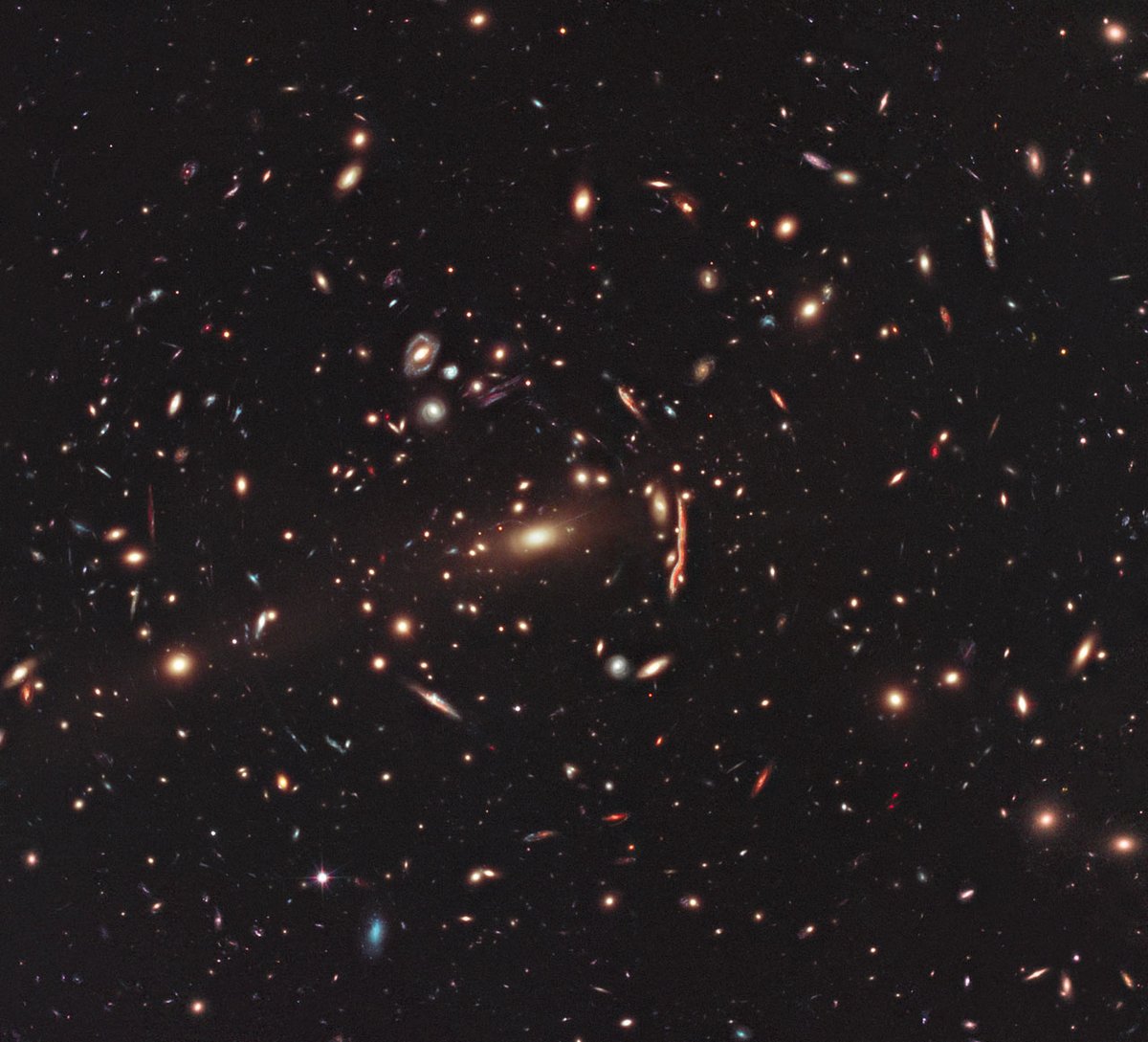
Our #HubbleTopImage shows the galaxy cluster MACS J1206.2-0847 MACS J1206.2-0847 was one of the first targets in a Hubble survey used by astronomers to construct detailed dark matter maps of galaxy clusters. Galaxy clusters are perfect laboratories for studying dark matter’s gravitational effects because they are the most massive structures in the Universe to be held together by gravity. Because of their immense gravitational pull, the clusters act like giant cosmic lenses, amplifying, distorting and bending any light that passes through them 🔍 an effect known as gravitational lensing. 1/2
HUBBLE tweet media
English
3
73
329
9.4K
HUBBLE
HUBBLE@HUBBLE_space·
Into darkness with Hubble! 🕶️ Access more space-themed .gifs at our giphy page: ow.ly/jK1550YiMJt
GIF
English
4
63
307
9.2K
HUBBLE
HUBBLE@HUBBLE_space·
Hubble teamed up with ESA’s Euclid and the Subaru Telescope in Hawaii to identify a collection of four globular clusters, surrounded by the faint glow of CGD-2. Read more here: esahubble.org/news/heic2605/ 📷 @NASA , @ESA, D. Li (Utoronto), Image Processing: J. DePasquale (STScI), N. Bartmann (ESA/Hubble) 🎶 Stellardrone - Ascent 2/2
English
0
11
54
4.3K