Sabitlenmiş Tweet
Hugo Lhuillier
238 posts

Hugo Lhuillier
@Hugo_Lhu
Economist. Assistant Professor @Columbia. Macro, Spatial, Trade, and Labor.
Katılım Ocak 2021
367 Takip Edilen1K Takipçiler
Hugo Lhuillier retweetledi

Michael Jenuwine’s job market paper measures the cost of inflation in sticky-price models by exploiting vintage, or the duration of price spell, as an observable. michaeljenuwine.com/files/papers/j…

English
Hugo Lhuillier retweetledi

Eugenia Menaguale's (@emenaguale) job market paper studies how market power in technology-specific capital markets shapes the direction of firms' technology adoption and workers' specific human capital accumulation. eumena.github.io/files/em_jmp.p…

English
Hugo Lhuillier retweetledi

Elena Aguilar’s (@tag_elena) job market paper studies location choices as a human capital investment. High-opportunity cities like New York offer superior learning environments but require paying high upfront housing costs. elena-aguilar.net

English
Hugo Lhuillier retweetledi

New paper:
"What Does Consulting Do?"
w/ Gert Bijnens, @simon_jaeger
Consulting is a storied but opaque industry.
Our VAT-based B2B data permit the 1st comprehensive study:
Which firms buy consulting?
What happens when they do?
nber.org/papers/w34072
eml.berkeley.edu/~schoefer/scho…

English

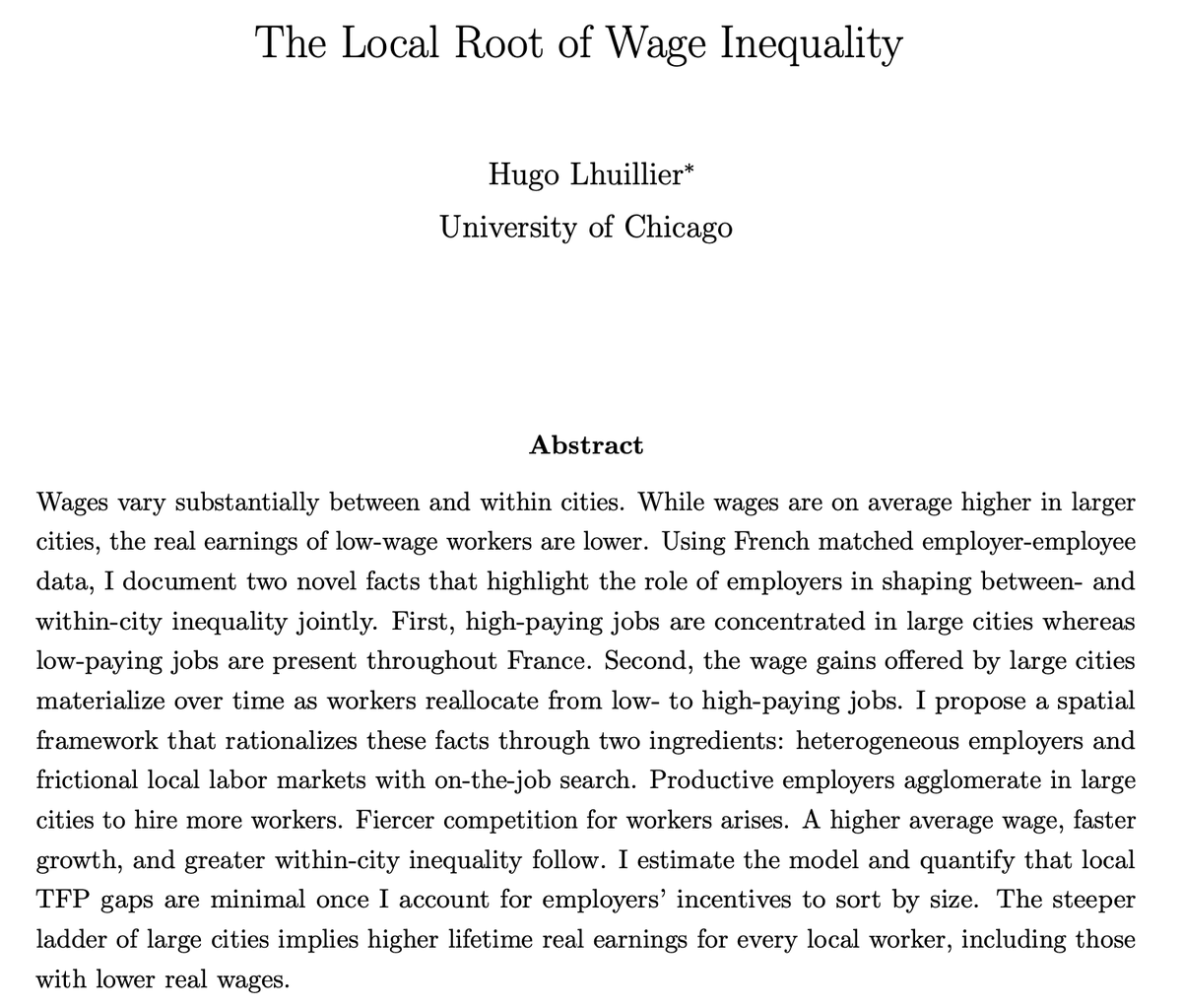
Thank you @BeckerFriedman for this summary of my research on the root of local wage inequality!
Becker Friedman Institute for Economics@BeckerFriedman
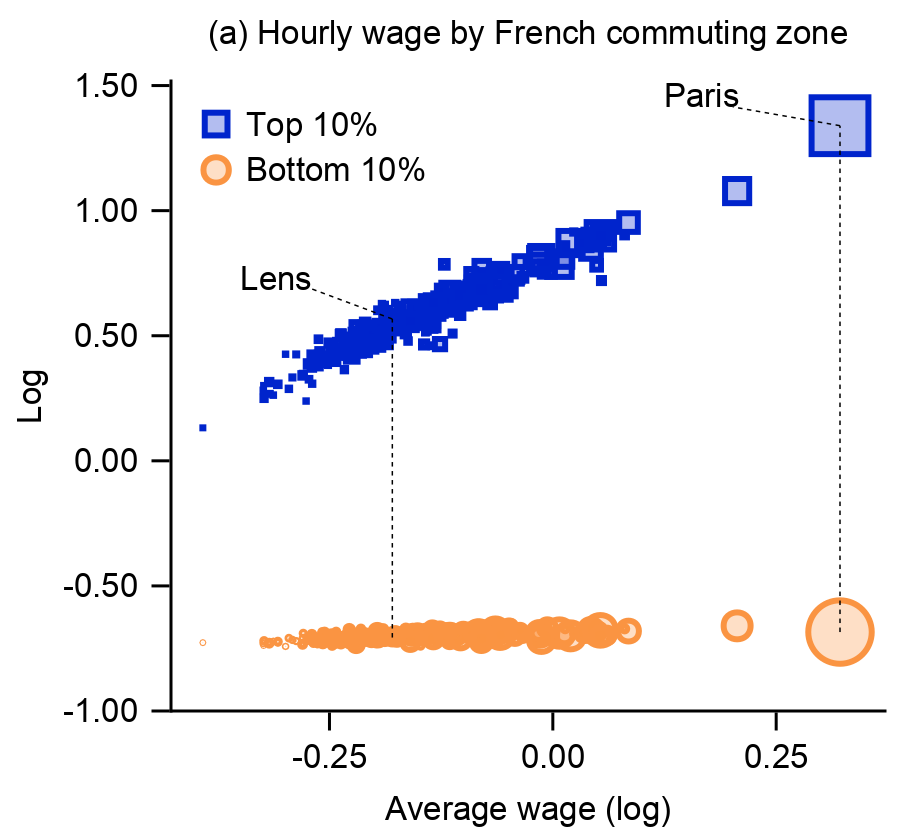
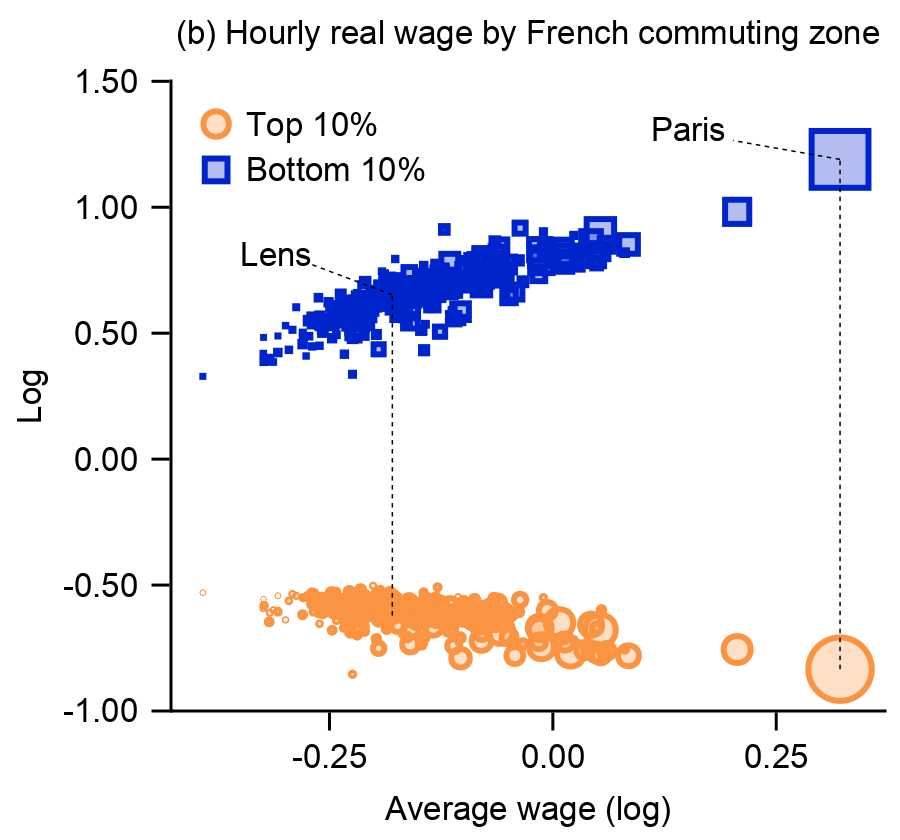
🏙️ High-paying jobs cluster in big cities, raising wages but also inequality. Yet over time, all urban workers tend to benefit—thanks to steeper career ladders and stronger growth paths. Research from Saieh Family Fellow @Hugo_Lhu. ow.ly/Ry1250Wrwnu
English
Hugo Lhuillier retweetledi

When knowledge spillovers are local, firms may under-invest in geographic expansion. This is studied using a spatial growth model, and detailed data on US firms, from Craig A. Chikis, @BennyKleinman, and @MartaPrato nber.org/papers/w34010

English
Hugo Lhuillier retweetledi

Just how much US income inequality has increased and why it is growing is a topic of intense debate among economists. We spoke with Matthieu Gomez of @columbia_econ about what's really behind the rise in top incomes. #ResearchHighlight aeaweb.org/research/incom…
English
Hugo Lhuillier retweetledi

My new paper (essay?) explores how labor market institutions may affect not just unemployment & wages...
-but also productivity & growth,
-especially in Europe (vs. the US).
-Potential channel: "dynamism."
Based on my talk and paper at the ECB Forum on Central Banking in Sintra.
NBER@nberpubs
Examining how labor market institutions and rigidities continue to shape European competitiveness and unemployment, from @Schoefer_B nber.org/papers/w33975
English

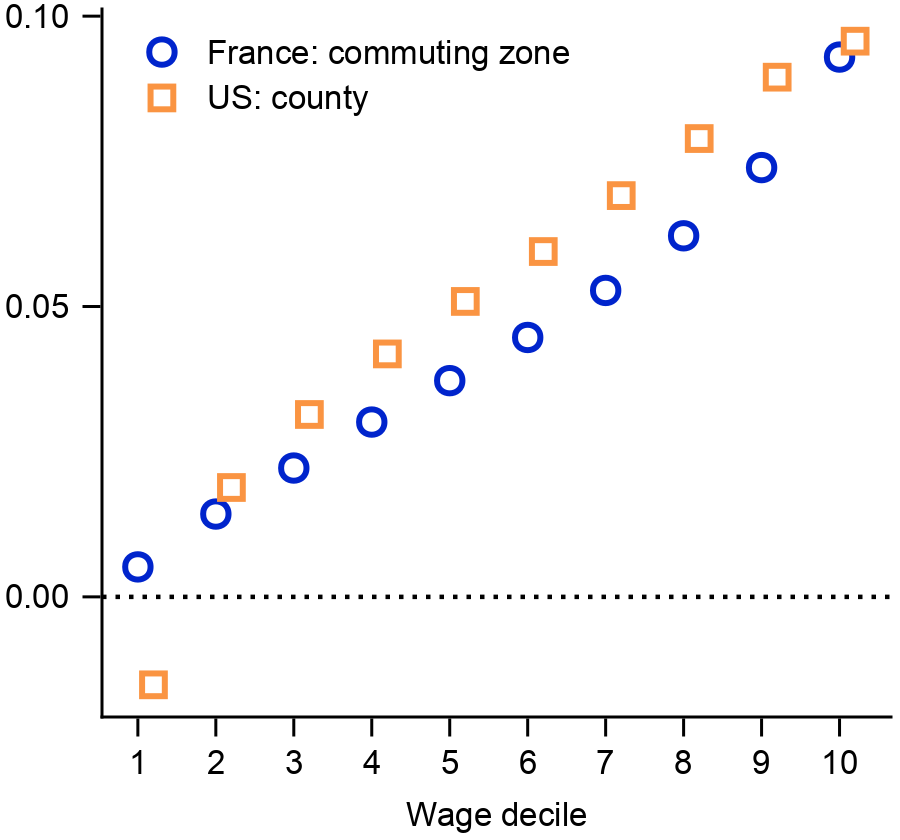
Following up on yesterday’s thread:
The motivating fact also holds in the US.
Below: the correlation between each city’s wage decile and city size.
In both France and the US, low-wage workers earn similar wages in small and large cities.
@mattyglesias @DonalWarde

English

Long-story short:
Employers —and how workers reallocate across them— are crucial at explaining spatial wage disparities.
🔗 If you want to know more: hugolhuillier.com/files/papers/l…

English
Hugo Lhuillier retweetledi

I am looking for one or two pre-docs to work with me at HEC Paris on historical patent data. Hopefully an exciting opportunity to develop quantitative skills in a nice research environment. See the position here dropbox.com/scl/fi/3obf3vc…
Thanks for sharing !
English
Hugo Lhuillier retweetledi

New version of "Outsourcing, Inequality and Aggregate Output" with @Hugo_Lhu. We characterize the equity-efficiency trade-off (rising inequality vs. efficiency gains) that comes with outsourcing domestic workers.
CEPR@cepr_org
New CEPR Discussion Paper - DP19985 Outsourcing, Inequality and Aggregate Output Adrien Bilal @AdrienBilal @Stanford, Hugo Lhuillier @hug0lhuillier @UChicago ow.ly/j2P250V8977 #CEPR_LE #CEPR_MG #EconTwitter
English
Hugo Lhuillier retweetledi

We have released new yearly measures of local GDP at the 1, 0.5, and 0.25 degree level. They are calculated using remote sensing data and a random forest model. All the data, documentation, and tests can be mapped and downloaded here: bfidatastudio.org/project/local-…
English