

HunterALund
637 posts

HunterALund
@HunterALund
Here to fight the good fight! Proud to be a supporter of women's rights, Black lives matter, LGBTQ, pro-choice, voting rights and strong animal lover!
Pittsburgh, PA Katılım Mart 2011
850 Takip Edilen640 Takipçiler

Help me settle an argument.
Do you still support John Fetterman?
Yes or No ✋

English

Imagine living in 1978 and hearing this amazing Song for the first time!🎸🎤
English

Ukraine has now attacked the infrastructure of TurkStream in Russia, which guarantees Hungary’s gas supply.
Without TurkStream, Hungary simply cannot be supplied with gas safely from a geographical and physical standpoint.
Ukraine’s oil blockade through the Druzhba pipeline and this strike against TurkStream are serious attacks on our sovereignty.
English
HunterALund retweetledi

@rshereme @KreusHakki Don't be the least bit surprised when he fakes an assassination attempt, just like his buddy Trump did in Butler, PA in an attempt to gain sympathy votes... save this post so we can say I told you so...
English

This is straight out of the Kremlin playbook.
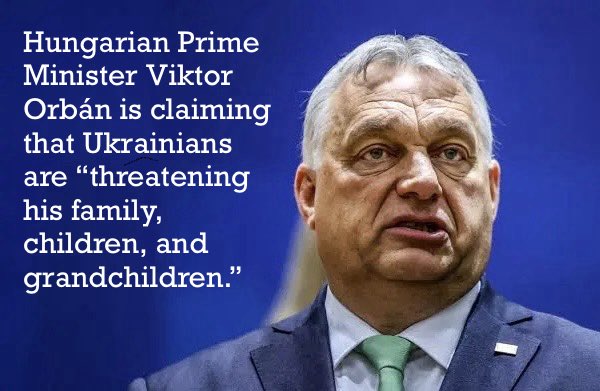
Hungarian Prime Minister Viktor Orbán is claiming that Ukrainians are “threatening his family, children, and grandchildren.” He added: “Everyone is fine, but there is a limit to everything!”
I wouldn’t be surprised if Orbán soon claims that there was an “assassination” attempt on his life organized by Ukraine’s GUR.
Propaganda is the only last resort Orbán has left to remain in power.
English
@RandyGoat @RepThomasMassie This is how we keep getting fucked... someone runs as independent, vote gets split and here we go again. Enough with the dumbshit...
English

Would you vote for @RepThomasMassie for president in 2028 if he ran as an independent?
English

Ok, here is one I am sure no one Knows who this is! At least 90 percent don’t recognize her here!

English

HunterALund retweetledi

JUST IN: Eric Trump and Donald Trump Jr. invested $25 million in a drone company called Powerus. The Pentagon is now at war with Iran. The Pentagon needs drones. Powerus sells drones to the Pentagon.
In January 2026, the President signed an executive order banning Chinese drones and components from the US military. Chinese manufacturers held 70% of the Pentagon’s drone supply chain. That supply chain vanished overnight. The Replicator initiative needs 30,000 one-way attack drones. Domestic producers cannot fill the gap at scale. Powerus, a startup with approximately 50 employees founded to build autonomous AI-swarm systems, is now competing for those contracts.
The President created the demand by banning Chinese drones. The President created the urgency by starting a war. The President’s sons invested in the company positioned to fill both gaps.
Viral claims of a $620 million Pentagon contract awarded to Powerus circulated on X in early March. These remain unverified by any Tier 1 credible source as of 9th March. Senate Democrats have flagged the conflict of interest. Ethics probes are reportedly underway. What is verified is the $25 million family investment, the 70% supply chain elimination, the active war creating acute demand, and the company bidding for Replicator contracts while the President’s family holds equity.
Now look at the war this demand is feeding.
Iran launched nearly 3,000 missiles and drones in the first week. Gulf states intercepted over 1,700 drones. The UAE shot down 1,110 out of 1,184 launched at its territory. A 94% intercept rate that cost an estimated $4.4 billion in munitions to defeat $23 million worth of Shahed drones. Each Shahed costs $20,000 to $50,000. Each Patriot interceptor costs $3 to $4 million. Each THAAD missile costs $12.7 million. The cost ratio is 190 to 1 in favour of Iran.
THAAD production runs at 8 per month. Iran produces hundreds of Shaheds per month from dispersed facilities that US strikes have degraded 40 to 60% but cannot eliminate under the Mosaic doctrine’s 31 autonomous provincial commands. Iran can launch more drones in a single night than the US produces interceptors in a year.
The longer the war continues, the more interceptors are consumed. The more interceptors consumed, the more urgent the Pentagon’s drone gap becomes. The more urgent the gap, the more valuable Powerus becomes. The more valuable Powerus becomes, the more the Trump family’s $25 million investment appreciates.
The war feeds the depletion. The depletion feeds the demand. The demand feeds the company. The company feeds the family.
This is not a conspiracy theory. It is a supply chain. Every link is documented. The executive order is public. The investment is reported by the Wall Street Journal and Bloomberg. The war is on live television. The intercept statistics are published by Gulf defence ministries. The Replicator programme is a Pentagon initiative with published procurement targets. The ethics probes are confirmed by Senate communications.
The only question is whether a sitting President’s family should hold equity in a defence contractor while the President wages a war that creates the contractor’s entire addressable market.
The market has priced the war. It has priced the oil. It has priced the drones.
It has not priced the answer to that question.
Full analysis here.
open.substack.com/pub/shanakaans…


Shanaka Anslem Perera ⚡@shanaka86
The White House says 4 to 6 weeks. The mechanism says 6 to 18 months. One of them is catastrophically wrong. The entire global allocation framework depends on which. Nine days into Operation Epic Fury, the kinetic campaign is succeeding by every traditional military metric. Iranian air defences are 80% destroyed. Missile launches are down 86% from opening-day peaks. Forty-three warships sunk. Three thousand targets struck. Air superiority achieved in 48 hours. Oxford Economics projects intense strikes wrapping within 1 to 3 weeks, settlement attempts within 2 months. Trump’s press secretary has repeated the 4 to 6 week timeline three times. None of this matters for the question that actually determines global market pricing. The war does not end when missiles stop flying. The war ends when the London reinsurance market decides it is safe to underwrite a VLCC transit through the Strait of Hormuz. That is a sequential institutional process involving actuarial recalculation, treaty reinsurance recapitalisation, individual vessel re-underwriting, and sustained safe-transit data accumulation. It cannot be compressed by executive order. It cannot be accelerated by naval presence. It operates on its own clock. After 26 months of Houthi Red Sea attacks that sank four ships and damaged over a hundred, war-risk premiums never returned to baseline. Traffic volumes never fully recovered. That was a low-intensity, intermittent campaign by a non-state actor in the absence of any leadership decapitation or insurance-market withdrawal. The 2026 Hormuz crisis is a high-intensity state-on-state war with the Supreme Leader assassinated, 31 autonomous IRGC commands activated, seven P&I clubs withdrawn, zero tanker transits, and a nuclear stockpile the IAEA cannot locate. The reference class is not the June 2025 Twelve-Day War, which involved no Hormuz closure, no insurance withdrawal, and no counterparty fragmentation. The reference class is the Tanker War of 1987 to 1988, where Operation Earnest Will required 30 warships escorting reflagged tankers for 14 months before normalisation. And that war had a centralised Iranian government capable of negotiating a ceasefire. This one does not. The 31 autonomous IRGC provincial commands operating under Mosaic Defence doctrine cannot collectively agree to a ceasefire because they do not have a unified command structure. Trump demands unconditional surrender. Iran’s Foreign Minister says “we are not asking for a ceasefire.” Ali Larijani says Iran “will not negotiate with the United States.” The Senate rejected War Powers 47 to 53. The Pentagon is preparing a $50 billion supplemental. The interceptor arithmetic sets a hard military clock. THAAD production runs at 8 per month. Iran produces over 100 missiles per month. The Stimson Center projects critical magazine depletion within 4 to 5 weeks of sustained operations. The campaign must end before interceptors run out but cannot end without a counterparty the campaign is destroying. This is the temporal trap. The kinetic war has an expiration date. The commercial war does not. Brent futures still price normalisation by the third quarter. The mechanism says the disruption persists through 2027. Every allocation model built on a 4 to 6 week resolution is mispricing duration by a factor of three at minimum. The positions built on those models are the most vulnerable in global markets right now. The war ends when the reinsurance market says it ends. Not when the White House says it ends. Full analysis is on my Substack! Paywall removed! open.substack.com/pub/shanakaans…
English
@chunks1nees @hashjenni Good, then yes I fucking detest you, thanks for world war 3 fuckhead, you can go fuck yourself ...
English

@hashjenni if you hate him you hate me as an American citizen who supports his stances and actions. Your beef is with me and millions and millions more of me.
English

@hashjenni The smart half do. The magat morons do not, they're too fucking stupid to realize it.
English
@MAGACult2 Declare martial law allowing him to suspend elections with the intent to remain in office allowing him to avoid prosecution....
English

This is former CIA agent Adam and he’s got some vital information about the war
English
@MAGACult2 I suspect Trump has set this all up, weakening our ability to assess and counter terrorism in this country, he places a non nothing in charge of our domearic counter terrorism unit, then starts this war. More rhan liky in hopes that an incident will occur to allow him to <cont>
English
@__Amoxicillin_ @MHinkkanen Then why the fuck have they waited for 9 effing years to release them, while the entire world starts bur ing because of that orange shitstain...
English
HunterALund retweetledi
🚨THE CONDITION OF DONALD TRUMP IS STILL UNKNOWN AFTER THIS ASSASSINATION ATTEMPT BY JONATHAN PIE🚨
English

Who do you think should be the next member of the Trump Administration to be fired?
1. Pete Hegseth
2. Kash Patel
3. Tom Homan
4. Pam Bondi
5. Stephen Miller
6. Tulsi Gabbard
English

Great Revenge 👏
Iran shot down America's honor and its bomber...
and paraded it through the market...
The Iranian army is proud...💪🎯
English

Iran’s increasing aggression and rapid ballistic missile development presented a clear and imminent threat that demanded decisive action.
The President acted fully within his authority under the law, and consistent with the precedent set by presidents for the past four decades.
Efforts now to restrict the Commander in Chief from completing this limited but crucial mission would be both dangerous and irresponsible.
English
HunterALund retweetledi

After 3 years a business owner was offered by Trump to take a million in a half for 3 million bill he refused to pay.
He sold the business, its assets & equipment, cut checks to all the contractors still owed and then went home and blew his brains out.
English