Sabitlenmiş Tweet

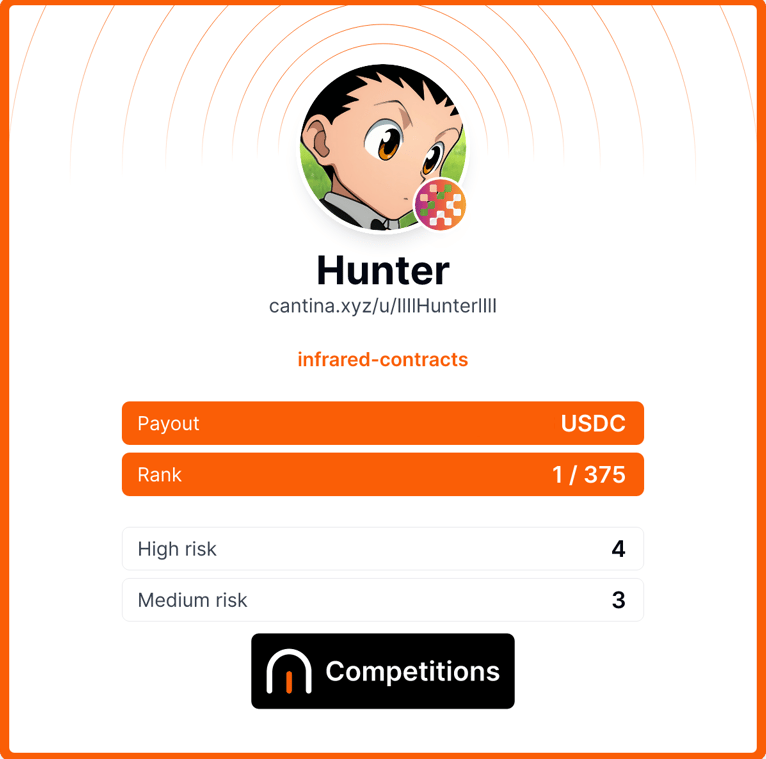
Alhamdulillah, i have won the @InfraredFinance contest.
Its been a while since my last posted win😅.
2nd consecutive contest and win, is it the rise?
Some stats:
- Time spent: 7 days
- was the only one to find all high severity issues
- Found the only solo in the code
The main thing iam happy with in this contest is the amount of learning i got:
- read a lot of EIPs (some were unrelated to the code but was intuitive to read more through)
- read some geth code, and got a grasp of how consensus/execution layers work on the code level
- read one GEAS
- run my first local node to build a POC
Downside for the above learnings is the % of coverage of those beautiful medium severity edge cases by those beautiful auditors
This code has one of the longest call flow i have ever seen.
I Love staking More than DEXs Auditing, Had much fun auditing this one
Also i may decrease my contests participation alot(in general and not related to specific platform)
Plans?
- Leverage more time on niches i believe in and love
- Join firmsss
- Only participate in contests that add to my knowledge and have proper incentives
- Become a judge (judging protocols that i love auditing), meh least likely because of the big amount of spams currently in the space and how judging may make me a hated person from newbies.
English