Finisher🧪

758 posts

Finisher🧪

Finisher🧪

@IBC_TIM

IBC MAXI

Katılım Haziran 2019
7.5K Takip Edilen768 Takipçiler
Finisher🧪 retweetledi
AsyncTrix
AsyncTrix@asynctrix·
Kubernetes - In Plain English ☸️ 1. Pod - Runs app 2. Deployment - Manages Pods 3. StatefulSet - Stable Pods 4. DaemonSet - Pod per node 5. Service - Internal access 6. Ingress - External access 7. ConfigMap - Config data 8. Secret - Sensitive data 9. Node - Runs Pods 10. Control Plane - Manages cluster 11. RBAC - Access control 12. Namespace - Isolation
AsyncTrix@asynctrix

Kubernetes - In Plain English ☸️ - Pod → Smallest unit where your app runs - Deployment → Manages replicas & updates - StatefulSet → Stable identity + persistent storage - DaemonSet → One Pod on every node - Service → Stable internal access - Ingress → External HTTP/HTTPS access - ConfigMap → Non-sensitive configuration - Secret → Sensitive data - Node → Machine that runs Pods - Control Plane → Brain of the cluster - RBAC → Controls permissions - Namespace → Logical isolation Understand the building blocks → Kubernetes becomes simple.

English
2
26
135
5.9K
Finisher🧪 retweetledi
Millie Marconi
Millie Marconi@MillieMarconnni·
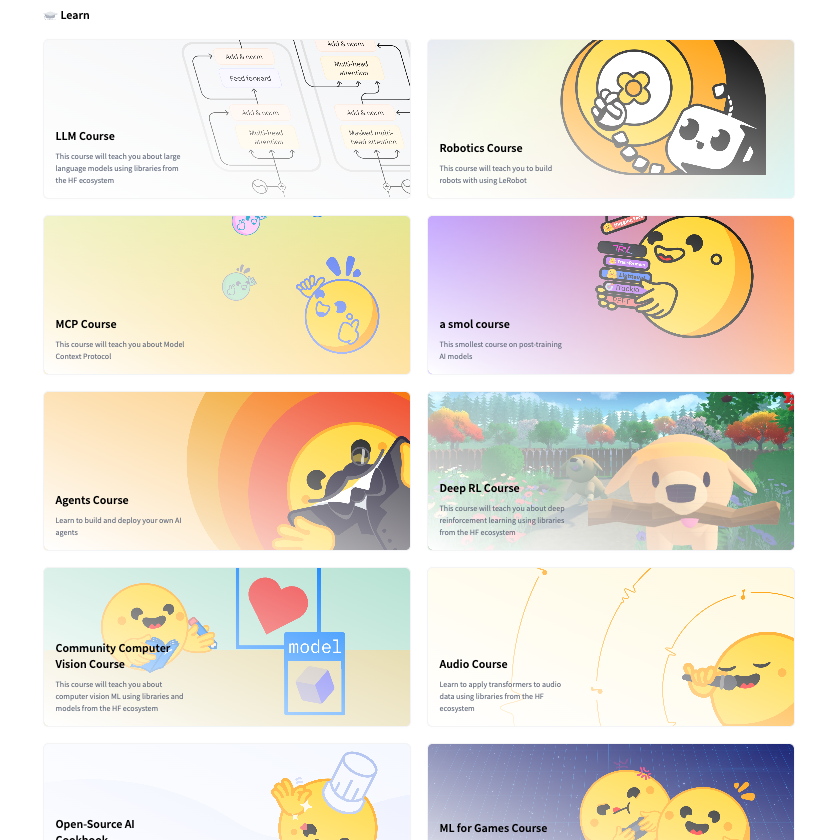
🚨 BREAKING: HuggingFace just dropped their complete AI engineering playbook to the public. They released 12 courses that were internal-only until this week. This covers LLMs, Robotics, and MCP, which is the exact tech stack behind Llama, Mistral, and every major open model. This level of training won't stay free forever. Here's what you need to grab right now 👇
Millie Marconi tweet media
English
13
102
524
22.8K
Finisher🧪 retweetledi
Cloudflare
Cloudflare@Cloudflare·
We’re introducing Dynamic Workers, which allow you to execute AI-generated code in secure, lightweight isolates. This approach is 100 times faster than traditional containers. cfl.re/4c2NvPl
English
129
361
3K
1.4M
Finisher🧪 retweetledi
Nikki Siapno
Nikki Siapno@NikkiSiapno·
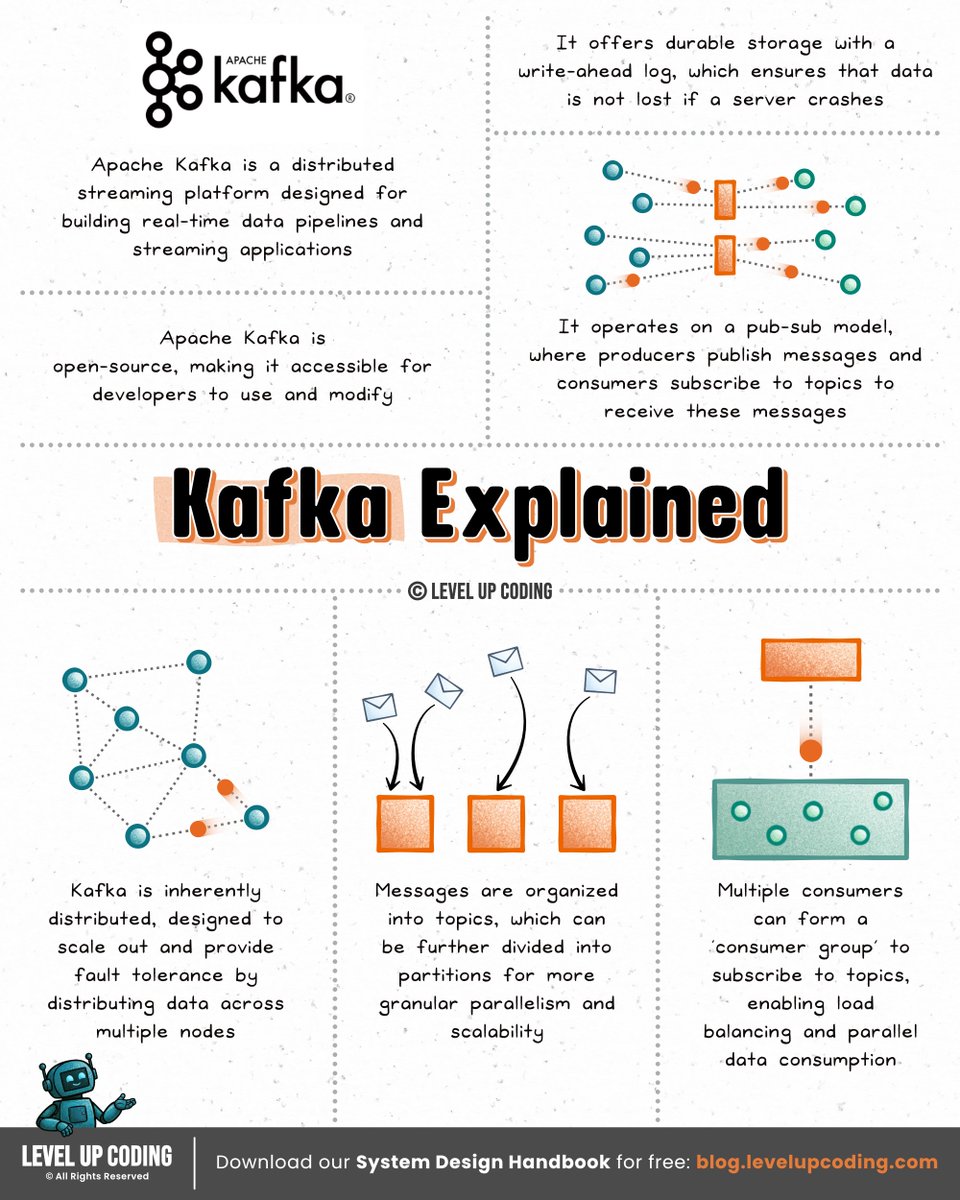
Kafka Clearly Explained
Nikki Siapno tweet media
Nikki Siapno@NikkiSiapno

How Kafka works (clearly explained in under 2 mins): First, did you hear about the Aiven Free Tier Competition? They're providing prize money for the best project built using their free tiers (including Kafka, Postgres, and more). If you’ve been meaning to get hands-on with Kafka, this is a great way to do it. Check it out → lucode.co/aiven-free-tie… At its core, Kafka is a distributed commit log. It stores streams of events in append-only logs that multiple systems can read from independently. Here’s a simple mental model to understand it: 𝟭) 𝗣𝗿𝗼𝗱𝘂𝗰𝗲𝗿𝘀 𝘄𝗿𝗶𝘁𝗲 𝗲𝘃𝗲𝗻𝘁𝘀 ↳ Applications publish events like order_created to a topic 𝟮) 𝗧𝗼𝗽𝗶𝗰𝘀 𝗮𝗿𝗲 𝘀𝗽𝗹𝗶𝘁 𝗶𝗻𝘁𝗼 𝗽𝗮𝗿𝘁𝗶𝘁𝗶𝗼𝗻𝘀 ↳ Each partition is an ordered, append-only log ↳ Events are stored with sequential offsets 𝟯) 𝗕𝗿𝗼𝗸𝗲𝗿𝘀 𝘀𝘁𝗼𝗿𝗲 𝘁𝗵𝗲 𝗱𝗮𝘁𝗮 ↳ Kafka runs as a cluster of servers (brokers) ↳ Partitions are distributed across them for scalability 𝟰) 𝗖𝗼𝗻𝘀𝘂𝗺𝗲𝗿𝘀 𝗿𝗲𝗮𝗱 𝘁𝗵𝗲 𝘀𝘁𝗿𝗲𝗮𝗺 ↳ Services subscribe to topics and read events sequentially ↳ Consumer groups allow parallel processing at scale Two important design ideas make Kafka powerful: Decoupling → producers and consumers never talk directly Durability → events are stored on disk and replicated across brokers That’s why Kafka is often used as the event backbone for microservices, analytics pipelines, and real-time systems. What else would you add? —— ♻️ Repost to help engineers learn Kafka. 🙏 Thanks to @aiven_io for sponsoring this post. ➕ Follow me ( Nikki Siapno ) to improve at system design.

English
11
92
521
22.9K
Finisher🧪 retweetledi
Robert Youssef
Robert Youssef@rryssf_·
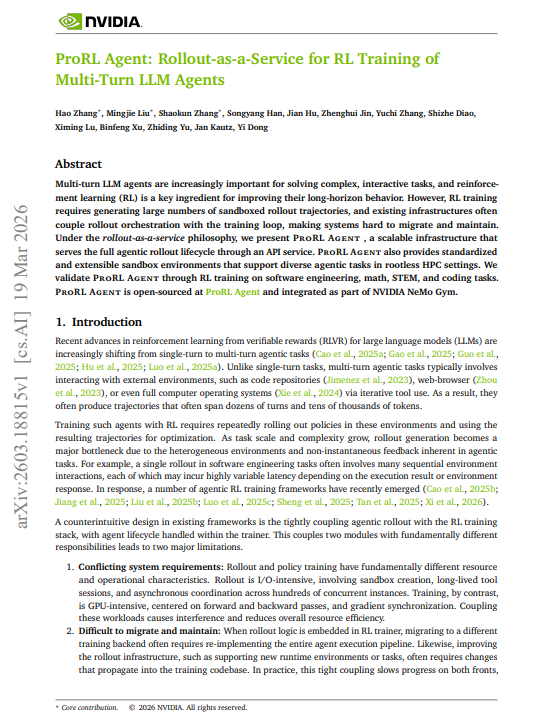
BREAKING: NVIDIA just proved that the AI agent training bottleneck everyone blamed on model capability was actually an infrastructure design error. Every framework SkyRL, VeRL-Tool, Agent Lightning, rLLM, GEM embeds rollout inside the training loop. I/O-intensive execution fighting GPU-intensive optimization. Nobody separated them. > Treat rollout as a service. Qwen 8B nearly doubles on SWE-Bench. The compute was always there. It was just fighting itself. > Training an AI agent with reinforcement learning requires two fundamentally different workloads running simultaneously. Rollout is I/O-intensive spinning up sandboxed environments, executing tool calls, waiting on shell commands, scoring outcomes. Training is GPU-intensive forward passes, backward passes, gradient synchronization. Every existing framework runs both inside the same process. The result is constant resource contention: rollout workers block on disk I/O while GPU compute sits idle, and gradient updates stall while environments finish executing. > NVIDIA audited every major agentic RL framework and found the same architectural decision in all of them. SkyRL keeps rollout control inside the training driver. Agent Lightning embeds rollout workers as child processes of the trainer if training stops, rollout stops. VeRL-Tool, rLLM, and GEM all keep environment management and trajectory collection inside the training stack. Not because it's the right design. Because it was easier to build that way and nobody had fixed it yet. > ProRL Agent separates them completely. The rollout system runs as a standalone HTTP service. The trainer sends a task instance. The rollout server handles environment initialization, multi-turn agent execution, tool calls, reward computation, and returns a completed trajectory. The trainer never touches the execution environment. The two systems communicate through one interface and run on separate machines optimized for their respective workloads. > The results are not subtle. Qwen 8B: 9.6% on SWE-Bench Verified under standard training. ProRL Agent: 18.0%. That's close to 2x on the benchmark the entire software engineering AI field uses to measure progress. Qwen 14B goes from 15.4% to 23.6%. Qwen 4B goes from 14.8% to 21.2%. Same models. Same data. Different infrastructure. → Qwen 8B on SWE-Bench Verified: 9.6% baseline → 18.0% with ProRL Agent → Qwen 14B: 15.4% → 23.6% → Qwen 4B: 14.8% → 21.2% → Throughput scales near-linearly with compute nodes added → Efficient bash optimization alone: shell command latency drops from 0.78s to 0.42s per action → GPU utilization with full system: 78% vs 42% without load balancing → Every existing framework audited: zero had decoupled rollout from training The engineering insight that gets buried in the results: the problem compounds at every tool call. A typical software engineering rollout spans dozens of sequential environment interactions. Each one blocks. Each one accumulates latency. At scale with hundreds of parallel rollouts, tool execution becomes the dominant bottleneck not model inference, not gradient computation. The entire field was measuring model capability while the infrastructure was quietly eating half the compute budget.
Robert Youssef tweet media
English
13
76
378
33.1K
Finisher🧪 retweetledi
Python Programming
Python Programming@PythonPr·
RAG vs Agentic RAG
Python Programming tweet media
English
4
123
690
25.2K
Finisher🧪 retweetledi
Nikki Siapno
Nikki Siapno@NikkiSiapno·
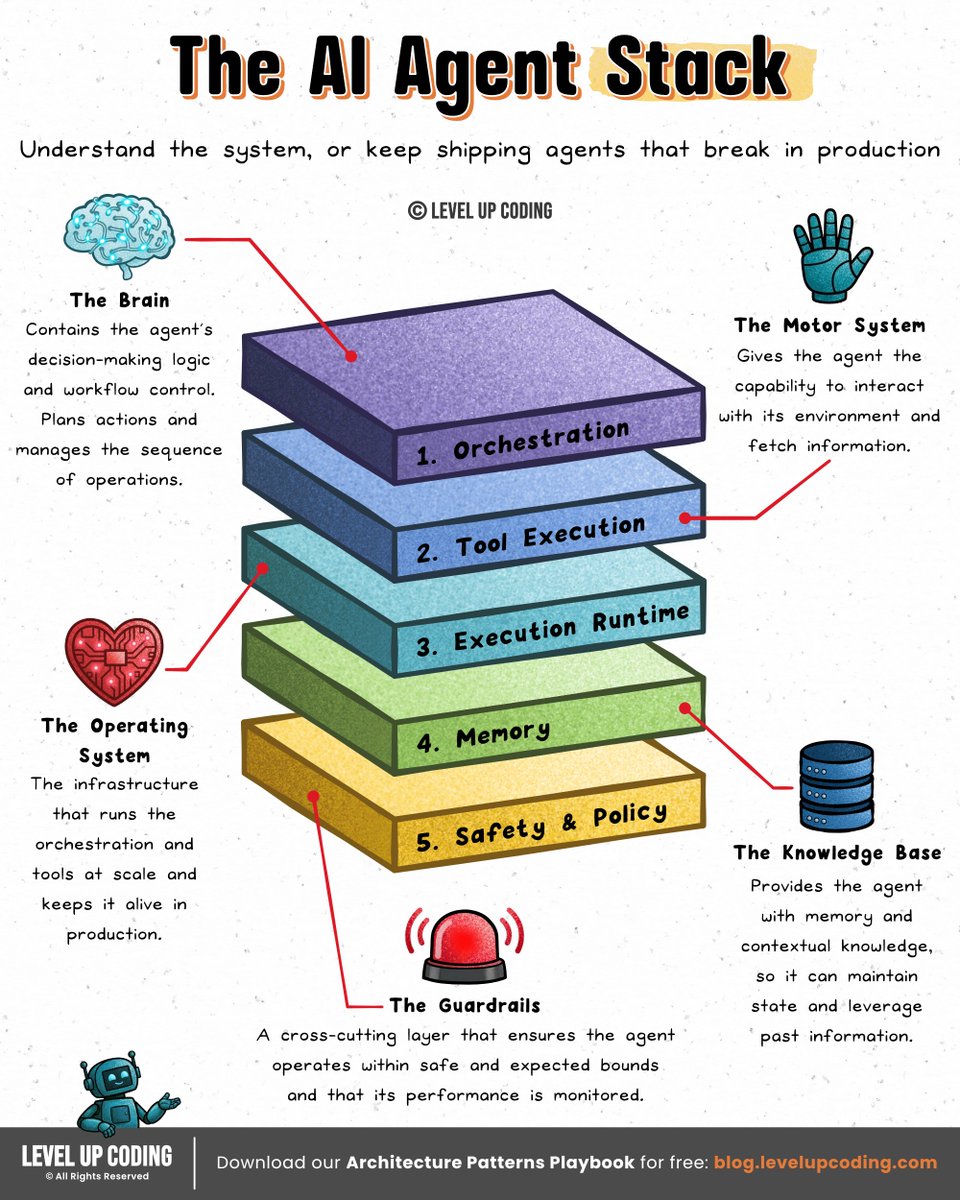
AI Agent Stack
Nikki Siapno tweet media
Nikki Siapno@NikkiSiapno

If you’re building modern AI applications, learn these concepts (resources included): I’ve been using MongoDB’s AI Learning Hub to sharpen how I think about AI systems. It stands out for covering both concepts and real implementation. 1. AI Stack ↳ lucode.co/ai-stack-z7xd 2. Vector Search ↳ lucode.co/vector-search-… 3. AI Data Strategy ↳ lucode.co/at-data-strate… 4. Data Ingestion for RAG Applications ↳ lucode.co/data-ingestion… 5. Evaluating RAG Application Results ↳ lucode.co/evaluating-rag… 6. Going from RAG to Agentic Systems ↳ lucode.co/rag-to-agentic… 7. Introduction to AI Agents ↳ lucode.co/ai-agents-intr… 8. Introduction to Agent Memory ↳ lucode.co/agent-memory-z… 9. Why Multi-Agent Systems Need Memory Engineering ↳ lucode.co/memory-enginee… Which concepts do you think don't get enough focus? —— ♻️ Repost to help others learn AI. 🙏 Thanks to @MongoDB for sponsoring this post.

English
4
60
196
10.6K
Finisher🧪 retweetledi
AsyncTrix
AsyncTrix@asynctrix·
Kubernetes - In Plain English ☸️ - Pod → Smallest unit where your app runs - Deployment → Manages replicas & updates - StatefulSet → Stable identity + persistent storage - DaemonSet → One Pod on every node - Service → Stable internal access - Ingress → External HTTP/HTTPS access - ConfigMap → Non-sensitive configuration - Secret → Sensitive data - Node → Machine that runs Pods - Control Plane → Brain of the cluster - RBAC → Controls permissions - Namespace → Logical isolation Understand the building blocks → Kubernetes becomes simple.
AsyncTrix tweet media
English
7
68
304
13.9K
Finisher🧪 retweetledi
Carlos E. Perez
Carlos E. Perez@IntuitMachine·
42 Agent Architecture Patterns: From Skill Repos to Intent & Harness Engineering
English
6
44
274
23.2K
Finisher🧪 retweetledi
Weaviate AI Database
Weaviate AI Database@weaviate_io·
AI agents are everywhere now, but most can't explain how they work. Here are the 6 concepts you need to know: 𝟭. 𝗠𝗼𝗱𝗲𝗹 𝗖𝗼𝗻𝘁𝗲𝘅𝘁 𝗣𝗿𝗼𝘁𝗼𝗰𝗼𝗹 (𝗠𝗖𝗣) A universal standard for connecting AI applications to external data sources and tools. Anthropic calls it "USB-C for AI" - one protocol that transforms the MxN integration problem into M+N. 𝟮. 𝗦𝗸𝗶𝗹𝗹𝘀 Agent skills are portable, modular packages of instructions, scripts, and assets. often contained in a SKILL.md file, that teach AI agents (like Claude Code: google.com/search?q=Claud… or GitHub Copilot: google.com/search?q=GitHu…) specialized capabilities. Dive deeper into Agent Skills here: weaviate.io/blog/weaviate-… 𝟯. 𝗦𝗶𝗻𝗴𝗹𝗲 𝗔𝗴𝗲𝗻𝘁 𝗔𝗿𝗰𝗵𝗶𝘁𝗲𝗰𝘁𝘂𝗿𝗲 One agent handles the full pipeline, deciding when to search, summarize, or generate. In its simplest form, it acts as a router choosing which knowledge source to retrieve from. 𝟰. 𝗠𝘂𝗹𝘁𝗶-𝗔𝗴𝗲𝗻𝘁 𝗔𝗿𝗰𝗵𝗶𝘁𝗲𝗰𝘁𝘂𝗿𝗲 Multiple agents coordinated by orchestration frameworks like Langgraph or LlamaIndex. These frameworks act as conductors, managing complexity, errors, and retry cycles across agents. 𝟱. 𝗔𝗴𝗲𝗻𝘁𝗶𝗰 𝗥𝗔𝗚 An AI agent-based implementation of RAG that goes beyond simple retrieval. Agents orchestrate components, validate retrieved context, and route queries to specialized knowledge sources for more robust responses. 𝟲. 𝗔𝗴𝗲𝗻𝘁 𝗠𝗲𝗺𝗼𝗿𝘆 Two types: short-term memory in the context window and long-term memory retrieved on demand. Vector databases like Weaviate can serve as long-term memory, storing and retrieving relevant bits of prior interactions. Get your free copy of the agentic architectures ebook and get hands-on: weaviate.io/ebooks/agentic…
Weaviate AI Database tweet media
English
17
172
790
32.2K
Finisher🧪 retweetledi
Avi Chawla
Avi Chawla@_avichawla·
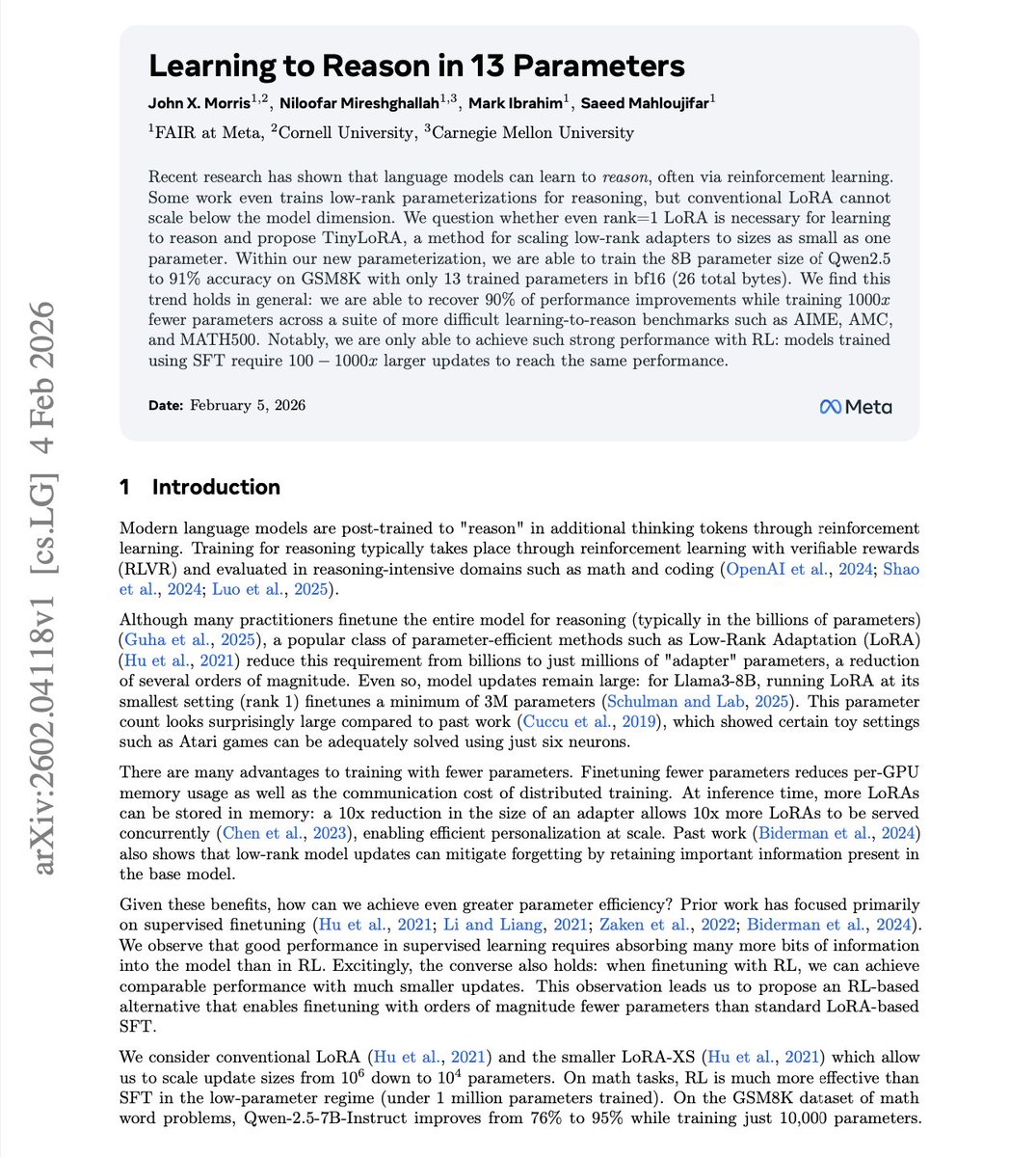
TinyLoRA: LoRA scaled down to 1 parameter. Researchers from Meta, Cornell, and CMU just dropped a banger. They turned an 8B parameter model into a math and reasoning powerhouse by tweaking just 13 of those parameters. That's 26 bytes and takes up less storage than this sentence. The model hit 91% accuracy on GSM8K, up from 76% before the tweak. The method is called TinyLoRA, and it pushes low-rank adaptation to its absolute extreme. Some quick background on LoRA first: When you finetune a large model, you're updating billions of parameters. LoRA showed you can instead learn a small low-rank update on top of frozen weights, bringing that down to millions. LoRA-XS compressed this even further by leveraging the internal structure of the weight matrices, bringing it down to tens of thousands. TinyLoRA goes all the way down to one. Here's how: > Instead of learning a matrix-sized update, learn a tiny vector that gets expanded into a full weight update through a fixed projection. only the tiny vector is trainable. > Tie this vector across all modules and layers so the entire model shares the same tiny set of trainable parameters. > With full weight tying, the entire model update collapses to as few as one trainable parameter. I have shared a really nice illustration to explain TinyLoRA in the next tweet. But the real insight is not the architecture. it's that this only works with reinforcement learning. When they tried SFT with the same tiny updates, performance barely moved. SFT at 13 parameters hits 83%. RL hits 91%. to match RL performance, SFT needs 100x to 1000x more parameters. This is because SFT forces the model to memorize full demonstration trajectories, treating every token as equally important. RL only passes back a sparse reward signal, and through resampling, the useful signal accumulates while the noise cancels out. This means RL is not teaching the model new knowledge. it's making a precise, tiny adjustment to unlock reasoning the model already has. One more surprising finding: as model size grows, the number of parameters needed to reach peak performance shrinks. this suggests trillion-scale models might be tunable for specific tasks with literally a handful of bytes. Find the paper and TinyLoRA visual in the next tweet.
Avi Chawla tweet media
English
15
97
537
30.2K
Finisher🧪 retweetledi
Utkarsh Sharma
Utkarsh Sharma@techxutkarsh·
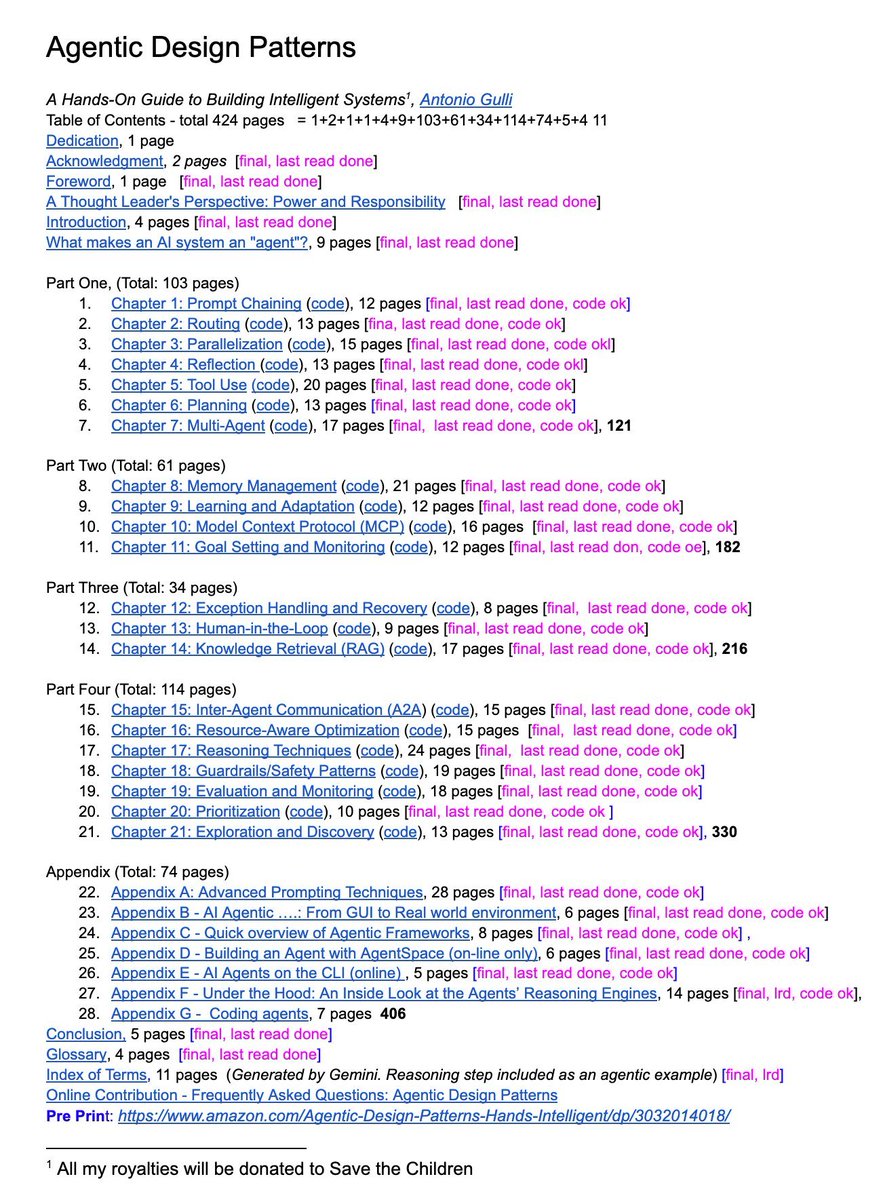
A senior Google engineer just dropped a 421-page doc called Agentic Design Patterns. Every chapter is code-backed and covers the frontier of AI systems: → Prompt chaining, routing, memory → MCP & multi-agent coordination → Guardrails, reasoning, planning This isn’t a blog post. It’s a curriculum. And it’s free.
Utkarsh Sharma tweet media
English
1.6K
819
4.7K
625.3K
Finisher🧪 retweetledi
Rohit Kumar Tiwari
Rohit Kumar Tiwari@_rohit_tiwari_·
If you want to learn AI the right way, start here. No shortcuts. No hype. No fluff. Top 10 Stanford's Courses on AI & ML. CS221: Artificial Intelligence CS229: Machine Learning CS229M: Machine Learning Theory CS230: Deep Learning CS234: Reinforcement Learning CS224N: Natural Language Processing CS231N: Deep Learning for Computer Vision CME295: Large Language Models (LLMs) CS236: Deep Generative Models CS336: Language Modeling from Scratch
Rohit Kumar Tiwari tweet media
English
8
245
1.1K
38.7K
Finisher🧪 retweetledi
Karan🧋
Karan🧋@kmeanskaran·
Before it's too late, learn any of these skills to become elite AI/ML Engineer: - Maths focused AI research - Data Engineering with distribution - AI Agents orchestration - Multi-GPU training - Inference optimization - Demand Forecasting with RL - MLOps and AgentOps - SLMs for IoT devices - Deployment on cloud - System Design for ML - Data drift detection - Rollback and task queues for ML - Backend for AI - Vision Transformers in IoT - Quant and Intraday using ML The most important skill is using minimal setup with high impact on business more than just ML metrics. Also, important part is just deliver projects within less span by iterative release.
English
7
55
556
18.1K
Finisher🧪 retweetledi
𝗿𝗮𝗺𝗮𝗸𝗿𝘂𝘀𝗵𝗻𝗮— 𝗲/𝗮𝗰𝗰
Reinforcement Learning from Human Feedback by Nathan Lambert Book: rlhfbook.com/c/06-policy-gr… Video: youtube.com/watch?v=jQPiH-… This is one of the best resources to understand how ChatGPT-like systems are actually trained. The RLHF Book. What you’ll learn: → What RLHF actually is (beyond the buzzword) → How models learn from human preferences → Reward models, policy training, and alignment → Why models become helpful, safe, and “human-like” What’s inside: → Full RLHF pipeline (instruction tuning → reward model → RL) → Practical intuition + real training workflows → Algorithms like PPO, DPO, and modern alignment methods → Advanced topics like evaluation, synthetic data, and open problems
YouTube video
YouTube
𝗿𝗮𝗺𝗮𝗸𝗿𝘂𝘀𝗵𝗻𝗮— 𝗲/𝗮𝗰𝗰 tweet media
English
1
58
328
15.3K
Finisher🧪 retweetledi
Ksenia_TuringPost
Ksenia_TuringPost@TheTuringPost·
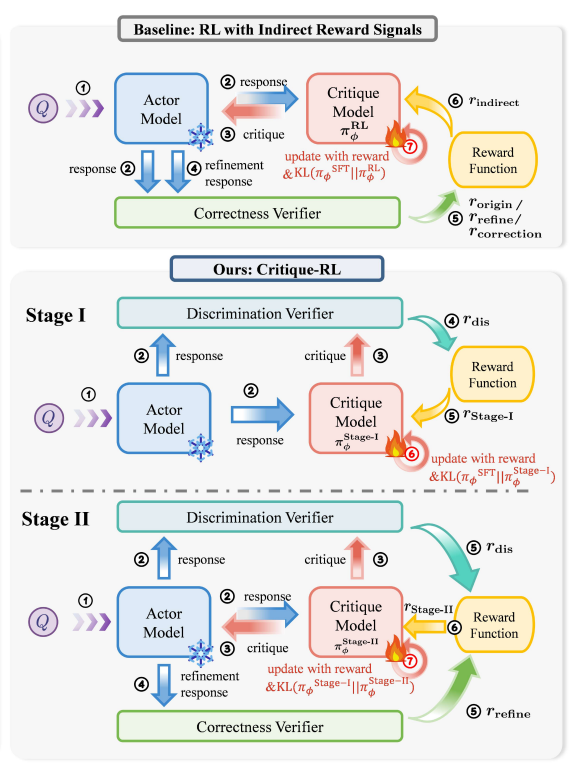
16 Reinforcement Learning approaches you should know about (classic + modern) ▪️ RLHF – RL from Human Feedback ▪️ RLAIF – RL from AI Feedback ▪️ RLVR – RL with Verifiable Rewards ▪️ RLCF – RL from Community Feedback (2 different variants) ▪️ RLCF – RL from Checklist Feedback ▪️ CM2 ▪️ Critique-RL ▪️ CRL – Critique RL ▪️ ICRL – In-Context RL ▪️ RLBF – RL with Backtracking Feedback ▪️ TriPlay-RL ▪️ SPIRAL ▪️ Co-rewarding ▪️ RESTRAIN ▪️ PRL – Process Reward Learning ▪️ RLSF – RL from Self-Feedback Save this list and check it out for links and explanations: turingpost.com/p/rlapproaches
Ksenia_TuringPost tweet media
English
10
134
622
26.3K
Finisher🧪 retweetledi
Ayaan 🐧
Ayaan 🐧@twtayaan·
9 GitHub Repos for DevOps Beginners: 1. Cloud-DevOps Learning Resources github.com/ahmedtariq01/C… 2. System Design Primer github.com/donnemartin/sy… 3. DevOps Exercises github.com/bregman-arie/d… 4. Into the DevOps github.com/NotHarshhaa/in… 5. DevOps Projects github.com/NotHarshhaa/De… 6. Cloud Native Security github.com/Hacking-the-Cl… 7. MLOps Basics github.com/graviraja/MLOp… 8. DevOps Interview Guide github.com/ramanagali/Int… 9. DevOps Roadmap github.com/milanm/DevOps-… Save this. You’ll need it later 🔖
Ayaan 🐧 tweet media
English
5
244
966
40.1K