
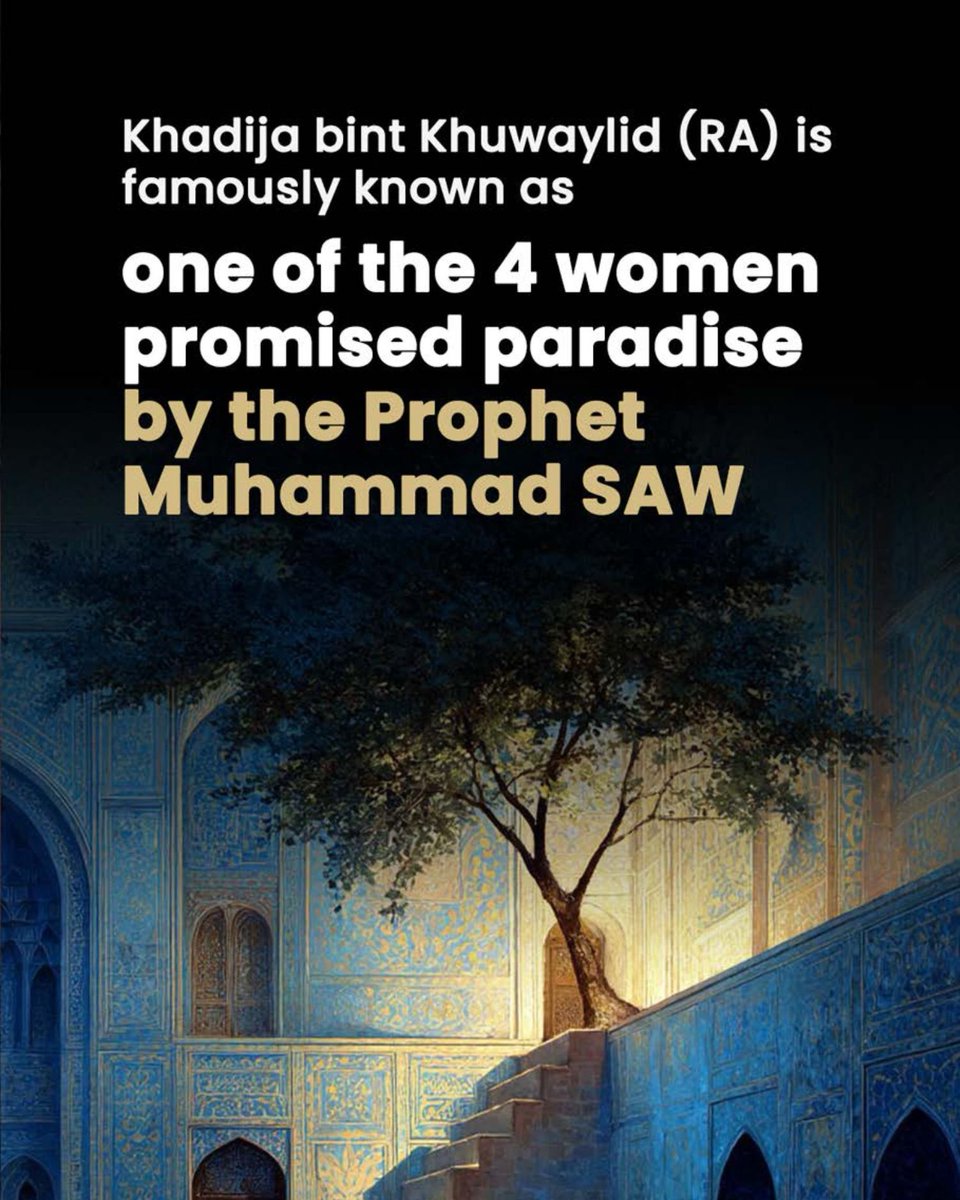
In 7th century Makkah, a woman ran one of the most successful trading operations in Arabia. She sent caravans across the desert while men twice her age struggled to turn a profit.
When she hired a young merchant named Muhammad to lead one of her expeditions, he returned with double the expected profit.
She later proposed to him for marriage, impressed by his trustworthiness.
Her name was Khadija. And her business strategies built the foundation that would later sustain an entire religious movement.
Here's what made her different 👇
Khadija understood something most traders didn't: in a world before contracts and legal systems, reputation was the most valuable currency a business could possess.
She didn't just engage in trade. She built trust with her partners, clients, and the broader community. Every deal she made reinforced her name.
That reputation would later prove invaluable.
When the Quraysh imposed an economic blockade against the Prophet ﷺ and his supporters - banning all trade, marriage, and social contact - it was Khadija's wealth and network that helped the community survive.
She had invested in relationships for decades. In the crisis, those relationships paid dividends.
But she wasn't reckless with her resources.
Khadija managed risk through systematic diversification. She didn't place all her trust in a single trade route or product. She sent caravans to Syria, Yemen, and other profitable markets.
If one route failed, others continued.
And she invested in people, not just goods.
Her decision to hire Muhammad wasn't random. She investigated his character thoroughly before entrusting him with her capital. She bet on integrity.
That single hiring decision changed history.
Building a business that lasts requires more than profit margins.
It requires reputation. Diversification. And the wisdom to invest in people whose character you trust.
Khadija mastered all three.
English